Season 6 · Episode 3
Yemen
The hardest—and most dangerous—country I have ever filmed in.
On this page ▾
By Sorin Mihailovici · Travel by Dart · Last updated October 2026 · ~17 min read
As of right now, Yemen stands among the hardest places to be alive on Earth. The country is living through one of the most severe humanitarian emergencies in the world: more than 18 million people — close to half the population — go hungry, and over a million children under five suffer acute malnutrition. A civil war grinds on, with the Houthi movement, an internationally recognized government, and southern separatists each holding fractured pieces of the map. Layer on abductions, airstrikes and economic collapse, and you have a country most people would never choose to enter.
I chose to enter it. Many will call that reckless, maybe irresponsible, and I understand why. But this is what I do: a blindfolded dart hits the world map, and I go wherever it lands, no matter how far or how difficult. I took full responsibility for whatever might happen to me over the next few days, and I went to see — and to show you — what is actually unfolding there, beyond the headlines.
How I Even Got Into Yemen
Here's the strange part: the dart that sent me to Yemen wasn't even thrown by me. I was in Norway, filming the launch of the Myklebust, the largest Viking ship ever discovered, rebuilt and rowed onto the fjord. The man who dragged that ship into the water by hand was Martins Licis, a former World's Strongest Man. We'd become friends over the week, so I handed him the dart and asked him to throw it at the map on my behalf. "Don't break the map," I said. "I can't promise anything," he laughed. His throw sealed my fate: Yemen.

And then the problems started. On the very day I committed to Yemen, Israeli airstrikes destroyed the national airport in Sanaa, the capital. I normally begin a Travel by Dart trip in the capital city — but how could I land in one that had just been bombed? Still in Norway, I spent days digging for a way in. The answer: for now, the only route is through Egypt. Fly Oslo to Cairo, then Cairo to Seiyun, a town of a little over a hundred thousand people in the eastern Hadhramaut region. But it isn't that simple. Only one airline, Yemenia, flies there, and foreigners aren't allowed to book their own tickets — only locals can. On top of that, I needed a visa, which I couldn't get alone either.
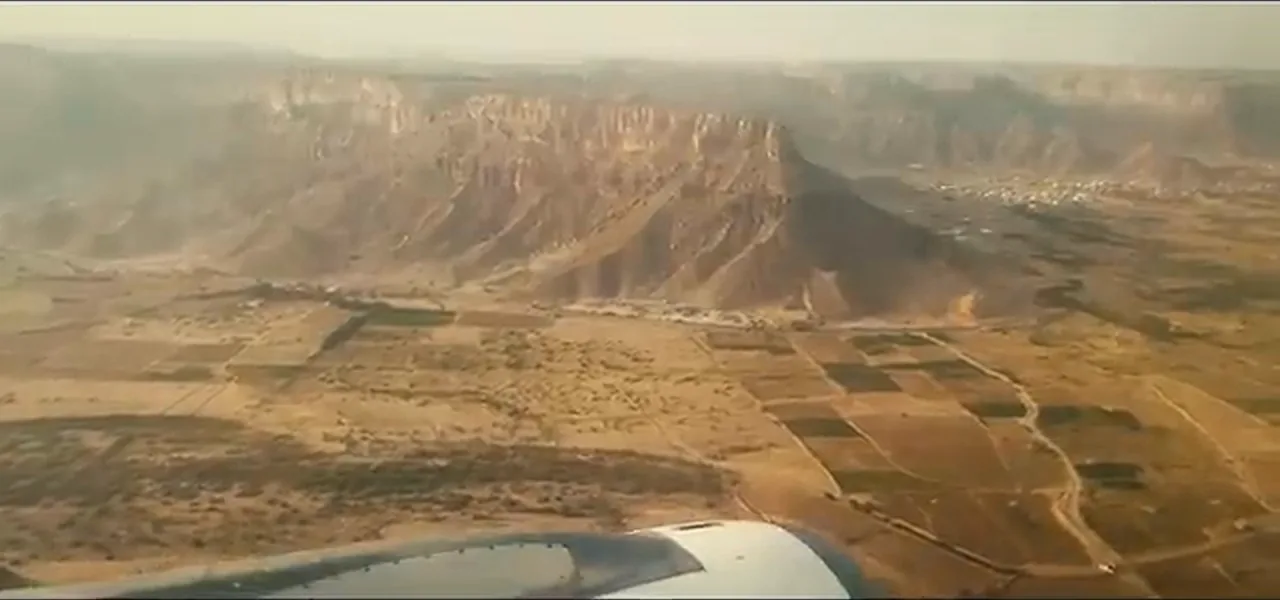
I was close to giving up, especially after Sanaa was hit again, when an idea surfaced: if I could find a local willing to trust me — a huge ask, when a foreigner shows up right after the capital's airport is bombed — he might send me an invitation, arrange my visa, and buy my ticket. That's how I met Salem. He'd have to purchase my plane ticket for me, and I'd have to send him the money first and simply trust him. In this part of the world, trust is a fragile, dangerous thing — it runs in both directions, and either of us could have been burned. It took days of messaging back and forth to build that bridge, and until I actually landed I didn't fully believe it would hold. But it did. From the plane, the land grew dustier and dustier, the mountains rose around the valley, and I landed in Seiyun, praying the complications would stop there.
Quick facts: Yemen at a glance
- Where I went
- Seiyun, Tarim & Shibam (Hadhramaut)
- Population
- ~40 million
- Facing hunger
- More than 18 million people
- Capital
- Sanaa (Houthi-controlled; its airport was bombed)
- How to get in now
- Via Cairo to Seiyun, on Yemenia
- Tourists per year
- About 300 — for the whole country
- UNESCO sites here
- Shibam; also Socotra & old Sanaa
- The dart came from
- Norway
An Armed Escort, and a Divided Country
Salem was waiting outside the tiny airport — and the first surprise came in the car. Riding with us was Jelal, and across his lap was a rifle. Any foreigner coming into this area, Salem explained, has to travel with an armed escort. Not because of a specific threat, but as protocol. It sets the tone fast: things here are serious.

It's the protocol, man. If anybody from out of town, from out of the country wants to come here, they'll have to have escorts.
It helps to understand how the conflict carves up the country. The capital, Sanaa, and much of the northwest are controlled by the Houthis, a group designated a terrorist organization by several countries, including the United States. Another region is run by the internationally recognized government, an eight-member presidential leadership council. And then there are the contested areas, where no single power dominates and control shifts between the Houthis, the government, southern separatists, and at times extremist groups. I was based roughly 400 miles from Houthi territory, in the calmer east, exploring only what was safe.
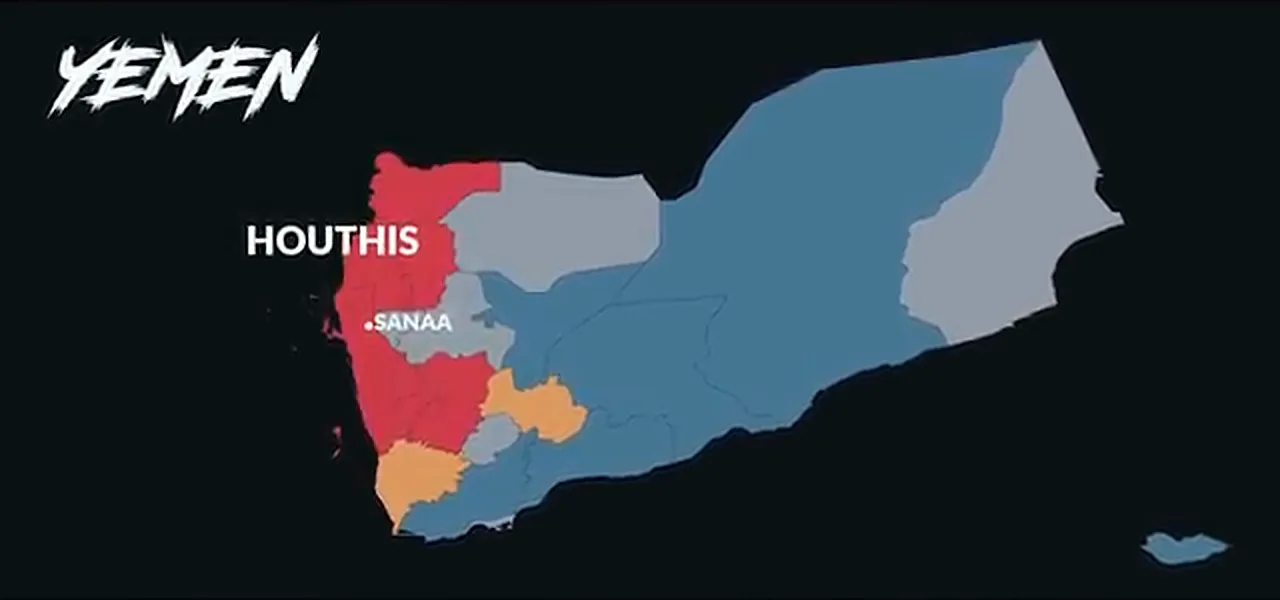
One reason the outside world sees so little of all this is that reporting on it is dangerous. Journalism in Yemen has been largely silenced, with only a few brave voices — people like Fatehi Bin Lazreq — still risking everything to get the truth out. Through 2025, the Houthis arbitrarily detained UN and civil-society staff, disrupting the very relief operations meant to keep people alive. Millions are internally displaced, public services are threadbare, and the institutions that would normally hold a country together barely function. That information blackout is part of why Yemen stays "forgotten" — and part of why I felt I had to come and film it myself.
Tarim: 360 Mosques and the Old Social Order
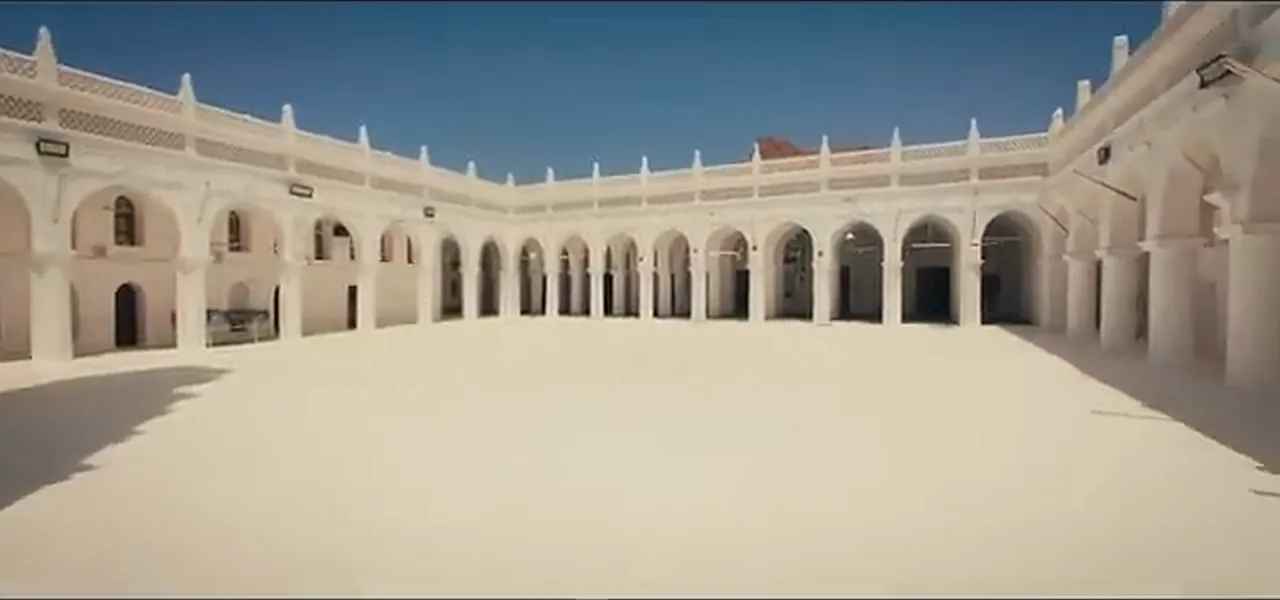
The first place Salem wanted to show me was Tarim, long regarded as the capital of Islamic culture and learning in Yemen. It's a conservative town of around 70,000 people said to hold an astonishing 360 mosques. The most famous is the Al-Muhdar Mosque, built entirely of mud brick, down to its soaring minaret — often called the tallest mud-brick minaret in the world, rising roughly 175 feet (about 53 metres). Standing in its courtyard, the craftsmanship is humbling: a skyscraper of mud and faith, decorated by hand.
What struck me more than the buildings were the people. Yemenis were known, long before the war, for their generosity and honesty — a code of good values that defines the Yemeni character. Even now, with so much gone wrong, that hasn't changed. People cooperated, helped, welcomed me. They don't like to see anyone begging on the streets. The war has crushed almost everything here, but not that.
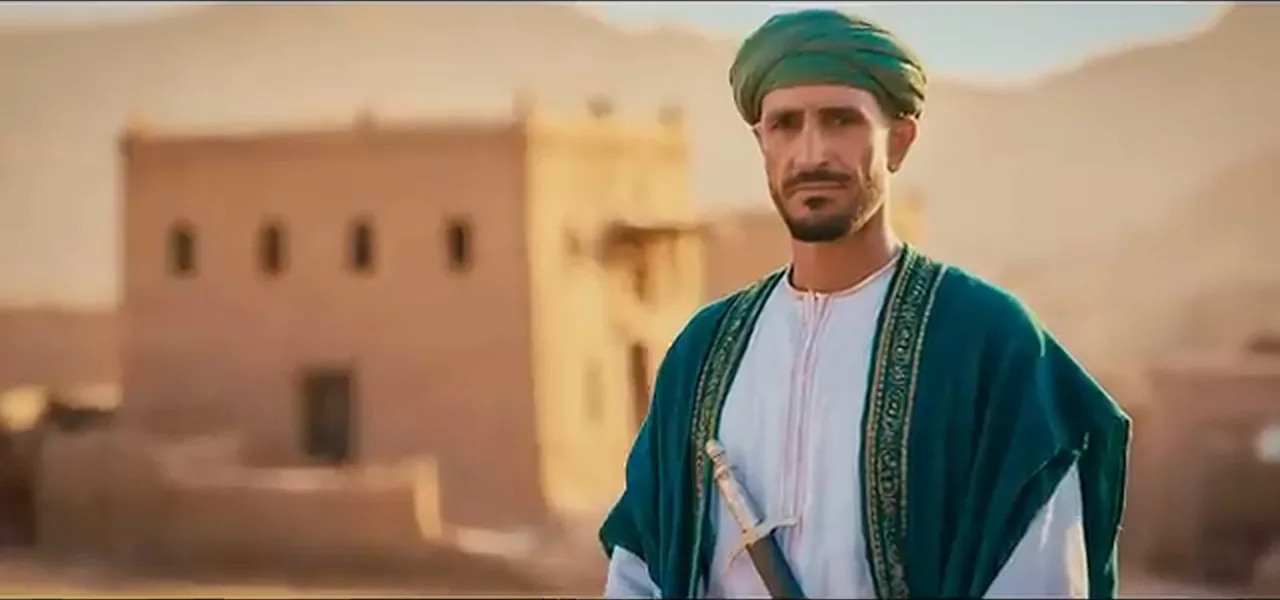
Tarim also runs on a social order that has survived for centuries. At the top are the Sadah, families who trace their lineage to the Prophet Muhammad — the class associated with the town's scholarship, its landmarks and its religious teaching. Below them come the sheikhs and the tribal families, then the common people. The lines are strict, especially in marriage: moving up between classes can require arrangements and large payments, and the upper class, I was told, only permits marriage from within its own ranks.

The Hunger You're Not Shown
That divide, it turns out, follows people even into death. In Tarim's cemeteries, the graves of the wealthy lie on one side, the graves of the poor on the other. And when my guide said "the poor," he didn't only mean the working class. He meant those who had died of hunger and starvation. It's the kind of detail that reorders how you see a place.
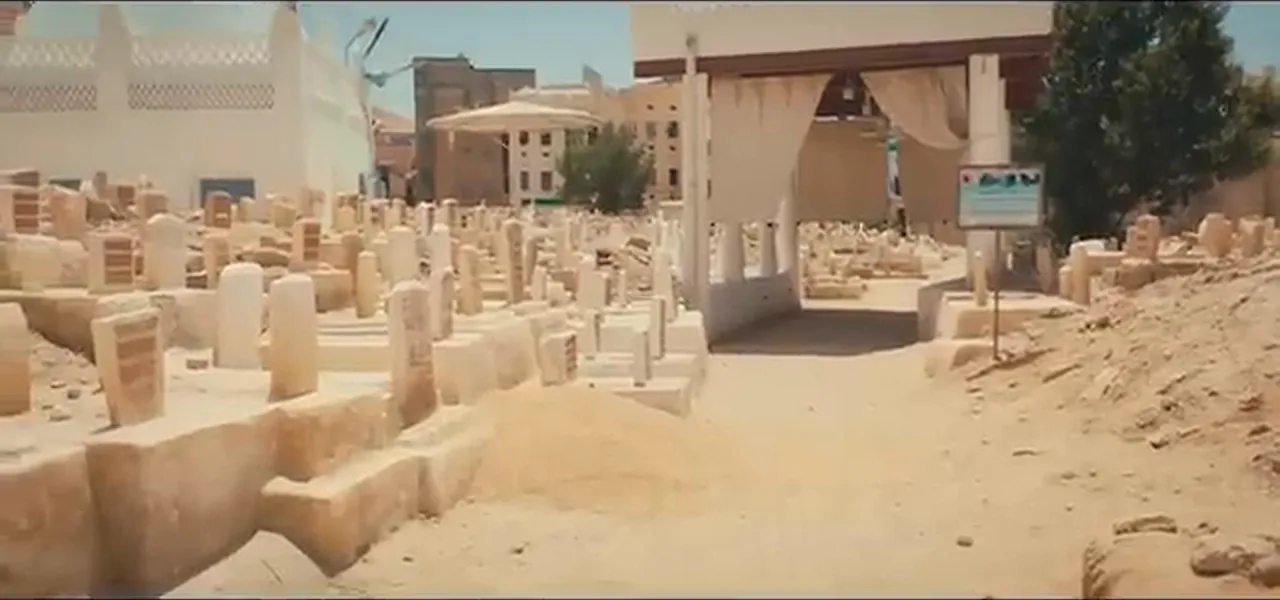
The scale is staggering. More than 18 million of Yemen's roughly 40 million people struggle with hunger, and over a million young children suffer acute malnutrition. This is not a distant statistic you can shrug off — it is the lived reality of nearly half a country.
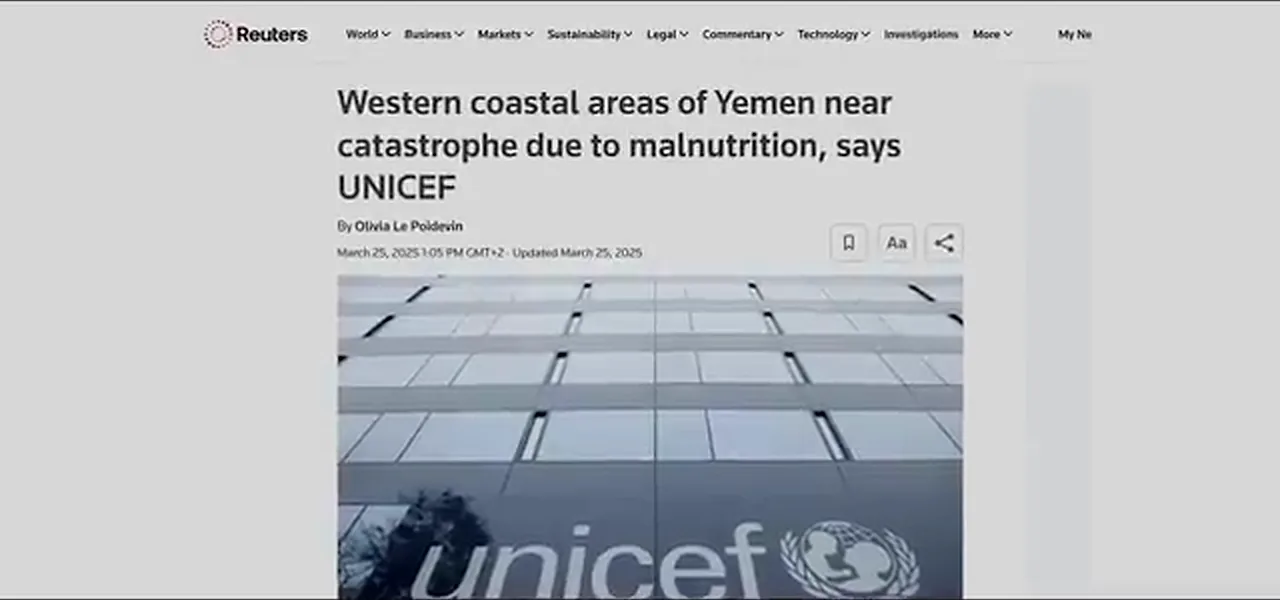
And here is the part that is hardest to accept. The markets in Seiyun can look full — stalls of fruit and vegetables, bread, rice. So why is anyone starving? Because, locals told me, the humanitarian food trucks are deliberately stopped at Houthi checkpoints. Ports have been bombed, aid operations constrained, salaries left unpaid. The food exists; it's the access that's been cut off. Hunger here isn't a drought. It's a decision.
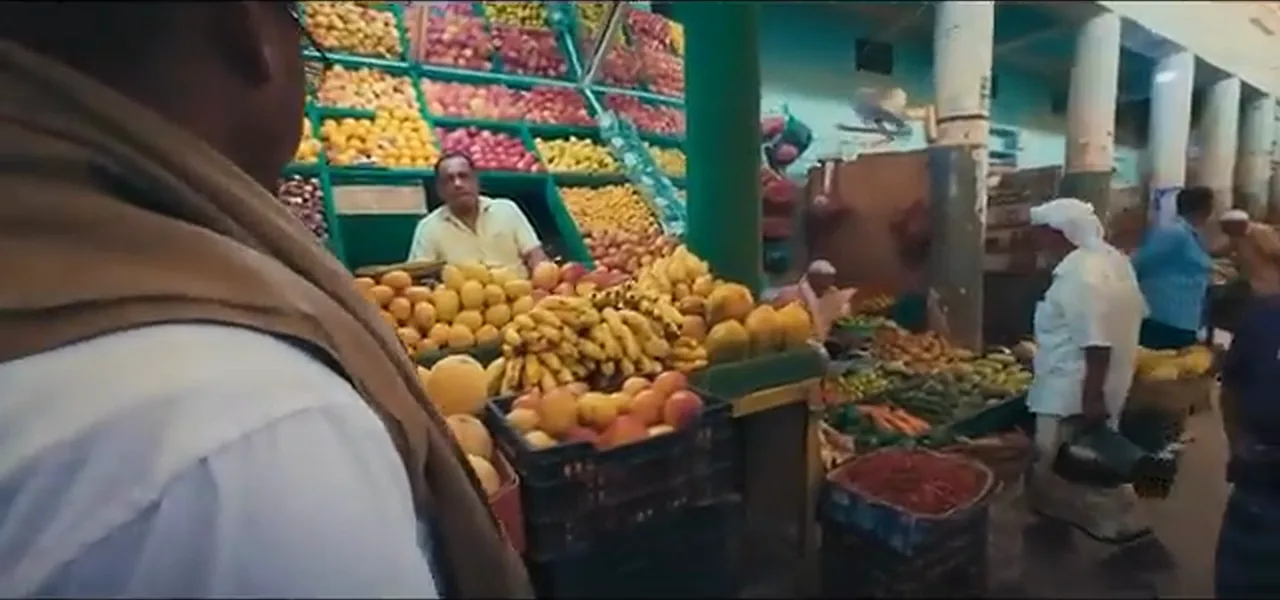
People aren't starving because there's no bread or rice — but because politics and war have locked it away. Hunger here is manufactured, not natural. It is a political choice, not just a natural disaster.
Eating in Yemen
For those who can afford it, I wanted to understand what everyday food looks like here, so Salem, Jelal and our driver Amin took me to one of Seiyun's most popular restaurants. There were no tables, no plates, no cutlery. You sit close together on the floor and eat with your hands. We had chicken and rice, and a pie for dessert. It was raw, communal and humbling — and it made me acutely aware of how much we take for granted back home.
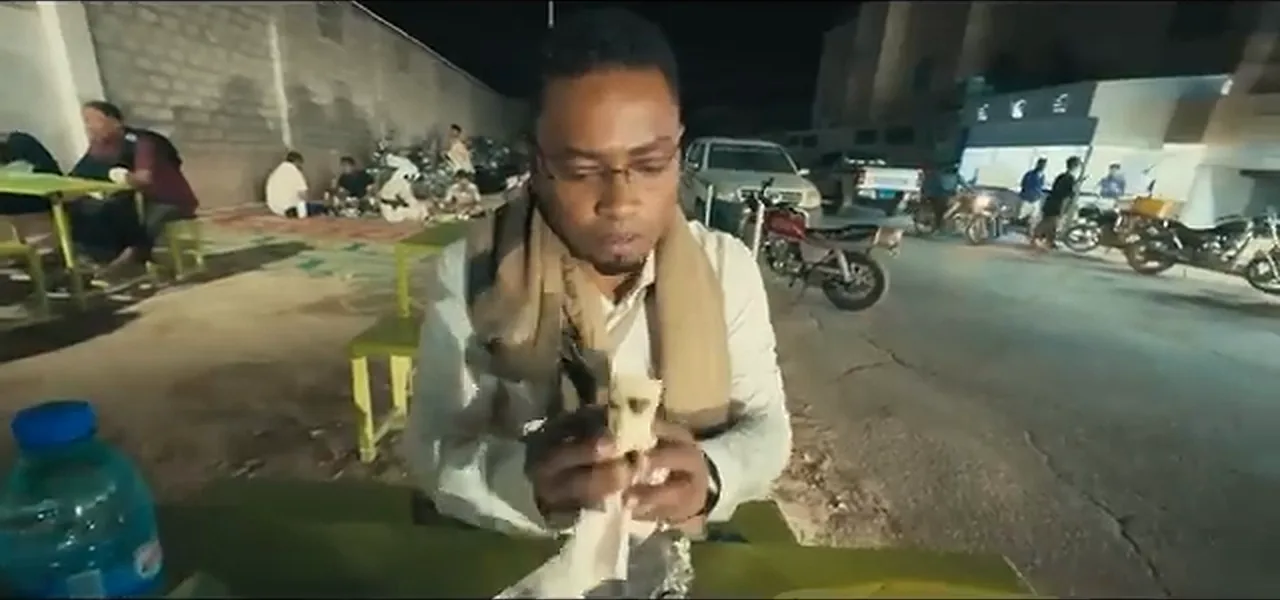
Dinner was a different kind of lesson. We went for what locals proudly call "fast food" — except here the term doesn't mean convenience, it means a treat, something rare and special. The dish was a "rocket": spiced chicken rolled up in a very long flatbread with sauces and garlic inside. It looked as good as it tasted.
Shibam: The Manhattan of the Desert
If there's one image that will outlast everything else from this trip, it's Shibam. They call it the "Manhattan of the desert," and the nickname is earned: a dense cluster of mud-brick tower houses, some eight or nine storeys high, packed inside a fortified wall. It's one of the oldest examples of vertical urban planning anywhere, and it's been a UNESCO World Heritage Site since 1982.
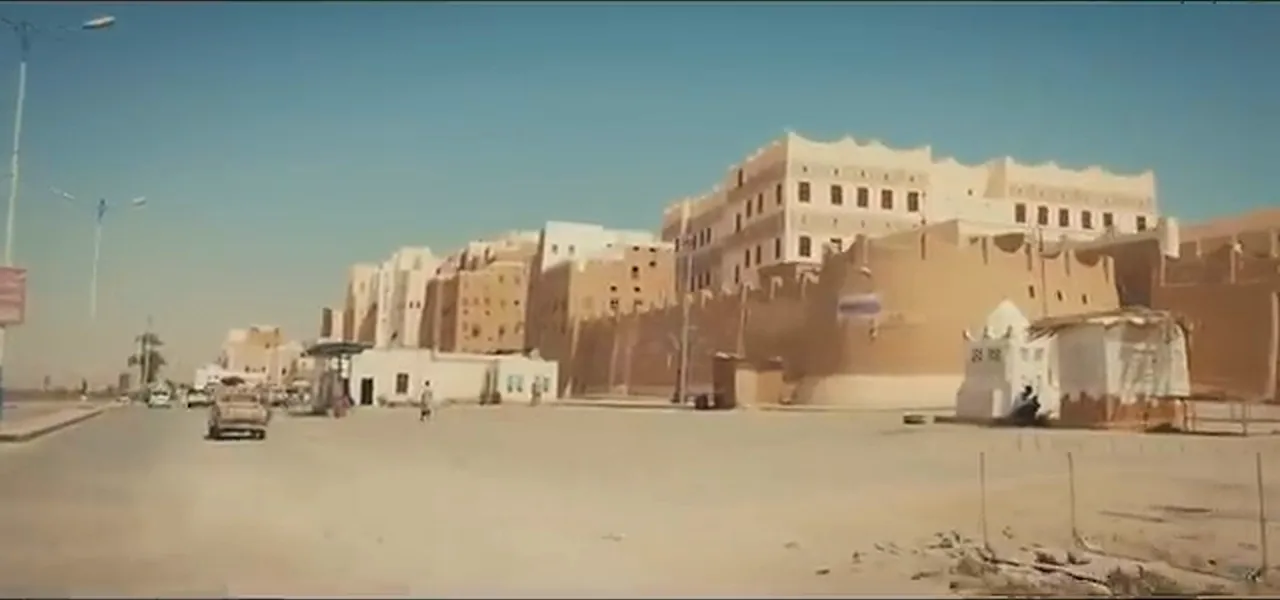
The wall around Shibam — three to six metres high — was built to defend against tribal raids, flash floods and thieves. The population has roughly doubled since 2002, from about 4,000 to 7,000, yet the old city hasn't sprawled; people still live stacked in the same mud towers. What you won't find is crowds. In a normal year, only about 300 tourists visit the entire country — and with this year's airstrikes, I may genuinely have been the only tourist in Yemen that week. Strangely, that suited me. I never wanted the touristy version of anywhere; I wanted the off-the-beaten-path truth of a place, and it doesn't get further off the path than this.
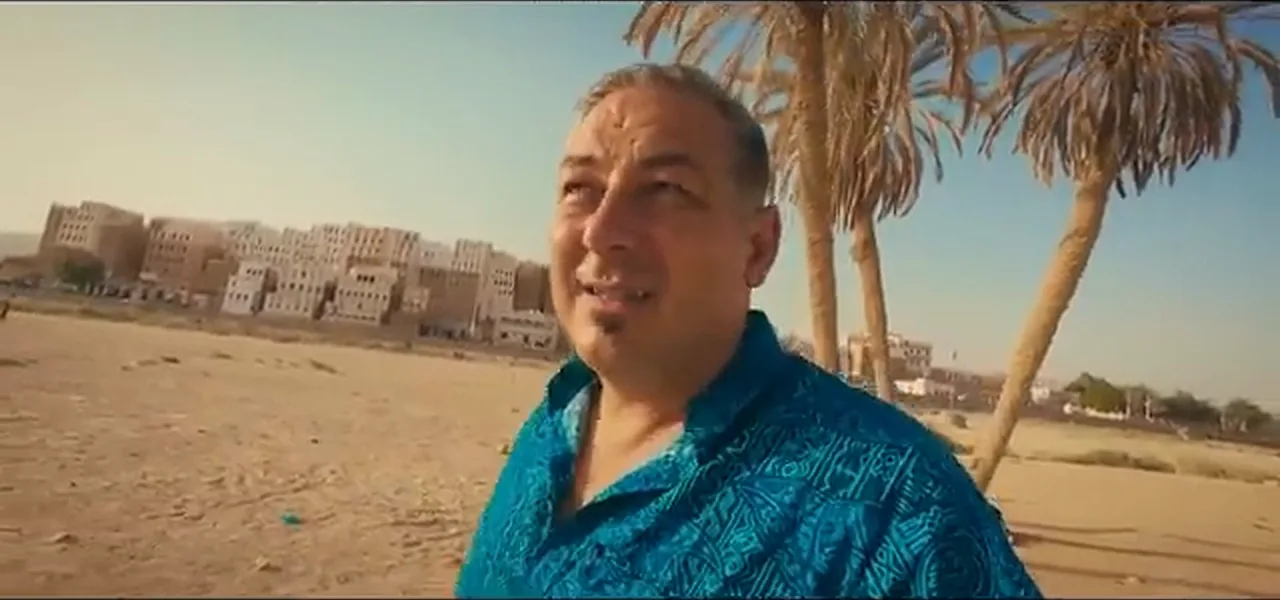
What also stayed with me in Shibam were the small signs of ordinary life continuing against the odds — shops still open, craftsmen still working, children leaning out of windows to shout hello at the rare stranger walking their street. For a place so often described only through its war, there was a stubborn, everyday normality to it that no headline ever captures.
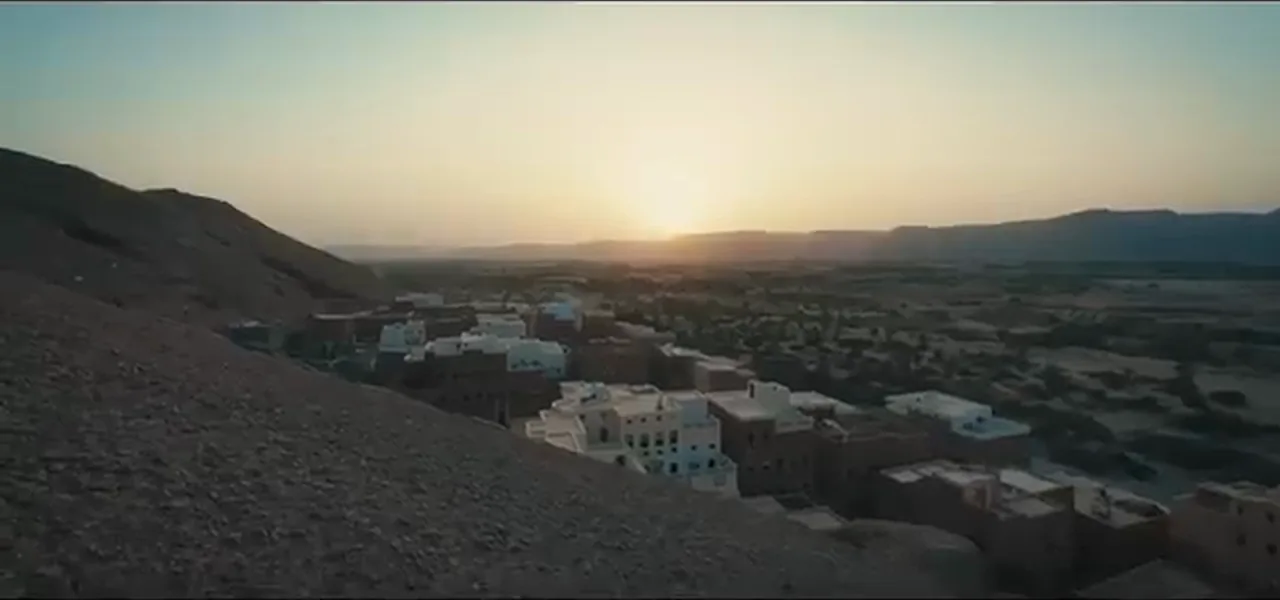
As evening came, we hiked a mountain nearby to watch the sun go down over the city. The climb was longer than I expected, but the payoff was total: Shibam spread out below, its towers glowing amber in the last light. Half an hour of sweat for one of the great views of my travels.
The Palace, and the Next Dart
Back in Seiyun — the most visitable town in Yemen, and the headquarters of my stay — I stopped first at the city's oldest gate, the original entrance to the town, more than 500 years old. Then came the symbol of Seiyun itself: the Sultan Al-Kathiri Palace. It's one of the largest mud-brick structures in the world, the royal residence of the Kathiri sultans of Hadhramaut from 1584 to 1967, and it's so iconic it appears on Yemeni banknotes.
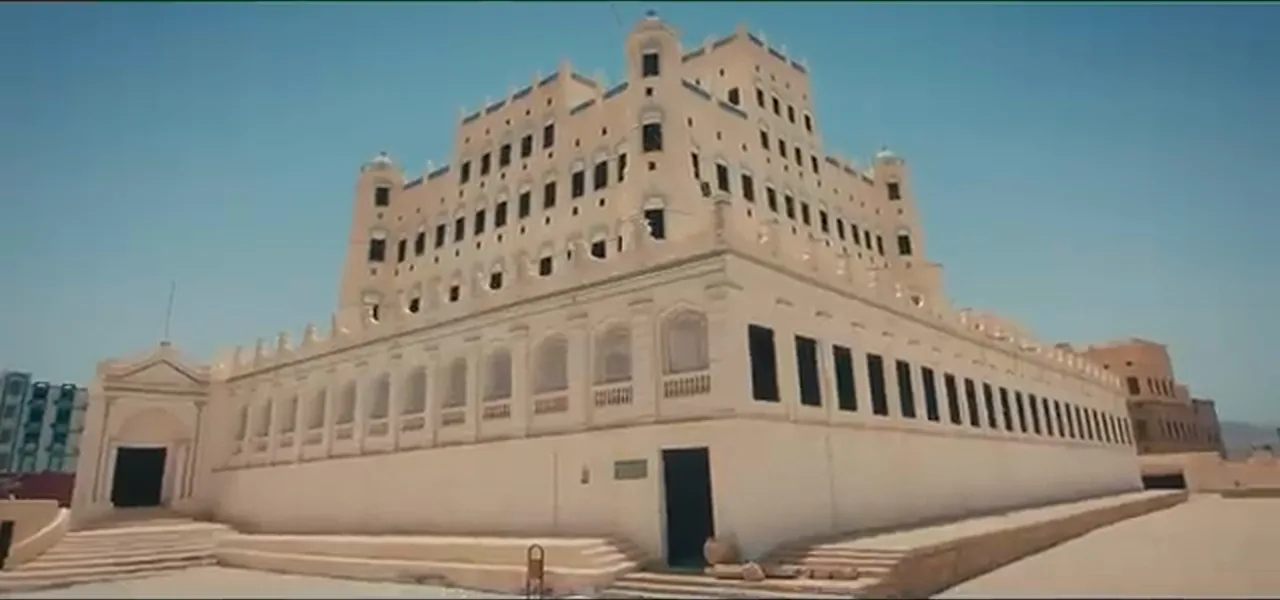
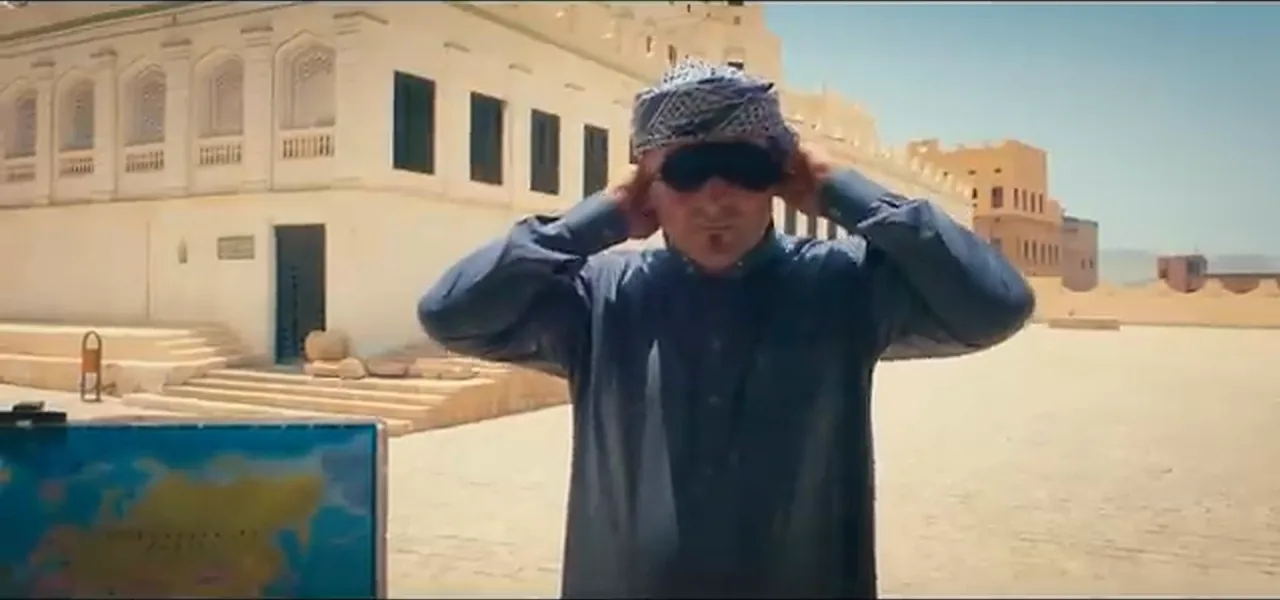
Thanks to Salem pulling a few strings, I was allowed to throw my next dart right inside the palace compound. I dressed for the occasion, out of respect, and sent it blindfolded at the map. The rules never change: if it hits a country I've already visited, I throw again; if it hits ocean, I go to the nearest country. This one landed between Nicaragua and Colombia — and since I'd already been to Colombia, Nicaragua it was. A country I knew almost nothing about, which is exactly how the best chapters begin.
By the numbers: Yemen, by the numbers
- Population
- ~40 million · 18M+ facing hunger
- Tarim
- ~70,000 people · said to have 360 mosques
- Al-Muhdar minaret
- ~175 ft (53 m) of mud brick
- Shibam
- ~7,000 people · towers up to ~8 floors
- Shibam, UNESCO listed
- 1982
- Al-Kathiri Palace (Seiyun)
- Royal seat 1584–1967
- Tourists per year
- ~300, for all of Yemen
- Distance from Houthi territory
- ~400 miles
Detained on the Way Out
I'll be honest about the worst thing that happened — and it had nothing to do with Salem, who was nothing but good to me. It came at the very end, at Seiyun airport, as I was preparing to leave. I was suddenly detained. The authorities seized every one of my hard drives — hundreds of hours of Travel by Dart footage — and treated me like a prime suspect. I was the only foreigner in the airport that day, which only made me stand out more. They grilled me for hours: where I'd stayed, what I'd filmed, why I was in their country. They even called Salem, trying to find a crack in the story. After hours of questioning, they found nothing to pin on me, and finally let me go.

Don't misunderstand me: when you choose to enter Yemen under these conditions, you expect moments like this. I'm not complaining — I promised to share the whole experience, and that includes the hard parts. But time has never moved slower than it did in that room, carrying drives full of footage, in a country where the capital's airport had just been bombed and I was the one person who didn't belong. In a place this tense, a foreigner with hundreds of hours of video is bound to look like a problem to someone, and I understood that going in. What mattered was that I'd been straight the whole way through — and in the end, that was enough to walk out and board my flight.
What Yemen Taught Me
Yemen was the most emotional, eye-opening country I have ever filmed, and I left with three lessons I think everyone should carry.
First, humanitarian crises are rarely about a lack of food — they're about access and politics. Yemen shows how war and rivalry can manufacture a famine even while markets have stock. People aren't starving because there's no bread; they're starving because ports are bombed, salaries unpaid, and trucks stopped at checkpoints. Hunger here is a political choice, not a natural disaster.
Second, what happens in Yemen doesn't stay in Yemen. The Houthi attacks on Red Sea shipping ripple outward, disrupting global trade and raising the cost of goods in Europe, Asia and Africa. Displacement and instability spill across borders. A war that feels far away can still reach your fuel bill and your grocery basket. No conflict is truly local anymore.
Third, silence enables suffering. Yemen has been called "the forgotten war." Unlike other conflicts, it rarely trends, even with 18 million people facing hunger. Raising awareness, supporting independent humanitarian groups, simply refusing to let mass suffering become normal — that matters.
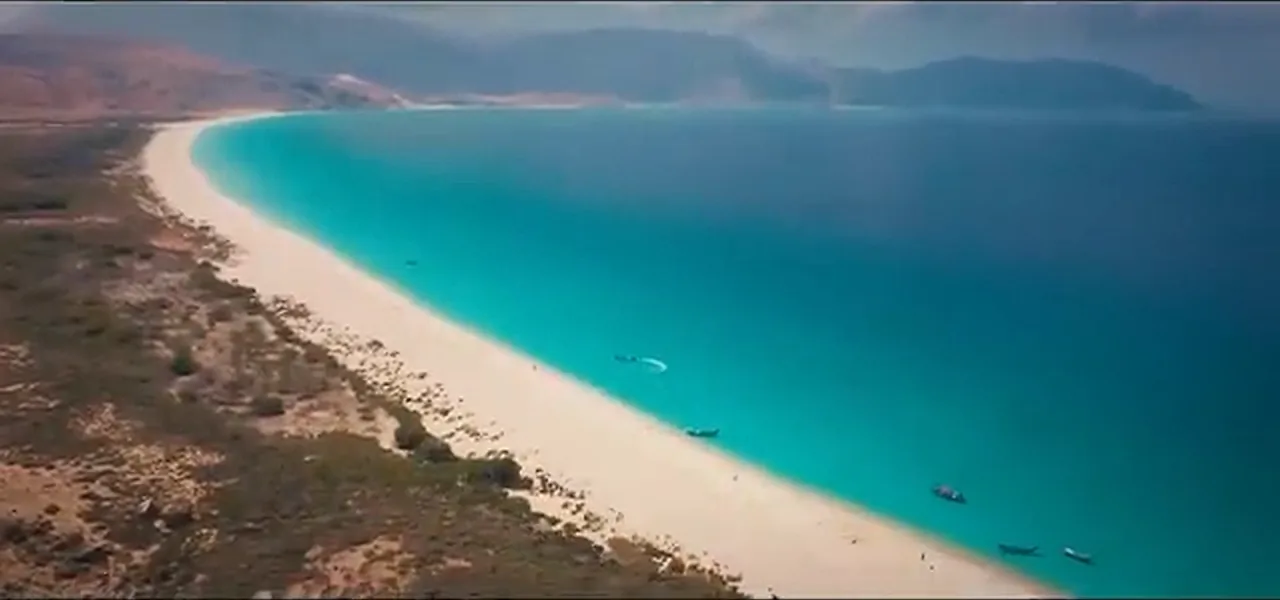
And yet I want to end where there is light. You can still, carefully, travel to Yemen — to Seiyun, or better still to the island of Socotra, under the internationally recognized government, a place so biologically strange and beautiful it feels like another planet. This country deserves so much more than its reputation, because its people — honest, generous, resilient — deserve so much better than this. Thank you, Yemen. I had a great time, and I will come back.
If you're following the journey in order, this chapter was chosen on the deck of a Viking ship in Norway, alongside Iraq and Argentina — and from the heart of Seiyun, the dart carried me onward to Nicaragua.
Explore More Travel by Dart Journeys
- Back to Norway, where the dart that chose Yemen was thrown — by the World's Strongest Man.
- Its two sibling darts from that same ceremony: Iraq and Argentina.
- Another ancient desert civilization the dart uncovered: the ruins of Iraq and the cave cities of Cappadocia.
- The next chapter after this one took me to Central America — watch this space for Nicaragua.
Suggested Sources & Further Reading
To understand Yemen beyond a single episode, these are some of the most authoritative resources:
- UN OCHA — Yemen — the UN's humanitarian overview and latest situation reports.
- UNICEF — Yemen crisis — on child malnutrition and the humanitarian emergency.
- World Food Programme — Yemen — food insecurity data and aid access.
- UNESCO — Old Walled City of Shibam — the mud-brick World Heritage city.
- UNESCO — Socotra Archipelago — the island's unique natural heritage.
- Encyclopædia Britannica — Yemen — history, geography and the roots of the conflict.
All facts verified October 2026.
Yemen: traveler questions
Is Yemen safe for travelers?+
Yemen is in the middle of a civil war and a severe humanitarian crisis, and most governments advise against all travel; mine flagged it as a high-risk destination. I went anyway, with my eyes open, and took full responsibility for the risk. I never travelled without a trusted local fixer and a mandatory armed escort, I stayed hundreds of miles from Houthi-controlled areas, and I was still detained and questioned for hours at the airport on the way out. If you go, it is only sensible through a vetted local operator, in the calmer eastern areas like Seiyun or the island of Socotra, and after checking your government's current advisory.
How do you even get into Yemen right now?+
With great difficulty. On the day I committed to Yemen, Israeli airstrikes destroyed the national airport in the capital, Sanaa, so flying into the capital was impossible. The route that worked was flying from Cairo to Seiyun, a small city in the eastern Hadhramaut region, on Yemenia — the one airline serving it. Foreigners can't book their own Yemenia tickets or get a visa alone; you need a trusted local to send you an invitation, arrange the visa and even buy your ticket, which means trusting someone with money up front. My fixer, Salem, made the whole trip possible.
What is there to see in Yemen?+
Extraordinary, little-seen things. Tarim is one of the great centres of Islamic learning, a town of 70,000 said to have 360 mosques, including the all-mud-brick Al-Muhdar Mosque with its towering minaret. Shibam — the 'Manhattan of the desert' — is a UNESCO World Heritage city of mud-brick skyscrapers up to eight storeys high. Seiyun has the vast Sultan Al-Kathiri Palace, one of the largest mud-brick buildings on earth. And the island of Socotra, with its otherworldly dragon-blood trees and beaches, is one of the most unique places on the planet.
Why is there a famine in Yemen if the markets are full?+
This was the hardest lesson of the trip. Yemen's hunger is less about a lack of food than about access and politics. The markets in Seiyun looked stocked, but locals told me humanitarian food trucks are deliberately stopped at Houthi checkpoints, ports have been bombed, salaries go unpaid and the economy has collapsed. More than 18 million people — nearly half the population — face hunger. As I put it in the episode, the famine is manufactured, not natural: a political choice layered on top of war.