Season 5 · Episode 6
Kazakhstan
The vast country at the centre of the world that few people truly know.
On this page ▾
By Sorin Mihailovici · Travel by Dart · Last updated September 2026 · ~17 min read
Let me introduce you to a country that might change your preconceptions. When the dart landed on Kazakhstan, my honest first reaction was: who goes to Kazakhstan? And what do I actually know about it? The answer was almost nothing. I've travelled to around a hundred countries and I can tell you something about most of them — but Kazakhstan was a blank. I vaguely assumed they spoke some kind of Russian and that was about it. Which, it turns out, is exactly the problem, and exactly why this trip became one of the most surprising of my life.
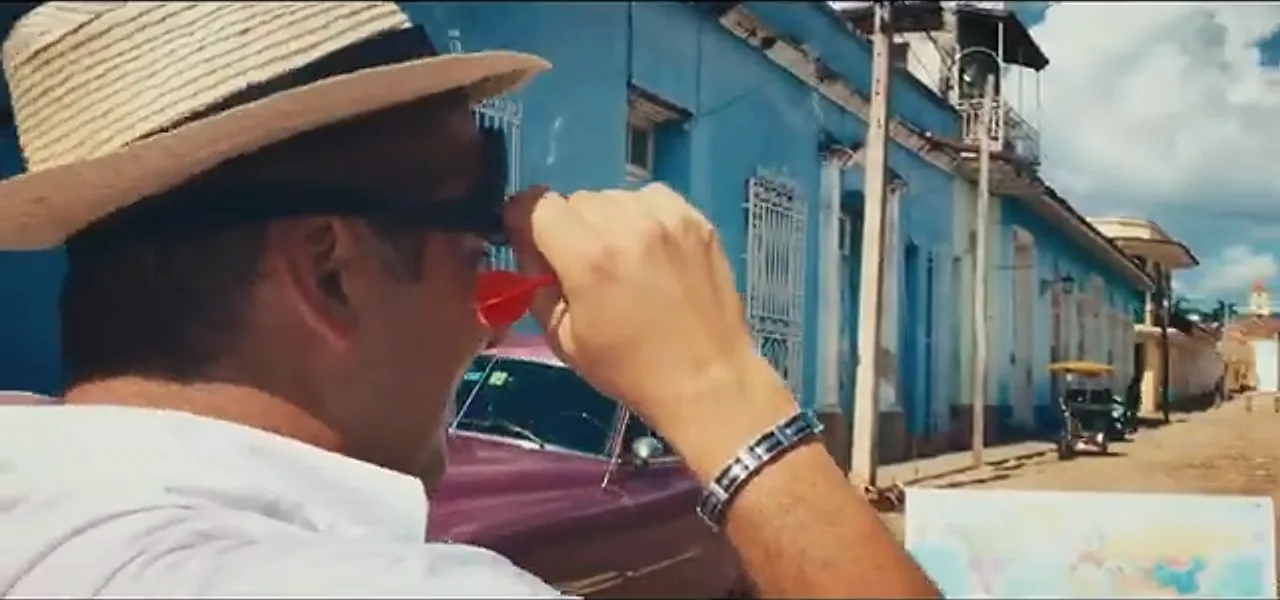
I threw the dart in Trinidad, Cuba, standing between two gorgeous classic cars in the middle of the street, having just finished filming in Havana and Santiago. Blindfold on, dart away — and when I looked, it was stuck in the middle of Central Asia. A few days later I landed in Almaty, the country's biggest city, with no expectations and a lot to learn.
Quick facts: Kazakhstan at a glance
- Capital
- Astana (Almaty is the largest city)
- Population
- ~20 million
- Size
- 9th largest country — largest landlocked
- Languages
- Kazakh (state) & Russian
- Religion
- Majority Muslim, strongly secular
- Currency
- Kazakhstani tenge
- National dish
- Beshbarmak (often horse meat)
- The dart came from
- Cuba
This trip grew into three films. Part 1 (above) covers Almaty, its food and the countryside; Part 2 takes me into a nomad yurt and the futuristic capital Astana; and Part 3 is a deep dive into the one thing everyone asks about — why horse meat matters so much here. Both follow-ups are embedded further down.
▶ Kazakhstan, Part 2 — A Yurt and a Futuristic Capital
Sleeping like a nomad on the steppe, then the glass-and-steel skyline of Astana
Beyond Borat: What Kazakhstan Actually Is
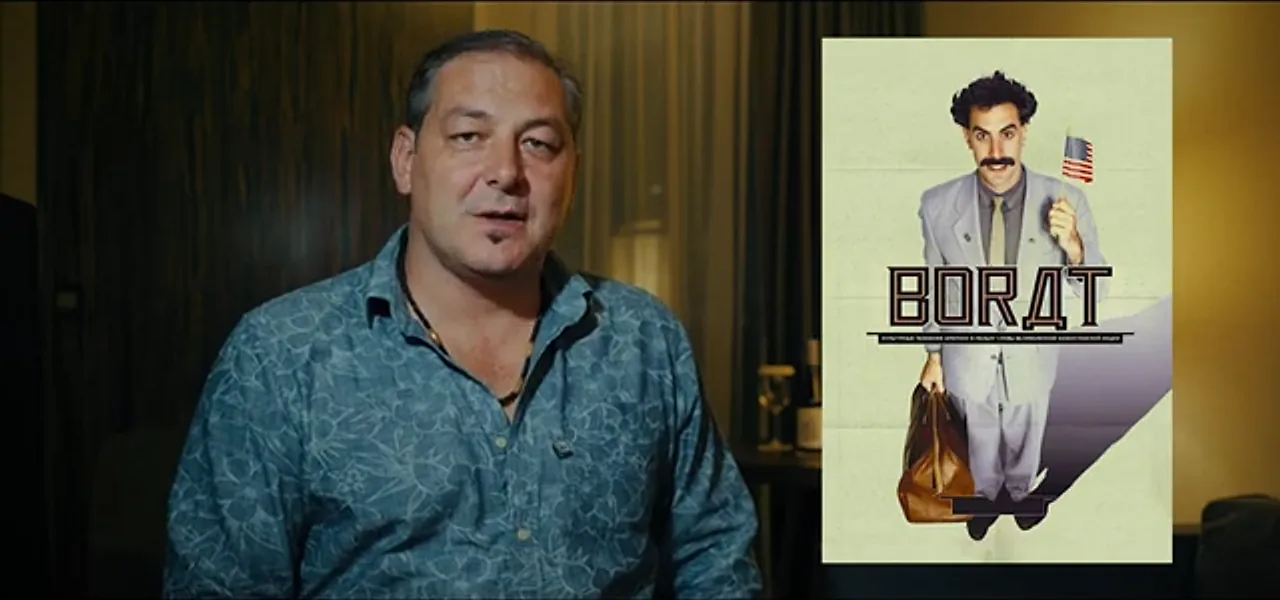
There's no getting around it: for most Westerners, "Kazakhstan" means one film. Borat came out around 2006, and while some Kazakhs will admit it put the country's name on the map, many are genuinely hurt and insulted by it — because it left millions of people believing the cartoon was real. People still half-expect Kazakhs to be riding camels and living in the dirt. The reality could hardly be more different, and clearing that up was a big part of why I came.
The real Kazakhstan is the 9th-largest country in the world — and the largest landlocked one — a modern Central Asian nation of around 20 million people. A local I met summed up the national character with an acronym I loved: Kazakhs, he said, are Western-educated, Asian-looking, Russian-speaking Muslims — W.A.R.M. — and "warm" is exactly how they describe themselves, because they are warm, welcoming people who genuinely love people. In Almaty alone, around 120 nationalities live side by side. This is not a country stuck in the Soviet past; it's one of the fastest-growing in the region, and it is completely safe and astonishingly hospitable.
We're Western-educated, Asian-looking, Russian-speaking Muslims — and together we call ourselves 'warm,' because we're warm, welcoming people who love people.
Almaty, and the Food That Shamed Michelin
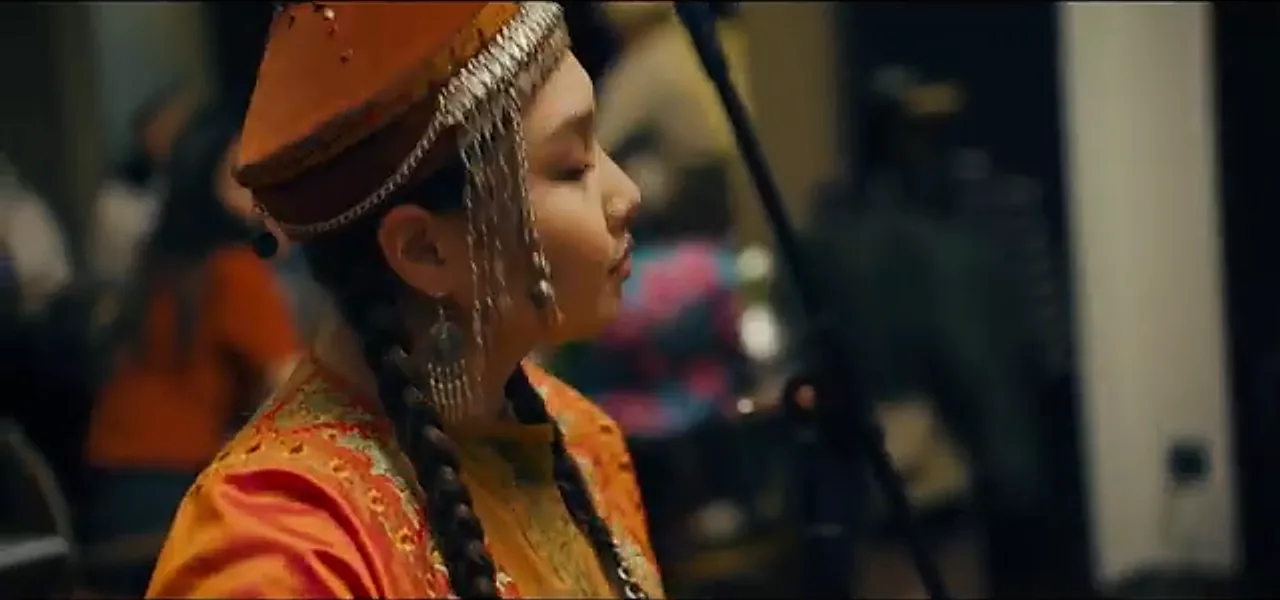
I started in Almaty, a green, mountain-ringed city of about two million and the former capital. My first evening, my new local friends Shireen and Camila took me to a restaurant called Sandyq — top-notch food with a live band playing Kazakh music that gave me actual goosebumps. And here is a claim I'll stand behind: I've eaten in Michelin-starred restaurants all over the world, and the cuisine I found in Kazakhstan beat a lot of them. Michelin doesn't even operate in this region — which, after what I ate here, says more about Michelin than about Kazakhstan.
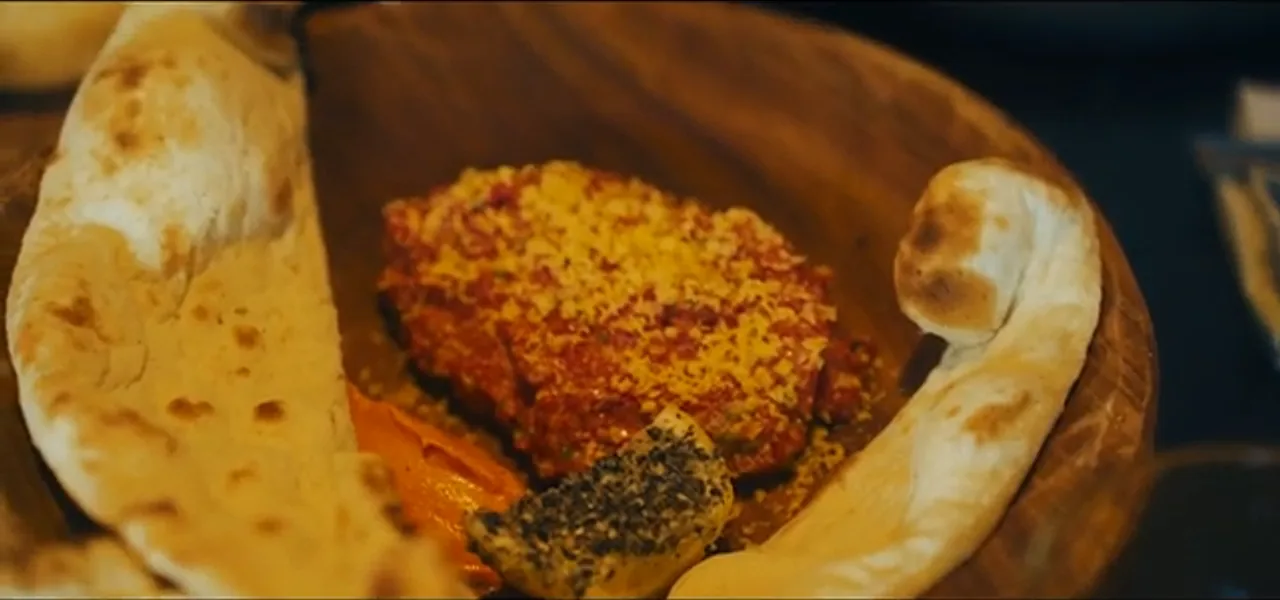
The thing some visitors need to brace for is the horse. Kazakhs love horse meat, and I know that unsettles some Westerners — but to a people whose whole history was lived on horseback, it's simply another animal, cooked with extraordinary skill in dozens of forms. I had horse stew at Sandyq that was better than any beef stew I've eaten. At a second restaurant, Aul — a stunning "neo-nomadic" fine-dining place where the décor, the custom knives for each dish, and even the music are all made in-house — I ate horse tartar served in a bread bowl, and the national dish, beshbarmak ("five fingers"), made from four different cuts of horse. I even tried kumis, lightly fermented mare's milk: sour, fizzy, and firmly not for me — though they say it's an acquired taste, so maybe with a few more tries I'd come around. I also had bone marrow twice in two days, after not touching it for 25 years; here it melts in your mouth and warms you from the inside, and I think I've found a new favourite. The horse, meanwhile, turned up so often that the running joke became whether the waiter was asking about the main course or the main horse. Either way, I became a convert.
What struck me about all of it was the philosophy behind the new wave of Kazakh restaurants: they're taking neo-nomadic cuisine — the food of people who lived on the move — and giving it a fine-dining renaissance, hiring their own musicians and forging their own knives so that every dish arrives with its own sound and its own blade. The message, as one chef put it, is that the nomads are still here: you can sleep in a yurt, watch an eagle hunt, ride a horse all day, and then enjoy a spa and a modern city at night. Tradition and modernity, served on the same plate.
▶ Kazakhstan, Part 3 — Why Horse Meat Is a Big Deal
A deep dive into the most misunderstood thing on the Kazakh table
Mountains, a Canyon, and a Concert I Never Saw Coming
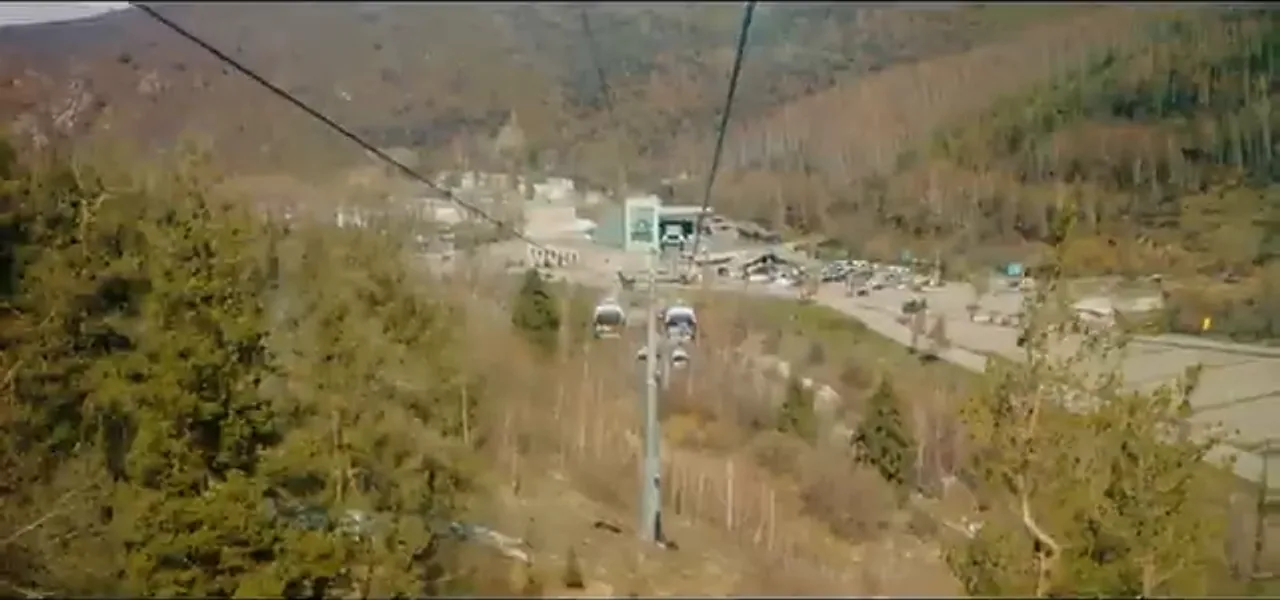
Almaty's great trick is how close the wild is. With a local guide named Dina, I went up to Shymbulak, a genuine, high-quality ski resort that sits just 11 kilometres from downtown — you're in the city one minute and, half an hour later, standing on a snowy peak that feels like Aspen or Banff. It's reached by the longest cable car in Central Asia (about 4.5 km), its runs start at 3,200 metres, and it's recently entered the record books for the altitude of its slopes. A "little Switzerland," minutes from a metropolis.
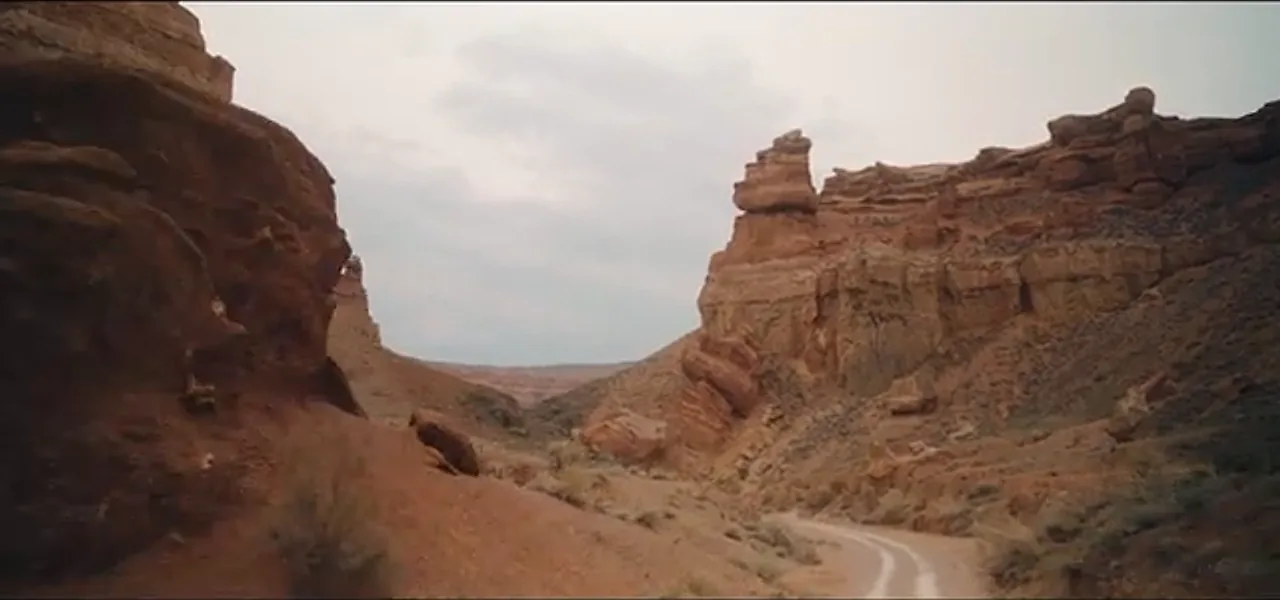
Then Dina said the words that change every trip: "Almaty's great, but let's go to the countryside." She took me to Charyn Canyon, often called the little brother of the Grand Canyon — though the Kazakhs will tell you theirs is actually older. Its red and black rock was the floor of the Tethys Ocean, which covered most of Central Asia some 30 million years ago; what's left is a surreal landscape of eroded sedimentary spires and ancient volcanic basalt, known as the Valley of Castles. We rode down into it in a rugged old Soviet truck with a group of young people I assumed were fellow tourists.
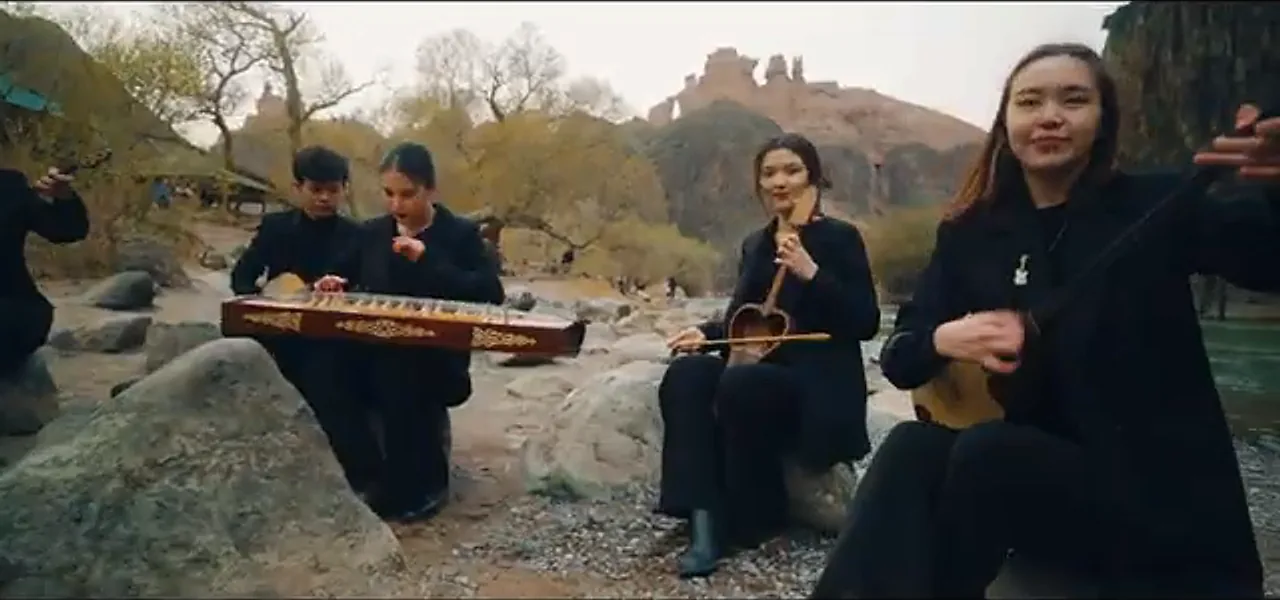
And then came one of the loveliest surprises I've had on this show. At the bottom of the canyon, by the river, those "tourists" suddenly changed into traditional costume, pulled out instruments, and began to play traditional Kazakh music — a full performance, arranged in secret by Dina and the national tourist board, just for Travel by Dart. I had no idea. Standing by that river, listening to music I'd never heard in a place I'd never imagined, I felt the full, ridiculous luck of getting to do what I do.
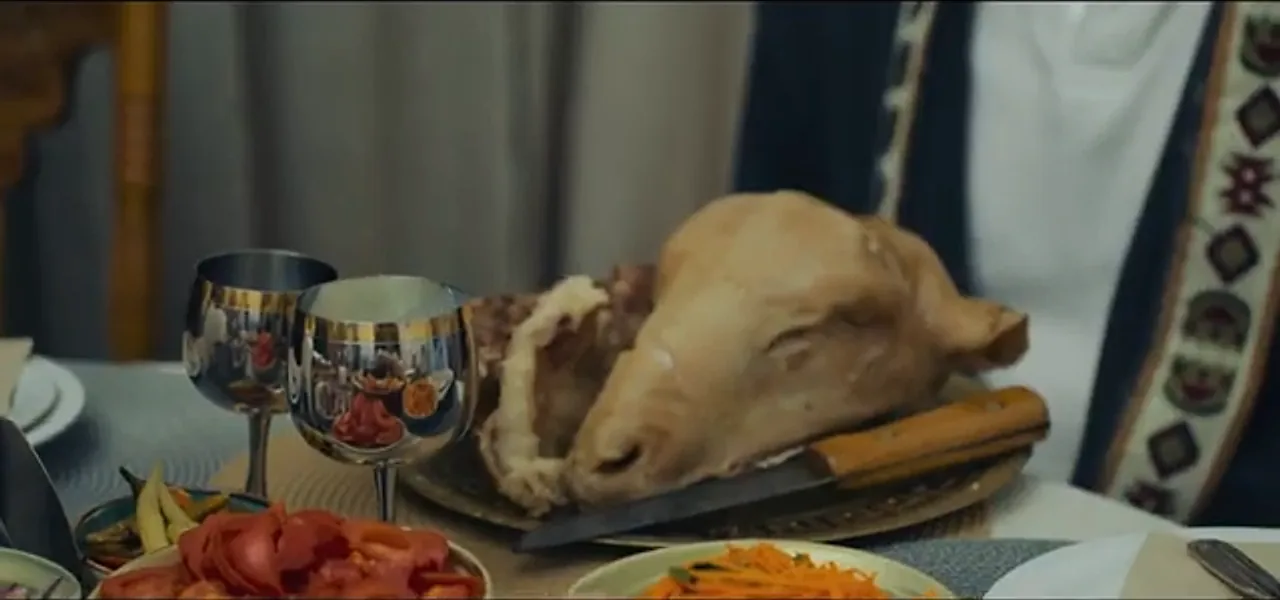
My last night in Almaty was spent at the home of a family who cooked the meal reserved for the most honoured guests — and placed in front of me a whole sheep's head. Nobody would touch the food until I, the guest, made the first cut. (I'm actually allergic to lamb, so I could only taste it — but you do not refuse that honour.) The table held enough food for fifty people, because in Kazakh tradition you always cook far more than enough; and before the night was over, the women of the house began to sing. It was the perfect end to the first half of the trip.
A Night in a Yurt
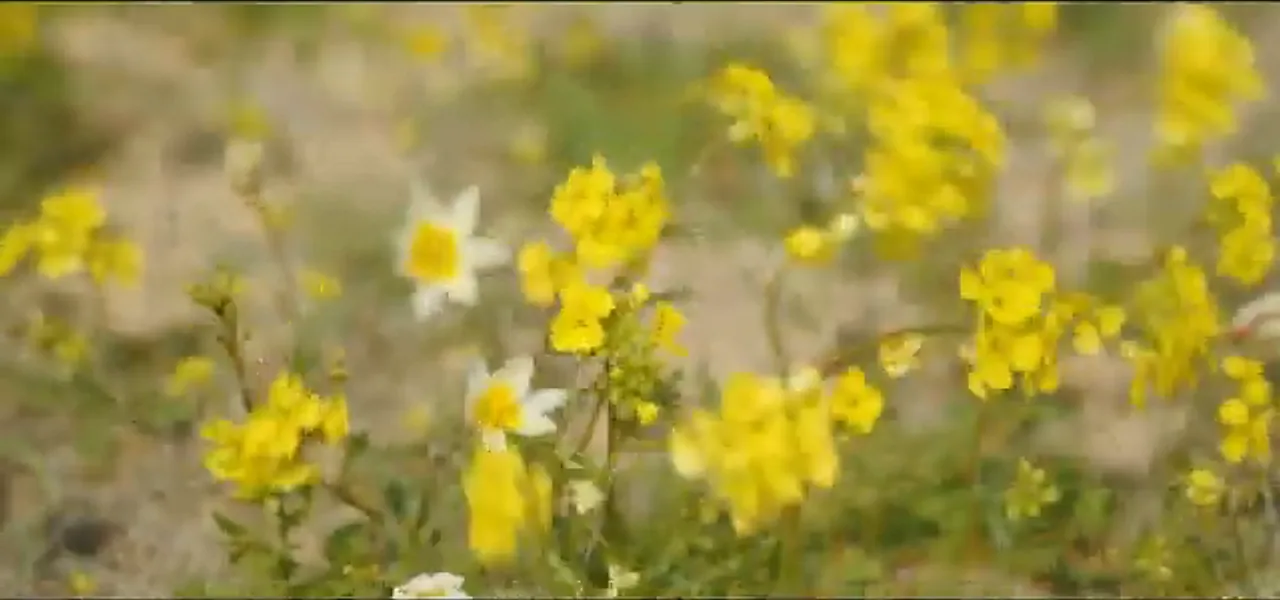
The second half of the trip was a study in contrasts, and it began on the steppe. We drove hours out of Almaty, and along the way stopped at a field of wildflowers so fragrant you could smell the honey from the road. The great Kazakh steppe blooms for only two months a year, in April and May — and we'd arrived at the exact right moment.
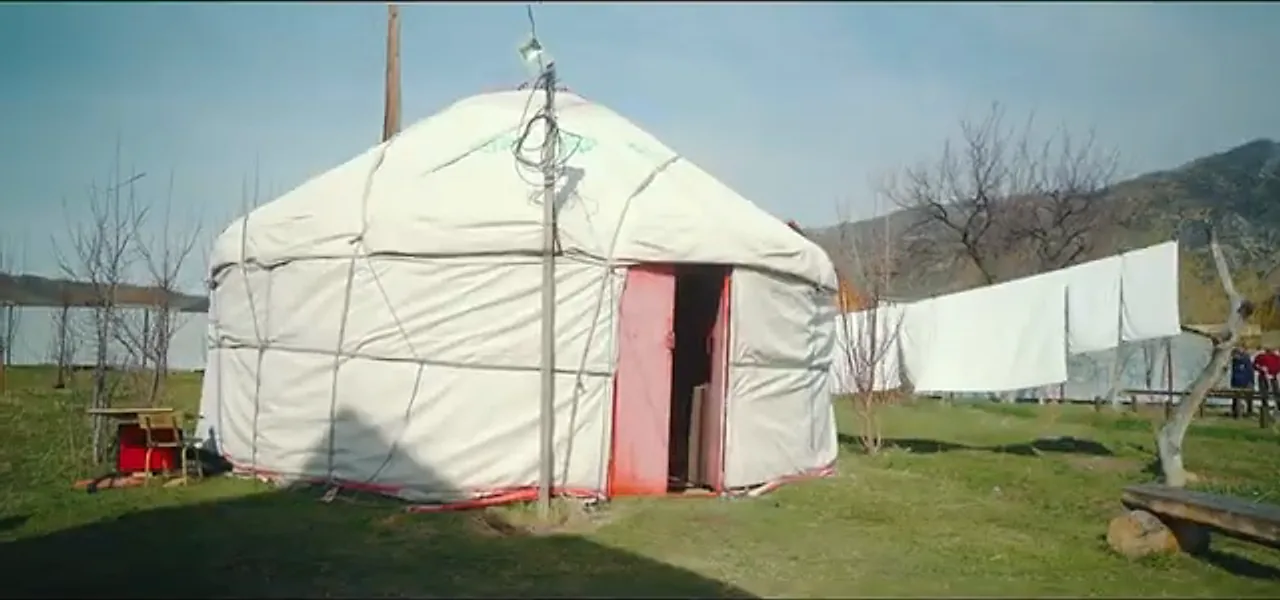
At the end of the road was a yurt — and a night I'd been looking forward to for a long time. A yurt is a round, felt-wrapped wooden tent, and it is a marvel of nomadic engineering. It's white because it's covered in wool, which is naturally wind- and waterproof; it's round so the wind flows around it and never gets in; and it can be taken down, packed onto a single horse-drawn cart, and rebuilt a couple of hundred kilometres away in just a few hours. Inside, it was far bigger and more welcoming than it looked — three beds, warm colours, and a central hearth.
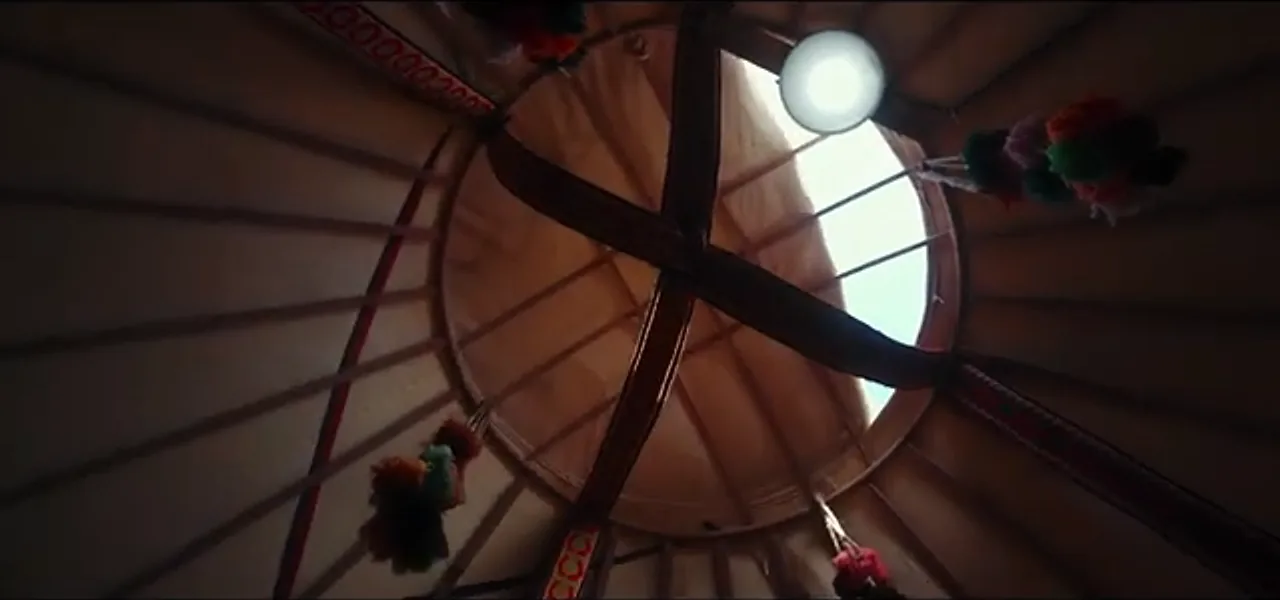
The most beautiful detail is overhead: the shangyrak, the wooden crown at the top of the yurt, crossed by a wooden lattice. That cross has meaning — it represents the strong head of the family who shelters everyone beneath him — and it was also profoundly practical: set up with the door facing the sunrise, the shangyrak worked as a sundial, the nomads reading the time from the sunlight moving across it through the day.
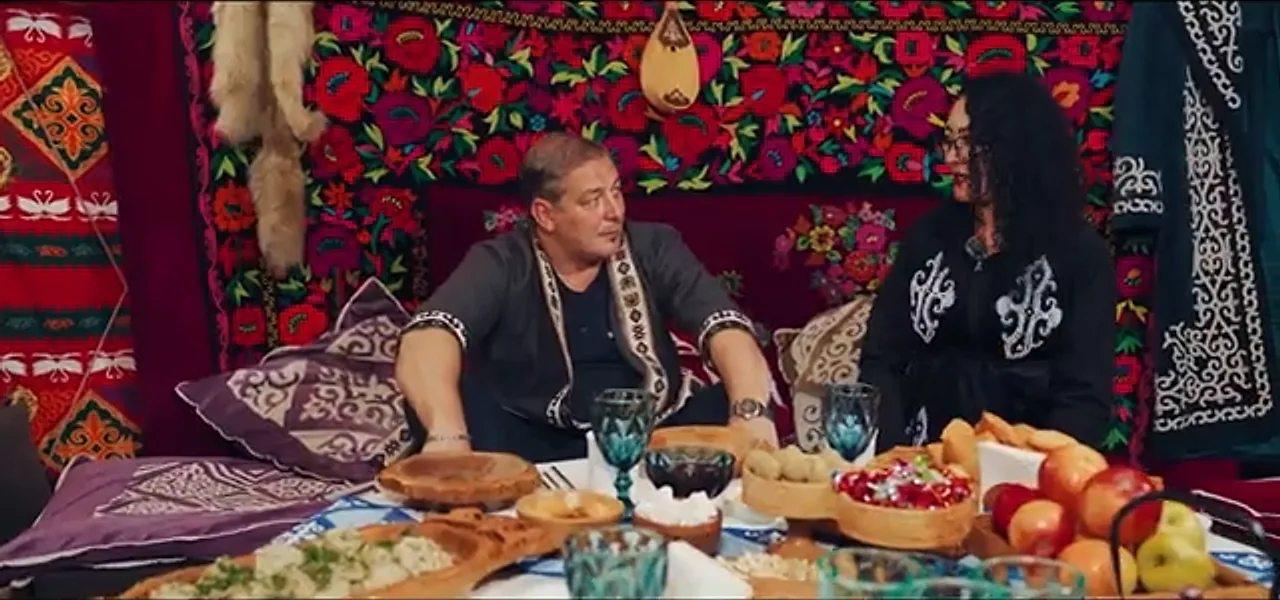
We ate a feast of homemade dumplings and nomad "energy balls" — dense little snacks of corn, wheat, butter and honey that kept nomads full through long days of travel — and a soft sweet cheese to finish. I wore a traditional Kazakh coat, and learned that the ornamentation on such clothing once worked like an ID card: a nomad could read, from the pattern alone, which region you came from, how many sheep or horses you owned, even how many children you had. Dina told me about her life and her culture late into the night, and for a few hours in that yurt I felt like a Kazakh khan.
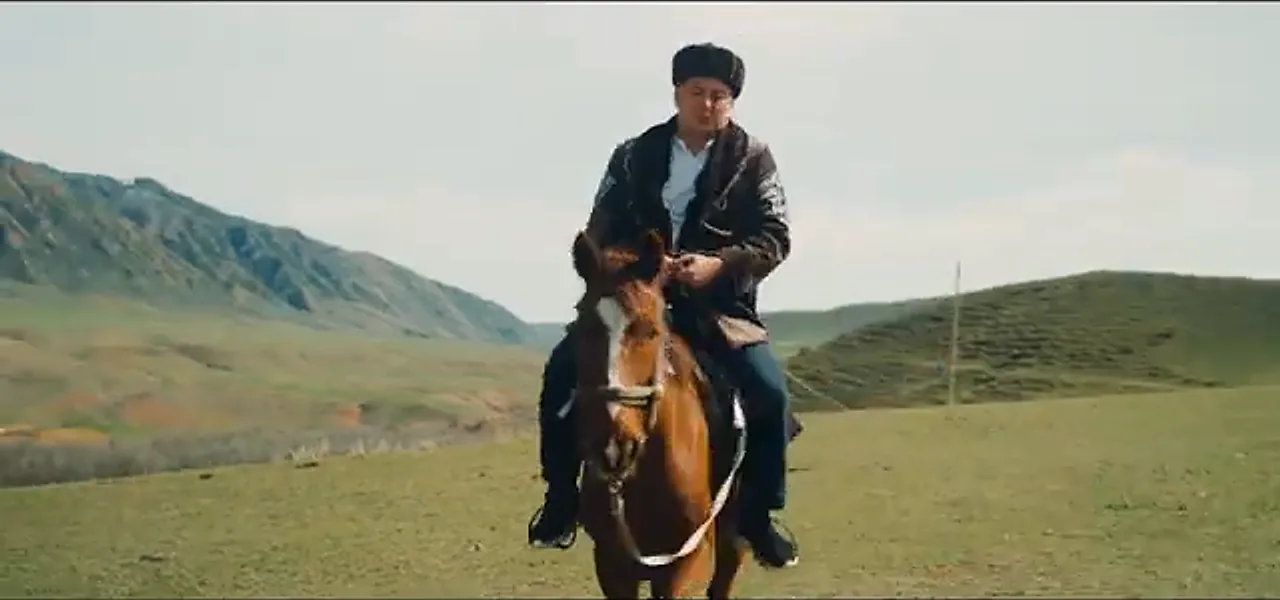
In the morning, Dina told me I'd be getting home a different way: on a horse. I thought it was a joke, right up until a man appeared on the steppe with three horses and pointed at mine. So I climbed on, and rode for hours across the countryside — mountains all around, clean air, the horse so calm I barely had to steer. We even forded a little river. It was the nomadic life, lived for real, if only for a day.
By the numbers: Kazakhstan, by the numbers
- Size
- 9th largest country · largest landlocked
- Population
- ~20 million
- Almaty
- ~2 million (former capital)
- Capital moved to Astana
- 1997
- Bayterek Tower
- 97 m platform (for 1997) · 105 m total
- Shymbulak cable car
- ~4.5 km — longest in Central Asia
- Nationalities in Almaty
- ~120
- Steppe bloom
- Only 2 months a year (April–May)
Astana: A Capital From the Future
From a felt tent on the steppe, I flew an hour and a half north to Astana — and it was like changing planets. Astana (the name simply means "capital" in Kazakh) became the country's capital in 1997, when it was moved here from Almaty, and in the decades since, it has been built almost from scratch into one of the most strikingly futuristic cities on Earth. It looks, as I put it at the time, like someone dropped a hundred wildly different cool buildings into one place — no two apartment blocks the same, all of it done with surprising taste.
What makes it genuinely remarkable is the timeline. Barely a generation ago this was a modest provincial town on a windswept northern plain; today it's a capital of glass towers, grand boulevards and bold experimental architecture that would look ambitious in any wealthy nation. The city has changed its own name more than once over the past century — part of the restless reinvention that defines modern Kazakhstan — but the ambition on display is consistent: this is a country determined to be seen as a player in the future, not a relic of the past. Standing in a yurt one night and under Norman Foster's giant tent the next, I felt the full span of that story in 48 hours.
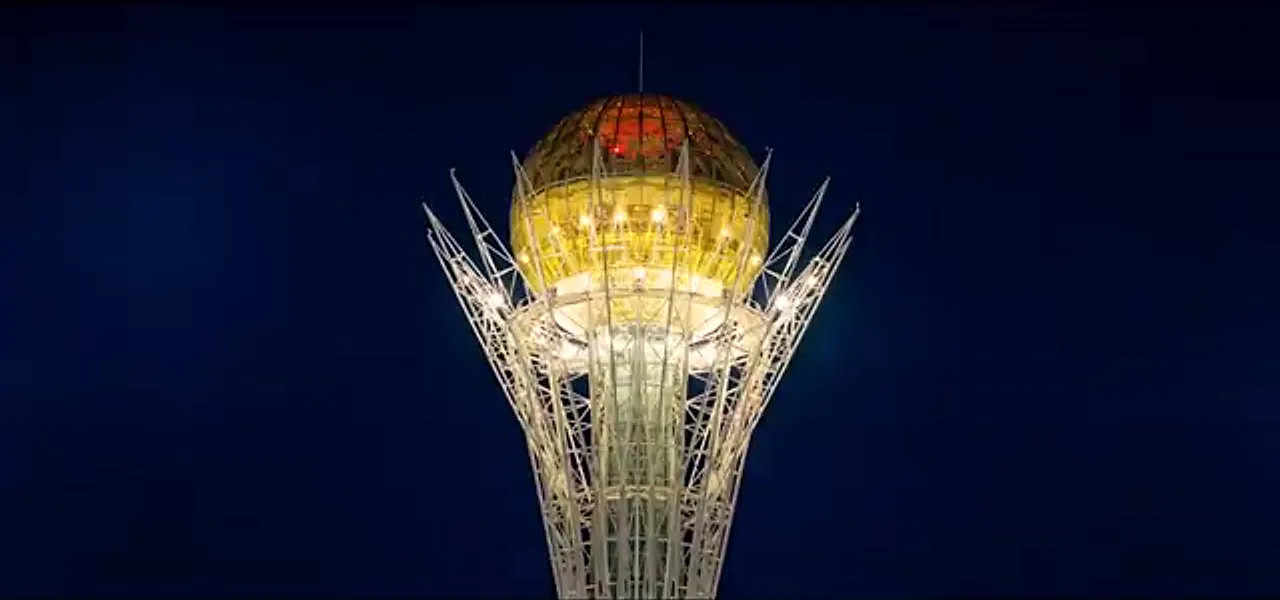
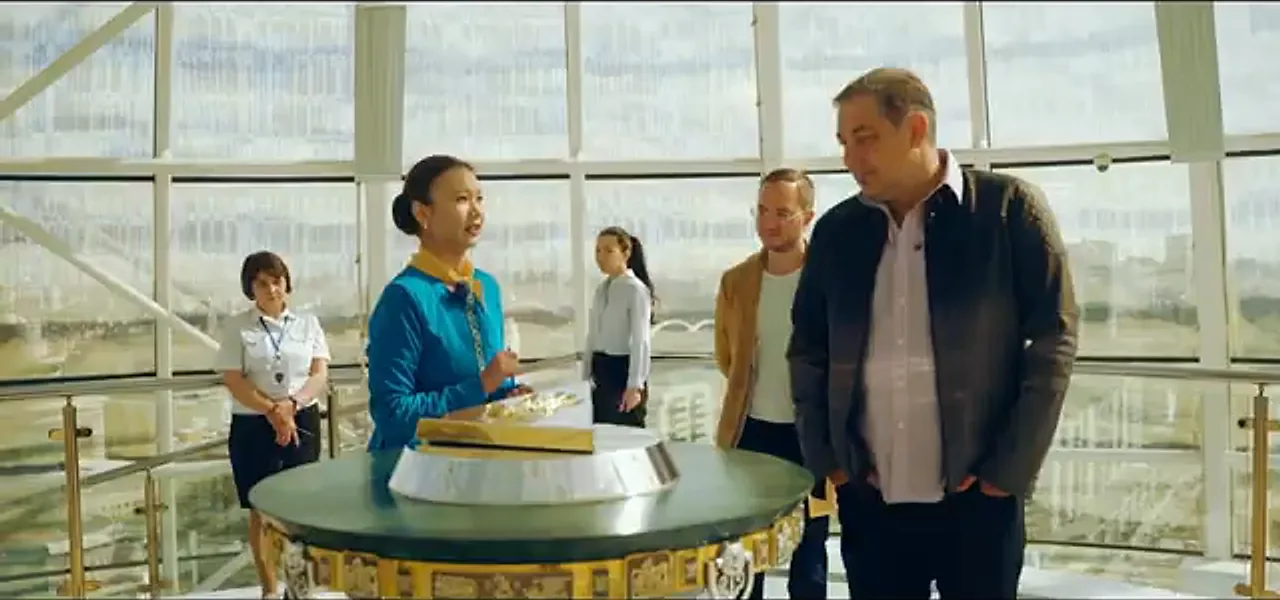
The symbol of the city is the Bayterek Tower, and it's pure Kazakh mythology made into architecture. It's shaped like the tree of life, holding at its top the golden egg of the Samruk, a mythical bird — a symbol of rebirth, standing for the capital's own rebirth here on the steppe. You ride to an observation deck set at 97 metres (for 1997, the year of the move), with the whole futuristic skyline spread out in 360 degrees.
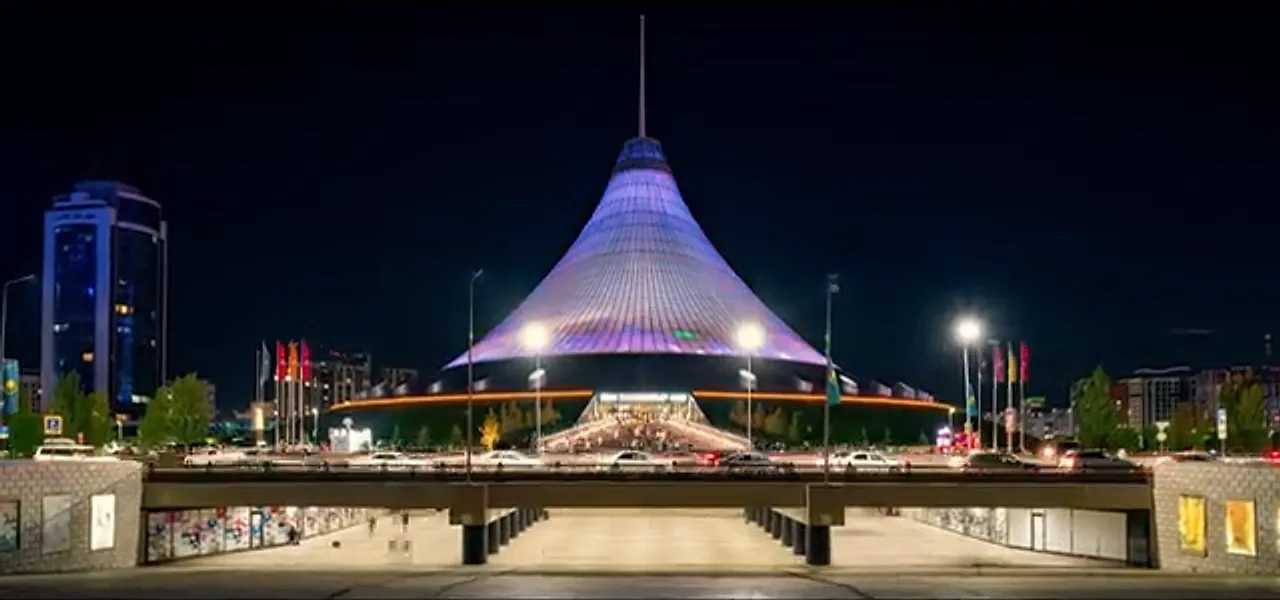
At the very top sits a golden handprint of Kazakhstan's first president. Place your palm into it and a song plays through the entire tower — a slightly surreal, very Astana moment. Nearby stands Khan Shatyr, a giant translucent tent designed by the British architect Norman Foster (it opened in 2010), which once held the record as the tallest tensile structure in the world. Inside it there's a shopping and entertainment centre — and, improbably, a beach resort with sand flown in from the Maldives, under a tent, in the middle of the Central Asian steppe.
What impressed me most, though, was the Astana Opera. I've seen a lot of opera houses, and this one is genuinely majestic. The assistant artistic director, Gohar, gave me an exclusive backstage tour — the stage itself rises, falls and revolves, and I watched dancers rehearsing both Spartacus and Don Quixote, with live horses and a donkey due on stage for the next performance. Some 900 people work at the theatre, around 600 of them artists. For a capital barely a few decades old, the depth of its investment in high culture is staggering.
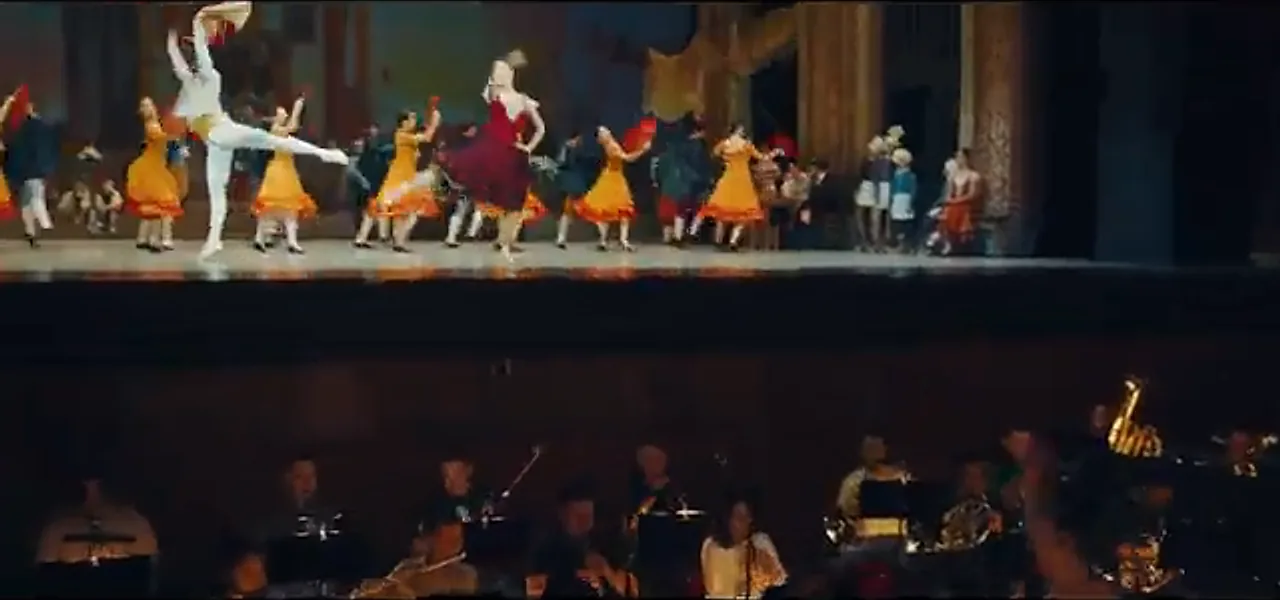
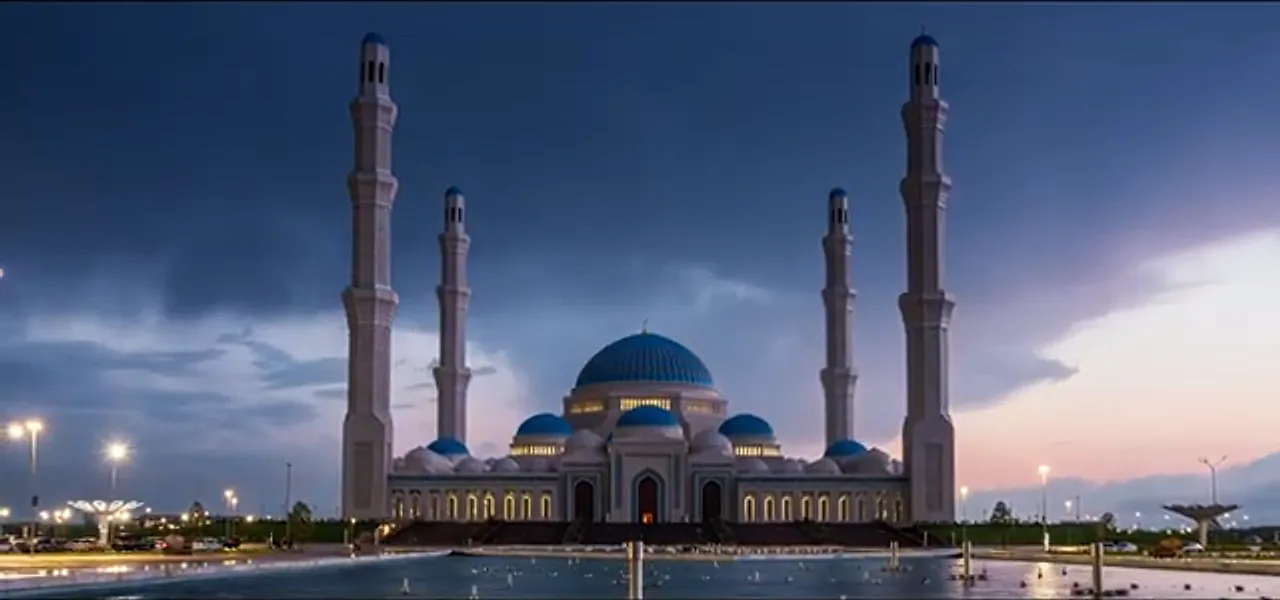
Astana also fed me as well as Almaty did — a fine-dining tasting menu at a restaurant called Eva that ran to twenty appetisers and ended with grape-juice bonbons wrapped in white chocolate that genuinely exploded in the mouth, one of the best things I ate in the whole country. And late in the day, I found myself watching a mosque glow against the dusk, a reminder of the quiet balance this place keeps: a Muslim-majority country that wears its faith lightly and its tolerance proudly, with those 120 nationalities of Almaty living easily side by side.
What Kazakhstan Taught Me
I arrived in Kazakhstan knowing nothing and carrying, whether I admitted it or not, the same lazy image everyone else does. I left convinced it's one of the world's best-kept secrets. In a single trip I ate better than I have in most Michelin restaurants, skied beside a two-million-person city, stood in a 30-million-year-old canyon, slept like a nomad in a felt tent, rode a horse across a blooming steppe, and watched ballet in a space-age capital that didn't exist in its current form when I was young. The country couldn't spell its own future in middle school, I joked — and now I know it's writing one of the most interesting stories in Asia.
If you want the deepest dive into the food, Part 3 above is a whole film on why horse meat matters so much here; and the adventure stretched even further than these three episodes could hold — out into the countryside to eagle hunting and some of the strongest women I've ever met. But the heart of it is simple: come with an open mind, and this enormous, misunderstood country will out-warm, out-feed and out-surprise almost anywhere you've been.
Watch both parts of the Kazakhstan story above. If you're following the journey in order, this one picks up from the classic cars of Cuba — and from here, the dart keeps pulling me on across the map, one blindfolded throw at a time.
Explore More Travel by Dart Journeys
- Back one dart to Cuba, the throw that sent me here.
- The nomadic cousin across the steppe — yurts, horses and Genghis Khan: Mongolia.
- More of the dart's long run through Asia: Vietnam and South Korea.
- Another land of surreal rock landscapes and underground history the dart uncovered: Cappadocia.
Suggested Sources & Further Reading
To go deeper into Kazakhstan, these are some of the best authoritative resources:
- Kazakh Tourism — the country's official national tourism site.
- UNESCO — Saryarka: Steppe and Lakes of Northern Kazakhstan — the country's World Heritage steppe landscape.
- Encyclopædia Britannica — Kazakhstan — history, geography and politics.
- Encyclopædia Britannica — Almaty — the former capital and largest city.
- Encyclopædia Britannica — Astana — the planned capital on the steppe.
All facts verified September 2026.
Kazakhstan: traveler questions
Is Kazakhstan safe for travelers?+
Yes — I moved freely across Almaty, the countryside and the capital Astana and never felt at risk. Kazakhstan is a stable, welcoming country with a strong tradition of hospitality, and in cities like Almaty you'll find a modern, cosmopolitan society. As anywhere, you use normal common sense, but the warmth of the people is the thing that stands out, not any sense of danger.
Is Kazakhstan anything like the movie Borat?+
No, and that's exactly the misconception I went to correct. The 2006 film Borat was shot almost entirely outside Kazakhstan and is pure satire, but it left millions of people with a cartoon image of the country. The real Kazakhstan is a modern Central Asian nation of around 20 million people — Western-educated, multi-ethnic, Russian- and Kazakh-speaking — with world-class food, futuristic cities and deep nomadic roots. Many Kazakhs find the film genuinely insulting.
Do people really eat horse meat in Kazakhstan?+
Yes — horse is a staple, not a novelty, and it's prepared in dozens of ways: horse stew, horse tartar, and cuts like kazy (smoked horse sausage) served in the national dish beshbarmak. Kazakhs also drink kumis, lightly fermented mare's milk. To a nomadic culture that lived alongside horses for millennia, it's simply another meat — and, having tried it many times, I found it genuinely delicious.
What's the difference between Almaty and Astana?+
Almaty is the largest city and the former capital — green, mountain-ringed, cultured and the country's commercial and culinary heart. Astana (the current capital since 1997) is a planned, futuristic city on the northern steppe, full of bold modern architecture like the Bayterek Tower and Norman Foster's Khan Shatyr. Almaty feels historic and relaxed; Astana feels like a city built for the future, almost overnight.
When is the best time to visit Kazakhstan?+
Late spring (April–May) is magical — the steppe bursts into bloom for just two months, and I happened to arrive right in the middle of it. Summer is warm and good for the mountains and canyons; winter is cold but brings excellent skiing at resorts like Shymbulak, right above Almaty. For the full contrast of green steppe and snowy peaks, spring is hard to beat.