Season 4 · Episode 6
Finland & Lapland
Northern Lights, the midnight sun, sauna culture, Santa Claus, the Sámi people and Europe's forgotten gold rush — from someone who threw a dart at the map and actually went.
On this page ▾
A 2-episode adventure — both films are on this page.
By Sorin Mihailovici · Travel by Dart · Last updated July 2026 · ~16 min read
I don't choose where I travel. I stand in front of a world map, throw a dart blindfolded, and go wherever it lands. That is the entire premise of Travel by Dart, and it is how I ended up standing in Finland — a country I had somehow never visited, despite two trips to Norway, two to Sweden, and one to Denmark. The dart, thrown in front of a castle in Germany, made the decision for me. It could not have chosen better.
What follows isn't a travel diary. It's the article I wish I'd had before I arrived: a complete, fact-checked guide to Finland and its Arctic north, Lapland — the history, the science, the culture, and the quiet philosophy that makes this the happiest nation on Earth. I'll bring you along for the moments that mattered, but the goal is to teach you something, whether or not you ever watch the film.
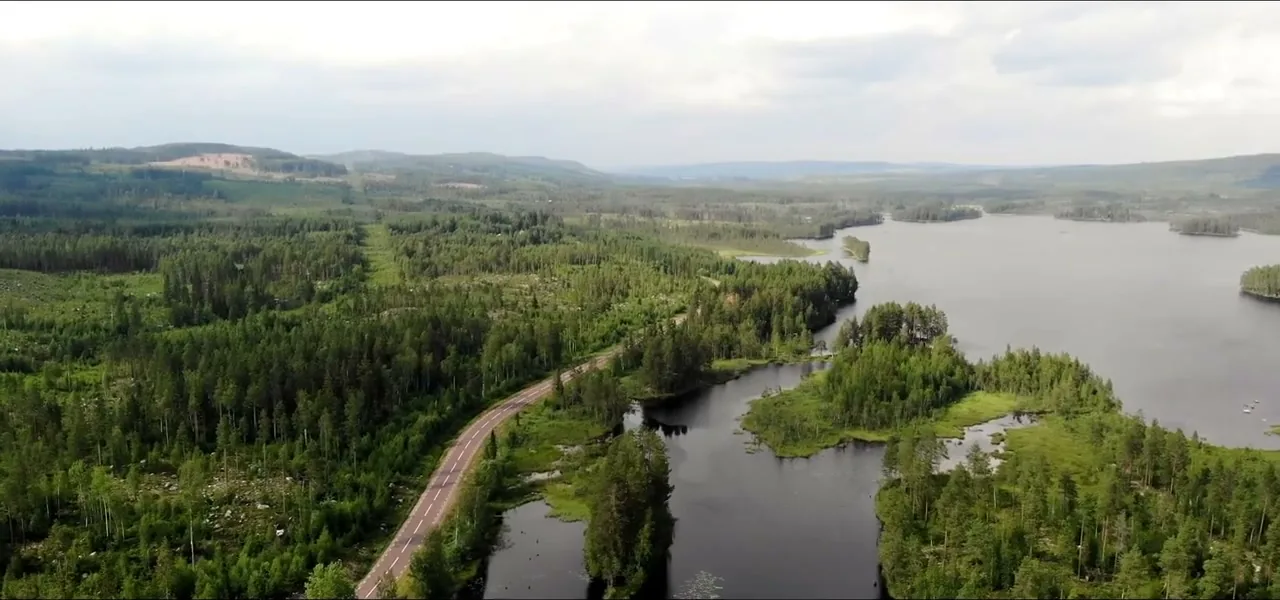
Because Finland gave me so much, I split the journey into two films. Part 1 is above; Part 2 — Santa, the reindeer, the Sámi and the far north — is embedded just below.
▶ Finland — Part 2
Santa Claus, the Sámi and the Arctic north
Quick facts: Finland at a glance
- Official name
- Republic of Finland (Suomi)
- Capital
- Helsinki (~660,000)
- Population
- ~5.6 million
- Languages
- Finnish & Swedish; Sámi recognized
- Currency
- Euro (€)
- Lakes
- ~188,000
- Saunas
- ~3.3 million (more than cars)
- Happiness ranking
- #1 in the world, 8 years running
- Best time to visit
- Jun–Jul (midnight sun); Aug–Mar (aurora)
Why Finland Is the Happiest Country in the World
For eight consecutive years — every year since 2018 — Finland has been ranked the happiest country on the planet by the World Happiness Report, published in partnership with Gallup and the University of Oxford. In the 2025 edition, Finns scored an average of 7.74 out of 10, ahead of Denmark, Iceland, Sweden and the Netherlands. The rankings weigh six factors: income, healthy life expectancy, social support, freedom, generosity, and freedom from corruption.
Here's the twist that surprises visitors: Finnish happiness is not loud. It isn't sunshine and grinning strangers. It's closer to contentment — a deep-rooted trust in society, in institutions, and in nature. Finns even have a word, sisu, for the stoic, quiet resilience that carries a person through a long, dark winter. When the dart landed here, I assumed "happiest country" meant something festive. It actually means something sturdier.
By the numbers: Finland
- Population
- ~5.6 million
- Forest coverage
- ~75% (Europe's most forested)
- Lakes
- ~188,000
- Islands
- ~179,000
- National parks
- 41
- UNESCO World Heritage Sites
- 7
- Saunas
- ~3.3 million
- Reindeer
- ~200,000
- Coffee consumption
- Highest per capita on Earth
- Tap water & air
- Among the world's cleanest
Sauna: The Beating Heart of Finnish Culture
If you want to understand Finland, start in a sauna. With a population of roughly 5.6 million and an estimated two to three million saunas, this is a country with more places to sweat than to park. Finns sauna in apartments, cottages, offices, even inside the parliament building. One local told me, without irony, that he personally owns three.
In December 2020, UNESCO added Finnish sauna culture to its list of Intangible Cultural Heritage of Humanity — the first Finnish tradition ever inscribed. UNESCO described the sauna as a space for physical and mental cleansing, and traditionally a near-sacred one. The steam itself has a name: löyly, created by throwing water onto stones heated on a wood-burning stove. Finns call it the spirit of the sauna.
The sauna wasn't always about relaxation. Because it was the cleanest, most sterile room a household had, it was historically where women gave birth and where the dead were washed before burial. When Finnish pioneers cleared new farmland, they often built the savusauna ("smoke sauna") first and lived inside it while the farmhouse went up. The sauna, quite literally, came before the home.
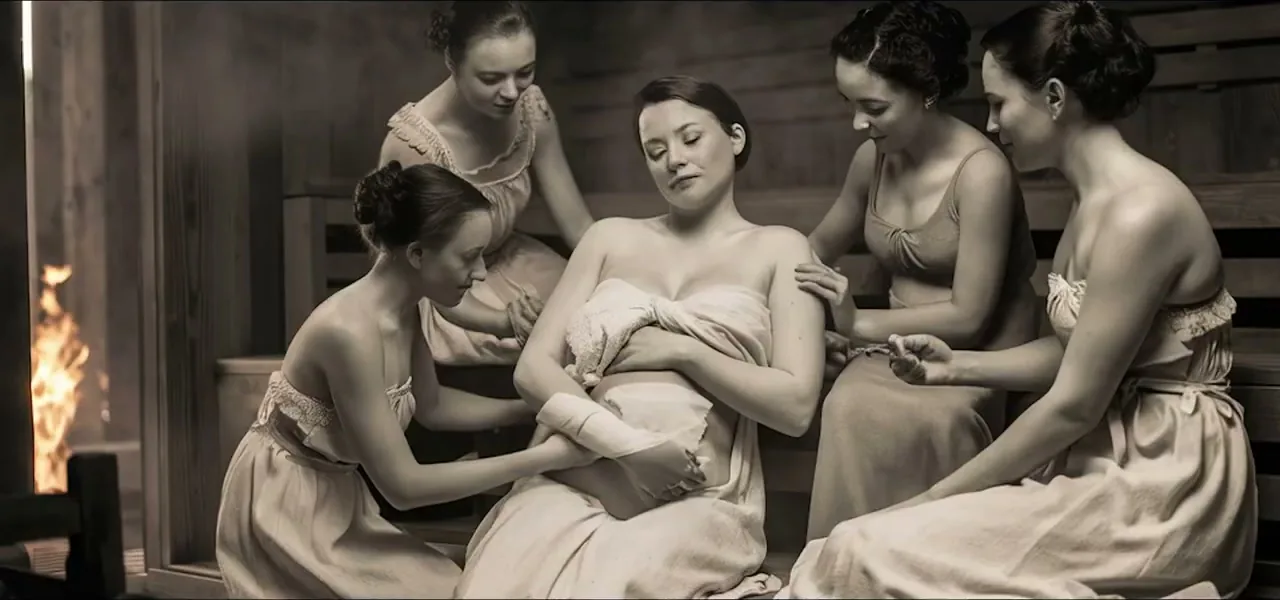
In the old days, people gave birth in the sauna, and when they died, they were taken back to the sauna and washed. It's basically part of our whole life — the most essential part of our culture.
I made it a personal rule to sauna every night I was in Finland — a wood-fired one by a lake, a smoke sauna that clung to my skin for hours, even a floating sauna. The ritual is simple and non-negotiable: heat until you can't stand it, plunge into the freezing lake, then repeat. It is, as the Finns say, good to sweat for the right reasons.
Sauna facts
The Northern Lights: The Science of the Aurora Borealis
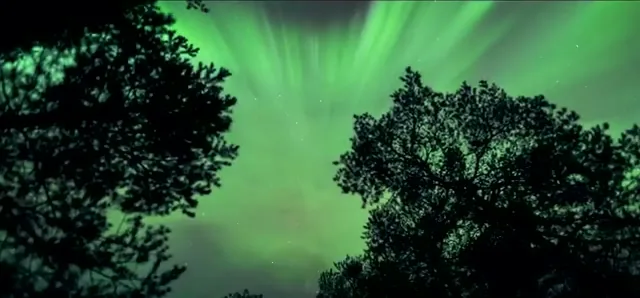
The Aurora Borealis — the Northern Lights — is arguably Lapland's most famous spectacle, and at Rovaniemi's Arktikum science museum I finally understood the physics I'd wondered about my whole life. The lights are the visible product of a collision between our planet and the Sun.
The Sun constantly hurls out charged particles known as the solar wind. When they reach Earth, most are deflected, but near the poles they are funneled down along the planet's magnetic field lines into the upper atmosphere. There they collide with gas atoms — principally oxygen and nitrogen — and the energy of those collisions is released as light. Oxygen glows green and deep red; nitrogen produces blues and violets. Because the phenomenon is anchored to the magnetic poles, you only ever see it near the top or the bottom of the globe: aurora borealis in the north, aurora australis in the south.
The Midnight Sun and the Polar Night
Lapland is magical in winter for the aurora, but it has an equal and opposite wonder in summer: the midnight sun. Because the Arctic Circle sits at roughly 66°33ʹ north, everything above it experiences at least one day a year when the sun never sets. In Rovaniemi, the capital of Finnish Lapland, the sun stays above the horizon continuously from about June 6 to July 7 — a full month of 24-hour daylight.
The effect on the body is strange and wonderful. At 3 a.m. it is still bright, and you simply don't feel tired. I went midnight kayaking on Lake Olkka, launching around 9 p.m. and gliding across mirror-flat water past midnight in full daylight. I could have paddled all night. Locals describe the same thing — a seasonal surge of energy after months of darkness.
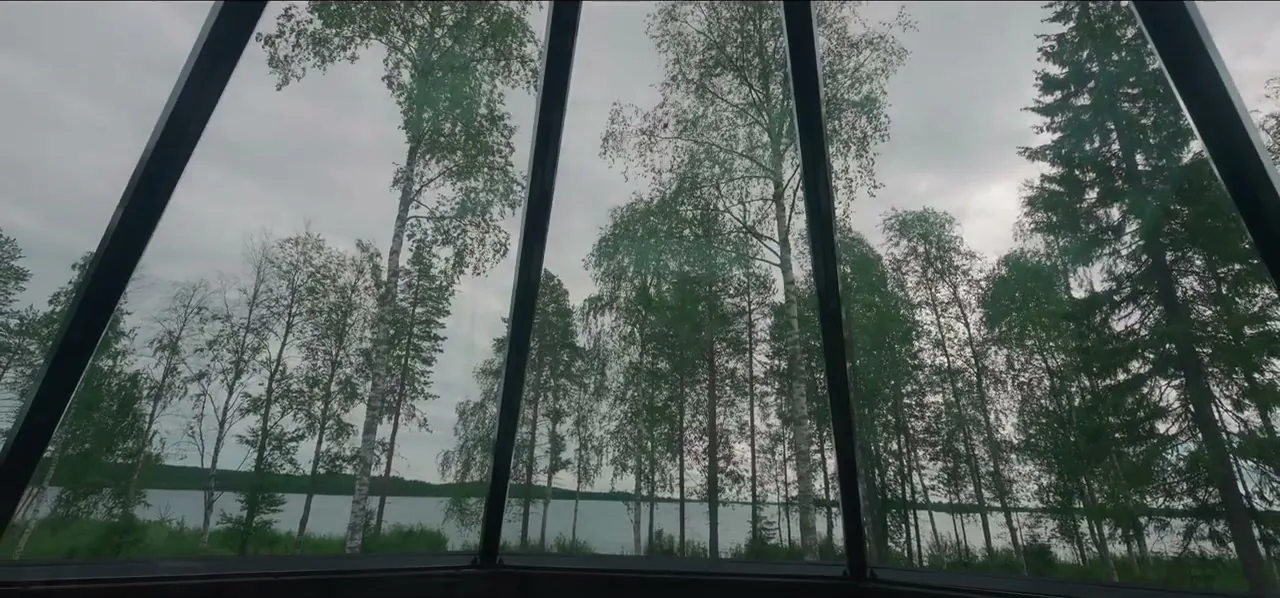
The light is so strong you don't want to go to sleep. You just want to live and have fun and talk with friends and dance. That's the part of the year when Finnish people are alive.
The trade-off arrives in December. The polar night — kaamos in Finnish — is the mirror of the midnight sun: in Rovaniemi the sun stays below the horizon from about December 6 to January 7. It isn't pitch black; it's a long, blue, dreamlike twilight. This dramatic swing between endless light and endless dusk shapes everything about life in the north, from mood to mythology.
By the numbers: Midnight sun & polar night
- Longest daylight in far north
- 70+ consecutive days without sunset
- Polar night (kaamos) in far north
- Up to 51 days without sunrise
- Best months for the midnight sun
- Late May to late July
- Best months for the Northern Lights
- September to March
Rovaniemi: The City Shaped Like a Reindeer
Most visitors treat Rovaniemi as the gateway to Lapland — the place you fly into (about 90 minutes from Helsinki) before the real adventure begins. But the town of roughly 60,000 hides one of the most remarkable urban-design stories in Europe, and it starts with tragedy.
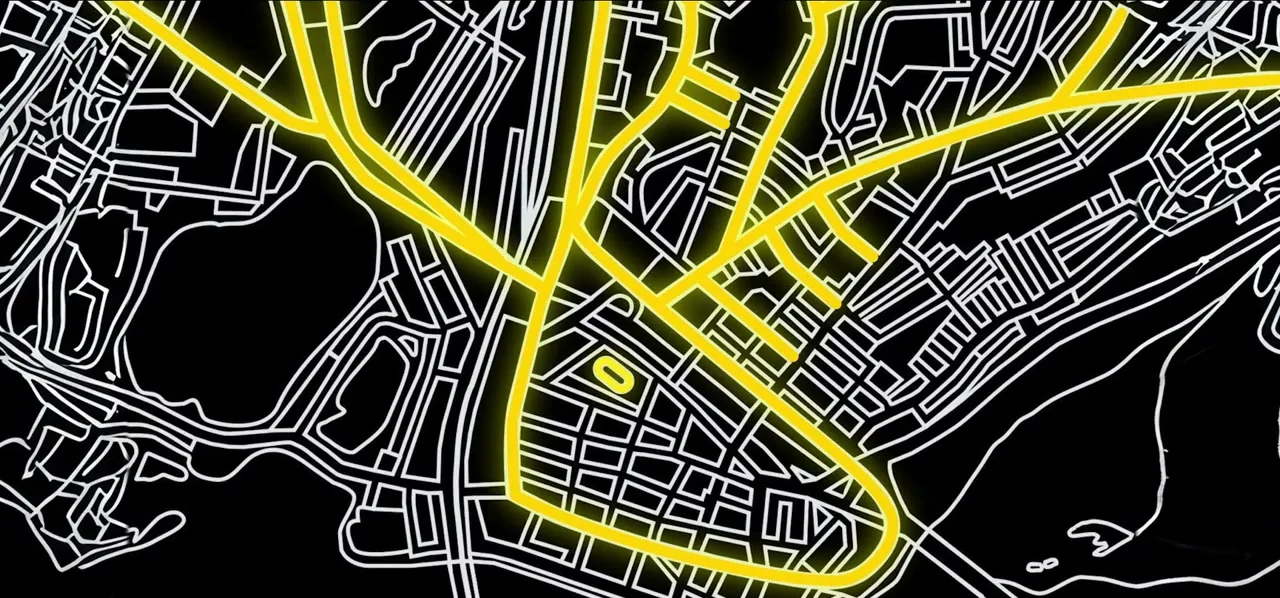
During the Lapland War of 1944, retreating German forces used scorched-earth tactics and destroyed roughly 90% of Rovaniemi. When it came time to rebuild, Finland turned to its most famous architect, Alvar Aalto. His 1946 master plan for the ruined town is called the Poronsarvikaava — the "Reindeer Antler Plan." Seen from above, Rovaniemi's main arterial roads trace the shape of a reindeer's head and antlers, and the eye of the reindeer is the Keskuskenttä sports stadium. An entire city was rebuilt in the silhouette of the animal that defines the region.
Meeting Santa Claus: Inside the World's Most Famous Village
Say "Lapland" and you say "Santa Claus." According to Finnish tradition, the man himself lives here, and just outside Rovaniemi sits Santa Claus Village — a complex of shops, cafés, a post office, and, crucially, the marked line of the Arctic Circle running straight through it, about 8 kilometres north of the city centre. Local lore says the more times you cross the line, the younger your soul becomes. I crossed it several times, purely as a wellness strategy.
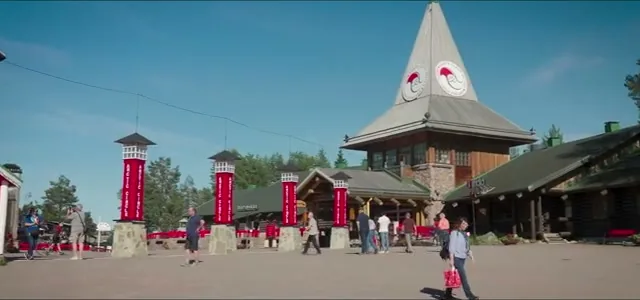
The most staggering statistic in the village lives at Santa's main post office. An elf told me the number and I made her repeat it: Santa receives roughly half a million letters every year, sent from more than 190 countries. What surprised me most was who writes them. Many are not from small children but from young adults, aged 15 to 25. I was allowed to read a few, and they were not wish lists. They were confessions — people writing about loneliness, lost confidence, the search for a job, the need to believe their choices hadn't been wrong. They were, as the elf put it, "lives in letter form."
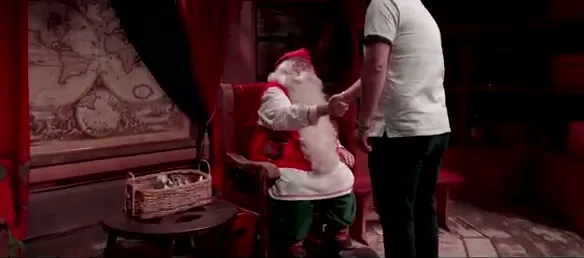
When people are having happy thoughts, that brings me the magic of Christmas. And you can have happy thoughts — and that helps me.
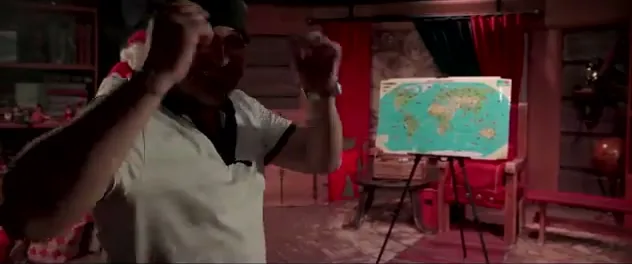
Because I was in Santa's own country, I did something no other episode of the show has done: I let Santa Claus throw the dart to choose my next destination. He threw for me (blindfolded, as the rules demand) and landed on Cape Verde, in the middle of the Atlantic. I threw as well, and hit Palau in the Pacific. Two darts, two islands most people have never heard of — which is exactly the point of the show.
Europe's Forgotten Gold Rush: Panning in Lapland
Long before it was famous for Santa, Lapland had gold fever. In September 1868, gold was discovered in the Ivalojoki river in the municipality of Inari, and by the following summer prospectors were pulling kilos of it from the gravel. It sparked Finland's first gold rush — an Arctic version of the American West, complete with fortune-seekers trekking into the wilderness to find their luck. The find was so significant that the government drew up a special gold-mining law, approved by Tsar Alexander II in 1870.
You can still pan for gold here, and I did — both at the Apukka resort and, for the history, at Tankavaara, home to the only international gold-prospecting museum in the world. The technique is beautifully simple. As my guide Perttu explained, it comes down to three things: running water, gravity, and the weight of gold itself. Gold is roughly seven times heavier than the surrounding gravel and sand, so as water washes the lighter material away in a sluice box, the gold sinks and stays behind. Nature does the sorting for you.
- The sluice box: gravel is shovelled in and running water flushes the lighter soil away, trapping heavy gold flakes behind small ridges called riffles.
- The pan: prospectors then hand-pan the leftovers — submerging, shaking and rolling the pan so the last of the sand spills over the edge and the gold rolls into view.
- The reward: my haul was worth about 15 cents. As I told Perttu, if I ever become a musician, I'll go by the name "15 Cent."
By the numbers: Lapland gold rush
- First gold found (Ivalojoki river)
- 1868
- Special gold-mining law approved
- 1870
- Only international gold museum on Earth
- Tankavaara
- Largest nugget ever found (Welcome Stranger)
- ~72 kg net
The Sámi: Europe's Only Recognized Indigenous People
The most moving part of my time in Finland had nothing to do with Santa or the Northern Lights. It was in Inari, the far north, learning the story of the Sámi — the only Indigenous people officially recognized within the European Union. As a museum guide named Taija explained, the Sámi live across four countries — Finland, Norway, Sweden and Russia — but consider themselves one nation, with one flag, one national day, and a homeland they call Sápmi.
Four different countries, but one people. As far as we know, the Sámi have always lived in these lands.
They are not newcomers. The earliest signs of settlement around Lake Inari date back more than 8,000 years. Yet, like many Indigenous peoples, the Sámi have endured generations of forced assimilation. In the 1940s and 50s, Sámi children were sent to Finnish-only boarding schools where they were forbidden from speaking their native language — and, as Taija described, beaten if they were caught doing so. Entire families lost their language within a single generation.
The turning point came in the late 1960s and 70s, when a new generation said enough is enough and launched a cultural revival — reclaiming the Sámi language, dress, the haunting vocal tradition called joik, and political rights. Today the Sámi have their own parliaments in Finland, Norway and Sweden. But the wounds are not fully healed: Taija spoke candidly about how suicide rates among young Sámi men can run close to double the national average, often tied to the collapse of a way of life — reindeer herding — that many were raised to believe was their only future.
About 20 kilometres from Inari lies a small, sacred island on the lake called Ukko ("The Old Man"), protected by the Finnish state. Centuries ago it was one of the Sámi's most important sacred sites, a place of ceremonies and offerings believed to be inhabited by the spirits of ancestors. Its status was so sacred that historically only shamans and chosen individuals were permitted to set foot on it.
By the numbers: The Sámi
- Sámi population worldwide
- 80,000–100,000
- Sámi living in Finland
- ~10,000
- Recognized Sámi languages
- 9
- Countries comprising Sápmi
- 4 (Finland, Norway, Sweden, Russia)
- Finnish Sámi Parliament established
- 1996
Reindeer: The Animal That Built Lapland
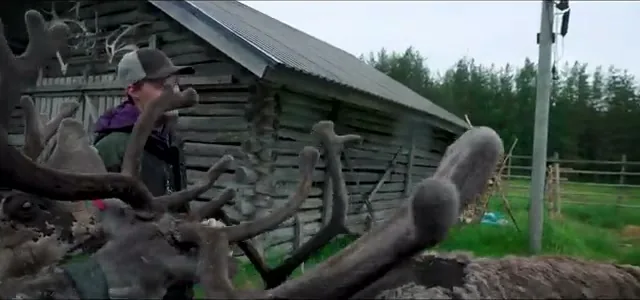
You cannot separate Lapland from the reindeer. They shape the economy, the cuisine, the Sámi identity, and — as we've seen — even the street map of Rovaniemi. At a reindeer farm I met Juho, an 18-year-old born into a herding family, who explained the biology I'd always been curious about.
Reindeer grow and shed a new set of antlers every single year. Through summer the antlers grow for four to six months, nourished by a velvet blood supply; once they stop growing, the blood flow ceases, the antlers dry out, and at some point in winter the animal simply drops them and starts again. Unusually among deer, both males and females grow antlers — one reason reindeer are so distinctive.
Huskies and the Sled-Dog Tradition
Reindeer aren't Lapland's only working animals. At a husky farm I met Timo, a musher (the term for a sled-dog driver) with over a decade of racing experience. In summer his kennel holds around 50 dogs; in winter, when the safaris run, that number swells to 180. A team of eight huskies, he told me, can pull an all-terrain vehicle weighing close to 600 kilograms. These are not pets so much as elite Arctic athletes — and they have the energy to prove it. I have never been licked so enthusiastically in my life.
Husky facts
Helsinki: A Sea Fortress and a Church Carved from Rock
Finland's capital is calmer and quieter than most European capitals, but it holds two landmarks worth the trip. The first is Suomenlinna, a sprawling sea fortress across six islands, a 15-minute ferry ride from the market square and a UNESCO World Heritage Site since 1991.
Suomenlinna's history is a lesson in shifting borders. Construction began in 1748, when this land belonged to Sweden, which built the fortress to hold back the expanding Russian Empire. It didn't work: Sweden lost the war, and Russia took both the fortress and Finland with it. Only when Finland won independence in 1917 did the fortress become Finnish, renamed Suomenlinna — "the Fortress of Finland." Remarkably, it isn't a museum piece: roughly 800 people live on the islands today, with children going to school there, and it even contains a working prison.
The second landmark is Temppeliaukio, better known as the Rock Church. Completed in 1969 and designed by the architect brothers Timo and Tuomo Suomalainen, it was excavated directly into solid bedrock. Its interior walls are raw, unworked stone, capped by a stunning dome lined with 22 kilometres of coiled copper and ringed by 180 skylights. Those rough rock surfaces give the church extraordinary natural acoustics, making it one of Helsinki's most sought-after concert venues — while still functioning as an active Lutheran church for weddings and baptisms.
Weird and Wonderful: The Championships Only Finland Could Invent
Finnish happiness has a gloriously eccentric side. This is a nation that has turned the absurd into organized sport, and the results are world championships you have to see to believe.
- Wife Carrying World Championship: held every year since 1992 in Sonkajärvi, competitors race through an obstacle course — water hazard included — while carrying a partner. The traditional prize is the "wife's" weight in beer. The sport is said to trace back to a 19th-century robber who tested recruits by making them haul sacks (or people) over rough terrain.
- Mobile Phone Throwing World Championship: born in Savonlinna, this contest rewards hurling an old phone as far (or as stylishly) as possible — originally conceived to encourage recycling of dead phones instead of tossing them into Finland's many lakes.
- Heavy Metal Knitting: yes, competitors knit on stage to blistering metal — fitting for a country with the world's highest density of metal bands.
Not every Finnish innovation is a joke, though. Consider the baby box. Since 1938, the Finnish state (via the social-insurance agency, Kela) has given every expectant family a cardboard box filled with about 50 baby essentials — clothes, bedding, a towel, a book, even a small mattress. The box itself doubles as the baby's first bed. It began as a public-health measure to cut one of the world's highest infant-mortality rates, and it worked so well it's now been copied around the globe.
Living Off the Land: Finnish Wilderness Skills
Finns don't just admire nature; they know how to survive in it. In the far north I spent a half-day with Jonas, a young outdoorsman who has been cooking over open fire since he was six or seven. He introduced me to packrafting — traveling with a lightweight inflatable raft small enough to carry in a backpack, which has quietly revolutionized wilderness travel.
If I see a lake — okay, no need to go around it. I can just fill up my trusty old packraft and go across.
Over a few hours he taught me the core skills of the northern woods: how to fillet a fish cleanly with a single confident cut behind the fins; how to start a fire without matches using birch-bark shavings and a fire steel (his rule: gather far more tinder than you think you need, then gather a little more); and how to turn a fresh-caught perch into a hot lakeside soup. It was, in his words, heaven in a bowl — and a reminder that Finnish self-sufficiency is a living skill, not a museum exhibit.
When to Visit Finland: A Practical Guide
The right time to visit Finland depends entirely on which natural wonder you're chasing — and Lapland offers two opposite ones.
- For the Northern Lights: late August through early April, when nights are dark. September–March offers the best odds under clear, cold skies away from light pollution.
- For the midnight sun: June and July, when the sun never sets above the Arctic Circle — ideal for kayaking, hiking and endless-daylight adventures.
- For Santa and snow: December, when Rovaniemi becomes a winter wonderland (and the polar night wraps the region in blue twilight).
- For fewer crowds and mild weather: late summer, when the forests turn golden in the phenomenon Finns call ruska.
Twenty Things That Surprised Me About Finland
- Finland has more than 188,000 lakes, not just "a thousand."
- About 75% of the country is forest, making it Europe's most forested nation.
- Finns drink more coffee per person than anyone else on Earth.
- There are roughly 3.3 million saunas for just 5.6 million people.
- Gold prospecting is still legal in parts of Lapland.
- The Northern Lights are visible on roughly 200 nights a year in the far north, weather permitting.
- The midnight sun can remain above the horizon for more than 70 consecutive days.
- Both male and female reindeer grow antlers.
- Helsinki became Finland's capital only in 1812.
- The Rock Church is carved directly into solid granite.
- Santa Claus officially receives letters from more than 190 countries.
- Finland has one of the world's strongest passports.
- Children begin formal schooling later than in many countries, yet Finnish students consistently rank among the world's best.
- Air guitar has its own World Championship — held in Oulu.
- Wife carrying is an internationally recognized sporting event.
- Mobile phone throwing is also a real competition. (Apparently old Nokias had to go somewhere.)
- Finland consistently ranks among the world's least corrupt nations.
- Silence is considered perfectly normal in conversation.
- Tap water is so clean that bottled water often feels unnecessary.
- Happiness here isn't loud — it quietly shows up in everyday life.
Why Finland Stays With You
Finland exceeded every expectation I had when that dart landed on it. But the thing I keep returning to isn't a single landmark — it's a philosophy. The sauna that erases rank. The trust that makes a whole society function. The Sámi fighting to keep a language alive. The reindeer released each spring and gathered each autumn. A city rebuilt from ashes in the shape of the animal that sustains it. Even Santa, insisting that the magic is simply people choosing to have happy thoughts.
Put together, they explain why this quiet country at the top of the world keeps being named the happiest on Earth. Happiness here isn't a mood — it's an infrastructure, built from equality, nature, and trust. From Finland the dart sent me onward to Cape Verde and Palau, but I left with friendships I expect to keep for life, and the sense that I'd understood something about how to live well. That, more than any photograph, is what a good journey is supposed to give you.
Explore More Travel by Dart Journeys
- Watch my Cape Verde documentary — the island Santa's dart chose for me.
- Read about the German castle where this whole Finland journey began.
- See my Ecuador episode at Latitude Zero, the middle of the world.
- Explore my Bolivia story on Cholita wrestling and the Cerro Rico silver mine.
Suggested Sources & Further Reading
To complement your journey through Finland, these are some of the best authoritative resources:
- Visit Finland — official tourism information, destinations and seasonal travel guides.
- Statistics Finland — population, economy and demographic data.
- UNESCO World Heritage Centre — information on Suomenlinna and Finland's other UNESCO sites.
- World Happiness Report — annual rankings and the methodology behind Finland's top position.
- Finnish Meteorological Institute — Northern Lights forecasts, climate and weather information.
- NASA — scientific explanations of the Aurora Borealis.
- Siida – Sámi Museum and Nature Centre — history, culture and traditions of the Sámi people.
- Finnish Heritage Agency — historical sites, museums and cultural heritage.
All facts verified July 2026.
Finland: traveler questions
Why is Finland the happiest country in the world?+
Finland has topped the World Happiness Report for eight consecutive years (2018–2025). Researchers attribute this not to wealth but to high social trust, strong public services, low corruption, income equality, and a deep connection to nature. Finns broadly trust that their institutions — and their neighbours — will do the right thing.
Where is Lapland and what is it known for?+
Lapland is the northernmost region of Finland, largely within the Arctic Circle. It is famous for the Northern Lights, the midnight sun, Santa Claus Village near Rovaniemi, reindeer herding, and as the homeland of the Indigenous Sámi people.
When can you see the Northern Lights in Finland?+
Roughly late August to early April, when the nights are dark enough. The lights occur year-round but are invisible during Lapland's summer midnight sun. Clear, cold, dark skies offer the best viewing.
What is the midnight sun?+
Above the Arctic Circle (about 66.5°N), the sun does not set for a period each summer. In Rovaniemi this lasts from about June 6 to July 7 — 24-hour daylight for a full month.
Who are the Sámi people?+
The Sámi are the only Indigenous people officially recognized within the European Union. They have lived across northern Finland, Norway, Sweden and Russia for thousands of years, traditionally practising reindeer herding, fishing and craft. They consider themselves one nation, Sápmi, across four countries.
Why is sauna so important in Finland?+
Sauna is central to Finnish identity and was added to UNESCO's Intangible Cultural Heritage list in 2020. With an estimated 2–3 million saunas for 5.6 million people, it functions as a great social equalizer — a space where everyone, regardless of status, is equal.
Does Santa Claus really live in Finland?+
By Finnish tradition, yes — in Lapland. Santa Claus Village near Rovaniemi sits right on the Arctic Circle and receives around half a million letters a year from over 190 countries, and you can meet Santa there year-round.
Is Finland expensive to visit?+
Finland is a high-income Nordic country, so prices for food, lodging and activities are comparable to other Western European nations. Lapland experiences (husky safaris, glass igloos, guided tours) sit at the premium end, but public transport, tap water and nature access are excellent value.