Season 3 · Episode 8
Kyoto
A thousand years of temples, gardens and quiet ritual.
On this page ▾
By Sorin Mihailovici · Travel by Dart · Last updated August 2026 · ~15 min read
Tokyo shows you where Japan is going. Kyoto shows you where it came from. After a month of neon crossings, bullet trains and sushi counters, I boarded one more train and travelled about two and a half hours southwest into the Kansai plain — and stepped, more or less, into another century. The buildings got lower. The pace got slower. Somewhere between the last skyscraper and the first temple gate, modern Japan quietly handed me over to the old one.
What follows isn't a day-by-day diary. It's the guide I wish I'd had before I arrived: a complete, fact-checked walk through Kyoto's temples, its shrines, its rituals and its most misunderstood profession — plus a day-trip to a nearby city where the deer bow back. I'll bring you along for the moments that mattered, but the goal is to leave you knowing something, whether or not you ever press play on the film.
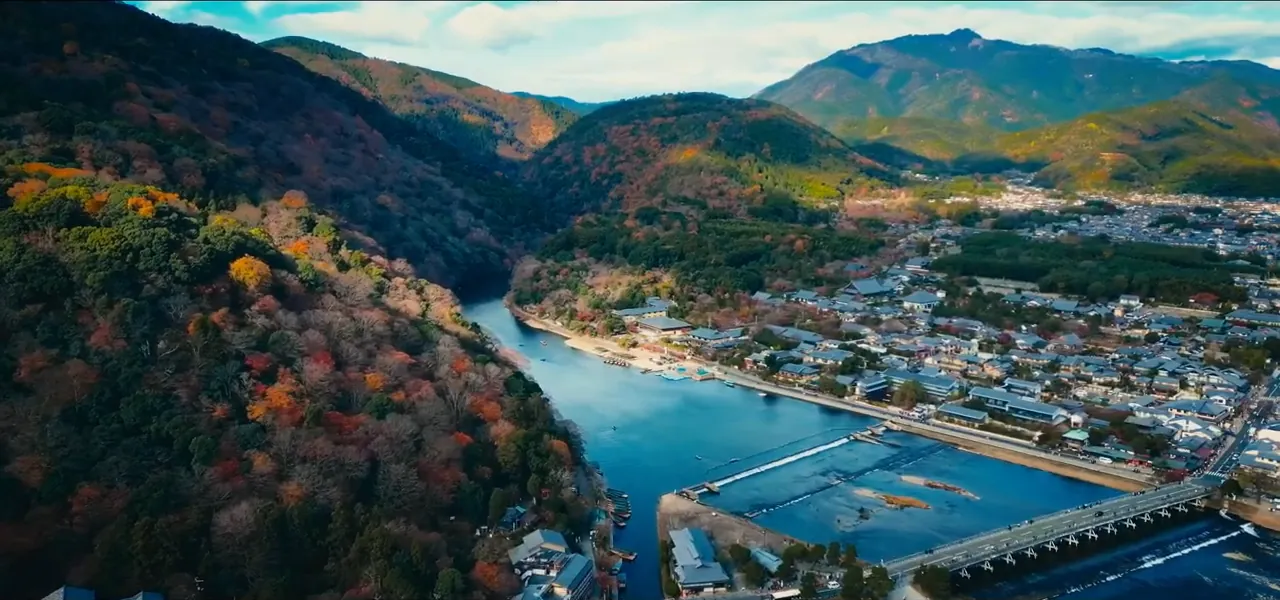
Quick facts: Kyoto at a glance
- Founded as capital
- 794 CE, as Heian-kyō
- Was capital for
- ~1,074 years, until 1868
- Region
- Kansai, central Japan
- Population
- ~1.4 million
- Buddhist temples
- ~1,600
- Shinto shrines
- ~400
- UNESCO World Heritage
- 17 sites (Historic Monuments of Ancient Kyoto)
- Prefectural symbol
- The cherry blossom (sakura)
A Thousand Years as the Heart of Japan
To understand why Kyoto feels the way it does, you have to know how long it has been important. In 794 CE, Emperor Kanmu moved the imperial court to a newly built city he called Heian-kyō — "the capital of peace and tranquillity." That name gave its era, the Heian period, to nearly four centuries of Japanese art, poetry and courtly refinement, and the city stayed the nation's imperial capital for the next thousand-plus years. It was only in 1868, with the Meiji Restoration, that the teenage Emperor Meiji left for Edo, which was renamed Tokyo — the "Eastern Capital." Kyoto had held the centre for roughly 1,074 years.
That continuity is the whole point. While capitals elsewhere burned, moved and rebuilt, Kyoto accumulated. Temples founded in the 700s still stand near tea houses from the 1700s. And then came the moment that nearly ended all of it — and, through a strange twist of history, saved it.
Because it escaped the firebombing that flattened so many Japanese cities, Kyoto kept its wooden hearts: the temples, the gardens, the narrow lanes. UNESCO recognised this in 1994, inscribing seventeen locations across the city and its neighbours as the Historic Monuments of Ancient Kyoto — several of which I'd visit on this trip.
A Week in the Pinkest Room in Japan
I wanted my base in Kyoto to feel like Kyoto, so I picked a hotel built entirely around a single idea: the cherry blossom. Pink ran through everything — the chairs, the drinks, even the staff uniforms. The couches, I was told, were upholstered in genuine kimono fabric. My room may have been the pinkest space I've ever slept in, and I mean that as a compliment; there's a reason the city leans into it. The cherry blossom, or sakura, is the symbol of Kyoto Prefecture, and each spring millions of people plan entire trips around the roughly one-week window when the trees bloom.

Dinner was its own small piece of theatre. After a month of eating Japanese food nearly every day, I thought I knew what to expect, and then a plate arrived carrying an appetizer shaped and coloured like a cherry blossom — crunchy, delicate, engineered to look as beautiful as it tasted. This is a very Kyoto idea: that presentation is not decoration but part of the meal itself, an aesthetic the Japanese call taking as much care with the eye as with the tongue. I needed the fuel. Kyoto is a walking city, and I was about to cover a lot of ground.
Into the Green Light of Arashiyama
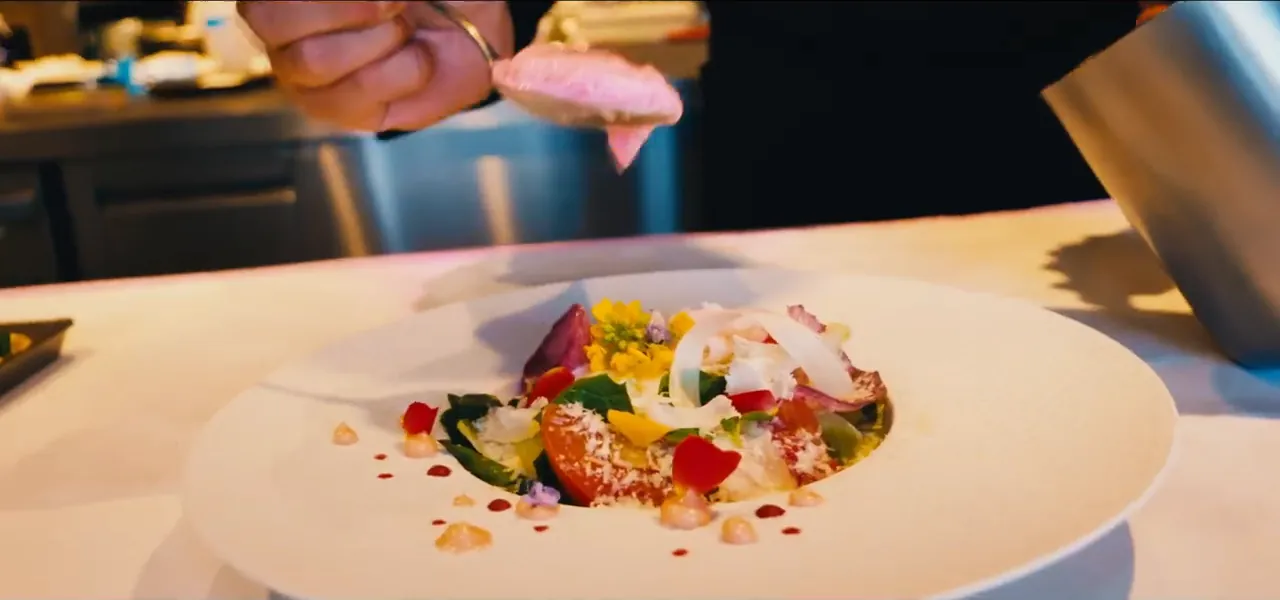
The first thing I chased was the one everyone photographs: the Arashiyama Bamboo Grove, on the western edge of the city. You step off an ordinary street and, within a few paces, the world turns green. Moso bamboo — the tall species that fills the grove — can grow well over 20 metres, and here it rises on both sides of the path until the canopy closes overhead and the sunlight filters through in shifting bands. Sound changes too; the stalks knock and creak in the wind, a rustle so distinctive that Japan officially lists it among its "100 soundscapes to be preserved."
It genuinely feels like walking onto a film set — which is partly the point. There is something engineered about the calm, a stillness the grove seems to impose on everyone who enters it. I've been to plenty of famous spots that disappoint in person. This one delivers.
Kinkaku-ji: The Pavilion of Gold
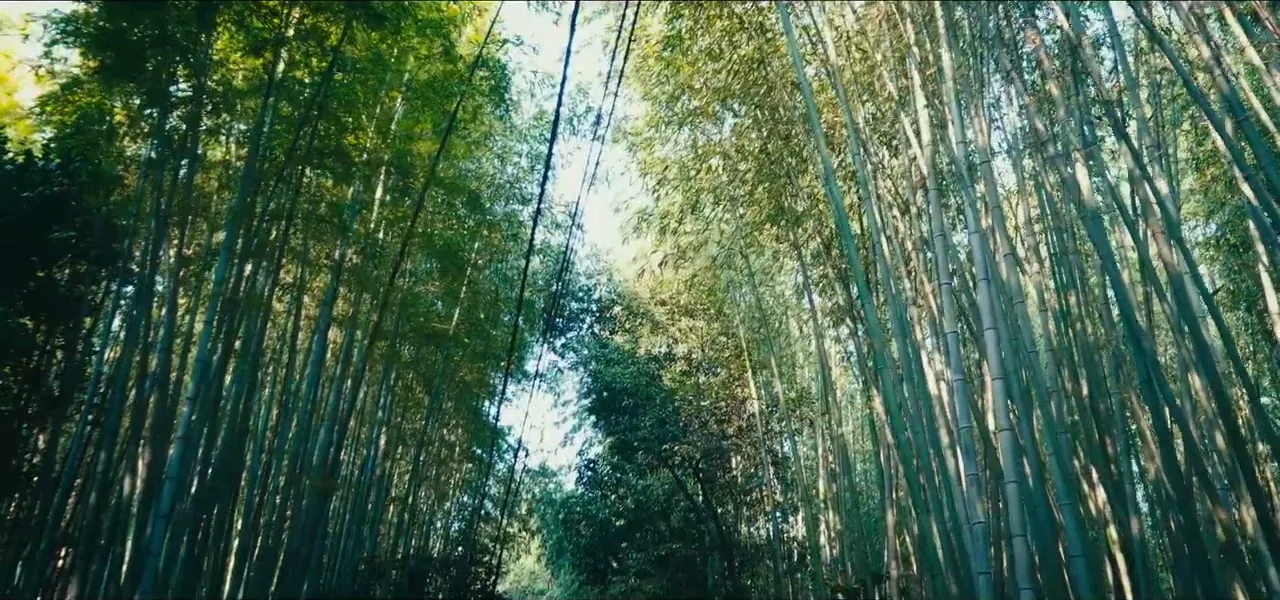
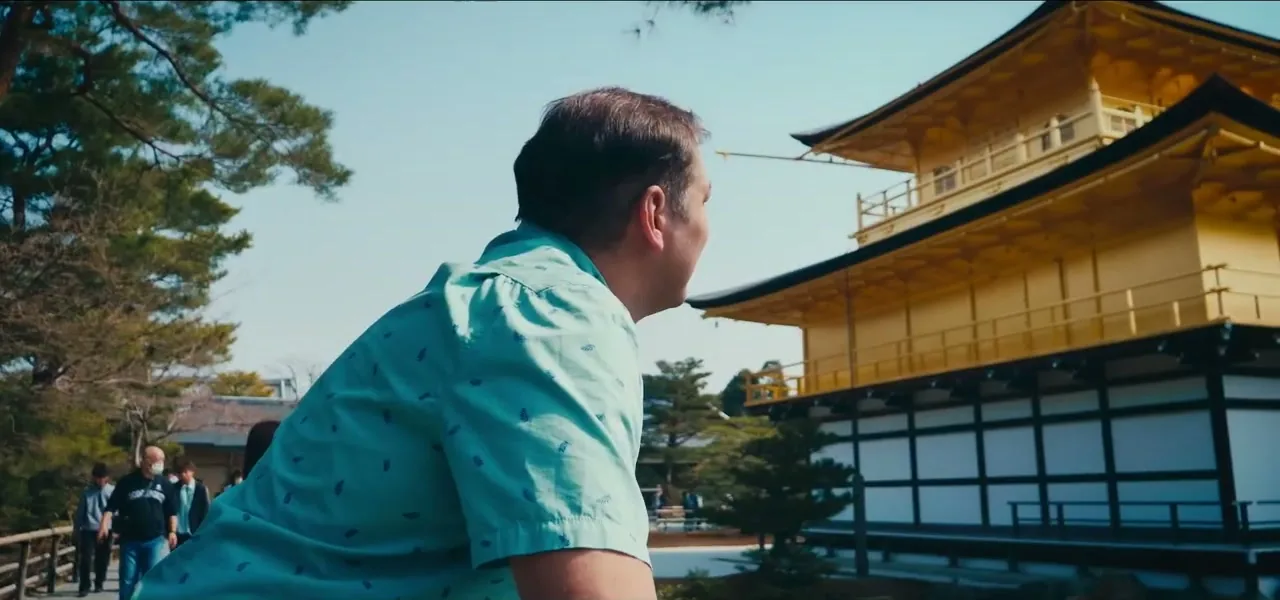
If Kyoto has a single postcard building, it might be Kinkaku-ji — the Golden Pavilion. A three-storey structure standing at the edge of a mirror-still pond, its top two floors are entirely coated in gold leaf, so that on a clear day the building and its reflection form one shimmering shape. A golden phoenix perches on the roof. Originally built as a retirement villa for a shogun in the 1390s and later converted into a Zen temple, the pavilion enshrines sacred relics of the Buddha. The gold isn't mere extravagance: in Zen tradition, images of the Buddha were often gilded, and the pavilion carries that symbolism up to full architectural scale — purity and enlightenment made visible.
Back in Zen Buddhist culture, the Buddha statues were made of gold. So a pavilion sprayed in gold is a beautiful symbol of exactly that.
Here's the part most visitors don't realise: the golden building you see today is not the medieval original. In 1950, a troubled young monk set fire to the pavilion and burned it to the ground — an act so shocking it inspired one of Japan's most famous postwar novels, Yukio Mishima's The Temple of the Golden Pavilion. The temple was painstakingly rebuilt in 1955 from preserved plans, and later re-gilded even more thoroughly than before. It joined UNESCO's list of the Historic Monuments of Ancient Kyoto in 1994. What you photograph is a faithful resurrection — which, in a country that rebuilds its greatest shrines on purpose, is somehow entirely fitting.
The Thousand Gates of Fushimi Inari
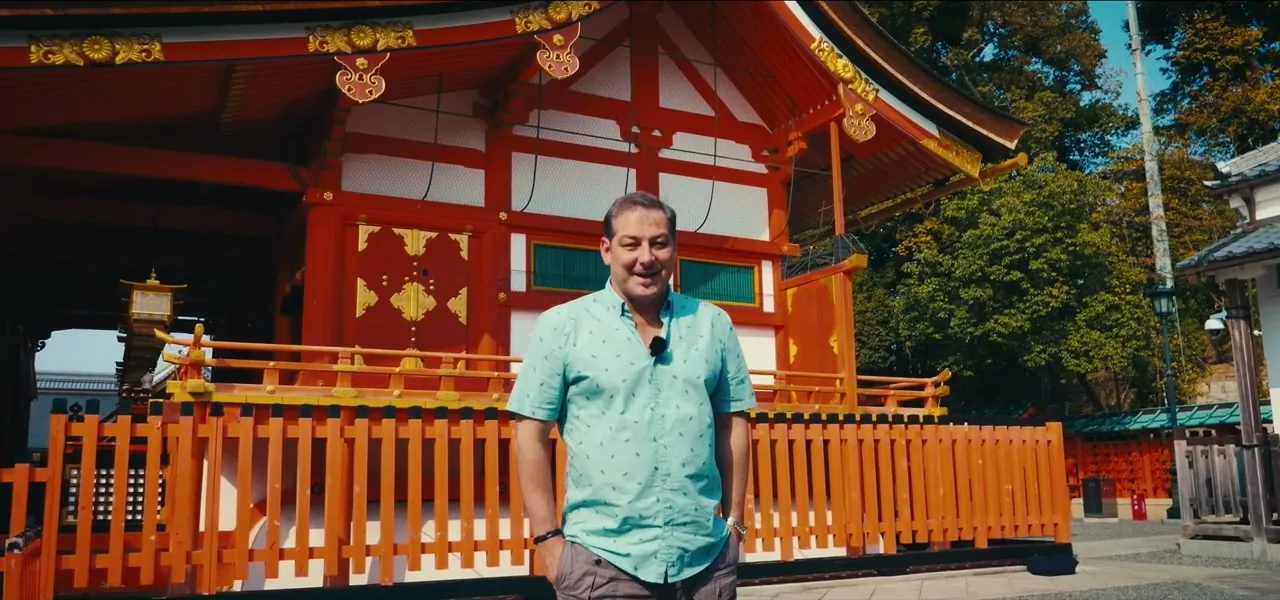
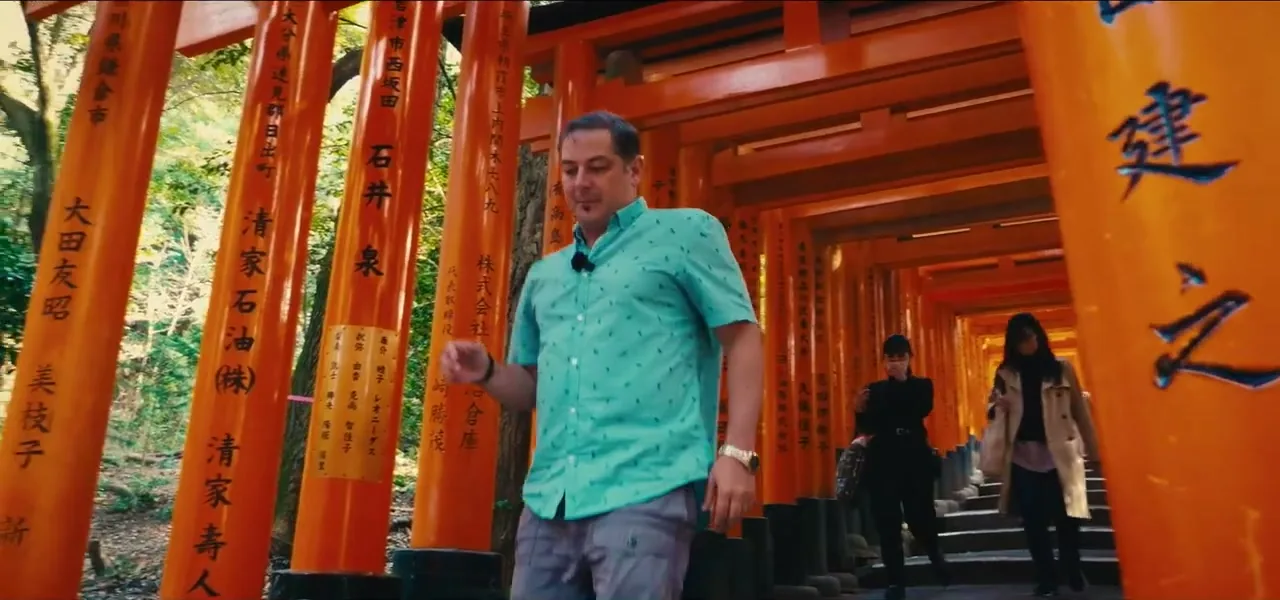
Some places are famous for a building. Fushimi Inari Taisha is famous for a path. This is the great shrine to Inari, the Shinto deity of rice, prosperity and business — and behind it, a network of trails winds up the sacred Mount Inari beneath thousands upon thousands of vermilion torii gates, packed so tightly that in places they form glowing orange tunnels. It is, without exaggeration, one of the most photographed images in all of Japan.
The gates are not decoration; they are gratitude. Each one was donated by an individual, a family or a company — a prayer of thanks for a wish granted or a business prospered. The tradition goes back to the Edo period, and if you look at the back of any gate, you'll find the donor's name and the date of the donation carved into the wood. There are roughly 10,000 of them in total winding up the mountain. The densest, most famous stretch near the inner shrine is the Senbon Torii — the "thousand gates."
By the numbers: Fushimi Inari's torii gates
- Total torii gates
- ~10,000, up the mountain
- Senbon Torii section
- ~1,000 gates over ~400 m
- Wood
- Cedar — durable, and cool to the touch
- Donation (small gate)
- From ~400,000 yen
- Donation (large gate)
- Over 1,000,000 yen
- Tradition dates to
- The Edo period (1603–1868)
Walking inside the tunnels, I noticed something I hadn't expected: the temperature drops. The gates are made of cedar — durable, weather-resistant, and, it turns out, good at holding a chill. Without a jacket, deep in the shade of the tunnel, I was genuinely cold, even as the open shrine grounds behind me sat in the sun. There's an almost physical sense of having crossed a threshold, which is exactly what a torii gate is meant to signal: the boundary between the ordinary world and the sacred one.
Kiyomizu-dera and the Meaning of "Taking the Plunge"
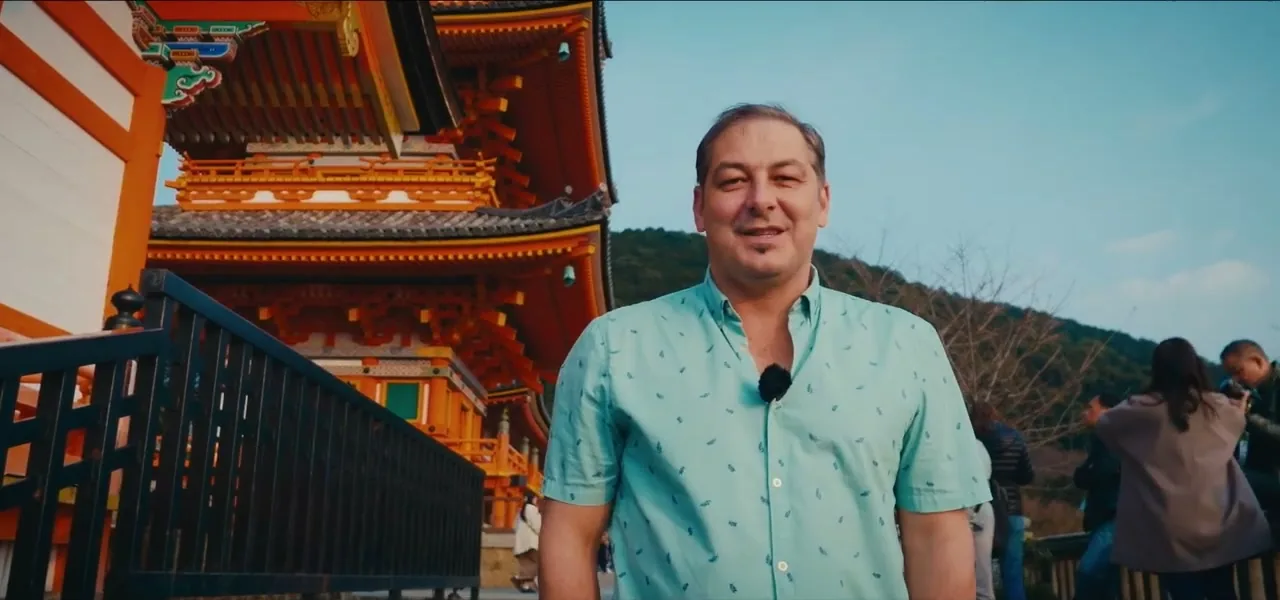
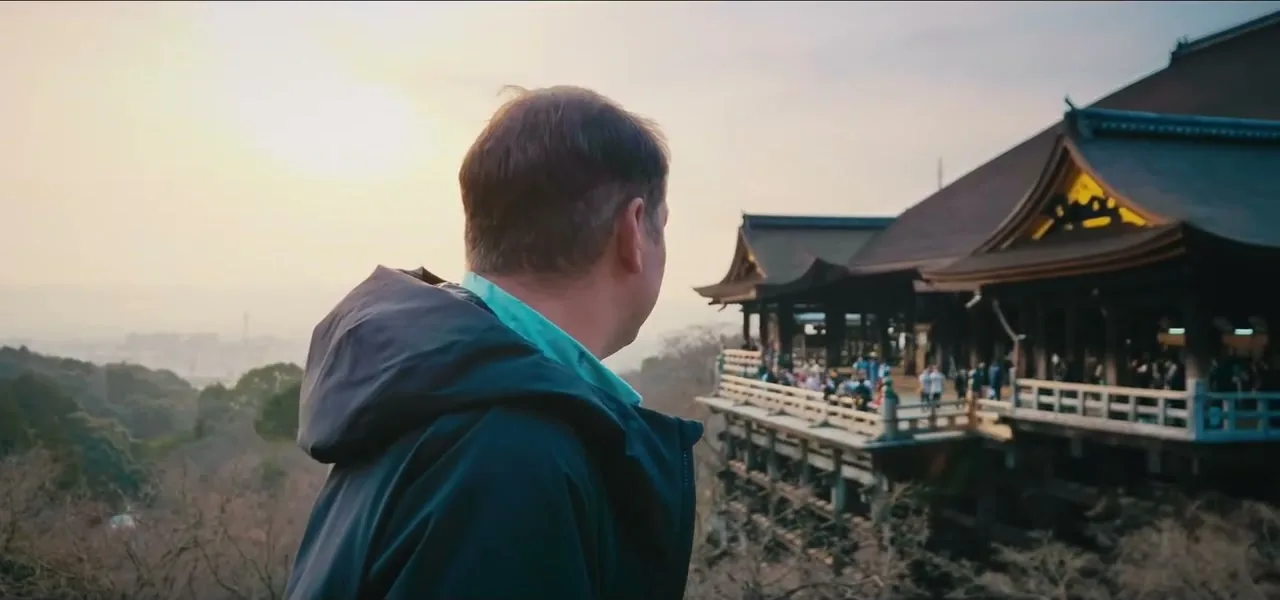
Of everything in Kyoto, the temple that stayed with me most is Kiyomizu-dera — "the temple of pure water." Founded in 778, its present buildings around 1633, it is some 1,200 years old in spirit and famously built without a single nail. Its enormous main hall thrusts out over the hillside on a lattice of tall wooden pillars, forming the celebrated stage — a broad wooden veranda suspended roughly 13 metres above the slope, with all of Kyoto spread out beyond it. It, too, is a UNESCO-listed monument, registered in 1994.
But the stage carries a darker, stranger story than its beauty suggests. During the Edo period, a belief took hold that if you leapt from the stage and survived the fall, your wish would be granted. And people did it. Temple records document 234 jumps over the period — and, remarkably, about 85% of the jumpers survived, cushioned by the dense vegetation and soft earth of the hillside below. Roughly 34 did not. The practice was finally banned in the early Meiji era, in 1872.
By the numbers: The Kiyomizu-dera stage
- Age
- ~1,200 years (rebuilt c. 1633)
- Construction
- Wooden joinery — no nails
- Stage height
- ~13 m (43 ft) above the slope
- Recorded Edo-period jumps
- 234
- Survival rate
- ~85% (about 34 died)
- Practice banned
- 1872 (early Meiji era)
That history gave Japan one of its enduring idioms: "to jump off the stage at Kiyomizu" — used exactly the way English speakers say to take the plunge. When a Japanese person is about to commit to something bold and irreversible, that's the phrase they reach for. Standing on the edge, looking down at the drop those Edo-period pilgrims actually threw themselves off of for a wish, the metaphor lands with a lot more weight than it does in English.
Below the stage, three channels of water spill from the Otowa Waterfall, the spring that gave the temple its name. Visitors line up to drink from one of the three streams using long-handled cups — each stream said to grant a different blessing: success, love, or longevity. Drinking from all three is considered greedy. It's a small, human ritual at the foot of a very grand building, and it's the kind of thing Kyoto does better than anywhere: the sacred and the everyday, side by side.
A Rickshaw Through Old Kyoto
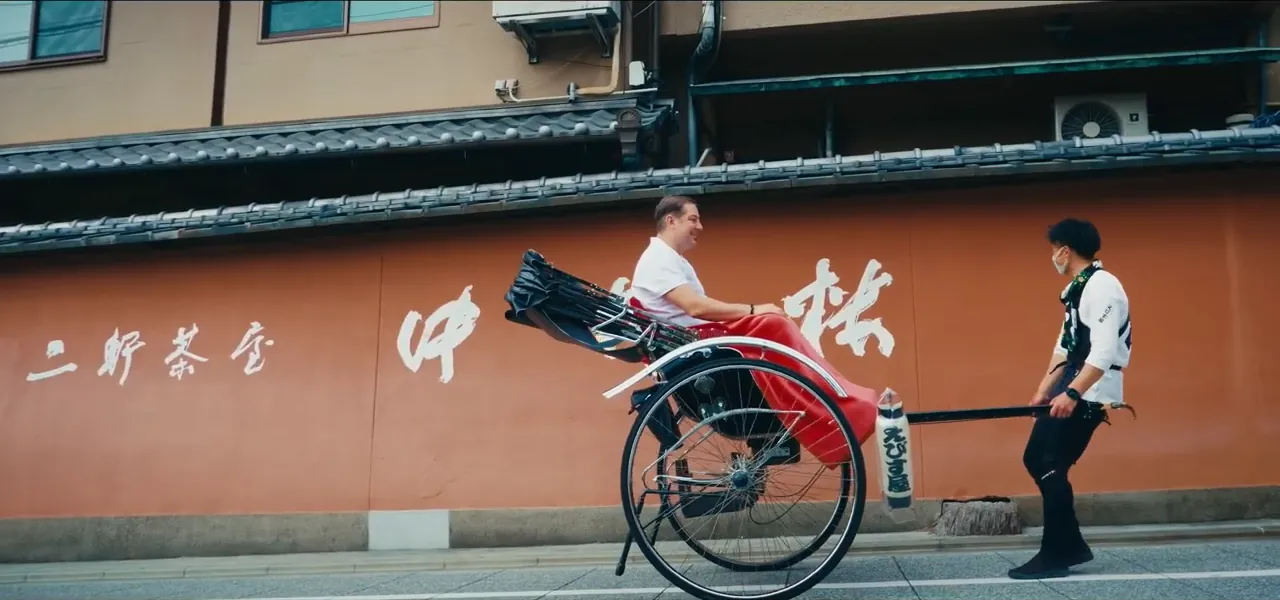
Kyoto is a city that rewards slowing down, so I did something I'd wanted to do since arriving: I booked a rickshaw ride through the old quarter. The rickshaw — a human-powered, two-wheeled cart — was actually invented in Japan around 1869, so there's a nice symmetry to touring the country's most traditional city in one. My driver pulled me through the preserved streets of the Higashiyama and Gion districts, where the modern world thins out and wooden machiya townhouses, lantern-lit teahouses and stone lanes take over.
There's a particular pleasure in seeing a place at the pace it was actually built for. Cars can't fit down many of these lanes, and even walking, you're moving faster than the neighbourhood was designed around. From the rickshaw seat, the details come forward: the noren curtains over doorways, the tiny shrines tucked between buildings, the way the light falls between the eaves. It adds a layer of authenticity that's hard to get any other way — a genuinely local, genuinely old experience in a city that guards both fiercely.
An Evening Almost No Outsider Is Granted
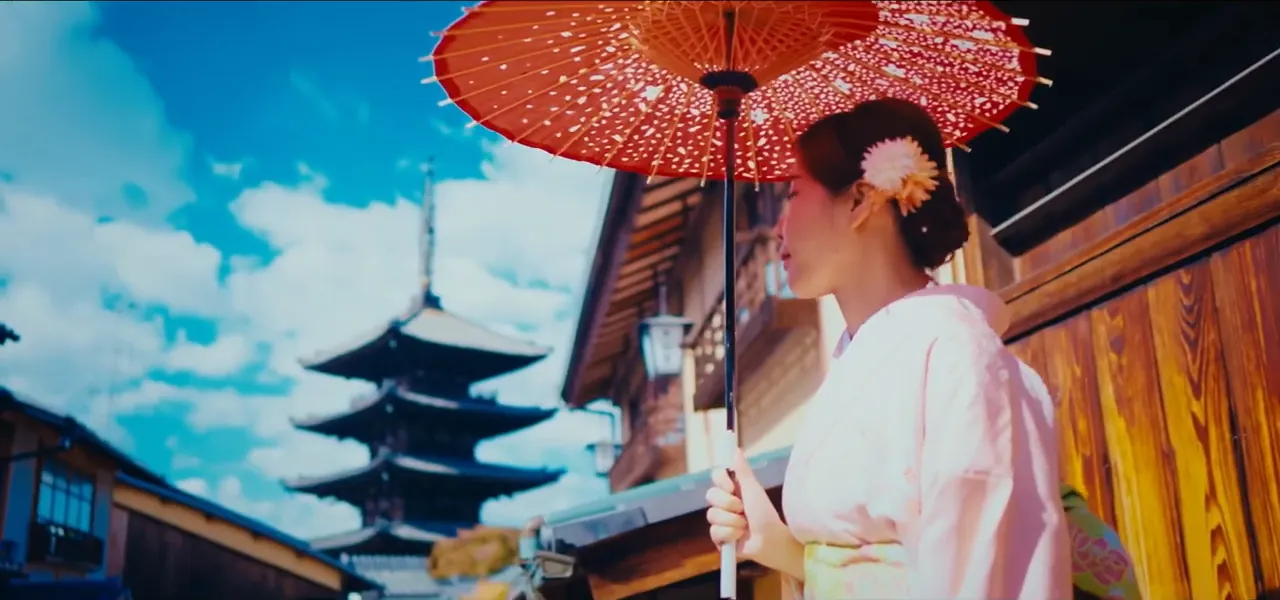
And then there was the evening I still talk about. Through a new friend named Fujita — a man who knew exactly the right person — I was granted something almost no foreigner, and few Japanese, ever experience: a private performance by a geiko and a maiko, with my camera the only one allowed in the room. You cannot buy your way into this. You need an introduction, and the introduction needs to come from someone the geisha world trusts.
A word on terms, because they matter and they're almost always gotten wrong. In Kyoto, a fully qualified geisha is called a geiko — literally "a person of the arts." A maiko is her apprentice, typically a teenager, who trains for about five years while living in a lodging house called an okiya under a "mother." These are not courtesans. They are professional artists — dancers, musicians, conversationalists — and the persistent Western myth that geisha are prostitutes traces to postwar confusion, when some sex workers presented themselves to foreign soldiers as "geisha girls." In Kyoto's five historic districts today, there are only around 160 geiko and perhaps 70 maiko still working, where a single district once counted more than a thousand.
I'm about to do something that even regular Japanese people can barely do — meet privately, and get an exclusive performance, from a geiko and a maiko. I'll never forget it.
I'm keeping the deep story of that evening — the training, the rules, the artistry, the myths and the truth behind them — where it belongs, in its own film. This encounter became the seed of a separate Geisha special, a full documentary devoted to one of the world's most misunderstood traditions. If the geisha world is what drew you here, that's the piece to read next. For now I'll simply say this: watching how these women live, and how completely they sacrifice ordinary life to master an art, was one of the most humbling things I've filmed anywhere.
The Sacred Deer of Nara
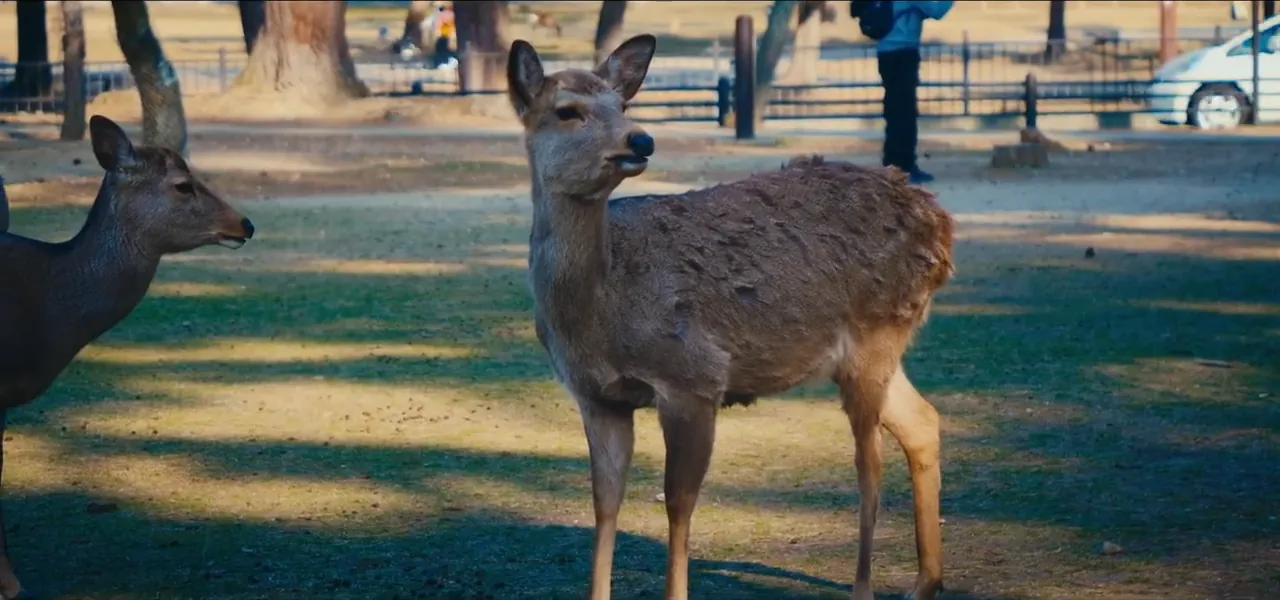
Not everything on this trip was inside Kyoto's city limits. About 45 minutes away lies Nara — a city with an even older claim than Kyoto's, having served as Japan's very first permanent capital from 710 to 784, before the court ever moved to Heian-kyō. Today most visitors come for one reason: the deer. Around 1,200 wild sika deer roam freely through Nara Park, and they are not ordinary wildlife. For more than a thousand years they've been regarded as sacred messengers of the gods, tied to the nearby Kasuga Taisha Shrine, whose founding deity was said to have arrived riding a white deer.
That reverence had a remarkable side effect. Because the herd was protected and never allowed to mix freely with outside populations, it became genetically isolated. A study published in early 2023 in the Journal of Mammalogy found that the Nara Park deer carry a unique genetic lineage, distinct from every other sika population studied — a pure line that split from its ancestors well over a thousand years ago, right around the time the shrine was established. The local claim that "there's no other deer in the world like the ones in Nara" turns out to be, remarkably, close to literally true.
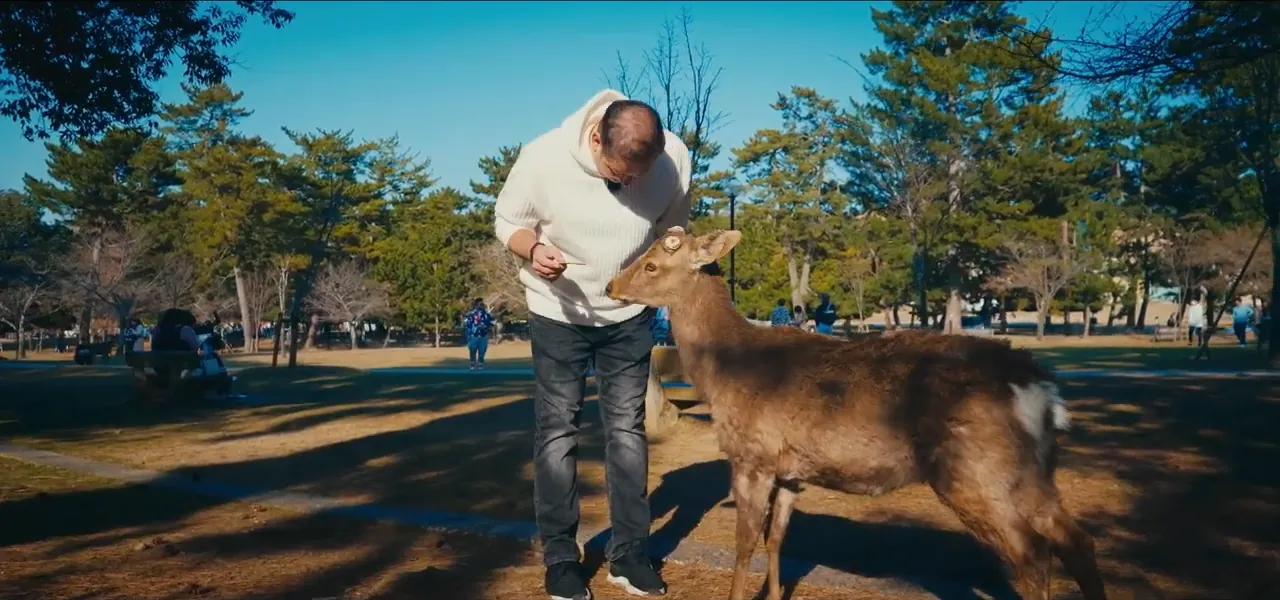
The deer live almost entirely on those crackers — a regulated mix of rice bran and flour, sold by park vendors — and, strangely, they tend to stay put. They have their patch of forest at the back of the park and their open lawns, and they rarely wander beyond the bounds they've kept for centuries. Feeding them is chaotic, funny and slightly alarming all at once; some are patient and polite, and some will absolutely nip you if the cracker isn't produced fast enough. Bowing to a wild animal and having it solemnly bow back is one of those experiences that sounds made up until it happens to you.
What Kyoto Keeps
I came to Kyoto straight from Tokyo, and the contrast is the lesson. Tokyo is Japan sprinting toward the future; Kyoto is Japan deciding what's worth carrying with it. A gilded pavilion rebuilt exactly as it burned. Ten thousand gates raised one gratitude at a time. A phrase for courage born from people who once jumped off a temple for a wish. An art form guarded so closely that only an introduction can open its door. A herd of deer so revered that a thousand years of reverence rewrote their DNA.
None of it happened by accident, and almost none of it had to survive. Kyoto exists in the form it does because, again and again, someone chose preservation over convenience — a shogun's villa turned temple, a monk's plans kept safe against the day of a fire, a Secretary of War who couldn't bring himself to erase a city he'd once admired. That's what Kyoto really keeps: not just the buildings, but the decision to hold on to them. Walk its lanes for a week and you start to feel the pull of it yourself — the quiet argument that some things are worth slowing down for, and worth keeping.
My journey through Japan wasn't over when I left. Next, the dart's story carried me out of the old capital and toward Mount Fuji — the electric little town of Kawaguchiko, and the famously strange snow monkeys of Nagano. But that's another film. For now: watch the Kyoto episode above, and if the geisha evening is calling you, my full Geisha special picks up exactly where this one bows out.
See also my main Japan episode — Tokyo, the samurai, sumo and the cherry blossoms — filmed on the same trip.
Explore More Travel by Dart Journeys
- The dart carried me on from here to Mount Fuji — the finale of the Japan trip.
- My full Geisha special picks up exactly where this evening bows out.
- See the main Japan episode — Tokyo, samurai, sumo and cherry blossoms — filmed on the same trip.
- More East Asia the dart uncovered: South Korea, palaces and K-pop side by side.
Suggested Sources & Further Reading
To go deeper into Kyoto, these are some of the best authoritative resources:
- Japan National Tourism Organization — Japan's official travel authority.
- Kyoto City Official Travel Guide — the city's own tourism site.
- UNESCO — Historic Monuments of Ancient Kyoto — the World Heritage listing covering Kinkaku-ji, Kiyomizu-dera and more.
- Encyclopædia Britannica — Kyoto — the former imperial capital's history.
- Encyclopædia Britannica — Geisha — the tradition behind the women of Gion.
All facts verified September 2026.
Kyoto: traveler questions
Where is Kyoto and why is it famous?+
Kyoto sits in the Kansai region of central Japan and served as the country's imperial capital for over a thousand years, from 794 until 1868. It's famous as the cultural soul of Japan — home to some 1,600 Buddhist temples, 400 Shinto shrines, Zen rock gardens, wooden machiya houses and the historic geisha districts of Gion. This is a standalone Travel by Dart episode, separate from my main Japan film.
How is Kyoto different from Tokyo?+
Where Tokyo is modern, vertical and fast, Kyoto preserves old Japan: imperial history, tea culture, ritual and craft. Kyoto was famously spared aerial bombing in World War II — U.S. Secretary of War Henry Stimson had it struck from the atomic-bomb target list — which is a large part of why so much of its heritage survives intact today.
What are the must-see sights in Kyoto?+
The essentials in this episode: Kinkaku-ji (the Golden Pavilion), Fushimi Inari Taisha with its thousands of vermilion torii gates, Kiyomizu-dera and its famous wooden stage, and the Arashiyama Bamboo Grove. Many visitors also day-trip to nearby Nara to meet its sacred bowing deer.
How many torii gates are at Fushimi Inari?+
Around 10,000 torii gates wind up the sacred Mount Inari, all donated by individuals and companies since the Edo period, with the donor's name and date inscribed on the back of each one. The famous 'Senbon Torii' ('thousand gates') is a densely packed section near the shrine's inner sanctuary.
What is the 'jump' at Kiyomizu-dera?+
During the Edo period, people believed that if you survived a roughly 13-metre (43-foot) jump from Kiyomizu-dera's wooden stage, your wish would be granted. Temple records list 234 jumps, of which about 85% survived. The practice was banned in the early Meiji era, but it gave Japan the idiom 'to jump off the stage at Kiyomizu' — the equivalent of 'taking the plunge.'
Are the deer in Nara really sacred?+
Yes. For more than 1,000 years the deer of Nara have been regarded as sacred messengers of the gods, tied to Kasuga Taisha Shrine. A 2023 genetic study found the Nara Park population has been so isolated by this protection that it forms a genetically unique lineage. The deer's famous 'bow' is a learned behaviour — they've figured out that bowing earns them a shika senbei cracker.