Season 2 · Episode 6
Brazil
The one country I dreamed about as a boy — Rio from the air, the Amazon at night, and a father's regret that I refused to inherit.
On this page ▾
By Sorin Mihailovici · Travel by Dart · Last updated July 2026 · ~19 min read
When I was a boy, my father was the most alive person I knew. In our city he was the man everyone wanted to be near — the one other men studied and women noticed, the one with the good job and the steady plan. And the plan always included the same promise: one day he would travel the world. Not now. Next year, maybe. When there was more money, more time, more later. Then, at forty-two, an accident took the use of his body, and he spent nearly three decades unable to leave the country he'd meant to leave a hundred times. His deepest regret was never the accident itself. It was all the trips he had saved for a "someday" that never came.
I grew up inside that lesson. And for reasons I could never fully explain, the country I always pointed to when I imagined someday was Brazil. There was something magical about it in my child's mind — a place that meant escape, colour, life at full volume. So when the dart finally sent me there, it wasn't just another pin on the map. It was a debt I'd promised to pay on my father's behalf: to actually go, while I still could.
This article is the guide I wish I'd had before I landed: the facts, the science and the history behind everything the dart dropped me into — across two full episodes and two very different Brazils.
Quick facts: Brazil at a glance
- Official name
- Federative Republic of Brazil
- Capital
- Brasília
- Largest city
- São Paulo
- Population
- ~212 million (world's 6th largest)
- Area
- ~8.5 million km² (5th largest country)
- Language
- Portuguese (only one in the Americas)
- Currency
- Brazilian real (R$)
- Amazon
- ~60% of the rainforest lies in Brazil
- Best time to visit
- Rio: May–Sept · Amazon: depends on water level
The Dart That Landed Twice
Brazil did not come from my hand. I'd just finished filming in Colombia, surrounded by friends, and I decided to let them throw the darts at the world map for me. When they did, two of them stuck — one on Brazil, one on Argentina. Faced with a choice I didn't want to make, I made the only decision that felt right: I'd go to both. Brazil first. Argentina would be the very next chapter.
So I flew to Rio de Janeiro straight from Colombia, carrying a childhood dream and a promise to a man who never got his turn. And almost immediately, Brazil did what Brazil does — it turned a simple trip into something much larger.
Rio de Janeiro, and a Statue That Silences People
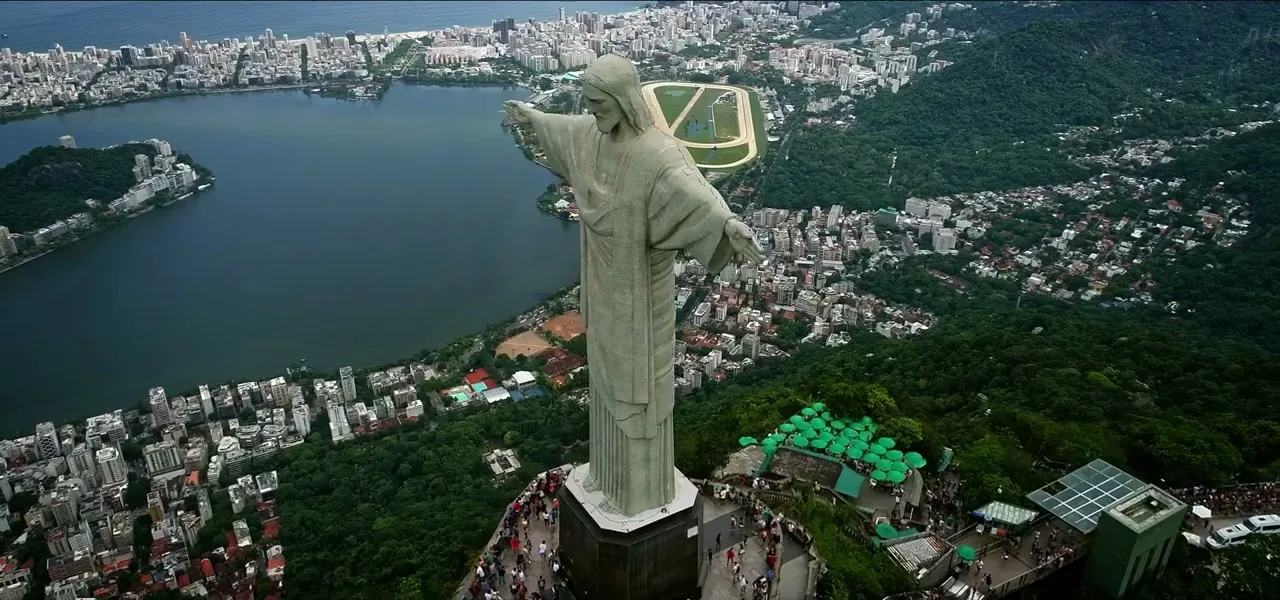
You cannot come to Rio and skip Cristo Redentor — Christ the Redeemer, arms open on top of Corcovado mountain. Everyone on Earth recognises the silhouette; far fewer know the details. The statue stands 30 metres tall (38 metres including its pedestal), with an arm span of 28 metres, and it was completed in 1931. It is the largest Art Deco sculpture in the world, and in 2007 it was named one of the New7Wonders of the World.
Most visitors reach it the way I did: on a cog railway that climbs about 20 minutes up through the forest of Tijuca, with escalators and a lift for the final stretch. The day we went, the summit was buried in cloud. We waited it out with a slow drink at the little bar near the base of the statue, and when the mist finally thinned and the figure appeared above us, the whole platform went quiet.
I've been to a lot of churches, a lot of cathedrals — and I never felt the power I felt up there.
That reaction wasn't unusual. There were women praying when we arrived; there were people who touched the base and simply stood there. I've spent years chasing adrenaline in places like this, and what surprised me on Corcovado wasn't a rush — it was stillness. Whatever you believe, the statue does something to a crowd. It gathers people and quiets them down.
Running Off a Cliff Above Rio
Then we did the opposite of quiet. One of the first friends I made in Brazil — a professional paraglider named Carlos — insisted that he and his colleagues fly the whole group over Rio. You don't say no to that. It meant a dune-buggy ride out to a high launch hill, a nervous wait on the edge, and then the part that terrifies everyone the first time: you have to sprint off a platform, fast enough to fill the wing and lift, with the ground dropping away beneath your feet.
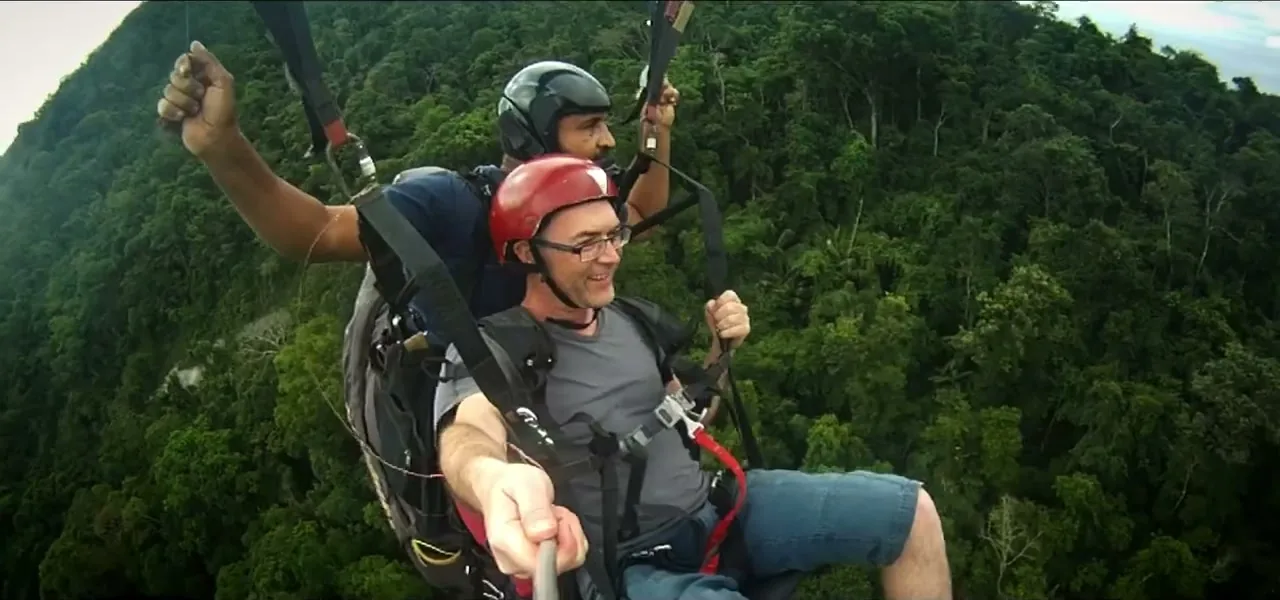
Here's the thing nobody warns you about: the fear evaporates the instant you leave the ground. You brace for a jolt of adrenaline and instead you get a strange, floating calm — Rio's beaches and green hills laid out under your boots, the wing holding you like a held breath. People landed in tears. One guest called it a dream come true; another said it pushed him to finally book the skydive he'd been putting off for years. It was, for several of us, the highlight of the trip before the trip had even really begun.
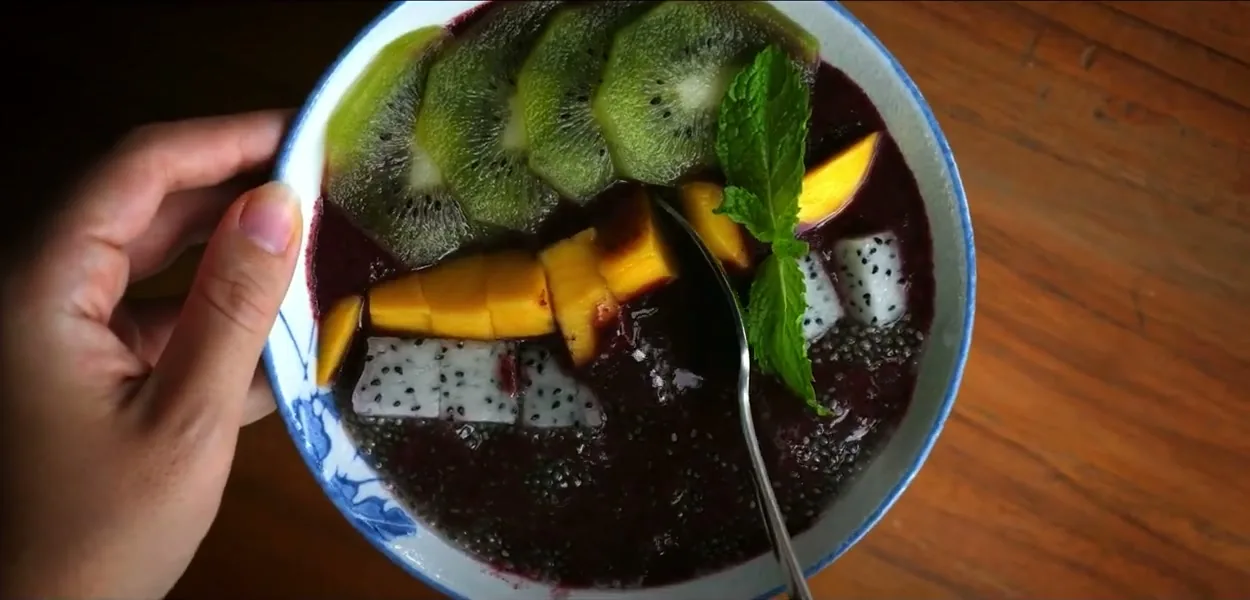
Afterward, one of the instructors, Jorge, invited us to his home — not for a meal, but for açaí. If you only know açaí from overpriced smoothie bowls, the real thing is a revelation. It comes from the açaí palm (Euterpe oleracea), native to the floodplains of the eastern Amazon, a tree that can grow more than 25 metres tall. The berries are one of the most concentrated antioxidants on the planet, which is exactly why the internet is flooded with fake "açaí" supplements — a good reason to be sceptical of any miracle product sold online.
Sugarloaf, and the City From Above
The next must-do is Sugarloaf Mountain — Pão de Açúcar — the granite thumb of rock rising 396 metres straight out of the bay. Its name comes from the 16th-century sugarcane trade, when refined sugar was pressed into tall conical clay moulds that the peak was said to resemble.
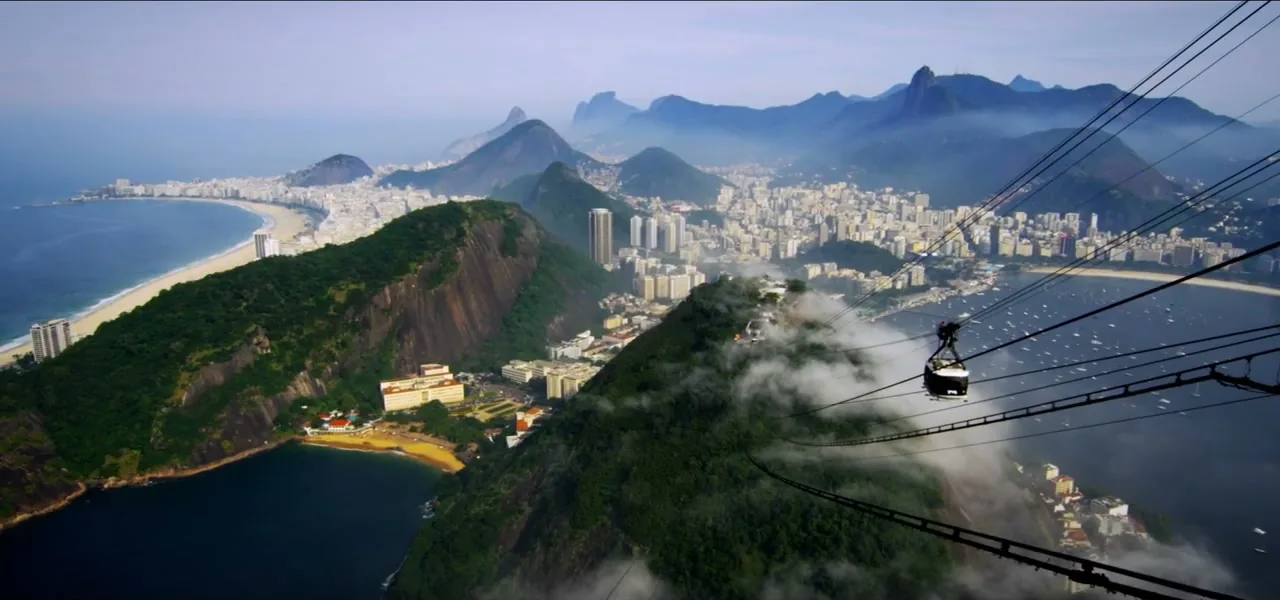
You reach the top by cable car — the bondinho — which first ran in 1912, making it the third such system in the world and the first in Brazil. It climbs in two stages, pausing at the lower hill of Morro da Urca before the final swing up to the summit. From the top, all of Rio unfolds: the beaches, the bays, the scattered peaks, and Christ the Redeemer standing small and white on the far mountain. We even spotted tiny marmoset monkeys in the trees near the upper station. As one of my group put it, it barely qualifies as a mountain — it's more like a colossal boulder someone dropped into the sea and then, improbably, strung with gondolas.
The Caipirinha, and Why Strangers Become Family
By now I have to introduce the drink that shadowed the entire trip: the caipirinha, Brazil's national cocktail. It's built from cachaça — a spirit distilled directly from fresh sugarcane juice — muddled with lime and sugar. Historians trace it to the sugarcane country around Piracicaba, in São Paulo state, in the 19th century. Swap the cachaça for vodka and Brazilians call it a caipiroska. Ordered one; ordered several. It became, with almost no resistance on my part, my new favourite drink.
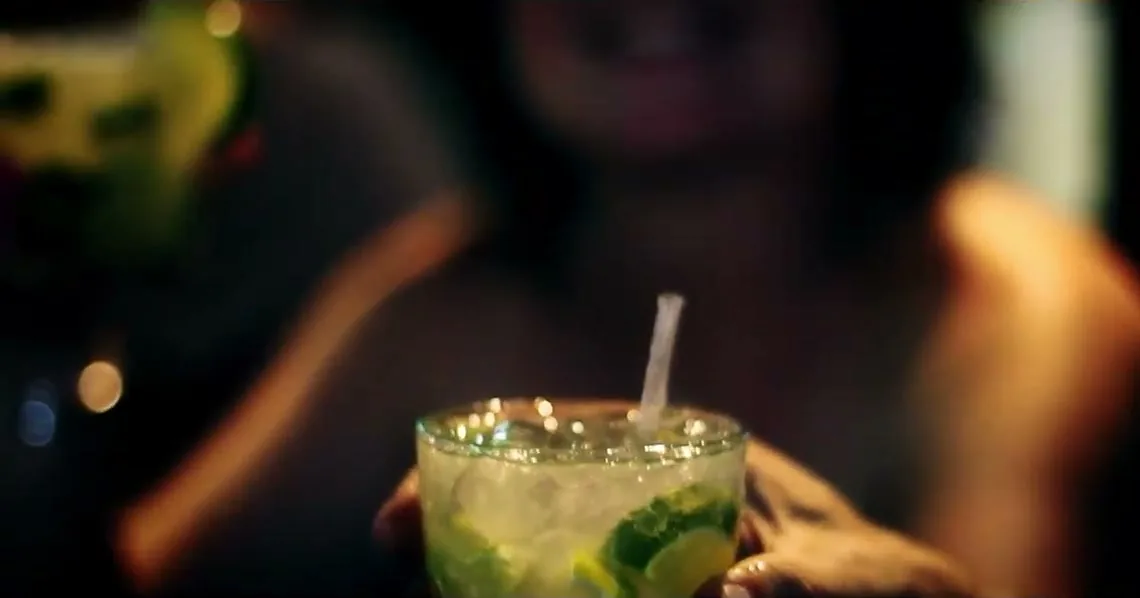
But the caipirinha is really a stand-in for something bigger: Brazilian warmth. After Rio, we escaped the tourist track and drove about four hours east to Arraial do Cabo, a coastal town in the Região dos Lagos that locals proudly call the "Brazilian Caribbean." The water there is a shocking, glassy blue you have to see to believe.
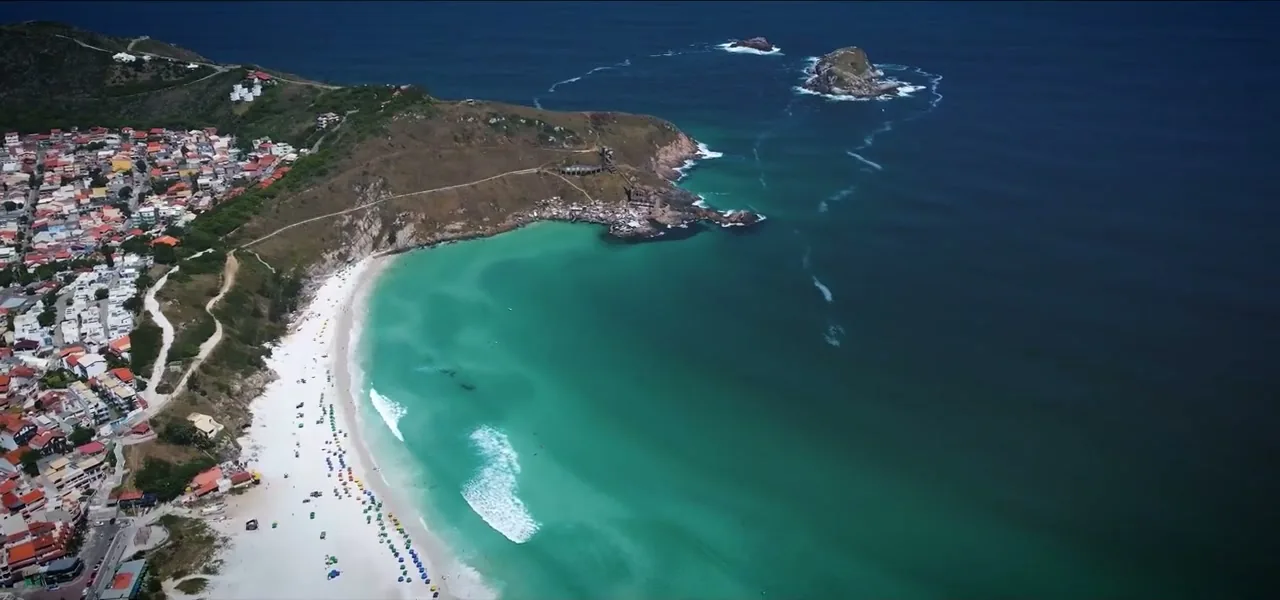
What happened in Arraial do Cabo is the part I can't stop telling people about. Through Carlos, I met more lifelong friends — Navarro, Alice, Robson — and within a day the whole group was invited into a stranger's home. Not for dinner. For a samba lesson, taught by Allan, a world-touring instructor who works with disabled children and gives workshops as far away as Norway and Russia. He tried, valiantly, to teach a room of North Americans to move their feet and hands at the same time. It did not go well. He ended up handing out prizes for the worst dancers, and there were so many contenders he had to hold a raffle.
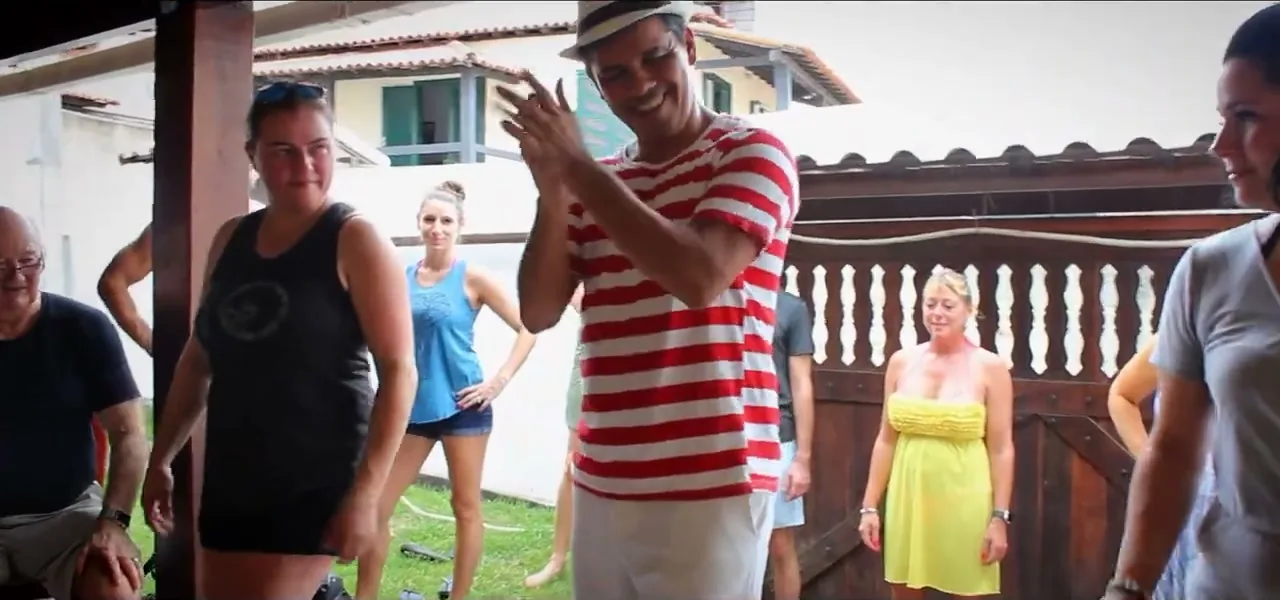
When they invite you into their home, that's something special. You can't get that anywhere else in the world.
There was a birthday dinner where the entire restaurant — not just our table — stood and sang. There was a boat party on that impossible blue water, thrown by locals, where a sudden tropical downpour hit and, instead of scrambling for cover, everyone climbed onto the bow net and danced harder in the rain.
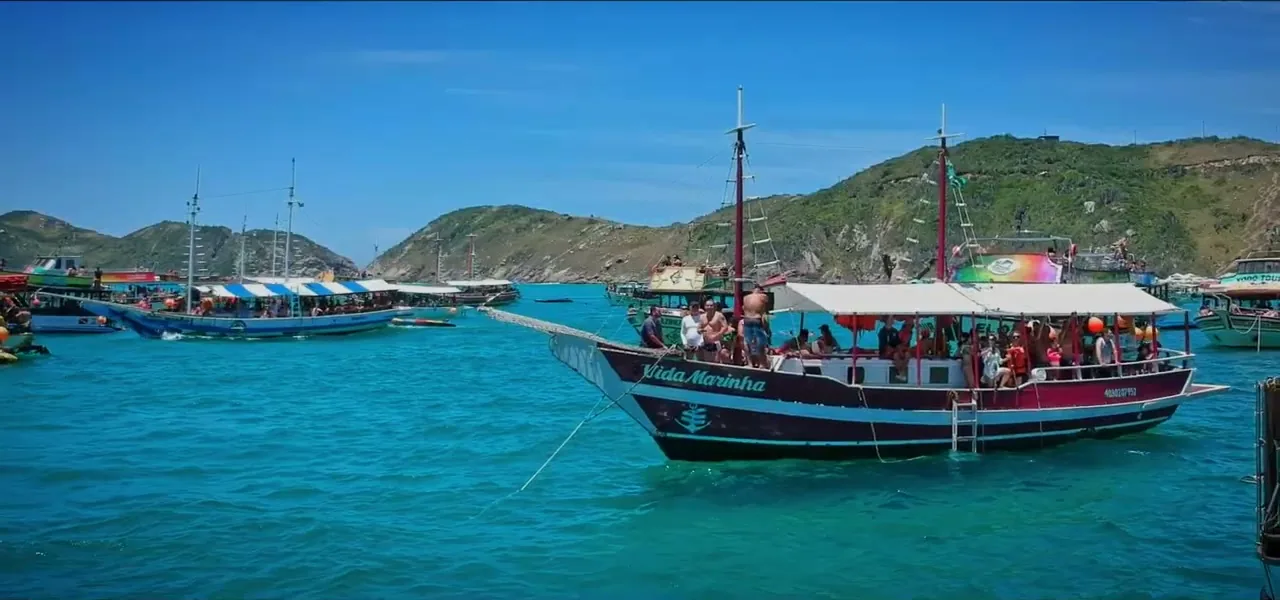
The Spark Experience
None of the people dancing on that boat were people I'd known two weeks earlier. That's because this Brazil trip wasn't a solo shoot — it was a Spark Experience, a challenge I put out on social media: come find me, on two weeks' notice, and do exactly what I do, no matter how far outside your comfort zone it goes. Strangers signed up. One even came back for a second Spark in a row.
The first night in Rio was when the group knitted together. By the last night, in the jungle, they were a family. And between those two nights was the reason half of them had come at all: the Amazon.
▶ Brazil, Part 2 — Into the Amazon
Swimming with piranhas, catching caimans, and sleeping in the rainforest
Into the Amazon
The second half of Brazil is a different planet. To reach the rainforest you first fly deep north to Manaus, the capital of Amazonas state and the great gateway to the Brazilian Amazon. In the episode I called it a city of "300,000" — I was badly out of date. Manaus is in fact a metropolis of well over two million people, an improbable island of high-rises in an ocean of forest. Its crown jewel is the Teatro Amazonas, an ornate opera house completed in 1896 at the height of the rubber boom, when barons grown rich on Amazonian latex tried to build a "Paris of the Tropics" in the middle of the jungle. That the opera house survived the region's economic collapse — and still hosts a festival today — is a story as improbable as the city itself.
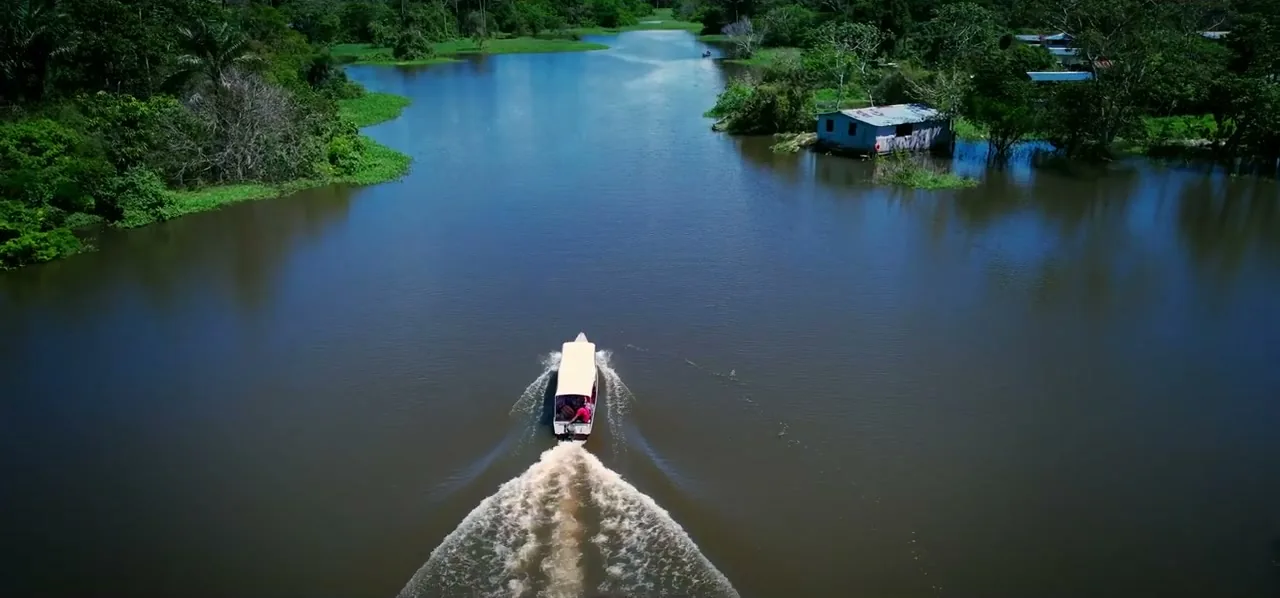
But Manaus is only the front door. Getting to our lodge meant a relay of transport that never seemed to end: a drive to the port, an hour by speedboat, more hours in combis (the local vans, whose drivers turned every muddy stretch of road into a race), and yet another speedboat. Along the way we passed pink river dolphins and our first caimans.
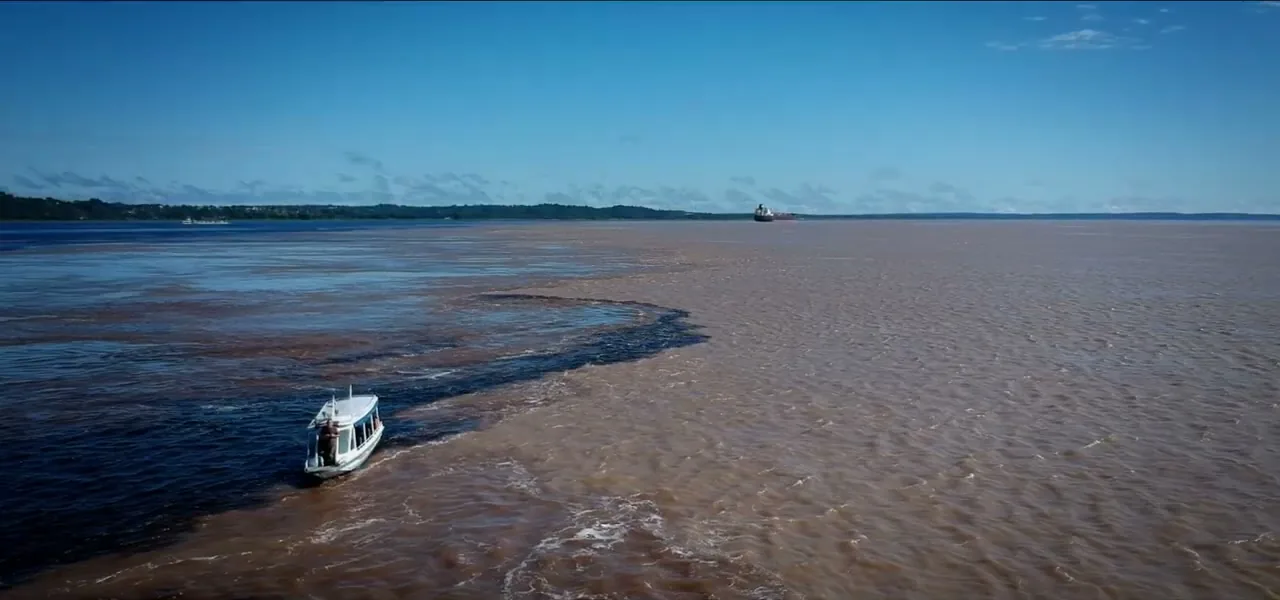
The gift on the way was the Meeting of Waters — Encontro das Águas — one of the strangest sights in nature. Here the dark, tea-coloured Rio Negro meets the pale, sandy Solimões, and instead of blending, the two rivers run side by side for about 6 kilometres with a visible seam between them. The reason is physics: the Negro is warmer (around 28°C), slower (roughly 2 km/h) and stained with tannins, while the Solimões is cooler (around 22°C), faster (4–6 km/h) and heavy with sediment washed down from the Andes. The differences in temperature, speed and density hold them apart until they finally surrender and merge — and it's below this exact confluence that the river officially becomes the Amazon.
I've travelled the whole world and never seen anything like it. Photos don't do it justice; you have to stand on a boat straddling the line, one hand trailing in warm black water and the other in cool brown, to believe it.
Swimming With Piranhas
Then came the question everyone asks about the Amazon: can you actually swim with piranhas? The answer, it turns out, is yes.
We hiked to a warm, still stretch of water and simply jumped in. While we swam, others fished — not with rods and reels, but with a stick, a line and a scrap of chicken. Within seconds the line would jerk and up would come a piranha. One after another after another, a few feet from swimming humans.
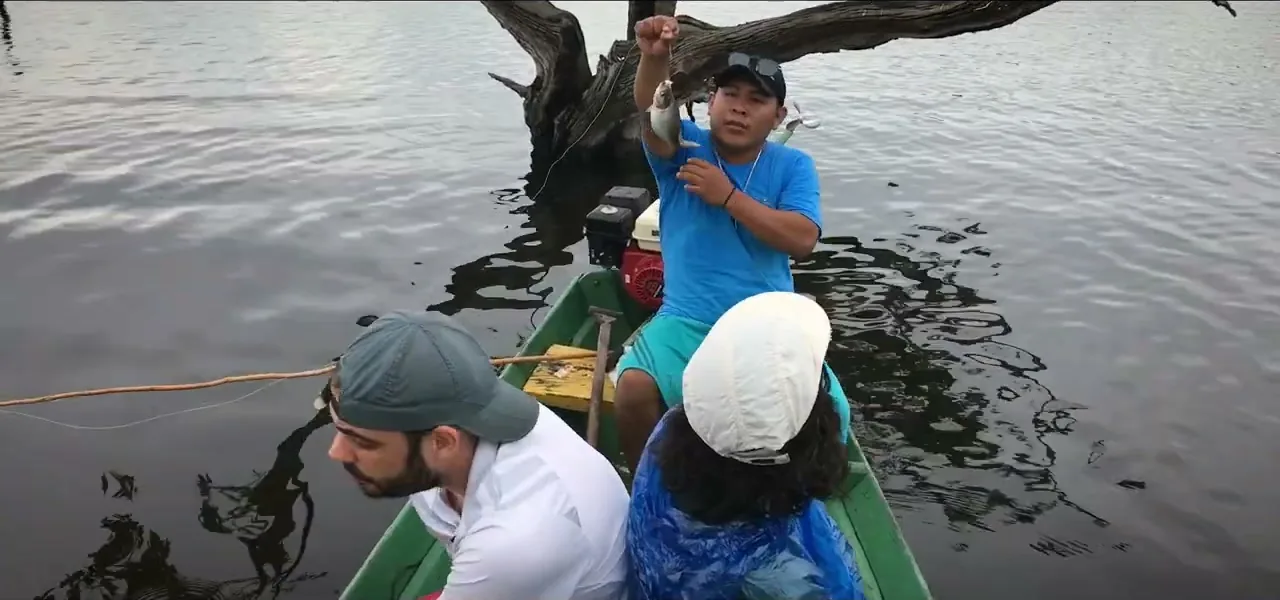
The horror-movie reputation is mostly myth. The Brazilian Amazon holds more than 20 species of piranha; the red-bellied is the most aggressive. But piranhas rarely attack people. When they do, it's almost always tied to specific conditions — low water in the dry season that concentrates hungry fish, an open wound or blood in the water, or a fish defending its nest around breeding time. Under normal conditions, with a guide who does it every day, the fish want nothing to do with you. As I said in the episode: I was there to eat the piranhas, not the other way around.
Fireflies in the Dark: Catching Caimans
The Amazon night is even wilder than its day. After dark we went out to catch and release caimans — the Amazonian relatives of alligators. Spotting one in pitch blackness is oddly easy: sweep a flashlight across the water and their eyes glow back at you like embers, because a mirror-like layer behind the retina (the tapetum lucidum) bounces light back out. Then you grab — quickly, and by the neck — and, as our guide kept stressing, make sure it's not the other way around.
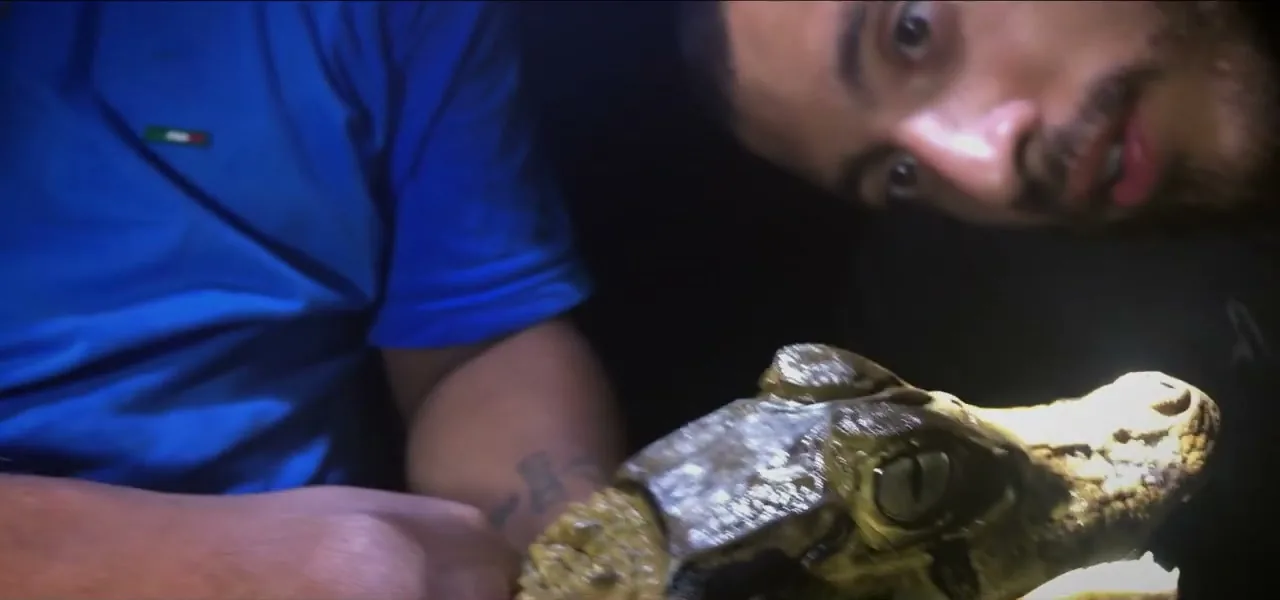
Our guide held one up and taught us its anatomy, and some of it is genuinely remarkable. Caimans have a second, transparent eyelid — the nictitating membrane — that slides across the eye like built-in goggles, protecting it and letting them see (dimly) underwater. There are three species in this part of the Amazon: the black caiman, the giant of the group at up to five or six metres; the smaller spectacled caiman; and a dwarf species our guide called the "stone caiman." He also insisted a caiman "has no tongue" — which is the folk version of the truth. Caimans do have a tongue, but it's anchored to the floor of the mouth and can't move or stick out the way ours does, and a flap at the back seals off the throat so they can't swallow underwater. Every caiman we caught was measured, admired and released back into the river within minutes.
Sleeping in the Jungle
The final test was the one that scared people most: sleeping in the actual rainforest. We hiked all day under heavy packs with two extraordinary guides, Raul and Gonzalo, who kept stopping to show us things we'd never have noticed — a tree whose crushed ants smell stronger than any bug spray, a cicada's shed exoskeleton left clinging to the bark like a ghost of its old body.
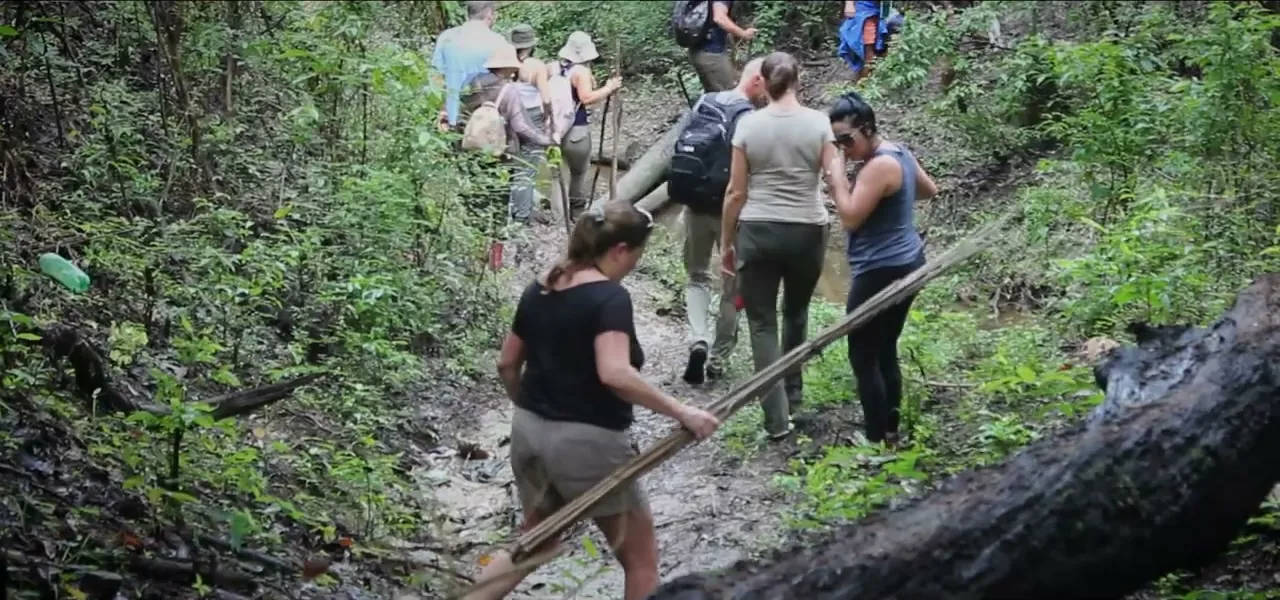
At camp we strung hammocks in a long row between the trees and climbed into them as the rain came down and the forest roared to life around us. People who swore they'd never go camping — who'd packed elaborate "jungle outfits" they didn't need — lay under a full moon listening to a symphony of unseen creatures and called it the best night of their lives. There is a particular kind of confidence that only comes from doing the thing you were most afraid of, and I watched it settle over the whole group that night.
I've checked more things off my bucket list on this trip than I even knew I had.
I want to be honest about one shadow over this part of the story. Not long after we left Manaus, we learned that Raul — one of the two guides who poured so much heart into showing us his forest — had died, in a sudden turn of fate that had nothing to do with his work with us. I mention him here because he deserves to be remembered: a man who did what he did not for money but because he wanted strangers to feel the place he loved. The Amazon gave us a hundred memories. He was one of the best of them.
By the numbers: Brazil, by the numbers
- Christ the Redeemer
- 30 m tall · 28 m arm span · completed 1931
- Sugarloaf Mountain
- 396 m · cable car since 1912
- Meeting of Waters
- ~6 km side by side before mixing
- Rio Negro vs Solimões
- ~28°C & slow vs ~22°C & fast
- Piranha species (Brazilian Amazon)
- 20+ (red-bellied most aggressive)
- Black caiman
- up to ~5–6 m long
- Manaus
- Amazon gateway · 2M+ people · opera house from 1896
The Regret I Refused to Inherit
Brazil gave me exactly what I'd hoped for as a boy pointing at a map, and more than I could have known to ask. Rio silenced me and then threw me off a cliff. The coast fed me and taught me to dance badly. The Amazon put me in the water with the most feared fish in the world and rocked me to sleep in a hammock under the rain. And somewhere in the middle of it, a childhood dream and a father's regret finally settled their long account.
My dad saved his whole life for a "someday" that a single afternoon took away from him. I made a promise, standing beside that lesson, that I would do what he didn't — that I would not reach the end holding a list of trips I meant to take. Brazil was that promise, kept. If you take one thing from these two episodes, let it be this: the best travel advice always comes from people who actually go, and the worst comes from people who never leave. Don't save the world for later. Later is not guaranteed.
The dart, of course, doesn't let me stay still. My friends threw it in Colombia, and it landed on two countries. Brazil was the first. Next, I kept my other promise and flew south to Argentina — to gaúchos, tango and Malbec — while the Amazon was still drying on my boots.
Explore More Travel by Dart Journeys
- Back one dart to Colombia, where my friends threw the darts that sent me here.
- The dart's twin landed on Argentina — my very next chapter, just to the south.
- Go deeper into the rainforest in my standalone Amazon Jungle episode.
- Follow the Portuguese language across the ocean to Portugal and Cape Verde.
Suggested Sources & Further Reading
To go deeper into Brazil, these are some of the best authoritative resources:
- Visit Brasil — Brazil's official national tourism board.
- UNESCO — Central Amazon Conservation Complex — the protected Rio Negro / Solimões region near Manaus.
- Encyclopædia Britannica — Christ the Redeemer — the statue's history and construction.
- Encyclopædia Britannica — Manaus — the Amazon's improbable jungle metropolis.
- Encyclopædia Britannica — Amazon River — the river system and the Meeting of Waters.
- New7Wonders of the World — the 2007 list that named Christ the Redeemer.
All facts verified September 2026.
Brazil: traveler questions
Where did the dart land to send Sorin to Brazil?+
It wasn't Sorin who threw it. While filming in Colombia, he handed the darts to friends. Two landed on the map — one on Brazil and one on Argentina — so he decided to visit both. Brazil came first; Argentina is the episode that follows.
How many episodes is the Brazil trip?+
Two. Part 1 covers Rio de Janeiro and the coastal town of Arraial do Cabo; Part 2 goes deep into the Amazon rainforest near Manaus — swimming with piranhas, catching caimans at night, and sleeping in hammocks in the jungle. Both are embedded in this article.
Why don't the two rivers at the Meeting of Waters mix?+
Near Manaus, the dark Rio Negro and the sandy Solimões flow side by side for about 6 kilometres without blending. The Negro is warmer (around 28°C), slower (about 2 km/h) and denser with tannins; the Solimões is cooler (around 22°C), faster (4–6 km/h) and heavy with Andean sediment. The differences in temperature, speed and density keep them apart until they finally merge to form the Amazon proper.
Is it safe to swim with piranhas in the Amazon?+
In most conditions, yes — and Sorin did. There are more than 20 piranha species in the Brazilian Amazon; the red-bellied is the most aggressive. Attacks on humans are rare and usually linked to low water in the dry season, an injured or bleeding swimmer, or fish protecting a nest. Local guides swim these waters routinely. It is not something to attempt without one.
When is the best time to visit Brazil?+
It depends on the region. For Rio and the southeast coast, the drier, cooler months of roughly May to September are the most reliable. For the Amazon around Manaus, the 'low-water' season (roughly July to November) exposes beaches and makes wildlife easier to see, while the high-water season floods the forest for boat access deep among the trees.