Season 2 · Episode 8
Curaçao
A Caribbean island painted in colour, culture and surprising history.
On this page ▾
By Sorin Mihailovici · Travel by Dart · Last updated August 2026 · ~18 min read
What does riding an ostrich have in common with a saggy iguana, a crazy-looking crab, a flock of flamingos, a peacock guarding your car, and a strikingly blue drink? The answer, as far as I can tell, is a single small country: Curaçao. I have travelled to a lot of places, and I can't think of another one that stacks up quite so many unrelated oddities and simply calls it a national identity.
I didn't arrive here by the usual dart throw, either. My previous episode ended in Argentina, and I ran out of time to throw for the next destination on camera — but I'd been quietly puzzled by this one small place for years, so I decided to make it happen anyway. Then I'd throw the dart from here instead, and let the island send me onward. This is the piece I wish I'd read before I landed: a complete, fact-checked guide to the island the dart-that-I-owed-myself dropped me into.
Quick facts: Curaçao at a glance
- Status
- Constituent country of the Kingdom of the Netherlands
- Capital
- Willemstad (UNESCO World Heritage Site)
- Location
- ~65 km off Venezuela; one of the 'ABC islands'
- Population
- ~155,000
- Languages
- Papiamentu, Dutch, English, Spanish
- Currency
- Caribbean guilder (florin)
- Hurricanes
- Below the belt — dry and sunny year-round
- The word to know
- Dushi — sweet, lovely, delicious, all at once
Where Is Curaçao — and Why Does It Speak Four Languages?
Curaçao sits in the southern Caribbean, only about 65 kilometres off the coast of Venezuela, part of a trio of Dutch islands known as the ABCs: Aruba, Bonaire and Curaçao. Crucially, it lies below the hurricane belt, which is why the weather is so relentlessly good — hot, dry, cactus-studded and reliably sunny while other Caribbean islands are boarding up their windows.
The first thing I learned stepping off the plane at Willemstad's airport was that even the word "Caribbean" gets pronounced two different ways here, and both are considered correct. That turned out to be the perfect introduction, because Curaçao is a place of layered, overlapping influences. Most people on the island speak four languages: Dutch, English, Spanish, and — most importantly — the native Papiamentu, a creole language that braids together Portuguese, Spanish, Dutch, English and West African roots into something entirely its own.
Why the linguistic tangle? Until recently, Curaçao was part of the Netherlands Antilles, a group of six Caribbean islands administered by the Netherlands. That entity was dissolved in 2010, and Curaçao became a self-governing constituent country within the Kingdom of the Netherlands — running its own affairs, but Dutch in matters like defence and nationality. The Dutch influence is everywhere, from the gabled architecture to the street signs, but the soul of the place is Papiamentu.
Willemstad: A Dutch City That Wandered Into the Caribbean
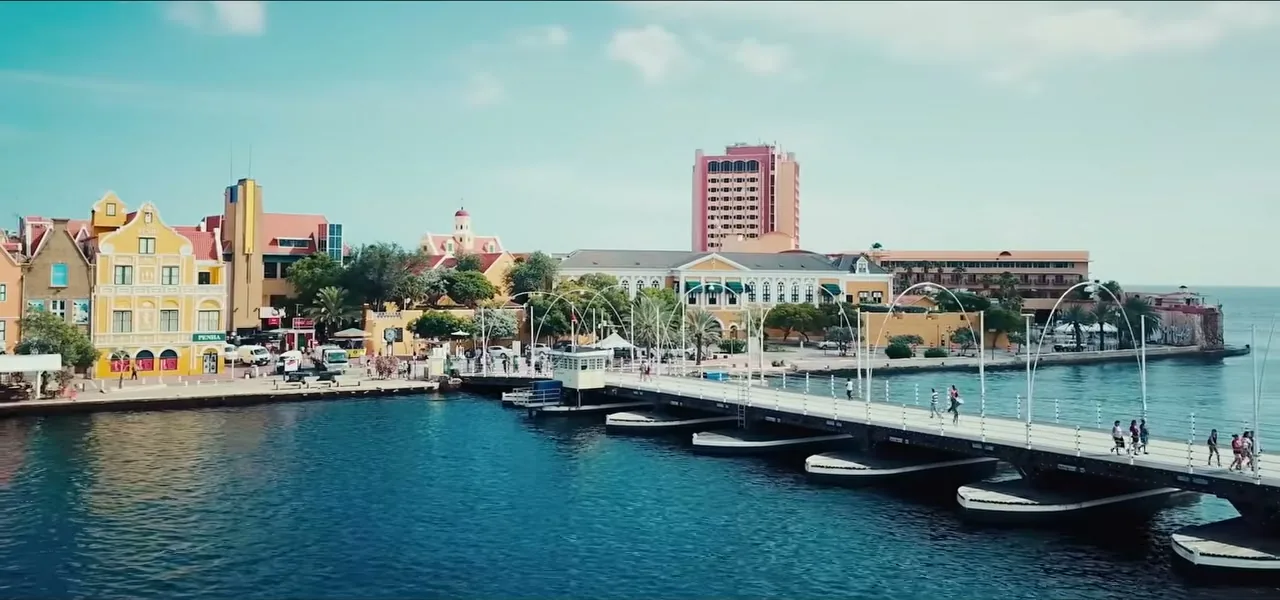
The capital, Willemstad, looks like someone picked up a slice of 17th-century Amsterdam and set it down on a turquoise sea, then let the sun bleach it into sherbet colours. The historic centre has been a UNESCO World Heritage Site since 1997, and it's genuinely one of the most photogenic city fronts anywhere — that famous row of merchant houses along the Handelskade, reflected in the water of Sint Anna Bay.
The city is split into two distinct halves, separated by that bay. On one side is Punda, whose name comes from "the point" — this is where the Dutch first settled and built. On the other side is Otrobanda, which means, with beautiful literalness, "the other side" in Papiamentu. My guide walked me between the two, and the way you cross is itself one of the island's signature attractions.
The Queen Emma Bridge connects Punda and Otrobanda, and it is not like other bridges. Built in 1888 by an American consul named Leonard Burlington Smith and named after a Dutch queen, it floats on a string of pontoons — fifteen of them — and instead of lifting, it swings sideways on the water to let ships pass into the harbour. Locals call it the "Swinging Old Lady." It opens dozens of times a day, and if you don't step off when the alarm rings, you can find yourself riding it slowly across the bay, stranded for up to 45 minutes until the ships have passed and it swings back. It's the oldest and longest floating pontoon bridge of its kind in the world.
Coral Stone and Chains: Otrobanda's Harder History
Beneath the postcard colours, Willemstad carries a heavier past, and to its credit the island doesn't hide it. The Dutch West India Company seized Curaçao from the Spanish in 1634, drawn less by the dry, unpromising land than by two things it had in abundance: salt, and one of the finest natural deepwater harbours in the Caribbean. That sheltered inner bay, the Schottegat, turned the island into a trading crossroads — and, darkly, into one of the largest slave-trading depots in the Americas. The prosperity behind those beautiful merchant houses and the suffering behind the coral walls come, in the end, from the same harbour.
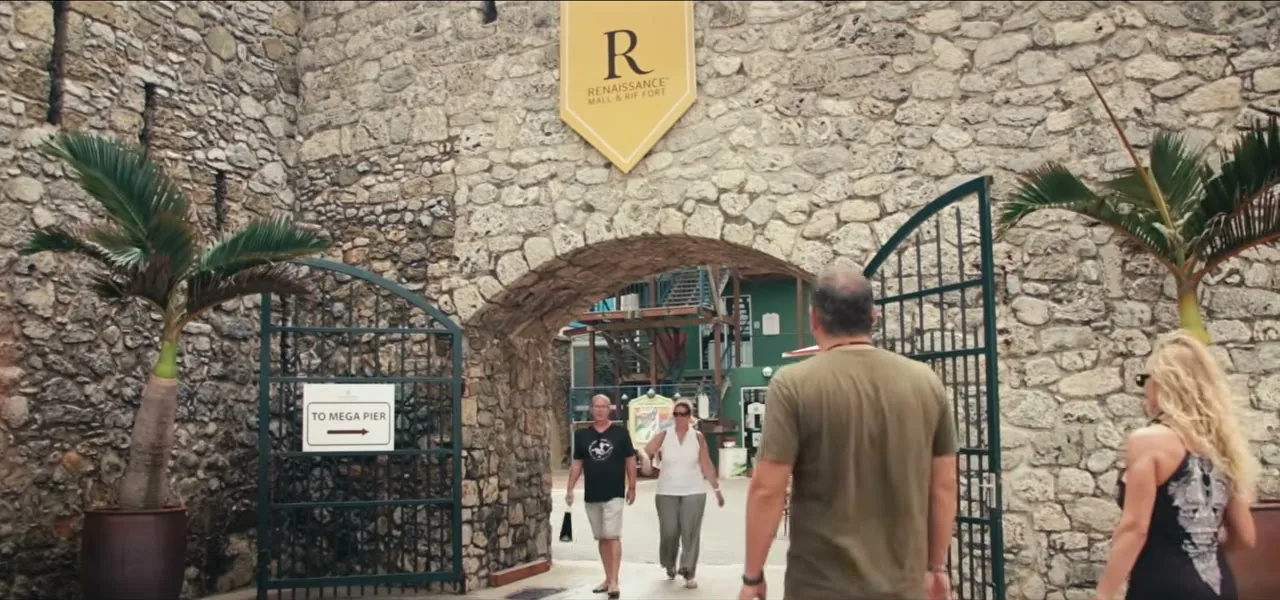
My guide took me to one of the old forts — this one opened in 1828, on the Otrobanda side, built to defend the harbour entrance after the British had occupied the island twice, finally leaving in 1816. What struck me was the building material: the original walls are made of coral stone, blocks of coral pulled straight off the coast and stacked into ramparts. You can still see the structure of the coral in the walls.
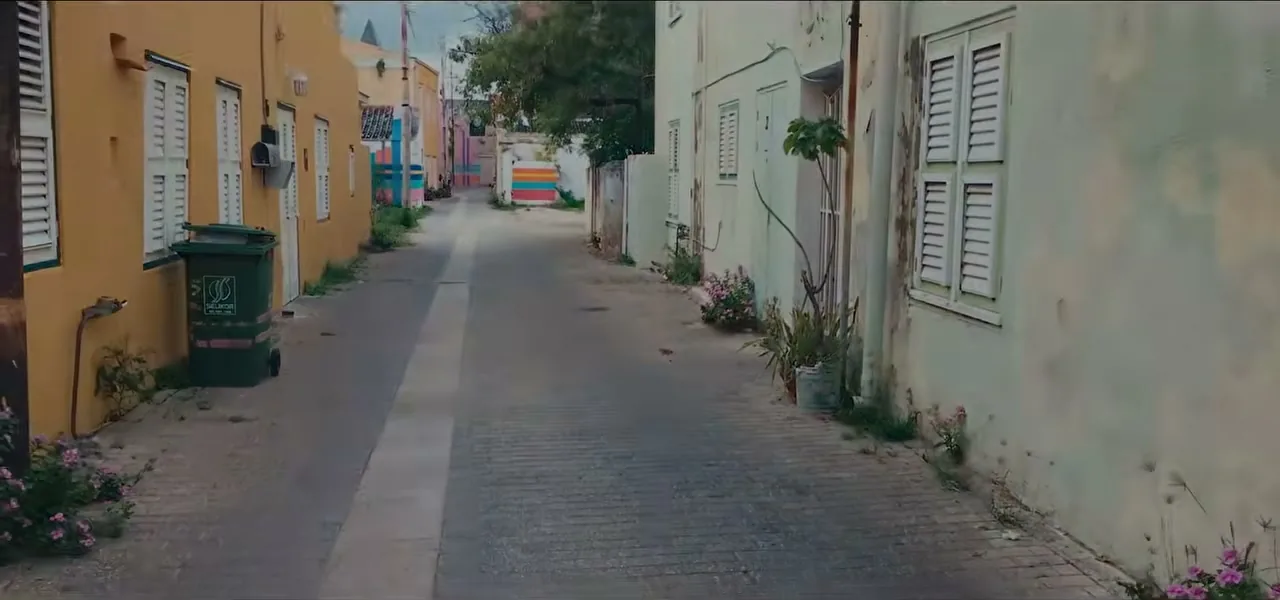
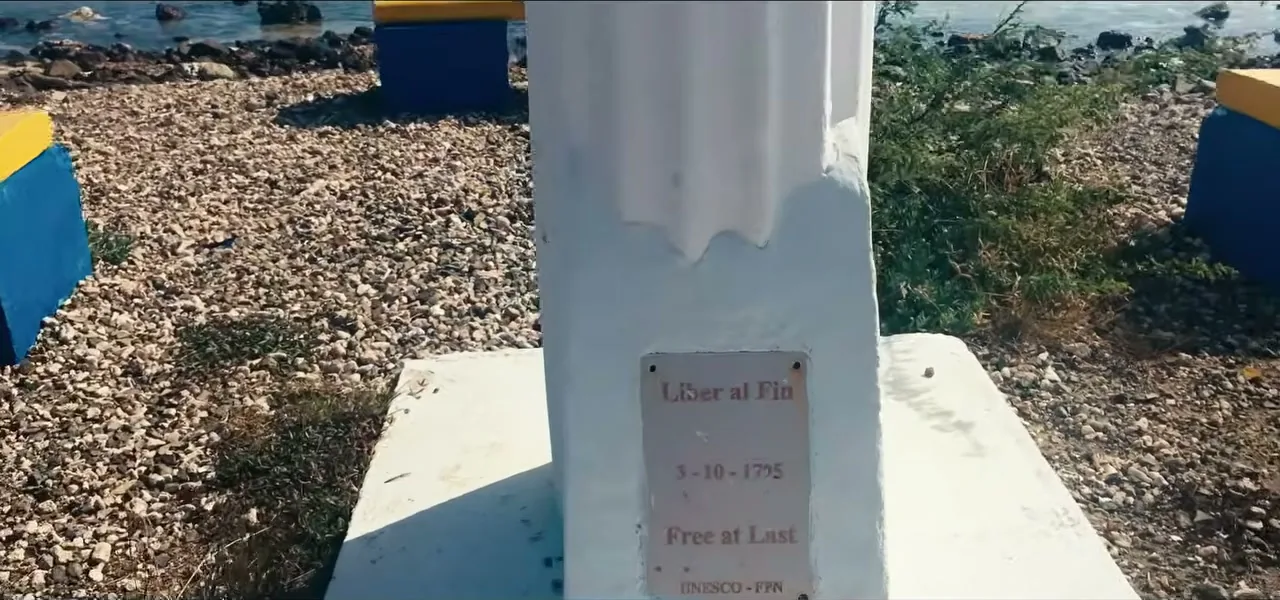
Otrobanda was also, for a long time, bound up with slavery. Curaçao was a major hub in the Dutch transatlantic slave trade, and the abolition of slavery here came only on 1 July 1863. Many of the newly freed people stayed on the plantations; many others came into the city, and Otrobanda became home to a community of freed slaves who became the island's goldsmiths, silversmiths, carpenters and shoemakers. Their streets were originally paved with those same coral cobblestones, split in half and laid flat-side up. That date — the first of July, 1863 — is still commemorated every year as Dia di Libertat, Freedom Day.
To get under the skin of the island, I partnered with the Curaçao Tourism Board, who paired me with the most charismatic guide I've had anywhere on this show — a man everyone simply calls Mister Reggie. Ask him what he's proudest of and the answer is immediate, and it's the same answer twice: the people.
Kòrsou ta dushi — bib'é, stim'é. Curaçao is lovely: live it, and enjoy it.
"Dushi": Eating Your Way Through Curaçao
Dushi is the word that unlocks the island. It means sweet, pretty, good, tasty, honey, dear — whatever nice thing you need it to mean. And there is no better place to understand it than at a plate of local food. Reggie took me to the central market and introduced me to the most famous cook in the country, Zus di Plaza — a woman whose food has been written up in magazines for years, who has spent 55 years at the market's stalls, and who cooks, unapologetically, with a cold beer in one hand and her daughter beside her.
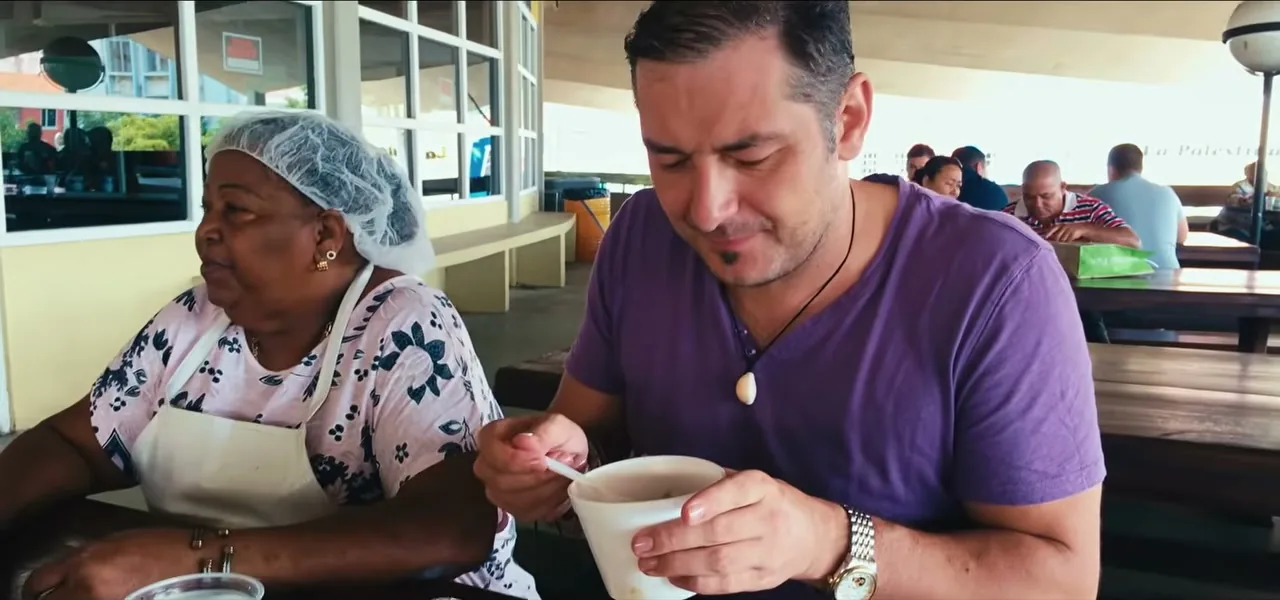
What landed in front of me was a crash course in Curaçaoan cooking. There was funchi, a cornmeal staple that's a close cousin of Italian polenta. There was goat, and red snapper, and pumpkin pancakes. And there was okra soup made with pigtail — a rich, green, faintly slippery soup that I loved, despite having to admit, to my shame, that I had never even heard of okra until that afternoon.
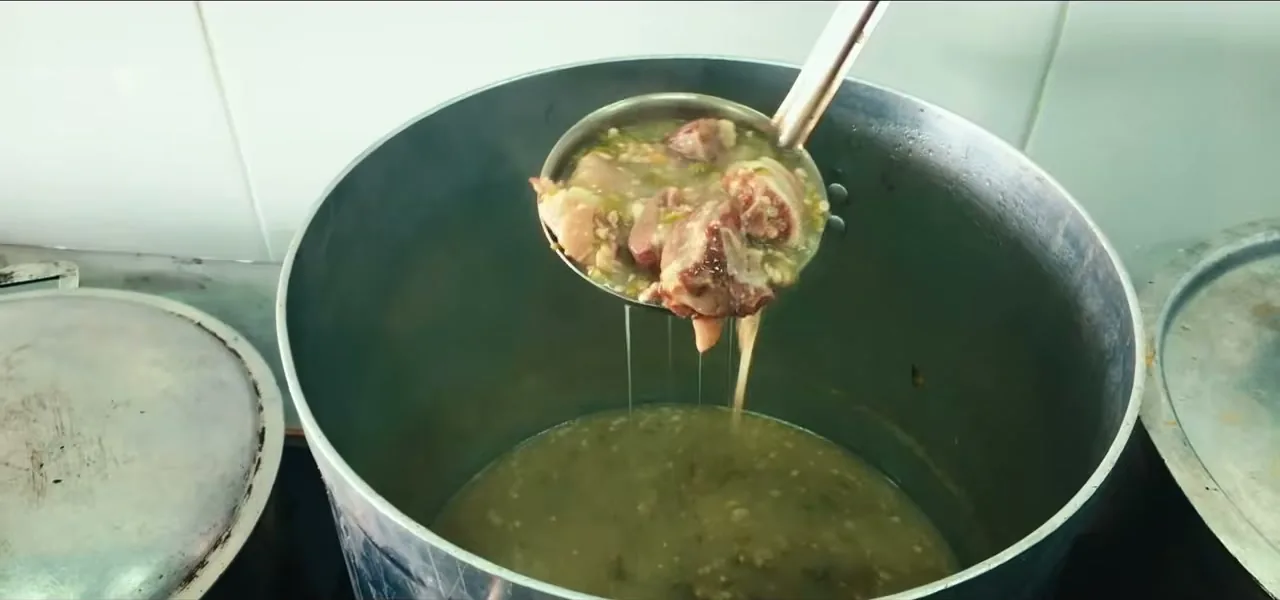
And that's only the gentle end of the menu. Curaçao's most famously wild dishes lean into the island's arid landscape and its history of making do. There's kadushi — a soup made from cactus, green and slippery and utterly indigenous, traditionally cooked with cured meats. And there's yuana stoba, a stew made from iguana — the locals affectionately call the iguana "tree chicken," and swear the stew has, let's say, restorative properties. That saggy iguana from the opening list? On Curaçao, it might be lunch.
The Bluest Drink in the World
If you've ever ordered a cocktail that arrived a shade of blue found nowhere in nature, you have Curaçao to thank. Blue Curaçao is exported to nearly every country on Earth, and yet the factory that makes the original is charmingly, almost comically, small. It's called the Landhuis Chobolobo, and Blue Curaçao has been distilled there by the Senior & Co family firm since 1896.
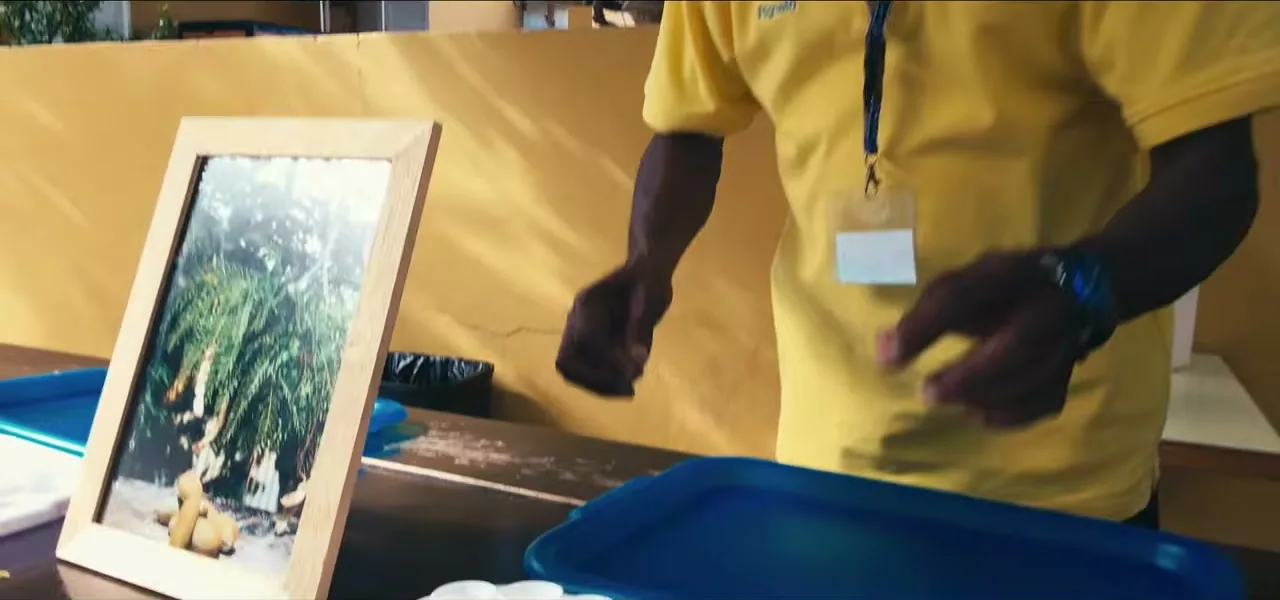
The secret is a fruit called the Laraha. Centuries ago, Spanish colonists planted sweet Valencia oranges here — but Curaçao's arid climate and poor soil transformed them into something new: a small, bitter, inedible orange with intensely fragrant peel. You can't do anything with the fruit itself. But dry the peel in the sun for about five days, infuse it in alcohol, add sugar and a secret blend of spices, and you get a rich orange liqueur — a triple sec, essentially, cousin to Cointreau.
Here's the twist that surprises everyone: the liqueur is naturally clear. That iconic electric blue? It's pure showmanship — food colouring added, since the 1960s, entirely for the visual drama of the cocktail. The distillery makes it in other colours too — red, green, orange — plus a growing range of flavours, from coffee and chocolate to tamarind, all from that same clear base. It's one of the great small revelations of the island: the world's most famous blue drink isn't blue at all until someone decides it should be.
There's a lovely bit of folklore attached to the name, too. My guide explained that the peels are cooked three times, which is why it's called a "triple sec." (Purists will tell you triple sec actually means "triple dry," but on Curaçao I'll take the local version.) The firm itself was founded by two families who had fled to the island to escape persecution in Europe — part of a long Sephardic Jewish presence in Curaçao that also built one of the oldest continuously used synagogues in the Americas, just a few streets away in Punda. Even the island's signature drink, it turns out, is a story about people arriving from somewhere else and making something new.
By the numbers: Curaçao by the numbers
- UNESCO listing
- Willemstad, since 1997
- Queen Emma Bridge
- Built 1888, floats on 15 pontoons
- Slavery abolished
- 1 July 1863
- Blue Curaçao distilled since
- 1896, at Landhuis Chobolobo
- Languages spoken
- 4 (Papiamentu, Dutch, English, Spanish)
- Klein Curaçao
- Uninhabited; ~2 hours by boat
Flamingos, Iguanas and a Peacock in the Car Park
Remember that opening list — the flamingos, the crazy-looking crab, the peacock guarding your car? None of it was a joke. Curaçao's dry, cactus-covered interior and its old salt pans make it a genuinely strange little ark. On the southwest coast, at the salt ponds near Jan Kok and Sint Willibrordus, wild flamingos gather to feed, wading pink against the white salt and blue water — the same brine that once made the island rich now draws the birds that have half become its mascot.
Away from the ponds, iguanas are simply part of the furniture. They sun themselves on walls, freeze mid-path when you pass, and — as the menu made clear — occasionally end up in the stew pot. You'll see them everywhere once your eye tunes in, prehistoric and unbothered. And yes, at more than one spot I found a peacock strutting the grounds like it owned the place, fanning its tail beside the parked cars as if it were on the payroll. Add in the hermit crabs clacking across the rocks and the sea turtles offshore, and you start to understand why my running joke about Curaçao being "the most random mixture of things in the world" is really just an accurate description.
Riding an Ostrich — The Reason I Came
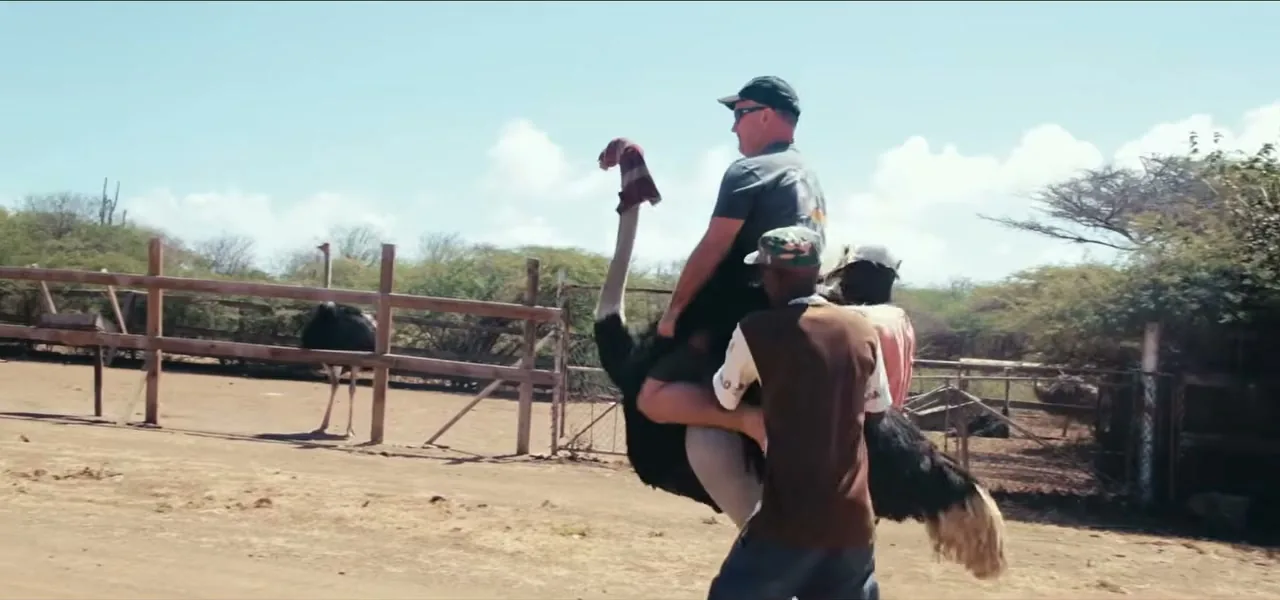
Now for the real confession. Of all the strange and wonderful things on the island, there was one that pulled me to Curaçao in the first place: I wanted to ride an ostrich. And because that experience deserves its own space, it became the second part of this episode — the ostrich-farm special.
▶ Curaçao — Riding an Ostrich
Part two: inside the Curaçao Ostrich Farm, one of the largest outside Africa
The Curaçao Ostrich Farm is one of the largest outside Africa. It started decades ago raising birds for meat and leather, then pivoted to tourism — and the tour is equal parts nature documentary and stand-up comedy, thanks to guides who clearly love these ridiculous animals. I learned that the ostrich is the largest bird on Earth; that it famously does not bury its head in the sand — that's a myth born of the way it lowers its head to the ground to listen for vibrations, or to turn its eggs; that its eye is larger than its brain; and that it defends itself with a forward kick powerful enough, the guides insist, to kill a lion. They only kick forward — never sideways or back.
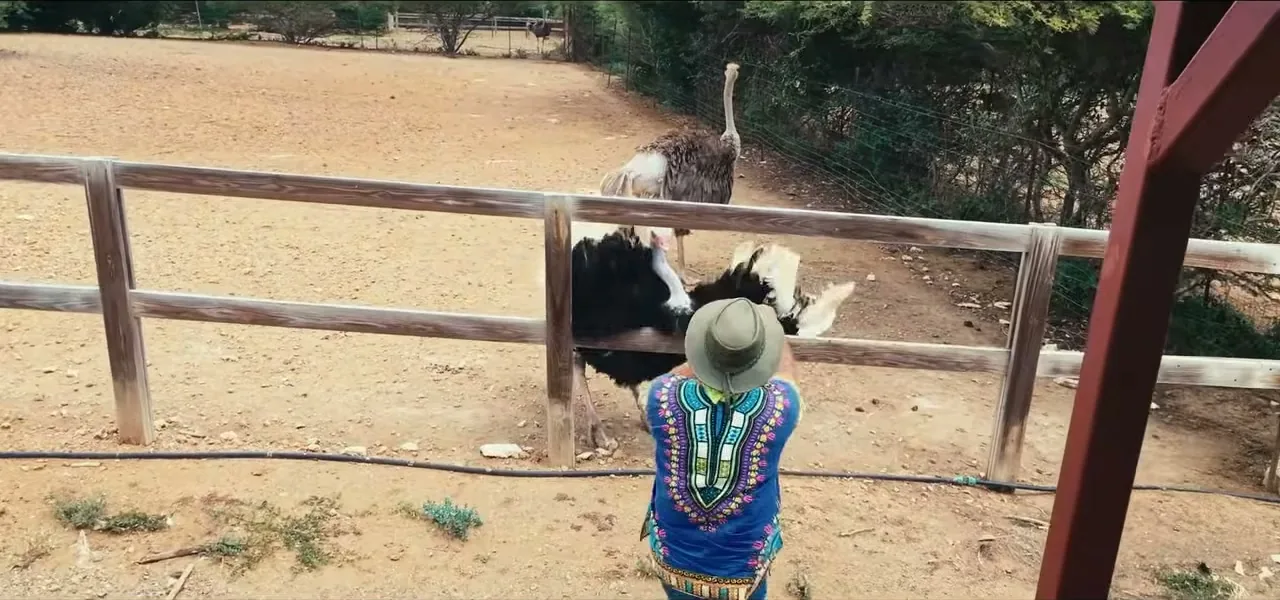
Then it was time to ride. As the person who had dragged everyone into this, I felt obliged to go first. Getting onto an ostrich is its own comedy — a graceless leap onto a bird's back — and staying balanced is harder still. The trick, they tell you, is to hold onto the wings and just let it go. An ostrich can run around 70 kilometres an hour, and with two handlers steadying it, you cling on while it lurches forward in a way that is nothing whatsoever like riding a horse. It is, objectively, absurd. It is also one of the most purely joyful things I have ever done — the kind of experience that makes a grown adult laugh like a kid.
Klein Curaçao: A Deserted Island With a Pink Lighthouse
When we'd survived the birds, the island offered its opposite: total stillness. About two hours by catamaran from the main island lies Klein Curaçao — "Little Curaçao" — a flat, uninhabited scrap of sand and coral in the open sea. There's almost nothing on it: a single ruined, candy-pink lighthouse, a scattering of stone ruins, a few haunting shipwrecks driven onto the reef by the fierce currents and northeast winds that make the island so hard to approach.
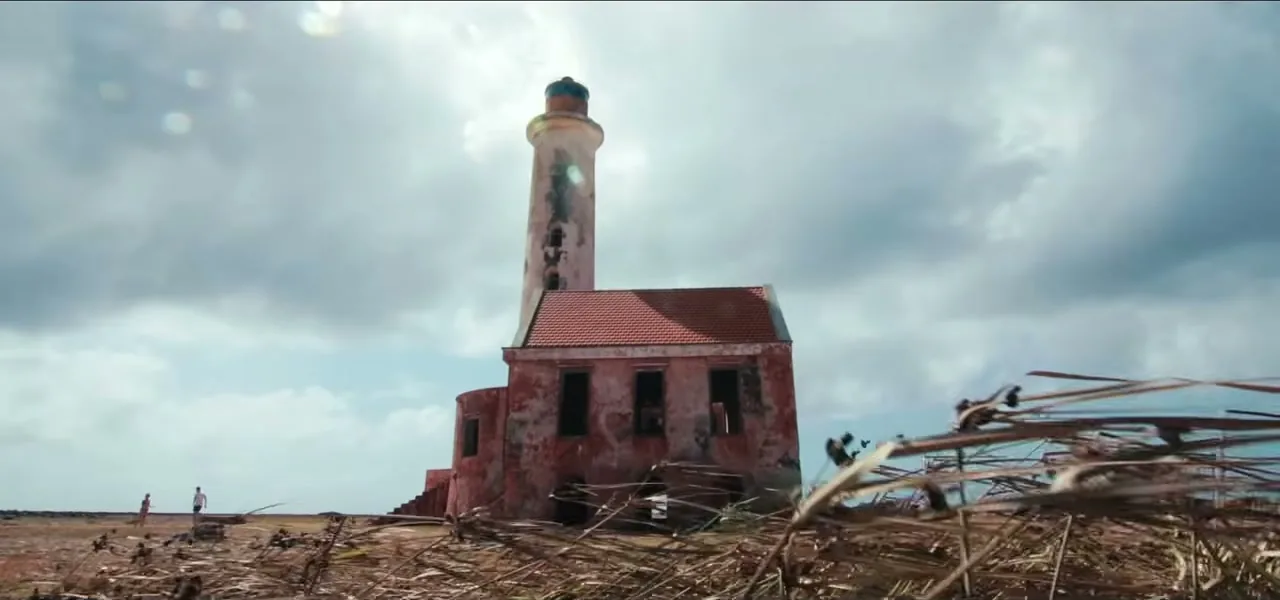
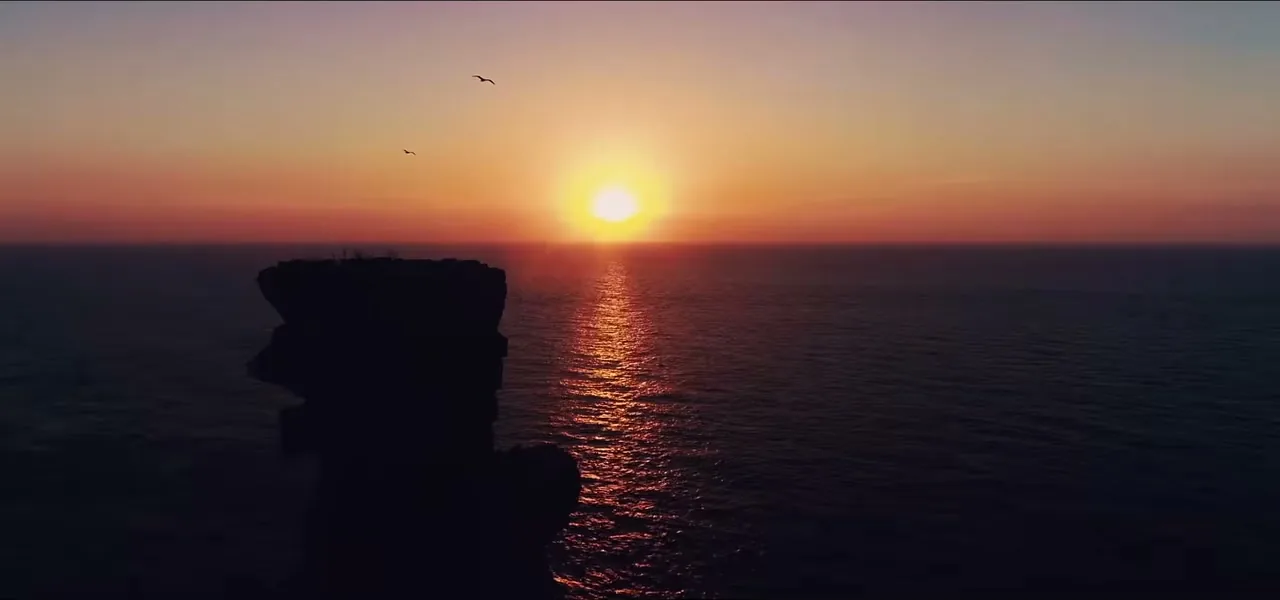
What it lacks in buildings it makes up for underwater. We snorkelled in absurdly clear water and swam with sea turtles that came right up to us, unbothered, curious. There were dolphins offshore. The beach is the kind of blinding white that doesn't look real, and because the island is uninhabited, the whole day has the feel of a private world you've been let into by accident. For a place I'd never heard of a week earlier, it was about as good as a beach day gets — and, being below the hurricane belt, the evening delivered one of those effortless, saturated Caribbean sunsets.
The Dart That Sent Me to the Maldives
Every episode has to end with a throw at the world map, and this one came with a twist. Because I had five good friends with me for the Spark Experience — the open invitation I post for fans to drop everything and join me somewhere random — I let them throw for me. Blindfolded. With rules: miss the map and you're out; hit a country I've already visited and you're out; hit the ocean and I go to the nearest landmass.
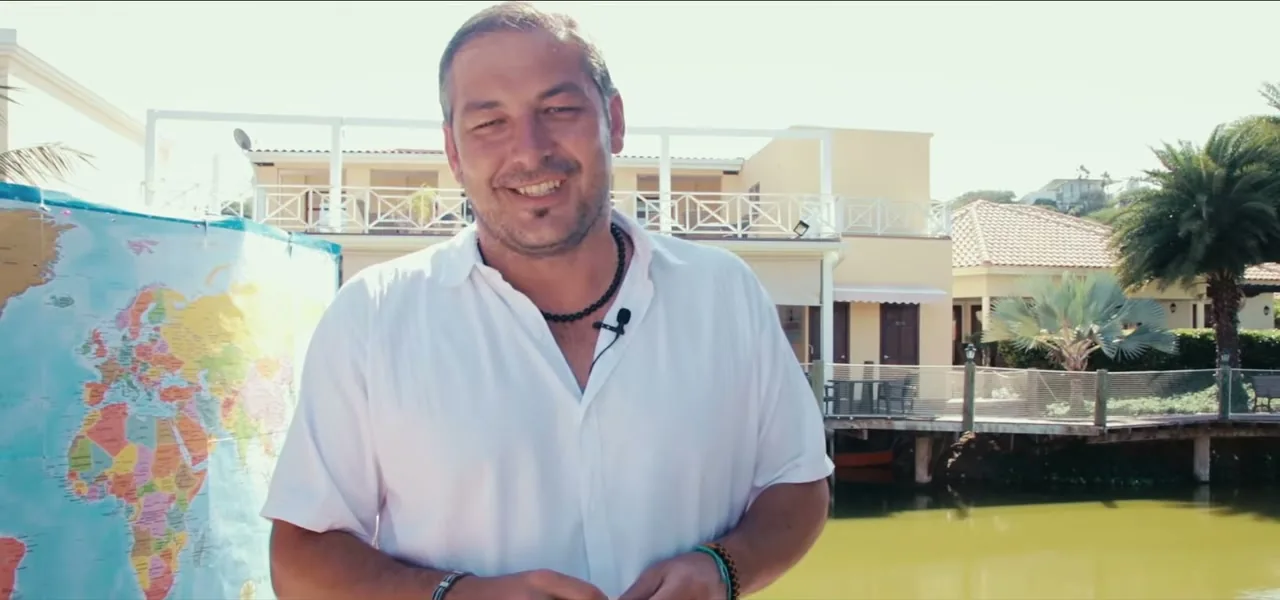
It came down to two of them, Amy and Lili, and a final round without blindfolds: Australia or the Maldives. The winning dart landed on the Maldives — one of the most sought-after destinations on the planet, and, as I said with some relief, not one of the world's troubled corners. So the dart has spoken, and the Maldives is where the next chapter goes.
When to Go, and How to Do It
The best news about Curaçao is that it doesn't really have a bad season. Sitting below the hurricane belt, it stays hot, dry and breezy essentially all year — the trade winds keep even the peak of summer comfortable, and the serious storms that batter the northern Caribbean almost never reach this far south. If you want the island at its liveliest, aim for late February, when Curaçao throws one of the biggest Carnivals in the Caribbean.
Getting around is easy: it's a small island, English is spoken everywhere, and a rental car will take you from the murals of Willemstad to the flamingo ponds, the ostrich farm and the wild northern coast in a single day. The local currency is the Caribbean guilder (often just called the florin), though US dollars are widely accepted. A day trip to Klein Curaçao needs booking ahead — the catamarans leave early and it's the one experience you won't want to miss. And wherever you end up, learn one word before you land. Dushi will get you a smile every single time.
An Island That Refuses to Be One Thing
I came to Curaçao because I wanted to ride an ostrich, which is a ridiculous reason to fly across the world, and I left understanding that the ostrich was never really the point. The point was everything around it: a Dutch city melting in Caribbean light, four languages in one mouth, a bitter orange that became the world's bluest drink, cactus in the soup pot, a freedom monument on coral stone, a pink lighthouse on an empty island, and strangers who folded me into their world within hours of meeting me.
If there's a lesson in all this randomness, it's the one Reggie kept coming back to, and the one my friends said after they'd ridden their own ostriches: it's easy to define yourself by what you can't do — I'm not brave enough, it's not the right time, it's not the right place. Saying "I'll do it" is almost always the better answer. On an island that speaks four languages and can't be summed up in one, that felt exactly right. Dushi.
Explore More Travel by Dart Journeys
- Back one dart to Argentina, the chapter that led me here.
- See where the dart sent me next: the Maldives.
- More of the Caribbean the dart uncovered: the Cayman Islands and Bermuda.
- Another two-island nation with a giant heart: Antigua and Barbuda.
Suggested Sources & Further Reading
To go deeper into Curaçao, these are some of the best authoritative resources:
- Curaçao — official tourism (curacao.com) — the island's official tourism site.
- UNESCO — Historic Area of Willemstad — the World Heritage listing for the capital's Dutch colonial harbour town.
- Encyclopædia Britannica — Curaçao — the island's geography and history.
- Encyclopædia Britannica — Willemstad — the colourful capital.
All facts verified September 2026.
Curaçao: traveler questions
Where is Curaçao and what country is it part of?+
Curaçao is a Caribbean island about 65 km off the coast of Venezuela — one of the 'ABC islands' with Aruba and Bonaire. It is a constituent country within the Kingdom of the Netherlands: self-governing in its own affairs but Dutch in defence and nationality, ever since the Netherlands Antilles was dissolved in 2010. It sits below the main hurricane belt, so it stays dry and sunny most of the year.
Why does Curaçao speak four languages?+
Most locals grow up speaking Papiamentu — a creole language born of the island's mixed African, Portuguese, Spanish and Dutch history — plus Dutch (the official administrative language), English and Spanish. Papiamentu is the heart of the island's identity; the word 'dushi', meaning sweet, nice, lovely, delicious, all at once, is the one you'll hear most.
What is Blue Curaçao and is it really from Curaçao?+
Yes. Blue Curaçao is an orange liqueur made from the dried peel of the Laraha, a bitter orange that evolved on the island from sweet Valencia oranges planted in Curaçao's arid soil. It has been distilled at the Landhuis Chobolobo estate by Senior & Co since 1896. The liqueur is naturally clear — the famous electric-blue colour is added purely for the drama of the cocktail.
Can you really ride an ostrich in Curaçao?+
You can. The Curaçao Ostrich Farm — one of the largest outside Africa — runs tours where, with two handlers, brave visitors can sit on and ride a full-grown ostrich. It is the single reason I chose Curaçao, and it forms the second part of this episode. Ostriches are the largest birds on Earth, can sprint around 70 km/h, and kick hard enough to injure a lion, so it is not for the faint-hearted.
What is Klein Curaçao?+
Klein ('Little') Curaçao is a flat, uninhabited island about two hours by boat southeast of the main island. It is famous for a candy-pink lighthouse, several dramatic shipwrecks, clear water full of sea turtles, and a single stretch of perfect beach. You go for the day by catamaran to snorkel and swim, and leave before dark.