The Rules
The Rules of Travel by Dart
People often ask whether Travel by Dart is genuinely random, what happens when the dart chooses somewhere impossible, and whether I have ever refused to go. These are the rules — and yes, I actually follow them.
How is the dart thrown?+
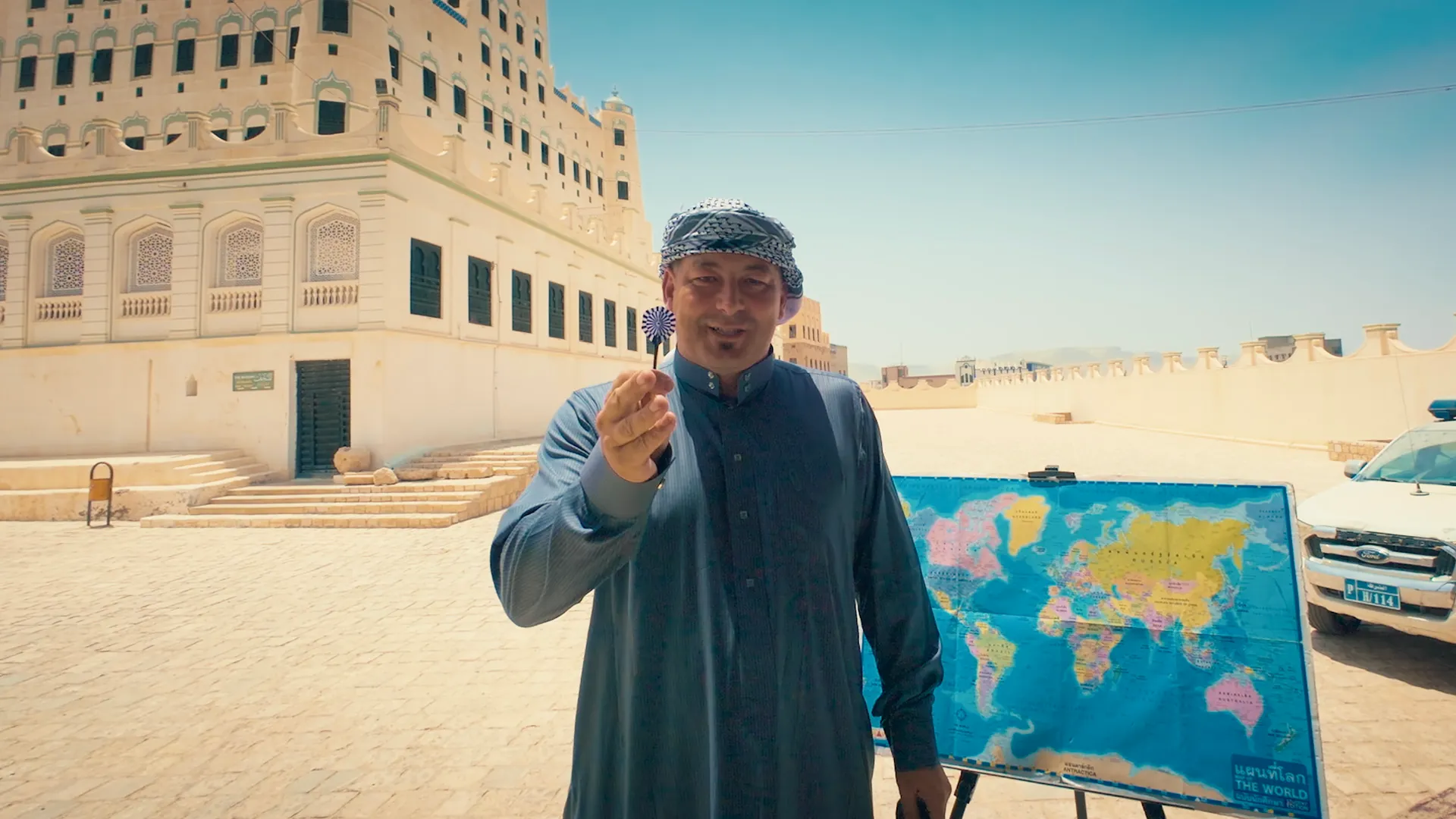
I stand in front of a world map, put on a blindfold, turn away from the map, and throw the dart without seeing where it is going. Wherever it lands determines the next destination.
The ceremony may happen in an unusual location, sometimes with a guest throwing the dart, but the fundamental rule remains the same: the destination is not selected in advance.
The dart decides first. The planning begins afterward.
Is it really random?+
Yes. That is the entire point of Travel by Dart.
I do not quietly choose a destination and recreate the throw later for the camera. The uncertainty is what makes the concept exciting. I might land somewhere easy, somewhere expensive, somewhere unfamiliar, or somewhere that creates an enormous production challenge.
I have built the show around surrendering control. Once the dart lands, my job is to find the story waiting there.
What happens if the dart lands in the ocean?+
It has happened. A LOT of times.
When the dart lands in water, I look at its exact position and determine the closest reasonable land destination. Depending on the location, that might mean the nearest island, coastline or country.
The objective is not to use the ocean as an excuse to throw again. It is to follow the intention of the dart as faithfully as possible and turn even an inconvenient landing into an adventure.
What if it lands somewhere like North Korea?+
The dart has already landed in North Korea.
At the moment, however, the country is closed to ordinary international tourism and filming access is extremely restricted.
That does not mean I rejected the destination. It means the trip is waiting.
North Korea remains on the Travel by Dart list, and should the borders reopen under circumstances that make safe and lawful filming possible, I intend to honour the throw.
Can you throw the dart again?+
Not simply because I dislike the result.
A difficult, expensive or unfamiliar destination is not grounds for another throw. That would defeat the entire philosophy of the show.
A destination may need to be postponed when travel is impossible, borders are closed or there is a serious and immediate safety issue. But postponing a destination is different from replacing it. The original landing remains part of the journey.
I do not fold just because the hand is difficult.
How are the trips financed?+
Travel by Dart is an independently produced international television series. The expeditions have been made possible through a combination of my own production investment, destination and hospitality partnerships, sponsors, media relationships, licensing and distribution opportunities.
Every journey is different. Sometimes local partners assist with transportation, accommodations, access, guides or experiences. Other times, I assume most of the production cost myself.
However a trip is supported, the story and the destination must remain authentic. A partnership can help me reach a place, but it cannot determine where the dart lands.
What happens if a country becomes too dangerous?+
Safety must come before television.
I have filmed in countries that many travellers would consider extremely challenging, including Yemen (watch the episode here). But there is a difference between entering a difficult destination with proper preparation and entering a situation where filming would be reckless.
I study the conditions, work with trusted people on the ground and adjust the timing or route when necessary. If a destination becomes temporarily inaccessible or presents an unacceptable threat to the crew, the trip is postponed — not erased.
The commitment remains, but courage should never be confused with carelessness.
Have you ever refused a destination?+
No.
Some destinations have taken longer to reach than others. Some have required extensive planning, difficult permissions, unusual routes or much larger budgets. But I have never looked at a legitimate dart landing and said, “I simply do not want to go there.”
That would break the promise at the centre of the show.
The easiest destinations do not always create the best stories. Very often, the places that initially seem the most complicated become the most meaningful.
What was the longest Travel by Dart trip?+
Japan.
I spent approximately four months there, making it the longest continuous Travel by Dart journey I have undertaken.
Japan offered far more than could be understood through a quick visit. The longer I remained, the more layers appeared: extraordinary traditions, futuristic cities, deeply rooted etiquette, remote communities, remarkable food and countless unexpected human stories. Watch the episode here.
It became much more than a filming trip. For several months, it became my life.
What was the hardest country you filmed in?+
Yemen.
Filming there involved extraordinary logistical, cultural and security challenges. It was a destination that required constant awareness, trusted local support and an understanding that conditions could change quickly.
At the same time, Yemen also challenged many of the assumptions people carry about it. Beyond the headlines, I encountered history, hospitality, architecture and human stories that deserve to be seen.
It was the hardest journey I have filmed — but also one of the strongest examples of why Travel by Dart exists. The purpose of the show is not merely to visit comfortable places. It is to go where the world sends me, look beyond expectations, and return with a story.