Season 1 · Episode 3
Bermuda
Pink sand, a shipwreck that founded a nation, and the honest truth about the Bermuda Triangle — from someone who threw a dart at the map and actually went.
On this page ▾
By Sorin Mihailovici · Travel by Dart · Last updated July 2026 · ~16 min read
I don't choose where I travel. I throw a dart at a world map and go wherever it lands. After my birthday voyage through Indonesia, my dart actually broke mid-throw, so I bought a new pack in Singapore and tried again from a hotel lobby. The dart drifted out into the Atlantic, between the U.S. and the Caribbean, and stuck on a speck I could barely see. "It looks like Bermuda. Yep — it is Bermuda. What a crazy location."
Here's what I quickly learned, and what this article is really about: almost everything most people believe about Bermuda is wrong. It's not in the Caribbean. Its famous Triangle isn't dangerous. And the pink sand isn't a marketing gimmick. What follows isn't a travel diary — it's the fact-checked guide I wish I'd had before I landed, covering the Triangle, the pink, the shipwreck that founded a nation, and the delightfully odd island built on top of it all. My next dart, thrown underground in a cave, would send me on to Portugal — but Bermuda earned every minute.
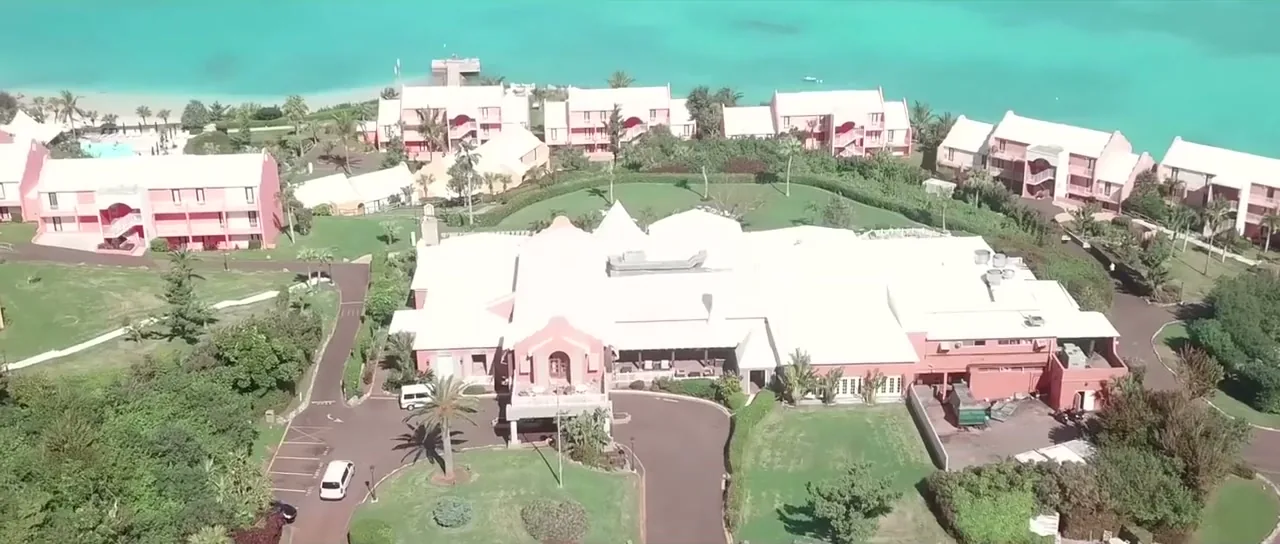
Quick facts: Bermuda at a glance
- Status
- British Overseas Territory (the oldest)
- Location
- North Atlantic, ~1,035 km off North Carolina
- Capital
- Hamilton
- Population
- ~64,000
- Area
- ~54 km² (21 sq mi), ~181 islands
- Language
- English
- Currency
- Bermudian dollar (pegged 1:1 to USD)
- Famous for
- The Triangle, pink sand, Bermuda shorts, reinsurance
- Speed limit
- 35 km/h — island-wide
Where Is Bermuda? (Not the Caribbean)
Let's clear up the biggest myth first, because even seasoned travelers get it wrong: Bermuda is not in the Caribbean. It sits by itself in the North Atlantic, roughly 1,035 kilometres (about 640 miles) off the coast of North Carolina — more than 1,500 km north of the nearest Caribbean island. The tropical feel is real (it's warmed by the Gulf Stream), but geographically it's closer to New York than to the tropics.
Bermuda is small and singular: about 181 islands totalling just 54 square kilometres — you could drive its length in under an hour, if it let you (more on the cars later). It's the oldest British Overseas Territory, self-governing, with a population around 64,000 and its capital at Hamilton. Warmed by that Gulf Stream, it also hosts some of the northernmost coral reefs on Earth — the same reefs that, as we'll see, sank hundreds of ships.
By the numbers: Bermuda
- Population
- ~64,000
- Land area
- ~54 km² (21 sq mi)
- Islands
- ~181 (linked by bridges)
- Distance to nearest land
- ~1,035 km (North Carolina)
- First settled
- 1609 (Sea Venture wreck)
- Documented shipwrecks offshore
- 300+
- Island-wide speed limit
- 35 km/h
- Coral reefs
- Among the world's northernmost
The Truth About the Bermuda Triangle
The whole reason my dart landing here felt so cinematic is the Bermuda Triangle — that stretch of ocean where ships and planes supposedly vanish into thin air. I went in wanting the truth, and the truth, from the locals and the data, is refreshingly boring: there is no mystery.
The Triangle is a loosely drawn region with corners near Miami, San Juan (Puerto Rico), and Bermuda, covering roughly 500,000 square miles. And according to the science, nothing unusual happens inside it. The U.S. Coast Guard has stated plainly that disappearances there are no more frequent than in any other heavily travelled patch of ocean, and Lloyd's of London — which insures the world's shipping — has never charged a premium for Triangle voyages. As the U.S. government's own NOAA puts it, there's no evidence the area is any more dangerous than the rest of the Atlantic.
So why do so many ships lie on the seabed here? Real, unglamorous reasons: the Gulf Stream can turn calm water violent within minutes, the Atlantic hurricane belt runs straight through, and Bermuda is ringed by shallow, hard-to-see reefs. One local guide, Aaron, pointed me to a beautiful irony — Gibbs Hill Lighthouse. Its beam reaches some 20 miles out to sea; for centuries, storm-tossed ships spotted it, steered gratefully toward land… and ran straight onto the reefs. A curse and a blessing in one.
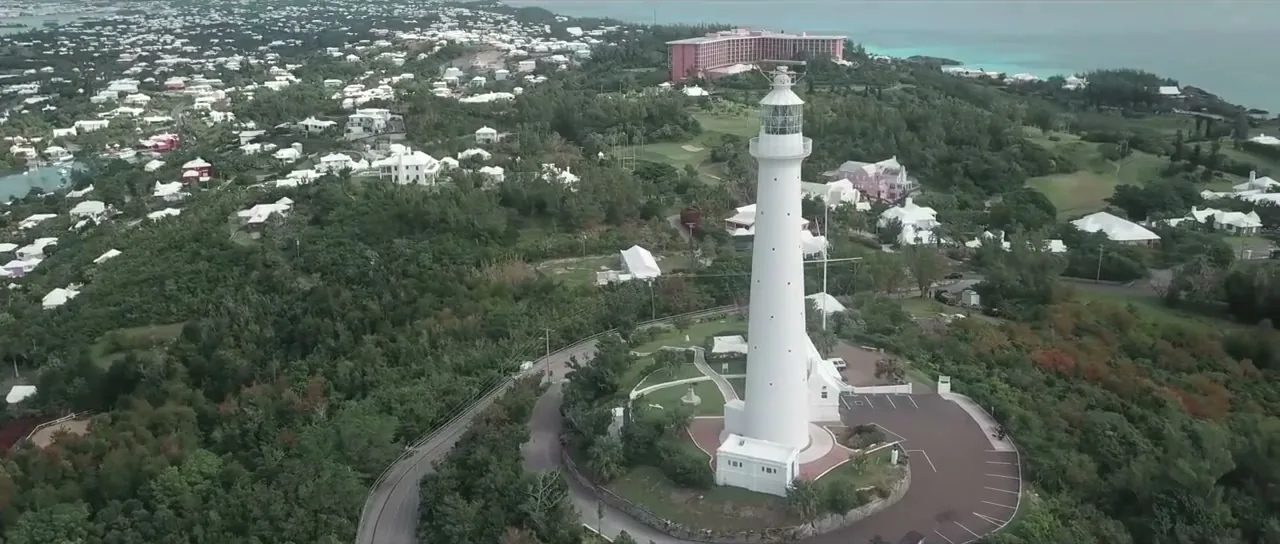
There are definitely people who are afraid of the Triangle. To us, it adds a little something — a little mystique. But the thing people need to know is: it's not dangerous at all.
The Triangle by the numbers
HMS Vixen: A Shipwreck You Can Snorkel
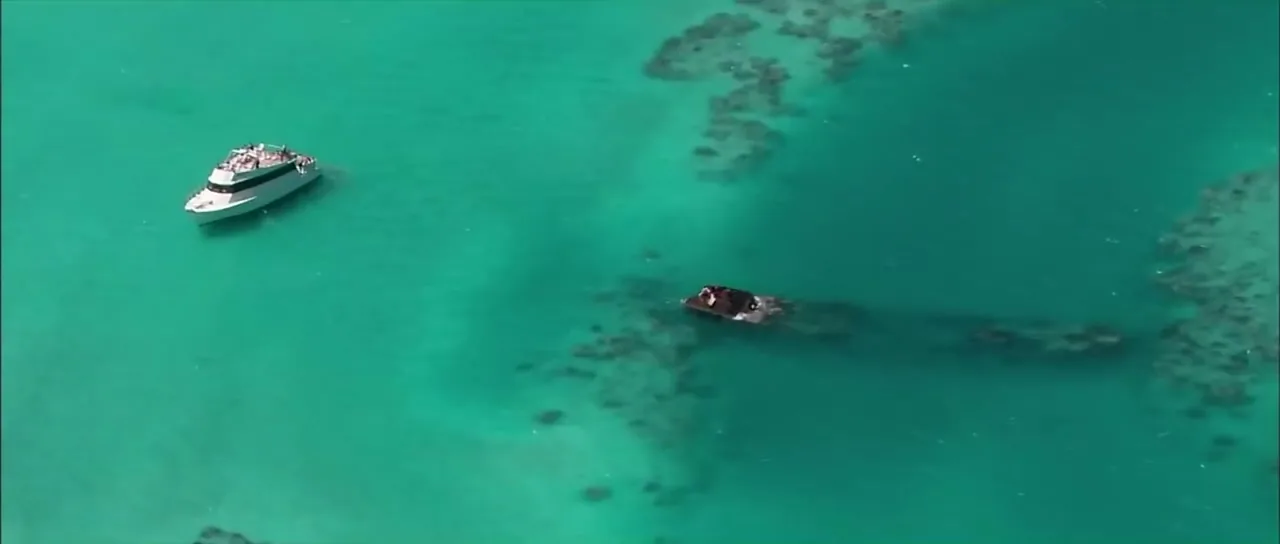
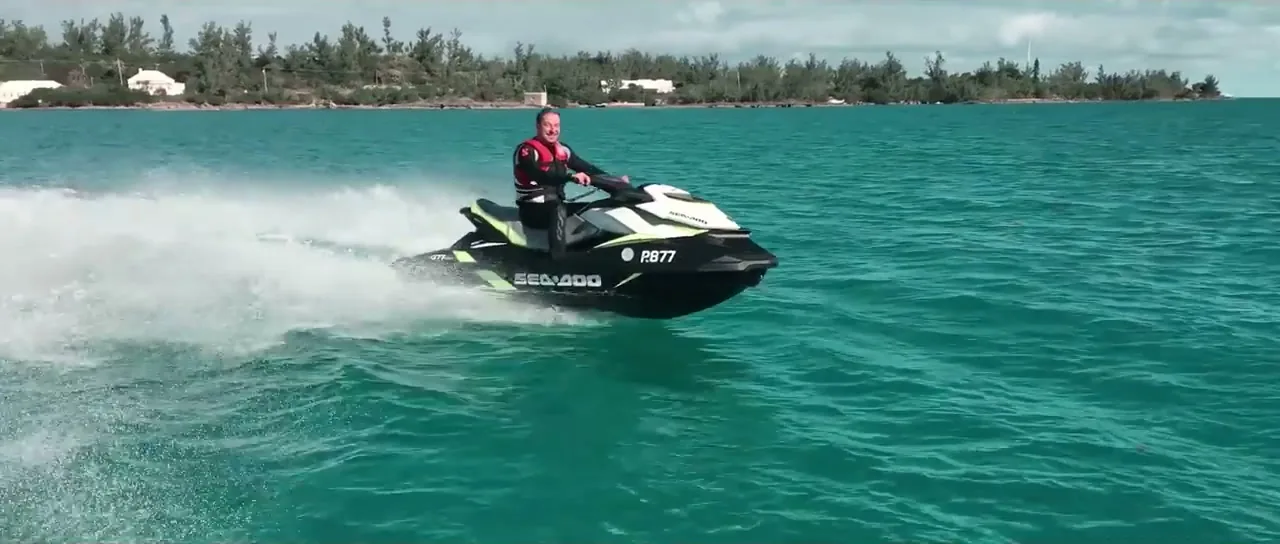
To see the "Triangle" up close, I took a jet ski out past Somerset, over water so clear the shipwrecks show as dark shapes from the surface. The one we visited is the HMS Vixen) — and its story is the Triangle in miniature: no aliens, just human decisions.
The Vixen was a British armoured gunboat with a ram bow, built to sink enemy ships by charging them. There was just one problem — she was hopelessly slow, topping out around 8 knots while the sailing ships she was meant to ram did 10–12. Useless as a warship, she was sent to Bermuda and, in 1896, deliberately scuttled across a gap in the reef (Chubb Cut) to block the channel from torpedo boats. Today she rests in about 10 metres of water near Daniel's Head with her bow still poking above the surface — a popular snorkel and glass-bottom-boat stop. Around 200 ships have gone down around this island; the Vixen is just the one you can stand on.
Why Is Everything Pink?
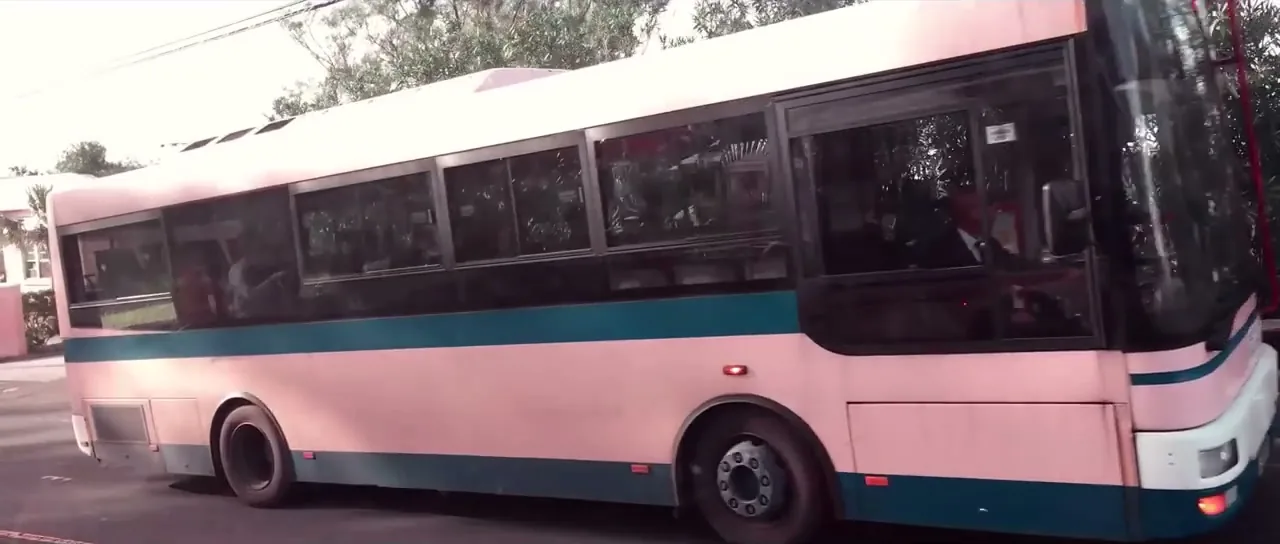
I stepped off the plane and the first thing I noticed wasn't the Triangle — it was the pink. Pink houses, pink buses, pink hotels, pink beaches, even pink food. Bermuda leans into it hard. But the pink beaches, at least, are pure science.
Bermuda's sand gets its blush from a tiny red organism called Homotrema rubrum — a single-celled foraminifer that builds a vivid red calcium-carbonate shell on the shaded undersides of the reefs, pulling iron from the seawater to do it. When the forams die, the surf grinds their red shells into fragments and washes them ashore, where they mix with the white skeletal sand of corals and shells. The result is that famous rosy tint. So the next time someone says Bermuda's pink sand is a filter, you can tell them it's a graveyard of microscopic red creatures — which is somehow both grosser and more wonderful.
The Shipwreck That Founded a Nation
Bermuda's entire existence as an English-speaking place comes down to a disaster. In 1609, the Sea Venture — flagship of Admiral Sir George Somers, bound for Jamestown — was caught in a hurricane and, after days of bailing, deliberately run onto Bermuda's reefs to save the roughly 150 souls aboard. Every one of them survived.
Stranded, the castaways spent months building two new ships, Deliverance and Patience, from Bermuda cedar and the wreck's timbers, then sailed on to Jamestown — arriving just in time to save that starving colony from collapse. A vivid first-hand account of the ordeal, written by survivor William Strachey, made its way back to London, and most scholars believe William Shakespeare drew on it for The Tempest — his tale of a shipwreck on a magical, uninhabited island. Bermuda was formally settled in 1612, and the Town of St George, founded that year, is the oldest continuously inhabited English town in the New World and a UNESCO World Heritage Site.
St George's and the Ducking Stool
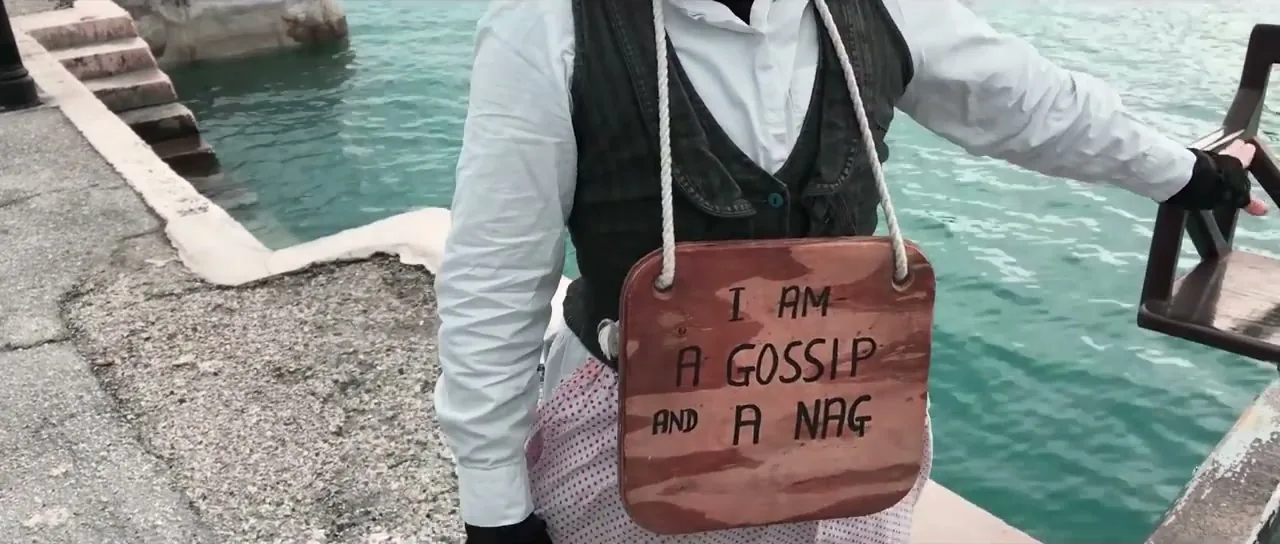
In St George's, history isn't behind glass — it's dunked in the harbour twice a week. I watched a reenactment of 17th-century colonial punishment in which a woman, convicted of being "a gossip and a nag," is strapped to a ducking stool and plunged into the sea to shouts from the crowd. It's played for laughs now (the poor "offender" went under about seven times while I cringed), but it's a genuine window into how petty offences — a stolen cow, a sharp tongue — were policed through public humiliation.
The Royal Naval Dockyard and a House Made of Iron
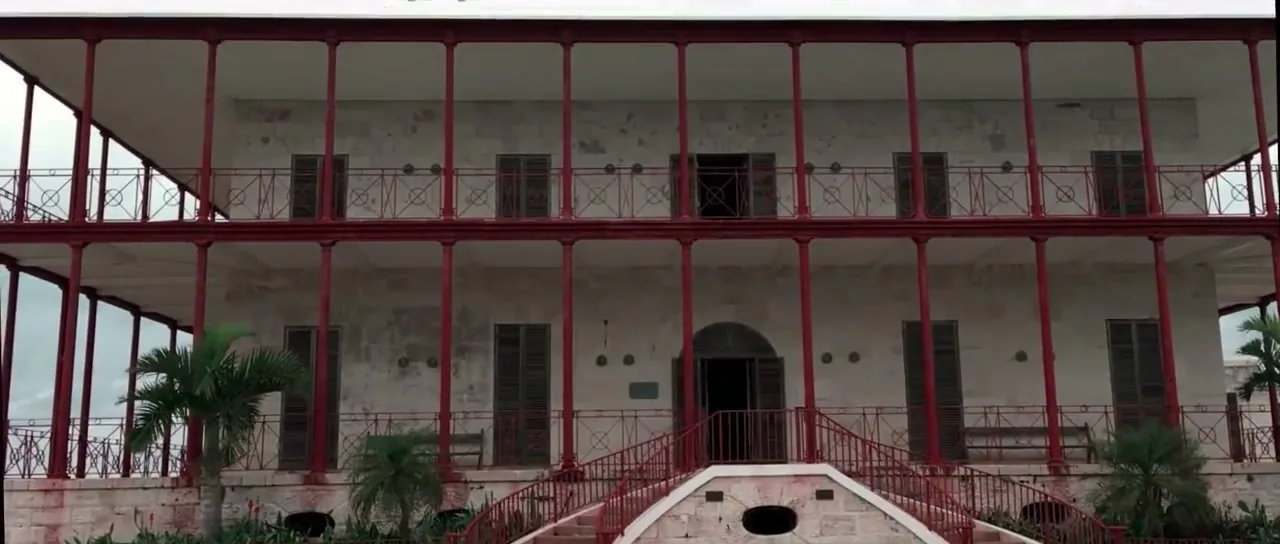
My favourite spot on the island sits at its western tip. After the American colonies won independence in 1783, Britain suddenly needed a new mid-Atlantic naval base — and chose Bermuda. The result was the vast Royal Naval Dockyard, and at its heart, the Commissioner's House. Built in the 1820s, it holds a genuine world record: it's the world's first prefabricated cast-iron residential building, its structural ironwork forged in England and shipped across the ocean to be bolted together here. After decades of neglect it was rescued by a 20-year restoration and now houses the National Museum of Bermuda. The whole Dockyard is, honestly, a work of art.
Getting Around: The Twizy and the 35 km/h Island
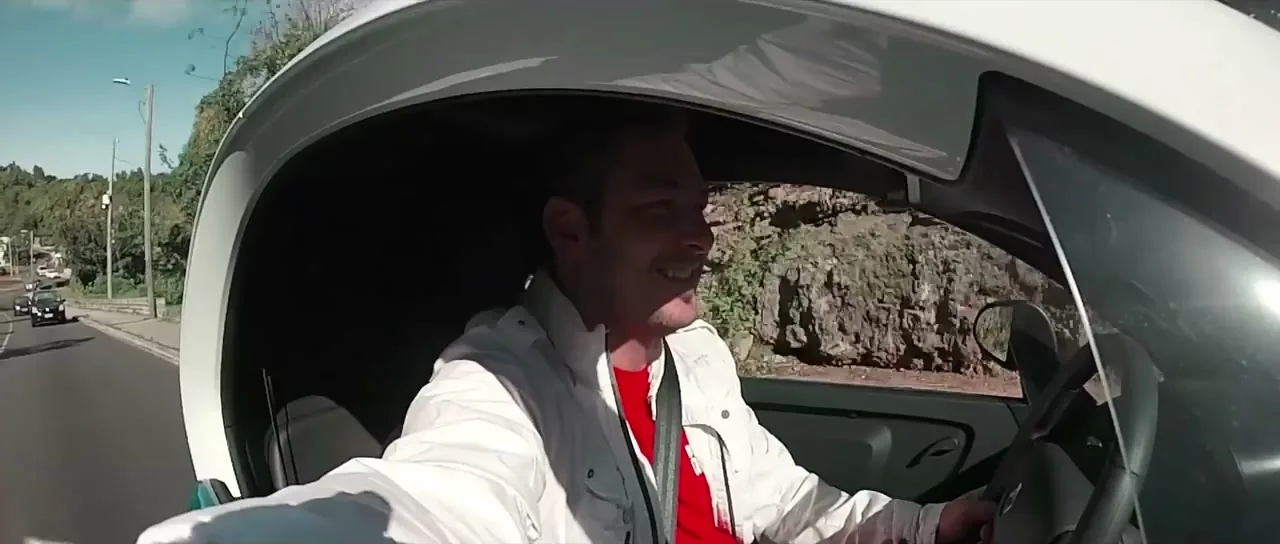
Here's a quirk that says a lot about Bermuda: for decades, tourists were not allowed to rent cars at all — the island is small and crowded, and it kept private car numbers strictly limited. Visitors used buses, scooters, and ferries. The modern workaround is the Renault Twizy, a tiny two-seat electric pod (built in Spain, shipped in) that you can rent, doing 60–80 km on a charge. I loved it — right up until I tried to keep pace with local traffic and discovered the island's other rule.
That rule: the speed limit across all of Bermuda is 35 km/h — one of the lowest national limits anywhere. On an island 21 miles long, nobody's in a hurry. And when you do need to cross the water, you might pass Somerset Bridge, billed as the world's smallest drawbridge: its "draw" is a single removable plank about 18 inches wide — just enough for a sailboat's mast to slip through.
Bermuda Shorts: The Island's Gift to Menswear
Everyone's heard of Bermuda shorts. Almost nobody wears them correctly. As Rebecca, founder of TABS — The Authentic Bermuda Shorts — set me straight, the baggy cargo things sold abroad are an impostor. Real Bermuda shorts are formal business attire: cut just above the knee and worn with long socks, a blazer, and a tie.
The origin is wonderfully specific. Around 1914, a Bermuda tea-room owner named Nathaniel Coxon hemmed his employees' trousers into shorts because the tea room was too hot. A visiting British Royal Navy admiral saw the look, thought it sharp, and adapted it for the military — and a business uniform was born. By the 1930s the knee socks were added, and to this day Bermudian businessmen wear tailored shorts to the office, blazer and all.

It's a dress short, worn with long socks and a blazer. The baggy ones with big side pockets? Those aren't Bermuda shorts — those are cargo shorts, or whatever you want to call them.
What to Eat and Drink in Bermuda
Bermudian food is British colonial comfort spiced with the tropics. The national dish is fish chowder — a dark, rich soup that isn't authentic until you stir in two things at the table: sherry peppers (a spicy hot sauce) and a splash of black rum. Order it and watch whether they bring the condiments; if they don't, as one local warned me, you're getting the tourist version.
To drink, Bermuda has two icons. The Dark 'n Stormy — Gosling's Black Seal rum floated over ginger beer — is the national drink, and Gosling's guards it so fiercely that they trademarked the cocktail: legally, it isn't a Dark 'n Stormy without their rum. The other is the Rum Swizzle, the unofficial national cocktail, poured at the centuries-old Swizzle Inn. Add a bowl of chowder at a spot like the historic Hog Penny and you've eaten your way through Bermudian history.
Whales, Caves, and the Underground Dart
Two last surprises. First, Bermuda is a whale-watching destination: it sits on the migration route of the North Atlantic humpback whale, a final rest stop as the animals swim north from the Caribbean each spring. Come in March or April and you can see them breach by the thousands — one of those sights, as I said in the episode, that become genuinely addictive.
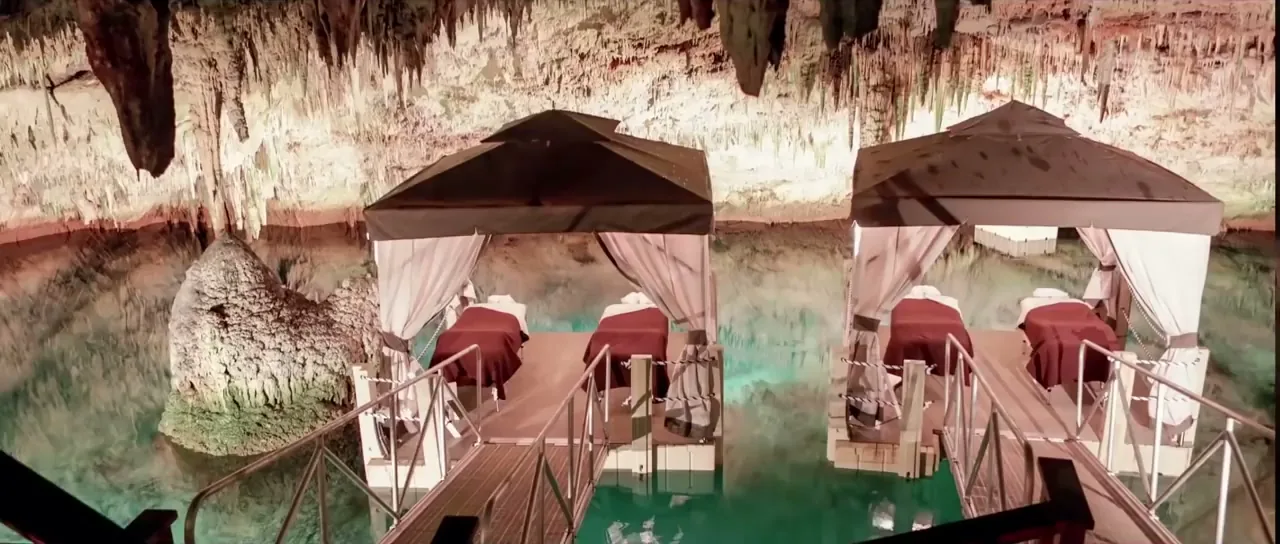
Second, the caves. I stayed at Grotto Bay, where a limestone cave beneath the hotel doubles as a spa. It was there, underground for the first time in the show's history, that I set up the world map and threw my next dart. It skipped across the Atlantic and landed on Portugal — my next destination, and my first time trying to learn Portuguese.
Things That Surprised Me About Bermuda
- Bermuda is in the North Atlantic, not the Caribbean — closer to Canada's latitude than the tropics.
- The Bermuda Triangle is statistically no more dangerous than any other ocean, per the U.S. Coast Guard.
- Lloyd's of London charges no extra insurance for Triangle voyages.
- The pink sand is made of ground-up red foraminifera shells.
- The island has no rivers or lakes — everyone drinks rainwater caught on their roof.
- The 1609 Sea Venture wreck likely inspired Shakespeare's The Tempest.
- St George's is the oldest continuously inhabited English town in the New World.
- The Commissioner's House is the world's first cast-iron prefab home.
- Tourists couldn't rent cars here for decades; the speed limit is just 35 km/h.
- Somerset Bridge is the world's smallest drawbridge — an 18-inch gap.
- Real Bermuda shorts are business wear, worn with a blazer, tie, and knee socks.
- The Dark 'n Stormy is a trademarked cocktail — Gosling's rum only.
- Locals proudly call themselves "Onions."
- Bermuda is a global reinsurance capital — a financial giant on 21 square miles.
- Everything, and I mean everything, is available in pink.
The Island That Debunks Itself
I threw a dart at a map expecting a spooky, dangerous, half-Caribbean rock, and I found the opposite: a proud, funny, self-aware little nation that spends half its time politely correcting your assumptions. The Triangle isn't scary. The sand really is pink. A shipwreck built the place, Shakespeare borrowed it, and the locals will serve you a trademarked cocktail while wearing shorts to work.
That's the gift of throwing the dart — you land somewhere you'd never have chosen and leave understanding it better than most people ever will. Bermuda was one of the biggest surprises the map has handed me. From a cave beneath a Bermudian hotel, the next dart sent me to Portugal — but I left the Triangle grinning, and entirely un-vanished.
Explore More Travel by Dart Journeys
- Go back one dart to my Indonesia episode — the birthday voyage that came before Bermuda.
- See where the dart sent me next: Portugal.
- Visit another Triangle corner — my Puerto Rico episode.
- Where it all started: the Easter Island adventure.
- More island surprises in my Cuba episode.
Suggested Sources & Further Reading
To go deeper into Bermuda, these are some of the best authoritative resources:
- Go To Bermuda — the official tourism site of Bermuda, with attractions and trip planning.
- NOAA — Does the Bermuda Triangle really exist? — the U.S. government's plain-English debunking.
- National Museum of Bermuda — the Dockyard, the Commissioner's House and Bermuda's maritime history.
- Encyclopædia Britannica — Bermuda — an authoritative overview of geography, history and government.
- UNESCO — Historic Town of St George — the World Heritage listing for St George's and its fortifications.
- Bermuda Institute of Ocean Sciences — pink sand — the science behind the colour.
All facts verified July 2026.
Bermuda: traveler questions
Is the Bermuda Triangle actually dangerous?+
No. Both the U.S. Coast Guard and Lloyd's of London have concluded that ships and planes disappear in the Bermuda Triangle no more often than in any other heavily travelled stretch of ocean — Lloyd's hasn't charged higher insurance for the area since the 1970s. The real culprits behind local shipwrecks are the Gulf Stream's sudden storms, human error, and Bermuda's ring of shallow reefs.
Where exactly is the Bermuda Triangle?+
It's a loosely defined region of the North Atlantic with vertices roughly at Miami (Florida), San Juan (Puerto Rico), and Bermuda — covering around 500,000 square miles. The boundaries aren't official; different sources draw them differently.
Why is Bermuda's sand pink?+
The pink comes from a tiny red single-celled organism called Homotrema rubrum — a foraminifer that builds a red calcium-carbonate shell on the undersides of the reefs. When they die, waves grind the red shells into the white sand, tinting Bermuda's beaches pink.
Is Bermuda in the Caribbean?+
No — this is the most common misconception about Bermuda. It sits alone in the North Atlantic, roughly 1,035 km (about 640 miles) off the coast of North Carolina, far north of the Caribbean. It's a British Overseas Territory of about 64,000 people, and home to some of the world's northernmost coral reefs.
What is the connection between Bermuda and Shakespeare?+
In 1609 the English ship Sea Venture wrecked on Bermuda's reefs in a hurricane. All ~150 aboard survived, built two new ships, and sailed on to save the struggling Jamestown colony. A first-hand account of the wreck circulated in London and is widely believed to have inspired William Shakespeare's play The Tempest.
What are real Bermuda shorts?+
Authentic Bermuda shorts are formal business wear, not beach cargo shorts. They end just above the knee and are worn with long socks, a blazer, and a tie — a genuine part of Bermudian office dress. The style traces to 1914 and was popularized after a WWI-era British admiral adopted the look.
What should I eat and drink in Bermuda?+
The national dish is fish chowder, served with sherry peppers and black rum stirred in. The national drink is the Dark 'n Stormy — Gosling's Black Seal rum over ginger beer (a cocktail so tied to Bermuda that Gosling's trademarked it). The Rum Swizzle is the unofficial national cocktail.