Season 5 · Episode 3
Scotland
Castles, legends and a proud identity carved into the landscape.
On this page ▾
By Sorin Mihailovici · Travel by Dart · Last updated September 2026 · ~14 min read
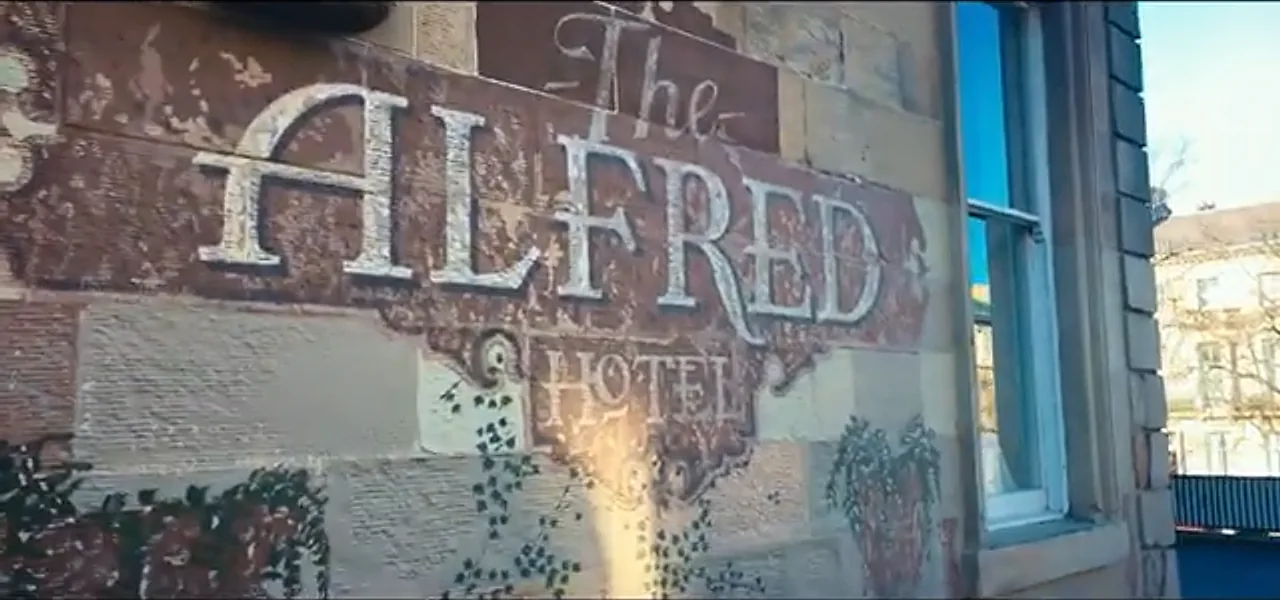
Most travellers, when they book a hotel, are quietly hoping the room is empty. I went looking for the opposite. Before I'd even landed in Scotland, I'd spent hours online searching not for the best-reviewed hotel in Glasgow, or the best located — but for the most haunted one. That's how I ended up at a place called The Alfred, a handsome old townhouse turned hotel with a long, strange history and a resident ghost named Mary. To me, that's not a red flag. That's an invitation.
This is what the dart does: it strips away the plan. There was no itinerary, no "top ten," no safe version of the trip. Just a country I'd always wanted to see — one of those places that lives in your imagination as kilts, bagpipes, castles in the mist and a monster in a lake — and a few weeks to find out how much of that image was real. Nearly all of it, as it turned out. And then some.
Quick facts: Scotland at a glance
- Capital
- Edinburgh (not Glasgow)
- Largest city
- Glasgow (~625,000)
- National dress
- The kilt (earliest record 1594)
- National dish
- Haggis, with neeps and tatties
- Most famous legend
- The Loch Ness Monster ('Nessie')
- Word for lake
- 'Loch'
- Two great castles
- Stirling and Edinburgh
- The dart's next stop
- India
Why the North Felt Like the Right Landing
I have to be honest about how I arrived here, because it matters to the story. I threw the dart on my last morning in Cappadocia, in a small piece of traditional Turkish dress, with the balloons rising behind me — and it hit the very top of the United Kingdom. The top of the UK is Scotland. I was genuinely, unreasonably happy: it's a country I'd wanted to see my whole life.
But I'll also say what I said on camera. Turkey had been hard on me. After that trip I had to step away for a while and go through some health treatments, and it took something out of me. By the time I got to Scotland I'd lost some weight, I was feeling much better, and I was ready — maybe more than ready — to throw myself into an adventure again. Scotland, it turned out, was the perfect place to be rebuilt by. There's something about cold clean air, big landscapes and a bit of whisky that recharges a person. I left the country with my batteries full and more motivation than I'd had in months. Not every destination gives you that. This one did.
Glasgow: Grand, Gothic and Gloriously Alive
Let me clear something up straight away, because the whole world seems to get it wrong — and I nearly did too. Glasgow is not the capital of Scotland. Edinburgh is, and has been for centuries. But Glasgow is the country's largest city, with around 625,000 people at its core and well over a million across the greater area, and it has an energy the capital can't quite match. There's always something happening — a match, a gig, a festival, a march — and every neighbourhood has its own character.
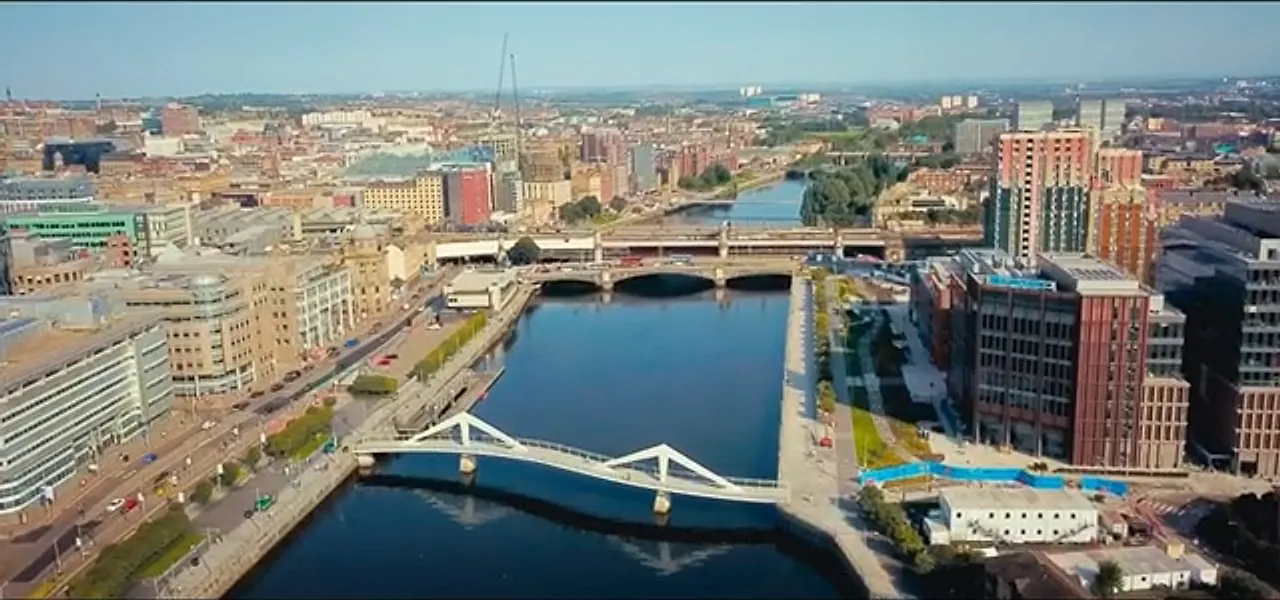
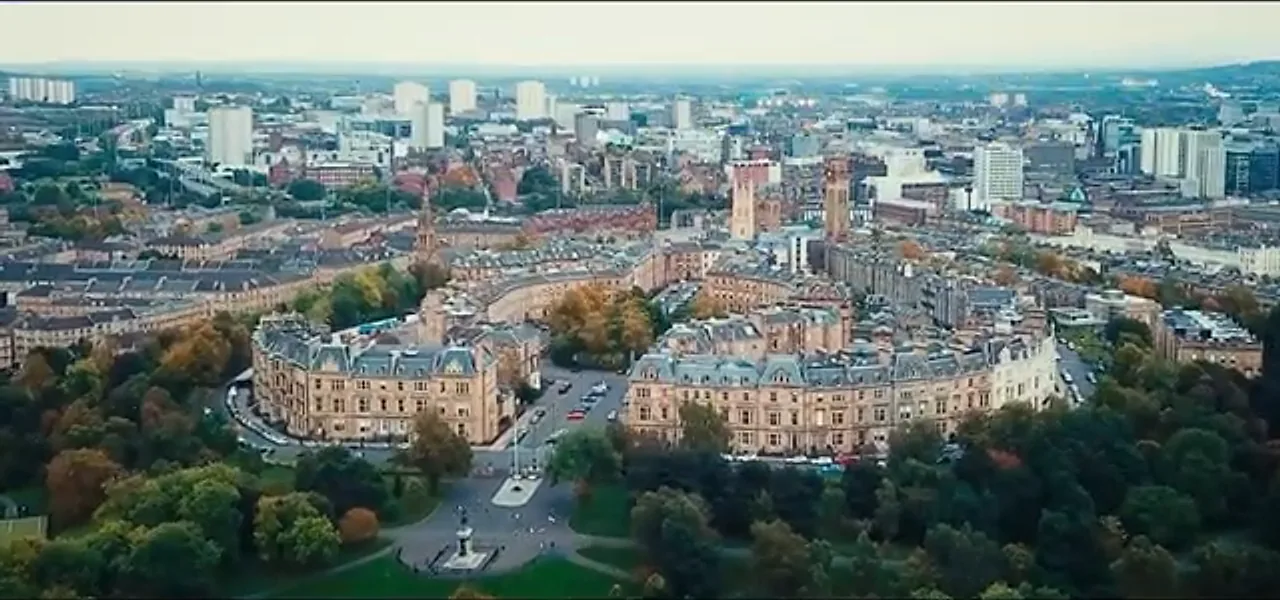
The architecture alone is worth the trip. Glasgow is a layered mix of Victorian, Art Nouveau and modern, and it wears its wealthy industrial past on its sleeve — grand stone terraces, sweeping crescents, ornate civic buildings that were built to impress and still do. The City Chambers on George Square look like a palace. But for my money the single most breathtaking building in the city is the University of Glasgow. Founded in 1451, it's one of the oldest universities in the English-speaking world, and its main building — a soaring neo-Gothic pile with a bell tower and cloisters — genuinely stops you in the street. I've been to over a hundred countries, and you won't see a university building quite like it anywhere. No surprise that Hollywood keeps borrowing it for films.
Just as memorable, in a darker key, is the Glasgow Necropolis — a vast Victorian cemetery on a hill beside the cathedral that locals call the City of the Dead. It opened in 1832, holds the remains of some 50,000 people, and is crowded with elaborate Gothic tombs and monuments winding up the slope. Walking its paths at dusk is exactly as cool and as creepy as it sounds. In a city this full of life, it's a striking reminder of how the Victorians thought about death: not to be hidden, but to be honoured in stone, with a view over the whole city.
A Night with Mary the Ghost
Which brings me back to The Alfred. The legend goes that before it was a hotel, the building was a private home — a grand one, with a wealthy owner, a family, and servants living the classic upstairs-downstairs life. The ghost, they believe, is Mary, the daughter of the original owner, who died in the house and, in the words of the staff, "just never left."
The stories are specific, which is what makes them stick. Guests on the upper floors have reported waking to the feeling of someone sitting at the end of their bed, in rooms where they were sleeping alone. Housekeepers have prepared a room, gone downstairs to fetch fresh linen, and come back up to find the pillows already made. The night staff sometimes hear music playing on an upper floor and go looking for the source — and never find it. I listened to all of this with a big grin on my face, because this is exactly the kind of thing I travel for.
We've had guests, especially on the higher floors, say they've felt a presence in the room — that they've woken up to someone sitting at the end of their bed. And they'd been the only person in there.
So naturally I requested a room on the higher floors, where Mary is said to be most active. And then — anticlimax — I slept like a baby. Not a creak, not a chill, not a note of phantom music. If Mary was there, I think I offended her by ignoring her completely. Sometimes the best ghost story is the one where nothing happens, and you lie awake for a while wanting it to.
The Kilt: Eight Yards of Wool and a Knife in Your Sock
You cannot come to Scotland and not wear a kilt. I know some men feel shy about it. I am not one of those men — if you've watched the show, you know I'll try anything a culture puts in front of me. So I went looking for the real thing, the full package, and I found Michael, the owner of A1 Kilt in Glasgow, one of those instantly likeable characters who knows everything about his craft.
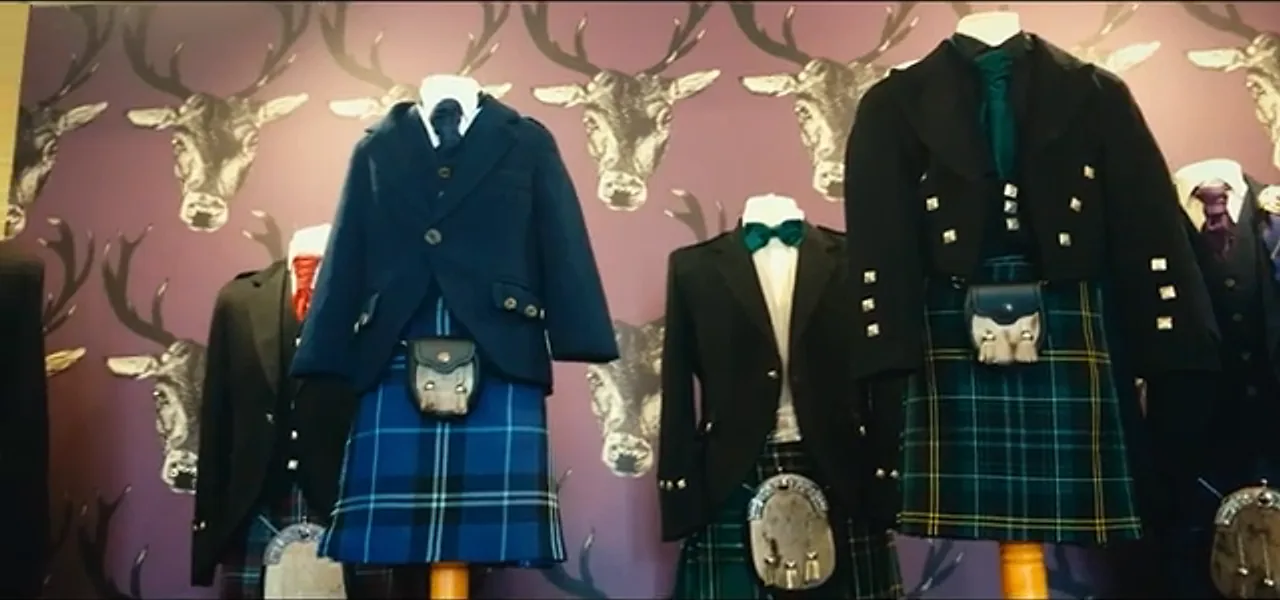
Michael gave me the history as he dressed me, and it's older and stranger than most people think. The earliest written record of the kilt dates to 1594, though the garment is believed to be up to two centuries older than that, first worn in the Highlands. Originally it wasn't the tailored short kilt we picture today but a belted plaid — a huge single piece of cloth wrapped around the waist, thrown over the shoulder and simply tied with a belt. The neat, formal kilt came later. Here's a fact worth correcting, though: Highland dress was actually banned for a time — not in some vague distant past, but specifically under the Dress Act of 1746, after the Jacobite rising, when the government tried to break the clan system by outlawing the very clothes. The ban lasted until 1782. What was once forbidden is now the proudest thing a Scotsman can wear.
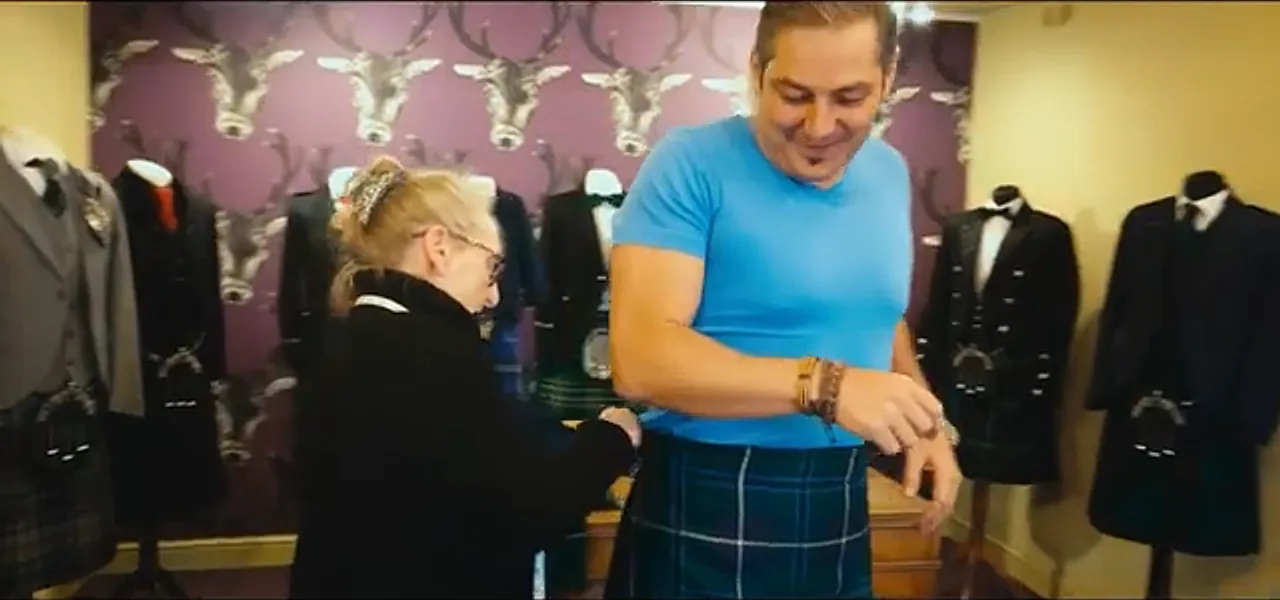
The outfit is a whole system. There's the jacket and formal shirt, the neckwear, the long socks — called hose — and, most importantly, the sporran: a small pouch worn at the front, because a kilt famously has no pockets, so that's where your money and your essentials go. The kilt itself is a serious object — eight yards of material, all of it 100% wool and, if it's done properly, entirely handmade. And then there's the sgian-dubh, the little knife tucked into the top of your sock. Michael told me that for a Scotsman, the sgian-dubh is the single most important part of the whole outfit — the piece everyone wants to get their hands on.
Once I was fully dressed I felt, in my own words, like William Wallace going to war — though Michael gently pointed out I looked more like I was going to a wedding. And then came the question every visitor eventually gets asked: what does a man wear under the kilt? Tradition is unambiguous. A true Scotsman wears nothing at all; wear anything underneath and you're quietly judged to be a bit soft. Michael's advice for when you're asked was perfect: just tell them you're keeping an eye on the Loch Ness Monster. Which is a good enough excuse as any to talk about Nessie.
The Truth About Nessie
Loch Ness is a deep freshwater lake in the Scottish Highlands — and remember, in Scotland a lake is a loch. It's an enormous, dark, cold body of water, and for nearly a century it has been home to the most famous cryptid on Earth. So let me do something useful and actually walk through the legend, because the real story is more interesting than the myth.
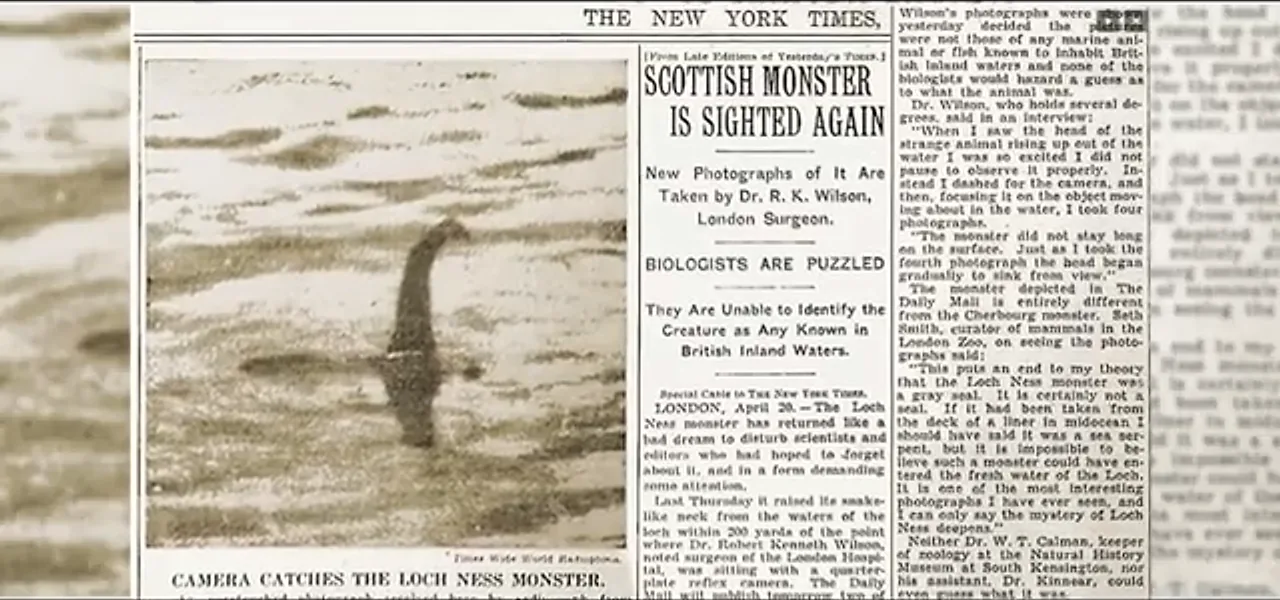
The modern legend was born in 1933, when a series of sightings — including a couple who reported a large, unknown creature near the loch — turned a local folk tale into a global sensation. Later that year, a man named Hugh Gray took what's believed to be the first photograph of the supposed monster. In 1934 came the image that fixed Nessie in the world's imagination: the so-called Surgeon's Photograph, showing a long-necked creature rising from the water. It was published everywhere. Decades later, it was revealed to have been an elaborate hoax — a toy submarine fitted with a sculpted head and neck. Over the years since, there have been hundreds of reported sightings, and not one of them has produced a shred of hard proof.
Then science stepped in. In 2018, researchers took environmental DNA samples from across the loch — essentially reading every scrap of genetic material floating in the water — and found no evidence of any large unknown animal. What they did find was a striking amount of eel DNA. That led to a memorable theory: that centuries of "monster" sightings might, at most, be glimpses of an unusually giant eel. Is that the answer? Nobody can say for certain — and that, honestly, is the point. Despite the total lack of scientific proof, monster hunters still come to Loch Ness year after year, cameras ready, hoping for the glimpse that finally settles it. A legend that survives the DNA test is a powerful thing.
Into the Highlands: Whisky, a Cow, and a Castle That Held a Nation
With the kilt sorted and Nessie duly debunked, I did the thing you have to do in Scotland: I pointed the car north, into the countryside, and let the Highlands do their work. The landscape up there is exactly the cinematic Scotland of your imagination — rolling green mountains, dark lochs, low cloud, and the occasional castle sitting in the middle of it all like a painting.
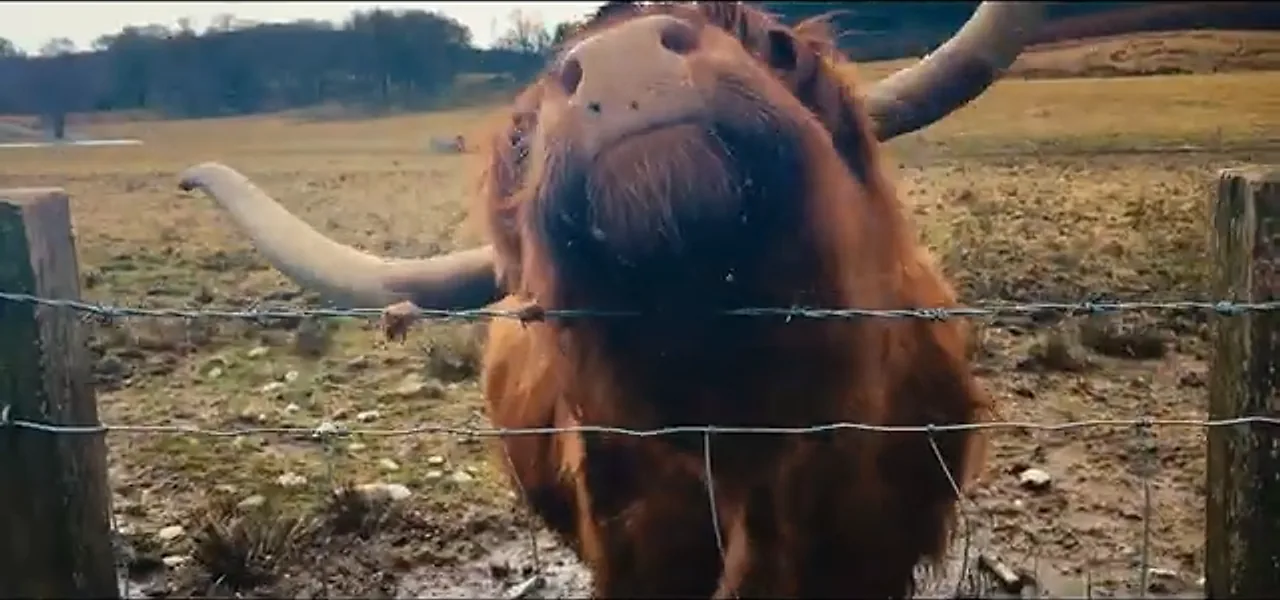
I made a lot of stops along the way — to say hello to some furry friends (the Highland cow, or "hairy coo," is basically a national mascot with horns), and to sample some of Scotland's finest whisky. Let's just say the rest of the drive got a good deal easier to handle after that. But the real destination was Stirling Castle, and Stirling is not just another castle. It sits on a crag guarding the historic gateway between the Lowlands and the Highlands, and for centuries whoever controlled it effectively controlled the country. There's an old saying that captures it perfectly: "He who holds Stirling holds Scotland."
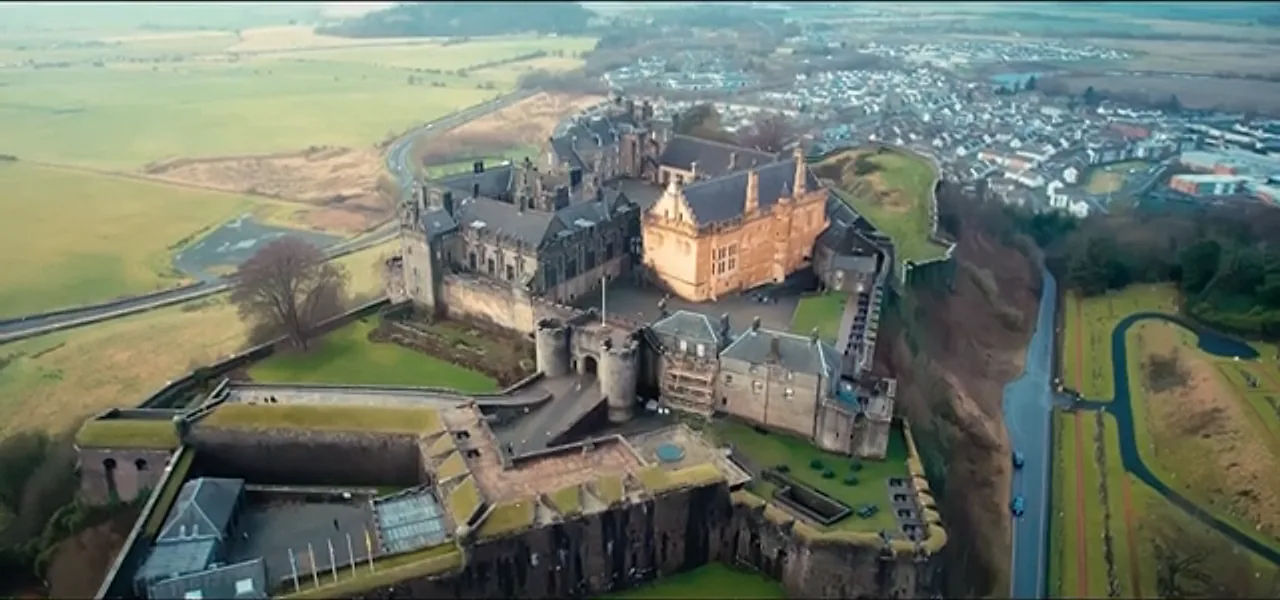
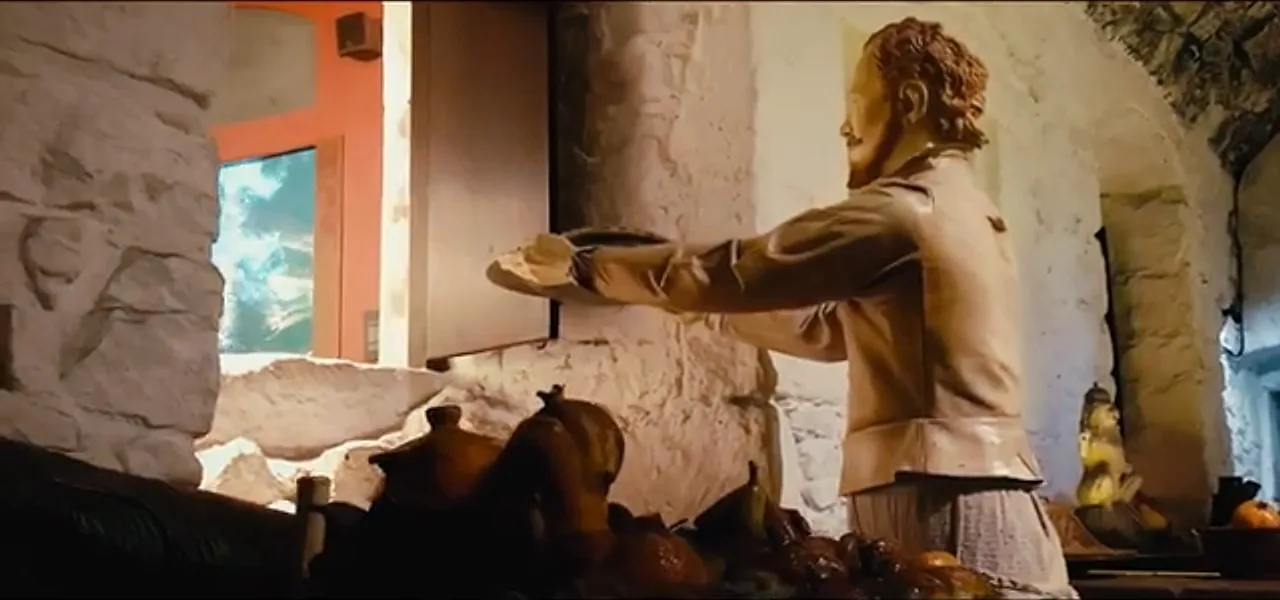
Stirling was a royal residence for Scotland's kings and queens, including Mary, Queen of Scots, who was crowned here in 1543. It played a central role in the Wars of Scottish Independence — this is William Wallace country, the ground around it soaked in the battles that decided whether Scotland would remain its own nation. Inside, one of the most vivid displays recreates the castle's Great Kitchens, the engine room that fed the royal court in the 16th century. Under kings like James IV and James V, these kitchens turned out lavish feasts, sometimes feeding hundreds of people in a single day. Wandering among the recreated cooks and mountains of food, you get a real sense of the sheer machinery of a royal household — the scale of the grandeur, and the number of hands it took to sustain it.
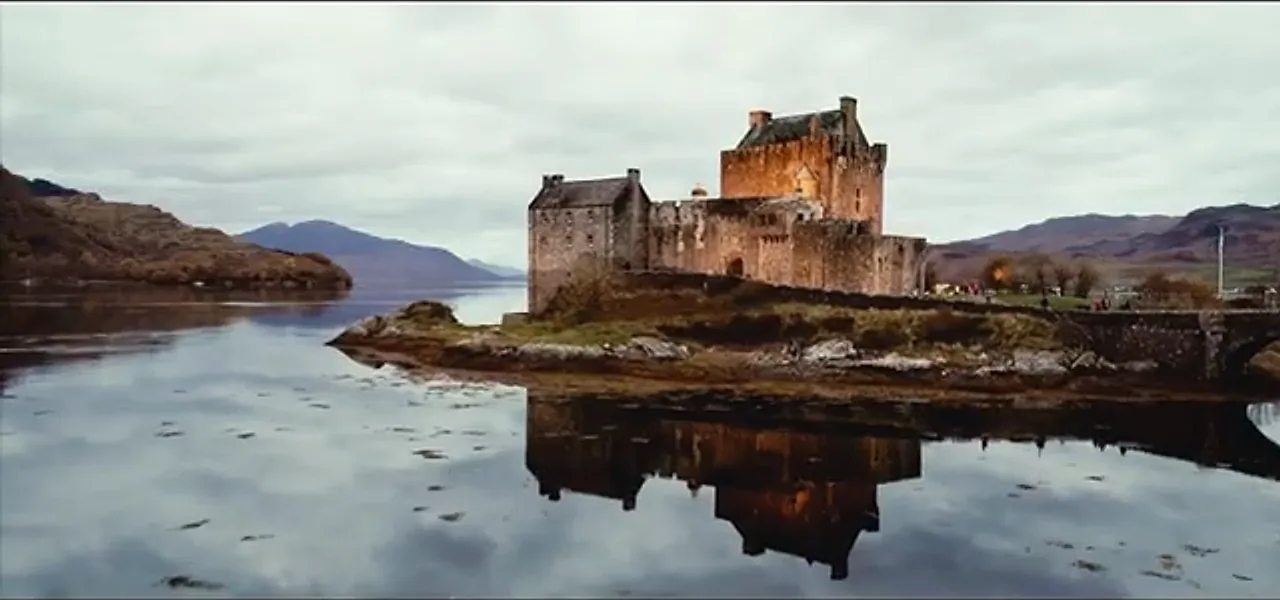
Scotland is stitched together with places like this. Drive far enough and you'll find Eilean Donan, on its little tidal island where three sea lochs meet — probably the most photographed castle in the country, and the picture-postcard image of the Highlands. You don't need to know its full history to feel the pull of it; a stone castle mirrored in still water beneath the mountains is the kind of sight that explains, in one glance, why people fall for this country.
The Bagpipes (Or: How I Learned I'll Never Be a Piper)
Before leaving the city behind, I'd stopped at the National Piping Centre in Glasgow to try my hand at the instrument every visitor associates with Scotland: the bagpipes. I will be brief about my performance, because there isn't much to say. It was a failure in just about every way a thing can fail. I made peace, on the spot, with the fact that I will never be a bagpipe player — and honestly, I'm fine with that.
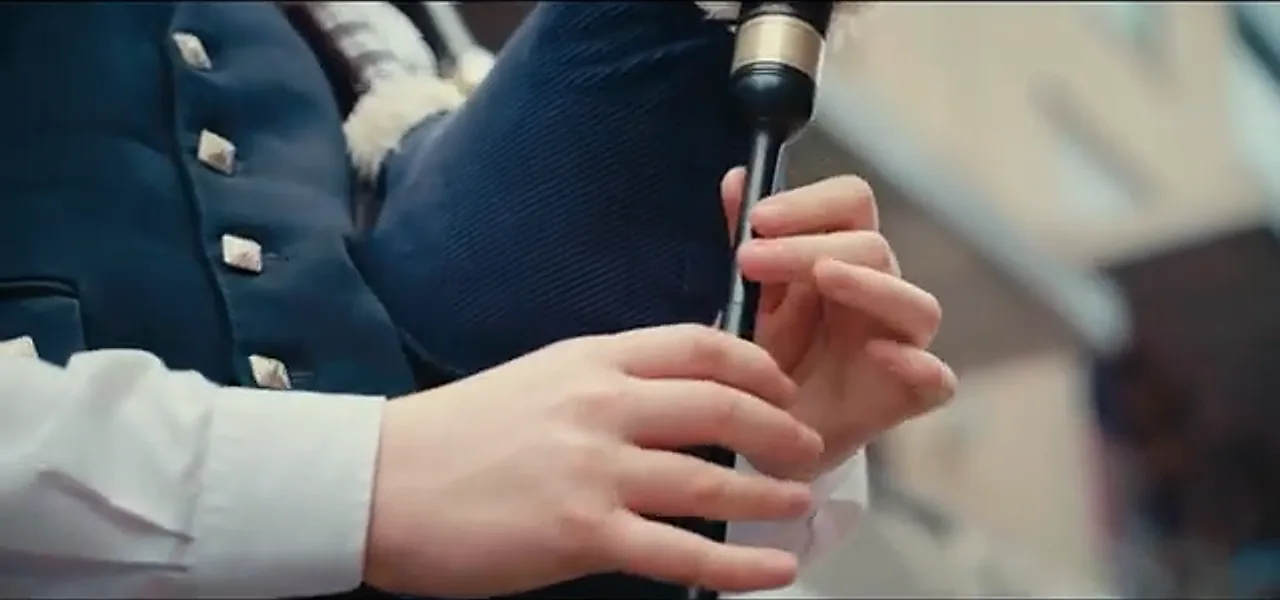
What I did leave with was a bit of history. The bagpipe is far older than Scotland's association with it — versions of the instrument appear in the ancient world, with references reaching back thousands of years to the eastern Mediterranean and beyond. But it was Scotland, and especially the Highlands, that made the Great Highland Bagpipe into a true national symbol: the sound of clan gatherings, of mourning, of celebration, and — famously — of soldiers marching to war. Standing in that room, listening to someone who could actually play, you understand why the sound gives people goosebumps. It's built to carry across a glen and straight into your chest.
Edinburgh: A City Out of a Fairytale
Glasgow won me over completely, but everyone I met said the same thing: you cannot come to Scotland and skip Edinburgh. So I took the train — barely an hour, and a genuinely pleasant ride — and stepped straight into what feels like a fairytale. Edinburgh is one of those cities that makes you feel like you've walked into a story, or back in time. Its Old Town is a maze of steep closes and towering stone tenements, spires and shadows, characters in the streets. It is, not coincidentally, considered one of the most haunted cities in the world — Google it and you'll fall down a rabbit hole of ghost stories deep enough to fill a series of its own. It's also the city where J.K. Rowling wrote much of Harry Potter, in its cafés, and once you've walked it after dark you completely understand where the magic came from.
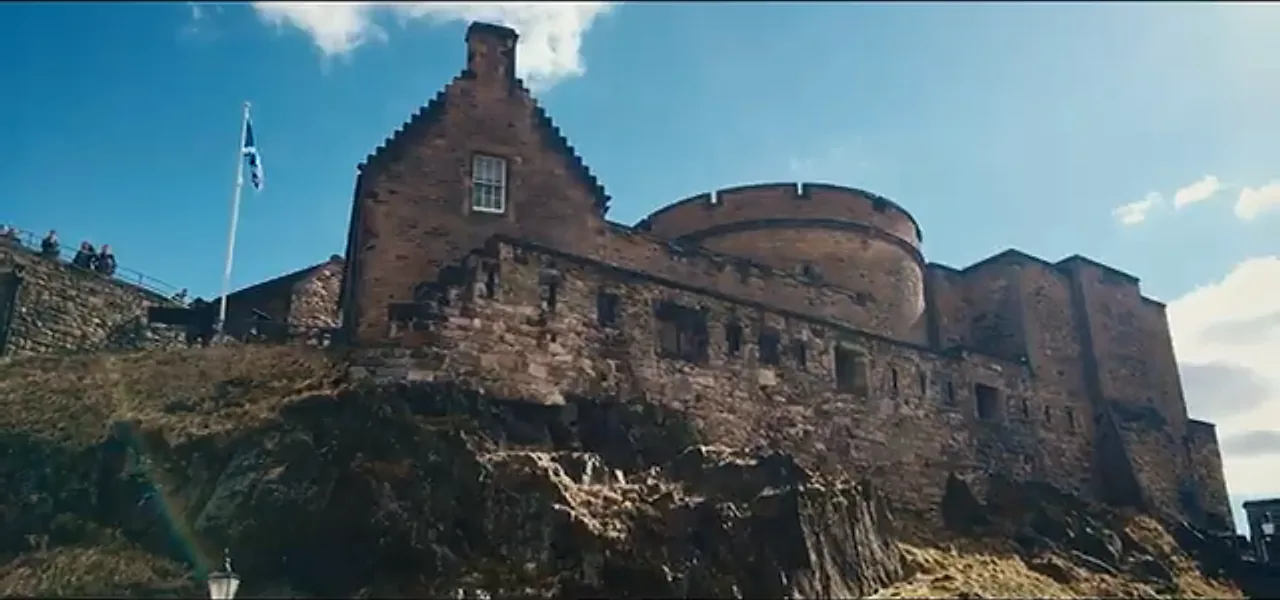
And crowning it all is Edinburgh Castle, dramatically perched on Castle Rock — an extinct volcanic plug rising straight out of the middle of the city. The castle dates back to at least the 12th century and has been, in its time, a royal residence, a military stronghold and a prison (I visited the prison vaults). It changed hands between the Scots and the English repeatedly during the Wars of Scottish Independence, and today it guards the Honours of Scotland — the country's crown jewels, comprising a crown, a sword and a sceptre. Like Edinburgh itself, the castle is said to be haunted, with legends of ghostly pipers and long-dead prisoners wandering its halls.
If you go, a little timing goes a long way: be at the gates by around 9:30am to beat the worst of the crowds, or come after 3pm for a quieter, softer-lit visit — and aim for spring or autumn if you can, when the light is best and the queues are shortest.
Haggis, Neeps and Tatties
No Scottish trip is complete without confronting the national dish head-on: haggis. I know how it reads on paper, so let me just say it plainly. Haggis is made from sheep's organs — heart, liver and lungs — minced together with onion, oatmeal, suet, spices and salt, traditionally packed into a sheep's stomach and boiled. It is the kind of dish that was born of a time when nothing on an animal was wasted, and it has become, improbably and wonderfully, a point of national pride.
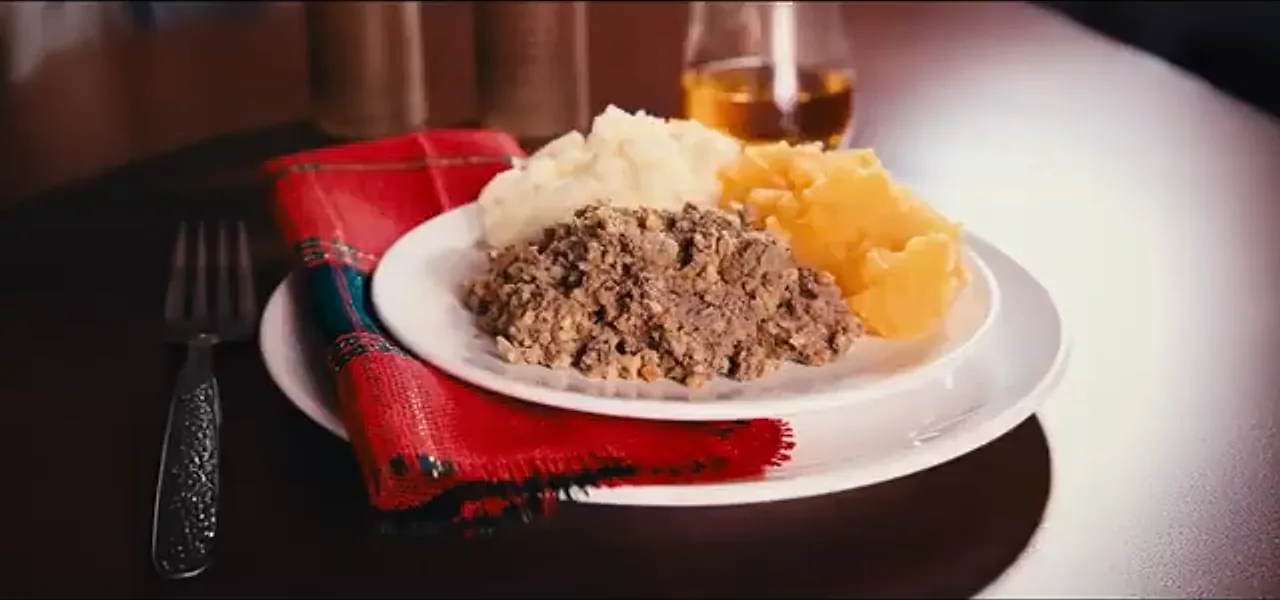
And here's the twist: it's delicious. It has a rich, savoury flavour and a slightly nutty texture from the oats, and served the classic way — with neeps and tatties (mashed turnip and potato) and a glass of whisky on the side — it's genuinely comforting, proper cold-weather food. I went in braced and came out a convert. If you visit around Burns Night in January, you'll see it treated with real ceremony, piped to the table and honoured with a poem before anyone lifts a fork. Don't let the ingredient list scare you off. Some of the best things I've eaten anywhere started with a description that made me nervous.
By the numbers: Scotland, by the numbers
- Capital
- Edinburgh (Glasgow is the largest city)
- Glasgow population
- ~625,000 at the core
- Kilt, earliest written record
- 1594
- Highland dress banned
- 1746–1782 (Dress Act)
- Mary, Queen of Scots crowned at Stirling
- 1543
- Glasgow Necropolis
- opened 1832 · ~50,000 buried
- Edinburgh Castle visitors
- 2 million+ per year
- One O'Clock Gun firing since
- 1861
Where the Dart Points Next
On my last day, I did what I always do to close a chapter — and, as a mark of respect, I did it dressed as a true Scotsman: full kilt, sporran, hose and matching shoes, standing in my haunted hotel in Glasgow. I promised I wouldn't flash anyone, but I can confirm I honoured the tradition of what's worn underneath. I've thrown this dart in some ridiculous places over the years — the top of a mountain, in Antarctica — and now I was adding a haunted Scottish hotel to the list, a building like the ones I'd only ever seen in films as a kid.
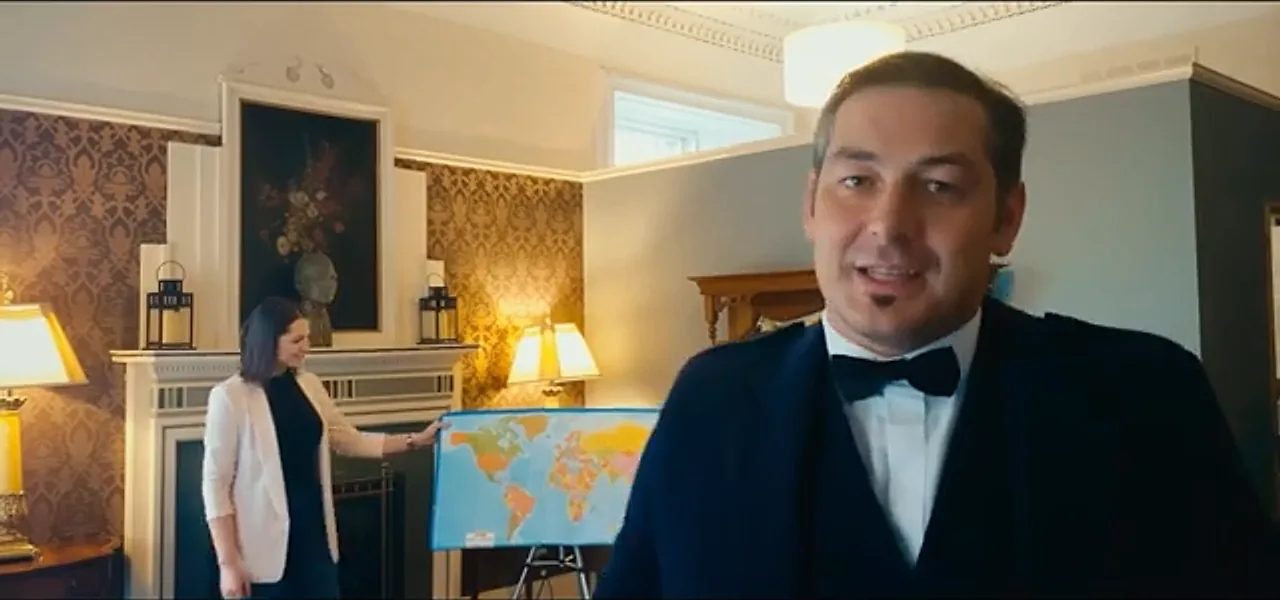
My assistant Nadia helped me spin the map, I threw blindfolded, and the dart came to rest out in the Arabian Sea, between Oman and India. Since Oman was already on my route, and India sat a little closer to the dart, the rule was clear: I was going to India next. I'd been before, for other reasons, but India is never the same country twice, and I was already looking forward to its culture, its chaos and its colour.
Before leaving, though, I wanted to thank Scotland properly, because it gave me more than a good episode. It recharged my batteries and reminded me why I do this at all. That's the thing I keep coming back to: life is short, and it's not about collecting cars or watches or shoes. It's about collecting memories — and Scotland handed me a suitcase full of them. Castles that held a nation, a lake that keeps its secrets, a kilt I never wanted to take off, a ghost who ignored me, and a plate of boiled sheep's organs I'd happily order again.
Watch the full Scotland episode above. If you're following the journey in order, this one picks up right where the dart left Cappadocia — and from that haunted hotel, it carries me on to India. Wherever it lands, I go.
Explore More Travel by Dart Journeys
- Back one dart to Cappadocia, where this throw sent me north to Scotland.
- The first half of that same trip: my Turkey episode — Istanbul and Pamukkale.
- Another land of legends and haunted castles: my home country, Romania.
- More of Europe's fairytale castles the dart uncovered: Germany.
Suggested Sources & Further Reading
To go deeper into Scotland, these are some of the best authoritative resources:
- VisitScotland — Scotland's official national tourism site.
- Historic Environment Scotland — the body that cares for Edinburgh and Stirling castles.
- UNESCO — Old and New Towns of Edinburgh — the capital's World Heritage listing.
- Encyclopædia Britannica — Scotland — history, geography and culture.
- Encyclopædia Britannica — Loch Ness monster — the legend and the science.
All facts verified September 2026.
Scotland: traveler questions
Is Glasgow or Edinburgh the capital of Scotland?+
Edinburgh is the capital of Scotland, and has been for centuries — it's the seat of the Scottish Parliament and home to Edinburgh Castle and the Honours of Scotland. Glasgow is the country's largest city, with a bigger population and a huge cultural and sporting life, but it is not the capital. It's an easy thing to get wrong, and I want the record straight here: the capital is Edinburgh.
Is the Loch Ness Monster real?+
There is no scientific evidence for a large unknown creature in Loch Ness. The modern legend took off in 1933, and the famous 1934 'Surgeon's Photograph' was admitted decades later to be a hoax — a toy submarine fitted with a sculpted head. A 2018 environmental-DNA survey of the loch found no reptilian DNA at all, but a surprising amount of eel DNA, leading some scientists to suggest that sightings might, at most, be very large eels. The mystery still draws visitors from all over the world.
Why do Scotsmen wear kilts, and what's worn underneath?+
The kilt grew out of the 'great kilt' or belted plaid worn in the Highlands — the earliest written record dates to 1594. A full outfit is traditionally 100% wool and handmade, with a sporran (a pouch, because a kilt has no pockets), long socks called hose, and a small knife called a sgian-dubh tucked into the sock. As for what's underneath: tradition says a true Scotsman wears nothing at all. Highland dress was even banned for a time under the Dress Act of 1746 and only made legal again in 1782.
What is haggis and what is it served with?+
Haggis is Scotland's national dish: sheep's organs (heart, liver and lungs) minced with onion, oatmeal, suet, spices and salt, traditionally encased in a sheep's stomach and boiled. It sounds daunting and tastes wonderful — rich, savoury and nutty from the oats. It's classically served with 'neeps and tatties' (mashed turnip and potato) and washed down, of course, with a dram of Scotch whisky.
When is the best time to visit Scotland?+
Spring and autumn are the sweet spots — the light is beautiful, the crowds at places like Edinburgh Castle are thinner, and you dodge both the peak-summer queues and the shortest, coldest winter days. For the big castles, aim to be at the gates by around 9:30am or arrive after 3pm for a quieter visit. And whatever the forecast says, pack for four seasons in one day; that's simply how Scotland works.