Season 3 · Episode 9
Mount Fuji
Japan’s sacred summit—the perfect cone that shaped a nation.
On this page ▾
By Sorin Mihailovici · Travel by Dart · Last updated August 2026 · ~16 min read
There are mountains, and then there is Fuji. Most peaks are a range's high point, one summit among many. Fuji stands almost entirely alone, rising straight off a coastal plain into a cone so symmetrical it looks less discovered than designed — the kind of shape a child draws when you say the word "mountain." I had spent weeks in Japan by the time I reached it, through the neon of Tokyo and the temples of Kyoto, and I'll admit I wondered whether one more famous view could still surprise me. It could. When the clouds finally pulled back and the whole mountain stood there, snow-capped and impossibly clean against a blue sky, I understood why an entire country has treated this thing as holy for more than a thousand years.
What follows isn't a diary of my week. It's the guide I wish I'd had before I went: the geology, the legends, the strange question of who actually owns the top of it — plus everything else this final Japanese episode swept up, from bathing monkeys to bullet trains. I'll bring you along for the moments that mattered, but the aim is to leave you knowing the mountain, whether or not you ever stand in front of it.
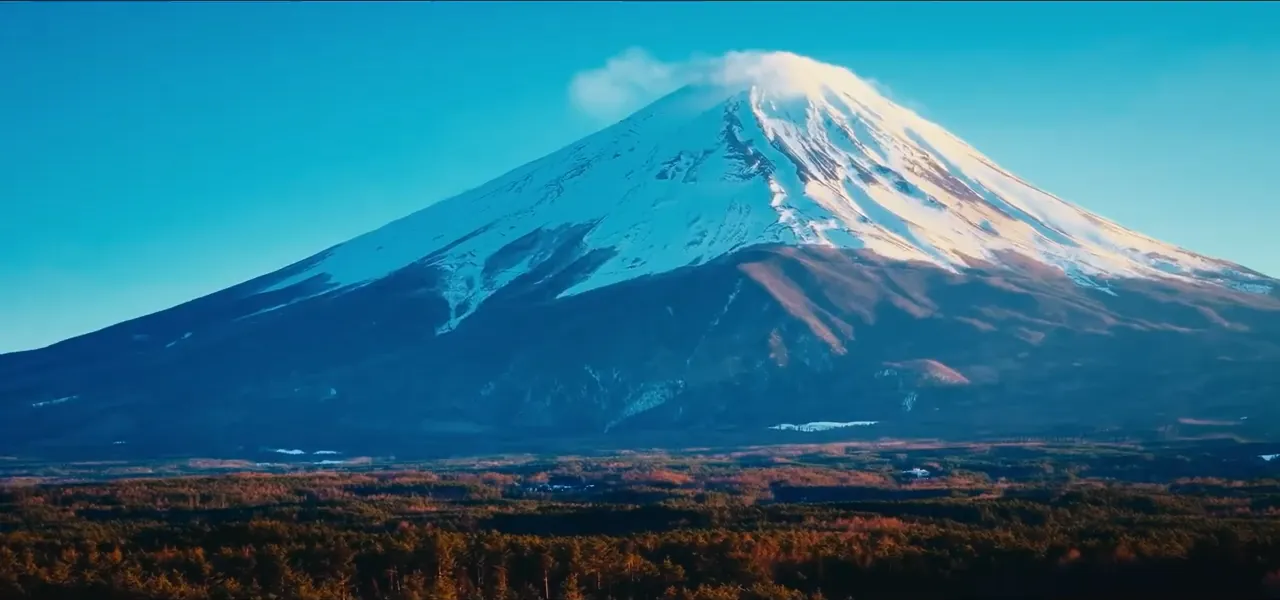
Quick facts: Mount Fuji at a glance
- Height
- 3,776 m (12,389 ft) — highest in Japan
- Type
- Active stratovolcano
- Last eruption
- 1707 (the Hōei eruption)
- Location
- Border of Shizuoka & Yamanashi, ~100 km SW of Tokyo
- UNESCO status
- World Heritage (cultural), 2013
- Deity
- Konohanasakuya-hime, the blossom goddess
- Climbing season
- Early July – early September
- Best lake base
- Lake Kawaguchiko (Fuji Five Lakes)
The Mountain That Became a Symbol
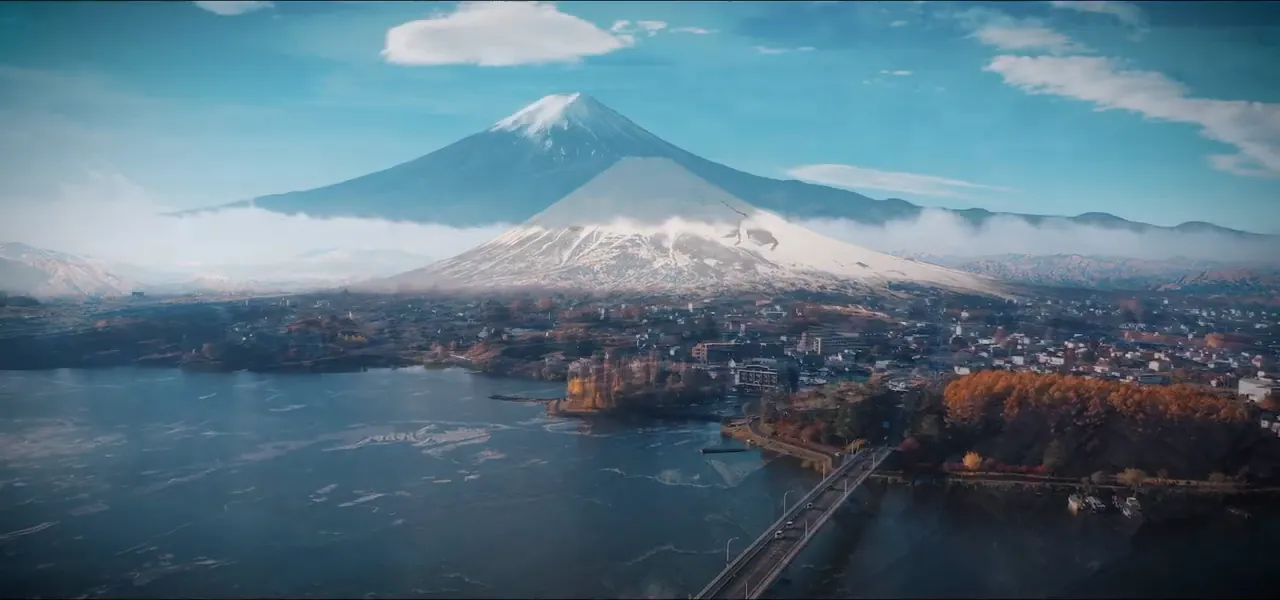
To see Fuji properly, you go to a town called Fujikawaguchiko, on the shore of Lake Kawaguchiko, on the mountain's northern side. That's where I based myself, and where I met a local named Steffan who became my guide to the whole region. The first lesson he taught me was patience. Fuji, it turns out, is shy: locals say it spends most of its days wrapped in cloud, and plenty of visitors travel a long way only to stare at a grey blank where the mountain should be. On a clear day, when the full cone appears, people stop what they're doing to look. I got lucky. What I saw — the mountain sharp against the sky and its reflection lying in the lake — is something even residents don't see most mornings.
The name itself carries weight. Written in Japanese, Fuji is often read as "the prosperous mountain," and prosperity is only part of its meaning. For centuries Fuji has been the single most painted, most photographed, most written-about object in Japan — the backdrop to Hokusai's woodblock masterpiece Thirty-six Views of Mount Fuji, and the reason UNESCO, when it finally recognised the mountain in 2013, listed it not as a natural wonder but as a cultural one: "Fujisan, sacred place and source of artistic inspiration." Japan didn't need a committee to tell it Fuji mattered. But the wording is telling. This is a mountain a nation thinks with, not just looks at.
Three Volcanoes in One, and Still Awake
Beautiful as it is, Fuji is a volcano — and an active one. It's a stratovolcano, meaning it's built up over time from alternating layers of hardened lava, volcanic ash, and pumice. (Pumice is the frothy, feather-light rock you get when gas-rich lava is thrown into the air and cools mid-froth; tephra is the general word for all the fragments a volcano flings out. Fuji is essentially a vast, tidy pile of its own past eruptions.) Hidden inside the mountain we see today are the remains of older volcanoes: geologists describe a stack of them — Komitake at the base, Kofuji ("Old Fuji") in the middle, and the "New Fuji" cone on top — each built on the ruins of the last.
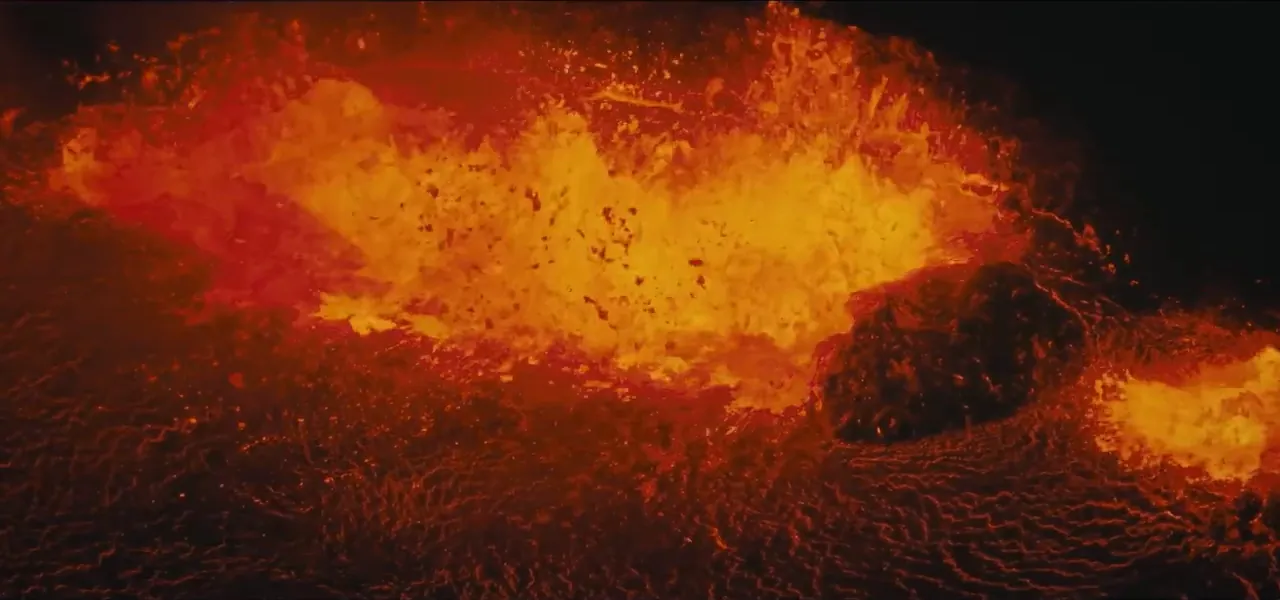
Fuji's last eruption was the Hōei eruption of 1707, in the Edo period — and it didn't come from the summit. It blew out of a vent on the mountain's flank, throwing ash as far as Edo (today's Tokyo), some 100 kilometres away. That flank behaviour is normal for Fuji; the pretty summit crater is not necessarily where the next event would occur. Scientists broadly sketch two futures for the mountain: it could erupt again, or, less dramatically but more strangely, it could one day collapse inward on itself. Neither is thought to be imminent, and Fuji is one of the most closely monitored volcanoes on Earth. But it is worth remembering, when you look at that serene cone, that it is sleeping, not dead.
By the numbers: The geology of Fuji
- Summit elevation
- 3,776 m (12,389 ft)
- Volcano type
- Stratovolcano (layered cone)
- Buried older cones
- Komitake, Kofuji, then 'New Fuji'
- Last eruption
- Hōei eruption, 1707
- Eruption style
- Often from flank vents, not the summit
- Summit climate
- Subarctic — near/below freezing even in summer
Red Fuji, Double Fuji, Diamond Fuji
Because Fuji is so often hidden, the Japanese have names for its rare good moods. Aka-Fuji, or "Red Fuji," is the fleeting phenomenon when the low sun of dawn or dusk washes the mountain in a fiery reddish glow — a sight so prized that Hokusai devoted one of his most famous prints to it. "Double Fuji" is the one I was lucky enough to witness: on a windless, cloudless day, the mountain reflects perfectly in the still water of one of the lakes, so that you see it twice, above and below the waterline. And "Diamond Fuji" is the rarest of all — the moment, achievable only on certain days from certain spots, when the sun sits exactly atop the summit and appears to drop into the crater, flaring like a gemstone.
A Goddess, a Ban, and the Woman Who Defied It
Fuji has a deity, and she is a goddess: Konohanasakuya-hime, the goddess of blossoms and, fittingly for a volcano, of fire. She is enshrined in the roughly 1,300 Sengen shrines dedicated to Fuji across Japan, and pilgrims have climbed the mountain for centuries not for sport but to draw closer to her. And yet, for most of that history, half the population was forbidden from making the climb at all.
Under a religious doctrine called nyonin kinsei — literally "women forbidden" — women were barred from Fuji's upper reaches, considered ritually impure by the standards of the time. The ban held until 1872, when the modernising Meiji government swept it away. But four decades earlier, one woman had already refused to wait for permission. In 1832, a farmer's daughter named Tatsu Takayama dressed as a man, joined a climbing party, and reached the summit — becoming, as far as records show, the first woman to stand on top of Mount Fuji. She risked exile to do it, and then history very nearly forgot her.
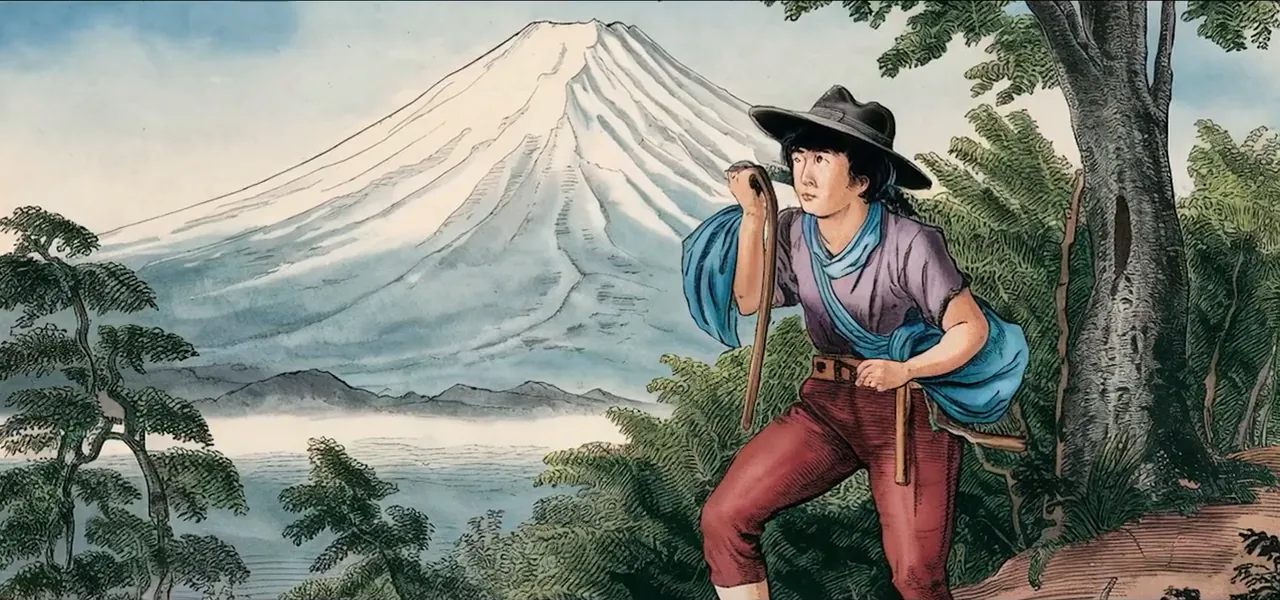
For most of a thousand years, the holiest mountain in Japan was closed to women. One of them climbed it anyway, in disguise, forty years before the law changed.
Climbing the Sacred Mountain
Today the mountain is open to everyone, and a lot of everyone shows up. In a busy season well over two hundred thousand people climb Fuji, making it one of the most-climbed mountains on the planet — a very different scene from the solitary pilgrimages of old. The official climbing season is short, roughly early July to early September, when the trails are snow-free and the mountain huts are staffed. Outside that window the mountain turns genuinely dangerous: the summit has a subarctic climate, and temperatures there rarely climb above freezing even at the height of summer.
The classic way to climb is overnight. Hikers ascend in the afternoon and evening, sleep a few hours in a hut partway up, then rise in the dark to reach the summit before dawn — all to witness goraiko, the sunrise seen from the top of Japan. On the way up, climbers pass through a series of torii gates, each marking a threshold between the ordinary world and the sacred one; the higher you go, the closer, symbolically, you come to the goddess. It is a walk with a destination in more than one sense.
Who Owns the Top of Fuji
Here's the fact that stops people cold: the summit of Mount Fuji is privately owned. Not the whole mountain — but everything above the 8th station, near the top, belongs not to the Japanese state but to a shrine. The owner is Fujisan Hongū Sengen Taisha, the head shrine of those 1,300-odd Sengen shrines, based in Fujinomiya. The arrangement goes back to 1606, when the shogun Tokugawa Ieyasu donated the summit lands to the shrine as an act of devotion.
The story didn't end there, and it's a remarkable one. In 1871, the new Meiji government nationalised the mountaintop along with much temple and shrine land. The shrine spent the next century fighting to get it back — and in 1974, Japan's Supreme Court ruled in its favour, recognising Sengen Taisha as the rightful owner of everything above the 8th station. Bureaucracy being bureaucracy, the land wasn't formally handed back until 2004. So the most iconic natural landmark in Japan has a private landlord, and that landlord is a goddess's shrine.
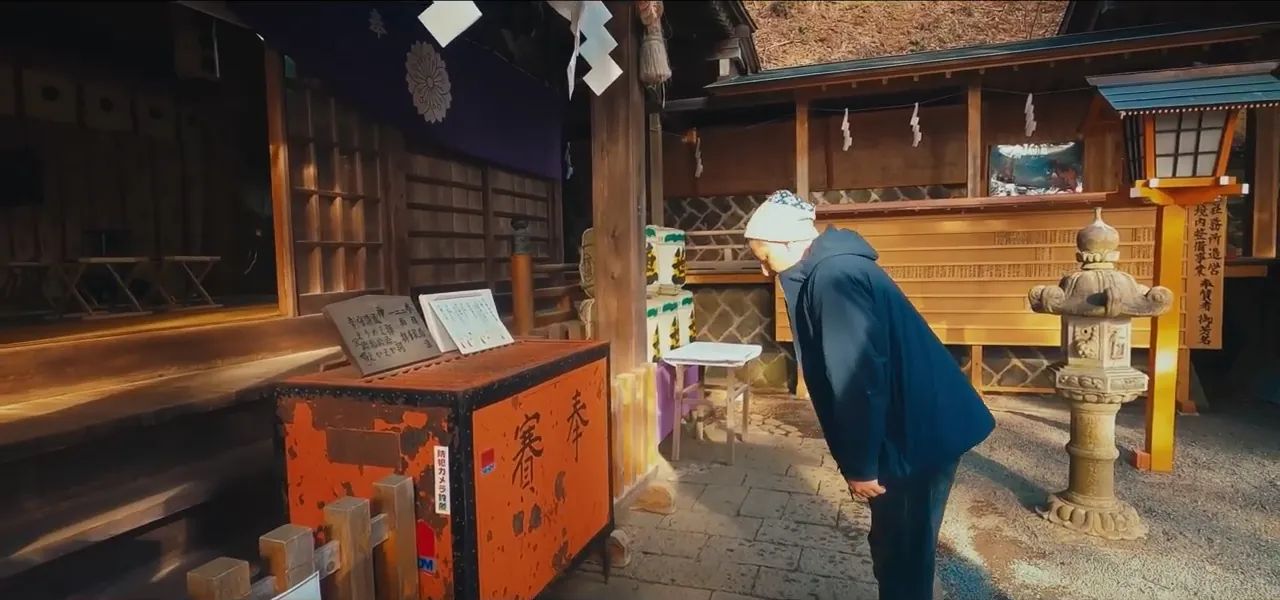
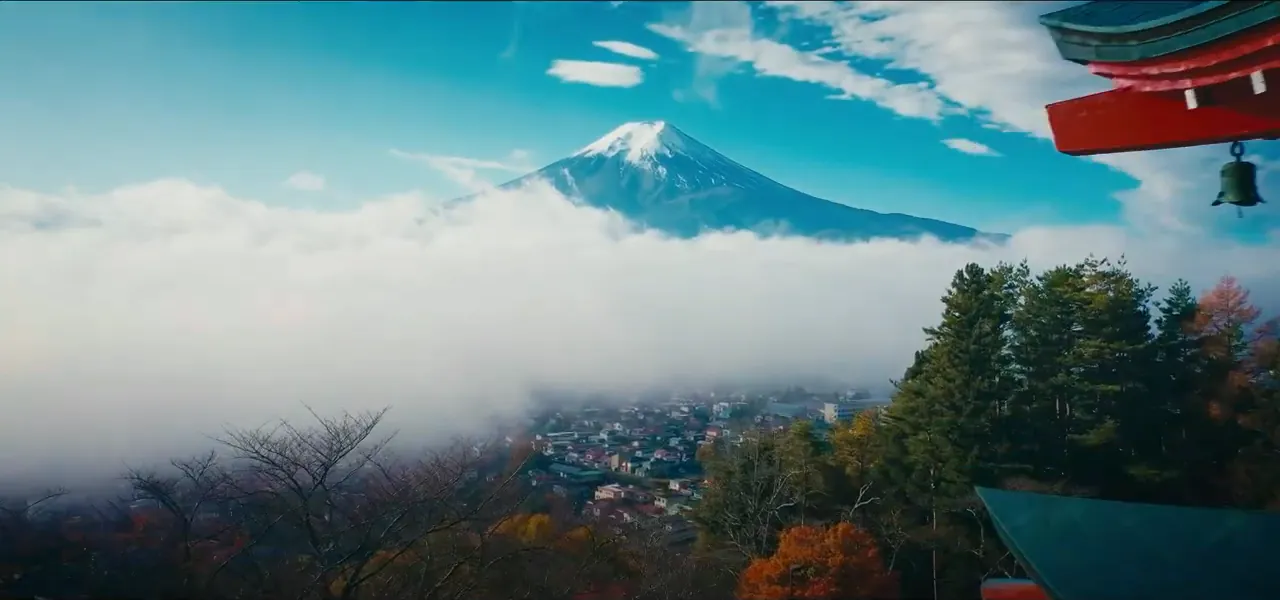
The Pagoda in Every Postcard
If you've ever seen a photo of Fuji framed by a red pagoda and a foreground of cherry blossoms, you've seen the Chureito Pagoda — part of the Arakura Fuji Sengen Shrine, on a hillside above Fujiyoshida. It is arguably the single most photographed viewpoint of the mountain, and getting there is its own small pilgrimage: you climb just under 400 steps up the hillside to reach the terrace where the pagoda and the mountain line up in one frame.
The exact number of steps — 398 — turns out to be a small piece of poetry. In Japanese, the digits can be voiced as "Sa-ku-ya" — the name of Fuji's goddess, Princess Sakuya (Konohanasakuya-hime). Whether by design or happy accident, you climb the goddess's own name to reach the best view of her mountain. From the top, on a clear day, you get the shot: pagoda, cloud, and Fuji stacked in a single, almost unreal composition.
A Town at the Foot of a Volcano
Life at the base of Fuji is its own thing. Fujikawaguchiko is a modest mountain town of around 26,000 people — quiet for most of the year, and then, for a few weeks in spring, utterly transformed. When the cherry blossoms bloom against the backdrop of the mountain in late March and April, tourists pour in by the thousand, and hotel rooms that are ordinary the rest of the year can command six or seven hundred dollars a night, purely for the view. Fuji is the town's sun, and everything orbits it.
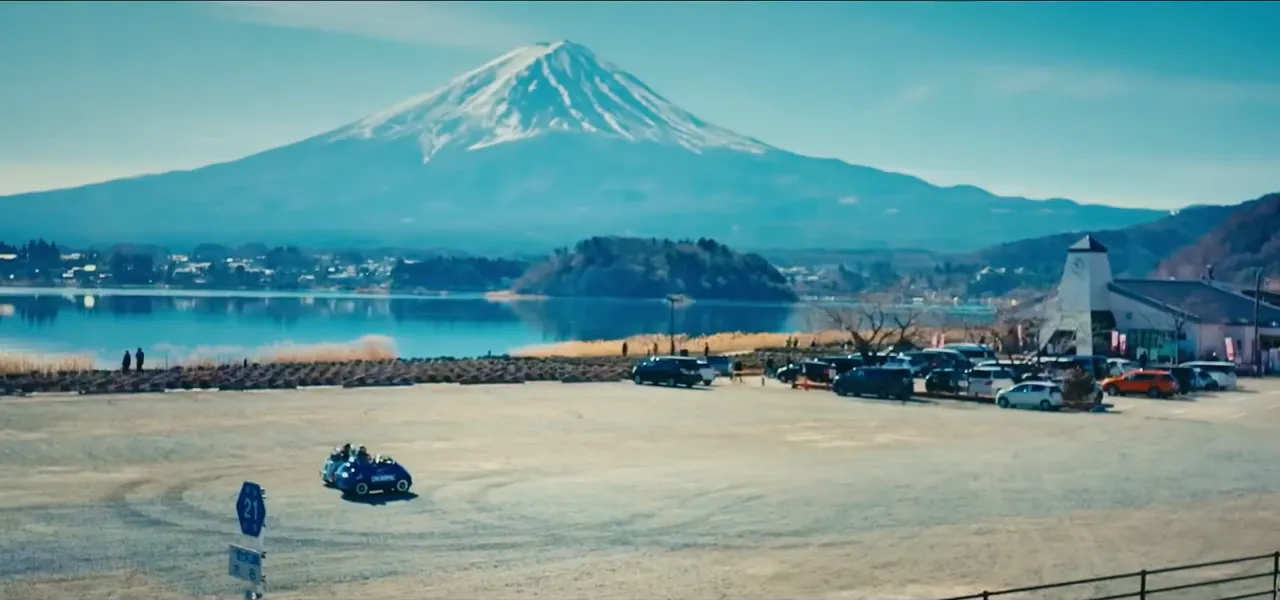
Steffan had a wonderfully odd way to see it all. Instead of a car, he showed up with a pair of tiny electric cars — and the story behind them is my favourite from the whole trip. He and his partners had bought the contents of a warehouse that was up for sale, sight unseen. When they finally opened the doors, they found the place packed with around 25 of these little electric vehicles and a heap of surfboards, all locked away and forgotten. Rather than send it to the dump, they refurbished the cars and turned them into a lake tour. The machines are gloriously impractical — a top speed of maybe 50 km/h and a range of around 50 kilometres before they need a long charge — which is exactly the point. You are not in a hurry here. You potter around the lake, the mountain wheeling past on your right, and you grin the entire way.
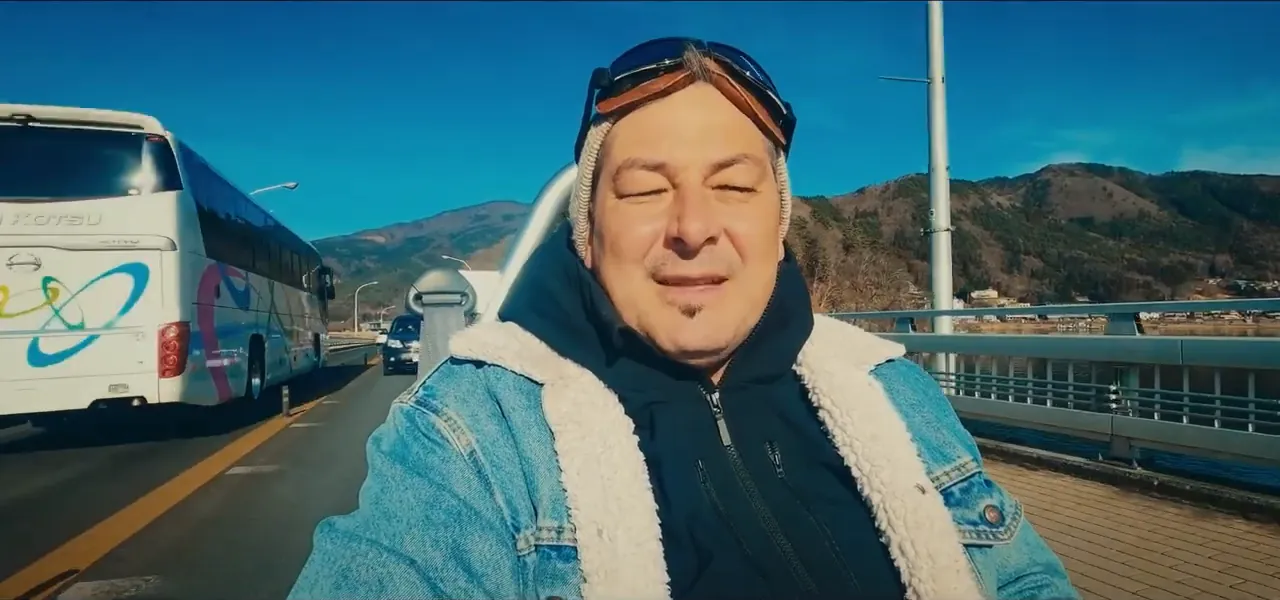
The Fastest Way Across Japan
If the electric cars are the slowest way to travel in Japan, the shinkansen is the opposite extreme — and no trip through the country is complete without one. Japan's bullet train has been running since 1964, when the first line, the Tōkaidō Shinkansen, opened between Tokyo and Osaka just in time for the Tokyo Olympics and rewrote what fast rail could be. Today the fastest services hit around 320 km/h (about 200 mph), gliding along with a smoothness that makes the speed almost hard to believe until you watch the landscape blur.
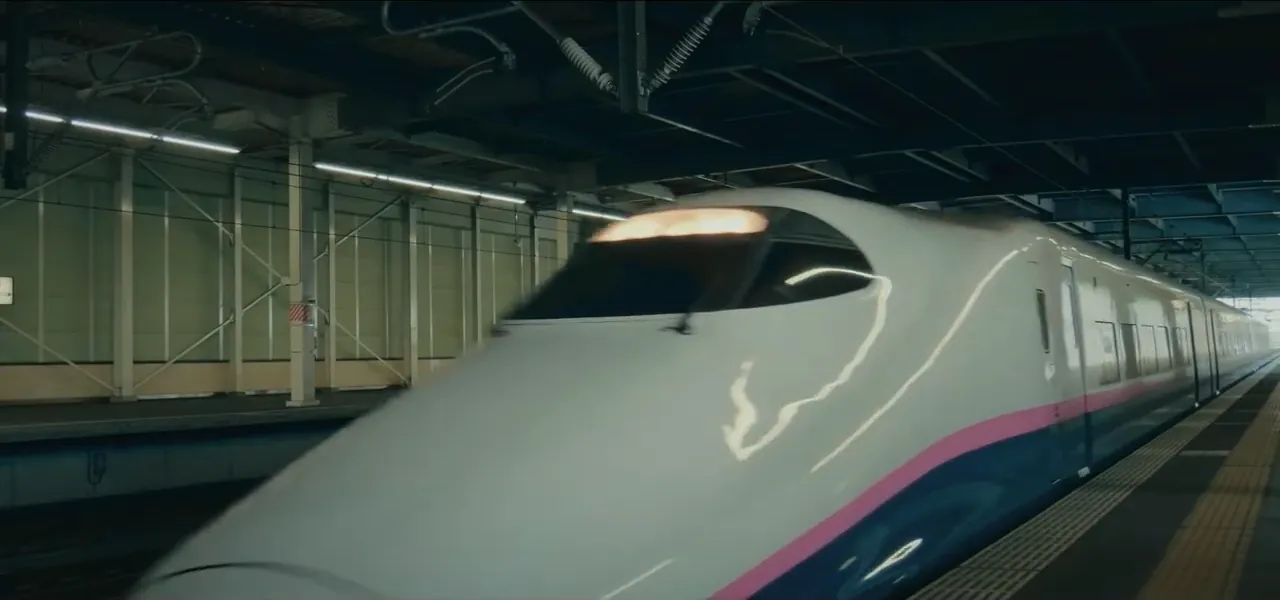
But the number that should impress you most isn't the speed — it's the safety record. In more than sixty years of carrying billions of passengers, the shinkansen has never had a passenger fatality from a derailment or collision. None. In a country prone to earthquakes and typhoons, that is a staggering feat of engineering and discipline, and it's why the shinkansen is less a train than a national point of pride — the physical proof of Japan's obsession with getting things exactly, relentlessly right.
The shinkansen
The Monkeys That Learned to Bathe
From Fuji my Japanese journey pushed north into the mountains of Nagano Prefecture, in search of one of the country's most beloved residents: the Japanese macaque, better known as the snow monkey. These are the northernmost-living primates on Earth apart from human beings, and they survive brutal mountain winters wrapped in thick fur — but that's not what made them famous. What made them famous is that they figured out the hot springs.
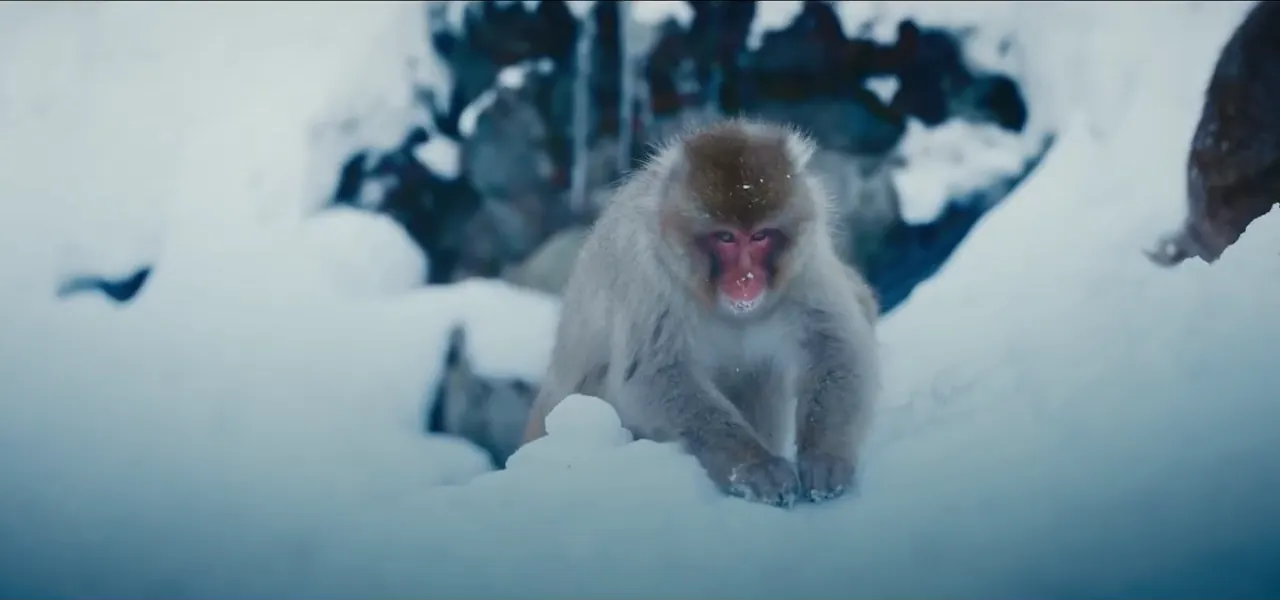
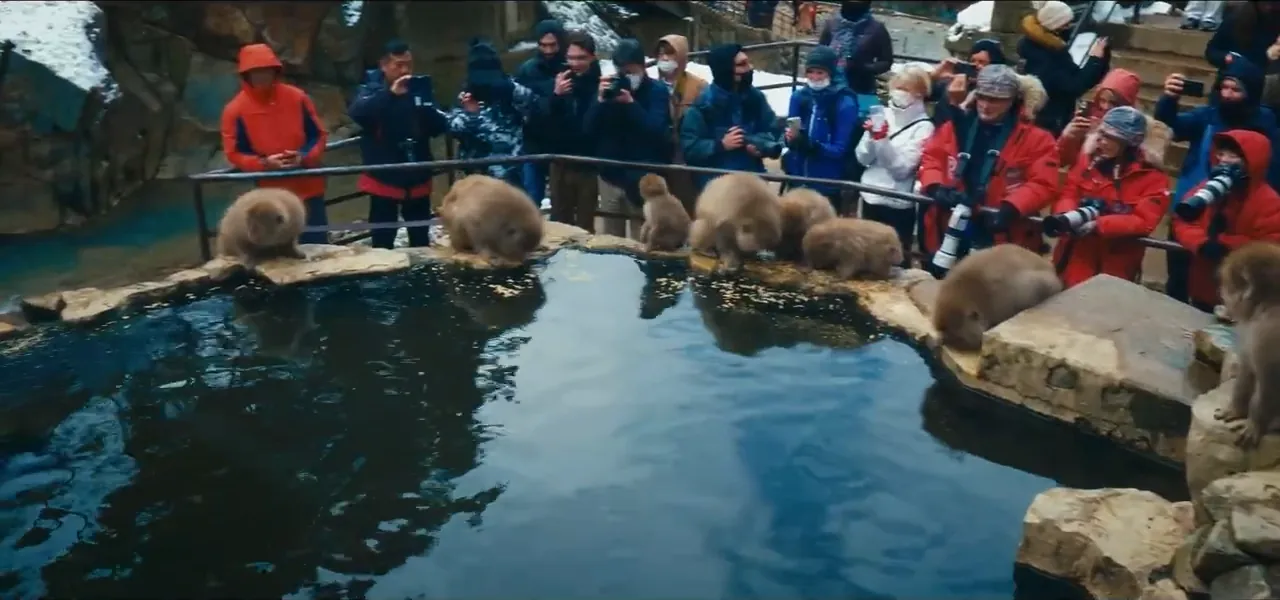
At Jigokudani Monkey Park, the macaques come down from the trees in winter and soak in the natural onsen, sitting chin-deep in steaming water while snow falls around them. Here's the part that fascinated me: this is not instinct. It's culture. The bathing habit was learned — one clever monkey started it, others copied, and the behaviour has been passed down through generations ever since, mother to infant, exactly the way a human tradition survives. Scientists point to Jigokudani's monkeys as a textbook case of cultural transmission in animals. I watched a few hundred of them come and go, and not one tried to steal my food — a marked improvement, I have to say, on the thieving monkeys that robbed me blind back in Ecuador.
Nagano: Noodles, Dumplings and a Hidden Buddha
The monkeys are only part of what Nagano offers. The city itself is an old temple town built around Zenko-ji, a Buddhist temple founded in the 7th century that holds one of the most extraordinary objects in Japan: what is said to be the first Buddha statue ever brought to the country, arriving from the Korean kingdom of Baekje around the year 552. And here is the strange, wonderful catch — no one alive has seen it. The statue is a hibutsu, a "hidden Buddha," kept locked away and shown to no one, not even the temple's own chief priest. A copy is displayed to the public just once every seven years, in a ceremony called the Gokaichō; the original itself has been concealed for well over a thousand years, an object of total faith precisely because it is never seen.
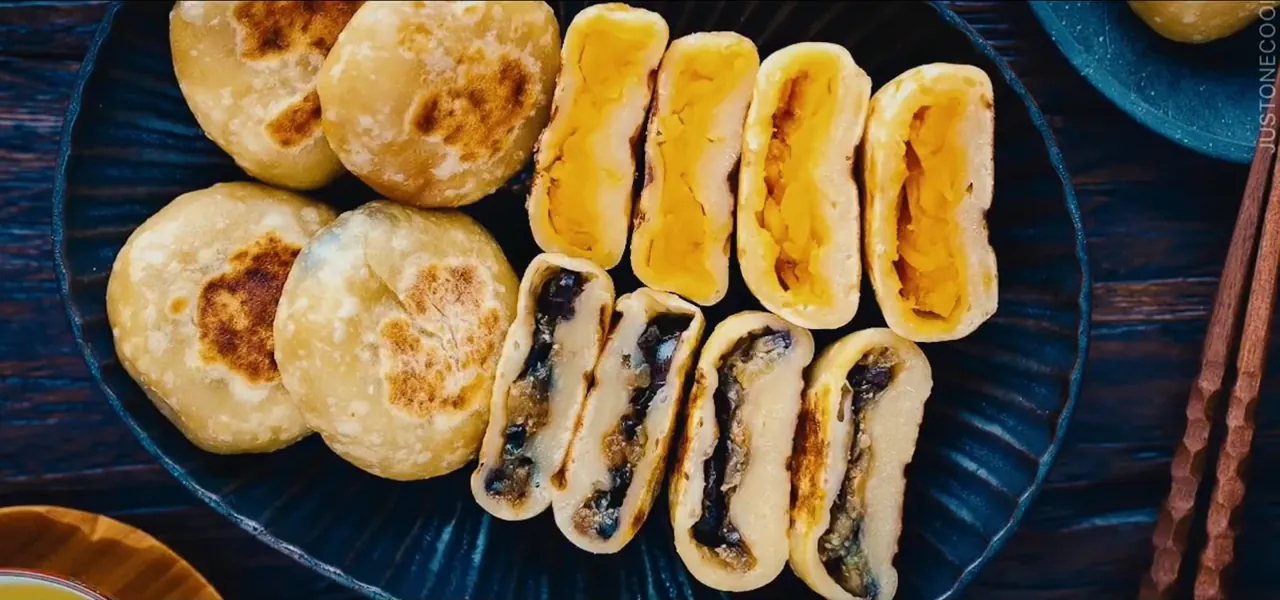
Nagano feeds you well, too. This is soba country — buckwheat noodles the region is famous for — and the home of oyaki, plump wheat dumplings stuffed with vegetables or sweet fillings and grilled or steamed, a warming mountain-town staple. Add the onsen, the temple, and the snow, and Nagano is a portrait of the other Japan: not the sprint of Tokyo, but the slow, snowbound, deeply traditional country in the mountains.
The Underground World of Tokyo Drift
For all its shrines and traditions, Japan also has a wilder side after dark, and I wanted to see it: the country's famous underground car culture. Enthusiasts gather at spots like the Daikoku parking area, a vast highway interchange rest stop near Yokohama, to show off custom builds of every imaginable kind — compact kei cars, tuned imports, high-horsepower monsters, motorbikes. It's less a car show than a community; students, retirees, the wealthy and the obsessed all park side by side, comparing work and talking shop deep into the night. The later it gets, the wilder it gets.

This is the world that gave us drifting — the art of holding a car in a controlled slide through a corner, prizing style and precision over raw speed. It grew out of Japan's mountain-road racing scene in the 1970s and 1980s, spread into a global motorsport, and became famous worldwide through The Fast and the Furious: Tokyo Drift, a film that exists because of exactly this subculture. Drifting on public roads is illegal, and I want to be clear I wasn't out to break any laws — but sitting among these cars and the people who pour their lives into them, you feel the same thing you feel at a shrine or a summit: devotion. Japan does obsession better than almost anywhere, whether the object is a thousand-year-old statue or a perfectly tuned engine.
Where the Dart Points Next
Every Travel by Dart journey ends the same way: with a throw that decides the next one. For the finale of my time in Japan, I dressed in a full kimono — which, I learned, traditionally comes with a small bag even for men — and that bag happened to be carrying a dart. At the Higashi Hongan-ji temple in Kyoto, blindfolded, I threw it at the world map, under the rules I always follow: miss the map and I throw again; hit somewhere I've already been and I throw again; hit open ocean and I go to the nearest country.
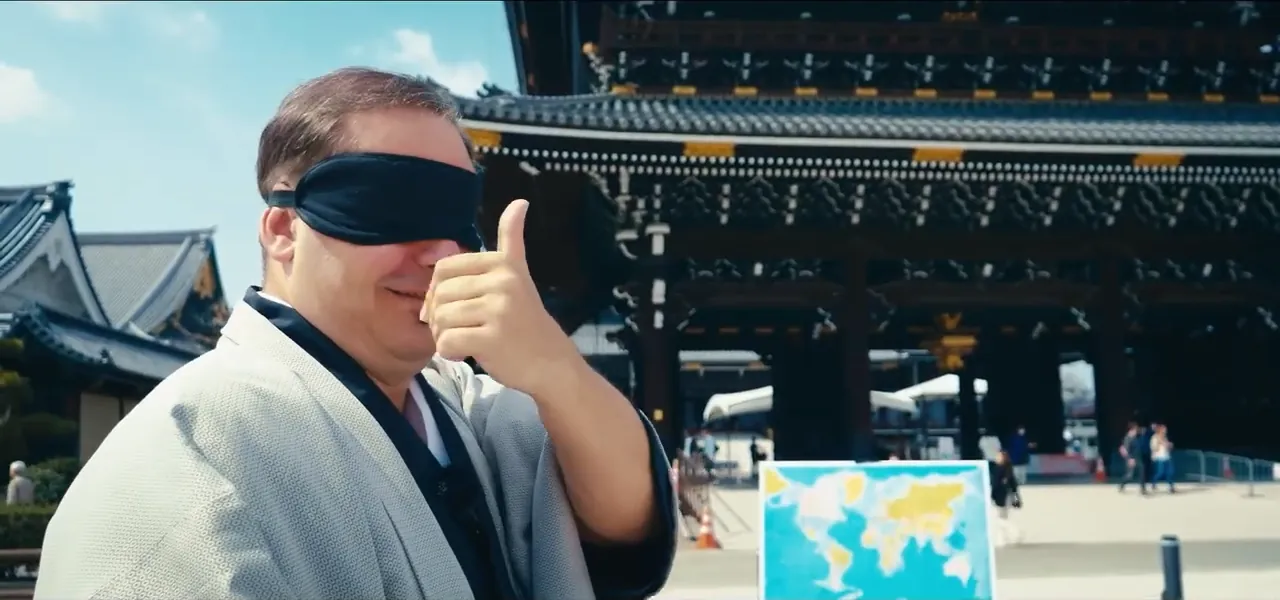
It took a few tries. The first throw landed on Madagascar — already visited. The second found Russia — already visited. The third hit the ocean near the Dominican Republic, and the nearest land was Puerto Rico. I couldn't have been happier: a Spanish-speaking, art-soaked island I'd never seen, chosen entirely by chance. That's the whole strange magic of this show — I don't get to plan the next chapter, and neither does anyone else. A blindfold, a map, and a dart decide it.
Japan gave me more than almost any country I've filmed: the future in Tokyo, the soul in Kyoto, and here, at the end, the sacred in a single perfect mountain. Fuji is the image the whole country keeps of itself — proof that a thing can be a geological hazard and a national deity at once, a volcano you're not entirely sure is finished, standing quiet and beautiful over a nation that has learned to live in its shadow and love it anyway. Watch the episode above, and if you haven't yet, start where I did — with my main Japan film and my Kyoto episode, both filmed on this same unforgettable trip.
Explore More Travel by Dart Journeys
- Back one stop to my Kyoto episode — the old imperial capital, filmed on this same trip.
- See the main Japan episode — Tokyo, the samurai, sumo and the cherry blossoms.
- The rare private evening with a geiko has its own Geisha special.
- See where the dart sent me next: Puerto Rico.
Suggested Sources & Further Reading
To go deeper into Mount Fuji, these are some of the best authoritative resources:
- Japan National Tourism Organization — Japan's official travel authority.
- UNESCO — Fujisan, sacred place and source of artistic inspiration — Fuji's World Heritage listing.
- Official Mount Fuji Climbing website — the prefectures' official climbing information.
- Encyclopædia Britannica — Mount Fuji — the volcano's geology and cultural history.
All facts verified September 2026.
Mount Fuji: traveler questions
How tall is Mount Fuji and is it still an active volcano?+
Mount Fuji is Japan's highest peak at 3,776 metres (12,389 ft) and an active stratovolcano — built from layers of hardened lava, ash and pumice. Its last eruption was the Hōei eruption of 1707, during the Edo period. It is not extinct, only dormant, and is closely monitored.
Why is Mount Fuji a UNESCO World Heritage Site?+
Fuji was inscribed in 2013 — not as a natural site, but as a cultural one: 'Fujisan, sacred place and source of artistic inspiration.' For centuries it has been a place of pilgrimage and the subject of Japanese art, most famously Hokusai's 'Thirty-six Views of Mount Fuji.'
What are the Fuji Five Lakes?+
The Fujigoko, or Fuji Five Lakes, are five lakes formed by Fuji's past eruptions along its northern base: Kawaguchiko, Yamanakako, Saiko, Shojiko and Motosuko. Lake Kawaguchiko is the most developed and the best-known base for viewing the mountain.
Who owns the summit of Mount Fuji?+
Above the 8th station, Mount Fuji is privately owned by Fujisan Hongū Sengen Taisha, the head of some 1,300 Sengen shrines across Japan. The land was donated by the shogun Tokugawa Ieyasu in 1606; after the government nationalised it in 1871, the shrine won it back in a 1974 court ruling and the land was formally returned in 2004.
Could women always climb Mount Fuji?+
No. Under a religious rule called nyonin kinsei ('women forbidden'), women were banned from the sacred mountain until 1872. In 1832 — four decades before the ban was lifted — a woman named Tatsu Takayama climbed to the summit disguised as a man.
When is the best time to climb, and what is Goraiko?+
The official climbing season runs from early July to early September, when the trails and mountain huts are open and the weather is mildest — though the summit stays near or below freezing even in summer. Many climbers time their ascent to reach the top before dawn to watch the sunrise, a tradition called goraiko.
What else is in this episode besides Mount Fuji?+
The episode is the finale of my Japan trip, so alongside Fuji and Lake Kawaguchiko it covers the snow monkeys of Nagano's Jigokudani park, the historic Zenko-ji temple, the shinkansen bullet train, and Japan's underground car culture — before I throw the dart to decide where I go next.