Season 6 · Episode 5
Java
The island where knives have souls — and the dart landed twice.
On this page ▾
By Sorin Mihailovici · Travel by Dart · Last updated November 2026 · ~16 min read
Here is a thing that is supposed to be impossible. Two people, blindfolded, each spin and throw a dart at a world map — two separate throws, two separate darts — and both points come down on the same island. Not the same continent, not the same country. The same island, in an archipelago of seventeen thousand of them. When that happened to my friend and me, and the island was Java, you don't argue with odds like that. You don't ask questions. You book flights.
So I left the mojitos of Puerto Rico behind, flew halfway around the planet into Southeast Asia, and landed in the most populous island on earth — a place where more than 150 million people live in an area smaller than the state of Washington. Indonesia is often called a country, but spend a week here and you realise it's closer to a planet of its own: more than 350 ethnic groups, hundreds of languages, whole religions shifting from one island to the next. And Java sits right at the centre of all of it.
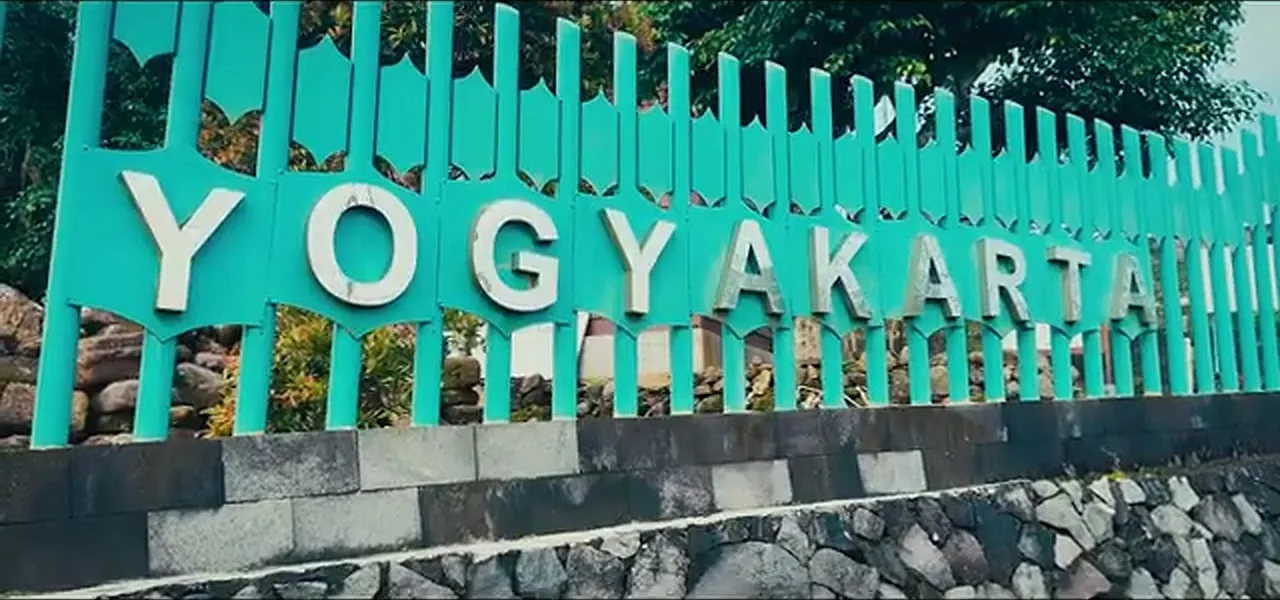
Jogja: the cultural heart of Indonesia
The capital of Indonesia is Jakarta, a megacity of around eleven million — picture the entire populations of Portugal, Iceland and Monaco stacked into one sprawl. But I didn't base myself there. I flew into Yogyakarta, which everyone shortens to Jogja, because if Jakarta is the country's engine, Jogja is its heart. It's the seat of a living sultanate, a city of batik, gamelan, universities and court tradition, and the launch pad for almost every great thing in Central Java.
Waiting at the airport was Dominic, from a company called Azimuth Adventures — a Frenchman who has lived on this island for some thirty years, married into a local family, and knows Java the way only someone who chose it can. He framed the whole country for me in a single idea I kept coming back to all week: Indonesia is a world inside the world. Java is mostly Muslim; Bali is mostly Hindu; islands like Flores are Catholic; Sumatra and Borneo are jungle; Komodo has its dragons. Cross a strait and you've effectively crossed a border.
We French people, we used to say that Java is very sweet — it's a sweet island. Bali is the island of gods, because there are temples everywhere. When you travel from island to island, you feel like you're travelling to different countries.
Quick facts: Java at a glance
- This trip
- Yogyakarta & Central Java
- Island population
- ~150 million — the world's most populous island
- National capital
- Jakarta (~11 million), also on Java
- Cultural capital
- Yogyakarta ('Jogja')
- Main religion
- Islam, over a deep Hindu-Buddhist past
- Famous for
- Borobudur, the keris, court culture
- The dart
- Landed on Java — twice, from two throws
What makes Jogja special is that the old world never left. This is a city where the Sultan still lives in a working palace, where artisans dye batik by hand and bronze gamelan orchestras tune to a scale that isn't quite Western, where students pour out of dozens of universities and sit on the pavement at midnight eating fried rice. You can feel the layers: a deep Hindu-Buddhist foundation, a Muslim present, a royal court that never stopped, all overlapping in one medium-sized city. Dominic kept promising me that none of what we were about to do was the tourist version — that Azimuth's whole idea is to take you to the people who actually make and keep these traditions. Over the next week he more than proved it.
Borobudur: the Largest Buddhist Temple on Earth
You cannot come to Central Java and skip Borobudur. It is the largest Buddhist temple in the world, built in the 9th century under the Sailendra dynasty — roughly three hundred years before Angkor Wat, and centuries before the great cathedrals of Europe. Around two million people visit each year, foreign and Indonesian, and from the air you finally understand its shape: it isn't a building with rooms, it's a single vast stone mandala, a diagram of the universe you climb with your feet.
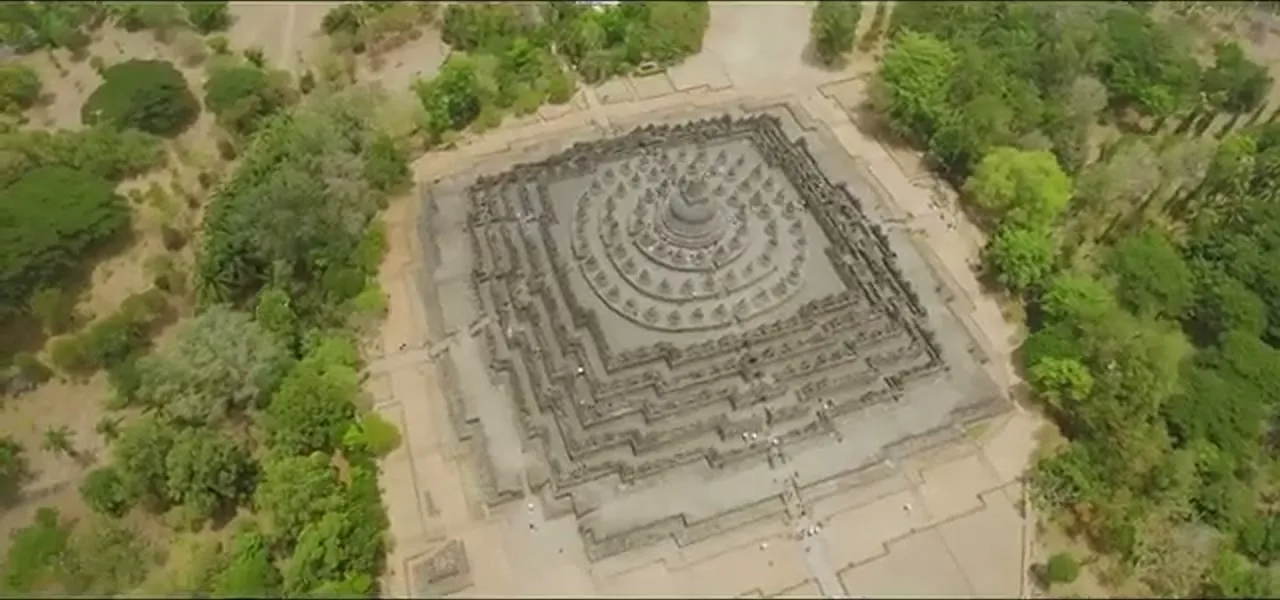
My guide through it was Reni, who walked me up level by level. Borobudur is built as three symbolic worlds, the Buddhist path to enlightenment made physical. The base is Kāmadhātu, the World of Desire; the middle galleries are Rūpadhātu, the World of Form; and the open summit is Arūpadhātu, the World of Formlessness. You literally climb out of desire, through form, into the formless — and the architecture makes you feel it.
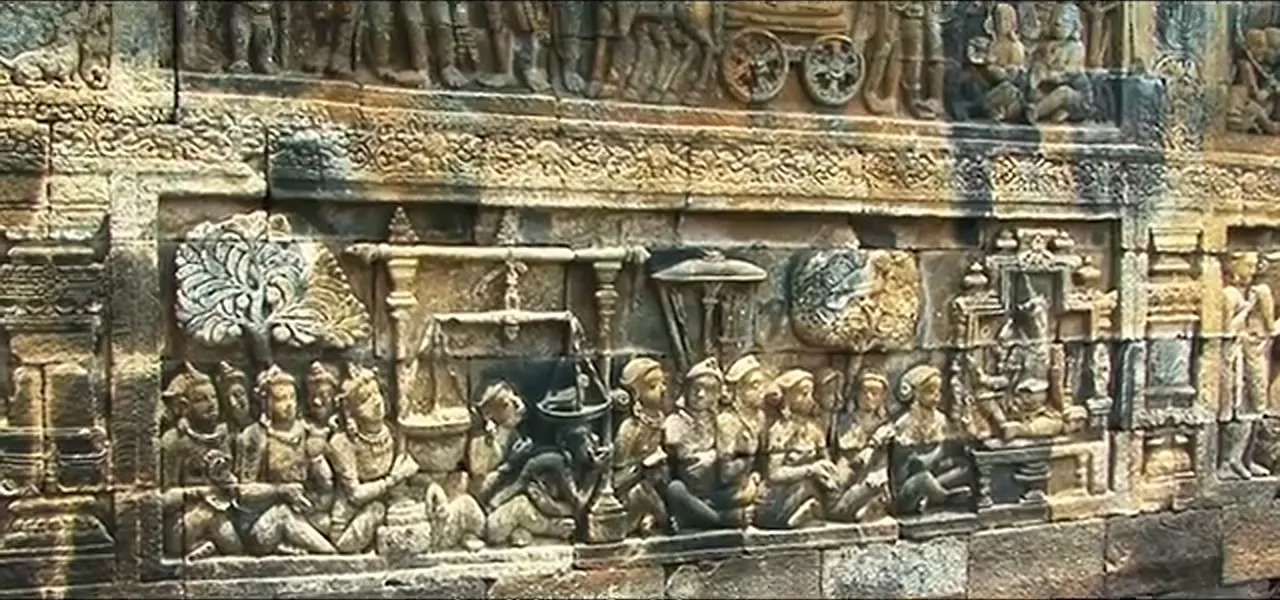
On the lower galleries, Reni showed me walls carved with moral lessons — one panel literally warns that if you spend this life gossiping and doing harm, your next reincarnation will be a lower one. Climb higher and the carvings tell the life of Siddhartha, the prince who became the Buddha. It's said that when he was born he took seven steps, and a lotus flower bloomed beneath each one; later, searching for the meaning of suffering, he met the sick, the aged and the dead, and only a wandering monk could finally answer him. Do good, meditate, break the cycle — and you can become a Buddha yourself.
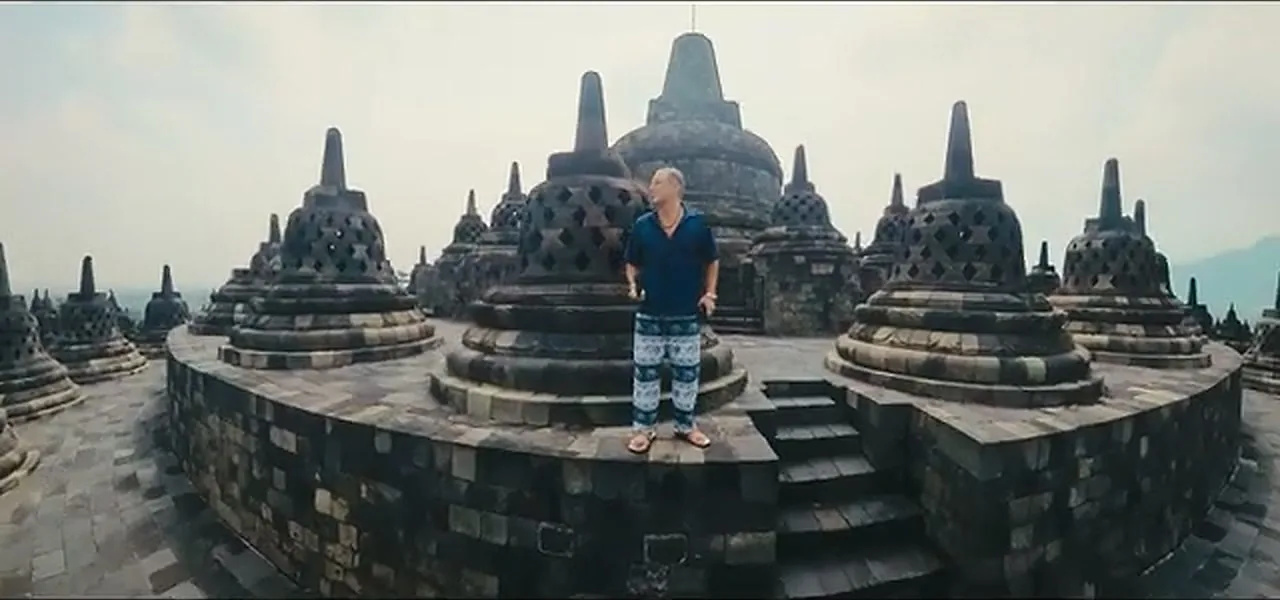
At the very top stand 72 bell-shaped stupas, arranged on three circular terraces around one massive central stupa, each small stupa sheltering a seated Buddha inside its stone lattice. The temple holds 504 Buddha statues in total, and the ones on the summit show six different hand positions — mudras meaning "calling the earth to witness," "giving," "meditation," "protection," "teaching," and "balance." Reni pointed out something I'll never forget: combine all six gestures and they echo the poses of classical Javanese dance. The sacred and the everyday, carved into the same stone.
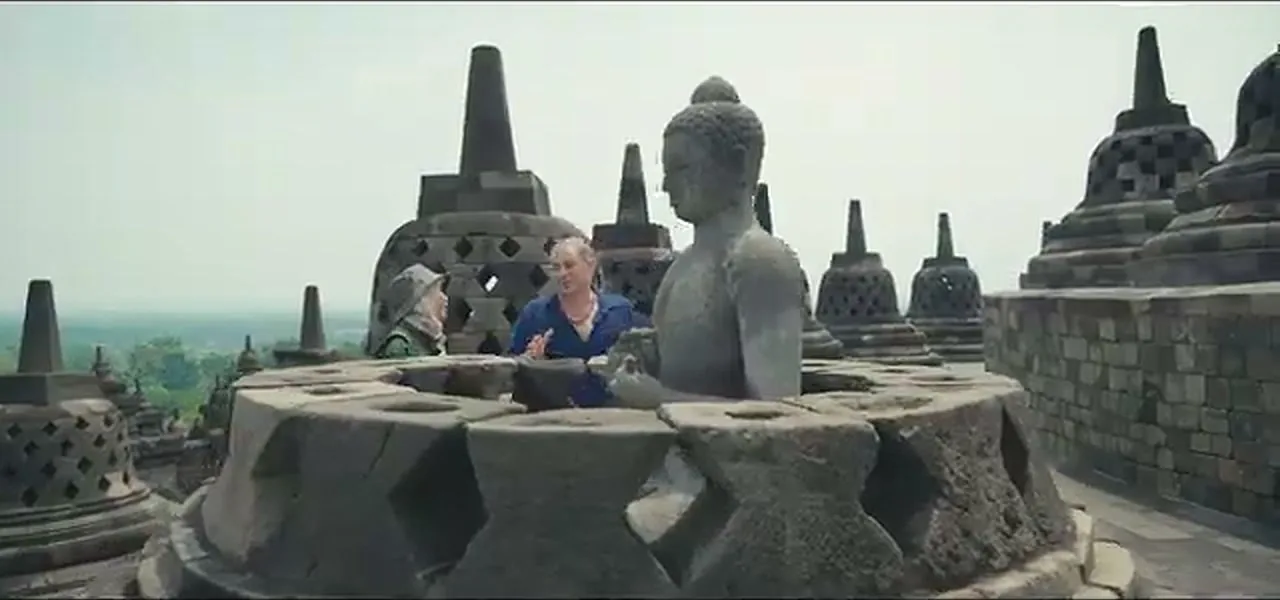
To reach the top of the largest Buddhist temple in the world — that gave me goosebumps. I'd recommend it to everyone. It doesn't matter your religion; it's a place to come, to stand still, and to learn.
The Keris: the Dagger With a Soul
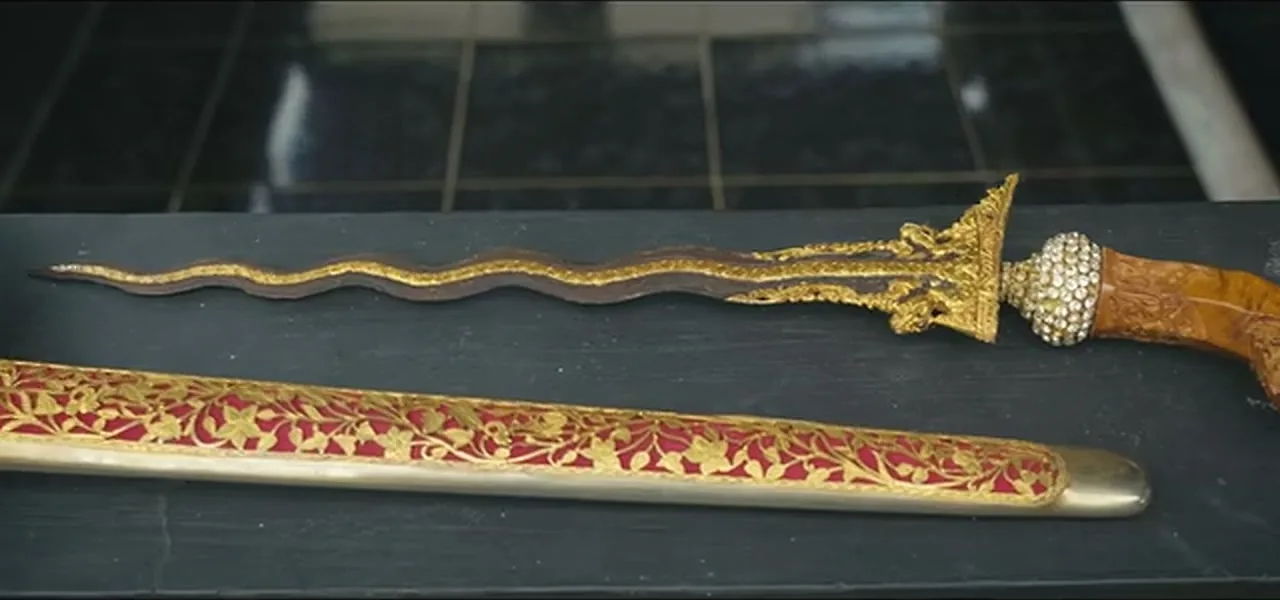
The episode is called The Island Where Knives Have Souls, and this is why. The keris — or kris — is the asymmetrical Javanese dagger that UNESCO lists as a Masterpiece of Intangible Cultural Heritage. In Java it is not really a weapon at all. Each keris is believed to carry its own spirit, and is passed down through generations as a sacred heirloom — people here will tell you a keris is almost like a human being, that it has a character, even that it can stand in for a man at his own wedding.
Dominic took me to meet one of the last families still forging keris for the royal court. The men worked dressed entirely in black, speaking an old dialect that even mainstream Indonesians don't follow — Reni knew just enough to translate. There are specific days of the week considered auspicious for the work, and we happened to arrive on one of them. They forged bare-handed: no gloves, holding iron in the coals with nothing protecting their skin.
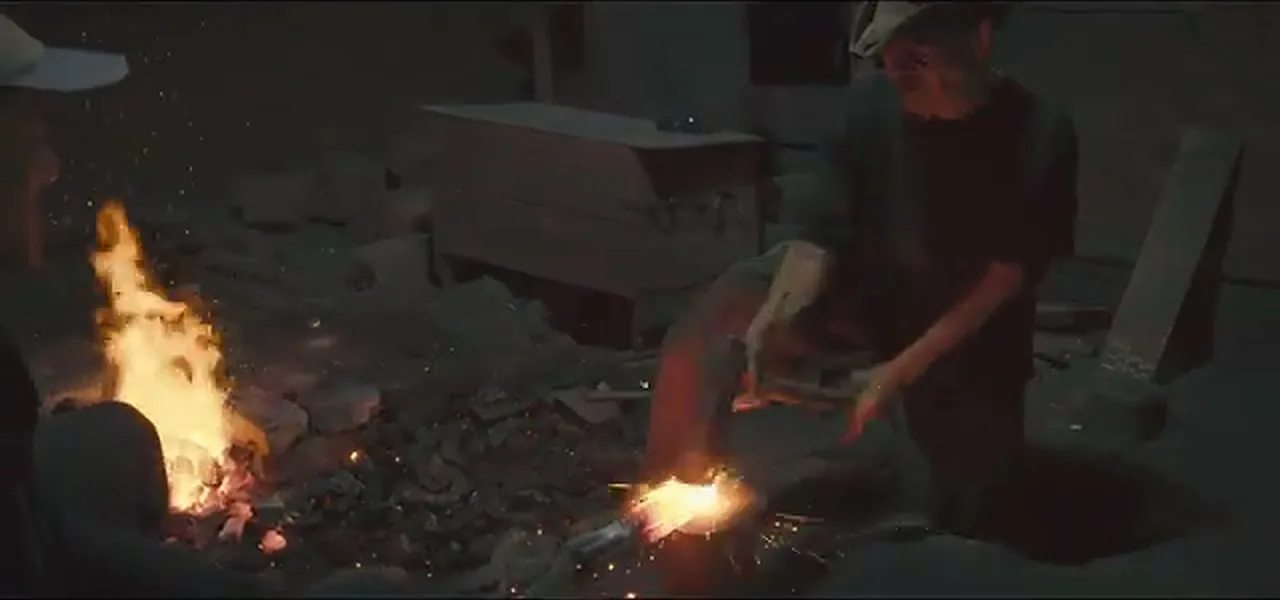
The numbers around a single keris are humbling. The metal goes into the fire for exactly seventeen minutes at a stretch to reach working temperature. A finished blade takes about a full month to make. It's forged from two metals — iron, and either nickel or, by old tradition, meteorite. The legend says that in the 13th and 14th centuries, meteorites fell onto Java, and local smiths began beating that sky-metal into blades. The wavy, watered pattern you see rippling down a fine keris is called pamor, and a meteorite keris is the one wealthy Javanese still order today, at upwards of $1,500 — a fortune for most people here, a status symbol for the few.
Pencak Silat: Java's Martial Art
Of everything Dominic proposed, Pencak Silat was, I'll admit, the one I was least excited about on paper. Within five minutes of arriving I was completely hooked. Pencak Silat is the Javanese martial art — another entry on UNESCO's intangible heritage list — and unlike the ground-grappling of jujitsu, it's fought upright, all strikes, sweeps and flowing, almost dance-like movement, with a strong current of spiritual discipline running underneath.
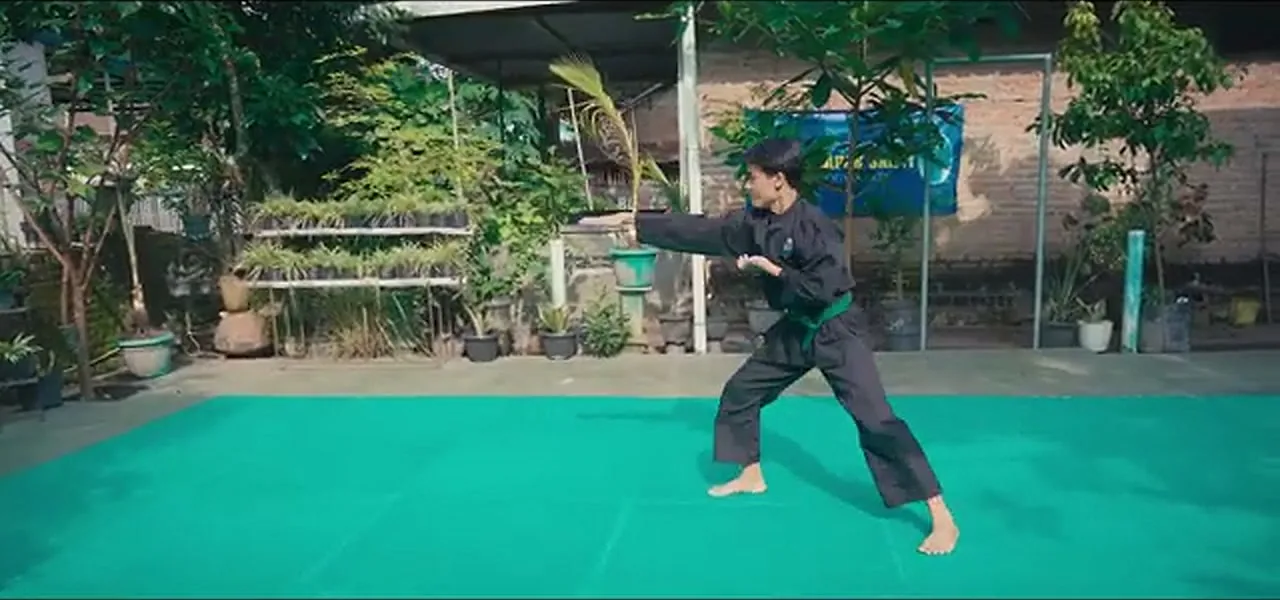
What stayed with me wasn't the fighting; it was the manners. When a new child arrived at the school in the garden, they would come to each adult and touch their forehead to the back of our hand — a gesture of respect for elders that they gave to a complete stranger from Canada without a second thought. The art has formal categories: full-contact sparring, a choreographed creative showcase, and Seni Tunggal, a judged solo performance of technique and rhythm. They invited me to try, and I discovered a fourth, unofficial category — comedy — because that's roughly what my attempt amounted to. I'm a big man, and their instructor still put me on the floor with ease. We ended the evening with tea and snacks, talking with the family who run the school. It became one of my favourite experiences in all of Java.
Imogiri: 345 Steps to the Kings
Most people don't put a cemetery on their highlight reel. Imogiri is the exception. It is the royal cemetery of the Mataram Sultanate, built in 1632 by Sultan Agung, and it is the resting place of the Javanese kings and their families — the dynasties whose descendants still sit on the thrones of Yogyakarta and Surakarta today. To climb up to the tombs, you dress the part and you earn it.
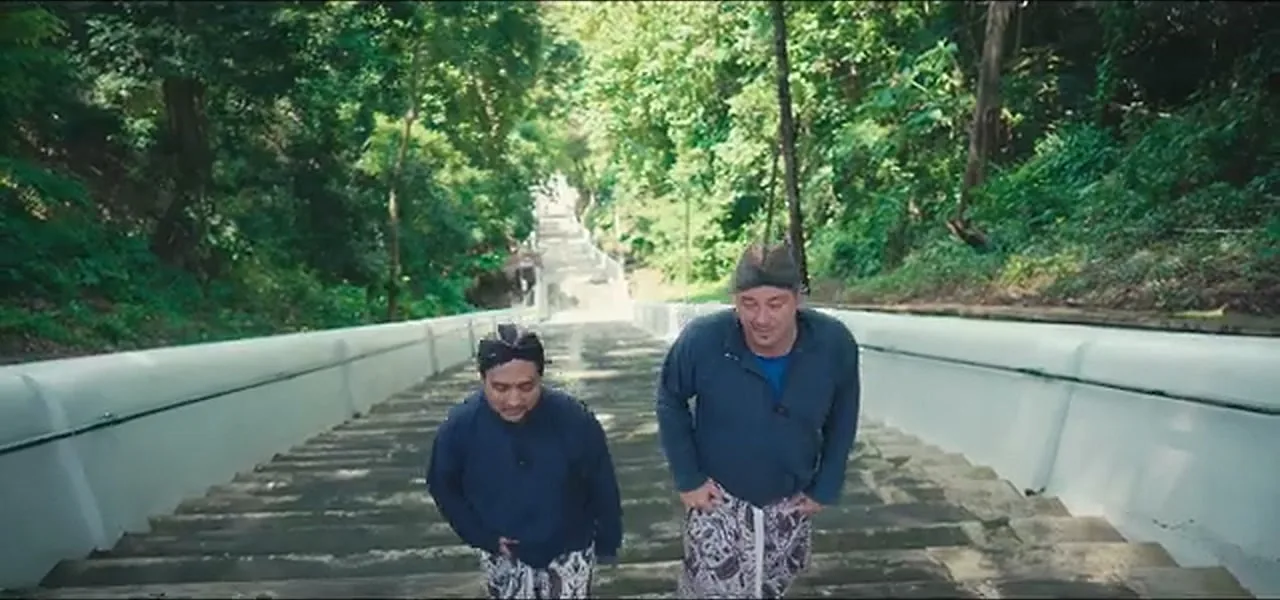
I was dressed in a sarong and a surjan, the traditional Javanese court jacket — the one they handed me was almost comically small for my frame, but as they said, if it's meant to be, it's meant to be. Then came the climb: a single steep stone stairway of around 345 steps. Halfway up, soaked through, I understood why the climb itself is considered a spiritual act. Javanese culture carries a deep mystical streak, and Imogiri is a place people still come not just to pay respects but to meditate and seek visions; some believe a prayer offered here comes true.
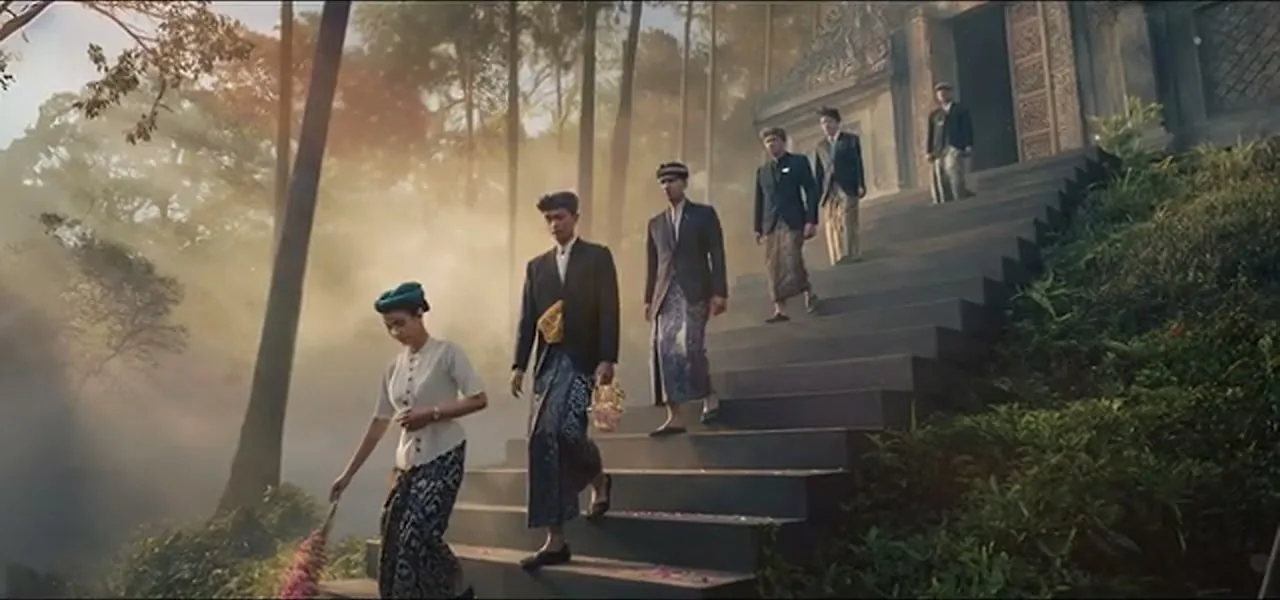
There's a darker detail woven into the stairs. When Mataram was at war with the Dutch, a traitor betrayed the Sultan's plans to the enemy. When he was discovered, he was executed — and buried into the stairway itself, his stone set in the middle of the path so that everyone who climbs to honour the kings steps on him on the way up. The sultanate was later split by the Dutch into the two courts of Surakarta and Yogyakarta, and you feel all of that history pressing down on you in the heat, somewhere around step two hundred.
Wayang Kulit: Puppets Cut From Leather and Light
In a small village, Dominic brought me to a maker of wayang kulit — the Javanese shadow puppets, figures cut and chiselled from leather and moved behind a lit screen to tell stories that can last all night. The craftsman was perhaps sixty-five, and had spent a lifetime at it. He handed me a chisel and a half-finished figure, and I felt about eight years old again.
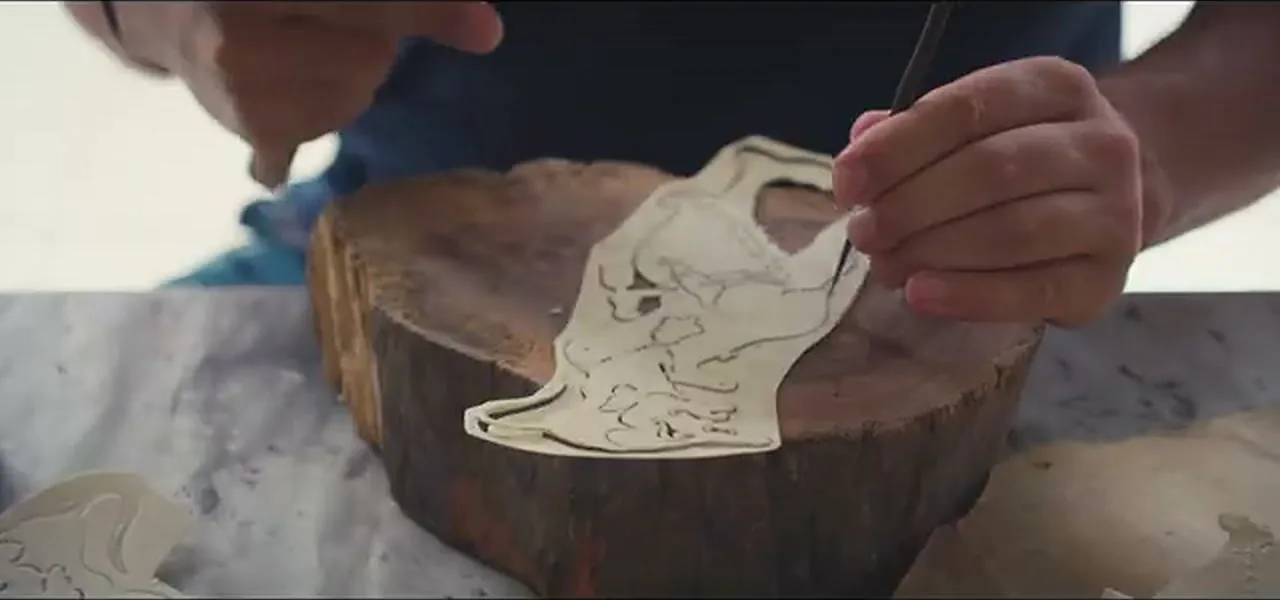
The detail is staggering — a single puppet is pierced with hundreds of tiny cuts, then painted, and the figure I worked on is called Petro, a much-loved character in Javanese plays. But wayang is not just children's entertainment. For centuries it has carried myth, religion and morality, and during the Suharto era it also became a sly way to tell political stories the government wouldn't allow out loud — resistance smuggled inside a shadow on a screen. Watching a man make a living this way, happily, after half a century, I came away with a whole new respect for the craft.
Underground: The Caves of Gunungkidul
Then Dominic changed gears entirely. "Today," he said, "is all about caves." Central Java's southern Gunungkidul region is karst country — a landscape where ancient volcanic stone meets limestone, riddled with caverns and underground rivers. The first was Goa Tanding, a cave you explore by tubing: floating on an inner tube down the water inside the mountain.

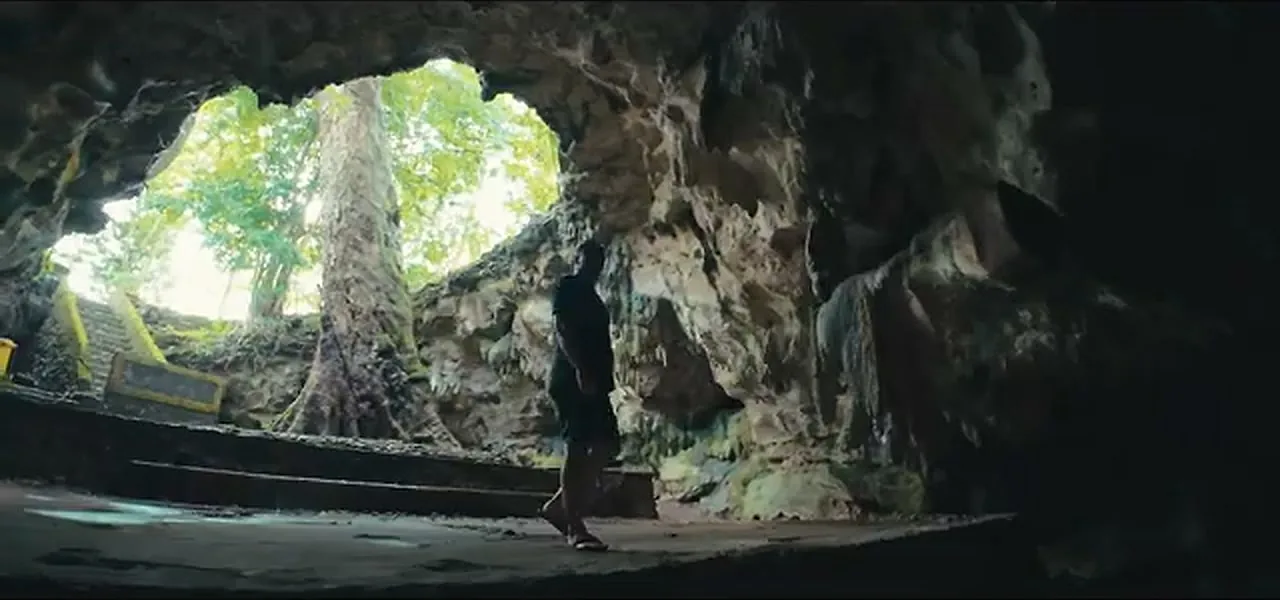
Goa Tanding runs about 450 metres in before it dead-ends, which means there's no exit at the far side — you turn around and row all the way back, a 900-metre round trip, past what must have been thousands of bats hanging in the dark. It was discovered by accident in 1997 by a villager named Harto Tanding, and opened to visitors only in 2015; the cave carries his name. The second cave, Goa Rancang Kencono, was even more striking. Its name means roughly "the golden plan" — in the Mataram era it was a hideout where locals gathered to strategise against the Dutch — and today a huge banyan tree grows up through a collapse in the roof, reaching for a skylight hundreds of years old.
Alun-Alun Kidul: A Night in the Square
After a day underground, Dominic and I were hungry, so we went where Jogja goes at night: Alun-Alun Kidul, the great southern square of the Sultan's Kraton palace. Historically it was a space for royal ceremony and military drills; by evening now it's a joyful chaos of maybe a thousand people and several hundred motorbikes, food stalls glowing in every direction.
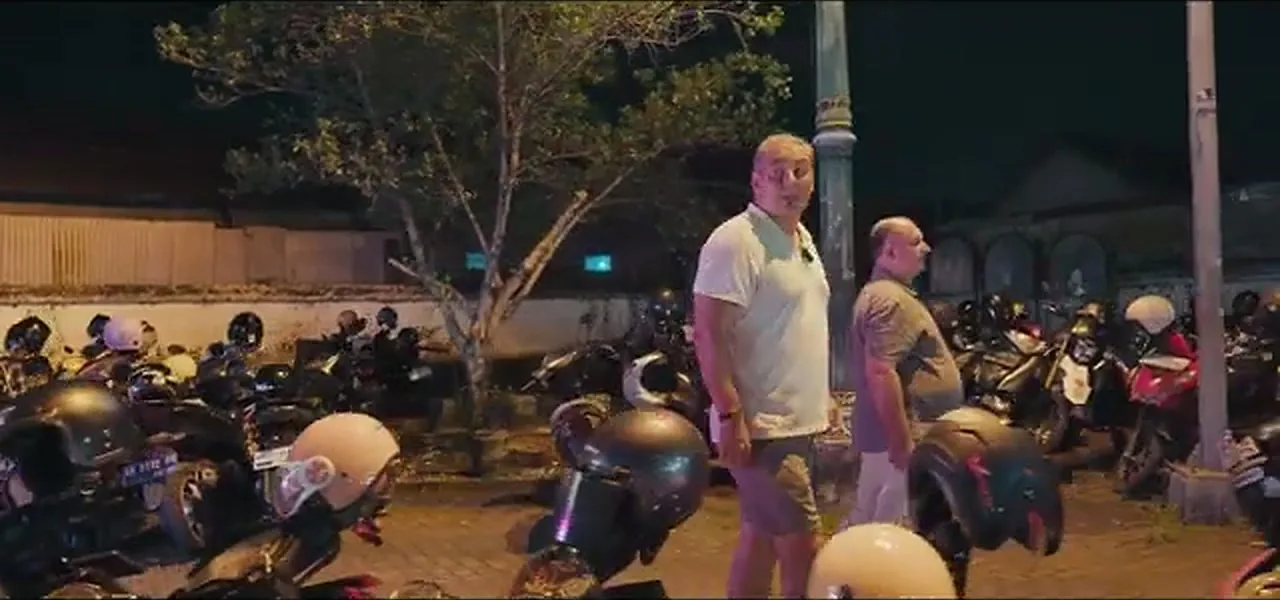
We ate nasi goreng, Indonesia's beloved fried rice, and I learned a small, warm custom: at these stalls you take your shoes off before you sit down to eat, as you would entering a home. The food was so spicy it nearly took the roof off my mouth — and I loved it. Somewhere between mouthfuls, Dominic and I got into a cheerful argument about where French fries were actually invented. His verdict: born in Paris, perfected and promoted by the Belgians. I'm still not sure I believe him.
Jemparingan: Archery as Meditation
The last thing Java gave me surprised me most. Jemparingan is traditional Mataram archery, and I expected a tourist line taking turns at a target. Instead I was led into an almost sacred space, meditation music playing, and met a master named Agung. In Jemparingan you don't stand — you sit on the ground to shoot, and there are rules you absorb before you ever touch a bow, including never passing your body over the bow itself.
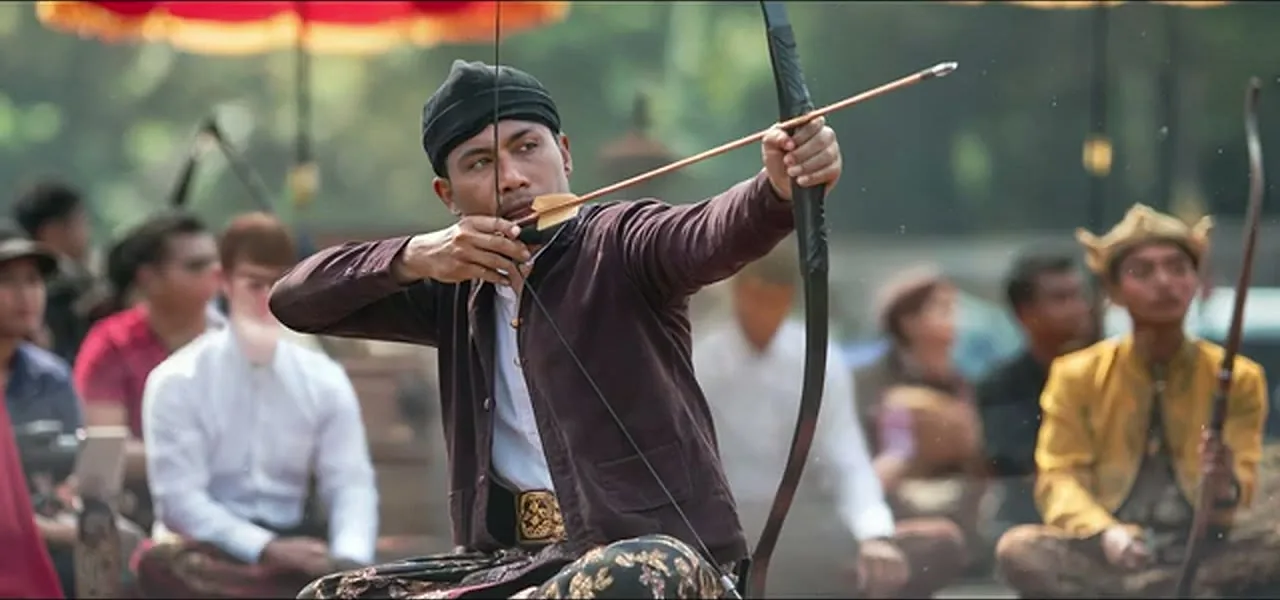
That's the whole point of it: Jemparingan is less a sport than a moving meditation, a discipline for training patience, concentration and control of your emotions. After fifteen minutes of instruction I finally loosed a few arrows and even landed a handful of bullseyes — helped, I'll confess, by a generously large yellow target. Sitting on the earth, drawing a bow in a slow hush of music, was the perfect note to end a week that had thrown everything at me.
By the numbers: Java, by the numbers
- Island population
- ~150 million — the most populous island on earth
- Borobudur
- 9th century · 504 Buddha statues · 72 stupas
- Borobudur visitors
- ~2 million a year
- A keris
- ~1 month to forge · 17 minutes per heating
- Imogiri royal cemetery
- Built 1632 · ~345 steps
- Goa Tanding cave
- ~450 m in · ~900 m round trip · opened 2015
- UNESCO heritage
- Keris, Pencak Silat & wayang all listed
What Java Left Me With
Two darts hit the same island out of seventeen thousand, and part of me still thinks that wasn't luck. In a single week in and around Yogyakarta I climbed the largest Buddhist temple on earth, watched a dagger forged from a fallen star, got put on the floor by a martial-arts master, climbed 345 steps to a line of dead kings, carved a puppet out of leather, floated an underground river, and learned to shoot a bow sitting down. No other dart city has ever handed me so much culture, so densely, so generously.
Java calls itself the sweet island, and now I understand why. It isn't the beaches or the volcanoes people chase elsewhere in Indonesia — it's the depth, the sense that every craft and ritual has a lineage running back a thousand years and someone still alive who keeps it. My journey across Indonesia wasn't done yet; the next dart would send me on to the island of gods. But Java had already given me the thing I travel for.
Every craft here has a soul and a lineage — the keris, the puppet, the bow, the dance. Java doesn't perform its culture for you. It's just living it, and it lets you in.
Throw a dart, trust where it lands, and go while you still can — because it all goes fast.
Explore More Travel by Dart Journeys
- Forward one dart to the island of gods: Bali, where the elephants, the jet hotel and the next chapter were waiting.
- See the archipelago from the water in the original Indonesia episode — Lombok, the Gili Islands and a phinisi sailing ship.
- Back one dart to where this leg began, among the mojitos and forts of Puerto Rico.
- Another lost temple civilization the dart uncovered in Southeast Asia: the ruins of Cambodia.
Suggested Sources & Further Reading
To go deeper into Java and its culture, these are some of the best authoritative resources:
- UNESCO — Borobudur Temple Compounds — the World Heritage listing for the great temple.
- UNESCO — Indonesian Kris — the keris, inscribed as intangible cultural heritage.
- UNESCO — Pencak Silat — the traditions of the Javanese martial art.
- UNESCO — Wayang Puppet Theatre — Java's shadow-puppet tradition.
- Encyclopædia Britannica — Yogyakarta — the city, the sultanate and Mataram history.
- Encyclopædia Britannica — Java — the island, its people and its place in Indonesia.
All facts verified November 2026.
Java: traveler questions
Where is Java and why is it worth visiting?+
Java is the central island of Indonesia and the most populous island on earth, home to more than 150 million people, the capital Jakarta, and the cultural capital Yogyakarta. I spent a week based in Yogyakarta — 'Jogja' for short — which locals call the soul of the country. In one week I climbed Borobudur, the largest Buddhist temple in the world; watched a keris dagger being forged from meteorite; learned the martial art Pencak Silat; climbed the 345 steps of the Imogiri royal cemetery in traditional dress; carved a leather shadow puppet; went cave tubing underground; and shot a bow in the meditative Mataram style. It is one of the richest cultural weeks I've ever filmed.
Is Java safe for travelers?+
I filmed across Yogyakarta and Central Java using normal travel common sense and never once felt I was taking a reckless risk. Java is relaxed, warm and used to visitors, especially around Borobudur and Yogyakarta. As anywhere, I stayed aware of my surroundings, dressed respectfully at sacred sites, and leaned on a trusted local guide — I travelled with Dominic and Reni from Azimuth Adventures, which opened doors ordinary tourists never see. Check your government's current travel advisory before you go.
What is the keris, the 'knife with a soul'?+
The keris (or kris) is the asymmetrical Javanese dagger that UNESCO recognises as a Masterpiece of Intangible Cultural Heritage. In Java it is far more than a weapon: each one is believed to carry its own spirit and is handed down through generations as a sacred heirloom. I visited one of the last families still forging keris for the royal court. A single blade takes about a month to make, is held in the fire for exactly seventeen minutes at a time, and the finest are forged with iron and nickel — or, by old tradition, with metal from meteorites that fell on Java centuries ago.
When is the best time to visit Java?+
The dry season, roughly May to September, is the most comfortable for Borobudur, the caves of Gunungkidul and long days outdoors; it was hot and humid when I filmed and the midday sun is no joke on open temple stone. The shoulder months either side give you thinner crowds at the big sites and better value, which I always prefer.