Season 3 · Episode 10
EXCLUSIVE: GEISHA SPECIAL
Inside the hidden world of the geisha — the artistry, the rules, the myths and the truth, from a private evening almost no outsider is granted.
On this page ▾
By Sorin Mihailovici · Travel by Dart · Last updated July 2026 · ~15 min read
Behind the paper doors of Kyoto's tea houses is a world most Japanese will never see — and one evening, they let me in. In Kyoto, through a friend who knew exactly the right person, I was granted something almost no foreigner ever experiences: a private evening with a true geiko and two maiko, with my camera the only one allowed in the room. No script, no actors, no second takes.
I want to be clear about what this article is, because the subject is so easy to get wrong. Nearly twenty years ago the world fell in love with Memoirs of a Geisha — beauty and heartbreak seen through Hollywood's eyes — and in Japan, many felt betrayed. The truth of who geisha really are got lost behind the fiction. So this isn't a trip recap; it's the piece I wish existed before I walked in: a complete, fact-checked guide to the geisha world — what they are, how they train, the rules they live by, the myths that surround them, and why this 400-year-old art is quietly disappearing.
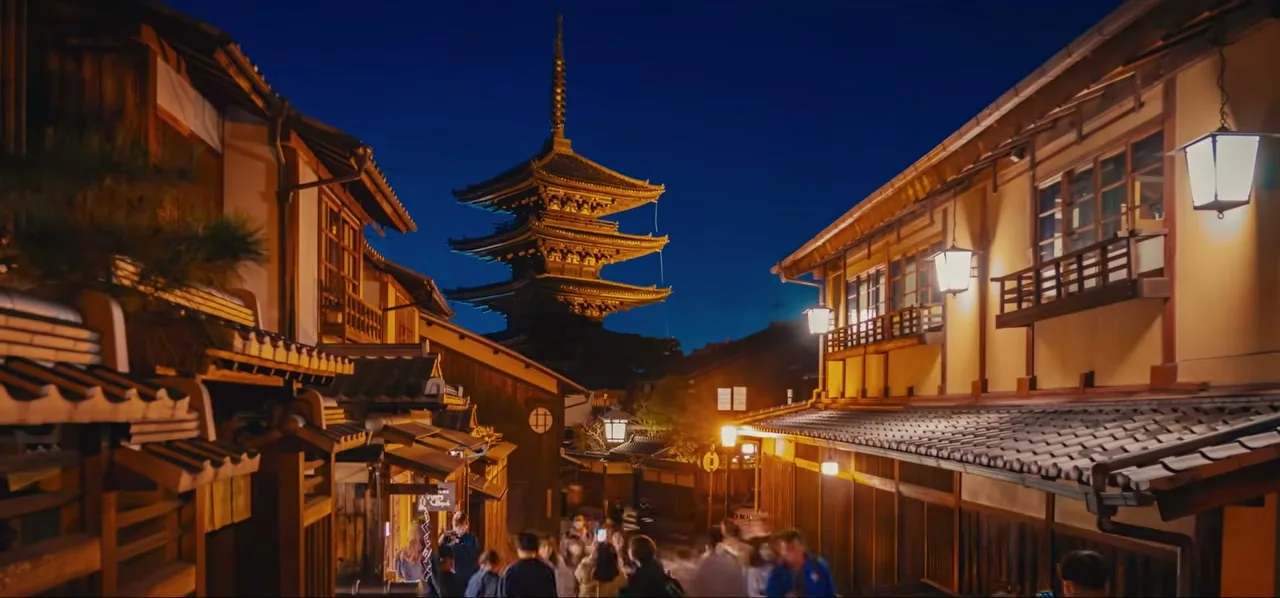
Quick facts: The geisha world at a glance
- What the word means
- 'Person of the arts' (gei = art, sha = person)
- Kyoto term
- Geiko (geisha); Maiko (apprentice)
- Apprenticeship
- ~5 years, starting around age 15–20
- Where they live
- The okiya (lodging house), run by a 'mother'
- Where they perform
- Ochaya (tea houses), in private ozashiki banquets
- Kyoto's districts
- 5 hanamachi ('flower towns'), Gion the most famous
- Core arts
- Shamisen, classical dance, song, conversation
- Numbers today
- ~1,000 in Japan (down from ~80,000 in the 1920s)
- First emerged
- 1600s–1700s
What Is a Geisha, Really?
Start with the word, because it corrects the biggest misunderstanding instantly. Geisha is written with two characters: gei (芸), meaning art, and sha (者), meaning person. A geisha is, literally, a person of the arts — a professional performer trained for years in classical dance, music, song, poetry, tea, games and the subtle craft of conversation and hospitality. In Kyoto, the cradle of the tradition, they are not called geisha at all but geiko — "woman of art."
The historical record traces professional geisha to the 1600s; by the 1700s they had risen to lead the banquets in the tea houses. They are, as one guide put it to me, the cultural ambassadors of Japan and the living symbol of Kyoto. What they are not — despite a century of Western assumption — is prostitutes.
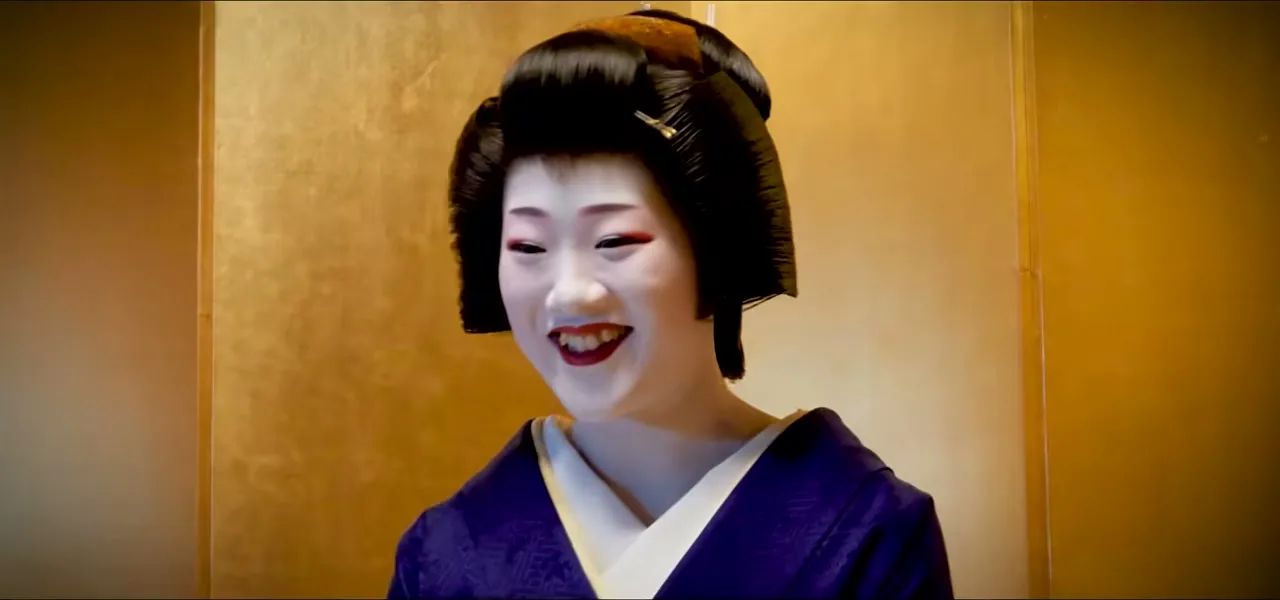
Geiko vs Maiko: The Two Stages of a Life
The single most useful distinction in this world is between the maiko (the apprentice) and the geiko (the full geisha). A maiko is typically between 15 and 20 years old and spends about five years in training before she can debut as a geiko. To the untrained eye they look similar, but the differences are precise and deliberate:
- Hair: a maiko styles her own natural hair into elaborate forms (which is why she sleeps on a special wooden pillow); a geiko wears a wig.
- Kimono: a maiko wears brighter kimono with a long, trailing darari obi; a geiko's dress is more subdued and refined.
- Visibility: a maiko, as an apprentice, can be seen at public events; a full geiko almost never performs in public — which is the very source of the mystery.
By the numbers: Kyoto's geisha world today
- Geiko working in Kyoto
- ~160
- Maiko (apprentices) in Kyoto
- ~70
- In a single district, in the past
- More than 1,000
- Peak across Japan (1920s)
- ~80,000
- Across Japan today
- ~1,000
- Maiko apprenticeship
- ~5 years
- Kyoto hanamachi (districts)
- 5
The Okiya and the "Mother": How a Girl Becomes a Maiko
No one simply decides to be a geisha. The path runs through the okiya — the lodging house where maiko live — and the woman who runs it, known as the "mother" (okā-san). In the episode I spent time with Reiko-san, one of the most influential okiya mothers in Kyoto, who at the time was housing two maiko and managing two geiko.
The recruitment is more formal than most people imagine. A hopeful girl sends what amounts to a résumé to the governing foundation or to one of the five flower-district unions — the Gion East Union, for example. If it reaches an okiya mother and she is interested, she arranges an interview. Only then, if accepted, does the girl leave home — often at just 15 — to live in the okiya for the length of her apprenticeship.
The apprentice period has to be five years. In the fifth year I see whether she's ready to become a geiko — and I have to make sure she truly wants it. Otherwise, she stops as a maiko.
That decision — to send a fifteen-year-old daughter away to a life of rigid discipline — is wrenching for a family, which is why parental permission and support are essential. But it is a world that gives as well as demands. The okiya provides everything: kimono, lodging, living expenses, training — and, in a detail that genuinely surprised me, a pension plan. This is a career, not a gilded cage.
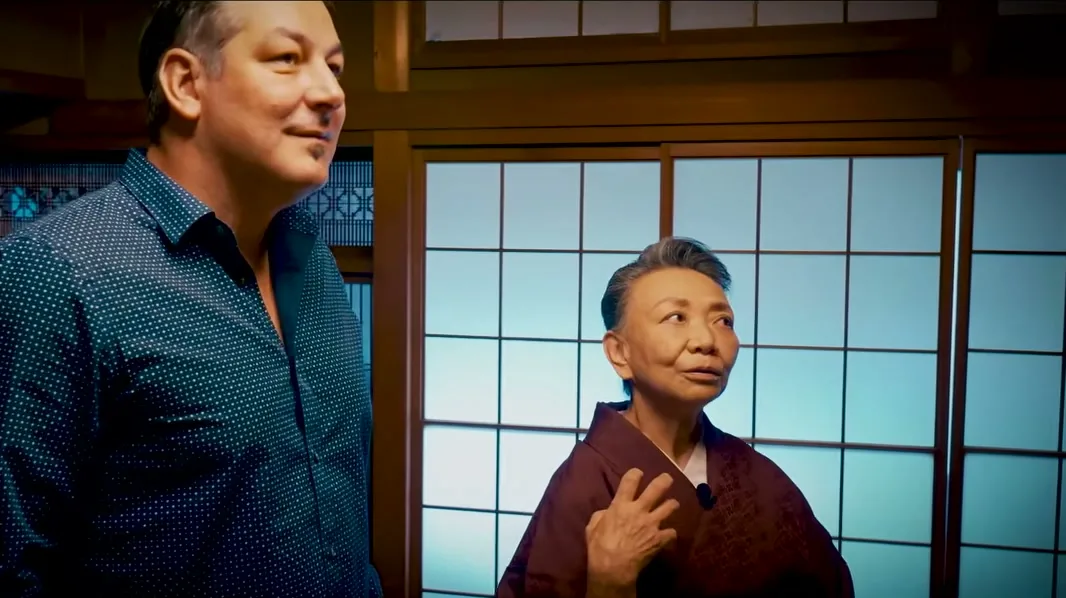
The Hanamachi: Kyoto's Five Flower Towns
The geisha world operates at night, in districts called hanamachi — literally "flower towns." Kyoto has five of them, known collectively as the Gokagai: Gion Kobu, Gion Higashi, Pontochō, Miyagawa-chō and Kamishichiken, with Gion the most famous of all. Within them, the performances happen in ochaya — exclusive tea houses that are less restaurant than private salon.
This is also why the experience is so hard to get. As I was told repeatedly, you cannot simply book a geisha; even Japanese men struggle to. Access runs almost entirely on introduction and trust — if you don't know someone who can connect you, the door stays closed. That exclusivity isn't snobbery; it's self-preservation.
Sorin is a lucky guy. To meet a geiko and get a private performance is a very, very rare case. If you don't know the person who can connect you, you never reach the geiko.
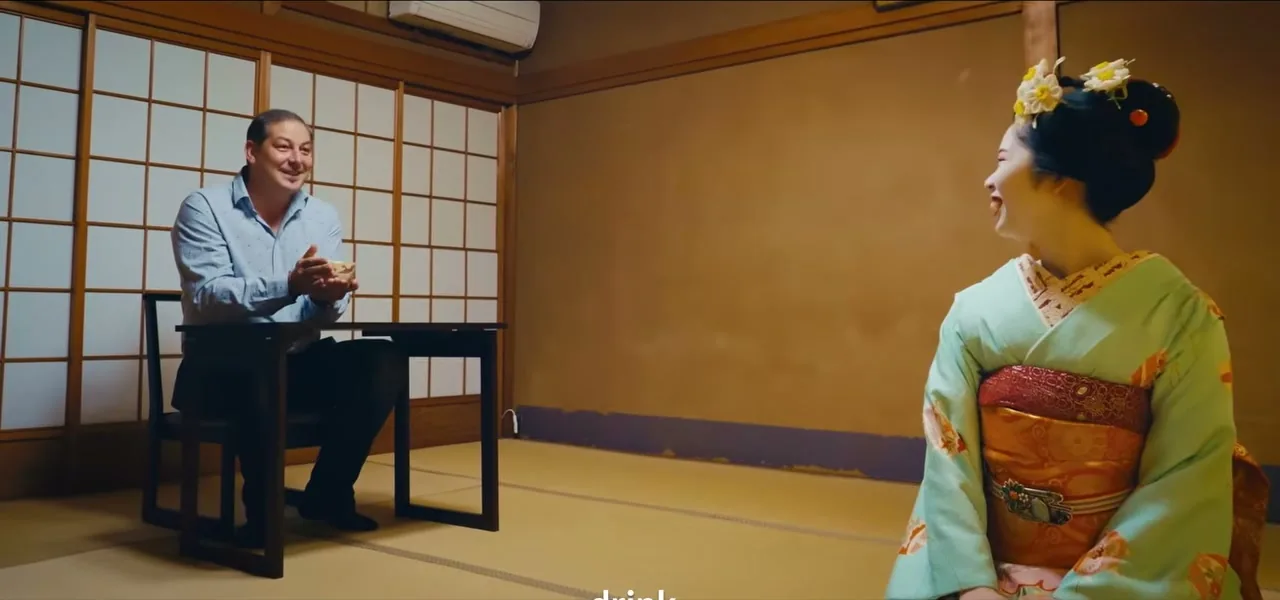
The Arts: What a Geisha Actually Does
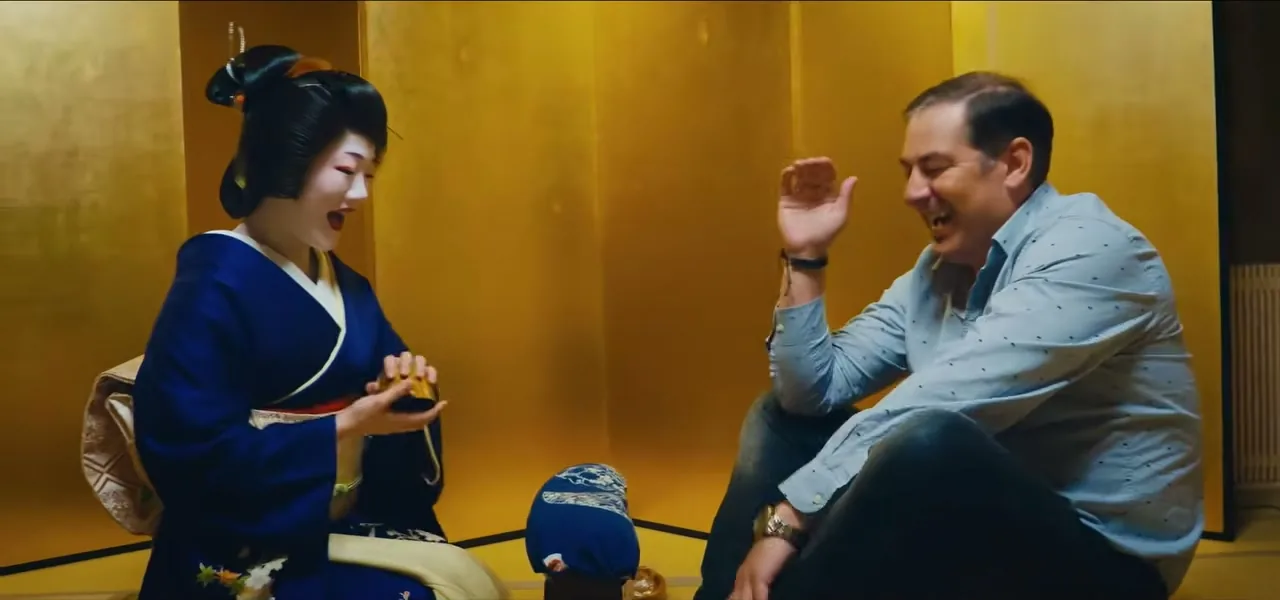
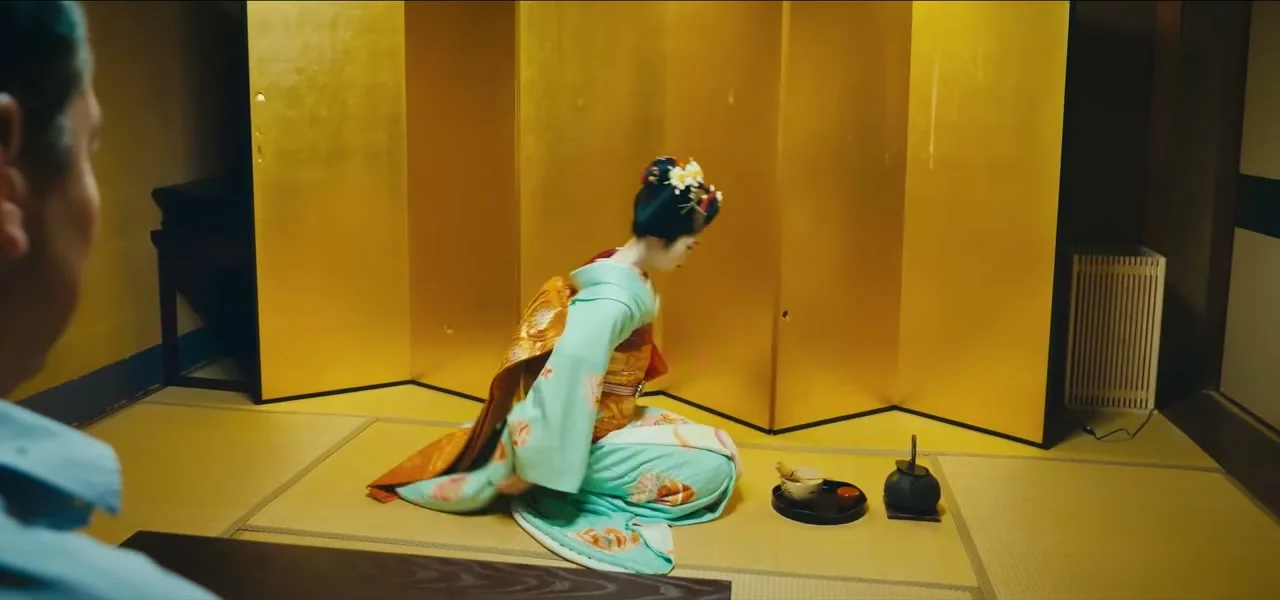
When the evening finally began, it unfolded like a piece of choreography. The maiko came first — pouring tea, talking, putting us at ease. Then the geiko entered and began to play the shamisen, the three-stringed Japanese instrument, while the maiko performed kyo-mai, Kyoto's restrained, precise classical dance. Later came the parlour games — ozashiki asobi — including a drinking game where the loser takes a shot of sake. It was, genuinely, one of the most memorable evenings of my life.
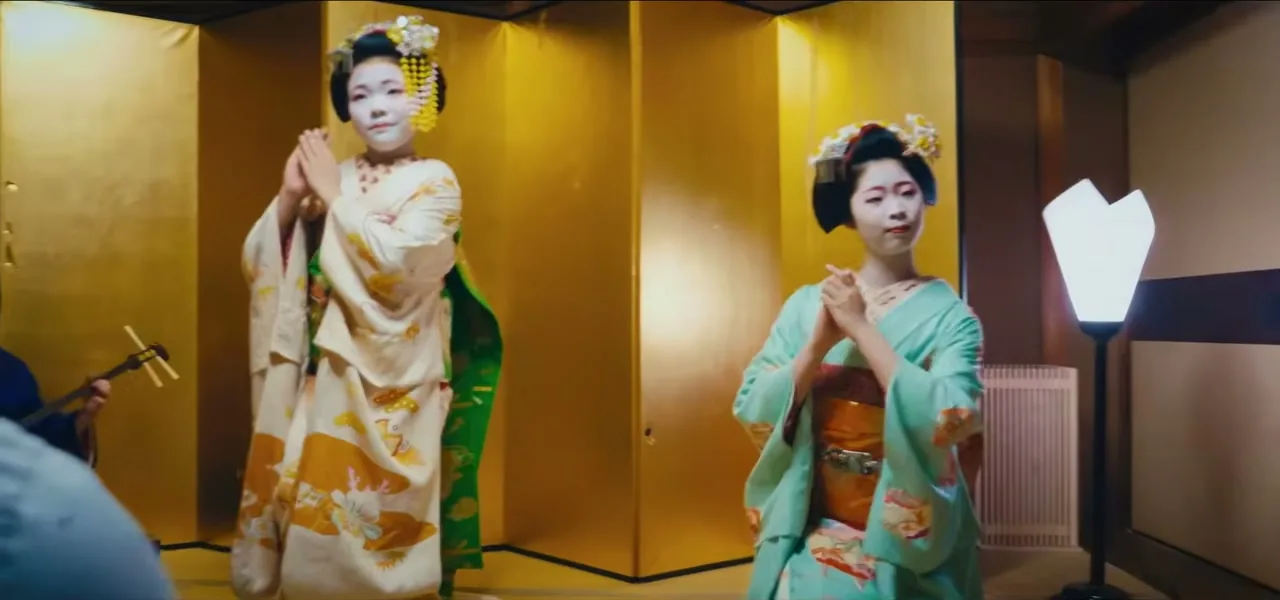
Underneath the entertainment is something subtler, and it's the real job. A geisha's ultimate skill is making a guest feel completely at ease. Behind closed doors, a geiko often becomes a trusted confidante — to CEOs, politicians and business leaders who need someone to talk to and know that whatever is said in that room stays there. Not romance; discretion. It is emotional labour of the highest order, and it is precisely why the geiko has held such a respected place for centuries.
The Rules: No Phone, No Money, No Boyfriend
The artistry rests on an almost monastic discipline. While training and working, maiko in particular live under strict prohibitions: no mobile phone, no money of their own, and no boyfriend. You are not permitted to touch a geisha — not even, as I was warned, with your clothing — and interfering with one in public can bring a fine (in the episode, about US$160) if you're caught. When you pass a maiko hurrying between engagements, the etiquette is simple: let her go. She cannot be late.
Then there's the cost of simply looking the part. A formal geiko kimono is hand-woven and hand-painted and can cost about as much as a small car. The wig alone runs on the order of ¥500,000, with monthly maintenance of roughly ¥30,000. Every element of the image is a serious, ongoing investment.
The price of the tradition
The Memoirs of a Geisha Controversy
You cannot write honestly about geisha without addressing the story that shaped the Western image of them. Arthur Golden's 1997 novel Memoirs of a Geisha, and the 2005 film, were beautiful — and, to many Japanese, a betrayal. The problem wasn't only artistic licence; it was personal.
Golden's key source was Mineko Iwasaki, one of the most famous geiko of her generation, who gave him more than a hundred hours of interviews on the strict condition of anonymity. When the book instead named her in its acknowledgments, she said he had broken their agreement and exposed her — and she sued him. The case was settled out of court in 2003. Iwasaki went on to write her own memoir to set the record straight, and has been blunt that the novel's most sensational elements — including the auctioning of a young woman's virginity (mizuage) — misrepresent the reality she lived.
The Business: What a Geisha Evening Costs
The geisha world is also a sophisticated economy built almost entirely on trust. Reiko-san declined to name a fixed price — it depends heavily on the setting, the seniority of the geiko and what the evening includes — but some Kyoto locals suggested that certain clients pay up to about US$5,000 for a single night.
The money moves in an unusually old-fashioned way. Geisha are paid through their union, which tallies the hours each geiko and maiko works over a two-week period and issues a cheque; a maiko's earnings typically go to her okiya, which in turn covers all her costs. And the client rarely pays on the spot. Traditionally the ochaya settles everything — the restaurant, the drinks, the performers' fees — and bills the customer later, even extending credit to trusted regulars who arrive without a yen on them. When a true VIP comes calling — the episode mentioned a prime minister — the union will often assign the most senior geiko as a mark of respect.
A Fading World: From 80,000 to 1,000
Here is the sobering truth beneath the beauty. In the 1920s, roughly 80,000 geisha worked across Japan. Today the figure is closer to 1,000, and shrinking — undone by a modern economy, changing tastes, the sheer cost of the entertainment, and the difficulty of persuading a teenage girl to trade a smartphone and a boyfriend for five years of discipline. In Kyoto, a single district that once held more than a thousand now counts about 160 geiko in the whole city.
What an overwhelming experience — learning how these women sacrifice their lives to become what they love: an artist, an entertainer. And to prove to the world that the misconceptions about them are completely wrong.
Things That Surprised Me About the Geisha World
- "Geisha" means "person of the arts" — not what most of the West assumes.
- In Kyoto, geisha are called geiko, and apprentices are maiko.
- The apprenticeship is a full five years, usually begun at 15.
- Maiko wear their own hair; geiko wear wigs.
- A full geiko almost never performs in public — that's the whole mystery.
- Maiko may carry no phone, no money and no boyfriend.
- You cannot touch a geisha, even with your clothes.
- A formal kimono can cost about as much as a small car.
- The okiya provides everything — including a pension plan.
- Payment runs on an old-fashioned credit-and-trust system through the tea house.
- Some evenings reportedly cost up to $5,000.
- Geisha often act as confidential advisors to powerful clients — never as escorts.
- Memoirs of a Geisha triggered a real lawsuit from the geiko who inspired it.
- Numbers have collapsed from ~80,000 to ~1,000 in a century.
- You essentially cannot book a geisha without a personal introduction.
An Evening You Don't Pass By
I have thrown a dart at the world map and ended up in a lot of extraordinary places, but few evenings will stay with me like this one. Not because of the sake games or the kimono, dazzling as they were, but because of what sat underneath: a group of women who gave up ordinary life — phones, money, romance, family, for years — to master an art that most of the world misunderstands, and to keep it alive one private performance at a time.
That art is fading. A little more of it slips away every year, and one day it may exist only in memory. Which is exactly why stepping behind those paper doors felt like a gift — a hidden chapter of Japan's soul, offered on trust. It may not be for everyone. But life is short, and the chance to witness something so delicate, so disciplined and so close to disappearing is not one you pass by.
Explore More Travel by Dart Journeys
- Wander the city that is the geisha's home — my Kyoto episode.
- See the bigger picture in my main Japan episode.
- Climb Japan's sacred volcano in my Mount Fuji episode.
- Continue across Asia with South Korea and Thailand.
Suggested Sources & Further Reading
To go deeper into the world of the geiko and maiko, these are some of the best authoritative resources:
- Kyoto City Official Travel Guide — the city's official guide to the hanamachi, seasonal odori dances and etiquette.
- Japan National Tourism Organization — official cultural background and how to experience traditional arts respectfully.
- Geisha: history and role — a well-sourced overview of the tradition's origins, arts and etiquette.
- Miyako Odori — Kyoto's famous annual public geisha dance.
- Mineko Iwasaki — the celebrated geiko behind the Memoirs of a Geisha controversy, and her own memoir.
All facts verified July 2026.
Geisha: traveler questions
What is a geisha, really?+
A geisha is a highly trained professional artist and entertainer, skilled in classical Japanese dance, music (especially the shamisen), song, conversation and the art of hospitality. The word itself means 'person of the arts' (gei = art, sha = person). Geisha are not, and never were, prostitutes — that is a Western myth rooted in post-war confusion.
What is the difference between a geiko and a maiko?+
In Kyoto, a fully qualified geisha is called a geiko. A maiko is an apprentice, usually aged 15 to 20, who trains for about five years. The clearest differences: maiko style their own natural hair while geiko wear wigs; maiko wear more colourful kimono with long trailing obi and can be seen at public events, while a full geiko performs almost exclusively in private.
How does a woman become a geisha?+
A candidate applies to one of Kyoto's five hanamachi (geisha districts) or the governing foundation; if an okiya 'mother' is interested, she interviews the girl. If accepted, the apprentice leaves home — often at 15 — to live in the okiya (lodging house) for a roughly five-year maiko apprenticeship before she can debut as a geiko.
Are geisha allowed to date or marry?+
While actively working, maiko in particular live by strict rules: no boyfriend, no mobile phone and no money of their own. A geisha who wishes to marry traditionally retires from the profession first. Their intimacy with clients is emotional and confidential — they are trusted confidants — not sexual.
How much does a geisha evening cost?+
A private ozashiki (banquet) is expensive and hard to arrange — you generally need an introduction. Costs vary widely with the setting and the geisha's seniority; in the episode, some locals suggested certain clients pay up to about US$5,000 for a single night. Payment traditionally runs through the ochaya on a trust-based credit system and is settled with the geisha via their union.
Why was Memoirs of a Geisha controversial in Japan?+
Arthur Golden's 1997 novel (and the 2005 film) shaped the Western image of geisha, but many in Japan felt it distorted the truth. Mineko Iwasaki, a famous retired geiko who was Golden's key source on the condition of anonymity, sued him after he named her; the case was settled out of court in 2003. She later wrote her own memoir to correct the record.
How many geisha are left today?+
From a peak of around 80,000 across Japan in the 1920s, the number has fallen to roughly 1,000 today, concentrated in Kyoto and Tokyo. In the episode, Kyoto's five districts were said to have about 160 geiko and 70 maiko — where a single district once had more than 1,000.