Season 5 · Episode 5
Philippines
Thousands of islands connected by extraordinary warmth and resilience.
On this page ▾
By Sorin Mihailovici · Travel by Dart · Last updated September 2026 · ~17 min read
The moment I told people the dart had chosen the Philippines, something happened that has never happened with any other country: everyone I knew who was Filipino — and in Edmonton, where I live, that's a lot of people — handed me a list. Eat this. Go here. You have to see that. By the time I landed I had a menu so long that I genuinely wasn't sure two or three weeks would be enough to get through it. They were right to be excited. This is a nation of around 7,641 islands and 118 million people — the 13th most populous country on Earth, though it's so spread across the sea that it feels like a hundred different places stitched together by warm water and even warmer people.
A week earlier I'd been in Antigua and Barbuda, on the other side of the world; the dart had landed in the ocean between the Philippines and Brunei, nicked the edge of the Philippine islands, and that was that. I was thrilled. What follows is the guide I wish I'd had before I arrived: the whale sharks and the waterfalls, yes, but also the history, the food and the people that the brochures rush past.
Quick facts: Philippines at a glance
- Capital
- Manila (Quezon City is the largest)
- Population
- ~118 million (13th in the world)
- Islands
- ~7,641
- Languages
- Filipino & English (100+ local)
- Religion
- Majority Roman Catholic
- Currency
- Philippine peso
- Named after
- King Philip II of Spain
- The dart's next stop
- Norway
Manila: Walls, a Hero, and Jeepneys
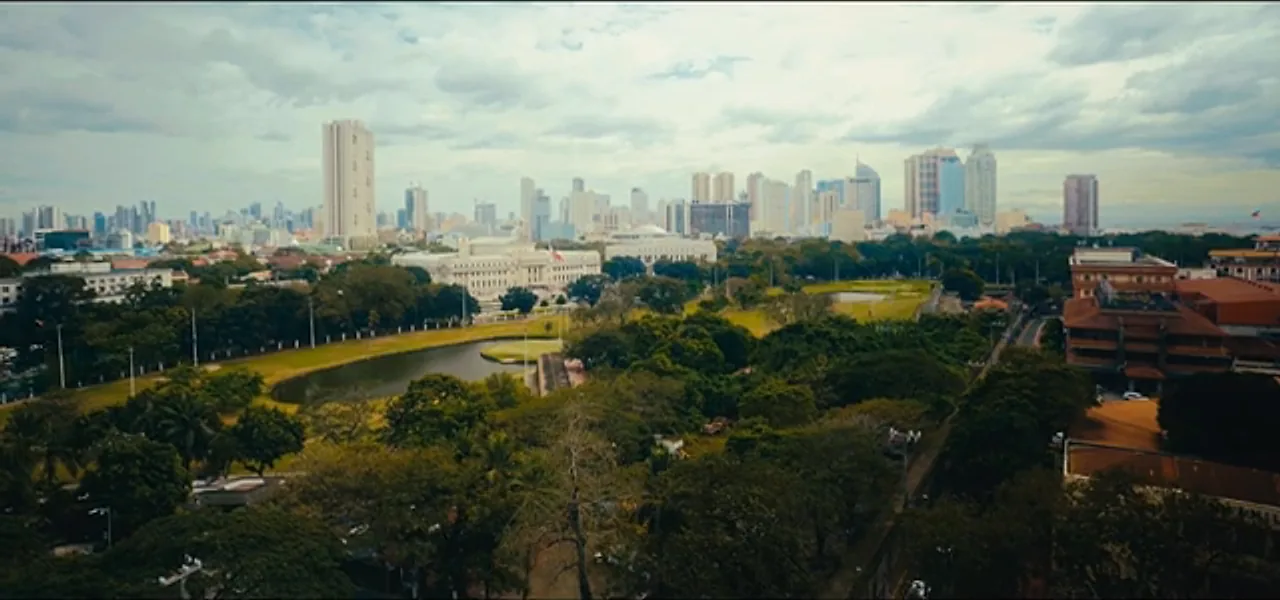
My guide for the next two weeks was Mary Ann, who I partnered with through Marsman Drysdale — one of the oldest companies in the country, in business since the 1920s. She started me where every Filipino story starts: in Manila, and specifically in Intramuros, the walled city the Spanish built in the late 16th century as the seat of their colonial power. The Spanish arrived in 1521, brought Christianity, and built the great churches that are now UNESCO World Heritage Sites. They also, in a detail that explains a lot, assigned Filipino families Spanish surnames from an official list — which is why so many Filipinos today carry Spanish names.
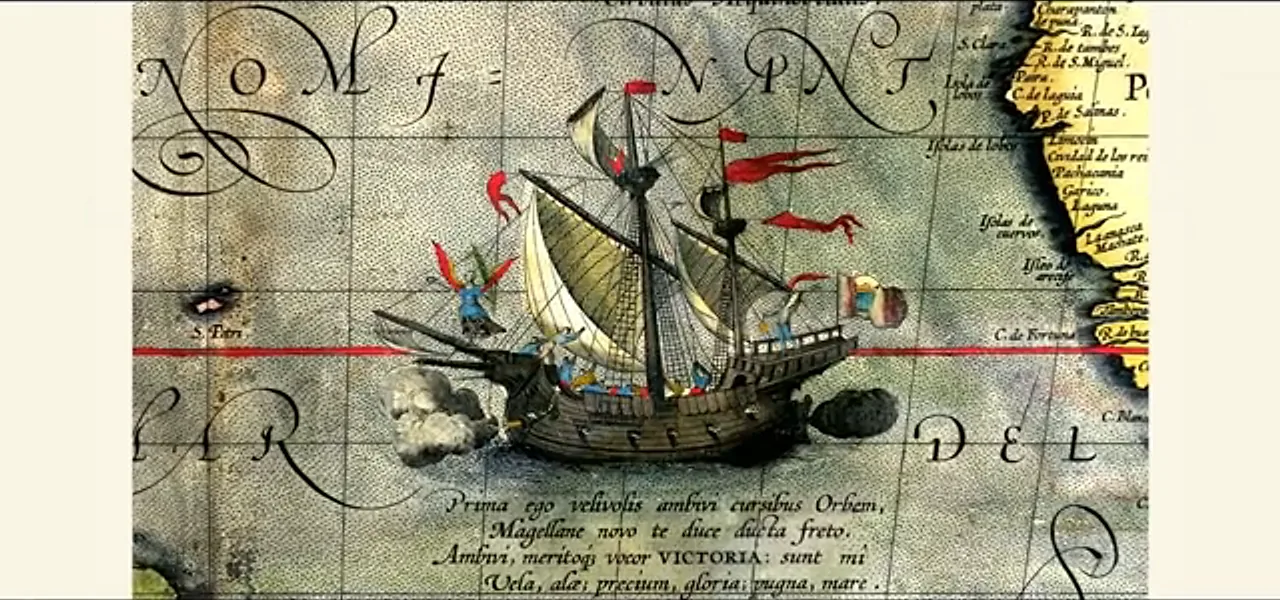
The country's own name comes from that era: the islands were named after King Philip II of Spain. (The explorer Ferdinand Magellan reached them in 1521; the name "Las Islas Filipinas" came a couple of decades later, honouring the prince who would become Philip II.) And here's a linguistic quirk that delighted me: the native Filipino alphabet traditionally has only 20 letters — no F, no ch, no Z — which makes the Spanish-given name "Philippines" a small irony in itself.
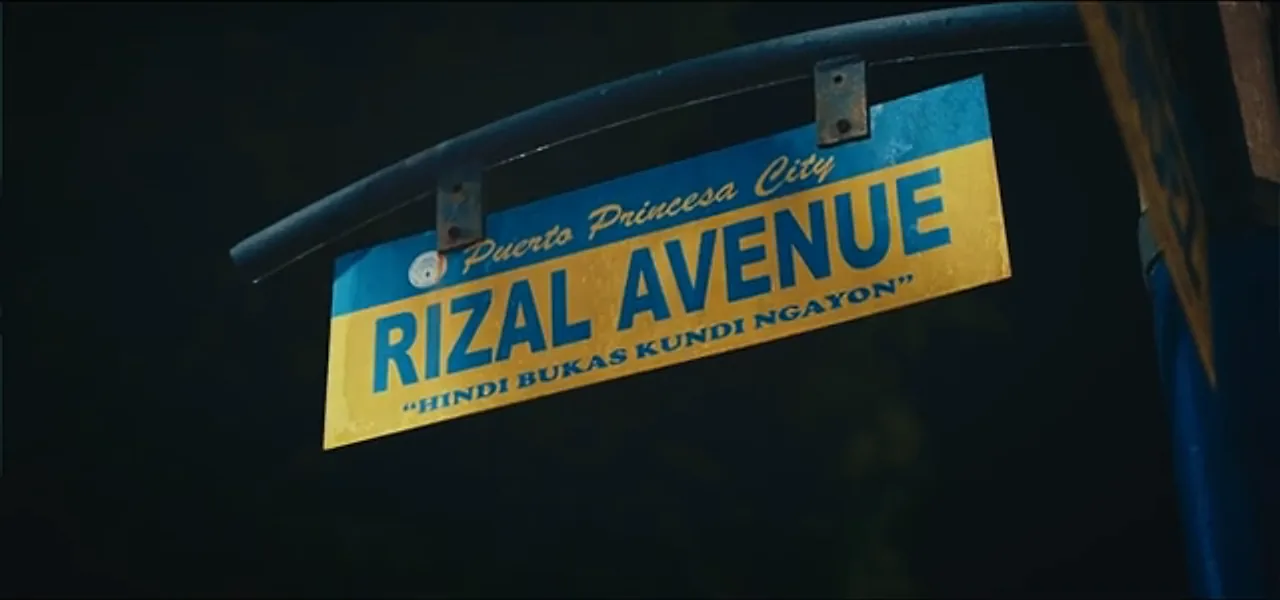
In Intramuros you also meet the country's national hero, José Rizal — a poet and reformer who stood up to the colonial government and was executed for it. How revered is he? There are more than 3,000 streets across the Philippines named after him. You cannot drive far without passing a Rizal Avenue or Rizal Street.
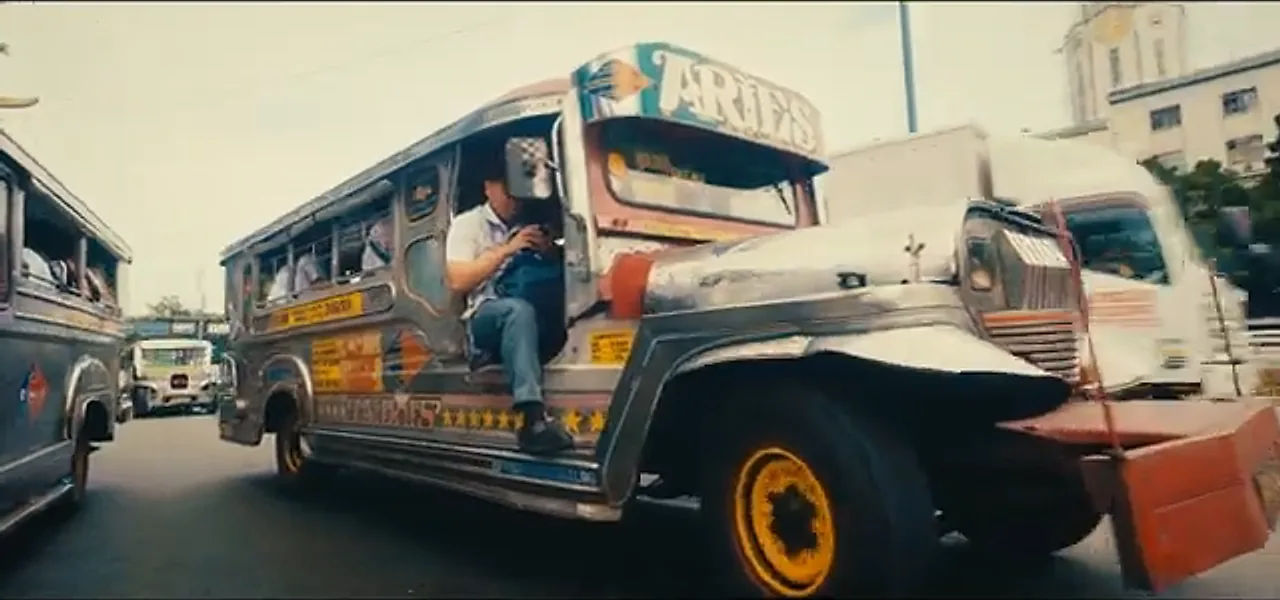
Getting around Manila is its own cultural lesson. The jeepney — that gaudy, chrome-plated, endlessly decorated minibus — is the cheapest way to travel, and it has a surprising origin: they're descended from US Army jeeps left behind after World War II, rebuilt and stretched and painted into rolling works of folk art. Mary Ann, though, insisted I try something older and even better: the calesa, a horse-drawn carriage. My driver put me up front, so for half an hour through the quiet streets it looked like I was the one steering the horse. Cars, I decided, are boring.
This is the one country in Southeast Asia where the people are so friendly. We'll always answer your question with a smile — even when, behind it, we don't really know the answer.
No visit is complete without lechon, the whole roasted pig the Filipinos also adapted from the Spanish — a glistening, crackling centrepiece that can run anywhere from 8 to 50 kilos, cooked slowly over charcoal and turned by hand. I watched one being prepared and saw a taxi simply pull over and buy a 15-kilo pig on the spot. That's how beloved it is.
Palawan: A River Under a Mountain
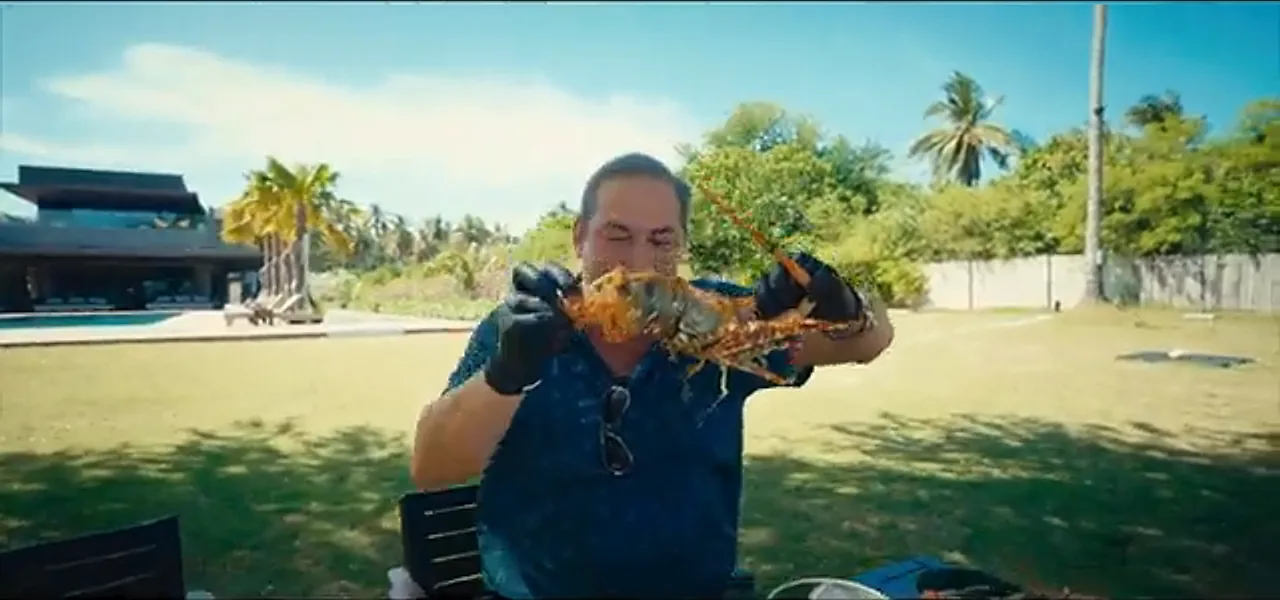
Nobody comes to the Philippines to stay in Manila, so we flew an hour and fifteen minutes southwest to Palawan, routinely voted one of the most beautiful islands on Earth, landing in its capital, Puerto Princesa. The welcome was a table of food at a hotel called the Funny Lion — named, with the kind of humour I came to love here, for being "the only lion in the Philippines." The spread was absurd: lobster thermidor, chili-garlic crab, a salt-crusted fish, a mountain of fruit. Three of us couldn't make a dent in it.
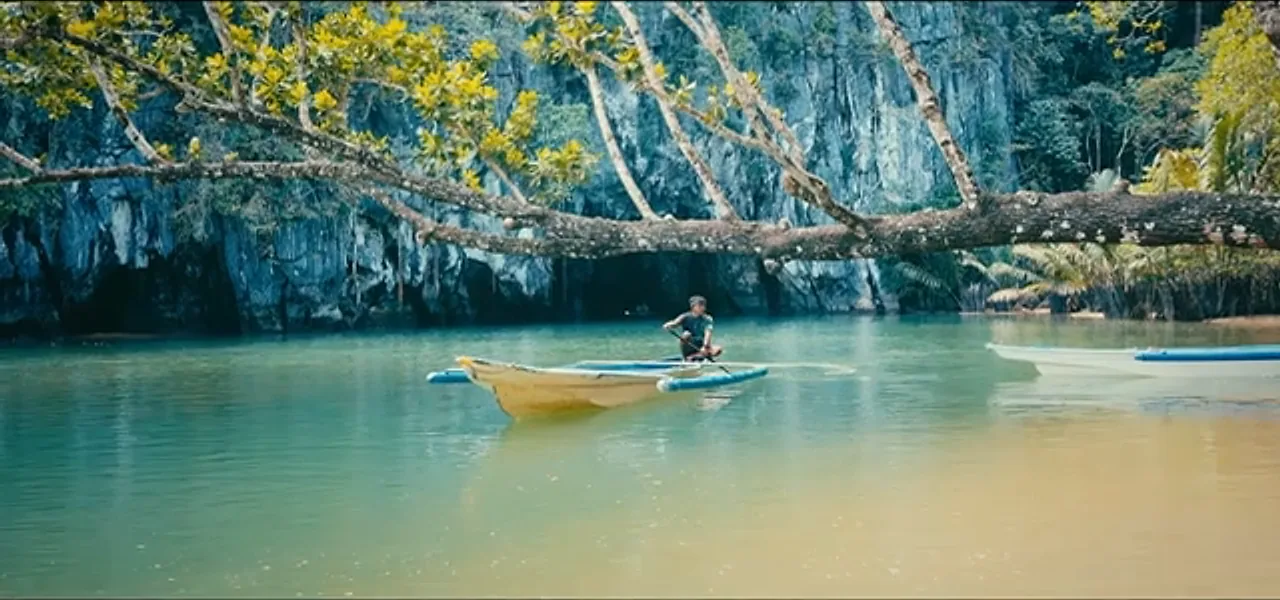
Then came the headline act: the Puerto Princesa Underground River, a UNESCO World Heritage Site and one of the official New7Wonders of Nature. It's exactly what it sounds like — a river that flows directly under a mountain. We drove two hours to Sabang Wharf, took a rustic outrigger boat 25 minutes along a stunning coast, and then climbed into a small paddled boat that carried us nearly an hour into the dark.
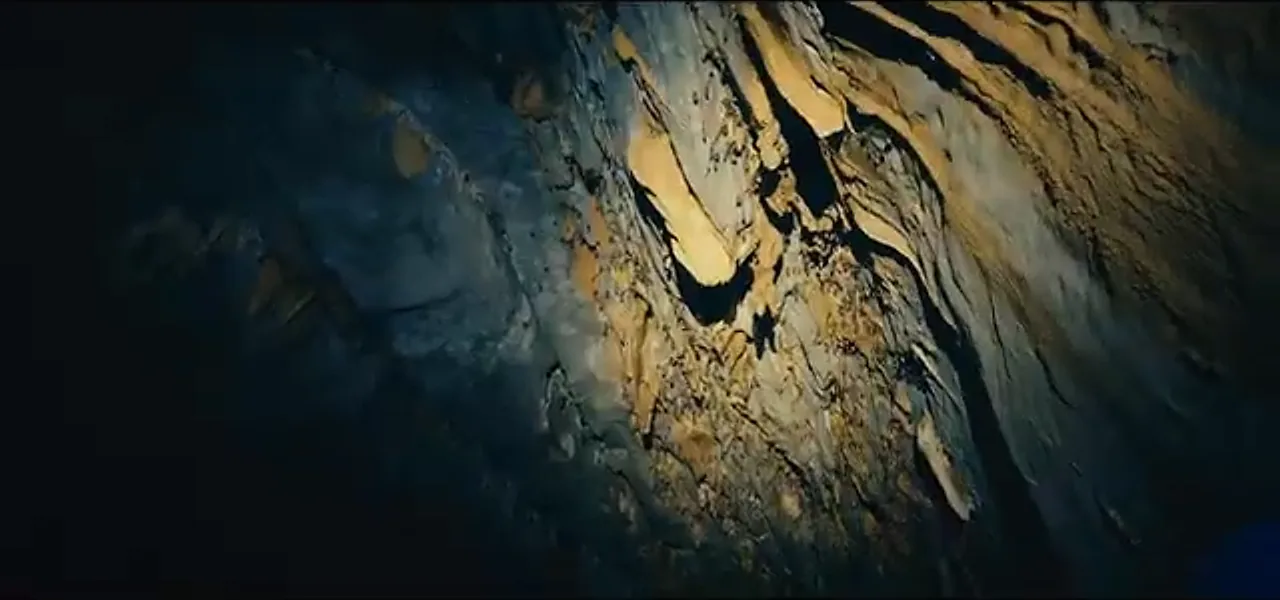
Inside, the cave opens into vast chambers of stalactites and stalagmites, lit by a single headlamp, and the guides point out shapes in the rock: a church on a hill, a giant mushroom, a family sitting together. It looks impossibly like it was carved by hand. Above you hang thousands of bats, and the one firm rule is this: do not look up with your mouth open. We saw only a fraction of the cave — not even half — and it was still one of the most remarkable natural places I've ever been.
That night brought something gentler: a firefly-watching tour through the mangrove delta near Puerto Princesa. Our guide Edward took us by boat into narrow channels until, all at once, the trees lit up like Christmas — not with lights, but with thousands of fireflies flickering in the branches. He placed two of them in my palm so I could finally see what, after a lifetime of hearing about them, a firefly actually looks like up close. (Honestly? Like a slightly glamorous mosquito — until it glows.) Fireflies produce what's often called a nearly 100% efficient "cold light," a feat of natural chemistry so impressive it has helped inspire research into more efficient lighting.
Palawan keeps earning its reputation — it's regularly voted one of the most beautiful islands in the world, and it's the launch point for liveaboard dives out to the remote Tubbataha Reefs, another of the country's UNESCO natural treasures. Before we left, I also tried something I'd genuinely never seen offered anywhere else: sky biking. It's exactly what it sounds like — you pedal a bicycle along a zipline cable strung high above the treetops, with nothing beneath you but air and jungle. Between the sky biking, the ziplines and the Underground River, Palawan alone could swallow an entire trip and leave you wanting more.
Cebu and Oslob: Whale Sharks, Waterfalls and a Flower Bath
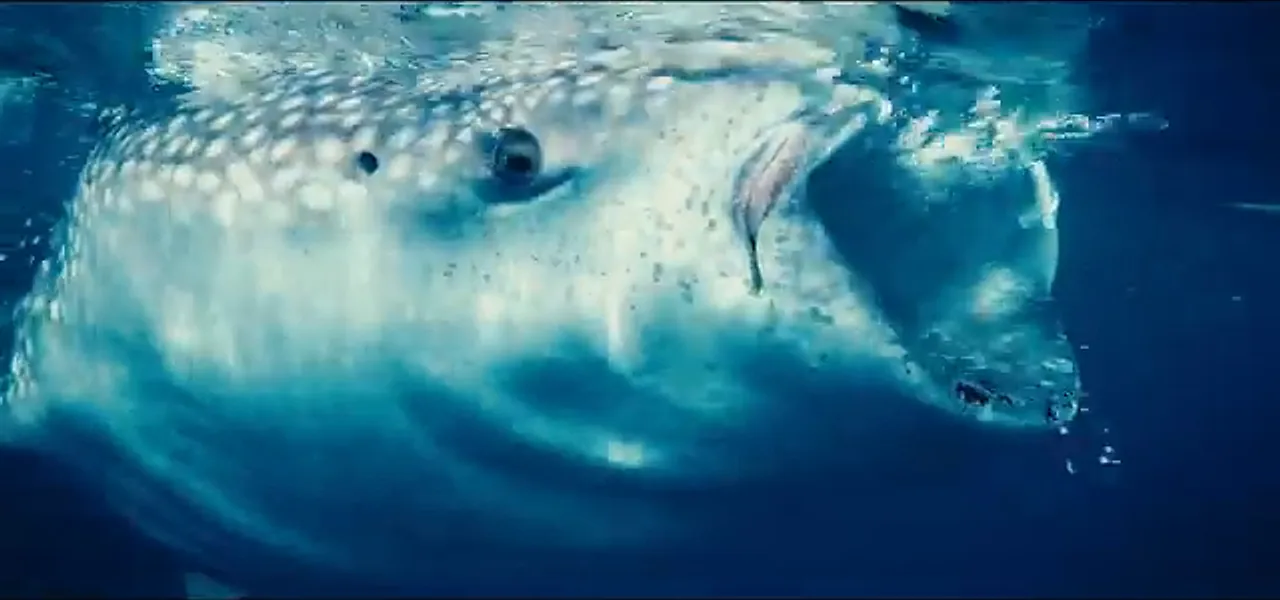
From Palawan we flew to Cebu, then drove three hours south to the town of Oslob for the bucket-list item I'd never managed to tick off anywhere: swimming with whale sharks. These are the biggest fish in the sea, and off Oslob's shore you take a small boat out a short way, slip into the water with a snorkel, and watch these gentle giants glide past close enough to touch — which you absolutely must not do. Spending 45 minutes in the water beside them is a genuine goosebumps experience.
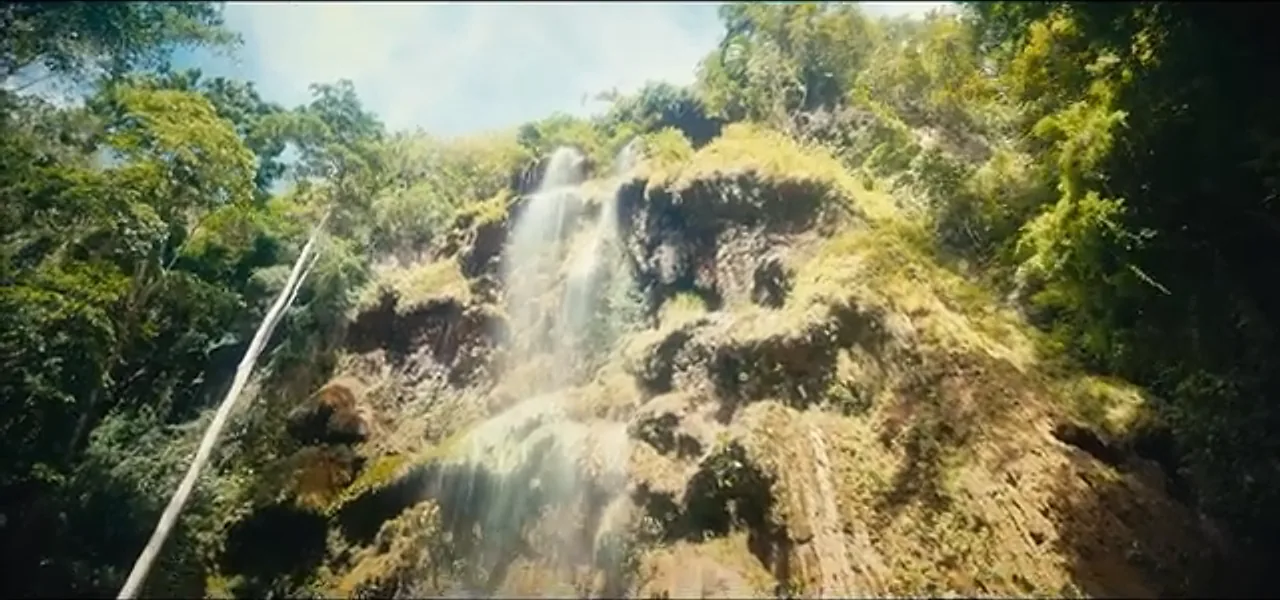
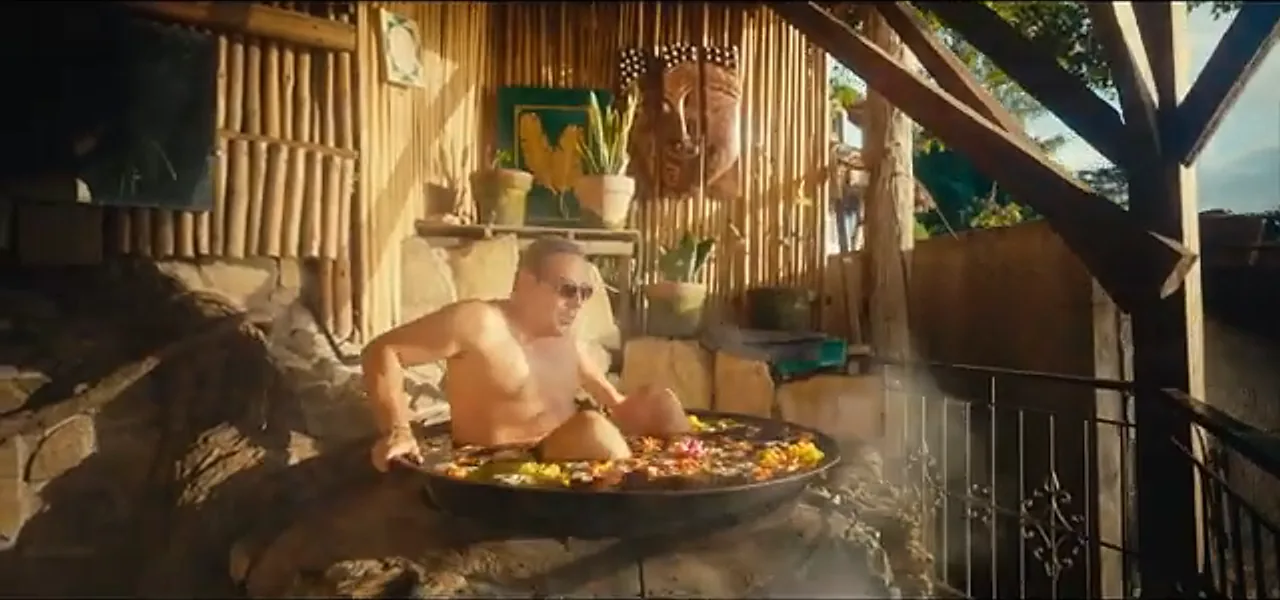
Nearby is Tumalog Falls, reached by a white-knuckle ride down the hills on the back of a motorbike. It's a tall, wide curtain of water falling in soft veils — among the tallest I've ever stood beneath — and one of its pools is even said to have therapeutic properties. But the most unexpectedly wonderful thing in this region wasn't a waterfall at all. It was a kawa bath: a giant wok, heated gently over a fire and filled with flowers and herbs, in which you sit and soak as the sun goes down. They call the experience "Get Cooked" — the joke being that they're making a soup out of you — and I spent what I can only describe as one of the best hours of my life in that flowered pot, watching the sunset and feeling absurdly grateful.
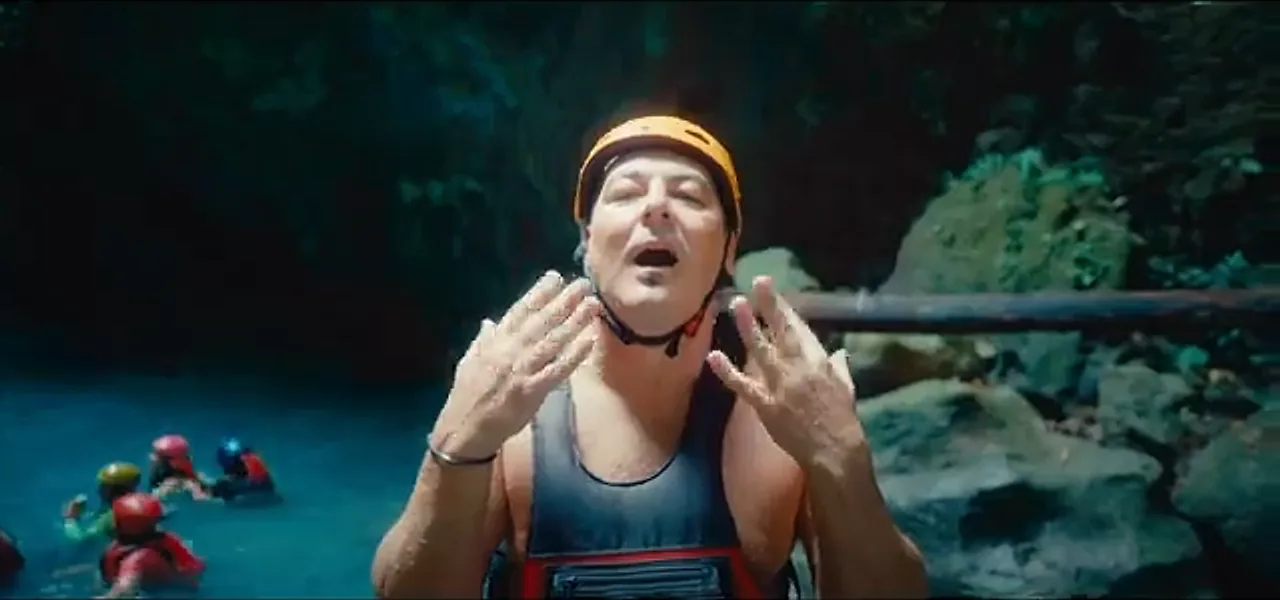
Then the Philippines reminded me it does not only do relaxation. The next morning I went canyoneering — six hours of hiking, swimming and scrambling through a river canyon of waterfalls, cold pools and gaps you have to squeeze your body through. It opens with a one-kilometre zipline that takes a full minute, floating you over the jungle, and then the guides cheerfully ask you to jump off cliffs — 7 metres, 10 metres — swing on Tarzan ropes, and let yourself be pushed off rocks into churning water. By the end I was completely wrecked, and it was worth every peso.
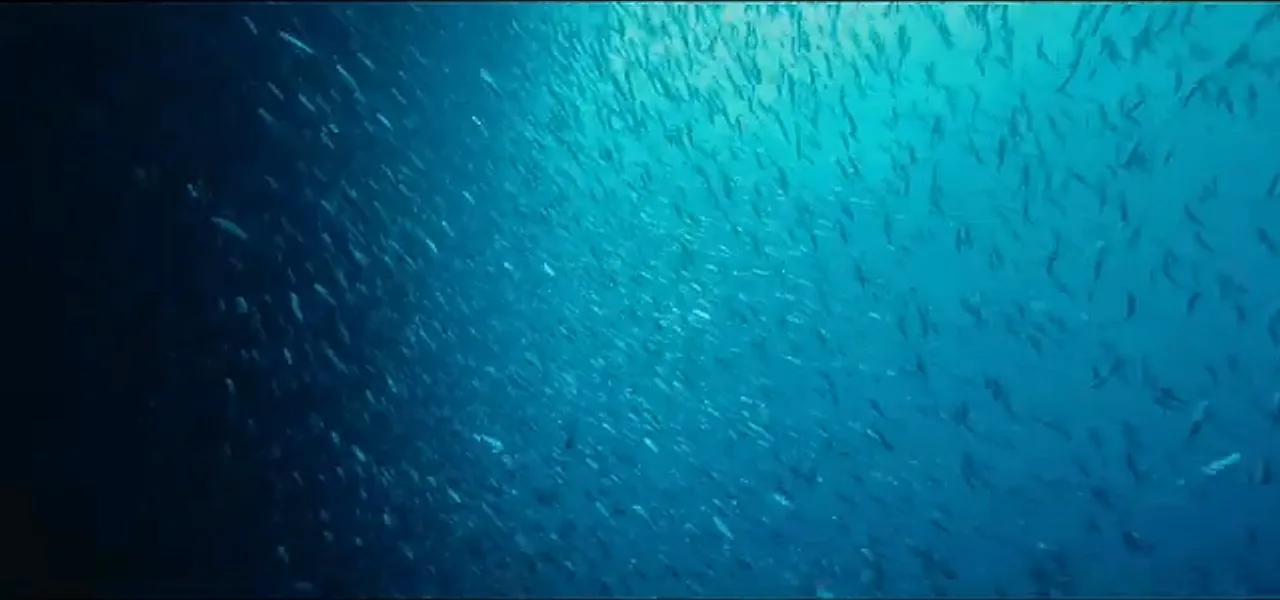
Last on Cebu was Moalboal and its famous sardine run — and this one I'll remember forever. You swim out just a few metres from the beach, and suddenly you're inside a swirling, shimmering wall of millions of sardines, a single enormous organism of fish that parts and reforms around you. There are turtles down there too. From the shore you'd have absolutely no idea what's happening twenty metres out. It was, simply, magical.
By the numbers: Philippines, by the numbers
- Population
- ~118 million (13th in the world)
- Islands
- ~7,641
- Languages & dialects
- 100+ (around 108)
- Filipino alphabet
- 20 letters (no F, ch or Z)
- Spanish arrival
- 1521 (Magellan)
- Streets named after José Rizal
- 3,000+
- Chocolate Hills (Bohol)
- 1,000+ limestone mounds
- Underground River
- UNESCO + New7Wonders of Nature
Bohol: Tiny Primates and Chocolate Hills
A two-hour ferry from Cebu City took me to Bohol, and to one of the strangest, most delicate creatures I've ever met: the tarsier. These are tiny primates with enormous, saucer-like eyes — they look like something out of Star Wars — and the Philippine tarsier is among the smallest primates on Earth. They are also extraordinarily sensitive: so easily stressed by loud noise and disturbance that sanctuaries enforce near-total silence, and the animals are known to harm themselves under stress or when their habitat is destroyed. Seeing one clinging to a branch, blinking those huge eyes, you understand instantly why they need protecting.
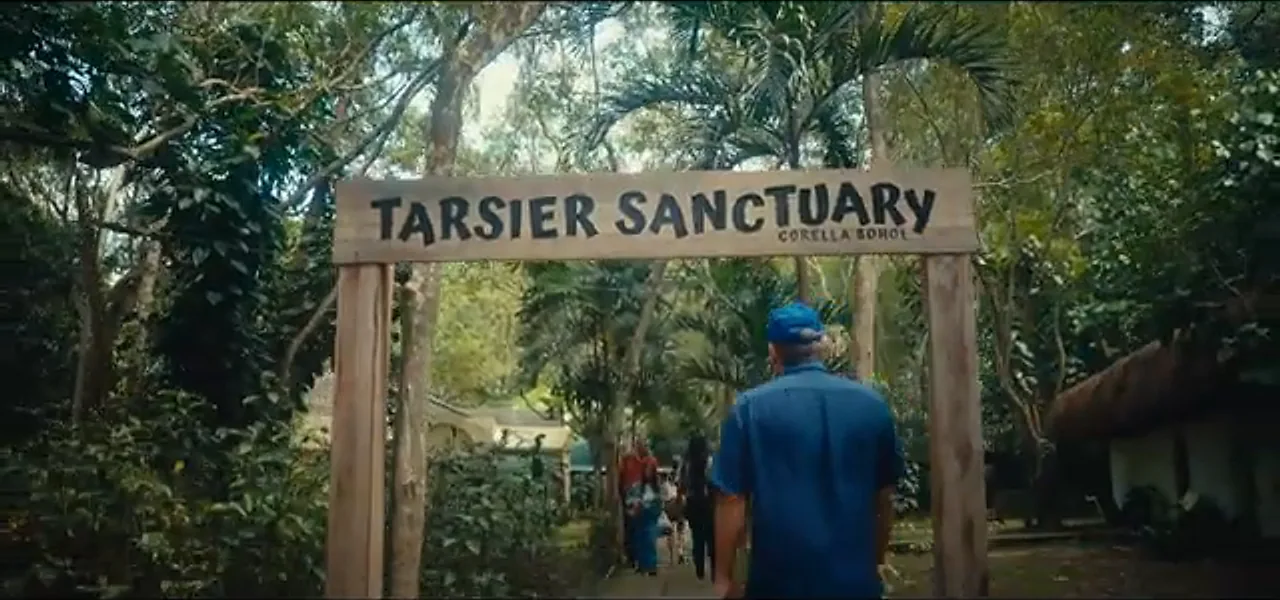
Bohol also served up one of the most joyful afternoons of the trip: a Loboc River cruise, where lunch floats downstream on a bamboo pontoon while a live band plays. Halfway along, we pulled up to a riverside platform where a group of local performers in traditional dress were waiting with a cultural dance — and then pulled us up to join in. I lasted about four minutes before I'd broken a full sweat, but as I always say, it's good to sweat for the right reasons.
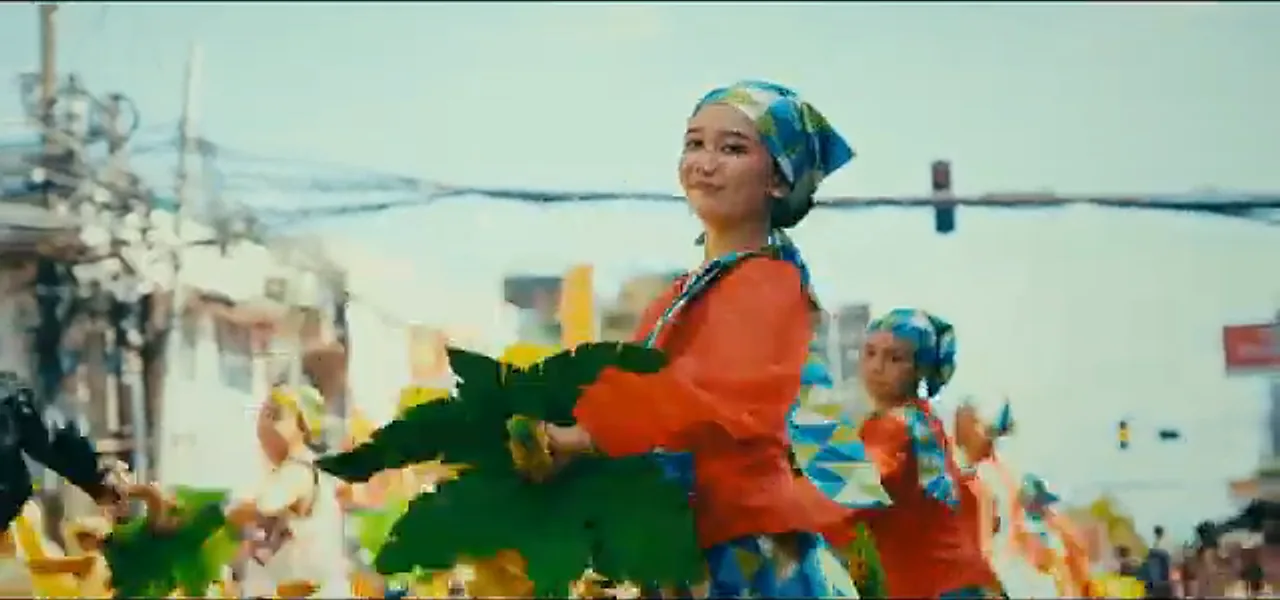
And then the sight Bohol is most famous for: the Chocolate Hills. These are not mounds of chocolate but more than a thousand near-identical, grass-covered limestone hills spread across the landscape — the local government counts over 1,200, with some estimates as high as 1,776. In the dry season the grass turns a rich brown, which is how they earned the name (they were once simply the Carmen Hills, renamed to give Bohol a signature attraction). Photographs genuinely can't do them justice; standing among hundreds of them stretching to the horizon is a surreal thing.
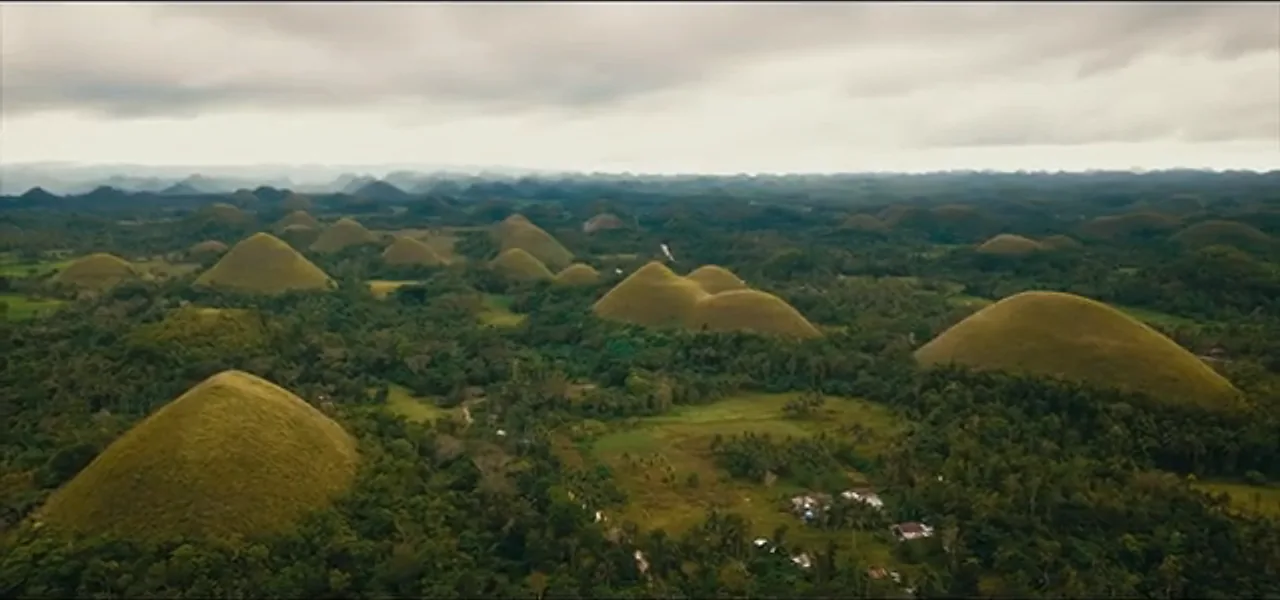
Boracay: Paradise, and the People Who Were Here First
After a few dusty days in the countryside, we recharged at a cool spot called Belmont near Cebu — a proper shower and a soft bed have rarely felt so good — before making the final hop. The last stop was the one that lands on every "world's best beaches" list: Boracay, and its legendary White Beach. The sand here is so fine and so pale that it reflects the heat — you can walk it barefoot at noon and it stays cool, while the water runs warm. It is, straightforwardly, one of the most beautiful beaches I've ever set foot on, and the shallow, gentle shoreline makes it one of the safest for families, too. We based ourselves beachfront at the Muse Hotel, close enough to the water that you could watch the sunset from the veranda.
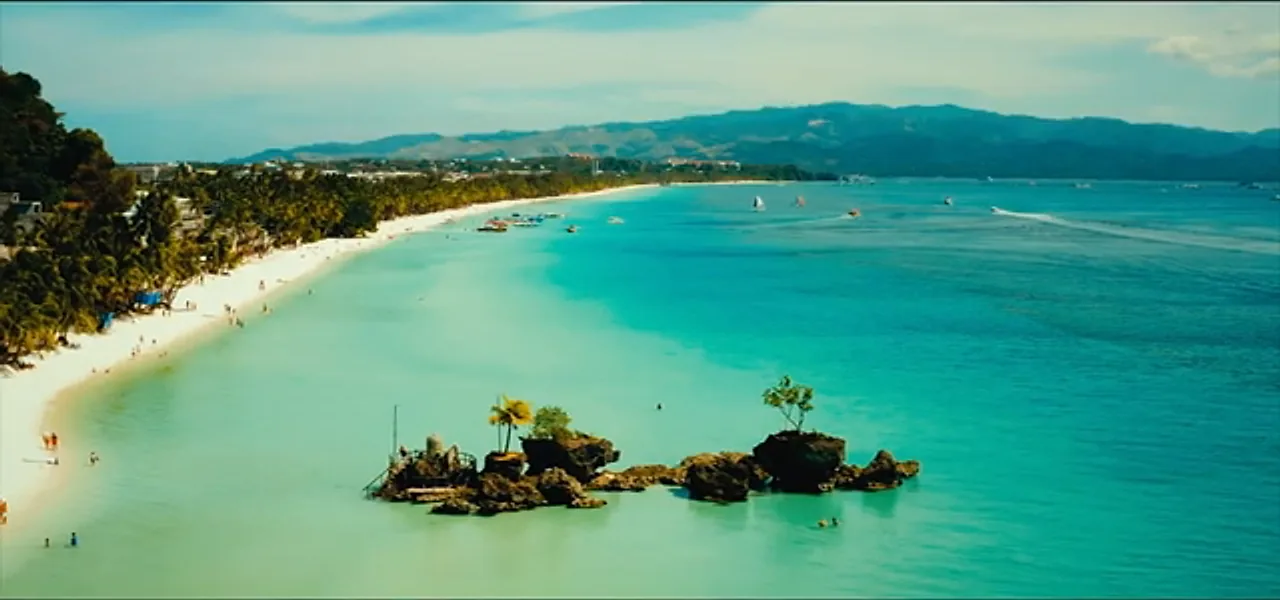
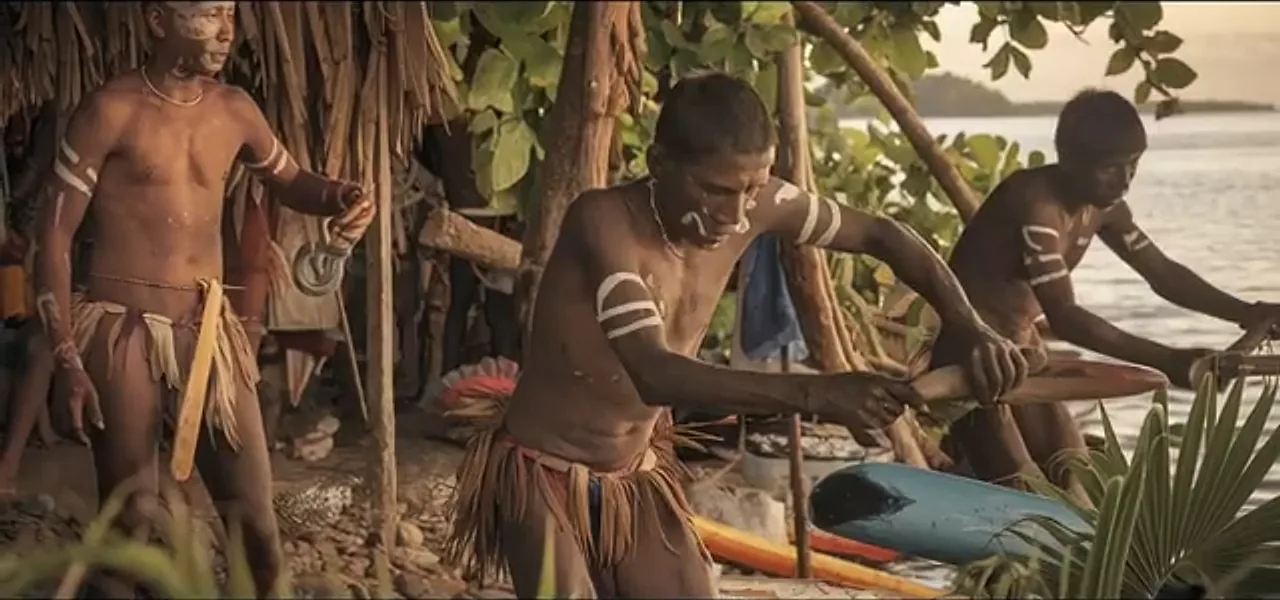
But I didn't want to leave Boracay knowing only its resorts, so I went to meet the Ati people — the island's Indigenous inhabitants, and among the earliest settlers of the entire Philippines. The Ati belong to the Negrito ethnic group and traditionally lived by hunting, fishing and foraging. Their story here is a hard one: as tourism transformed Boracay into a global destination, the Ati were displaced from their ancestral land, pushed into marginalised communities and tangled in ownership disputes that continue to this day. The word "Boracay" itself comes from their language, Inati — bora (bubble) and bukay (sand), "bubble sand." The most direct way to help is simply to visit, buy their handmade crafts, and donate, which I was glad to do.
Where the Dart Points Next
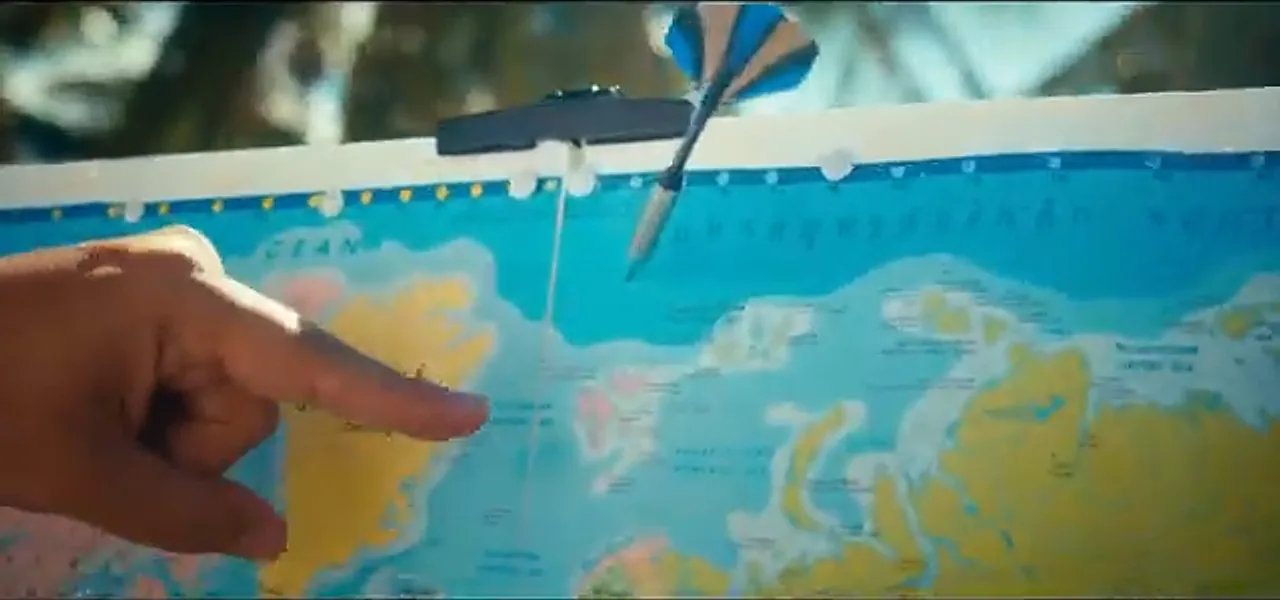
On my last day, on a Boracay beach, I did what I always do: blindfold, world map, dart. And this one travelled about as far as a dart can go. When I pulled off the blindfold, the tip was sitting right up at the top of the world, near the Spitsbergen islands of Svalbard, which belong to Norway. I'd already been to Svalbard — so the rule sent me onward to the mainland: Norway. Mary Ann grinned and pointed out the obvious upside: after two weeks of tropical heat and whale sharks, I was about to go chasing the Northern Lights.
The Philippines overwhelmed me, in the best possible way. My Filipino friends back home had given me a list two weeks long, and I still barely scratched it — I never made it to the surfing of Siargao, the rice terraces of Banaue, the diving of Coron, or a hundred other places. What I did find was a country where the nature is on another level — a river under a mountain, the biggest fish in the sea, a wall of a million sardines — and where the people meet you, every single time, with a smile. Seven thousand islands, one unmistakable warmth. That's the Philippines, and it earns every bit of the affection its people carry for it.
Watch the full Philippines episode above. If you're following the journey in order, this one picks up from the Caribbean warmth of Antigua and Barbuda — and from a beach in Boracay, the dart sends me to the opposite end of the Earth, to Norway and the top of the world.
Explore More Travel by Dart Journeys
- Back one dart to Antigua and Barbuda, the throw that sent me here.
- See where the dart flew next — all the way to the Arctic: Norway.
- More of Southeast Asia the dart uncovered: Indonesia and Vietnam.
- Another South Pacific island nation full of warmth and tradition: Fiji.
Suggested Sources & Further Reading
To go deeper into the Philippines, these are some of the best authoritative resources:
- Philippine Department of Tourism — the official "It's More Fun in the Philippines" travel site.
- UNESCO — Puerto Princesa Subterranean River National Park — the Underground River's World Heritage listing.
- UNESCO — Baroque Churches of the Philippines — the Spanish-era churches.
- New7Wonders of Nature — Puerto Princesa Underground River — the 2012 natural wonders list.
- Encyclopædia Britannica — Philippines — history, geography and culture.
- Encyclopædia Britannica — Chocolate Hills — the geology of Bohol's hills.
All facts verified September 2026.
Philippines: traveler questions
Is the Philippines safe for travelers?+
I spent two weeks island-hopping — Manila, Palawan, Cebu, Bohol and Boracay — and never felt I was taking a reckless risk. The country runs on tourism and the people are famously warm and helpful. As anywhere, you use common sense in big cities and at night, keep an eye on the weather (typhoon season runs roughly June to November), and lean on trusted local guides. The warmth you'll meet is the thing that stays with you.
How many islands does the Philippines have?+
About 7,641 islands, which is why it's one of the most geographically scattered nations on Earth — and why there are more than a hundred local languages and dialects. Only a fraction of the islands are inhabited. The country has around 118 million people, making it the 13th most populous in the world.
Is swimming with whale sharks in Oslob ethical?+
It's the single most popular thing to do in Oslob, Cebu, and it's genuinely breathtaking — but it's also debated. The operation attracts the whale sharks by feeding them, which some conservationists worry changes the animals' natural behaviour. If you go, choose responsibly, keep your distance, never touch the sharks, and follow the no-sunscreen and no-flash rules. Many travelers prefer to see whale sharks on wild encounters elsewhere; I've laid out what I saw so you can decide for yourself.
What is the Puerto Princesa Underground River?+
It's a navigable river that flows directly beneath a mountain in Palawan, lined with dramatic limestone stalactites and stalagmites and home to thousands of bats. It's a UNESCO World Heritage Site and was named one of the New7Wonders of Nature in 2012. You reach it by outrigger boat from Sabang and explore it on a paddled cave tour — one of the great natural experiences in Asia.
When is the best time to visit the Philippines?+
The dry season, roughly December to May, is the most reliable window for island-hopping and beaches, with the driest months around March and April. Typhoon season runs June to November. Because the country is so spread out, I'd pick two or three regions rather than trying to see everything — you could spend a month here and still only scratch the surface.