Season 1 · Episode 8
Cambodia
The country that built the largest temple on Earth — and, within living memory, survived the unimaginable. Angkor, the Khmer Rouge, a lake that flows backwards, and a blessing from child monks.
On this page ▾
By Sorin Mihailovici · Travel by Dart · Last updated July 2026 · ~16 min read
Some countries you understand at a glance. Cambodia is not one of them. It hands you the most breathtaking temple you will ever see, and in the same breath tells you that, fifty years ago, a quarter of its population was wiped out. The dart that sent me here — into a corner of Southeast Asia I'd barely glimpsed — dropped me between those two truths, and I spent the whole trip trying to hold them together: unimaginable beauty, unimaginable loss, and a people who have somehow turned survival into grace.
What follows isn't a travel diary — it's the fact-checked guide I wish I'd had: the empire that built Angkor, the history everyone here quietly carries, the science behind a lake that runs the wrong way, and the small, luminous moments (a monk's blessing, a circus, a mangrove seedling) that made this one of the most moving episodes I've filmed. It ended, improbably, with a blindfolded dart hitting neighbouring Thailand.
Quick facts: Cambodia at a glance
- Official name
- Kingdom of Cambodia
- Capital
- Phnom Penh
- Population
- ~17 million (Khmer people)
- Language
- Khmer
- Religion
- ~97% Theravada Buddhist
- Government
- Constitutional monarchy (a king)
- Currency
- Cambodian riel (US$ widely used)
- Icon
- Angkor Wat — on the national flag
- Best time to visit
- Dry season, Nov–Mar
Angkor Wat: The Largest Religious Monument on Earth
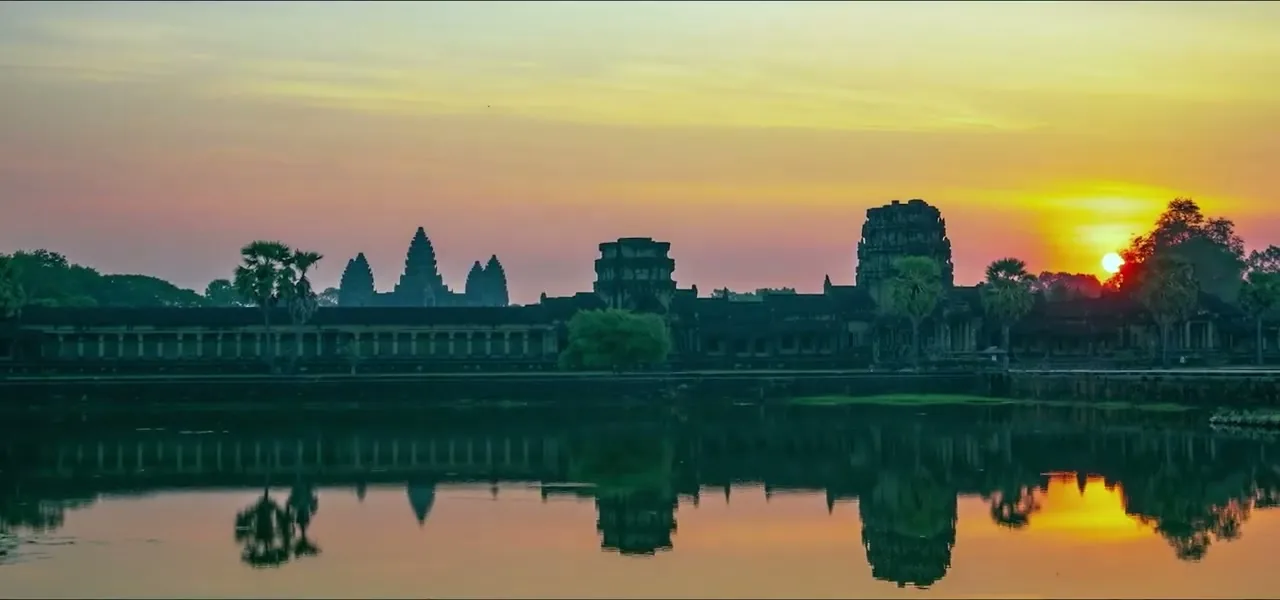
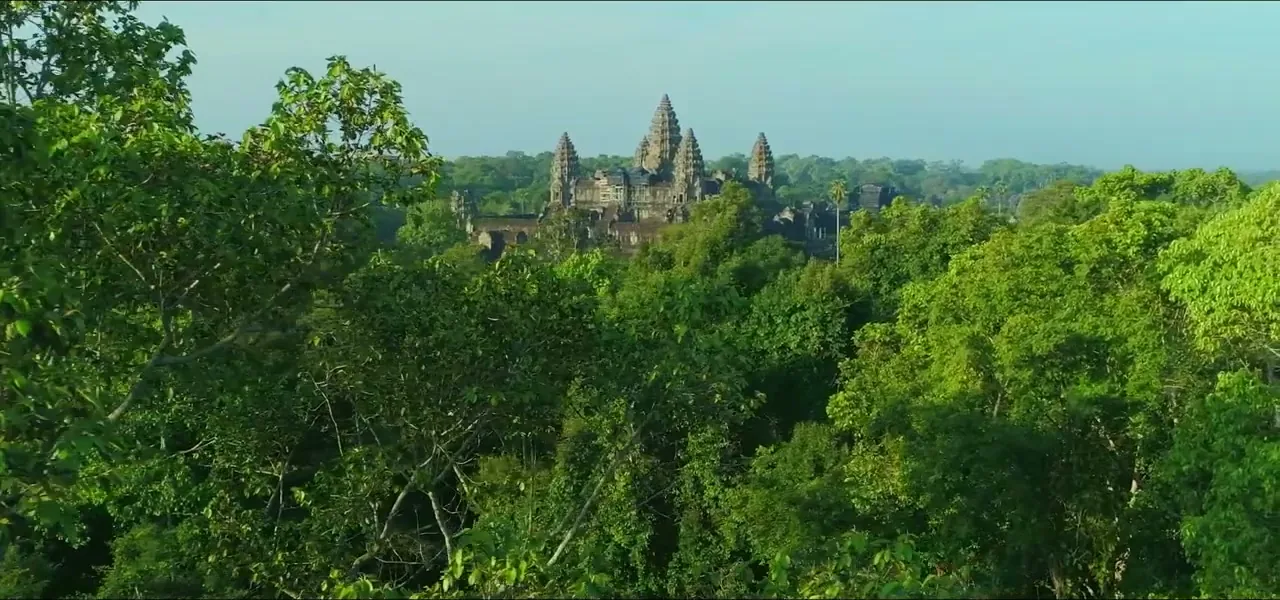
You cannot come to Cambodia and skip Angkor Wat. Near the city of Siem Reap, it is quite simply the largest religious monument in the world — a temple complex sprawling across 162 hectares (about 400 acres), its central towers rising 65 metres into the sky. It was built in the early 12th century by King Suryavarman II, and here's the twist that surprises most visitors: it began not as a Buddhist site but as a Hindu temple dedicated to Vishnu, only later becoming the Buddhist shrine it is today. In 1992 it became a UNESCO World Heritage Site.
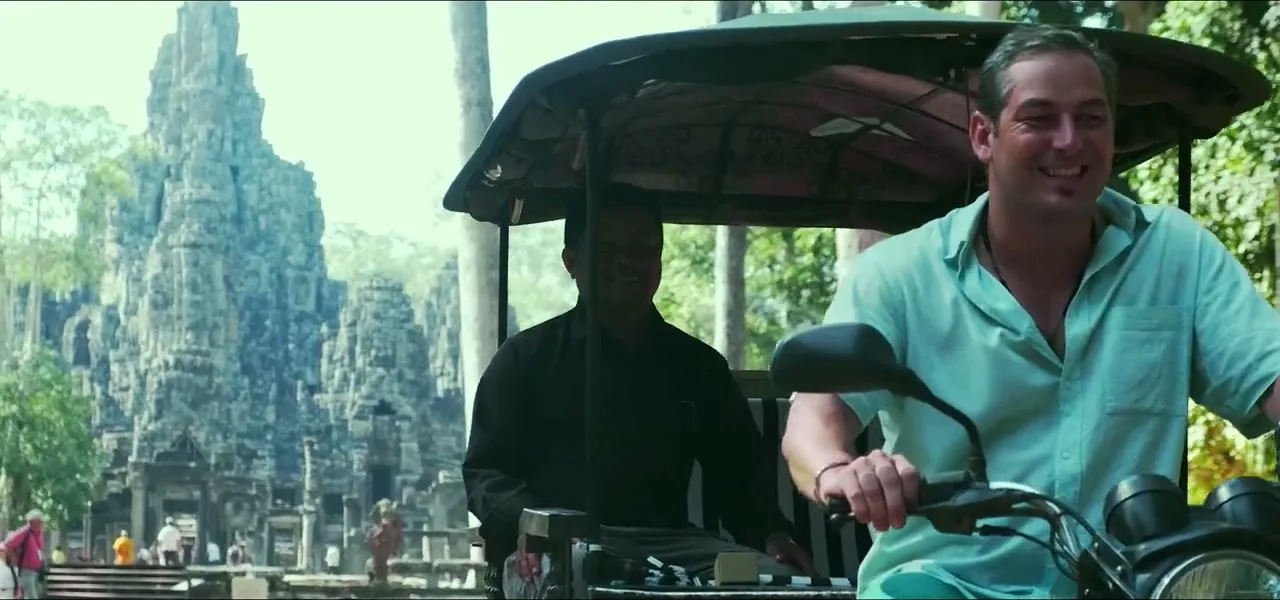
I explored it the proper way — from the back of a tuk-tuk driven by Mr. Suri, a man so easygoing that I insisted on driving him for a stretch. That, for the record, did not go well.
The Faces of Bayon and the Khmer Empire
Angkor Wat is only the crown jewel of a vast complex. Nearby, inside the walled city of Angkor Thom, stands the Bayon — the "temple of faces." Its 54 towers are carved with 216 enormous, serene stone faces, believed to represent the bodhisattva Avalokiteshvara, and possibly modelled on the king who built it, Jayavarman VII, around 1200. They gaze out in every direction, and wherever you stand, one of them is watching you.
All of this was the work of the Khmer Empire, which ruled much of Southeast Asia from 802 to 1431 with Angkor as its capital — at its height, the largest pre-industrial city in the world. Understanding that Cambodians are the Khmer people, heirs to that empire, is the key to the whole country: this is a nation that remembers being great.
The Khmer Rouge: A Country That Survived the Unimaginable
A definitive guide to Cambodia cannot look away from what happened here, because every person you meet is shaped by it. Between 1975 and 1979, the communist Khmer Rouge, led by Pol Pot, tried to force Cambodia back to an agrarian "Year Zero" — abolishing money, cities, schools and religion overnight. Its rule caused the deaths of an estimated 1.7 to 2.2 million people — roughly a quarter of the entire population — through execution, forced labour, starvation and disease. Intellectuals were murdered for wearing glasses; a prison known as S-21 processed some 20,000 people, of whom only a handful survived; the mass graves became known as the Killing Fields.
The regime was finally ended by a Vietnamese invasion in 1979, but the wounds run deep, and the country is still, in a real sense, recovering — from the trauma, and from the millions of landmines left behind.
Phare: Healing a Nation Through Art
Nowhere is that rebuilding more visible than at Phare, the Cambodian Circus in Siem Reap — the most powerful show I have ever seen. It isn't a circus of clowns and animals; it's acrobatics, theatre and live music telling Cambodian stories, and it exists because of the darkest chapter above. After the Khmer Rouge, in the refugee camps along the Thai border, a French art teacher used drawing classes as therapy for traumatized children. When the camps closed, she and her students founded an arts school, Phare Ponleu Selpak, in Battambang, "to use art to heal the community." The circus is its social enterprise: every ticket funds the school and gives a young Cambodian a future.

My family was very poor — I have eleven brothers and sisters. And now my family is better, because we're trying to do Phare. This is my life.
If they see them on the show, they look glamorous — but you don't know what their life was about. Everybody fights a fight we know nothing about. Finding out what that fight was, and appreciating what they did, gave me such an inspirational boost.
The Tonlé Sap: The Lake That Flows Backwards
Cambodia's beating heart isn't a temple — it's a lake. The Tonlé Sap is the largest freshwater lake in Southeast Asia, and it does something almost nowhere else on Earth does: it reverses direction once a year. For most of the year the Tonlé Sap River drains the lake into the Mekong. But each monsoon, the Mekong swells so violently that it shoves water back up that river and into the lake — which then balloons from about 2,700 km² to over 16,000 km², roughly six times larger, its depth rising from one metre to nine.
That flood pulse makes the Tonlé Sap one of the most productive inland fisheries on the planet, yielding well over a million tonnes of fish a year and supplying most of Cambodia's protein. Around its edges float entire stilted and floating villages. I cruised it aboard a boat called Samsara and felt, as I said at the time, like I was on the Orient Express — only on water.
Koh Rong, Mangroves and a Monk's Blessing
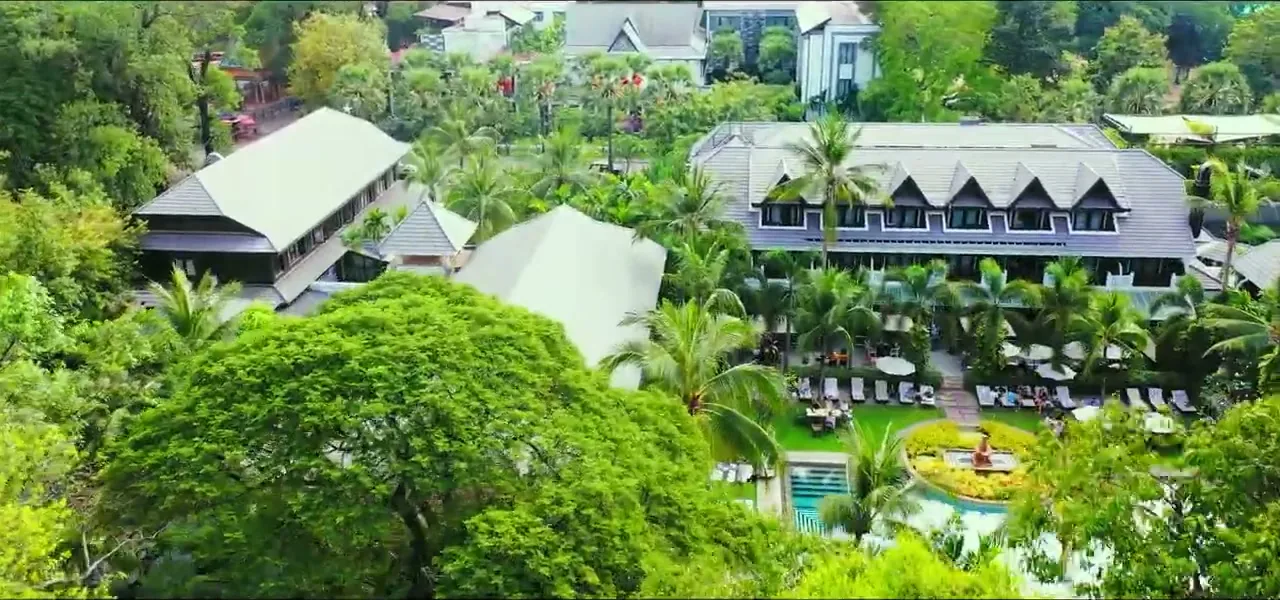
From the temples I flew south to the coast and took a boat to Koh Rong, a white-sand island in the Gulf of Thailand so off-grid that my resort made its own electricity and fresh water and treated all of it before returning anything to the sea. There I did something I'd never done — I planted mangroves, wading barefoot through the shallows by canoe to push seedlings into the mud. I hadn't even known what a mangrove was before Cambodia; by the end I understood they're nurseries for the whole coastal ecosystem.
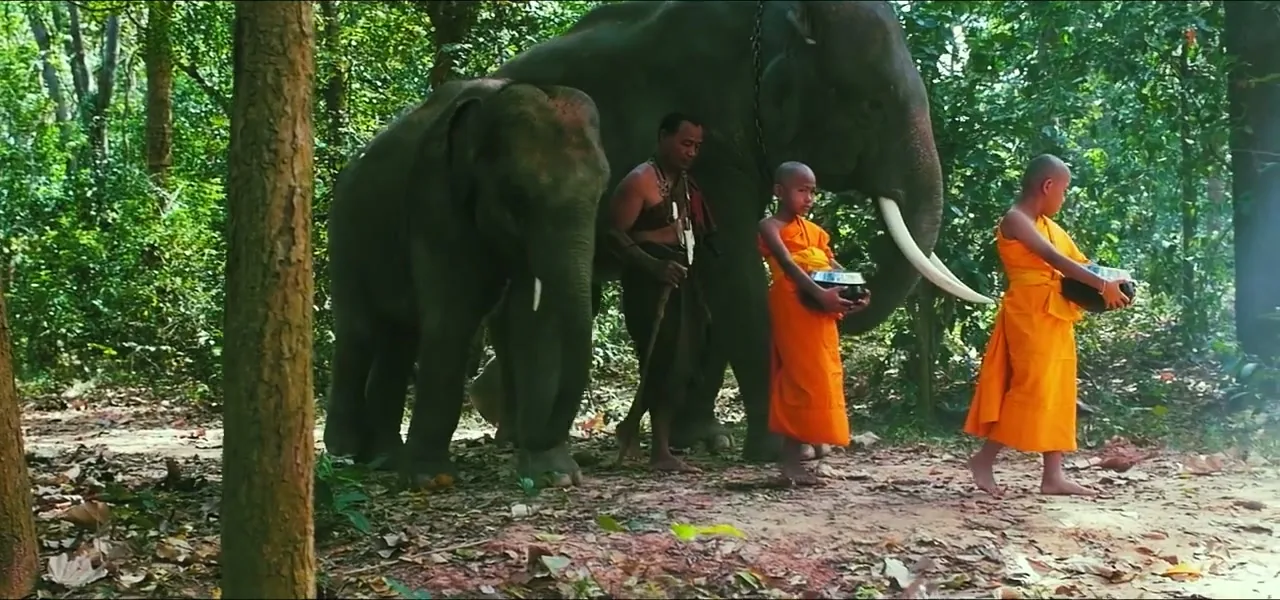
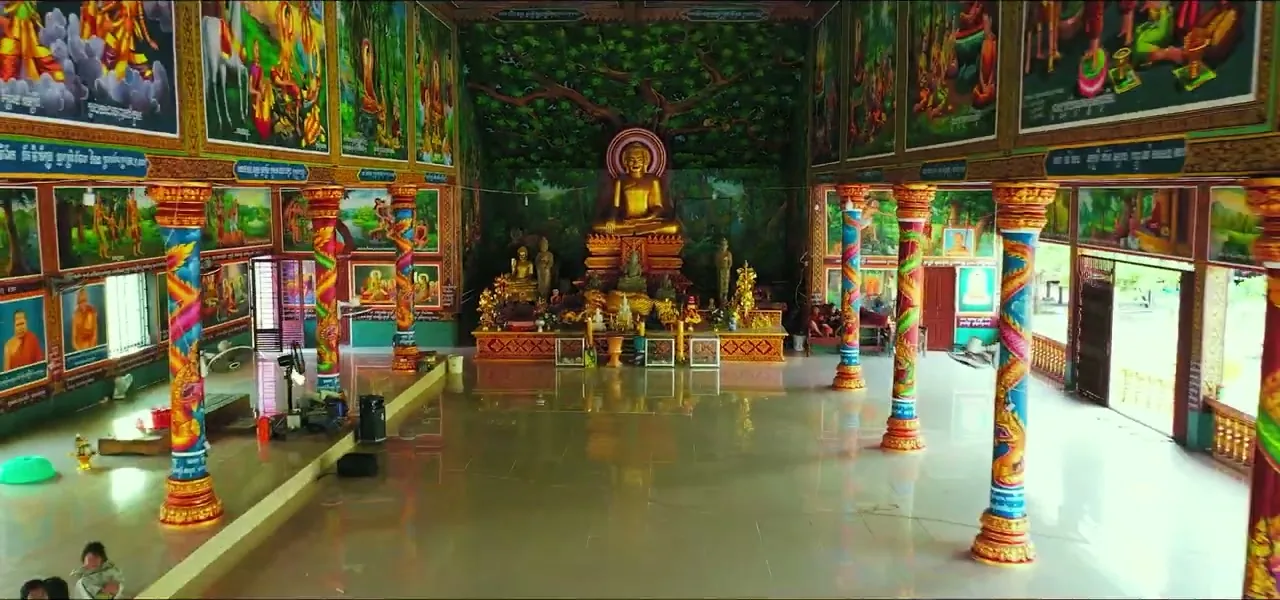
But the moment that stayed with me was a Buddhist monk blessing. Cambodia is roughly 97% Theravada Buddhist, and I'd grown up watching monks on television, hoping one day to experience the ritual myself. A raft carried me to a remote pagoda — and to my surprise, the monks who blessed me were children, some as young as fourteen, with a calm, intimidating presence far beyond their years. I didn't understand a word of the chanting. I didn't need to. I left feeling energized, lighter, blessed.
Tourism That Gives Back — and One Very Strange Drink
Two more things defined Cambodia for me. The first is a model of travel I wish existed everywhere. My hosts were part of the Shinta Mani Foundation, which pours hotel profits into building homes and wells, free healthcare, education and microfinance for Khmer villages, and even anti-logging conservation at its jungle property. I met people like Andrew Booth, a British transplant whose travel company funnels its profits into supporting scores of local schools. In a country still finding its feet, tourism done this way isn't a luxury — it's infrastructure.
The second is less noble: the snake wine. At a market I tried a local rice liquor with an actual cobra and a scorpion inside the bottle — 40% alcohol, tasting like orange-tinted moonshine, and reputed to cure whatever ails you. One shot is plenty. It could, as I noted at the time, "kill a whole party."
Things That Surprised Me About Cambodia
- Angkor Wat is the largest religious monument on Earth — and the only building on any national flag.
- It began as a Hindu temple before becoming Buddhist.
- The Bayon temple has 216 giant stone faces.
- The Khmer Empire ran much of Southeast Asia from 802 to 1431.
- Cambodians speak Khmer, not "Cambodian."
- The country is about 97% Theravada Buddhist and has a king.
- Within living memory, the Khmer Rouge killed roughly a quarter of the population.
- The Tonlé Sap lake reverses its flow every year and grows six-fold.
- That lake supplies most of Cambodia's protein.
- Phare Circus grew out of art therapy in refugee camps.
- The monks who blessed me were children.
- Some traditional village homes, made of bamboo and coconut leaves, outperform modern materials for keeping cool.
- Snake-and-scorpion wine is a real (and ferocious) local drink.
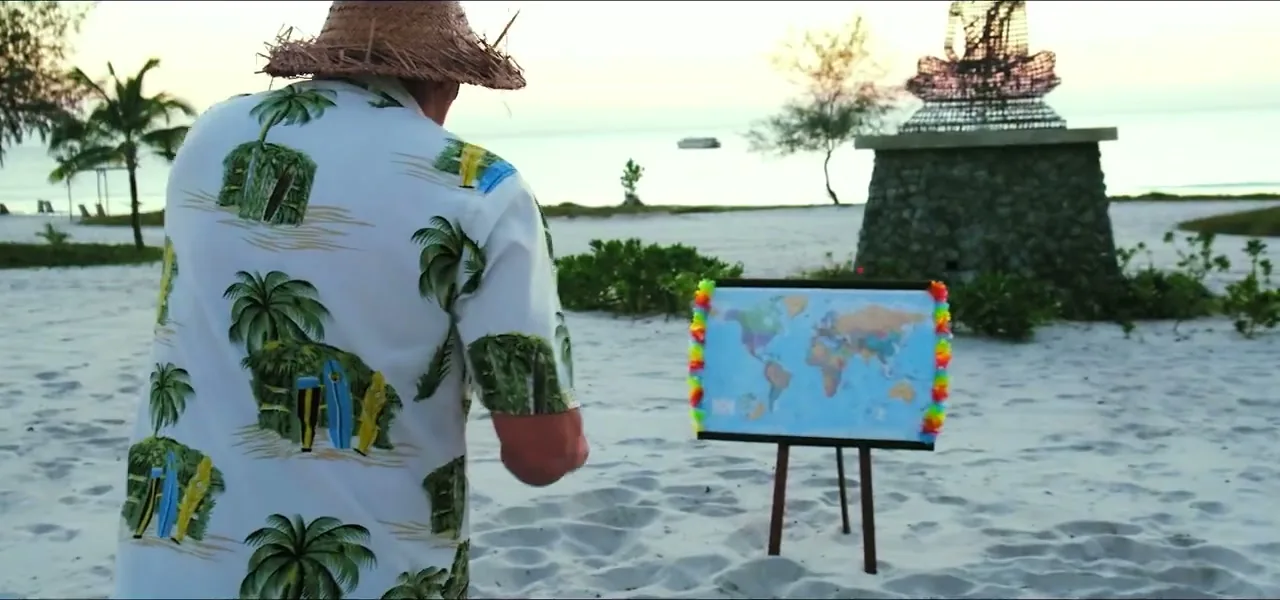
- My blindfolded dart, thrown on a beach, hit tiny neighbouring Thailand.
The Grace of Survival
Cambodia asked more of me than most places the dart has chosen. It's impossible to stand before Angkor Wat, or sit through the Phare Circus, or be blessed by a child monk, without feeling the weight of everything this country has carried — and the astonishing grace with which it carries it. The Khmer built the greatest temple on Earth, endured one of history's worst horrors, and are, quietly and stubbornly, rebuilding through art, faith and openness to strangers like me.
When I threw the dart to leave, it hit Thailand — next door, and one of the last countries on my must-see list. I had four days to prepare and nothing planned, which is exactly how I like it. But I carried Cambodia with me: a reminder that the most beautiful places are often the ones that have survived the most.
Explore More Travel by Dart Journeys
- See where the dart sent me next: Thailand.
- More of Southeast Asia in my Indonesia episode.
- Another country that turned a hard past into warmth: Uruguay.
- Or the pure-nature adventure of Costa Rica.
Suggested Sources & Further Reading
To go deeper into Cambodia, these are some of the best authoritative resources:
- Ministry of Tourism of Cambodia — the Kingdom of Cambodia's official tourism authority.
- UNESCO World Heritage Centre — Angkor — the listing for the Angkor temple complex.
- Encyclopædia Britannica — Cambodian genocide — an authoritative account of the Khmer Rouge era.
- Encyclopædia Britannica — Angkor Wat — the temple's history and architecture.
- Phare, the Cambodian Circus — the social enterprise behind the show.
All facts verified July 2026.
Cambodia: traveler questions
Why is Angkor Wat so important?+
Angkor Wat, near Siem Reap, is the largest religious monument in the world — a 162-hectare temple complex built in the early 12th century under King Suryavarman II. It began as a Hindu temple dedicated to Vishnu and later became Buddhist. It's a UNESCO World Heritage Site and appears on Cambodia's national flag — the only national flag to feature a building.
What language do Cambodians speak?+
Khmer. Cambodians are the Khmer people, and 'Cambodian' is not the language — Khmer is. It's written in its own ancient script and is one of the oldest recorded languages in Southeast Asia. Cambodia is a constitutional monarchy of about 17 million people, roughly 97% Theravada Buddhist, with its capital at Phnom Penh.
What was the Khmer Rouge?+
The Khmer Rouge was the communist regime, led by Pol Pot, that ruled Cambodia from 1975 to 1979. In an attempt to force the country back to a rural 'Year Zero,' it caused the deaths of an estimated 1.7 to 2.2 million people — roughly a quarter of the population — through execution, forced labor, starvation and disease. It was ended by a Vietnamese invasion in 1979.
Why does the Tonlé Sap flow backwards?+
The Tonlé Sap is Southeast Asia's largest freshwater lake, connected to the Mekong by the Tonlé Sap River. Each monsoon, the swollen Mekong pushes water the 'wrong' way up that river, reversing its flow and expanding the lake roughly six-fold — from about 2,700 km² to over 16,000 km². It's one of the most productive inland fisheries on Earth, supplying most of Cambodia's protein.
What is Phare, the Cambodian Circus?+
Phare is a professional circus in Siem Reap and a social enterprise of Phare Ponleu Selpak, an arts school in Battambang. The school grew out of refugee camps after the Khmer Rouge era, where a French art teacher used drawing as therapy for traumatized children. Ticket sales fund the school and give young Cambodians a career in the arts.
What can you do in Cambodia beyond the temples?+
Plenty: cruise the Tonlé Sap and its floating villages, watch the Phare Circus, relax on islands like Koh Rong in the Gulf of Thailand, plant mangroves, and take part in a Buddhist monk blessing. The episode covers Siem Reap, the Tonlé Sap, and the southern coast.