Season 3 · Episode 3
Barbuda
The wild, pink-sand sister island — frigate birds, empty beaches and a fiercely independent spirit.
On this page ▾
By Sorin Mihailovici · Travel by Dart · Last updated August 2026 · ~18 min read
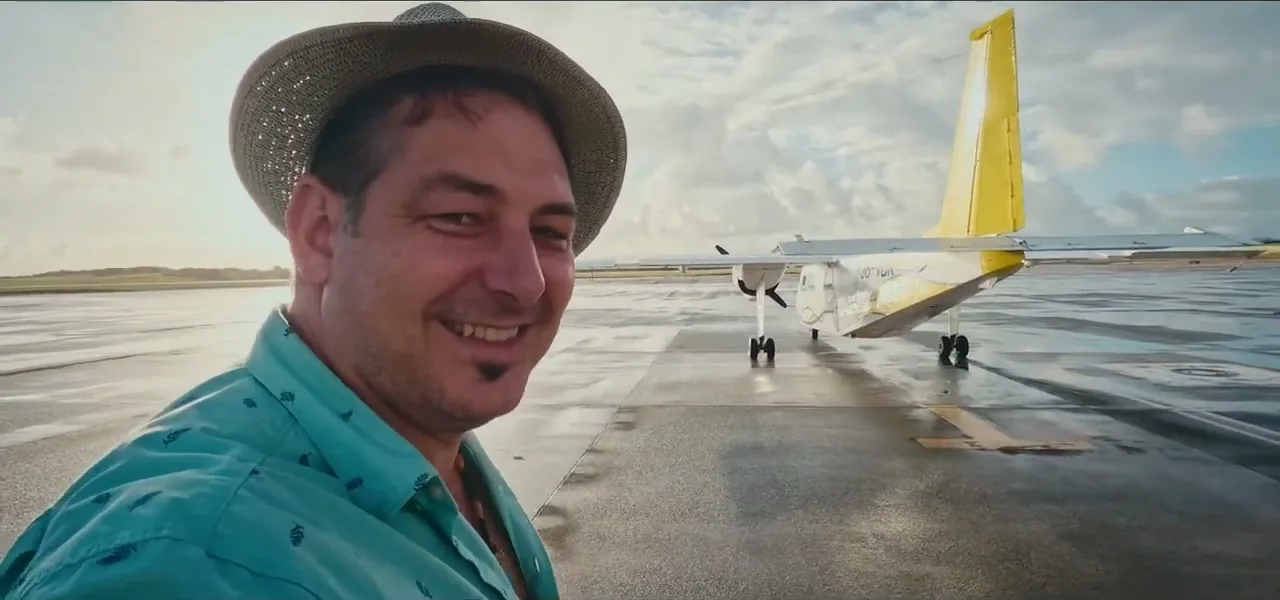
After a couple of weeks falling for Antigua, I climbed into a seven-seater plane and pointed it north. Fifteen minutes later — barely long enough to gain altitude before beginning the descent — I stepped out onto Barbuda, and it was like landing on a different planet that happened to share a flag. Where Antigua is green hills, sailing yachts and Sunday parties, Barbuda is dead flat, wide open, and so quiet you can hear the wind. Most travellers never make the hop. That, it turns out, is exactly why you should.
Quick facts: Barbuda at a glance
- Part of
- Antigua and Barbuda
- Distance from Antigua
- ~40 km (15-minute flight)
- Only village
- Codrington
- Population
- A couple of thousand
- Pink beach
- 17 miles — the Caribbean's pinkest
- Frigate sanctuary
- Largest in the Western Hemisphere
- Main exports
- Lobster and sand
- Hotels
- Essentially one
The Island That Was Erased — and Came Back
You cannot understand Barbuda today without knowing what happened to it in September 2017. That month, the Category 5 Hurricane Irma — one of the most powerful Atlantic storms ever recorded — passed directly over this low, flat island and flattened it. Roughly 95% of the buildings and infrastructure were destroyed. The entire population, around 1,400 people, had to be evacuated to Antigua, and for the first time in some 300 years of recorded history, not a single human being lived on Barbuda. The island's own prime minister described it, heartbreakingly, as the erasing of the footprints of an entire civilisation.
What I found, years later, was an island quietly stitching itself back together. The infrastructure is being rebuilt, and people are slowly returning, though many stayed behind in Antigua. Barbuda is so flat that it's tragically easy for a hurricane to swamp — but that same flatness gives it its haunting, horizon-to-horizon emptiness. Life here runs at a different speed and on different work: the main exports, a local told me, are lobster and sand, with a few race horses kept around, half-seriously, as a hobby. There's a fierce, communal independence to Barbudans — a deep attachment to their land and their island way of life — that Irma bent but did not break.
Almost everyone on Barbuda lives in a single village, Codrington, strung along the edge of the lagoon — a low, spread-out place of modest houses, a few shops, and a pace of life that makes even sleepy Antigua feel frantic. There are no traffic lights, no crowds, no resort strips; the roads are rough and the "rush hour" is a couple of pickup trucks. What there is, instead, is an unmistakable sense of a tight-knit community that has been through the worst nature can throw at it and chosen, stubbornly, to rebuild. Interestingly, despite the island's remoteness, you get phone signal the moment you land — one of those small modern surprises that make Barbuda feel less isolated than it looks from the air.
Land Held in Common
There's something about Barbuda you won't find on many islands anywhere in the world: for centuries, Barbudans have traditionally held their land in common, rather than as individual private plots. The whole island, in a sense, has belonged to all of its people together — a communal system passed down through generations that shapes how Barbudans see themselves and their home. It's a big part of that "fiercely independent spirit" you hear about, and part of why the community's attachment to this flat, wild place runs so deep. In the years since Irma, that way of life has been the subject of real debate, as questions of rebuilding and development collide with tradition. I won't pretend to adjudicate a conversation that belongs entirely to Barbudans — but you can feel, even as a visitor, how much the island matters to the people who call it home. This isn't a resort strip; it's somebody's ancestral ground.
The Largest Frigate Colony in the Hemisphere
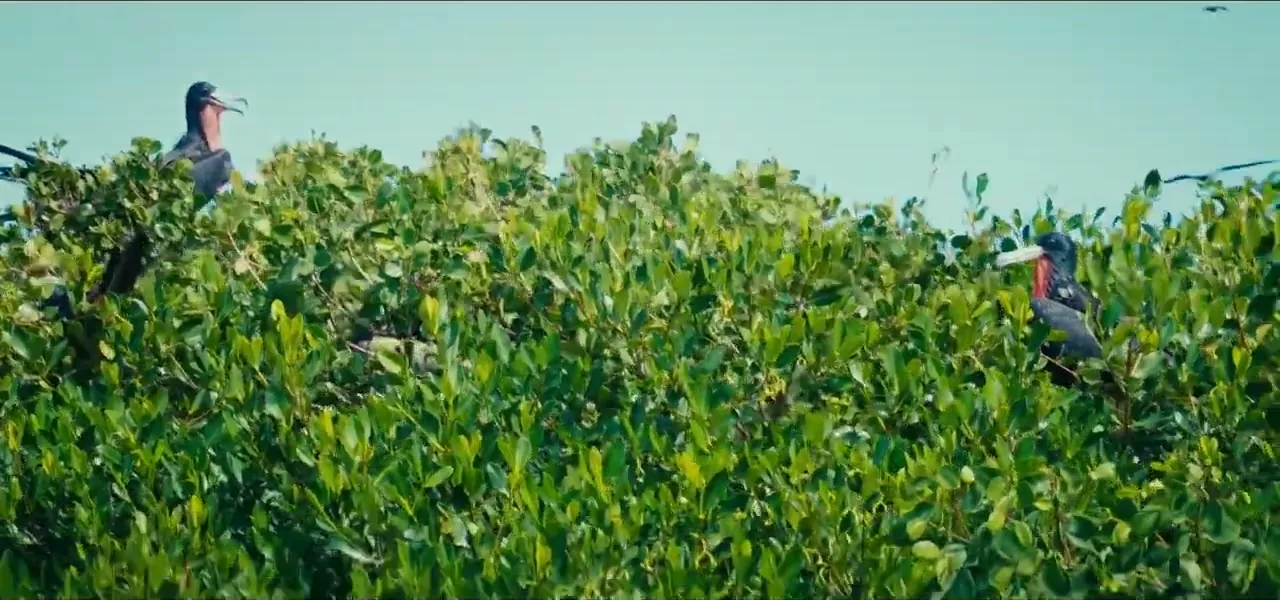
Barbuda's greatest natural wonder floats in the Codrington Lagoon: the Frigate Bird Sanctuary, the largest colony of frigate birds in the Western Hemisphere. More than 5,000 frigate birds nest in the scrubby mangroves here, alongside over 170 other bird species — you approach by boat, drifting quietly up to the low green thickets until you're surrounded by them.
I arrived, by luck, right in the middle of mating season, and it's a genuinely surreal sight. The males inflate an enormous, balloon-like scarlet throat pouch to attract a female — hundreds of glossy black birds with these vivid red balloons puffed out beneath them, rattling and displaying across the mangroves. You learn to read the colony: the females have white chests, and a white head marks a juvenile. And there's a poignant twist to their story. After the pairs mate, the males simply take off — heading for the Galápagos and other distant places — leaving the females behind to raise the young alone. There's no glass, no fence, no viewing platform — just a small boat, the shallow water, and thousands of wild birds going about the oldest business there is, close enough to hear their wings. It is one of the most extraordinary wildlife spectacles I've stood in the middle of anywhere in the world, and the fact that so few travellers ever see it only makes it feel more like a secret you've been let in on.
This is a country that keeps its best treasures — its people — hidden in plain sight.
Seventeen Miles of Pink Sand
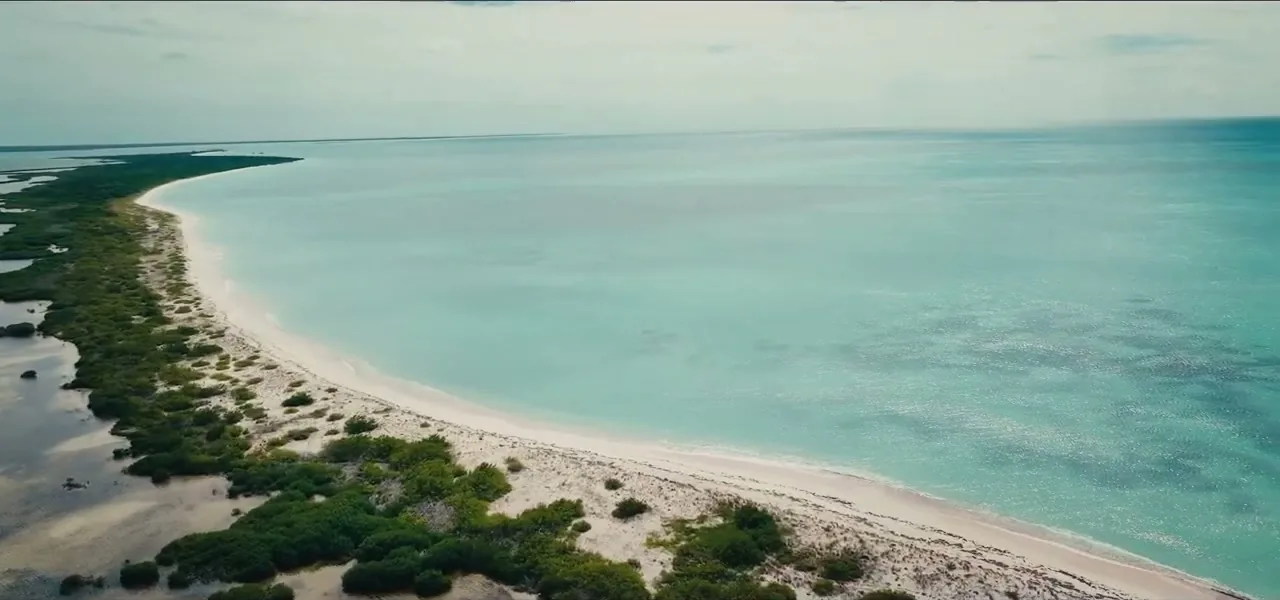
Then there's the beach — the reason Barbuda is whispered about among people who chase empty coastlines. It runs for an astonishing 17 miles, an almost unbroken ribbon of pale, blush-coloured sand, widely considered the pinkest beach in the Caribbean. Even Princess Diana loved it enough that a stretch now bears her name.
Why pink? The science is lovely. The colour comes from microscopic marine organisms called foraminifera, which build tiny shells in shades of reddish-pink. Over time those shells break down into grains, mix with the white coral sand, and tint the whole shore a soft rose. But the number that stays with you isn't the length or the science — it's the solitude. I sent my crew back to the boat and walked that beach entirely alone, mile after mile of it, thinking about all the good fortune the dart had thrown my way. On an over-touristed planet, a 17-mile beach with no one else on it feels almost impossible. Barbuda still has it.
Walking it, I kept thinking about how rare this has become. Half the famous beaches on Earth are now a wall of umbrellas and vendors; here I could stand at the waterline and see, in either direction, nothing but pink sand curving into turquoise until it vanished in the haze. No footprints but my own. The pink is subtle — softer than the postcards, a blush that deepens where the waves have concentrated the tiny shells — but the emptiness is total, and the emptiness is the point. It is, without exaggeration, one of the most peaceful places I have ever set foot.
Nature on the Edge
The frigate birds and the pink beach are the headliners, but Barbuda's whole environment is a kind of fragile miracle. The Codrington Lagoon, a shallow, sheltered expanse of water separated from the sea by that long sandbar, is a nursery for marine life and a haven for birds — a genuinely important ecosystem for the region. The island's beaches are nesting grounds for sea turtles, which haul themselves ashore under cover of darkness to lay their eggs; conservationists here have watched, anxiously and then hopefully, as that turtle population weathered Irma and began to recover. Inland, the flat scrub is roamed by wild deer and horses, giving parts of Barbuda an almost safari-like emptiness.
But "fragile" is the operative word. This is one of the lowest, flattest inhabited islands in the Caribbean, which makes it acutely exposed to exactly the kind of storm that emptied it in 2017 — and, in the longer run, to rising seas. Spend a day here and you feel the tension that defines so many of the most beautiful places I've reached by dart: paradise and precariousness, holding hands. Barbuda is a reminder to see these places thoughtfully, and to see them now.
Caves, Petroglyphs and My First Treasure Hunt
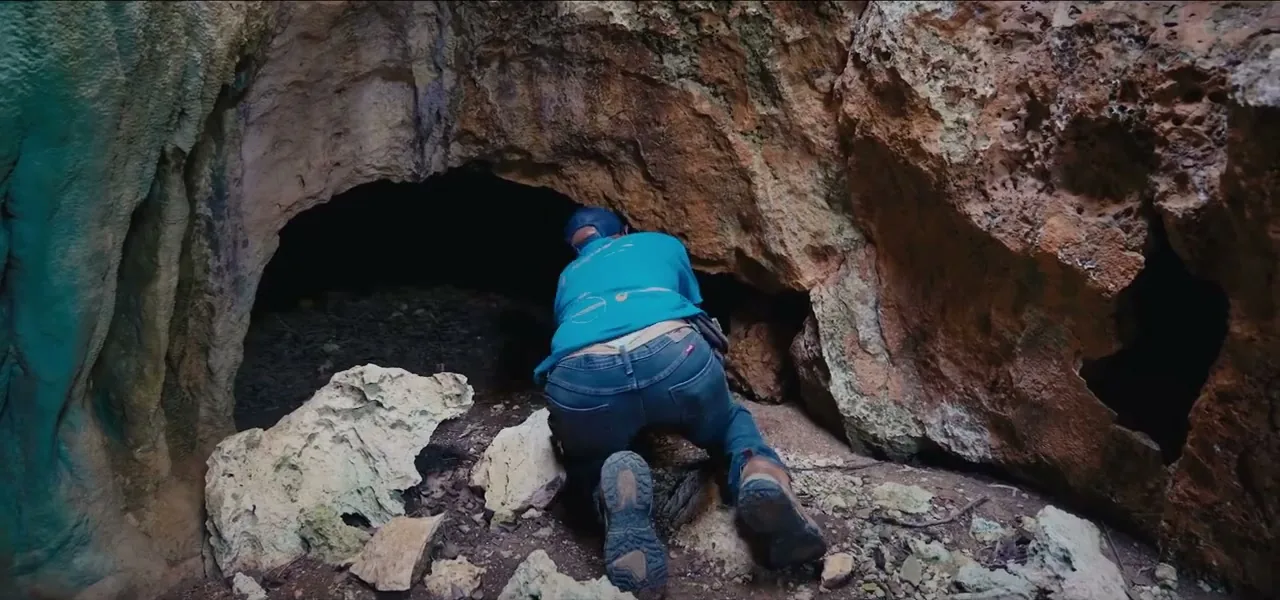
For all its beaches, my single favourite thing on Barbuda was underground. The island is riddled with caves, and in places like Two Foot Bay you can crawl into chambers carved into the cliffs where the island's earliest inhabitants left their mark: Amerindian rock carvings — faces, figures, symbols — scratched into the stone more than 2,000 years ago, by people who came here, worshipped the sun, and performed their rituals in these very hollows. They are, remarkably, the only petroglyphs found anywhere in Antigua or Barbuda. Standing in that cool dark, running my eyes over marks made two millennia ago, was the kind of quiet, humbling moment I travel for.
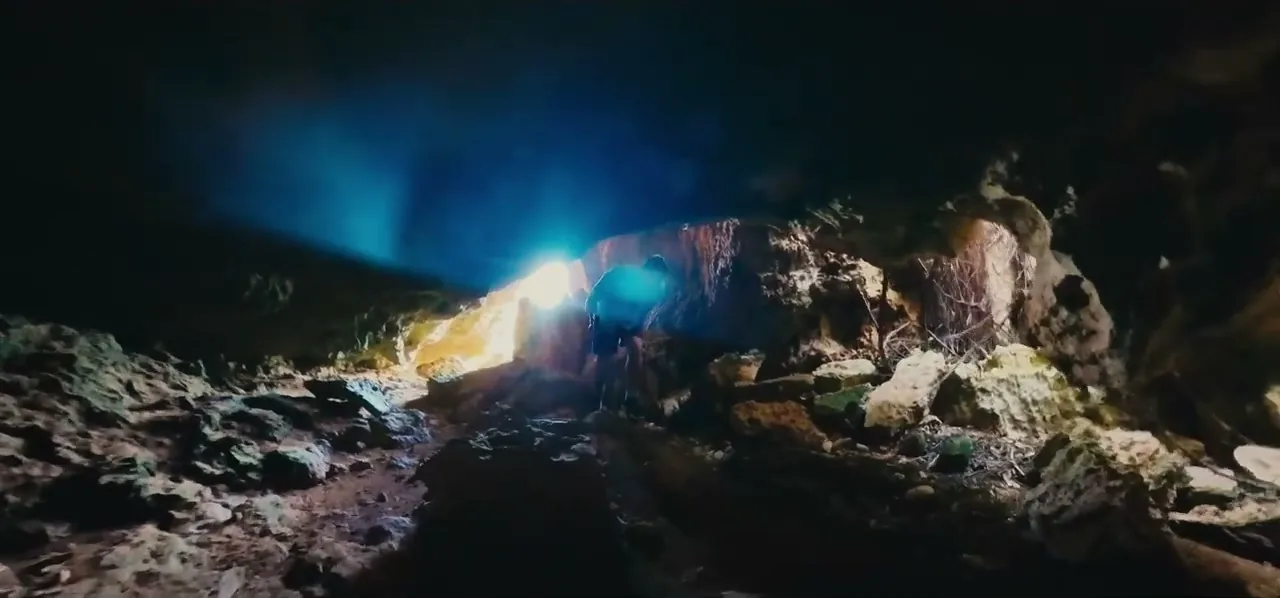
And the caves gave me a bonus: my first encounter with geocaching, a global game I'd somehow never heard of in all my years of travel. Somewhere in the rocks, hidden and weathered by storms, was a small waterproof box — a geocache. The rules are charming: players use GPS or an app to hunt down these containers scattered all over the world, and when you find one, you leave a small personal item and take one that's already inside. I opened ours to find years of little tokens and names from strangers who'd stood exactly where I was. I joked about leaving my passport, then my plane ticket, took nothing, and left it for the next lucky finder. A tiny, worldwide brotherhood of adventurers, quietly passing objects hand to hand across decades. I loved it.
One Hotel, and Beds With a Remote Control
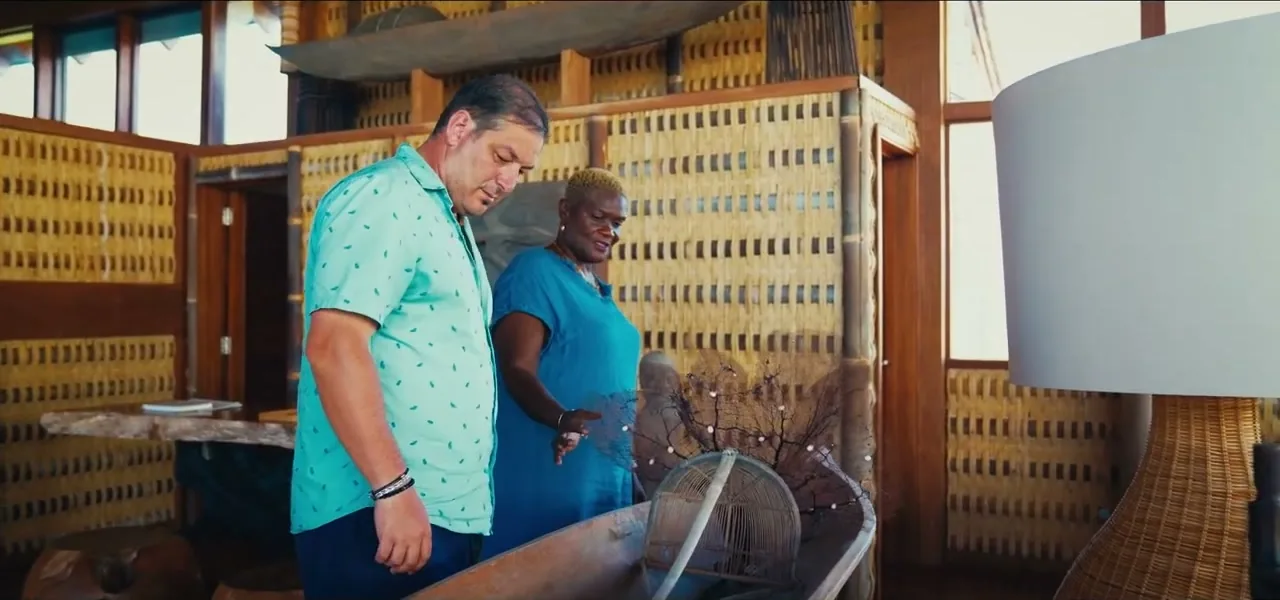
For an island this beautiful, the most surprising statistic is the accommodation. How many hotels does Barbuda have? One. It's called Barbuda Belle, it's built almost entirely from bamboo, and there is genuinely nothing else like it in the Caribbean — beyond it, you're looking at a handful of guesthouses and private rentals. That scarcity is exactly what keeps Barbuda so uncrowded, and it's part of the appeal.
Barbuda Belle also gave me something I'd never seen anywhere on Earth: beds with remote controls. Because the island is so flat and so relentlessly hot, the beds let you dial the temperature of the mattress up or down — so instead of waking up drenched in sweat or blasting the air conditioning all night, you simply cool the bed itself and sleep like a baby. A small, brilliant idea from a tiny island that has every reason to be resourceful.
Back on Antigua: A Rock Star, a Dressmaker and a Distiller
Barbuda sent me back to Antigua for a final stretch, and this is where the nation's real magic revealed itself — not in its landmarks, but in its people. For a country of just 97,000, Antigua and Barbuda hides an astonishing density of remarkable lives.
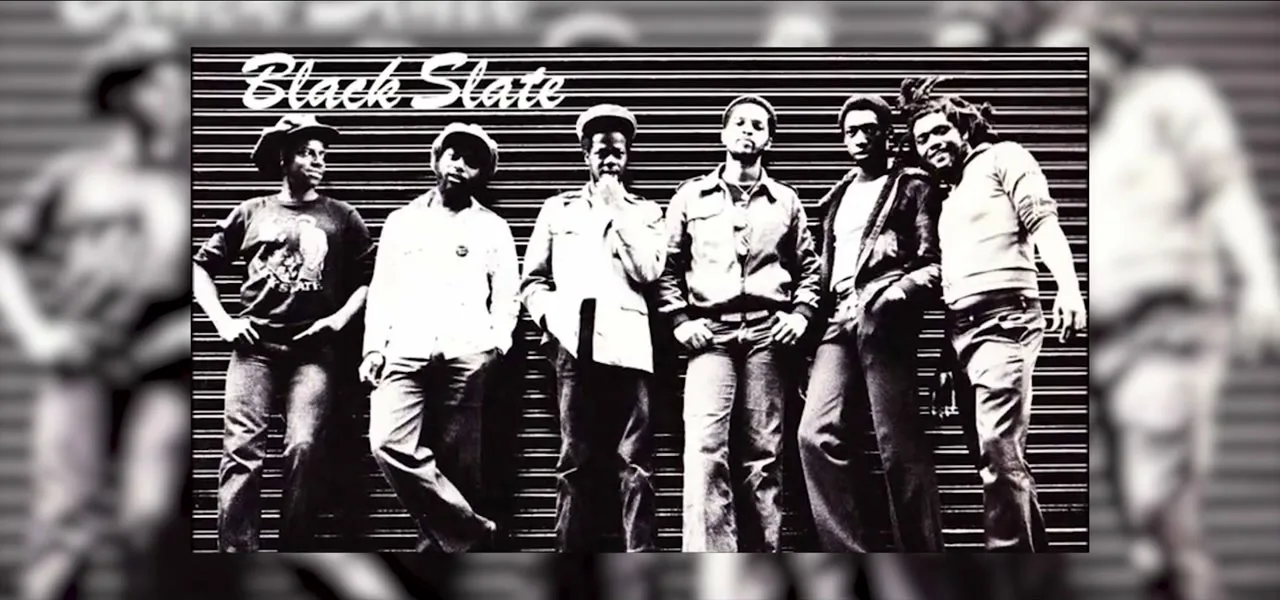
I stayed at Buckley's Country Club, the property of Anthony Brightly — and only slowly learned who he was. Anthony was a member of the British reggae band Black Slate, the group behind the 1980 hit "Amigo," a song of encouragement that went number one in Holland, Belgium, France and New Zealand and is still played today. He made his first record at 12. Now, decades on, he lives in Antigua — he moved here, he told me, simply to give his sons a better education — and has reinvented himself as a filmmaker, with two movies to his name. What struck me most was something he said about me: that most interviewers only want to talk about themselves, whereas I wanted to know about him. That's the whole point of this show.
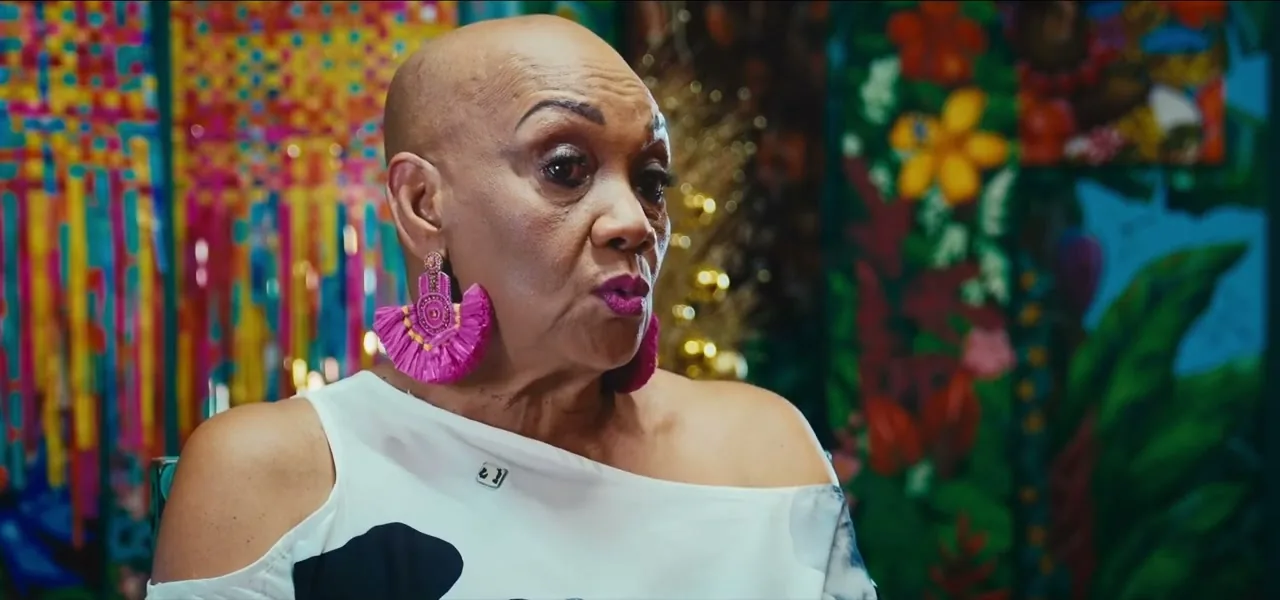
Then there was Heather Doram — actress, educator, activist — who did something I have never encountered in nearly a hundred countries: she designed her nation's national dress. In a 1992 competition (the country realised, heading to the Olympics, that it had no national costume), Heather was asked to be a judge and instead insisted on competing. Told the design had to reflect the immediate post-emancipation period, she researched the archives and wove in her African ancestry, choosing a madras in black, red and green — colours the region identifies with. Both a male and a female design of hers won. She's also a gifted painter; I liked her work so much I bought one of her pieces.
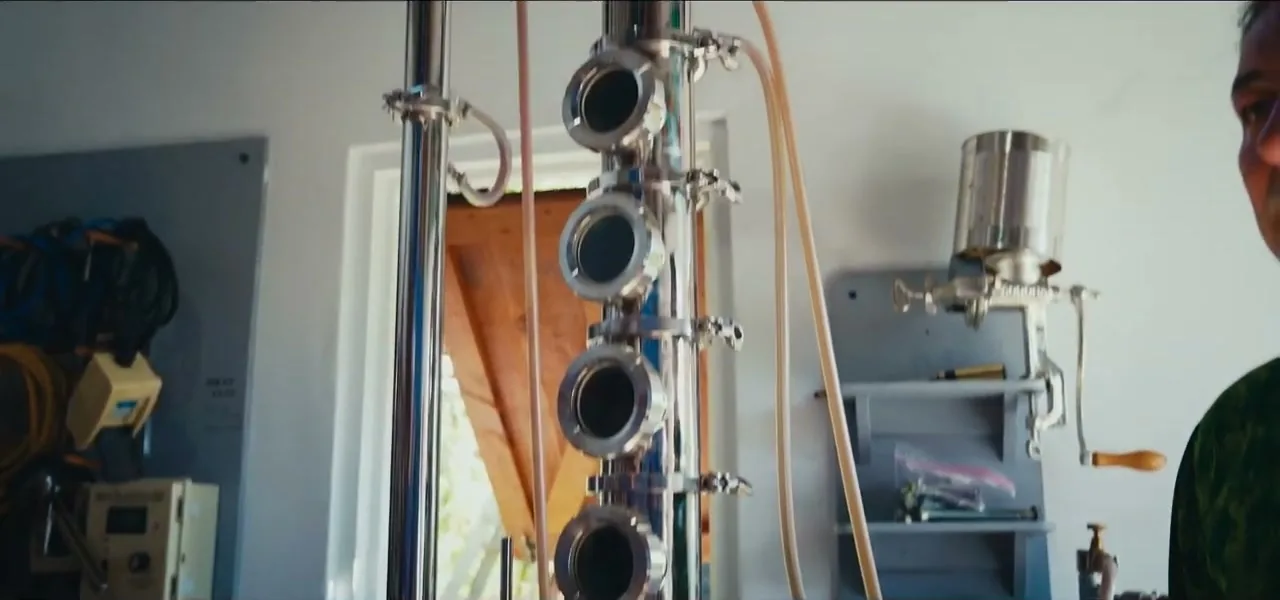
Alcohol, I quickly learned, is woven into Antiguan culture, so I went to the source: Antilles Stillhouse, the island's only traditional gin distillery, a tiny family operation where a distiller named David makes spirits from Caribbean brown sugar and local botanicals — including a pink gin coloured and flavoured with sorrel. Watching that little still turn island ingredients into bottles now sold around the world, then tasting the result before noon, was a very Caribbean kind of morning.
How Antiguans Party
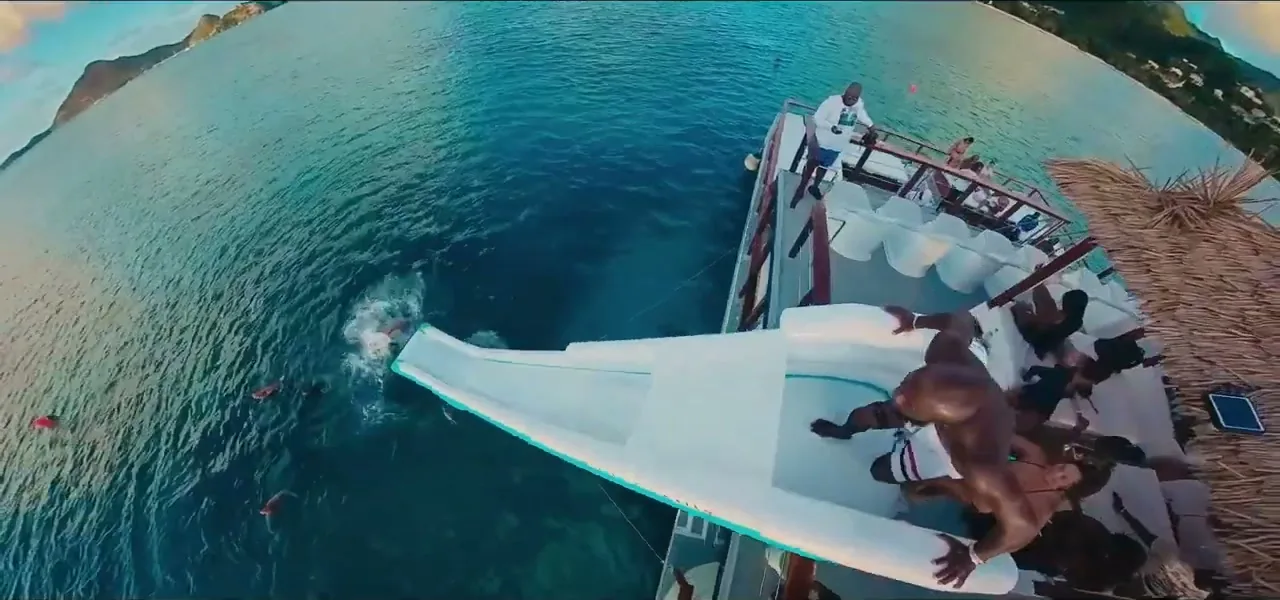
Two weeks in, I'd soaked up the culture and the history but hadn't yet seen how the islands let loose. Enter Kai Coconut — a huge party catamaran, complete with a waterslide, that you can rent and turn into a floating festival. Its owner, Glenn, has one of those stories that stays with you: he arrived in Antigua from Dominica 31 years ago with the equivalent of about seven US dollars and two mangoes — and even the mangoes were confiscated at the airport. He had a vision, worked relentlessly, and built all of this from nothing. "If you have a vision, if you know what you want, and if you work hard for it, you can make it," he told me. Watching a boat full of strangers slide, dance and laugh their way through a Caribbean afternoon, I believed him.
It's worth knowing, too, that Antigua and Barbuda actively invites the world to put down roots: through its Citizenship by Investment Program, well-off individuals can gain citizenship and a second home in exchange for an investment on the island (with a rigorous due-diligence process, and a requirement to spend at least five days there). For a small nation, it's a clever way to draw investment and visitors to islands this beautiful.
By the numbers: Barbuda by the numbers
- Pink-sand beach
- 17 miles — the Caribbean's pinkest
- Frigate birds
- 5,000+ — largest colony in the hemisphere
- Cave carvings
- Amerindian, 2,000+ years old
- Hurricane Irma (2017)
- ~95% destroyed; island evacuated
- Uninhabited
- First time in ~300 years
- Hotels
- Essentially one (Barbuda Belle)
Planning a Trip to Barbuda
If Barbuda tempts you — and by now it should — the practicalities are refreshingly, sometimes challengingly, simple. Most people come as a day trip from Antigua, either on the short flight I took or by ferry, and that's enough to see the frigate sanctuary, the pink beach and a cave or two. But if you can, stay a night: with essentially one hotel and a few guesthouses, Barbuda after the day-trippers leave is about as close to having a Caribbean island to yourself as exists on Earth.
Come in the dry season, roughly mid-December to April, for the calmest seas and most reliable sun; be very mindful of the June-to-November hurricane season, which on an island this exposed is not to be taken lightly. Manage your expectations, too: this is not a place of resorts, nightlife and convenience stores — services are minimal, so bring what you need, book your beach and sanctuary tours ahead through a local guide, and treat the island's fragile nature and its people's home with real care. Do that, and Barbuda gives you something almost nowhere else can anymore: genuine, unhurried, uncrowded wild.
The Dart Points West
On my very first night in the country, standing at Shirley Heights as the sun sank over English Harbour, I'd made myself a promise: I'd come back here, to the most beautiful view on the islands, to throw the dart that would choose where I went next. On my last day, I kept it. Blindfolded, map on its easel, the Caribbean glowing gold below me, I threw — and the dart came down on the far side of the world, on the Philippines. A big country, one I'd heard wildly mixed stories about, and one where I already had plenty of friends waiting. Wherever the map sends me, I go.
Antigua and Barbuda genuinely exceeded my expectations — and I don't say that lightly. I came knowing nothing and left having found, in one of the smallest nations on Earth, a woman who flew to space, a reggae star turned filmmaker, the designer of a country's costume, an immigrant who built an empire from two confiscated mangoes, ancient carvings in a cave, five thousand courting birds, and seventeen empty miles of pink sand. It's a country that keeps its best treasures — its people — hidden in plain sight, behind an easy island smile. Barbuda, wild and quiet and rebuilt, was the perfect final surprise.
If Antigua taught me how warm a nation can be, Barbuda taught me how resilient one can be — how a community can watch its whole island emptied by a storm and still choose to come home, to rebuild on ground held in common, to keep the frigate birds and the pink sand and the ancient carvings safe for whoever comes next. Of all the countries the dart has chosen for me, few have hidden this much wonder in so small a space, or worn their history and their fragility so honestly. I'll be back — I said as much to more than one person there — and I mean it. But for now, a dart is in the air over the Pacific, and, as always, it threw me back out into the unknown.
Explore More Travel by Dart Journeys
- The confident big sister across the water: my Antigua episode.
- More of the Caribbean the dart uncovered: the Cayman Islands and Curaçao.
- Back one dart to where this Caribbean chapter began: Iceland.
- Another small island nation punching far above its size: Bermuda.
Suggested Sources & Further Reading
To go deeper into Barbuda, these are some of the best authoritative resources:
- Visit Antigua & Barbuda — the nation's official tourism authority.
- Encyclopædia Britannica — Barbuda — the island's geography and history.
- Encyclopædia Britannica — Antigua and Barbuda — an authoritative country overview.
- Encyclopædia Britannica — frigate bird — the species behind Barbuda's famous colony.
All facts verified September 2026.
Antigua and Barbuda: traveler questions
Where is Barbuda, and how do you get there?+
Barbuda is the smaller, flatter, far quieter island of the two-island nation of Antigua and Barbuda, about 40 km north of Antigua. You reach it in a 15-minute flight on a small plane, or by boat. Its only village is Codrington, and only a couple of thousand people live there.
What is Barbuda famous for?+
Three things above all: a 17-mile stretch of pink-tinged sand widely called the pinkest beach in the Caribbean; the Codrington Lagoon Frigate Bird Sanctuary, the largest frigate-bird colony in the Western Hemisphere with over 5,000 birds; and its ancient caves, which hold the only Amerindian rock carvings in the country.
What happened to Barbuda in Hurricane Irma?+
In September 2017, the Category 5 Hurricane Irma destroyed roughly 95% of Barbuda's buildings and infrastructure. The entire population — around 1,400 people — was evacuated to Antigua, leaving the island with no inhabitants for the first time in some 300 years. Barbuda has been slowly rebuilding ever since.
Why is Barbuda's sand pink?+
The pink hue comes from microscopic marine organisms called foraminifera, which have tiny reddish-pink shells. Over time these shells break down and mix with the white coral sand, tinting the whole beach a soft blush colour — the same phenomenon that colours a handful of other famous beaches in the Bahamas and beyond.
Can you stay overnight on Barbuda?+
Yes, though options are limited. Barbuda has essentially one hotel — the bamboo-built Barbuda Belle — plus a scattering of guesthouses and private rentals. It's part of what keeps the island so gloriously uncrowded compared to the wider Caribbean.