Season 3 · Episode 2
Antigua
365 beaches — one for every day of the year — and a sailing culture like nowhere else.
On this page ▾
By Sorin Mihailovici · Travel by Dart · Last updated August 2026 · ~17 min read
I have never gone from one extreme to another quite so fast. One moment I was standing in a freezing crevasse in Iceland — one foot in North America, one in Europe — throwing a dart in a Viking costume under the midnight sun. The next, the dart had chosen the closest speck of land it could find in the warm Atlantic, and I was stepping off a plane into the tropical heat of Antigua. A country I knew, embarrassingly, nothing about: not the language, not the people, not the history. So I did what any good Viking would do — I went anyway, friendly and curious, ready to explore. What I found was one of the warmest, most surprising little nations the dart has ever handed me.
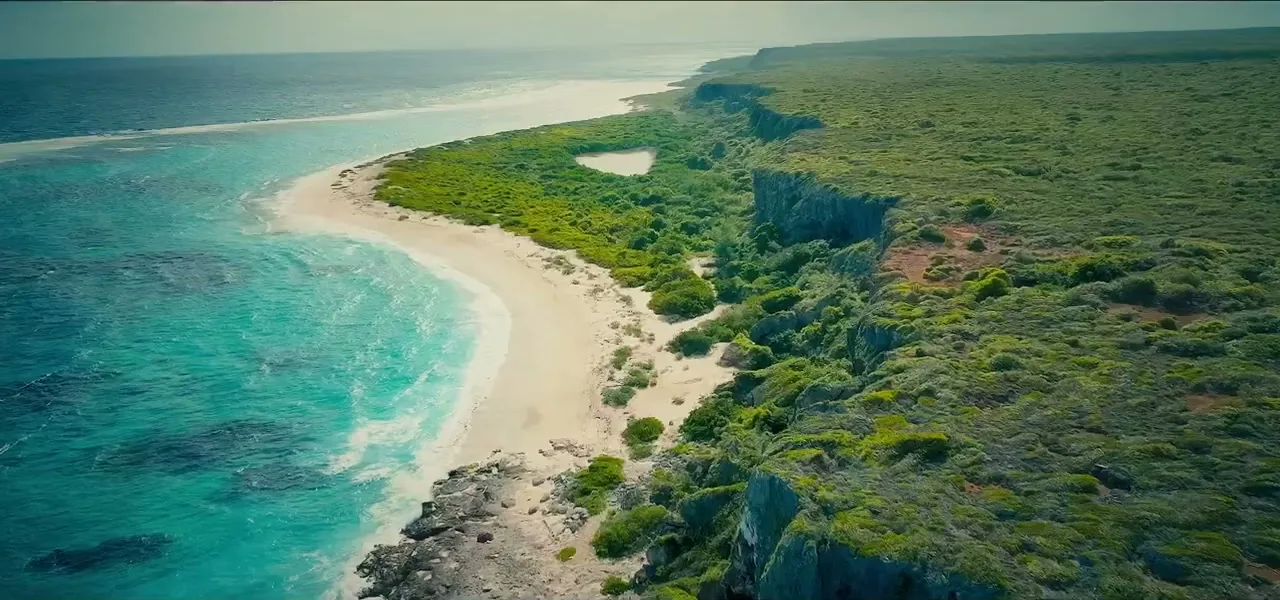
Quick facts: Antigua & Barbuda at a glance
- Capital
- St John's (on Antigua)
- Population
- ~97,000 (about 97% on Antigua)
- Independence
- From the UK in 1981
- Language
- English
- Currency
- East Caribbean dollar
- Beaches
- 365 — one for every day
- Nelson's Dockyard
- UNESCO World Heritage (2016)
- Known for
- Sailing, beaches, warmth of its people
Two Islands, One Nation
Antigua and Barbuda is a country of two islands about 40 kilometres apart — you cross between them by small plane or boat. Their names carry their character. Antigua is Spanish for "ancient," a nod to Christopher Columbus, who sighted it in 1493 and named it Santa María la Antigua. Barbuda means "bearded" — and charmingly, nobody's quite sure why: maybe the bearded fig trees that grew there, maybe the beards of its early inhabitants. Together they form one of the smallest nations on Earth.
How small? The whole country has about 97,000 people — you could fit the entire population into New York's Times Square. Roughly 97% of them live on Antigua; Barbuda is home to only a few thousand. It's been an independent nation since 1981, with its capital at St John's, and it carries itself with the easy confidence of a place that knows exactly what it has. Antiguans, one local told me, can be a little shy with strangers at first — who's this, who are you? — but once they warm up, you meet some of the friendliest people in the Caribbean. That warmth, plus one of the lowest crime rates in the region, is why so many visitors return every single year.
And then, of course, there are the beaches. Antigua's proudest boast is its 365 beaches — one for every day of the year — and standing on any of them, watching that impossible turquoise meet white sand, you stop arguing with the marketing. But as one Antiguan put it to me, "the beach is just the beginning." There's the cuisine, the yachting, the world-famous Sailing Week, a December boat show that draws in some genuinely enormous yachts, and a Carnival — held around the first weekend of August — that celebrates the islands' emancipation from slavery. It is, they'll happily tell you, a very romantic place: easy to get married on, they joke, and much harder to get divorced.
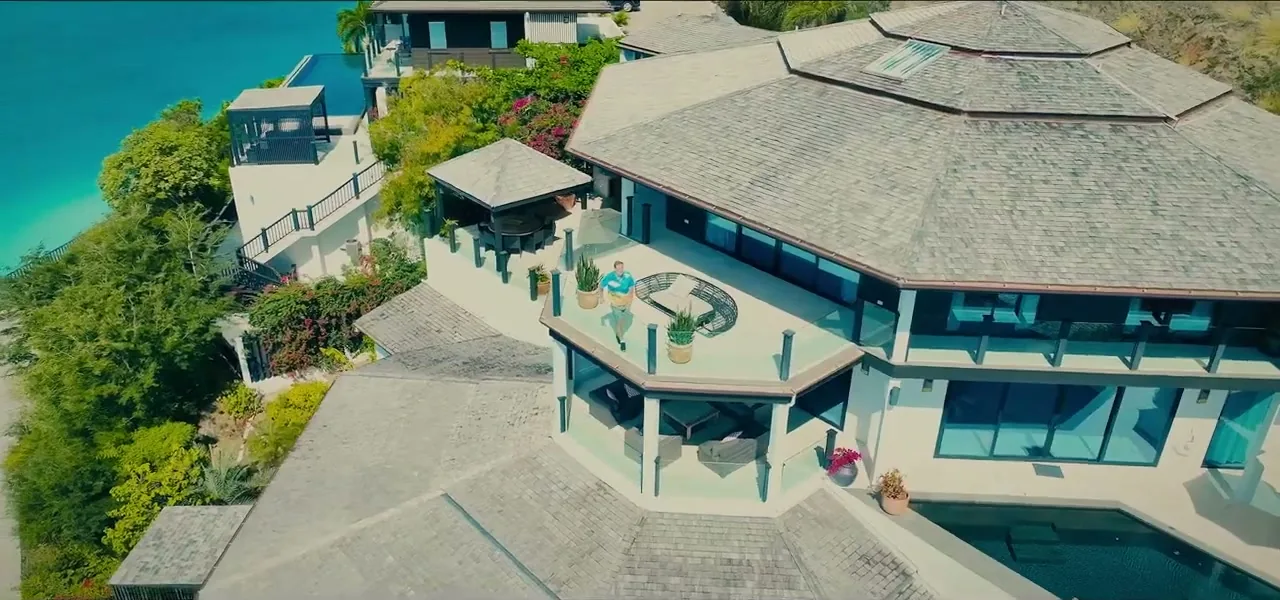
For the trip I split my stay between two very different places — the villas of Tamarind Hills, stacked on a hillside above the sea, and later the more laid-back Buckley's Country Club — because that's how I like to travel: not chasing five-star logos, but finding the spots where I can actually feel the place. And Antigua makes that easy. Within a day of landing I'd gone from a total stranger to being folded into conversations, handed food, told stories. It's the kind of island where the warmth of the people quickly outshines even the scenery — and on an island with 365 beaches, that's saying something.
A Sailing Nation — and a Cricketing One
Two passions run through Antigua deeper than almost anything else, and you can't understand the island without them. The first is sailing. The deep, protected harbours of the south coast — English Harbour and neighbouring Falmouth — made Antigua a naval prize for the British, and today those same anchorages make it one of the great yachting capitals of the Caribbean. Each spring, Antigua Sailing Week, running since the late 1960s, turns the island into one of the premier regattas on the planet, and every December a boat show fills the harbours with superyachts the size of small hotels. For a country of 97,000 people, Antigua punches absurdly above its weight on the water.
The second passion is cricket, and here Antigua is not just good — it's legendary. This tiny island produced some of the greatest players the sport has ever seen: Sir Vivian Richards, widely rated among the most devastating batsmen in cricket history, plus fast-bowling giants like Sir Andy Roberts and Sir Curtly Ambrose. There's a modern stadium named for Richards outside St John's, but the real spirit of Antiguan cricket is in the noise, the music and the joy the island brings to the game. When people say Caribbean cricket is a carnival, Antigua is a big part of why.
Nelson's Dockyard and the Ghosts of Empire
My first real stop was Nelson's Dockyard, and it's the kind of place that stops you in your tracks. Set in the sheltered inlet of English Harbour, it's a beautifully preserved Georgian-era British naval base — and, remarkably, the only continuously working Georgian dockyard in the world. That distinction earned it a spot as a UNESCO World Heritage Site in 2016, under the formal title "Antigua Naval Dockyard and Related Archaeological Sites."
It's named after Admiral Horatio Nelson, later the hero of Trafalgar, who was stationed here in the 1780s enforcing unpopular British trade laws — which made him, at the time, thoroughly disliked and famously arrogant. The stories the guides tell bring the place alive: how Nelson actually hated the land, the sun and the mosquitoes so much that he mostly stayed aboard his ship; how the old Copper and Lumber Store, where naval supplies were kept and 500 men once slept in hammocks, is now a five-star hotel; how a heavy British cannon from 1793 still guards the harbour; how men leaving to fight in the World Wars carved their names into a wall on their way out — some made it home, some didn't. There's even a "white gate" that Nelson kept locked, once barring women and animals from the working yard — a rule, I was delighted to hear, long since abolished, in a dockyard whose parks commissioner today is a woman.
But it's important to sit with what this beauty was built on. The dockyard is a monument to British naval power and to the transatlantic slave trade that underwrote the whole Caribbean sugar economy — the enslaved Africans whose labour built these very walls. Antigua doesn't hide from that history; it holds it, in the same breath as it celebrates the emancipation that Carnival marks each August. The islands you see today, warm and free and proud, are the other end of that long, hard story.
Sugar, Slavery and the Road to Nationhood
To really know Antigua, you have to know what those Georgian walls and green hillsides were once for. For roughly two centuries this was a sugar island — its interior carved into plantations, its economy built entirely on sugarcane, and that entire economy built, in turn, on the forced labour of enslaved Africans brought across the Atlantic. The scattered stone windmills you still see dotting the countryside, like the twin mills at the restored Betty's Hope estate, are the bones of that system: beautiful, and haunted.
Slavery was abolished across the British Caribbean in the 1830s, but freedom did not mean prosperity or self-rule; that took much longer. Antigua and Barbuda remained a British colony until it finally became a fully independent nation in 1981. This is exactly why the island's Carnival, each August, is not just a party but a commemoration — a celebration of emancipation, of survival, of a people who turned one of history's cruelest chapters into music, colour and a fierce, joyful pride. When you watch the moko jumbies stride over the crowd or hear the steel pans ring out at Shirley Heights, you're hearing the sound of that transformation.
It's a place that hides real depth behind an easy Caribbean smile — history, resilience, and a warmth that sneaks up on you.
Shirley Heights and the Best Sunday on Earth
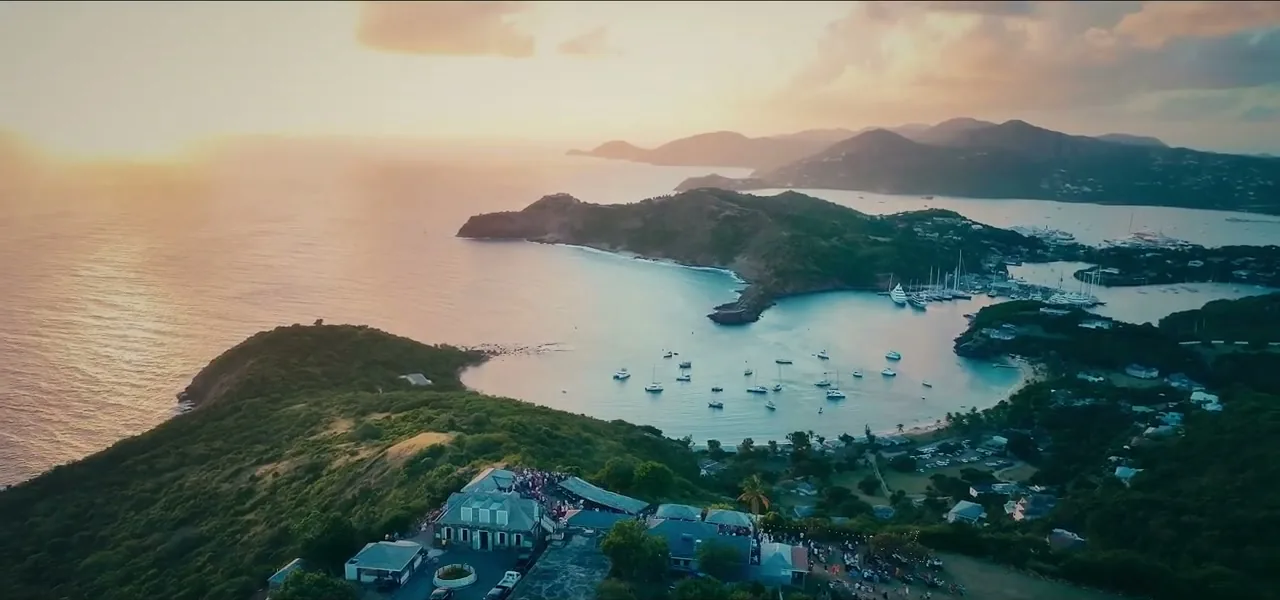
High above the dockyard sits Shirley Heights, once a military lookout where a sentry would watch the sea and signal back to base whether an approaching ship was navy, merchant or threat. Standing up there, with English Harbour spread out below and the Caribbean gilding gold in the late light, you feel the history of the place — and you understand instantly why it's the most visited landmark on the island.
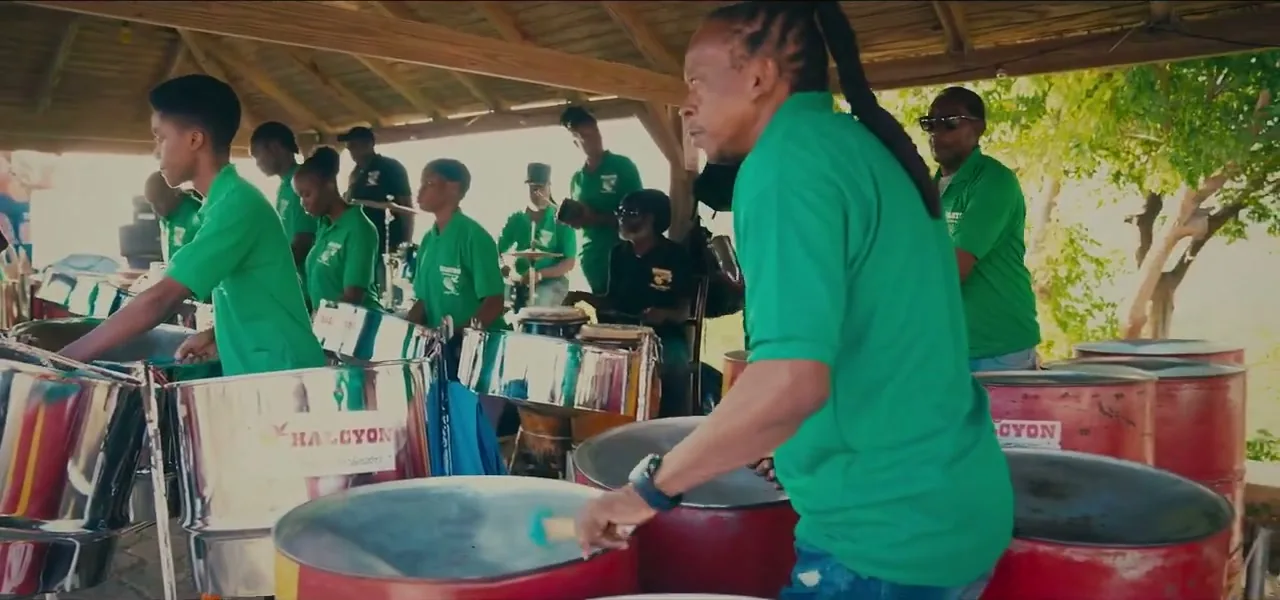
But Shirley Heights isn't a museum piece. Every Sunday afternoon, it transforms into what is, without exaggeration, one of the best parties in the Caribbean: a sunset barbecue with a live band, food, dancing and a view that does half the work. The heart of it is the steel-pan orchestra — musicians coaxing entire songs out of oil drums, everything from Elvis Presley to Jay-Z, played on instruments most of the world only half-imagines. I stood there covered in goosebumps, hearing songs I'd known my whole life reinvented in that shimmering steel sound. It was one of those pure, unrepeatable travel moments, and I decided on the spot that this was where I'd hold my dart-throw ceremony.
Fungee, Pepperpot and the Table as a Ritual
In Antigua, food is a social act. Go to any good local spot and you'll find people not just eating but gathering — telling stories, catching up, folding you into the conversation. On an island this small, more or less everybody knows everybody, and the table is where that closeness lives.
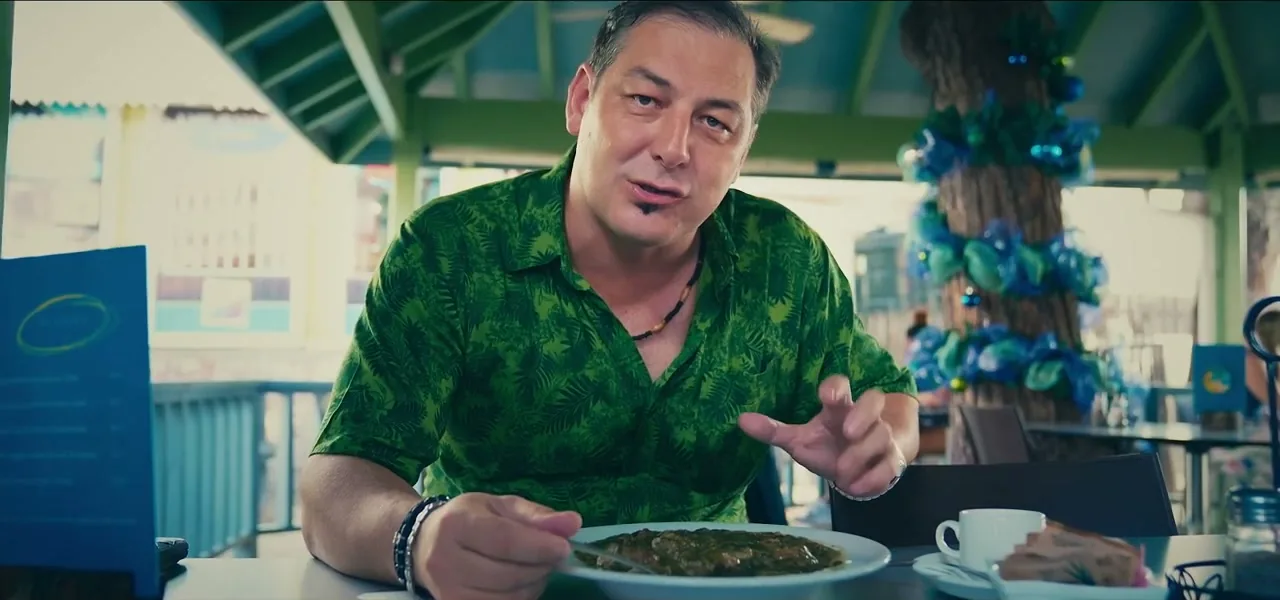
So of course I had to try the national dish: fungee and pepperpot. Fungee (say it "foon-jee") is a cornmeal dumpling, close cousin to Italian polenta. Pepperpot is the real showstopper — a thick, savoury stew of vegetables and a serious quantity of meat (pickled beef, pork, chicken, right down to the bones), slow-cooked for hours until it's almost a meal and a hug at once. Both dishes carry the deep African heritage of the islands. I took one spoonful, felt it settle in like ballast, and understood immediately why it takes three hours to make — and why, after a bowl of it, I didn't need to eat again for the rest of the day.
Walking Tall: The Moko Jumbie
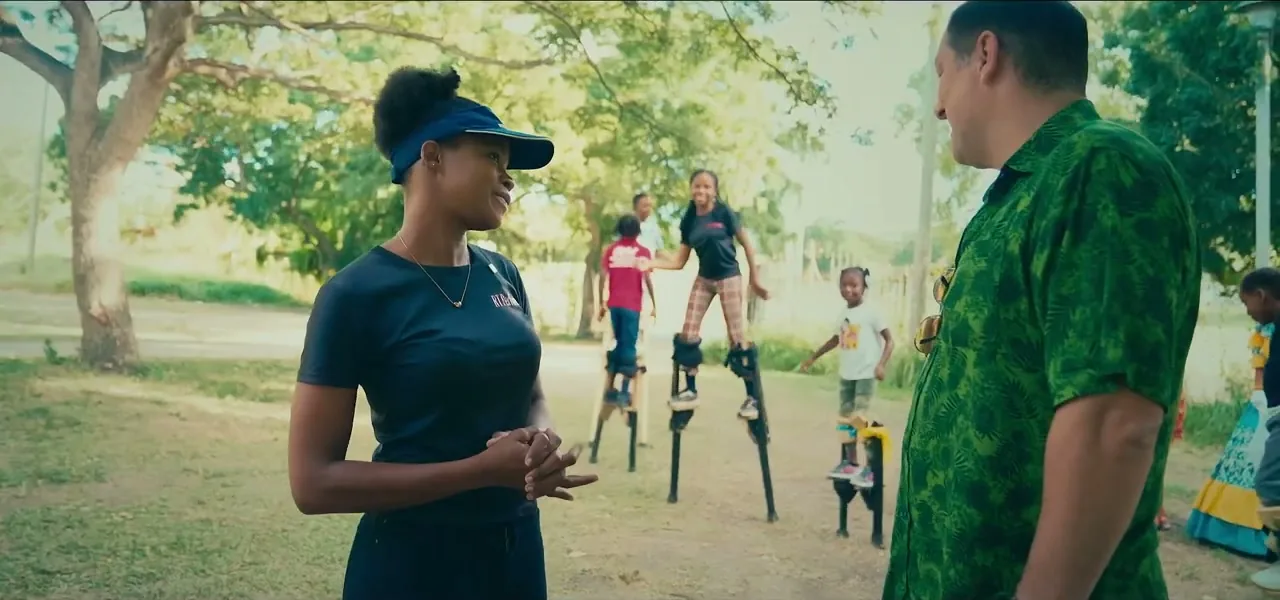
Every country I visit is quietly fighting the same battle — to keep its traditions alive against the pull of smartphones and screens — and Antigua's answer has a name and a face. Renee, who runs a non-profit called RT Performers, spends two afternoons a week teaching island children something wonderfully improbable: how to walk on stilts.
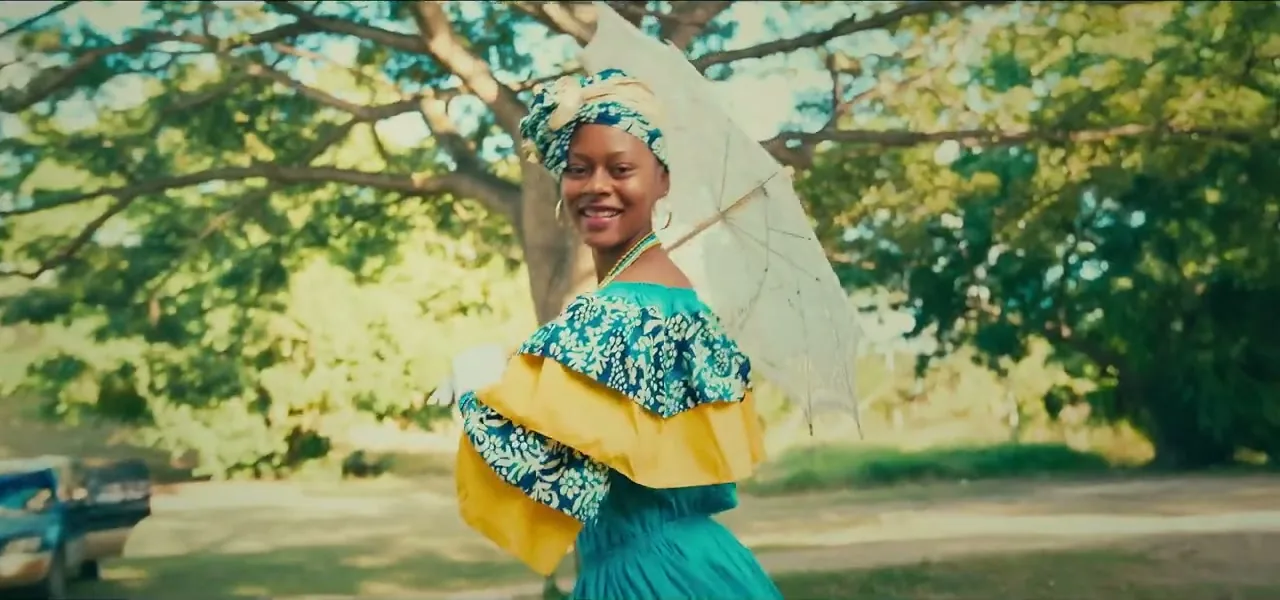
This isn't a circus trick; it's the moko jumbie, a tradition carried across the Atlantic from West Africa. The name itself tells you how seriously it was once taken: "moko" comes from an African word for a god or spirit, and "jumbie" is the Caribbean word for a ghost — a moko jumbie is, roughly, a towering spirit. In old West African villages, stilt-walkers served as watchmen, tall enough to see over the rooftops and spot trouble coming. Today they're pure carnival — dazzling, brightly costumed figures striding above the crowd during festival season.
Renee has been on stilts since she was seven, and watching her students, some of them tiny, stride around with total confidence was humbling. "It's as hard as your mind makes it," she told me — some kids are up and walking within a minute. I badly wanted to try, and here's the one true disappointment of my Antigua trip: they bolt each child's own shoes onto the wooden stilt platform, and nobody had a pair anywhere near my size. So I left a pair of my shoes behind with a promise to come back. I intend to keep it.
The Woman Who Won a Ticket to Space
For all its beaches and history, the single most extraordinary thing I found on Antigua was a person. Her name is Keisha Schahaff, and her story sounds invented until you hear her tell it.
In 2021, Keisha was on a flight from London to Barbados when an advertisement popped up — on her screen only, she swears; she looked around and no one else seemed to have it — inviting her to enter a sweepstake to go to space with Richard Branson's Virgin Galactic. She took it as a sign, entered, and forgot about it. Months later, Branson himself turned up at her house to tell her she'd won two tickets — normally worth around $450,000 each — and that she and her daughter were going to space.
And in August 2023, they did. Aboard Virgin Galactic's spaceplane Unity — carried aloft by a mothership named Eve, released at around 45,000 feet and rocketed on toward the edge of space — Keisha and her 18-year-old daughter, Anastatia Mayers, made history several times over. They became the first people from the Caribbean ever to go to space, and the first mother-and-daughter duo to do it, with Anastatia among the youngest people ever to make the trip. Fewer than 700 humans have crossed that line; Keisha and her daughter are two of them.
What moved me most wasn't the spectacle but the aftermath. Keisha described looking out the window and seeing Earth "floating there like this big animal ball" — realising, in her words, that our planet is a living thing — and coming home changed in ways she's still working out: her appetite gone for a month, unable to drink room-temperature water since. She told me about the hardest part of the training, too: being asked to record goodbye videos for her mother, her husband, her children, just in case. This is a woman from an island of 97,000 people who wrote her own farewell letters, strapped into a rocket, and came back to a nation that had thrown her a watch party. If Antigua has a modern legend, it's her.
By the numbers: Antigua by the numbers
- Beaches
- 365 — one for every day
- Population (whole country)
- ~97,000; ~97% on Antigua
- Independent since
- 1981 (capital: St John's)
- Nelson's Dockyard
- Only working Georgian dockyard; UNESCO 2016
- Columbus named it
- 1493 — 'Santa María la Antigua'
- Keisha & Anastatia
- First Caribbeans in space, Aug 2023
Beyond the Beaches
"The beach is just the beginning," that Antiguan told me, and the island proves it the moment you turn inland or offshore. On the wild Atlantic side, Devil's Bridge is a natural limestone arch carved by centuries of pounding surf, with blowholes that fire spray into the air. Out on the water, snorkellers drift over reefs at spots like Stingray City, where the rays glide right up to you, and boats run to uninhabited cays like Great Bird Island for the kind of empty, castaway beach you thought only existed in adverts. There are rainforest ziplines in the island's green interior, and coastal walks that end at beaches with no name and no footprints. Antigua rewards the curious — the visitors who treat those 365 beaches as an invitation to explore rather than a place to simply lie down.
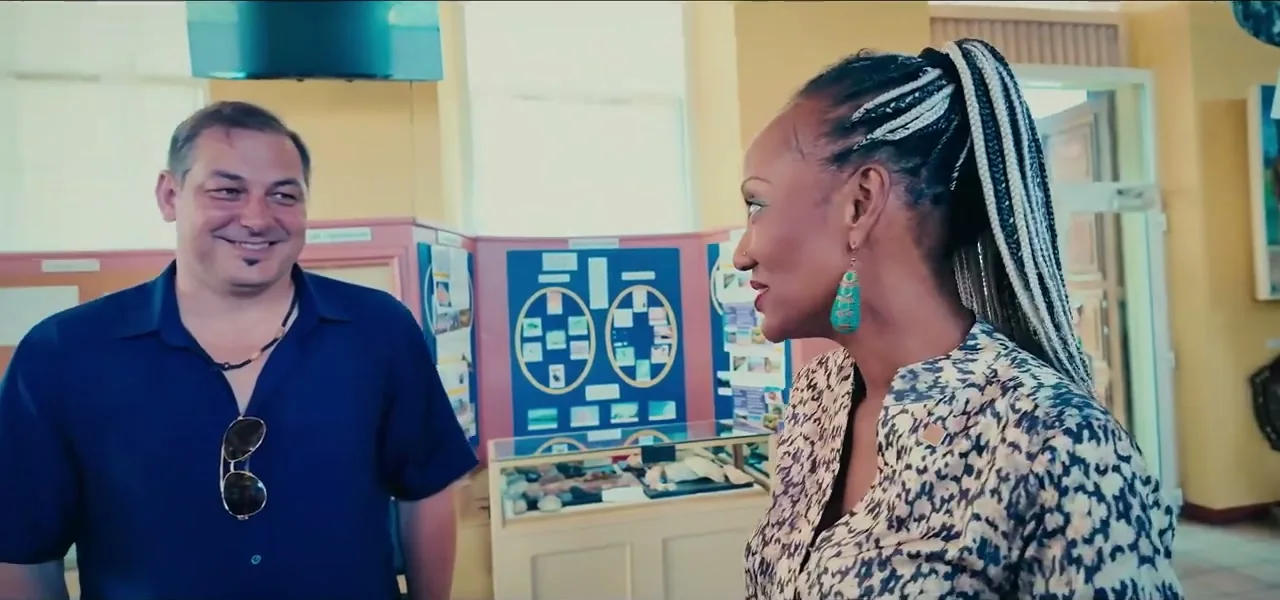
It also has a habit of quietly hiding remarkable people in plain sight. The guide who first showed me around, warm but modest, never mentioned until well into our day that she had been Miss Antigua in 2002 and had represented her country at Miss Universe. That's Antigua all over: a small island, endlessly welcoming, forever underselling just how much it's produced.
When to Go, and How to Do It
If Antigua tempts you — and it should — the practicalities are refreshingly simple. Everyone speaks English, the currency is the East Caribbean dollar (US dollars are widely accepted), and the island is small enough to explore in a relaxed week, ideally with a rental car to reach the quieter beaches on your own schedule.
Timing matters most. The dry season, roughly mid-December to April, brings the reliable sunshine and calm seas the Caribbean is famous for — it's peak season and worth booking ahead. The flip side is hurricane season, June to November, which is cheaper and quieter but carries real weather risk. If you can, time your visit around one of the island's set-pieces: Sailing Week in spring, the December boat show, or Carnival in early August, when the whole island pours into the streets. And do the two things that make Antigua Antigua no matter when you come: get to Shirley Heights on a Sunday for the sunset and the steel pans, and set aside at least one full day to island-hop across to Barbuda. One island simply isn't enough.
The Sister Island Waiting Across the Water
I came to Antigua knowing nothing and left carrying a whole country in my chest: the steel pans at sunset, the towering spirits on stilts, the pepperpot that filled me for a day, the astronaut who wrote her own goodbye letters and flew anyway. It's a place that hides real depth behind an easy Caribbean smile — history, resilience, and a warmth that sneaks up on you and refuses to let go long after you've flown home.
But this nation has two halves, and I'd only seen one. About 40 kilometres north lies Barbuda — wilder, flatter, emptier, with pink-tinged sand, a great colony of frigate birds, and a story all its own. That's where the journey goes next: across the water to the quiet sister island most travellers never reach. You can follow me across the water in Barbuda — because a country this small, it turns out, still had one more wild and beautiful surprise waiting quietly for me.
Explore More Travel by Dart Journeys
- Cross the water to the wild sister island: my Barbuda episode.
- Back one dart to the tectonic rift of Iceland, where this throw came from.
- More of the Caribbean the dart uncovered: the Cayman Islands and Curaçao.
- Another island nation with a big heart and a small population: Bermuda.
Suggested Sources & Further Reading
To go deeper into Antigua and Barbuda, these are some of the best authoritative resources:
- Visit Antigua & Barbuda — the nation's official tourism authority.
- UNESCO — Antigua Naval Dockyard — the World Heritage listing for Nelson's Dockyard.
- Encyclopædia Britannica — Antigua and Barbuda — an authoritative country overview.
All facts verified September 2026.
Antigua: traveler questions
Where is Antigua, and how big is the country?+
Antigua is the main island of the two-island nation of Antigua and Barbuda, in the eastern Caribbean. The whole country has only about 97,000 people — you could fit the entire population into New York's Times Square — with roughly 97% of them living on Antigua and just a few thousand on Barbuda. The capital is St John's, and the country has been independent from Britain since 1981.
Does Antigua really have 365 beaches?+
Yes — Antigua is nicknamed the 'Land of 365 Beaches,' famously one for every day of the year. Combined with a very low crime rate, a strong sailing culture and warm, welcoming people, it's one of the reasons visitors return year after year.
What is Nelson's Dockyard?+
Nelson's Dockyard, in English Harbour, is a beautifully preserved Georgian-era British naval base named after Admiral Horatio Nelson, who was stationed there in the 1780s. It is the only continuously working Georgian dockyard in the world and was inscribed as a UNESCO World Heritage Site in 2016. Above it sits Shirley Heights, a former lookout that now hosts a famous Sunday sunset party.
What is the national dish of Antigua and Barbuda?+
Fungee and pepperpot. Fungee (pronounced 'foon-jee') is a cornmeal dumpling similar to polenta, and pepperpot is a rich, slow-cooked stew of vegetables and various meats. Both dishes trace back to the African heritage of the islands.
Who is Keisha Schahaff?+
Keisha Schahaff is an Antiguan woman who won a sweepstake and, in August 2023, flew to space on Virgin Galactic's Galactic 02 flight alongside her teenage daughter, Anastatia Mayers. They became the first people from the Caribbean to go to space, and the first-ever mother-and-daughter duo to do so.