Season 3 · Episode 6
Cayman Islands
More than luxury and blue water—this is the Caribbean beneath the surface.
On this page ▾
By Sorin Mihailovici · Travel by Dart · Last updated August 2026 · ~16 min read
I came to the Cayman Islands for three reasons: to host a dart-throwing ceremony here, to finally visit the famous Stingray City I'd dreamed about for years, and — honestly — to find out what all the buzz was about. This is a place with a big reputation and a very particular image: offshore money, superyachts, luxury. What I found beneath that surface was something warmer and stranger and better, and I owe most of it to two locals, Kenny and Jade, who threw open the doors of their island to me and my friends Raz and Daniela. One of the first things they taught me: you don't say "Cayman." You say "Cay-Man." With that settled, the adventure began.
Quick facts: Cayman Islands at a glance
- Status
- British Overseas Territory
- Capital
- George Town (Grand Cayman)
- Islands
- Grand Cayman, Cayman Brac, Little Cayman
- Population
- ~70,000, from 130+ nationalities
- Taxes
- No direct taxes (income/corporate/capital gains)
- Distance from Miami
- ~1 hour by air
- Famous for
- Stingray City, diving, finance, safety
- Currency
- Cayman Islands dollar
Three Islands, 130 Nations, One Very Good Vibe
The Cayman Islands are a British Overseas Territory in the Caribbean, an hour's hop south of Miami, made up of three islands: Grand Cayman, by far the largest and the business and tourism hub, home to the capital George Town; and the two quieter "Sister Islands," Cayman Brac (about 1,500 people) and tiny Little Cayman (barely 120). The whole country has only around 70,000 people — but they come from an astonishing 130-plus nationalities, a mix of Jamaican, Latin American and British heritage that makes this one of the most genuinely multicultural little places on the planet.
The two Sister Islands, though I based myself on Grand Cayman, are worth knowing about — because they're where the old, slow Caribbean survives. Cayman Brac is defined by "the Bluff," a dramatic limestone ridge riddled with caves that runs the length of the island, a magnet for climbers and hikers. Little Cayman, with barely a hundred residents, is a near-untouched nature reserve: home to the world-class Bloody Bay Wall dive site, a protected pond full of red-footed boobies, and more rock iguanas than people. If Grand Cayman is the polished, prosperous face of the country, the Sister Islands are its quiet, wild heart.
What surprised me most was how nice it all is. I'd expected an island with a lower standard of living than the mainland, the way many Caribbean islands are. Instead I found the opposite — a high standard of living, spotless, safe, with one of the lowest crime rates I've encountered anywhere. And it's a young success story: back in the 1970s there were only about 10,000 people here. In half a century they've built something remarkable. We settled into a house on Seven Mile Beach, the island's most famous stretch of sand, and got to work exploring.
No Caimans, But an Army of Chickens
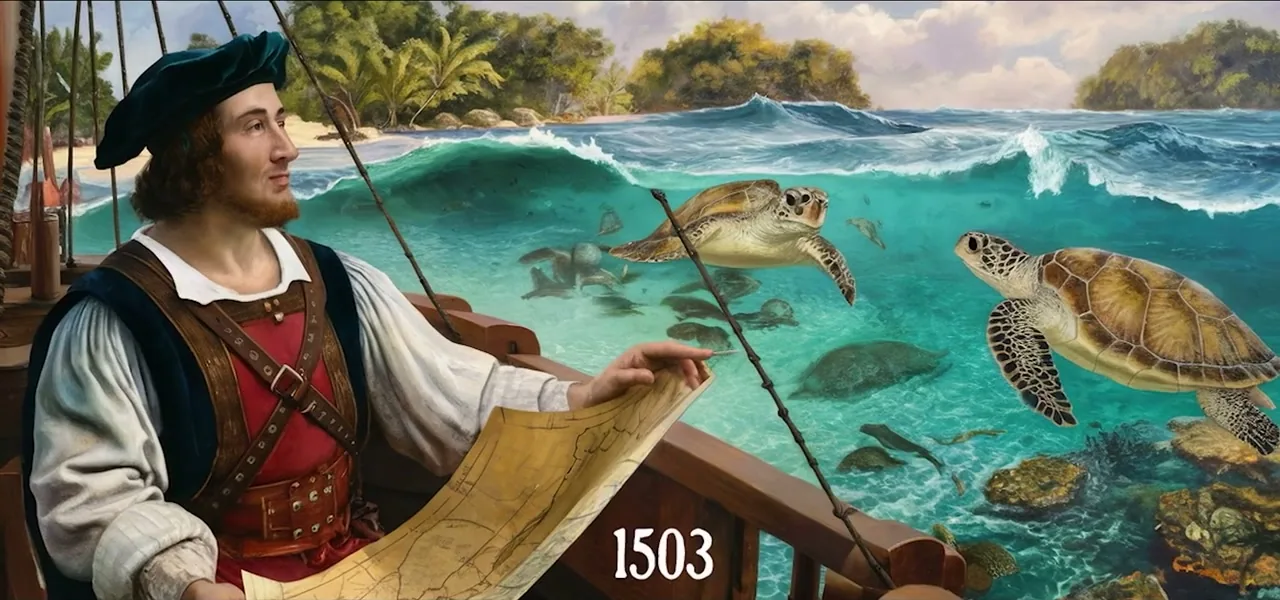
Here's the first delightful contradiction of the place: there are no caimans in the Cayman Islands. None have been seen in over a century. The name is a leftover — Columbus first called these islands "Las Tortugas," the turtles, when he sighted them in 1503, for the countless sea turtles in the water; they were only renamed decades later for the caimans (a kind of crocodilian) that explorers once spotted here.
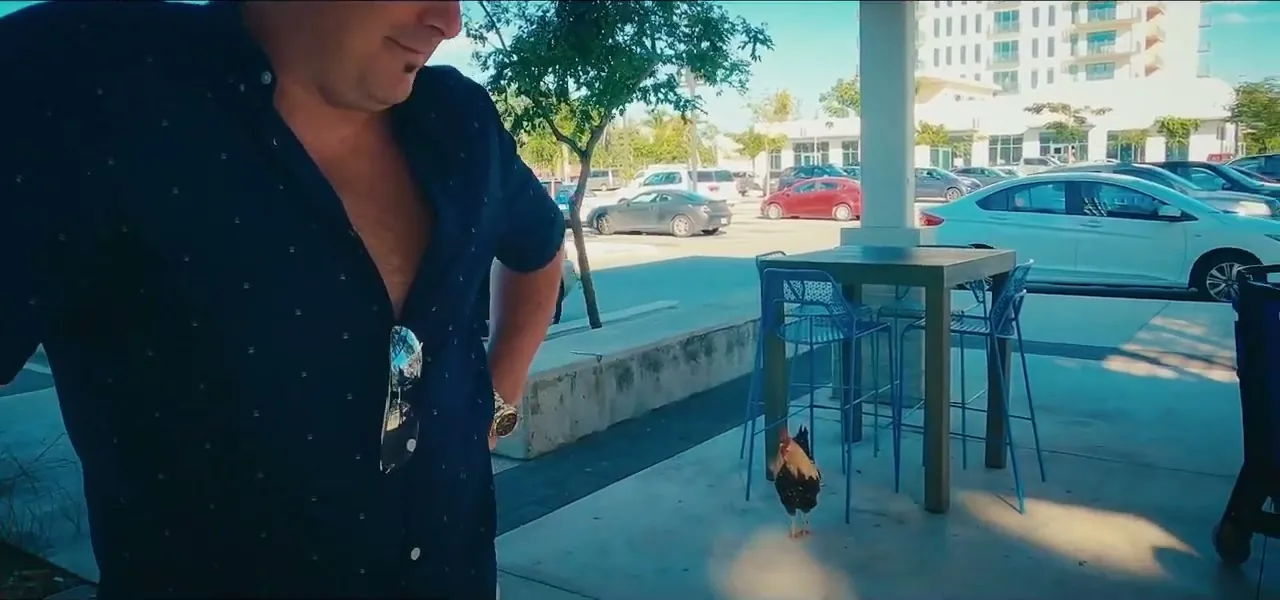
What the islands do have, in almost comic abundance, is chickens. Thousands upon thousands of wild hens and roosters roam everywhere — through car parks, past cafés, across the roads. The story goes that their numbers exploded after Hurricane Ivan, the catastrophic 2004 storm that flattened Grand Cayman, when destroyed coops set countless birds loose to go feral; they got another boost, locals swear, during the quiet of COVID lockdowns. It's charming to a visitor and, the residents will tell you with a weary sigh, a genuine and growing nuisance to the people who actually live here.
The Truth About the Tax-Free Legend
You can't talk about the Cayman Islands without the taxes, and there's a lovely legend attached. The story goes that in 1794, a convoy of ships carrying treasure ran aground on the island's reefs — and that among the passengers was a son of King George III of England. The grateful king, so the tale goes, decreed that the Cayman Islands would be exempt from taxes forever in thanks for the way the locals rescued the survivors.
It's a wonderful story, and Caymanians love to tell it. But I'll be straight with you, because the truth matters: it's folklore. There really was a famous 1794 shipwreck here — the "Wreck of the Ten Sail" — but historians have found no record that any royal was aboard, or that any king ever issued such a decree. The romantic version is a myth.
The reality is more mundane and more interesting. The Cayman Islands genuinely levy no direct taxes — no income tax, no corporate tax, no capital gains tax — which is exactly why they became one of the world's great offshore financial centres. But this is not, as the caricature suggests, some lawless place to "evade" taxes; the banking rules here are notoriously stringent. Instead, the government funds itself through import duties and fees baked into the price of goods. Which is why the flip side of "tax-free" is that almost everything is expensive — real estate, cars, even groceries cost more than in North America. There's no free lunch, even in paradise.
An Offshore Empire on a Speck of Land
It's worth pausing on just how improbable the Cayman economy is. This is a tiny, low-lying strip of land with no natural resources to speak of — no oil, no minerals, not even much fresh water — and yet it has become one of the most important financial centres on the planet. Those "no direct taxes" rules turned Grand Cayman into a global magnet for banks, insurance companies and, above all, investment funds: an enormous share of the world's hedge funds are legally domiciled here, and the territory sits among the largest banking hubs anywhere, all run out of a George Town skyline that would look modest in any mid-sized city.
That reputation comes with baggage — the "tax haven" caricature of shady money and secret accounts. But the modern reality is more buttoned-up than the movies suggest: Cayman operates under strict international regulations and transparency agreements, and it's genuinely hard to "hide" here in the way outsiders imagine. What the model has done is fund a country with no national debt and an enviable standard of living, paid for not by taxing income but by duties and fees on nearly everything imported. It's a fascinating experiment: a whole prosperous nation, built on a speck of coral, out of nothing but rules, trust and a very good location.
Turtles, Conch and Lobster You Catch Yourself
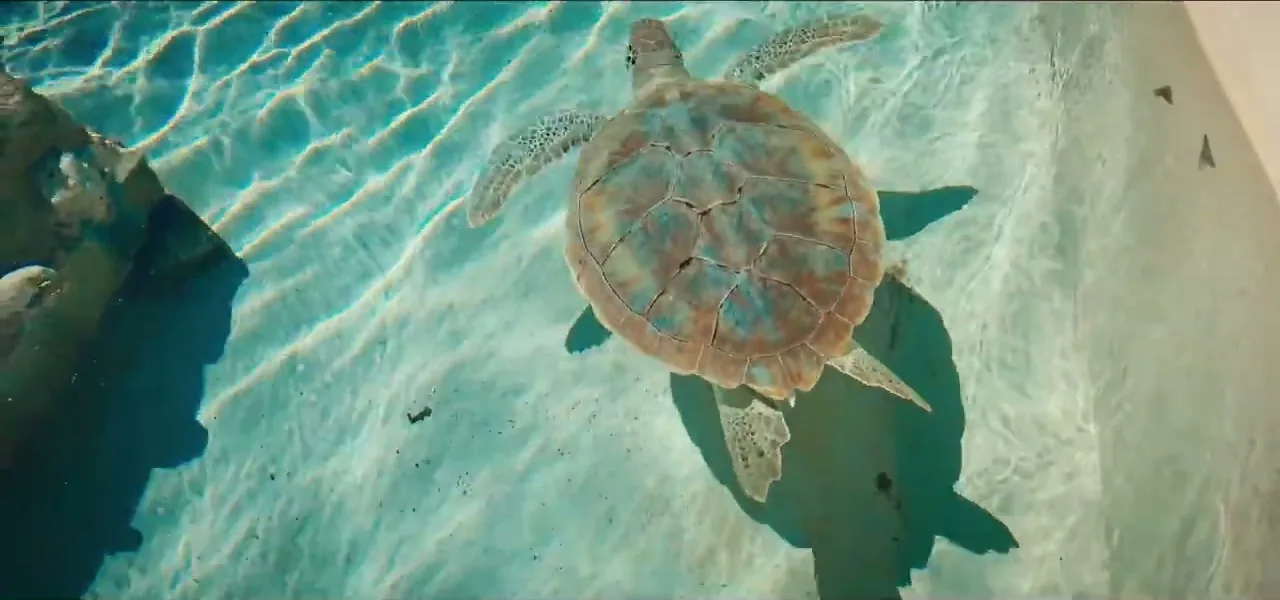
To honour the island's original name, we visited the Cayman Turtle Centre — the oldest green sea turtle conservation facility in the world, which has spent over fifty years breeding turtles and releasing them back into the wild (and which also looks after sharks and rare birds I got to play with). It's a genuinely good-news story in a world short on them.
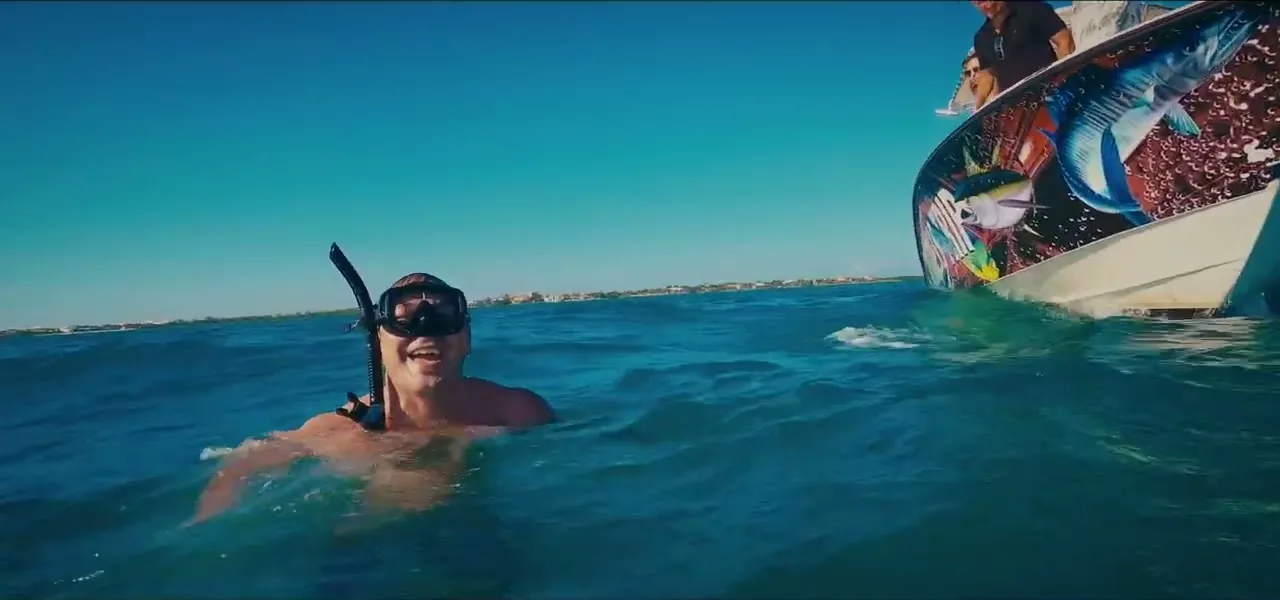
Then came one of my favourite days. Kenny and Jade sent us to a marina to find a boat with the perfect name: "Business Trip" — because, its owners explained, if you're going fishing, you don't have to tell your wife you're going fishing; you tell her it's a business trip. The two brothers who run it, Dylan and Douglas, promised us three experiences: hunt for lobster, dive for conch, and play with stingrays. We caught a single lobster ("Jimmy," the only catch of the day), then dived down for conch — the big sea snail that's a Caribbean staple.
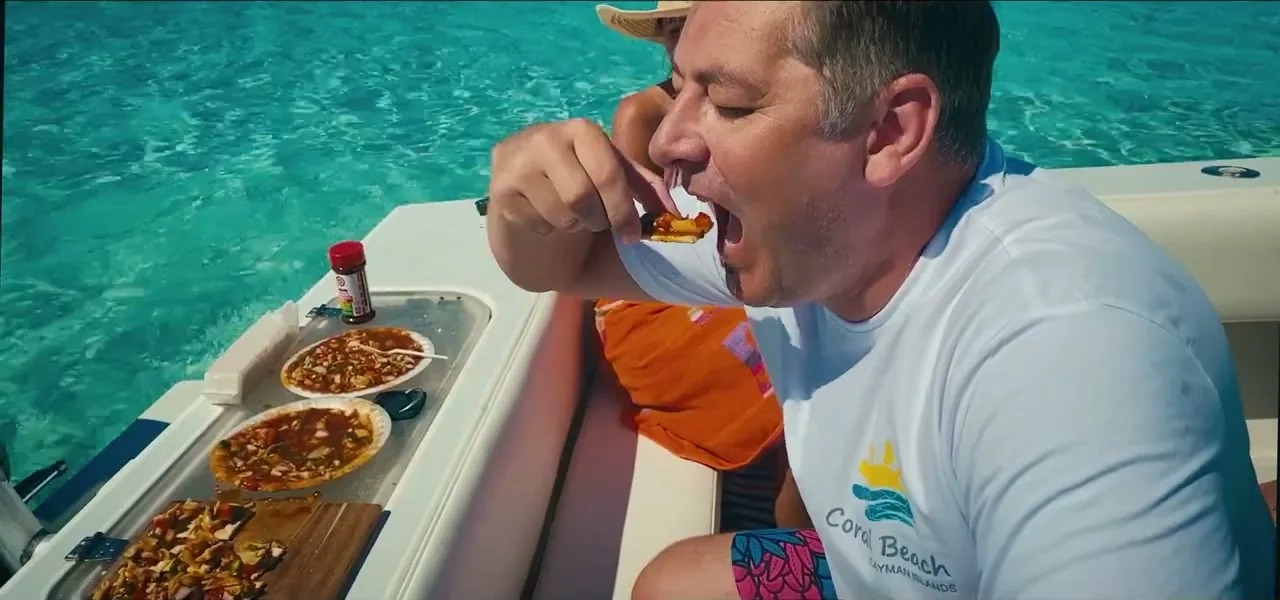
Two hours later, the brothers turned our catch into lunch right there on the boat — cracking the conch out of its shell, slicing it thin, and marinating it with peppers, onions, seasoned salt, ketchup and a Jamaican hot sauce called Pickapeppa. It was chewy, salty from the sea, and absolutely delicious. "This would be the perfect breakfast," I told them. "I want five or six of these every morning."
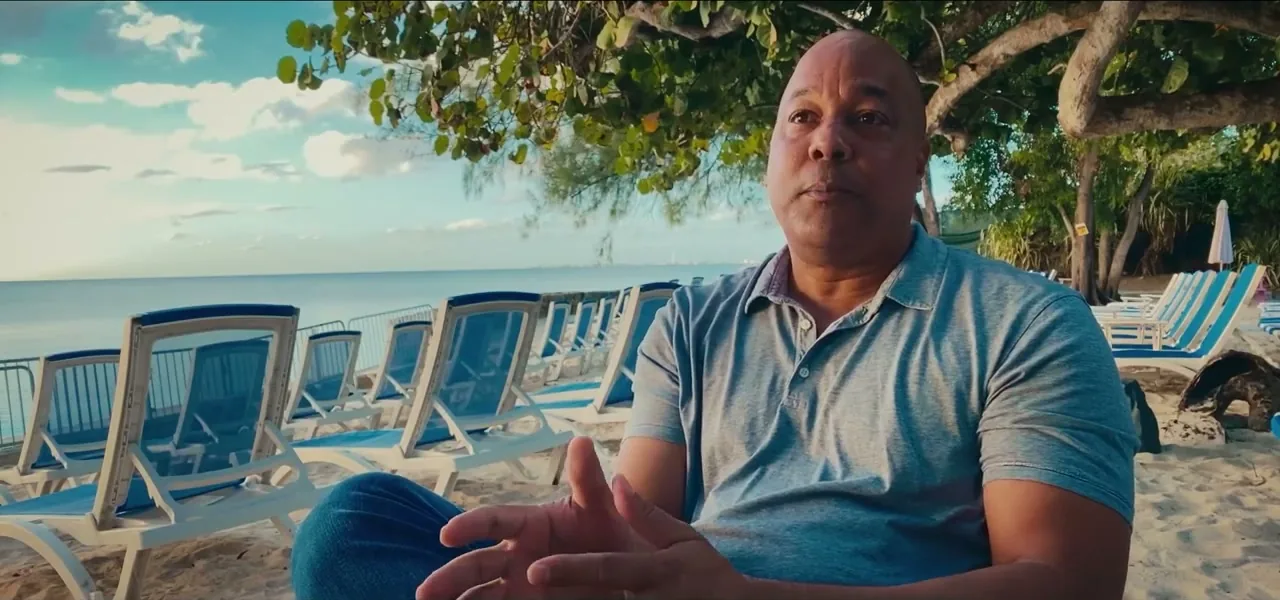
We offer more than services and finance and tourism. We offer quality people.
Stingray City: The One I'd Waited For
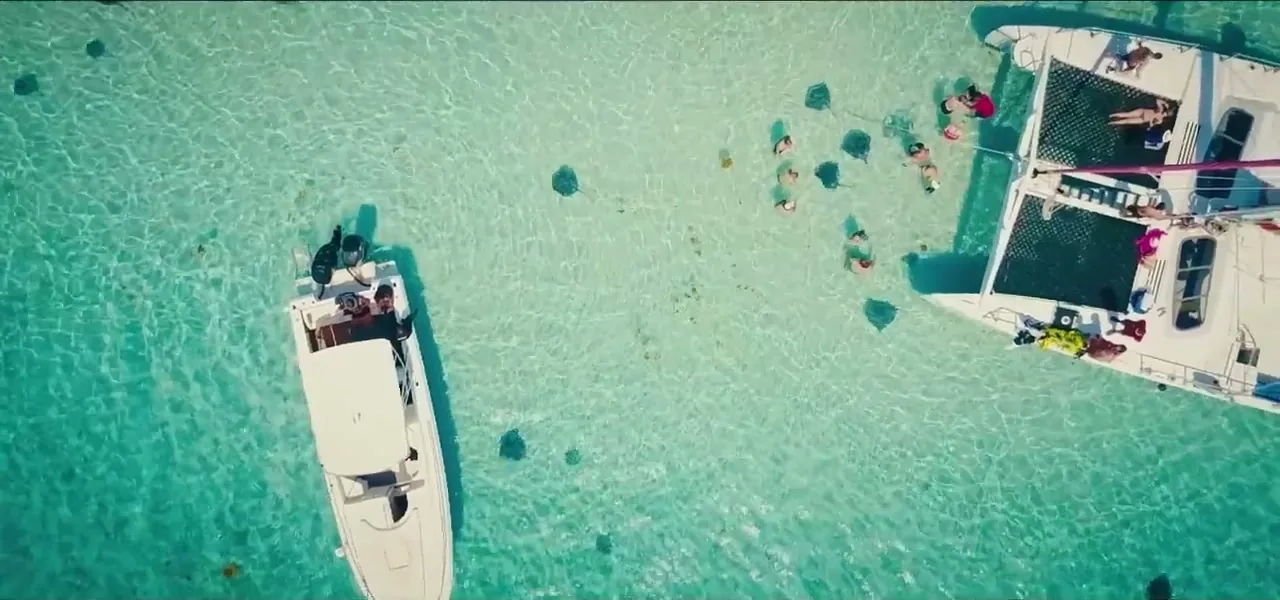
And then, the reason I'd come. Stingray City is one of the most magical places I've ever been — a shallow sandbar in the middle of the ocean, in Grand Cayman's North Sound, where the boat stops, you step out into water just up to your knees, and you wait. Within moments, they come: not one or two, but thirty or forty wild southern stingrays, gliding right up to you, rubbing against your legs, playing.
There's a lovely origin to the whole thing. For generations, fishermen would stop at this sheltered sandbar on their way home to clean their catch, tossing the scraps overboard — and the local stingrays learned, over decades, that this particular patch of ocean meant an easy meal. Generation after generation of rays kept coming back, growing tamer with every visit, until the sandbar became the single most famous spot in the Cayman Islands. Today the rays are cherished and protected, and the relationship runs both ways: they get fed, and we get one of the most magical wildlife encounters anywhere on Earth.
They are far gentler than their reputation. Feeding one, you tuck your thumbs in and hold the food to its mouth, and it vacuums it up. Touching them is extraordinary — like, as I said at the time, wearing "cashmere velvet." Local legend has it that if you kiss a stingray, you get seven years of good luck — which, I pointed out, means I'll have to come back every seven years. I'll happily accept those terms. Getting a "massage" from a wild stingray in the open ocean was, hands down, one of the coolest things I've ever done, and a memory I'll keep forever.
Rum Point, Pirates and a Fish That Fights
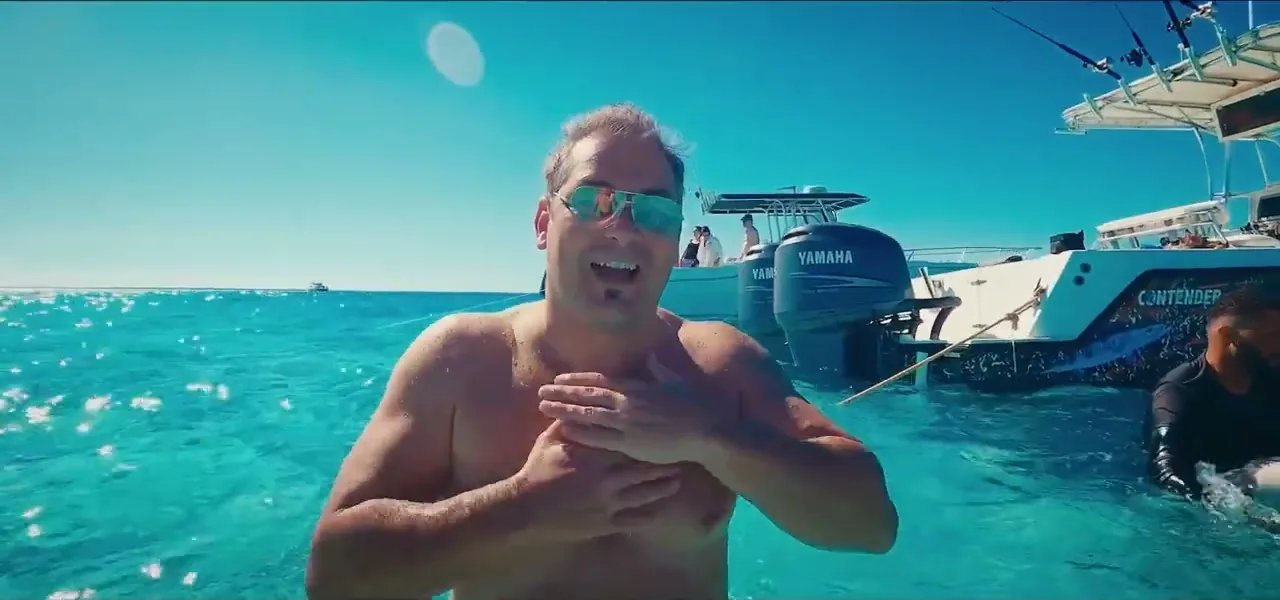
Just when I thought the day was over, Dylan and Douglas said, "Whoa — this is only half of it." They took us north to Rum Point, the northernmost tip of Grand Cayman, which comes with a proper pirate legend. Back in the 1700s and 1800s, real pirates worked these waters, and the story goes that they'd stash their loot on the Caymans — not just treasure, but rum. According to the tale, pirates once buried barrels of stolen rum in the sand here; decades later, the shifting tide washed the sand away and revealed them. People never found the treasure, the joke goes — but they found tons and tons of rum. Hence, Rum Point.
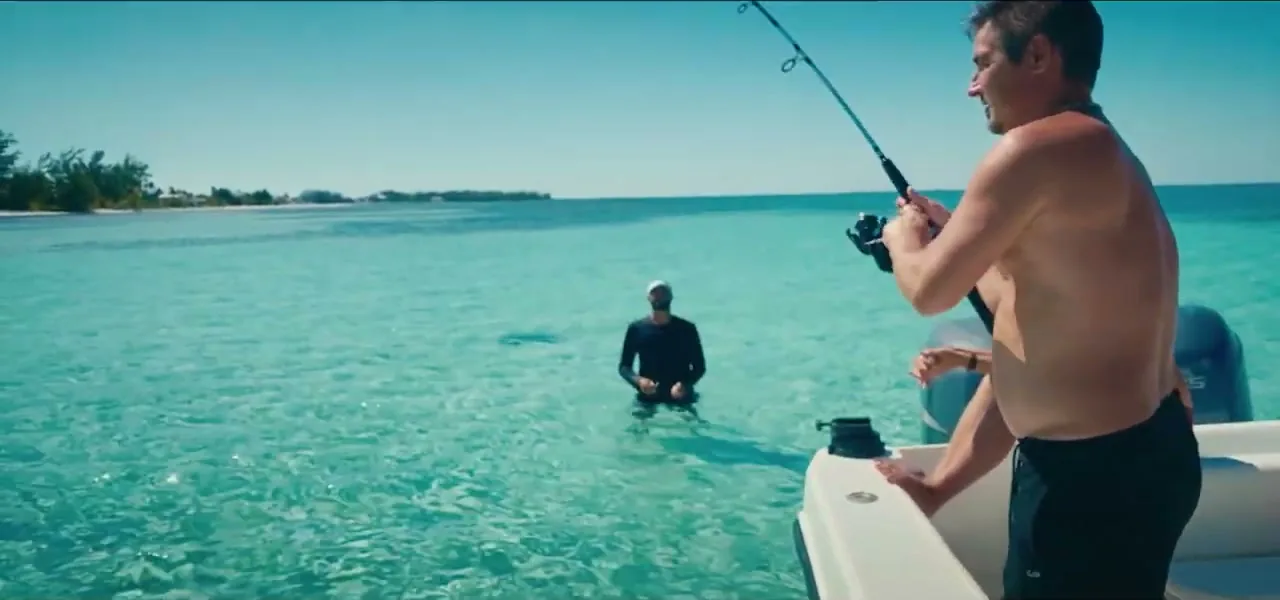
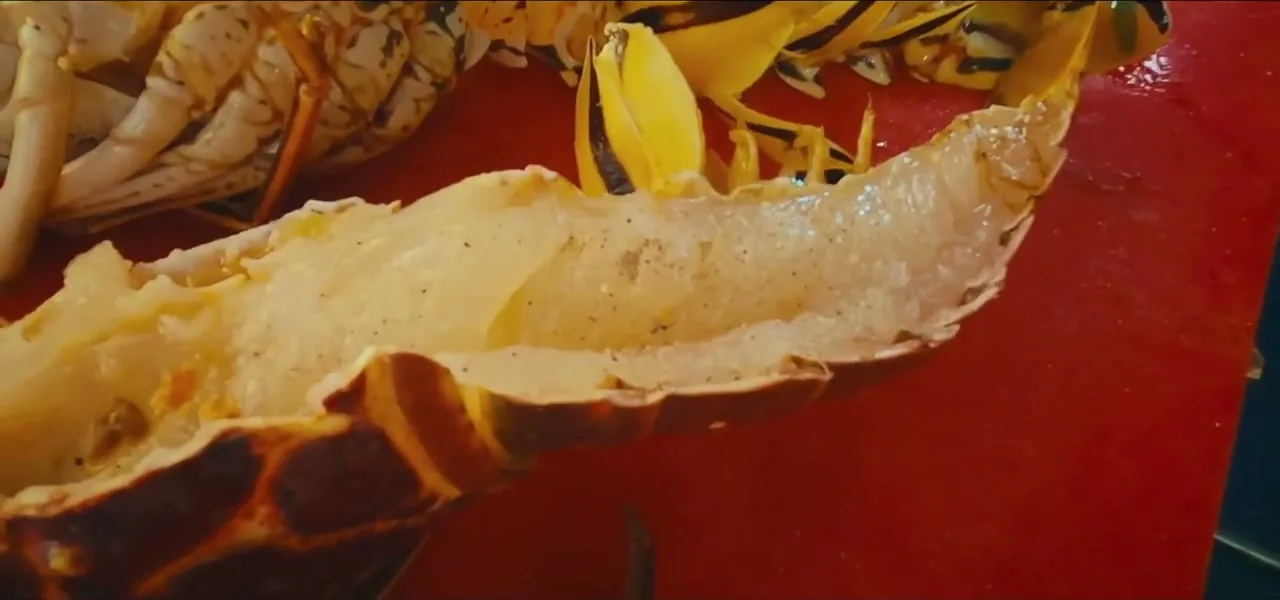
But the brothers hadn't brought us for rum — they'd brought us to fish for bonefish, a world-renowned sport fish famous for how hard it fights. I'd never even heard of it, but Raz was instantly "in," and before long I'd landed my very first bonefish, a beautiful, silvery thing that battled the whole way. Like all bonefish, it was caught, admired, and released — the anglers here don't keep them. We couldn't take that one home, but back in George Town we still had Jimmy the lobster, which chef Craig at Kenny's place split, seasoned and grilled with sweet chili, garlic and lime. On Cayman, lobster and conch aren't special-occasion food — they're just lunch.
One of the World's Great Dive Destinations
If Stingray City is the Cayman experience everyone knows, the islands hold a bigger secret just under the surface: this is one of the finest scuba diving destinations on Earth. The water is astonishingly clear — visibility often well over 30 metres — and the reefs drop away into dramatic underwater cliffs known as walls. Little Cayman's Bloody Bay Wall, a sheer coral face that plunges thousands of feet into the deep, is spoken of by divers in the same breath as the world's very best sites.
Grand Cayman adds its own draw: the USS Kittiwake, a retired US Navy ship deliberately sunk off Seven Mile Beach to create an artificial reef, now a spectacular wreck dive teeming with fish. Add turtles, reef sharks, rays and healthy coral, and you have a place where a beginner can snorkel with stingrays in the morning and an expert can drift a vertical wall in the afternoon. In fact, the Cayman Islands are widely credited as one of the birthplaces of modern recreational diving, and the whole territory has protected its reefs for decades with strict marine parks. So much of what makes the Caymans special isn't on the land at all — it's in the extraordinary blue that surrounds it.
The Dart Finally Hits Japan
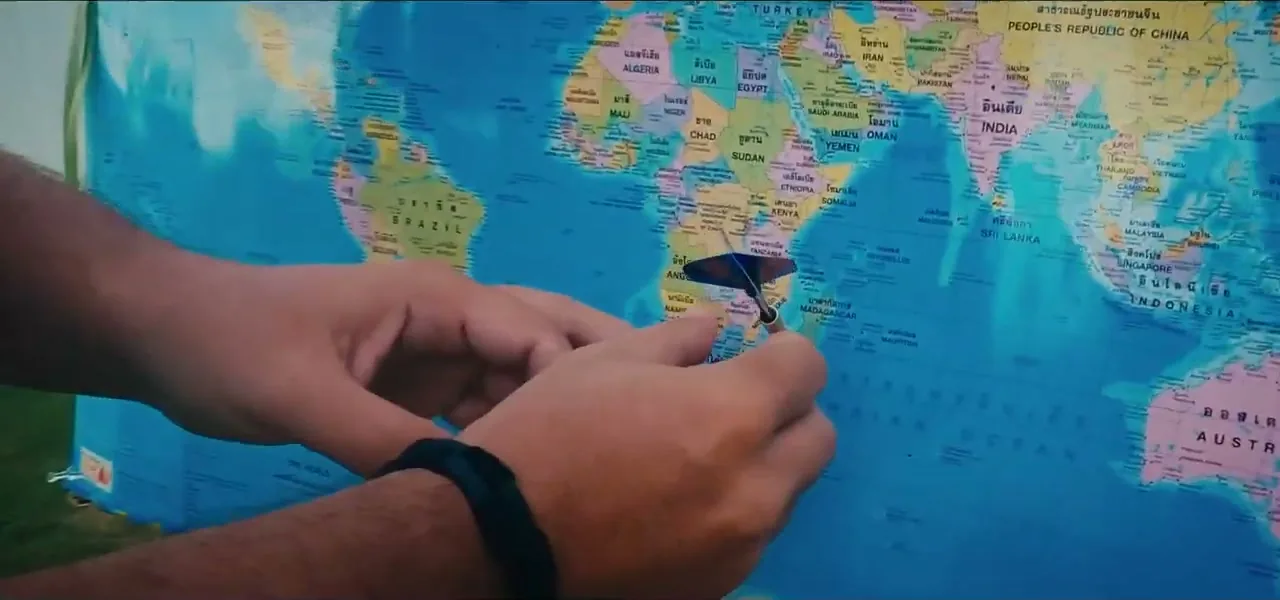
Which brought me to the dart. I threw it, blindfolded, at our beachfront house, feeling — as I always do here — energized and full of good vibes. The first dart hit Madagascar (been there); the second, Ecuador and the Galápagos (been there too). On the third throw, I peeled off the blindfold and shouted. The dart had landed on a tiny speck — the Bonin and Marcus Islands — which belong to Japan. Japan! A country that had been on my list for as long as I can remember, and which somehow the dart had dodged for three whole seasons. I could hardly believe it. Sometimes the map makes you wait for the thing you want most — and there's a strange poetry in the fact that it finally handed me Japan here, on the friendliest island I'd found in seventy countries, as if the world were rewarding a good week with a great one. I had to do three whole seasons of Travel by Dart to reach a country I'd dreamed of my entire life. That's the beauty and the cruelty of surrendering your route to a dart: you can't chase what you want. You can only keep throwing, keep going, and trust that it will come.
By the numbers: Cayman Islands by the numbers
- Islands
- 3 (Grand Cayman, Cayman Brac, Little Cayman)
- Population
- ~70,000, from 130+ nationalities
- Growth
- ~10,000 in the 1970s to ~70,000 today
- Direct taxes
- None
- Stingray City rays
- 30–40 wild southern stingrays
- Caimans on the islands
- Zero (but thousands of chickens)
When to Go, and How to Get Around
For a place this far-flung, the Caymans are wonderfully easy to visit. Everyone speaks English, the Cayman Islands dollar is stable (it's pegged to the US dollar, and greenbacks are accepted everywhere), and it's just an hour's flight from Miami, with direct connections from across North America and the UK. One quirk to remember: as a British territory, you drive on the left.
Timing is the main thing to plan around. The dry season, roughly November to April, brings the calm, sunny, postcard-perfect weather — it's peak season, and the diving and beaches are at their best. Hurricane season runs June to November, cheaper and quieter but with real weather risk; Grand Cayman still remembers what Ivan did in 2004. Wherever you base yourself — most visitors stay on Seven Mile Beach — build your trip around the water: a day at Stingray City, a dive or snorkel on the reef, a lazy afternoon at Rum Point, and as much fresh conch and lobster as you can eat. Just be ready for the prices; remember, the tax the islanders don't pay on their income, visitors quietly pay at the till.
The Country That Offers Quality People
I've travelled to more than seventy countries in my life, and I'll say this about the Cayman Islands without hesitation: its people are among the most chill, respectful and genuinely kind I've ever met. You feel it the moment you step outside — everyone smiling, every server warm, the whole island running on a low, easy, friendly hum. Combine that with near-nonexistent crime, a high standard of living and water this blue, and you understand why so many people who come here find a reason to stay.
That warmth has deep roots. For all the modern finance, Caymanians hold tight to a seafaring heritage — this was once a nation of turtle fishermen and sailors, and that history still surfaces in the island's festivals, from the pirate-themed Pirates Week each November to the Batabano carnival in spring. The blend of Jamaican, British and Latin cultures gives the food, the music and the accent a flavour all their own, and the people wear their good fortune lightly.
It would have been easy to write the Caymans off as just another luxury tax haven — the postcard version, all yachts and offshore banks. But the dart's whole point is to look past that, and beneath the surface I found something the brochures undersell. This is a small, safe, welcoming country that offers, as one local beautifully put it, more than services and finance and tourism. It offers quality people. And after three seasons of throwing darts across the whole world, that turned out to be exactly the thing worth flying an hour from Miami to find — right before the map finally, finally sent me to Japan.
So if the Cayman Islands are on your list only as a stopover, a cruise-ship half-day, or a name on a bank statement, do them the justice they did me: stay a while, get out of the resort, dive the walls, feed a stingray, eat the conch straight off the boat, and talk to the people. You'll leave understanding what I did — that the real treasure these islands are hiding was never buried rum or offshore gold. It was the place itself, and the extraordinary human beings who call it home.
Explore More Travel by Dart Journeys
- See where the dart finally sent me next: Japan.
- More of the Caribbean the dart uncovered: Bermuda and Curaçao.
- Another island nation with a big-hearted small population: Antigua and Barbuda.
- The dart's wildest ocean encounter of all: swimming the seventh continent in Antarctica.
Suggested Sources & Further Reading
To go deeper into the Cayman Islands, these are some of the best authoritative resources:
- Visit Cayman Islands — the islands' official tourism authority.
- Cayman Islands Department of Environment — the science behind Stingray City and the reefs.
- Cayman Turtle Centre — the conservation and research facility.
- Encyclopædia Britannica — Cayman Islands — an authoritative overview.
All facts verified September 2026.
Cayman Islands: traveler questions
Where are the Cayman Islands, and how many are there?+
The Cayman Islands are a British Overseas Territory in the Caribbean, about an hour's flight south of Miami. There are three islands: Grand Cayman (the largest, home to the capital George Town and most of the population), Cayman Brac, and Little Cayman. The whole territory has only around 70,000 people, drawn from more than 130 nationalities.
Why are the Cayman Islands tax-free?+
The Cayman Islands levy no direct taxes — no income, corporate or capital gains tax — which is why the territory is a major offshore financial centre. A romantic local legend credits King George III with granting a tax exemption after islanders rescued survivors of an 18th-century shipwreck, but historians agree that story is folklore. In reality, the government funds itself through import duties and fees, which is why almost everything on the islands is expensive.
Are there really no caimans in the Cayman Islands?+
Correct — despite the name, no caimans have been seen there in over a century. Columbus originally named the islands 'Las Tortugas' (the turtles) in 1503; they were later renamed for the caimans (a type of crocodilian) spotted by explorers in the 1500s. Today the islands are famous instead for their thousands of wild chickens, which multiplied after Hurricane Ivan in 2004.
What is Stingray City?+
Stingray City is a shallow sandbar in the North Sound of Grand Cayman where you can stand in waist-deep water while dozens of wild southern stingrays swim right up to you, gentle and curious. It's one of the Caribbean's most famous experiences — and, locals say, kissing a stingray brings seven years of good luck.
What food is the Cayman Islands known for?+
Everyday Caymanian food leans on the sea: fresh lobster and conch (often eaten marinated or fried), reef fish, and Jamaican-influenced flavours like Pickapeppa sauce. Because of the mixed heritage — Jamaican, Latin American and British — and 130-plus nationalities, the island's food and culture are a genuine melting pot.