Season 1 · Episode 7
Costa Rica
Pura Vida, the world's happiest country: a blue river that shouldn't be blue, a waterfall you swim to, and a road where cars roll uphill. From a dart that landed on the country I was already in.
On this page ▾
By Sorin Mihailovici · Travel by Dart · Last updated July 2026 · ~16 min read
Here's a first for the show: I threw my dart at the world map and it landed on the exact country I was already standing in. I'd come to Costa Rica between episodes — waiting on paperwork for my next destination — and set up camp in Guanacaste to chase three of the strangest things you can do here: swim against a violent current to a hidden waterfall, get a full-body massage in melted chocolate, and visit a stretch of road where cars roll uphill. Then, at the end, I threw the dart to pick where I'd go next… and it stuck on Costa Rica itself. The country wanted me to stay a little longer, so I did.
What follows isn't a trip diary — it's the fact-checked guide I wish I'd had: why this tiny nation is a genuine world leader, the real science behind its most famous sights (two of which are widely misexplained), and how the dart eventually sent me on to the Galápagos. My previous throw had brought me from Portugal; this one nearly refused to let me leave.
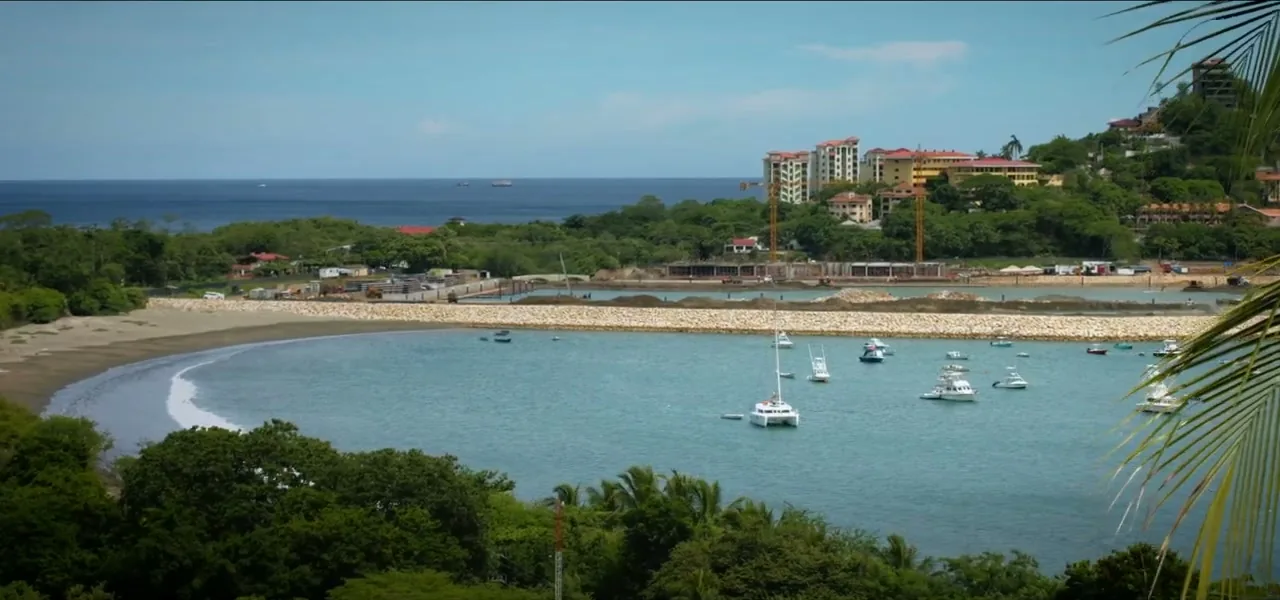
Quick facts: Costa Rica at a glance
- Official name
- Republic of Costa Rica
- Capital
- San José
- Population
- ~5.3 million (Ticos)
- Military
- None — abolished in 1948
- Electricity
- ~98% renewable
- Protected land
- Over 25% of the country
- Share of world species
- ~5–6% (on 0.03% of Earth's land)
- Motto / mindset
- Pura Vida
- Best time to visit
- Dry season, Dec–Apr
Pura Vida: The World's Happiest Country?
You hear it a dozen times a day: Pura Vida — "pure life." It's hello, goodbye, thank you, no worries, and a whole philosophy in two words. And Costa Rica has earned the optimism. This is a country that, in 1948, abolished its army — after a brief civil war, President José Figueres literally handed the keys of the main military barracks to a school, and the 1949 constitution made it permanent. The money that would have gone to soldiers went instead to health, education and the environment, and the results speak for themselves.
Today Costa Rica's roughly 5.3 million people — who call themselves Ticos — enjoy universal healthcare, high literacy, and a stability rare in the region. The country repeatedly tops the Happy Planet Index, which measures how well nations deliver long, happy lives without wrecking the planet. And its Nicoya Peninsula is one of the world's five Blue Zones, where people routinely live past 90. I felt it the moment I stepped outside each morning: the heat, the birdsong, a kind of built-in calm.
When you get out of the house, you get that instant relaxation — the climate, the heat, the moisture that embraces your body, and you instantly feel better. Costa Rica is easily in my top five countries, mostly for the quality of the people.
By the numbers: Costa Rica
- Army abolished
- 1948
- Renewable electricity
- ~98%
- Protected territory
- 25%+
- Share of world's species
- ~5–6%
- Population
- ~5.3 million
- Blue Zones (of 5 worldwide)
- 1 — the Nicoya Peninsula
- Happy Planet Index
- #1, multiple years
A Biodiversity Superpower
If Costa Rica were a stock, biologists would have bought it long ago. On just 0.03% of the planet's land surface, it holds an estimated 5–6% of all known species on Earth — a density almost nowhere else can match. Sloths, four species of monkey, toucans, scarlet macaws, the resplendent quetzal, morpho butterflies, and more frogs and orchids than you can count. The secret is its microclimates: in a country you can drive across in a day, you pass from dry tropical forest to cloud forest to rainforest to volcano.
Crucially, Costa Rica protects it. More than a quarter of the national territory is conserved in national parks and reserves — a conservation record that turned "ecotourism" from a buzzword into a national industry.
Biodiversity, by the numbers
Río Celeste: The Real Reason It's So Blue
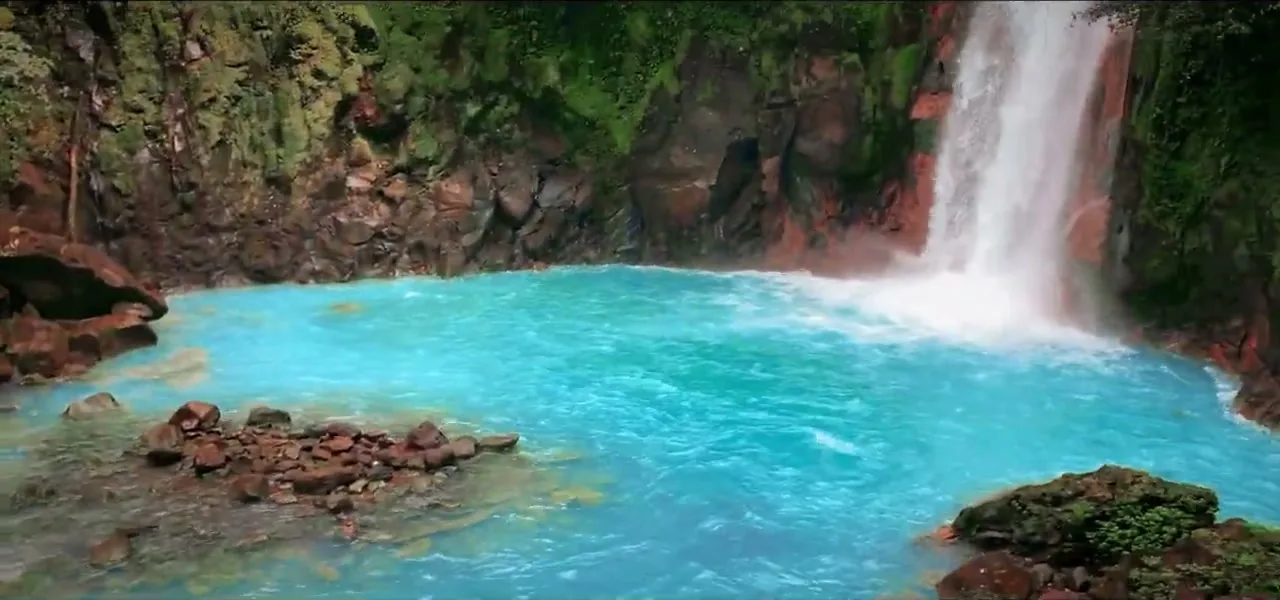
In Tenorio Volcano National Park, a river runs an unreal, milky sky-blue — Río Celeste, "sky-blue river." It's one of the most photographed places in the country, and almost everyone, including my guide, explains the colour the same way: minerals from the volcano react chemically with the water. It's a great story. It's also wrong.
A 2013 scientific study settled it. The blue isn't a chemical dye at all — it's an optical illusion of a different kind. The water is full of suspended aluminosilicate mineral particles about 566 nanometres across, and those particles scatter sunlight (a physical effect called Mie scattering), reflecting blue light back to your eye. The magic is in where it happens: two colourless streams meet, the change in acidity makes the particles clump to just the right size, and only below that junction does the water "turn" blue. Nothing is actually dyeing the river — your eyes are being beautifully, physically fooled.
La Leona: The Waterfall You Have to Swim To
Costa Rica hides one of the hardest-to-reach waterfalls on Earth, and naturally I had to try it. La Leona sits at the end of a canyon on the Río Blanco, fed from the Rincón de la Vieja volcano, and there's no trail to the base — you get there by swimming against a strong current and hauling yourself along fixed ropes through the rapids. It was recently "discovered" by the tourism world; a few years ago almost no one knew it existed.
The water was freezing, my phone and drone were a constant worry, and the closer I got to the falls, the harder the current pushed back. But that's exactly the kind of discomfort I go looking for. I've seen a lot of waterfalls; this was in a category of its own.
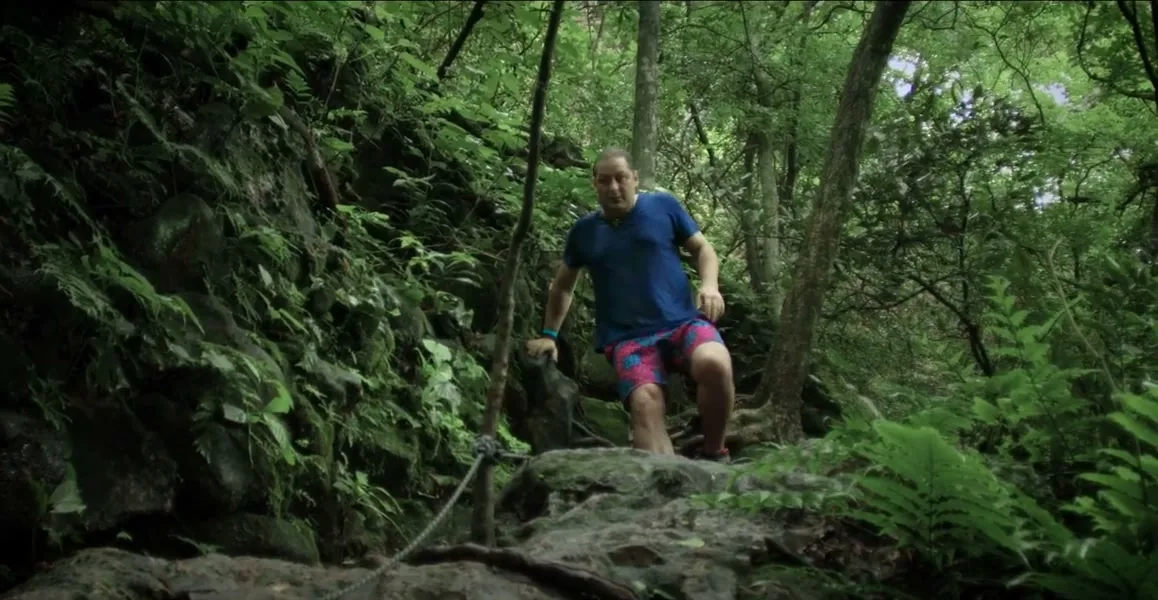
I've been to more than 70 countries and seen a lot of waterfalls all over the world — but La Leona is one of a kind. I wanted an adventure. Adventure I'm getting.
Crocodiles on the Tempisque River
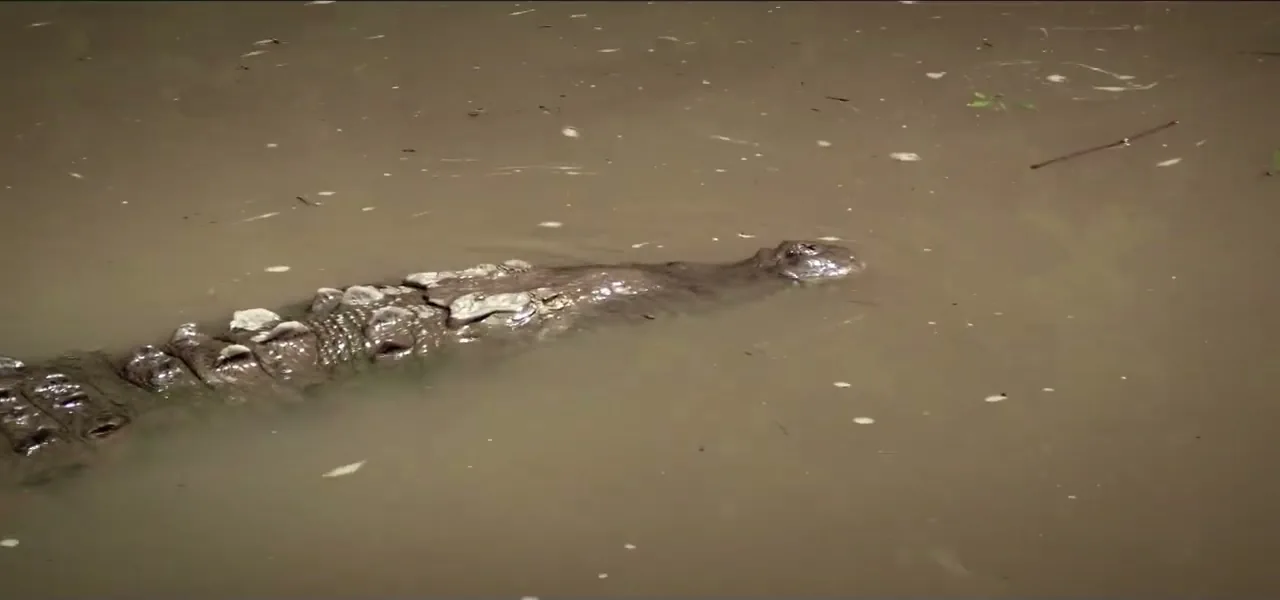
For wildlife of the toothier kind, I took a small boat down the Tempisque River, in the wetlands of the northwest. The star here is the American crocodile — and they don't keep their distance. Two of them slid right up to our little boat and circled us, and at one point one lunged toward a crew member's hand as he filmed too close to the water. Nobody was hurt, but the lesson landed: hands away from the water.
Zip-Lining: Costa Rica's Gift to Adventure Travel
That heart-in-your-mouth thing you've done on holiday — flying through a forest on a steel cable — is, in a real sense, a Costa Rican invention. In 1979, an American biologist named Donald Perry rigged cables through the canopy of a Costa Rican rainforest simply to study the treetops. Others saw the thrill in it, and by the 1990s Monteverde had the world's first commercial canopy zip-line tours. Today they're a global industry — but they were born here, and Costa Rica remains the best place to do it, with lines strung across beaches, volcanoes and cloud forests.
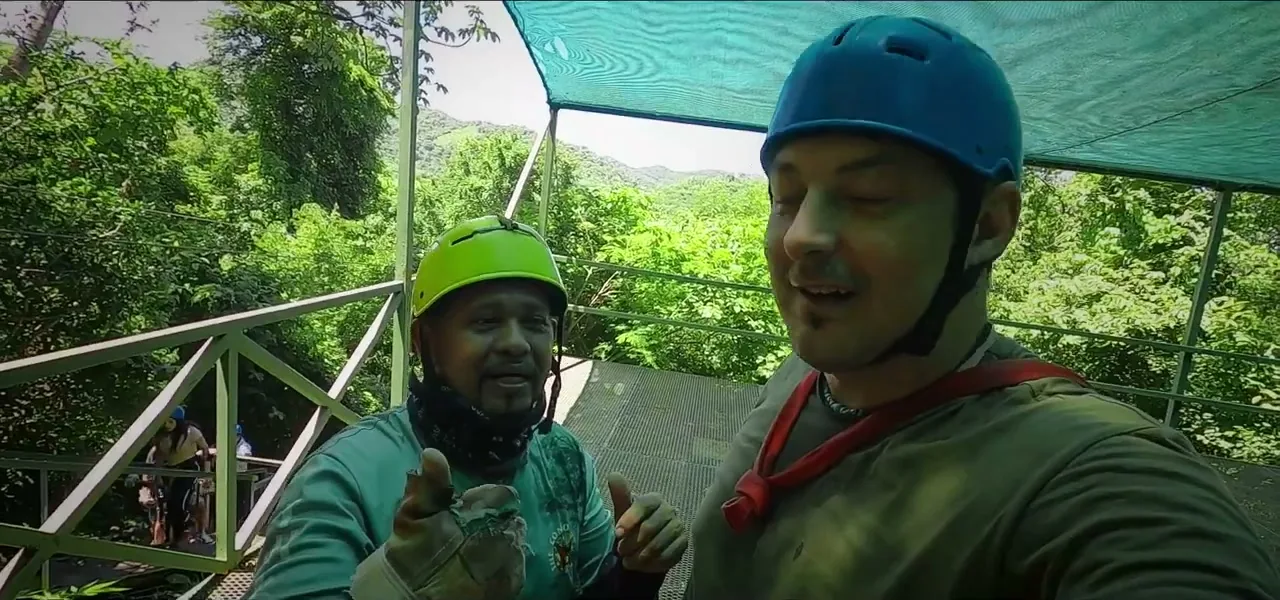
I did the full thing, including the "Superman" — strapped in face-down and flying head-first across the canopy, sometimes 200 metres above the ground. It was the best of all the adventures.
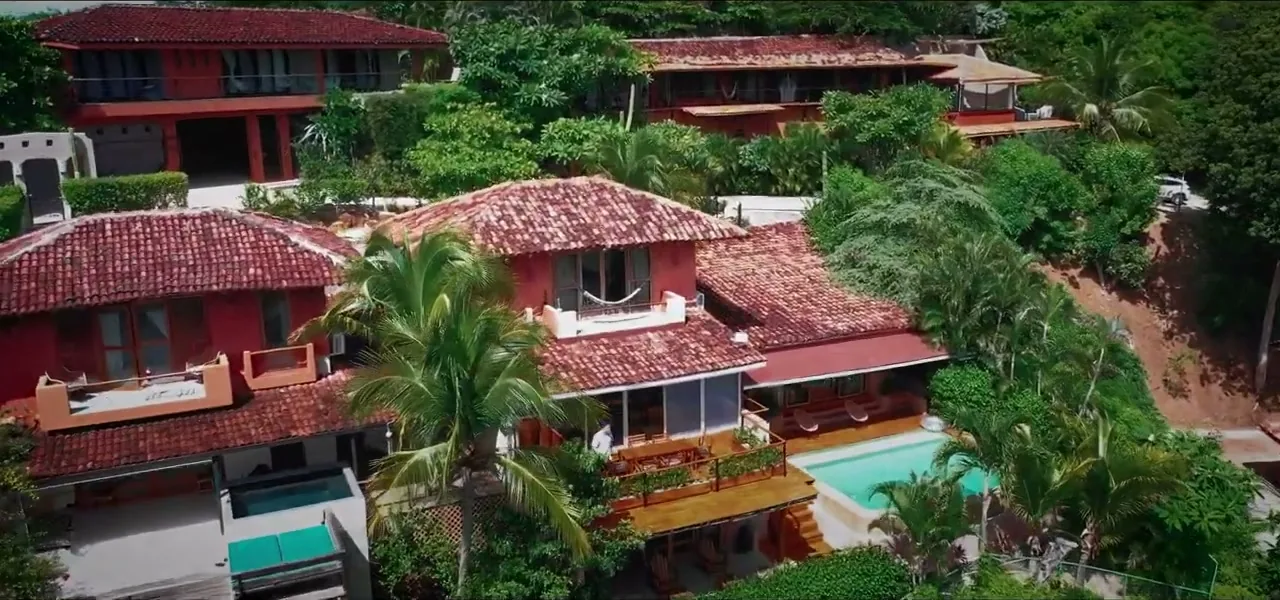
Not everything here is adrenaline. One of the country's signature indulgences is a full-body chocolate massage — real cacao and cocoa, smoothed over you at a jungle spa in the hills. Costa Rica grows fine cacao, and for a day afterward I could still smell the chocolate on my skin. If I could start every morning that way, I would.
The "Magnetic Hill" Mystery — Solved
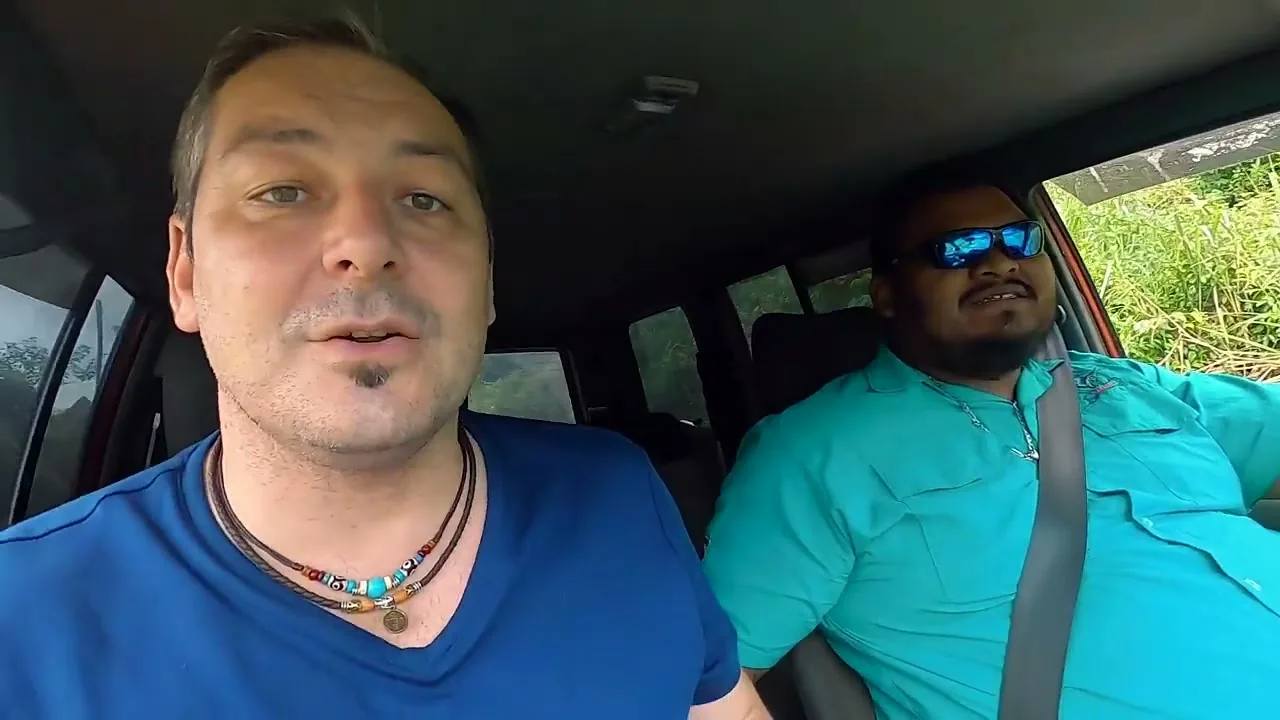
The strangest thing I did in Costa Rica got its own short film, embedded below. Two hours from my base, on a quiet road at kilometre 19 between the towns of Bijagua and Upala, is a spot the locals call the magnetic hill. Put your car in neutral, take your feet off the pedals, and it rolls — uphill — gathering speed as it climbs. My driver Mauricio and I tried it, and it absolutely works: the car moved on its own, faster and faster, apparently defying gravity.
▶ Costa Rica — The Magnetic Hill
The mystery road where cars appear to roll uphill
But here's the truth, because a definitive guide owes you the truth: there is no magnetic force. This is a gravity hill — one of dozens around the world — and it's a pure optical illusion. The surrounding terrain hides the real horizon, so a gentle downhill slope reads to your brain as uphill. The car isn't climbing at all; it's rolling downhill, exactly as gravity demands. Your eyes, starved of reliable reference points, simply fill in the wrong answer. Knowing that doesn't make it any less fun to watch — it just moves the wonder from "magic" to "the marvellous glitchiness of human perception."
Things That Surprised Me About Costa Rica
- Costa Rica has had no army since 1948 — and put the savings into schools and forests.
- About 98% of its electricity is renewable, and it's run 100% renewable for long stretches.
- It holds roughly 5–6% of the world's species on 0.03% of its land.
- Over a quarter of the country is protected.
- It reversed its own deforestation, doubling forest cover back to over half the country.
- The Nicoya Peninsula is one of only five Blue Zones on Earth.
- Río Celeste's blue is light scattering, not a chemical reaction.
- The "magnetic hill" is a gravity-hill optical illusion — no magnetism involved.
- Zip-line canopy tours were invented here in the late 20th century.
- You can get a full-body massage in melted chocolate.
- Costa Ricans call themselves Ticos, and greet life with Pura Vida.
- The country regularly ranks #1 on the Happy Planet Index.
- La Leona waterfall can only be reached by swimming against the current.
- The Tempisque and Tárcoles rivers teem with wild American crocodiles.
- My dart, thrown here, landed on Costa Rica itself before sending me to the Galápagos.
The Country That Wouldn't Let Me Leave
Costa Rica is the rare place that lives up to its own marketing. Pura Vida isn't just a slogan on a T-shirt; it's a genuinely different way of moving through the day — slower, warmer, more alive. And behind the postcard sits a serious country: no army, a power grid that runs on rivers and volcanoes, a forest it fought to win back, and a people who decided long ago that peace and nature were worth more than tanks.
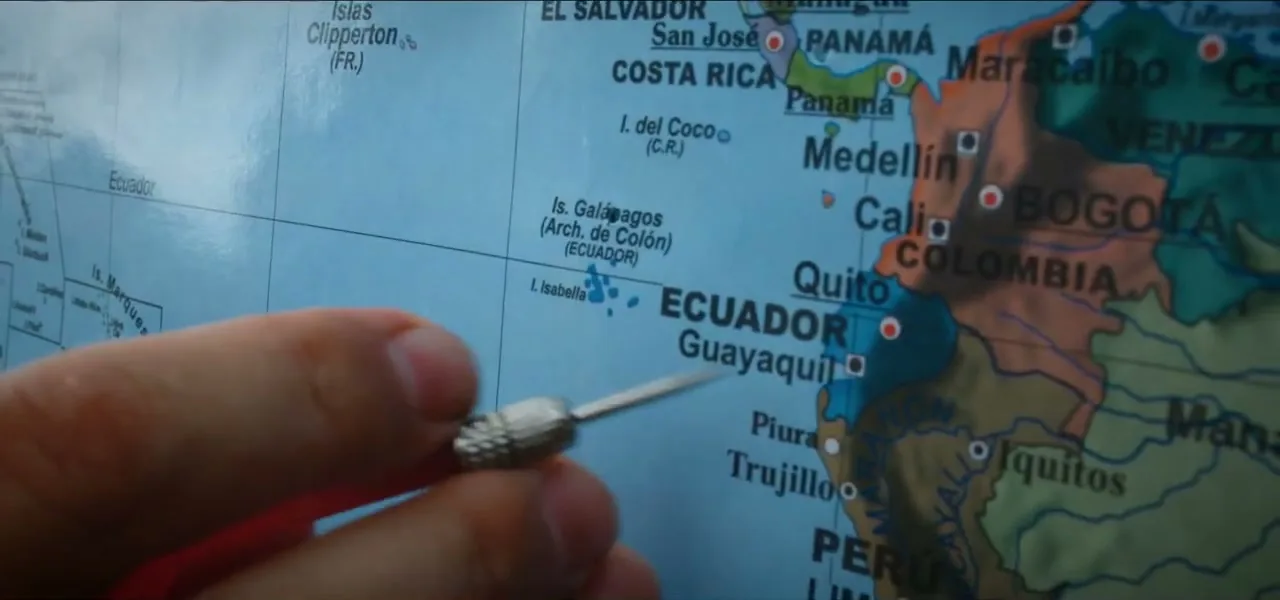
Even the dart agreed. When I finally threw it to choose my next destination, it hit Costa Rica first — as if to say not yet — before bouncing to the Galápagos, and on to Ecuador. But of all the countries the map has sent me to, this is one of the very few I'd have happily stayed in. Pura vida, indeed.
Explore More Travel by Dart Journeys
- Go back one dart to my Portugal episode — where this throw came from.
- See where the dart sent me next: the Galápagos and Ecuador.
- More wild nature and water in the Amazon Jungle.
- Another Latin-American surprise: my Uruguay episode.
Suggested Sources & Further Reading
To go deeper into Costa Rica, these are some of the best authoritative resources:
- Visit Costa Rica — the official tourism board of Costa Rica, with parks, regions and trip planning.
- PLOS ONE — the science of Río Celeste's blue — the peer-reviewed study explaining the colour.
- Gravity hill (Wikipedia) — how "magnetic hill" illusions actually work.
- Happy Planet Index — the ranking Costa Rica keeps topping.
- Encyclopædia Britannica — Costa Rica — an authoritative overview of the country.
All facts verified July 2026.
Costa Rica: traveler questions
Why does Costa Rica have no army?+
Costa Rica abolished its military in 1948, after a short civil war, and enshrined the abolition in its 1949 constitution. President José Figueres redirected the former defense budget into health, education and environmental protection — a decision widely credited for the country's stability, high literacy, and conservation record.
Why is Río Celeste so blue?+
Not because of a chemical reaction, as is often claimed. A 2013 scientific study found the sky-blue colour is an optical effect: suspended aluminosilicate mineral particles (about 566 nanometres across) scatter sunlight — a physical phenomenon called Mie scattering. The colour appears only where two colourless streams meet and the particles clump together.
What is the 'magnetic hill' in Costa Rica?+
It's a spot at kilometre 19 in Guanacaste, between Bijagua and Upala, where a car left in neutral appears to roll uphill. Despite the local 'magnetic' legend, it's a gravity hill — an optical illusion. The surrounding landscape hides the true horizon, so a downhill slope looks like an uphill one; the car is actually rolling downhill, as gravity always dictates.
Is Costa Rica really one of the happiest countries?+
Yes — Costa Rica has repeatedly topped the Happy Planet Index, which measures long, happy lives achieved sustainably. Its Nicoya Peninsula is also one of the world's five 'Blue Zones,' regions where people live exceptionally long. Locals sum up the outlook in two words: Pura Vida.
How biodiverse is Costa Rica?+
Extraordinarily. Costa Rica covers about 0.03% of Earth's land surface but is home to roughly 5–6% of the world's known species, thanks to its many microclimates. More than a quarter of the country is protected in national parks and reserves.
Where was Costa Rica's episode filmed, and what can you do there?+
Mostly in Guanacaste, in the northwest. Highlights include Río Celeste in Tenorio Volcano National Park, the swim-to-access La Leona waterfall, crocodile boat safaris on the Tempisque River, jungle zip-lining and ATV tours, a cacao (chocolate) spa treatment, and the 'magnetic hill' near Bijagua.