Season 6 · Episode 7
The Private Jet Villa
A retired Boeing 737, trucked up a cliff and turned into the wildest villa in Bali.
On this page ▾
By Sorin Mihailovici · Travel by Dart · Last updated November 2026 · ~15 min read
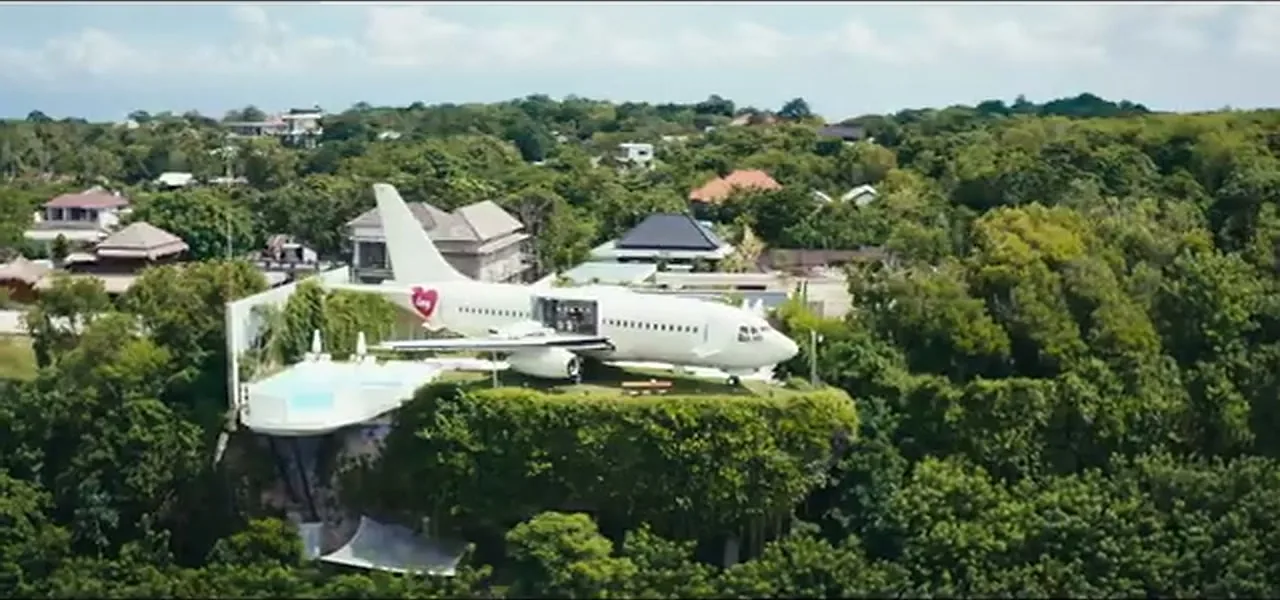
Every so often the dart stops testing me and simply rewards me. After weeks crossing Indonesia — the temples and volcanoes of Java, the elephants of Bali's interior — my final stop before fate moved me to a new country was a place so strange I had to see it twice to believe it was real: a passenger jet, a genuine Boeing 737, sitting on the lip of a cliff on the southern tip of Bali, turned into a villa you can actually sleep in. I spent three unforgettable days there, and it might have been the best weekend I've ever had.
Quick facts: The Private Jet Villa at a glance
- What it is
- A Boeing 737 rebuilt into a villa
- Where
- Uluwatu, Bali — above Nyang Nyang Beach
- Height
- ~150 feet above the Indian Ocean
- The aircraft
- Ex-Mandala Airlines, retired 2014
- Rooms
- Two — incl. a cockpit suite
- A night
- ~$3,600 when I stayed (rates vary)
- This trip
- My last stop in Indonesia
The Dart's Reward: a Plane on a Cliff
The way I travel, I don't choose my destinations — I throw a dart at the world map, blindfolded, and go wherever it lands. This whole leg began when the point came down on Indonesia, and after immersing myself in the culture across the country, I ended up in Bali for the finale. My timing was lucky: my trip overlapped with my friend Josh organising a major but intentionally exclusive event here, and the venue he'd chosen was this villa. Before we filled the plane with people for the party, though, I wanted to simply take it in — because a building like this deserves to be understood before it's celebrated.
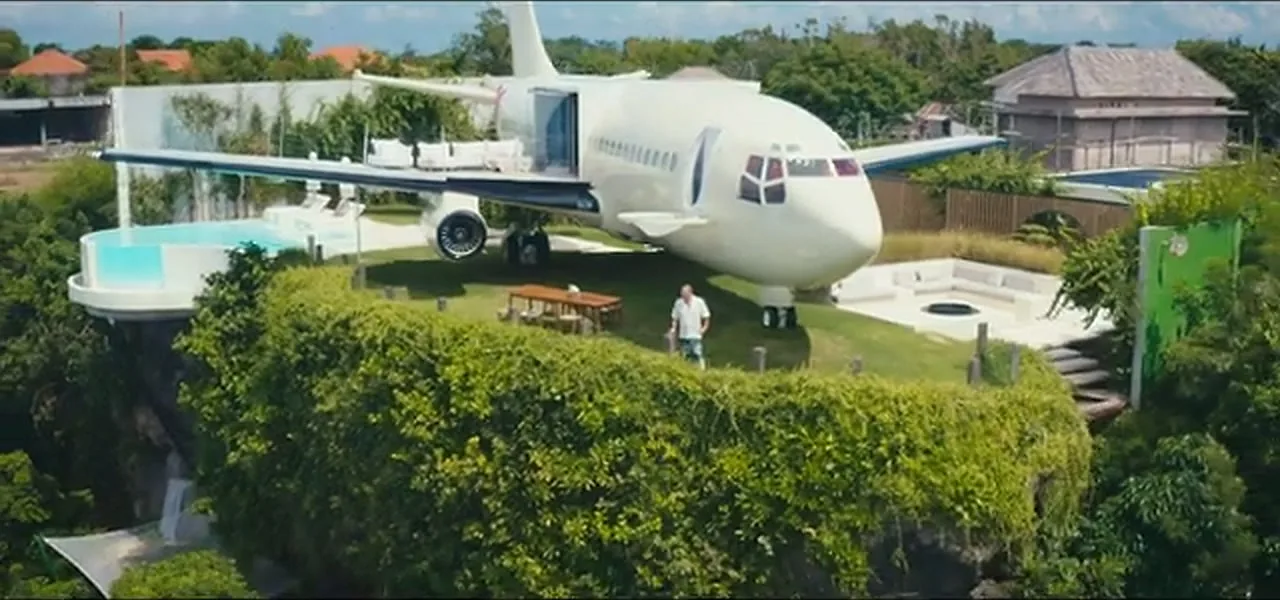
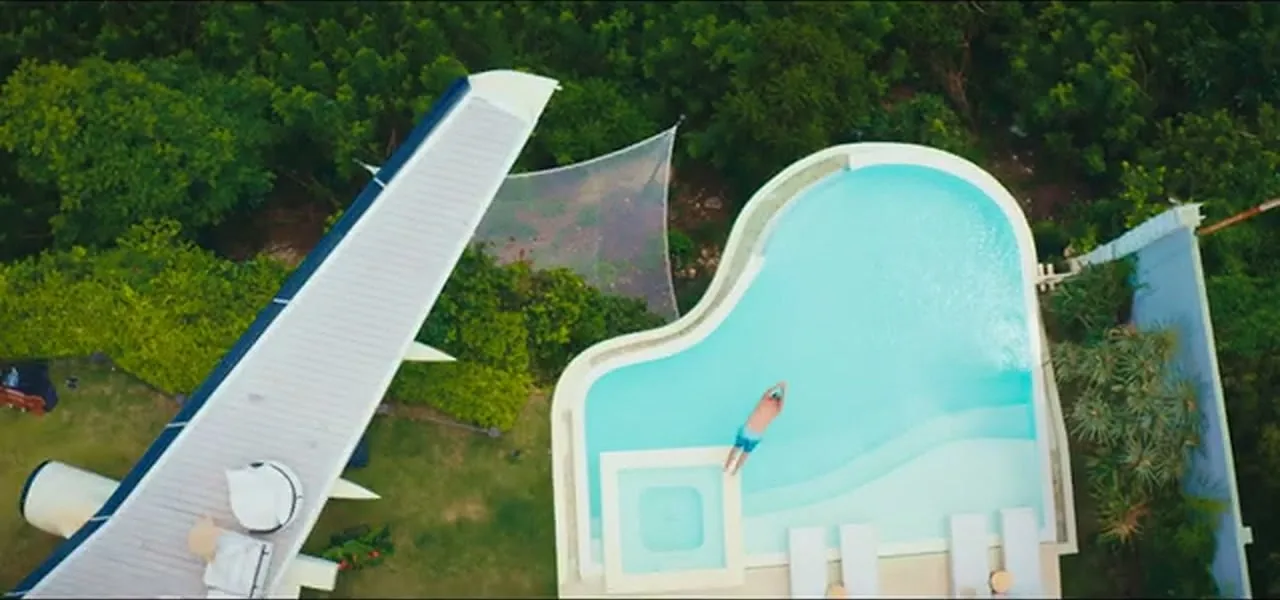
This is Uluwatu, on the Bukit Peninsula at the far southern tip of Bali — a region of dramatic limestone cliffs, world-famous surf breaks and clifftop temples, and in recent years a magnet for a particular kind of luxury travel and digital-nomad living. The villa sits high above Nyang Nyang Beach, one of the quieter, harder-to-reach stretches of coast down here, which is exactly why a plane could be parked on a cliff without a crowd forming beneath it. From the air, the whole thing looks impossible: a white airliner nosed out over the void, a swimming pool glinting along one wing.
Uluwatu: Bali's Cliff-Edge South
It's worth understanding where this is, because the setting is half the magic. Uluwatu sits on the Bukit Peninsula, the arid limestone tongue of land hanging off the southern end of Bali, connected to the rest of the island by a narrow neck. It feels like a different Bali from the rice terraces and temples of the interior I'd seen in Java and around Ubud: here it's all towering sea cliffs, turquoise water and some of the most revered surf breaks on the planet. The peninsula is crowned by Pura Luhur Uluwatu, an ancient Balinese Hindu sea temple perched on a cliff edge, famous for its sunset Kecak fire-and-chant dance and its resident troupe of cheeky monkeys.
In the last decade this corner has become a magnet for a very particular crowd — surfers, luxury travellers and the roaming digital-nomad entrepreneurs who've turned Bali into a global base. Clifftop beach clubs, designer villas and wellness retreats have multiplied along the Bukit, and a converted airliner on a private cliff is, in a strange way, the logical endpoint of all that ambition. Nyang Nyang, the beach far below the villa, remains one of the harder-to-reach and emptier stretches of this coast — a long walk or ride down from the clifftop — which is exactly what makes it the right place to hide a plane.
How a Retired Boeing Ended Up Here
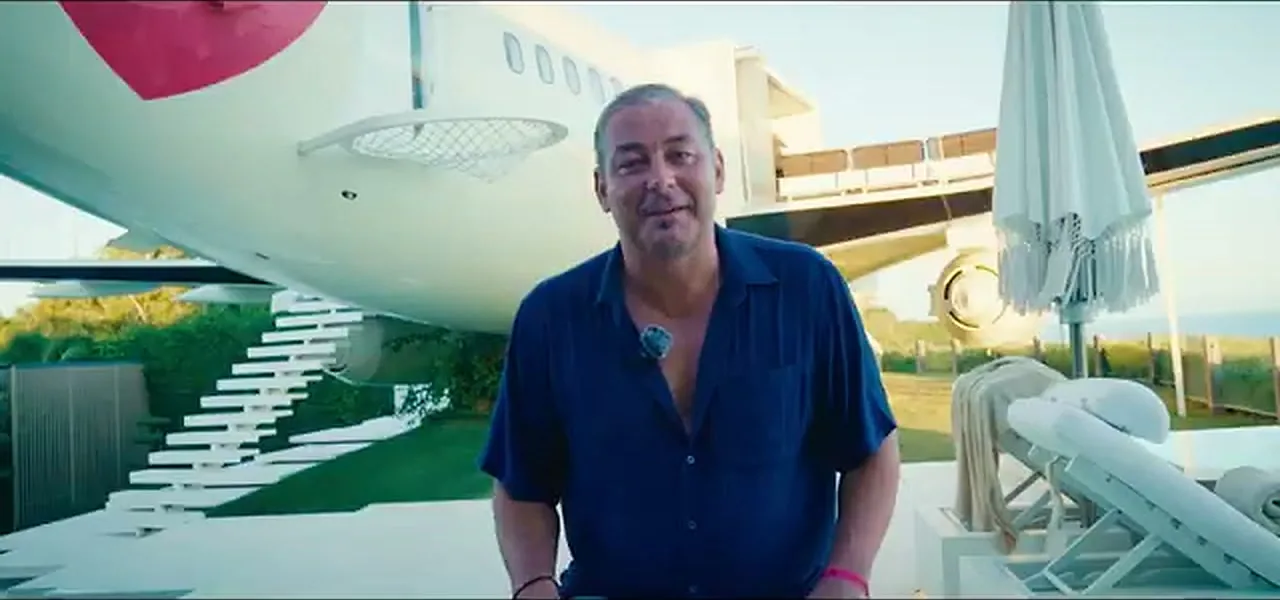
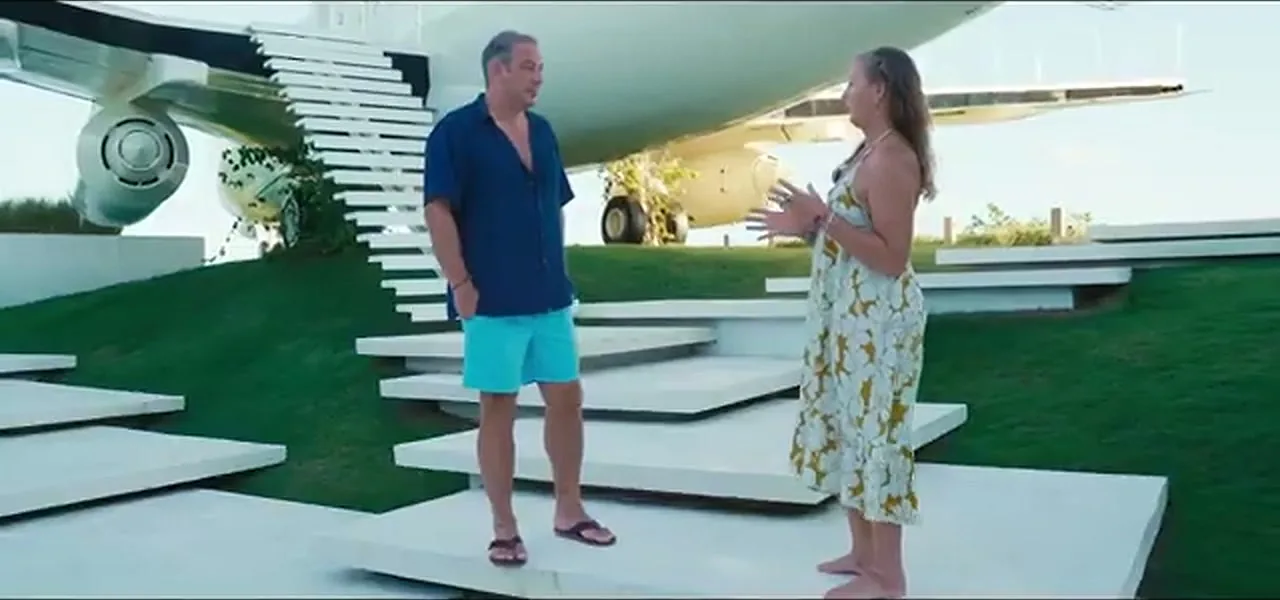
A villa this unlikely needs a guide to explain it, and ours was a sharp local host named Kit Kat, who told me the plane's story. The villa is the dream child of Felix Demin, a 35-year-old entrepreneur — a talented guy I unfortunately missed, because he'd had to leave the country on business. But the backstory she told is the best part of the whole place.
The aircraft is a real Boeing 737 that once flew for Mandala Airlines, an Indonesian carrier, and finished its flying life when the airline wound down around 2014. The retired jet ended up near Pantai Melasti, about a twenty-minute drive from here, where a group of Australian buyers purchased it intending to turn it into a restaurant. That plan never got off the ground. Felix then bought the plane from them — and this is where it gets wild. He had it cut up into smaller sections with the help of an engineer, loaded the pieces onto the backs of several trucks, and moved it up to this cliff in parts over a few days.
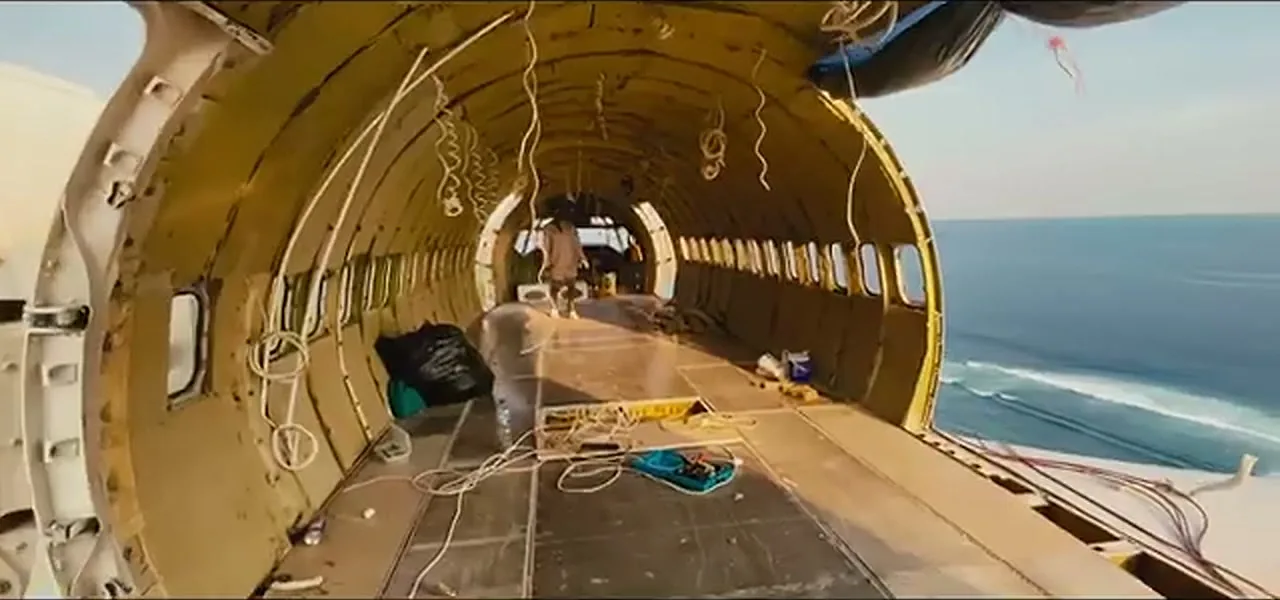
If you've ever been to Bali, you know why this was, in Kit Kat's words, a logistical nightmare: the roads are narrow, the villages tight, and the sky is a cat's-cradle of low-hanging power cables. Threading a dismantled airliner through all of that, uphill, is the kind of idea most people would abandon on the first phone call. Once it was reassembled on the cliff, Felix worked with a designer and an architect to gut the interior entirely — stripping out every original fitting and rethinking the space from scratch — while keeping the plane's original outer shell intact. What you stay in today is an airliner on the outside and a tailored luxury villa within.
Felix bought the plane, cut it up into smaller pieces with an engineer, and over a few days, in parts, drove it up here — which is quite a logistical nightmare when you've seen the power cables and the narrow roads in Bali.
There's something I find genuinely moving about that story, underneath the spectacle. A passenger jet is, by the end of its life, a liability — tonnes of aluminium that stopped earning the day it stopped flying, usually destined for a scrapyard in a desert somewhere. Turning one into a place people dream about sleeping in is adaptive reuse at its most audacious. Aircraft have been reborn as homes, restaurants and cafés before, in Costa Rica, in the Netherlands and elsewhere — but almost never on a cliff like this, and almost never rebuilt to this standard. The villa calls itself the world's first plane turned into a private villa, and whether or not you want to argue the exact wording, standing next to it you don't really feel like arguing. You feel like someone took a very big, very stubborn idea and simply refused to let it be impossible.
Inside: Cockpit Suites and a See-Through Pool
Step through the door and the first space is a living room — somewhere to have dinner, tea or coffee, with custom meals provided — flanked by the two bedrooms, one to each side. The real showpiece outside is the wing: walk out onto it and the view opens left, right and straight ahead over the ocean, 150 feet below. It comfortably holds fifteen or twenty people, which, as I'd soon find out, matters a great deal.

The two bedrooms play on the aircraft theme without tipping into kitsch. The first is the cockpit room, built into the nose, with a frontal view straight out over the cliff — romantic to the point of comedy, strewn with little hearts, with a tub positioned for the view and a daybed "basket" outside to catch the scenery. Its party trick is the windows: these are smart windows that change from clear to opaque with a remote control, and can even be opened to let the breeze in. Privacy, view and ventilation, all on a dial.
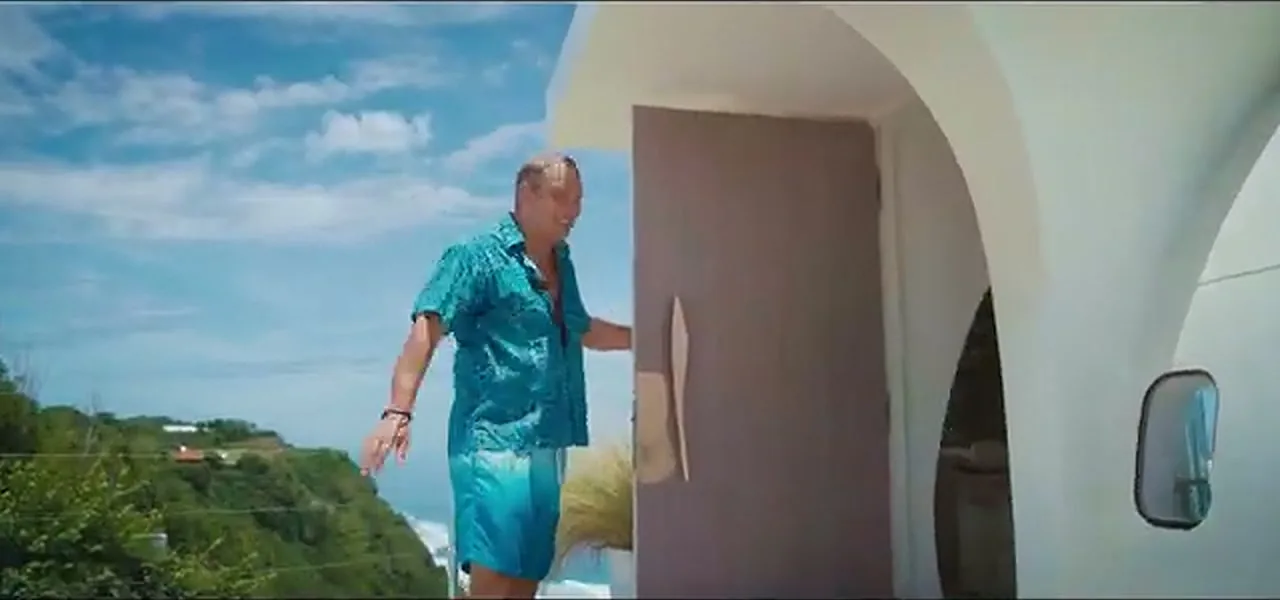

The second bedroom, in the back, is just as beautiful and a little calmer — no hearts, so you can actually sleep — with an even larger, more oval tub and its own outdoor basket seat for sunbathing above the pool. And that pool is the detail people remember: a swimming pool running along the wing, with acrylic glass panels you can see straight through, so you can look out over the cliff even while you're underwater.

What Three Days in a Plane Is Actually Like
The novelty could have worn off in an hour. It didn't. There's a particular rhythm to living inside this thing that I didn't expect. You wake up in a curved white cabin with the ocean filling every window, dial the smart glass from opaque to clear, and the whole Indian Ocean simply arrives in the room. Mornings are coffee on the wing with nothing but air and water in front of you. The staff bring custom meals to the living room, so you can eat dinner at thirty-thousand-feet height without ever leaving the ground. And then there's the sheer, slightly absurd fact of it that never quite fades — that you are sleeping, showering and swimming inside a machine that once ferried hundreds of strangers across this archipelago, now stopped forever at the most dramatic gate it will ever pull up to.
What struck me most, though, was the quiet. For all the Instagram spectacle of the place, three days in it felt oddly peaceful. You're far enough down the Bukit that there's no traffic, no neighbours, no competing music — just wind, surf and the occasional gecko. A plane is engineered to move through the sky at speed; parking one here, utterly still, turns that whole association on its head. It becomes the least hurried place imaginable. I've stayed in a lot of hotels chasing the word "unique." This is one of the only ones that earned it without trying.
What It Costs — and Why People Pay It
So what does a night inside a Boeing on a cliff actually cost? It's no secret; look it up and you'll find it. When I was there, renting the villa — both rooms — ran around $3,600 a night. I'll be straight with you: published rates for this place swing wildly depending on the season and where you book, from well under that figure to more than double it, so if you're tempted, check the current price directly before you get your hopes up. For context, Bali's general hotel occupancy runs around 80% in high season and about 50% in low season — and a singular property like this one performs well above that average, because there is quite literally nothing else like it.
Is it "worth" it? That depends entirely on what you're buying. You're not paying for square footage or thread count; you're paying for a night somewhere there is only one of, on a planet where most luxury is a competition to be slightly nicer than the hotel next door. The dart has taught me that the most valuable travel experiences are almost never the most expensive ones — but every so often, the two line up, and this was one of those times.
By the numbers: The jet villa, by the numbers
- Height above the ocean
- ~150 feet
- Aircraft
- Boeing 737, ex-Mandala Airlines
- Retired from service
- around 2014
- A night (when I stayed)
- ~$3,600 for both rooms
- Bedrooms
- 2 — including a cockpit suite
- Party capacity
- ~60 (about 70 came)
- Bali hotel occupancy
- ~80% high season · ~50% low
The Party Like No Other
Then the calm broke. The real reason the timing was perfect is that my friend Josh had a dream as an event organiser: to stage a show in one of the most unconventional venues on earth. He landed on Bali — home, he'd say, to half the world's roving entrepreneurs and nomads — and on this plane. He asked me to help pull it together, which is how I ended up spending a few of those nights as part planning session, part celebration.
There was a nice symmetry to it, too. Josh and I had become close friends partly through this kind of thing — he'd watched me chase down Travel by Dart and The Spark Experience and take them seriously as a life, not a hobby, and he said it taught him to go all-in on something he loved. Staging a music event inside an airplane on a cliff was well outside his own comfort zone, which is exactly why he pulled me in to help think it through. Spending those few nights half-planning and half-living the thing with a good friend — scribbling run-of-show notes one minute, watching the sun melt into the ocean the next — was its own quiet highlight, under all the noise.
What Josh built was, deliberately, not a commercial event. He partnered with a record label, Sippy Time, and curated a music networking night — free, not ticketed — explicitly meant to give something back to Bali's creative community and bring people together. The villa's capacity is about 60 people; keeping it small was the point, because exclusivity, done right, means quality over crowds. In the end around 70 of Josh's friends and Bali's music scene came.
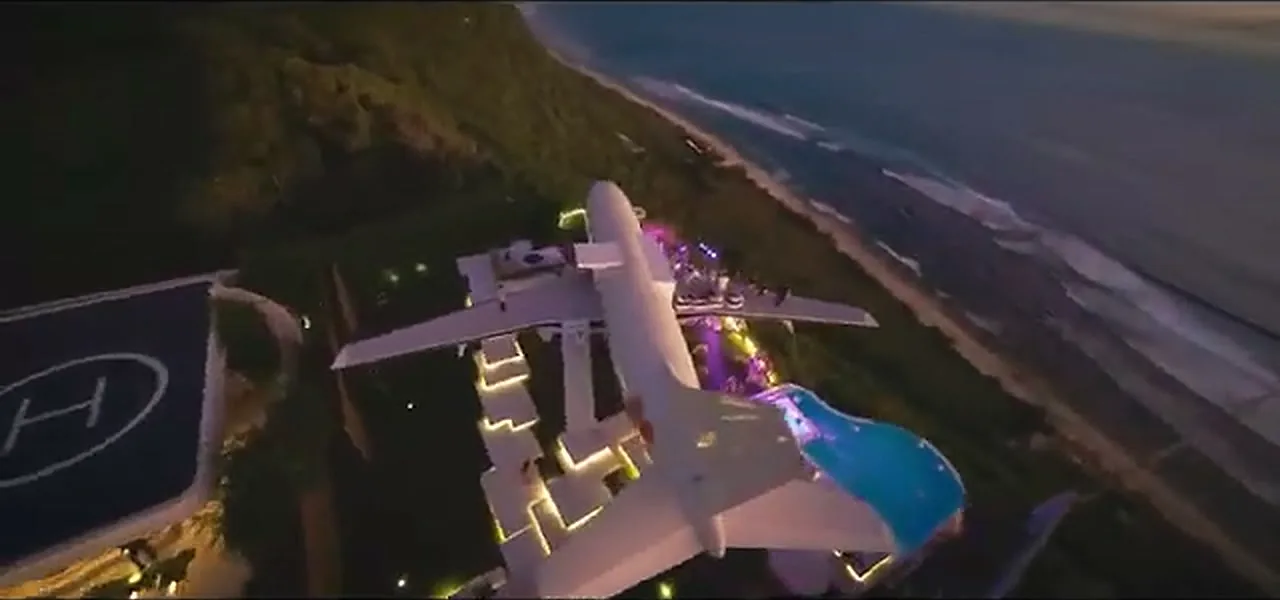
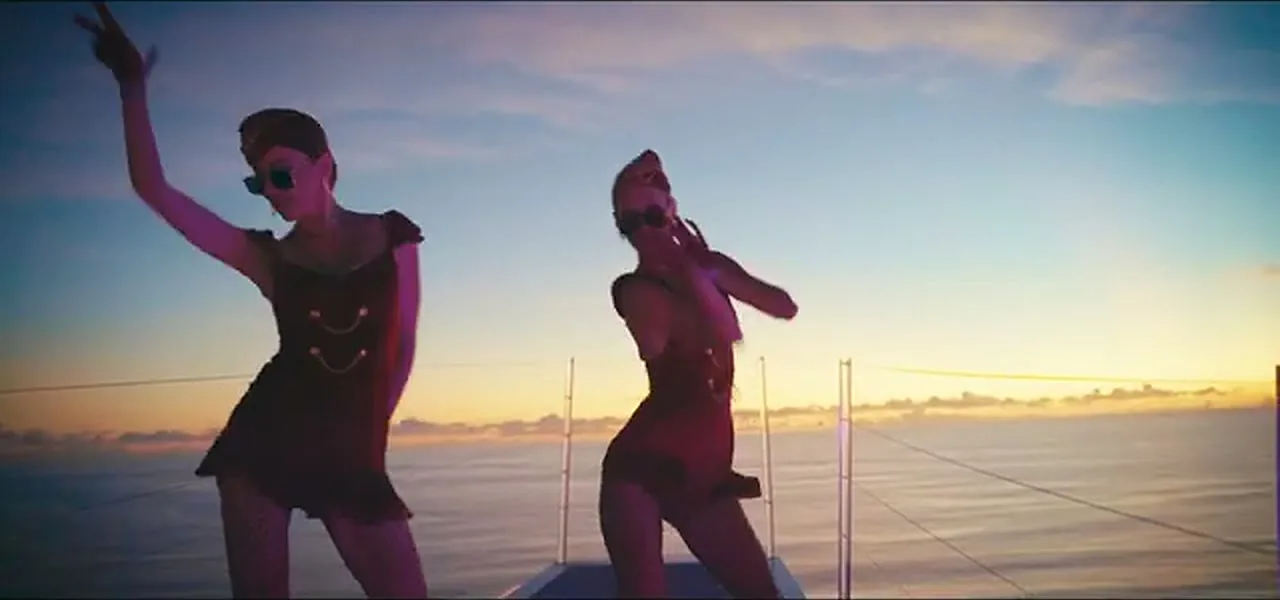
And it delivered. Josh's friends performed as the DJs — a lineup including Romy Janssen, Benja (whose summer hit Yamore I kept hearing), the twin FINE brothers and Pablo Lundall — on a stage set on the wing, with the dancers in their flight-attendant costumes and the décor kept proudly Balinese. The sunset was flawless. By two in the morning everyone was in the pool. It was, without exaggeration, one of the best nights I've had anywhere on this journey.
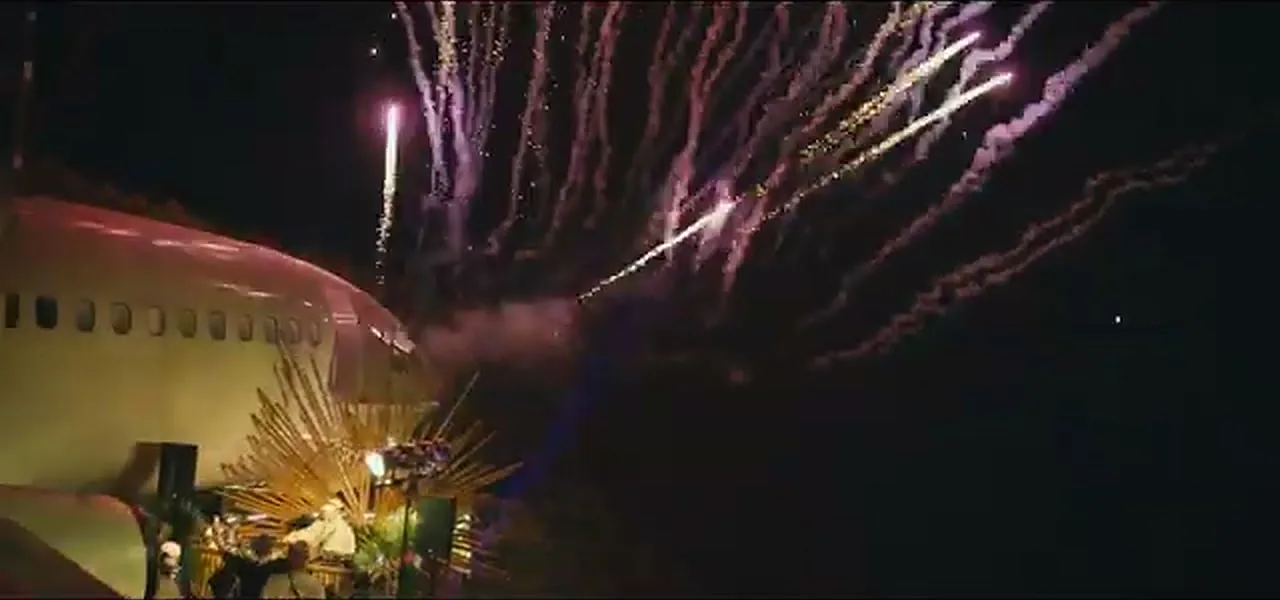
I spent three unforgettable days here, and it might just have been the best weekend I've ever had. It's one of the most stunning locations on this earth — and I don't think there's another private jet quite like it.
One More Throw Off the Cliff
In the early hours, when the music finally stopped and the pool emptied, we all went to bed, and the plane fell silent again. But the dart never really lets me rest. Fate had decided I was moving on to a new country, so I did what I always do — I stood by the plane, on the edge of that cliff, pulled on the blindfold and threw the next dart at the world map. One leg of the adventure closes exactly as the last one did: not knowing where the next one begins.
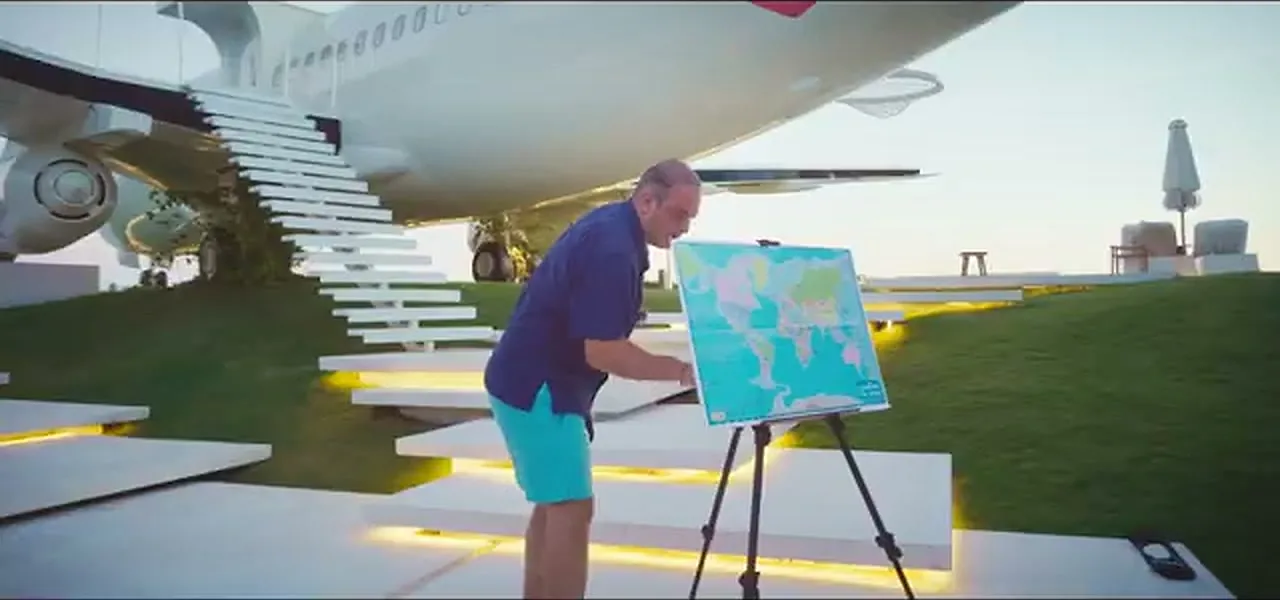
If You Want to Go: Visiting Uluwatu
You don't have to book the plane to enjoy this corner of Bali — though if you do, remember my one piece of hard advice: check the current nightly rate directly before you get attached to a number, because the published prices for this villa swing dramatically with season and platform. The villa sits on the Bukit Peninsula, roughly a 40-to-60-minute drive south of Ngurah Rai (Denpasar) airport, depending on Bali's famously unpredictable traffic. The dry season, roughly May to September, gives you the cleanest skies and the best surf and sunsets; it's also peak season, so both crowds and prices climb.
Even if you only come to Uluwatu for the day, it rewards the trip. Pair it with the clifftop Pura Luhur Uluwatu temple at sunset and its Kecak fire dance; the surf and sand at Padang Padang, Bingin or the long descent to Nyang Nyang itself; and one of the cliff-edge beach clubs for which the Bukit is now famous. Treat the plane, if you can swing it, as the once-in-a-lifetime centrepiece and let the rest of this wild peninsula fill in around it. And a reminder: respect that Bali is a deeply Hindu island — the little palm-leaf offerings on every step and dashboard aren't decoration, so step around them, dress modestly at the temples, and travel here as a guest.
Bali had given me two completely different gifts on the same island — the elephants and their hard questions in the interior, and here, on the coast, pure wonder with no strings attached. The Private Jet Villa isn't the kind of place most of us will book on a whim, and it's fine to find the whole idea a little outrageous. But as a feat of imagination — someone looking at a scrapped airliner and a windswept cliff and seeing that — it's exactly the sort of thing I started throwing darts to find. Sometimes the reward for trusting the randomness is a night you could never have planned if you tried.
Explore More Travel by Dart Journeys
- The other side of this same island: the elephants, tortoises and hard questions of Bali's interior.
- Back one island to Java, where this leg began — Borobudur, keris blades and ancient caves.
- See the archipelago from the water in the original Indonesia episode.
- Back to where this whole dart began, among the forts and mojitos of Puerto Rico.
Suggested Sources & Further Reading
To go deeper into the Private Jet Villa and its setting, these are some useful resources:
- Robb Report — the Bali Boeing 737 villa — the aircraft's Mandala Airlines history and the conversion.
- Encyclopædia Britannica — Bali — the island, Uluwatu and the Bukit Peninsula.
- Encyclopædia Britannica — Mandala Airlines — background on the Indonesian carrier the jet once flew for.
All facts verified November 2026.
Bali: traveler questions
What is the Private Jet Villa in Bali?+
It's a luxury villa built inside a real, decommissioned Boeing 737, perched on a cliff above Nyang Nyang Beach in Uluwatu, southern Bali — about 150 feet above the Indian Ocean. The aircraft once flew for the now-defunct Mandala Airlines before it was retired in 2014. It was bought, cut into pieces, trucked up the cliff and completely rebuilt inside into a two-bedroom villa with a cockpit suite, a see-through pool on the wing, and 360-degree ocean views. It bills itself as the world's first plane turned into a private villa.
How much does it cost to stay in Bali's jet villa?+
When I filmed, renting the whole villa — both bedrooms — ran around $3,600 a night. Be warned that published rates vary a lot depending on the season and the booking platform, with figures reported anywhere from roughly $900 to well over $7,000 a night, so always check the current price directly before you book. Bali's general hotel occupancy runs about 80% in high season and 50% in low season; a one-of-a-kind property like this sits well above average.
Where exactly is the jet villa, and how did a plane get up there?+
It's on the cliffs of Uluwatu, on the Bukit Peninsula at the southern tip of Bali, above Nyang Nyang Beach. The plane originally sat near Pantai Melasti, about a 20-minute drive away, where Australian buyers had intended to turn it into a restaurant that never happened. The entrepreneur behind the villa, Felix Demin, bought the aircraft, had it cut into smaller sections with an engineer, and moved it up the cliff in parts on the back of several trucks over a few days — a genuine logistical nightmare given Bali's narrow roads and tangles of overhead power cables.
Is the jet villa the same as the Bali elephant episode?+
No — this is a separate chapter of the same Bali trip. Earlier in Bali I stayed at Mason Elephant Park & Lodge near Ubud; this was my final stop in Indonesia before the dart sent me onward. Both are on the island of Bali, but they're very different experiences: one is about animals and conservation, this one is about design, luxury and a party like no other.