Season 2 · Episode 10
Romania
Returning to the country where my own journey began.
On this page ▾
By Sorin Mihailovici · Travel by Dart · Last updated August 2026 · ~18 min read
Every other episode of this show begins the same way: I throw a dart, and I go. This one is different. For the finale of Season 2, before the darts flung me off to the new countries they'd chosen, I wanted to take everyone somewhere the map didn't decide — the country I was born in. People had been asking for years when I'd finally show them Romania, and honestly, I had my own reason too. Whatever gets made about my country lately, on television and in the movies, never quite matches the Romania I know. So I gathered a group of viewers from around the world for a Spark Experience, and set out to give them — and you — the real thing.
One of my guests summed up why they'd come better than I could: they wanted to visit Romania before it becomes commercialized. That's exactly the window we're in. So let me be your host. This is a complete, fact-checked guide to the country that made me.
Quick facts: Romania at a glance
- Capital
- Bucharest
- Population
- ~19 million
- Language
- Romanian (a Romance language)
- Currency
- Romanian leu (EU member since 2007)
- Regions
- Transylvania, Wallachia, Moldavia and more
- Famous for
- Dracula legend, castles, the Carpathians
- Danube Delta
- UNESCO site; 2nd-largest delta in Europe
- Best time to visit
- May–September
An Island of Latin in a Sea of Slavs
Before the castles, one thing to understand about Romania, because it explains the people. Romania is a Latin country — a little island of Latinity surrounded by Slavic and Hungarian neighbours. Two thousand years ago this was Dacia, conquered by the Roman Emperor Trajan in 106 AD, and the Romanian language descends directly from the Latin the Romans left behind; a Spanish or Italian speaker can catch surprising fragments of it. The country is stitched from three great historical regions — Transylvania in the centre and west, ringed by the Carpathians; Wallachia in the south, Vlad's old domain, with Bucharest at its heart; and Moldavia in the east, running down to the Danube Delta where I was born.
That geography gives Romania an almost absurd variety for its size: fortified Saxon churches and mist-wrapped mountains in Transylvania, the painted monasteries of the north, and Bucharest, a capital once nicknamed "Little Paris" for its Belle Époque boulevards. And it's genuinely wild country — the Carpathian Mountains hold the largest population of brown bears in Europe, well over half the continent's total. Keep all of that in mind as we go, because Dracula is the door most people come through, but he's the smallest room in a very large house.
The Truth About Dracula
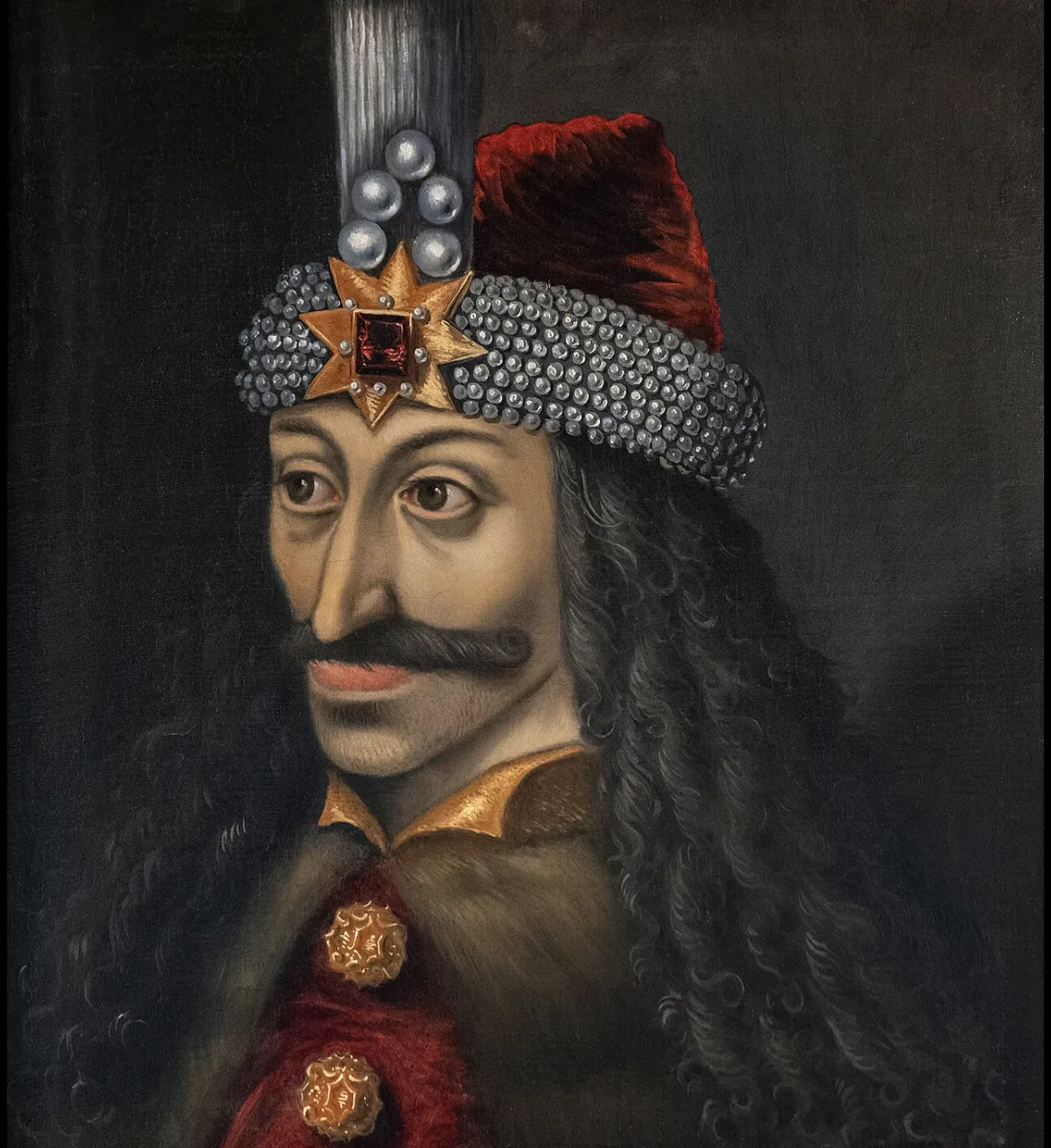
You cannot come to Romania without confronting the vampire in the room, so let's start there — and let's get it right, because almost everyone gets it wrong. Dracula is a fictional character, invented by the Irish writer Bram Stoker in his 1897 novel. But Stoker didn't pull the name out of thin air. He borrowed it from a very real Romanian prince: Vlad III, the Voivode of Wallachia, who lived in the 15th century and died around 1476.
Vlad's own name has a story. His father belonged to the Order of the Dragon, a Christian knightly order sworn to fight the Ottomans, and took the name Dracul — "the dragon" (and, in Romanian, also "the devil"). His son became Dracula, "son of the dragon." History remembers that son by a grimmer title: Vlad the Impaler, for his signature method of dealing with enemies and criminals alike. When the Ottoman sultan Mehmed II demanded he pay homage, Vlad had the sultan's envoys captured and impaled; he did the same to thieves, crooks and anyone who broke his law. He was cruel, yes — but he was also a genuine national figure who defended his country ferociously, and that's the part the movies flatten.
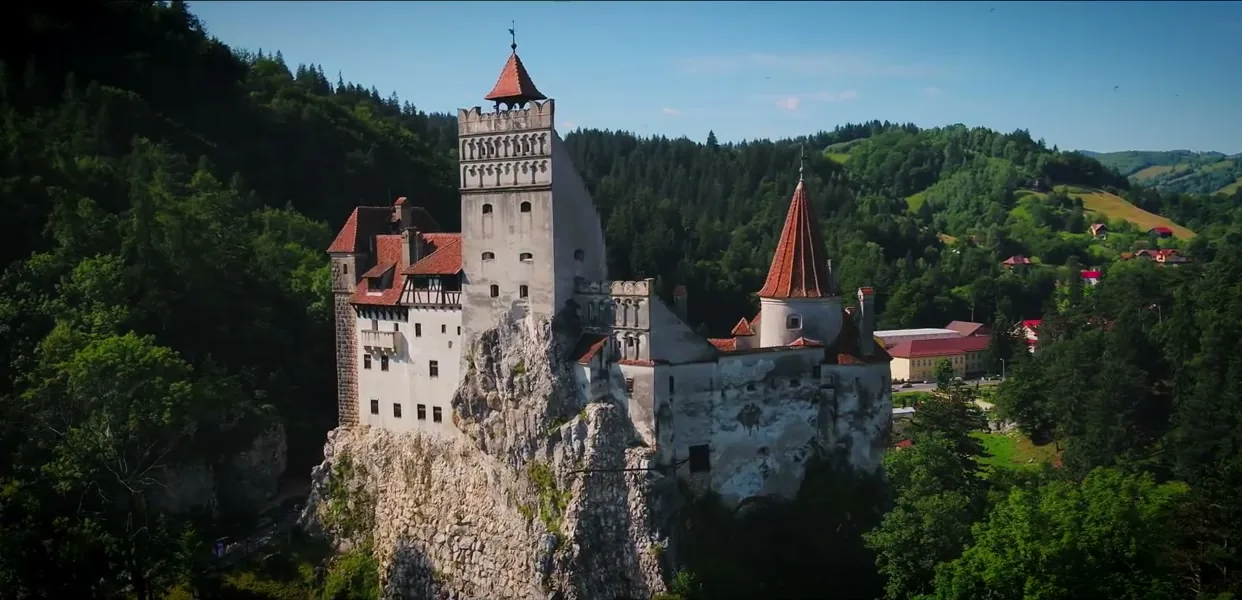
Here's the twist most tourists never hear: Bram Stoker never set foot in Romania. He found the name "Dracula" in a book by a British diplomat, loved its dark associations with Transylvania, and stitched it onto a vampire that otherwise has nothing to do with the historical Vlad. And Bran Castle — the dramatic fortress everyone photographs as "Dracula's Castle" — has only the thinnest real link to him. The authentic site comes later in my trip: the actual room where Vlad is said to have been born, in Sighișoara. Even so, standing at Bran, and then getting the castle's dinner hall entirely to ourselves after the tourists had gone, was a genuinely magical, slightly spooky way to begin.
A Medieval Night at Alba Iulia
From Bran we drove about 130 miles northwest to Alba Iulia, to do something you can't do in many places on Earth: spend the night inside a working medieval fortress. Alba Carolina is a magnificent star-shaped citadel, and we timed our visit for the changing of the guard — costumed soldiers in tricorn hats, muskets and drums, and a cannon-fire reenactment that a small boy in the group took more seriously than any of the adults.
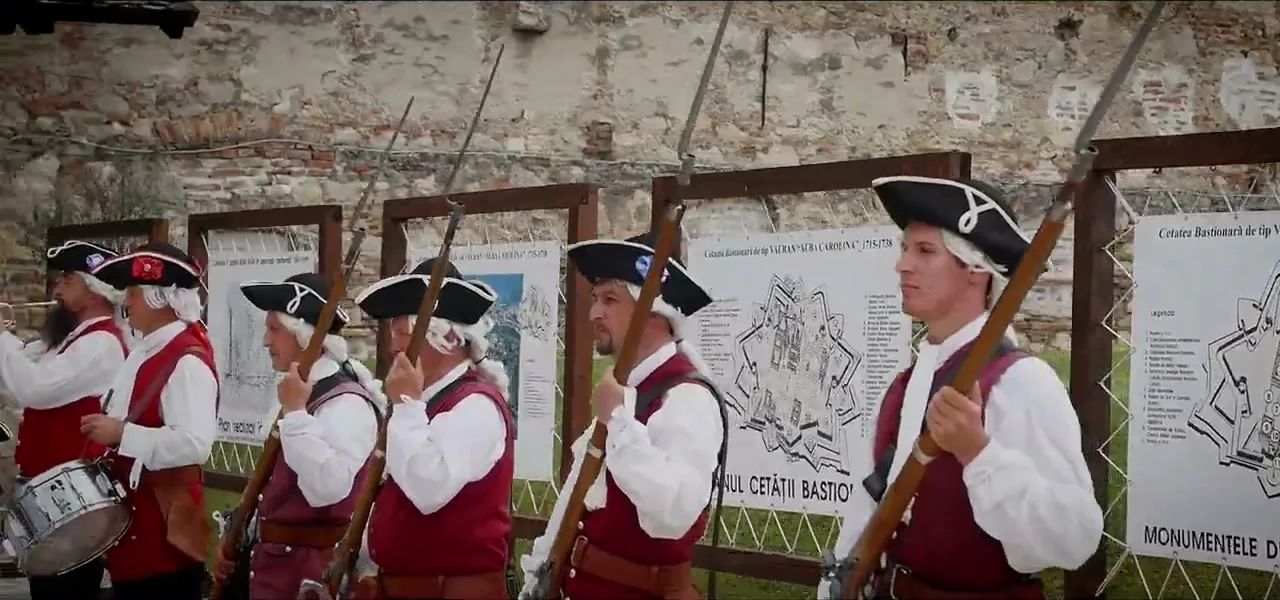
Alba Iulia isn't just picturesque; it's sacred ground for Romanians. This is where, on 1 December 1918, an assembly declared the union of Transylvania with Romania — the moment that completed the modern country. Some 100,000 people gathered for it, and the day is still Romania's national holiday. Sleeping within those walls, imagining the centuries they've held, and eating in a candlelit brick restaurant that my guests called the most beautiful they'd ever seen, made the history feel less like a museum and more like something you could reach out and touch.
Bread, Salt and a Village That Dances
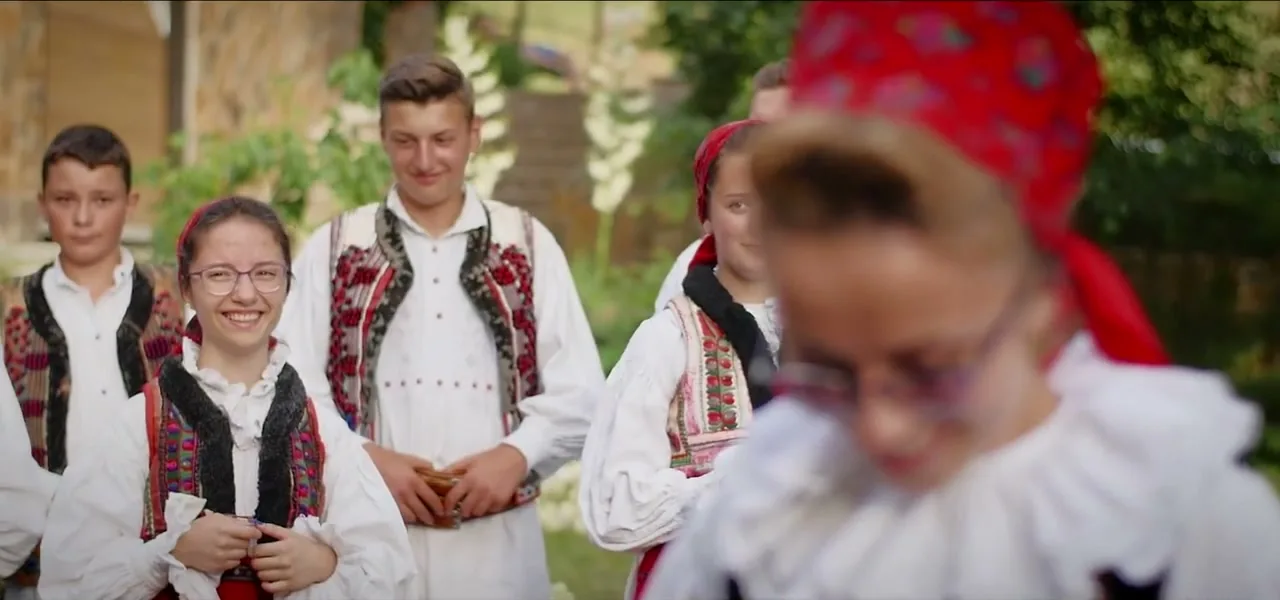
Then I made it personal. We drove further west, to the region around Beiuș, and I told my friends only that a surprise was waiting. When we crossed a little bridge, a group of teenagers in traditional Romanian costume was there to meet us — and they began to dance. Then came the bread, broken and dipped in salt, the oldest Romanian welcome there is, washed down with a shot of țuică, the local plum moonshine that "set the tone for the night," as one guest put it.
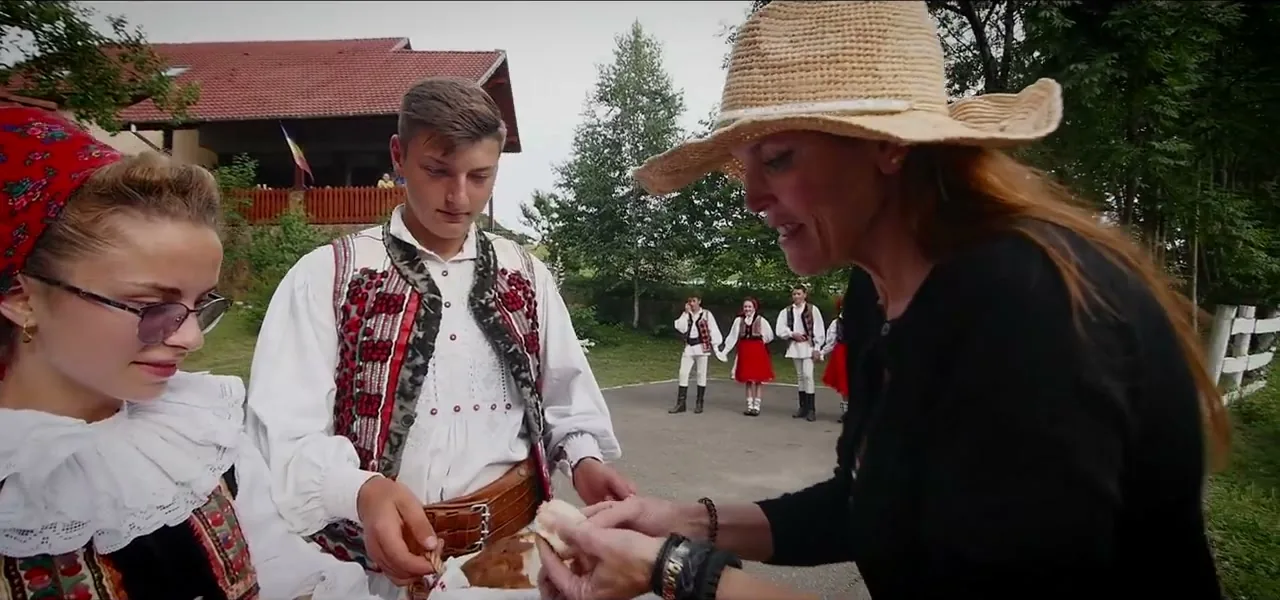
The dancers were from the village of Budureasa, and they told me something that stuck with me. They're an amateur ensemble — no formal schooling, because, as one of them said, a Romanian peasant simply knows the folk dances, the way they know the seasons. Their costumes are over a hundred years old, entirely hand-sewn, passed down through the family dowry box from generation to generation. One young woman was wearing the exact outfit her great-grandmother married in, with socks her grandmother had knitted. That is not a performance for tourists. That is a living thread of memory, and being invited to dance inside it — with the whole village pouring out to join — was one of the warmest nights of the entire trip.
Come now, while it's still like this — be a guest in my country before everyone else discovers it.
Sighișoara: Europe's Living Medieval Town
We turned back toward the heart of the country and arrived in Sighișoara, a town so well-preserved it's been called the medieval capital of Europe. The moment I stepped onto its cobblestones, it felt like home: compact, busy, wrapped in the details of another age — wrought-iron fittings, ancient towers, buildings painted in faded golds and reds.
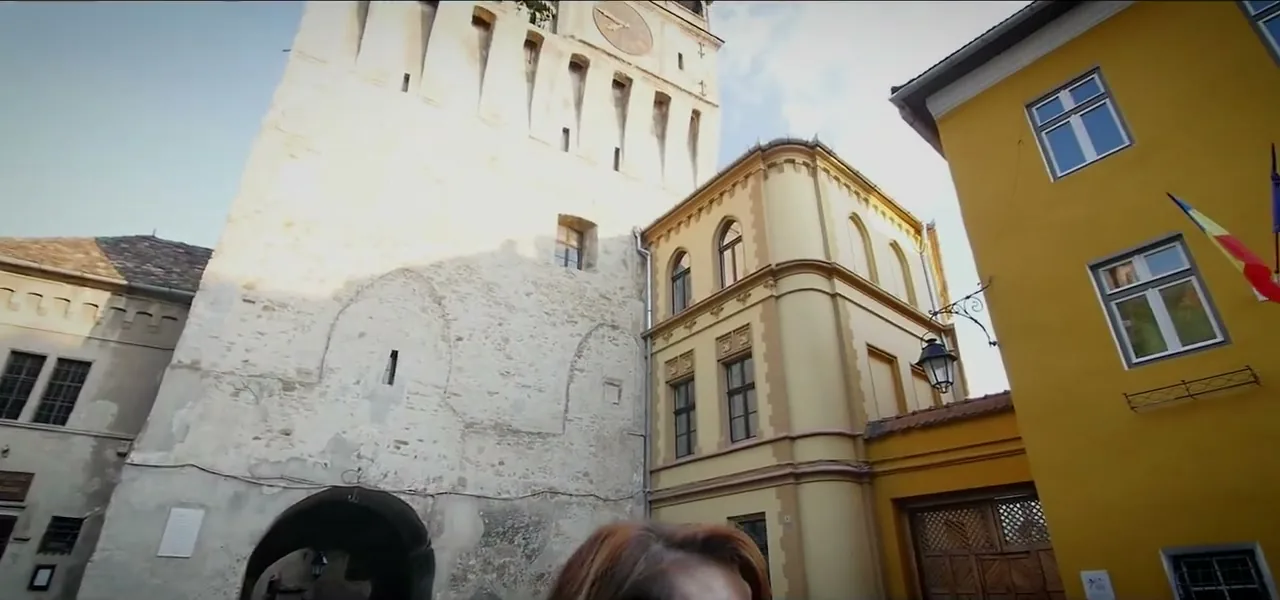
Sighișoara was founded by the Transylvanian Saxons — German craftsmen and merchants — and its historic centre has been a UNESCO World Heritage Site since 1999. It is the only still-inhabited medieval citadel in this part of Europe: people live and work inside the walls, beneath a ring of defensive towers and the famous Clock Tower. And here is where the Dracula story comes full circle. In Sighișoara stands Casa Vlad Dracul, the house where Vlad the Impaler is traditionally said to have been born. We stepped into the very room — met, for fun, by an actor playing Dracula himself, leaping out to terrify everyone — but beneath the theatre, this was the real thing: the birthplace of the man the whole myth is built on. Of everywhere we went, Sighișoara was the one several of my guests named their favourite.
Food Like Your Mother Made It
If there's a single thread running through the whole trip, it's the food — and the fact that so much of it tastes homemade, because it essentially is. Romanian cooking is honest, seasonal peasant food elevated by generations of practice. There's sarmale, minced meat and rice rolled in pickled cabbage or vine leaves and slow-cooked for hours; mămăligă, a golden cornmeal polenta that turns up beside almost everything; mici (also called mititei), skinless grilled sausages of spiced minced meat that are the soul of any Romanian barbecue; and ciorbă, a family of sour soups that a Romanian grandmother will insist can cure most of what ails you.
What struck my guests wasn't refinement — it was purity. "The ingredients are so pure," one of them told me, "as if your mom cooked it for you at home." That's not an accident. In the villages we passed through, a lot of what lands on the table was grown, raised or foraged within walking distance, and preserved the old way. After a decade of eating my way around the world, I still think a proper home-cooked Romanian meal, finished with a slice of cozonac (a sweet, nut-filled holiday bread) and another small glass of țuică, is one of the great underrated pleasures in European travel.
Wine for a Royal Family
Not far from the road back to Bucharest, I pulled off a coup: exclusive access to Tohani, one of Romania's most renowned wineries, and the maker of wine for the Romanian royal family. Romania hasn't been a monarchy for decades, but the royal family is still very much present and much loved, and Tohani's flagship Apogeum — along with a Merlot dedicated to Prince Radu, husband of the Custodian of the Crown, Princess Margareta — carries that quiet prestige.
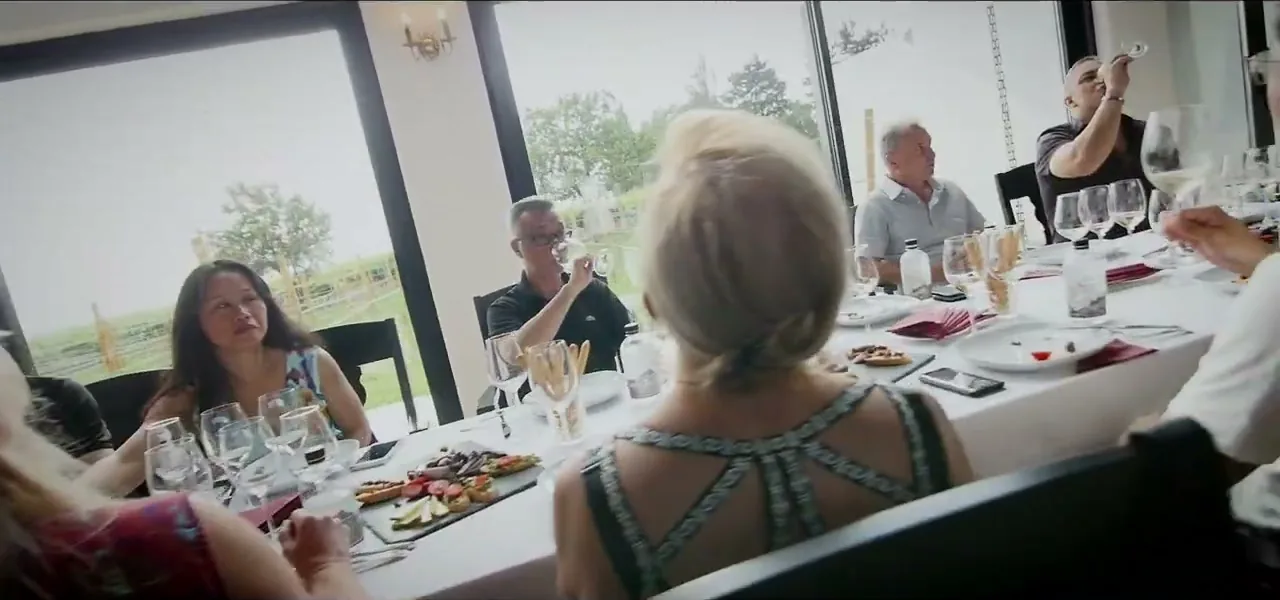
The land itself holds a love story. In 1931, Prince Nicolae of Romania married Ioana Doletti here in secret, in defiance of the rules of the royal house; his older brother, King Carol II, had the marriage annulled by law that same year. The couple refused to part, went into exile in Switzerland, married again, and stayed together for the rest of their lives. And the wine we tasted was as unique as the story — a Fetească Neagră, meaning "Black Maiden," an ancient indigenous Romanian grape that grows nowhere else in the world, with roots traced back thousands of years to the Neolithic Cucuteni culture. Tasting of dark, sometimes smoked plum, it moved one of my guests so much she told me she was going home to redesign her house. That's the effect this country has on people when you show them the real version.
The Heaviest Building on Earth
Back in the capital, Bucharest, I took the group to a monument of a very different and darker kind: the Palace of the Parliament, once called Casa Poporului, the House of the People. The name is bitterly ironic. It was built over some 13 years on the orders of the communist dictator Nicolae Ceaușescu, essentially for one man, while ordinary Romanians queued for bread. He was overthrown and executed in the revolution of December 1989, only a couple of years after it was finished.
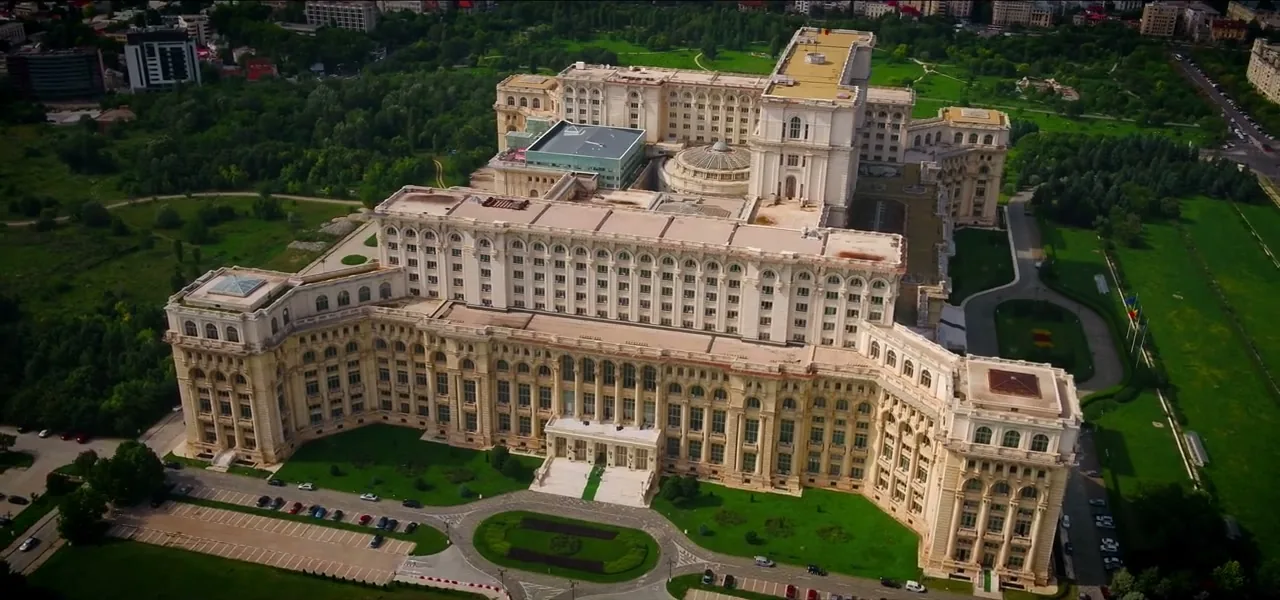
The numbers are almost impossible to hold in your head. It is the heaviest building in the world, weighing on the order of four million tonnes of steel, marble, crystal and wood — so heavy it is said to sink a few millimetres into the ground every year. By floor area it is the second-largest administrative building on the planet, behind only the Pentagon, and the only palace on that list; the rest are hangars. Walking in, past endless marble and crystal chandeliers, my guests kept saying the same thing: you feel like an ant. Today it houses Romania's democratic Parliament — a strange, fitting second life for a monument to one man's ego.
The Danube Delta: Where I Was Born
And then we left the grandeur behind for the quietest, wildest place in the country — and the most personal stop of all. After crossing much of Europe, the Danube River finally empties into the Black Sea here, fanning out into the Danube Delta: a labyrinth of channels, lakes and reed islands that feels like a miniature Amazon dropped into Europe. This is where I was born.
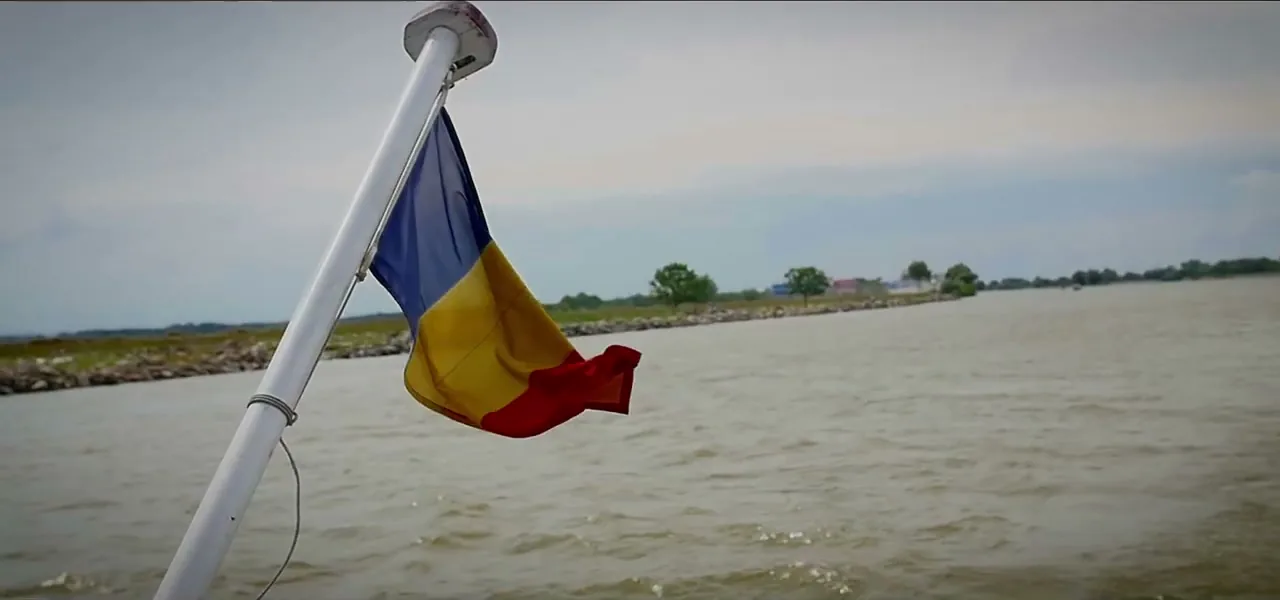
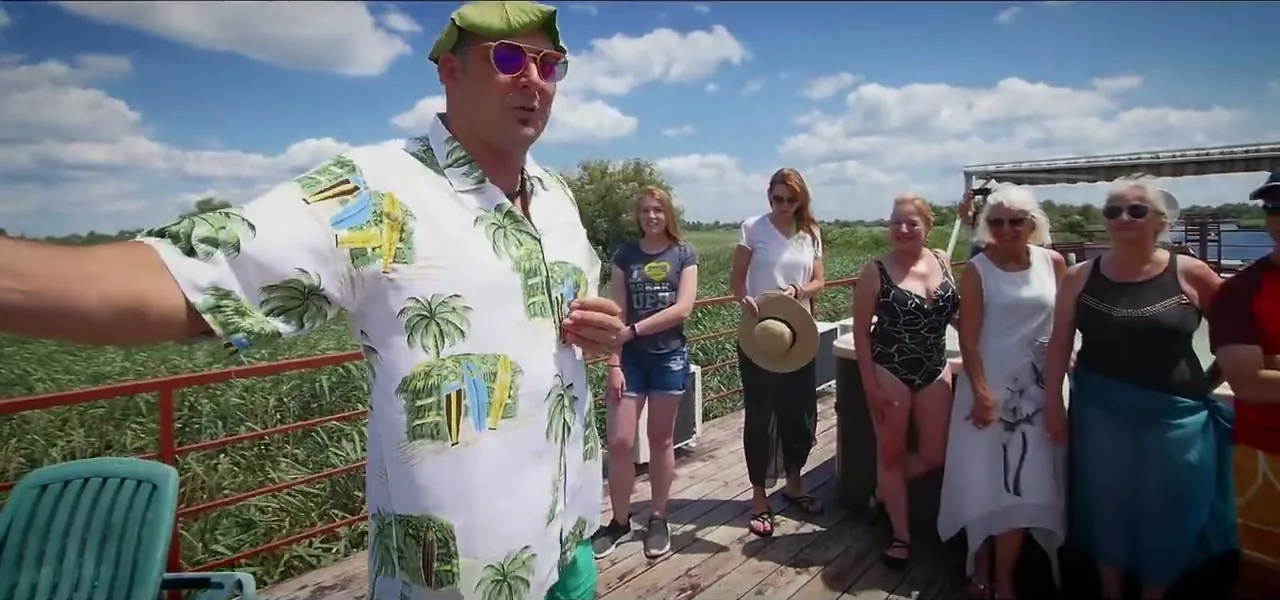
We stopped first in Tulcea, the small town at the mouth of the Delta — where I got to say hello to my parents — and then boarded a houseboat and disappeared into the wilderness. The Delta is the second-largest and best-preserved river delta in Europe, a UNESCO World Heritage Site and Biosphere Reserve, holding the continent's largest reed bed and its biggest colony of great white pelicans, with more than 300 bird species in all. My guests, most of whom had never seen a pelican in their lives, kept gasping as the boat rounded a bend to reveal a water lily blooming in the middle of the channel, or a sky full of birds over water so still it mirrored them. "You'd think water lilies belong in Vietnam," one said, "and then you find them here in Europe." It is untouched, tranquil, and — knowing a place like this still exists, and that it's where my own story started — quietly overwhelming to share.
The Delta is also home to a way of life you find almost nowhere else in Europe. Scattered through the reeds are tiny fishing villages, many of them belonging to the Lipovans — descendants of Russian Old Believers who fled here centuries ago and still fish these channels much as their ancestors did, often reachable only by boat. Their cooking is built entirely around what the water gives: a rich Danube fish soup, carp and pike and catfish cooked a dozen ways. Eating that on a houseboat, drifting past reed banks with pelicans overhead, you understand something about Romania that no castle can teach you — that its greatest treasures aren't the grand monuments at all, but the quiet, living corners the modern world simply hasn't reached yet.
The Dart Points to China
Because there's no Travel by Dart episode without a dart, I held the ceremony right here, in the Delta where it all began for me. My friends, blindfolded, threw for my next destination, and after a final round between three countries the winning dart chose China — one of the biggest countries on Earth, and somewhere I'd never managed to visit. So Season 3 would begin far from home.
By the numbers: Romania by the numbers
- Vlad the Impaler
- Voivode of Wallachia, died ~1476
- Bram Stoker's Dracula
- published 1897
- Great Union at Alba Iulia
- 1 December 1918
- Sighișoara
- UNESCO site since 1999
- Palace of the Parliament
- heaviest building on Earth (~4M tonnes)
- Danube Delta
- 2nd-largest delta in Europe; UNESCO
Planning Your Own Romanian Adventure
If this episode makes you want to trace our route, here's the practical version. The natural loop is the one we did: fly into Bucharest, head up into Transylvania for the castles and medieval towns — Bran, Sighișoara, Brașov, Sibiu — then swing east to the Danube Delta and out through Tulcea. You'll want a car or a driver-guide for the countryside; the distances aren't huge, but the joy is in the small roads, the villages, the places you stop on a whim. Give yourself at least a week; ten days if you can.
When to go matters. Late spring through early autumn — roughly May to September — is best for the mountains, the towns and the Delta, which is at its most alive with birds in spring and early summer. Winters are cold and atmospheric but harder for touring. As for safety: Romania is a member of the European Union and a thoroughly easy, welcoming country to travel in, with very low risk for visitors; ordinary common sense is all you need. English is widely spoken by younger people and in tourist areas, and a smile plus a couple of Romanian words will open almost any door.
One last tip, learned the hard way over a lifetime: don't rush it into a checklist. The moments my guests remembered weren't the famous sights at all — they were the village that danced, the winery that made someone want to redo their house, the bend in the Delta where a water lily appeared out of nowhere. Leave room in the plan for Romania to surprise you, because it will.
Come Before the World Catches On
I've now thrown darts on six continents, and I can tell you honestly: few countries surprise people the way Romania does. My guests arrived with the usual half-formed images — vampires, grey communist blocks, somewhere vaguely "eastern" — and left talking about medieval towns and village dances, about food that tasted like their mothers had made it, about a warmth in the people they hadn't expected and couldn't quite explain. Everywhere we went, someone had a surprise waiting; by the end we half-expected it. Maybe that really is a Romanian thing.
The truth is that Romania offers you far more than you think you're going to get. It's a country still standing at the edge of the tourist map — its castles uncrowded, its villages genuine, its wildest delta still wild. That won't last forever. So here's my one piece of advice, from someone who was born on the banks of the Danube and had to travel the whole world before circling back to appreciate it: come now, while it's still like this. Be a guest in my country before everyone else discovers it. You'll leave, as my friends did, wishing you'd come sooner.
Explore More Travel by Dart Journeys
- See where the dart sent me next: China.
- Another land of legends and haunted castles the dart chose: Scotland.
- More of Europe the dart uncovered: Italy and Greece.
- The country the whole journey keeps circling back to — because it began here.
Suggested Sources & Further Reading
To go deeper into Romania, these are some of the best authoritative resources:
- Romania — official tourism (romania.travel) — the national tourism site.
- UNESCO — Historic Centre of Sighișoara — the living medieval town.
- UNESCO — Danube Delta — the wetland where I was born.
- Encyclopædia Britannica — Romania — history, geography and culture.
- Encyclopædia Britannica — Vlad the Impaler — the real man behind the Dracula legend.
All facts verified September 2026.
Romania: traveler questions
Was Dracula a real person?+
Sort of. Dracula is a fictional vampire from Bram Stoker's 1897 novel, but Stoker borrowed the name from a real 15th-century Romanian prince: Vlad III, Voivode of Wallachia, known as Vlad the Impaler or Vlad Dracula ('son of the dragon'). Vlad was a genuine, ferocious historical figure, but historians agree the vampire itself was almost entirely Stoker's invention — he never even visited Romania.
Is Bran Castle really Dracula's castle?+
It's marketed that way, and it's a spectacular castle in Transylvania, but the real Vlad the Impaler's connection to Bran is thin. The more authentic Dracula site is Casa Vlad Dracul in Sighișoara — the house where Vlad III is traditionally said to have been born.
What is the Palace of the Parliament in Bucharest?+
It's the enormous building commissioned by communist dictator Nicolae Ceaușescu, once called the House of the People. It is the heaviest building in the world (around four million tonnes) and the second-largest administrative building on Earth by floor area, after the Pentagon. Ceaușescu was overthrown and executed in 1989, and the palace now houses Romania's Parliament.
What is the Danube Delta and why is it special?+
Where the Danube finally reaches the Black Sea, it fans out into the Danube Delta — the second-largest and best-preserved river delta in Europe, a UNESCO World Heritage Site and Biosphere Reserve. It holds Europe's largest reed bed and its biggest population of great white pelicans, with more than 300 bird species. The town of Tulcea is the gateway.
When is the best time to visit Romania?+
Late spring through early autumn (roughly May to September) is ideal for Transylvania's castles, medieval towns and the Danube Delta. Romania is still refreshingly uncrowded compared to Western Europe — which is part of its charm, and a good reason to go sooner rather than later.