Season 4 · Episode 2
Mongolia
Where the horizon has no limits and freedom still travels on horseback.
On this page ▾
A 2-episode adventure — both films are on this page.
By Sorin Mihailovici · Travel by Dart · Last updated August 2026 · ~17 min read
When the dart hit Mongolia, I had exactly one association: Genghis Khan. That was the sum total of my knowledge — a name, a reputation, a blank space on the map where a country should be. I stood there in Vietnam, where I'd thrown the dart, and said out loud, "I don't know if I'm going to have fun or not." That uncertainty is the whole point of Travel by Dart, and Mongolia turned out to be one of the most rewarding places it has ever sent me — a country that gave me an empire's worth of history, and then handed me a bucket and told me to go milk a horse.
What follows is the full, fact-checked story of both films, because Mongolia gave me far too much for one. Part 1 is above; Part 2 — a week living with nomad families, the Naadam festival and the Gobi Desert — is embedded below. I'll take you through the moments that mattered, but the goal is to leave you actually knowing this astonishing country.
Because Mongolia gave me so much, I split the journey into two films. Part 1 is above; Part 2 — the nomads, the milking, Naadam and the Gobi — is right here:
▶ Mongolia — Part 2
Living with nomad families, the Naadam festival and the Gobi Desert
Quick facts: Mongolia at a glance
- Capital
- Ulaanbaatar ('Red Hero')
- Population
- ~3.4 million
- Density
- ~2 people/km² — lowest on Earth
- Capital's share
- ~half the country lives in Ulaanbaatar
- Founding father
- Genghis Khan (Temüjin), d. 1227
- Religion
- Mainly Tibetan Buddhism; historically shamanic
- Biggest festival
- Naadam (July) — wrestling, archery, horse racing
- Famous desert
- The Gobi — largest in Asia
The Emptiest Country on Earth
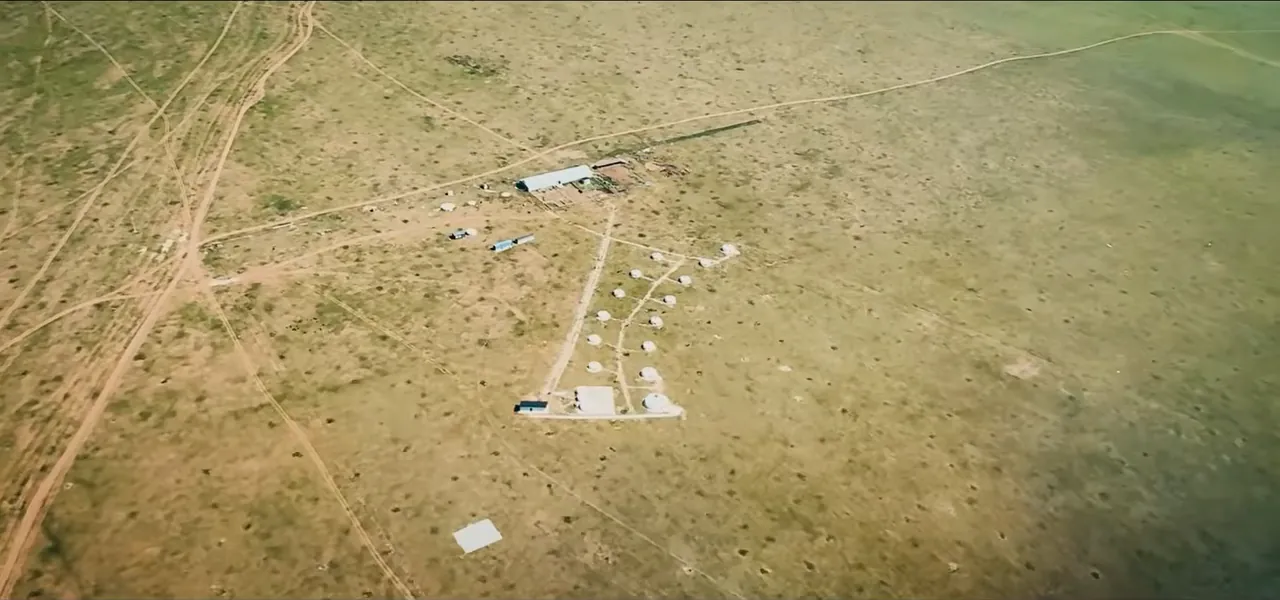
The flight from Vietnam felt endless — hours of nothing but desert out the window — and that emptiness is the first thing you have to understand about Mongolia. This is the most sparsely populated sovereign country in the world, with only about two people per square kilometre spread across a land nearly the size of Alaska. As the plane descended toward Ulaanbaatar, the brown gave way to green, and I started to see them: the round white tents Mongolians call gers (the word "yurt" is Russian; locals prefer their own). The capital itself has another distinction — it's widely called the coldest capital city on Earth, with winters that plunge below minus 40 degrees.
Mongolia doesn't get many tourists, and it knows it. For years the country has worked to push its annual visitor numbers toward a million — a modest figure by big-city standards, and one squeezed into a short summer season. To do this properly I partnered with DMD Mongolia, a top local tour operator, and met Nara, part of the family that runs it, who became my guide for the whole trip.
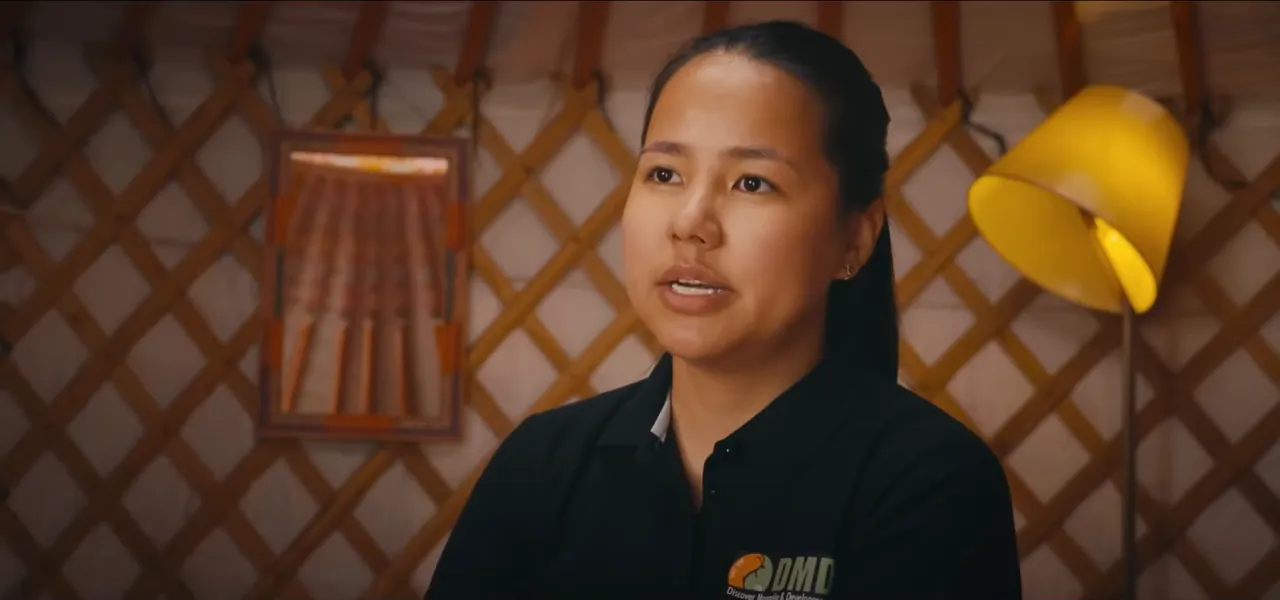
Mongolia is a very good destination to disconnect from our busy life, recalibrate, and start your next journey.
The other thing worth knowing before you arrive: Mongolia is home to the rare Bactrian camel, the two-humped kind, adapted to survive the brutal extremes of the Gobi. Hold that thought — I'd meet them properly by the end.
Ulaanbaatar: Half a Nation in One City
Here's a statistic that reshapes every assumption about Mongolia: roughly half the entire population lives in Ulaanbaatar. The image of a nation on horseback is real, but it's only half the story — the other half is in the capital, a busy, modernising city of glass towers, traffic and a young generation building tech companies. Visitors expecting only tents and horses are always surprised.
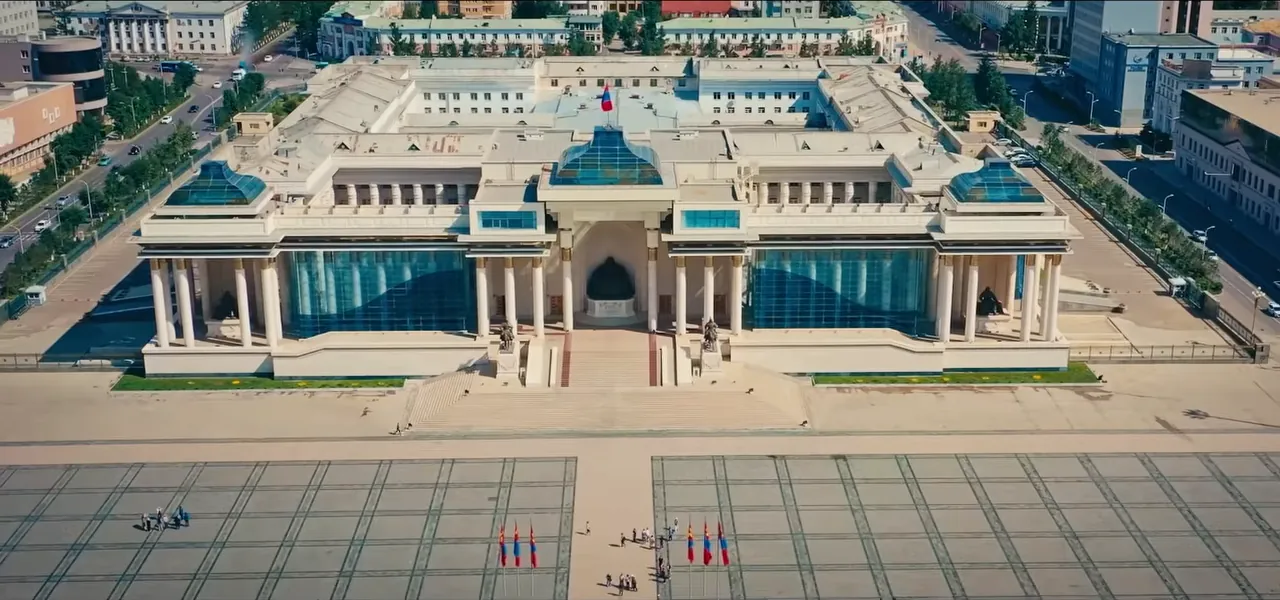
The city's very name tells its recent history. It began as a nomadic settlement — a capital that literally moved from place to place, first called Urga, later Ikh Khüree ("Great Monastery") when it grew around its Buddhist centre. Then the 20th century arrived. Mongolia spent decades in the orbit of the Soviet Union, and when the atheist communist government wanted a name less steeped in religion, they landed on Ulaanbaatar — "Red Hero," a reference to the red of communism. That Soviet era is written into the architecture too: the stark, symmetrical, concrete government buildings and apartment blocks that still define stretches of the city, standing alongside the new towers. At the centre is Sukhbaatar Square, where the Parliament House looks out over a giant seated statue of Genghis Khan — because in Mongolia, all roads eventually lead back to him.
Gandan and the Prayer Wheels
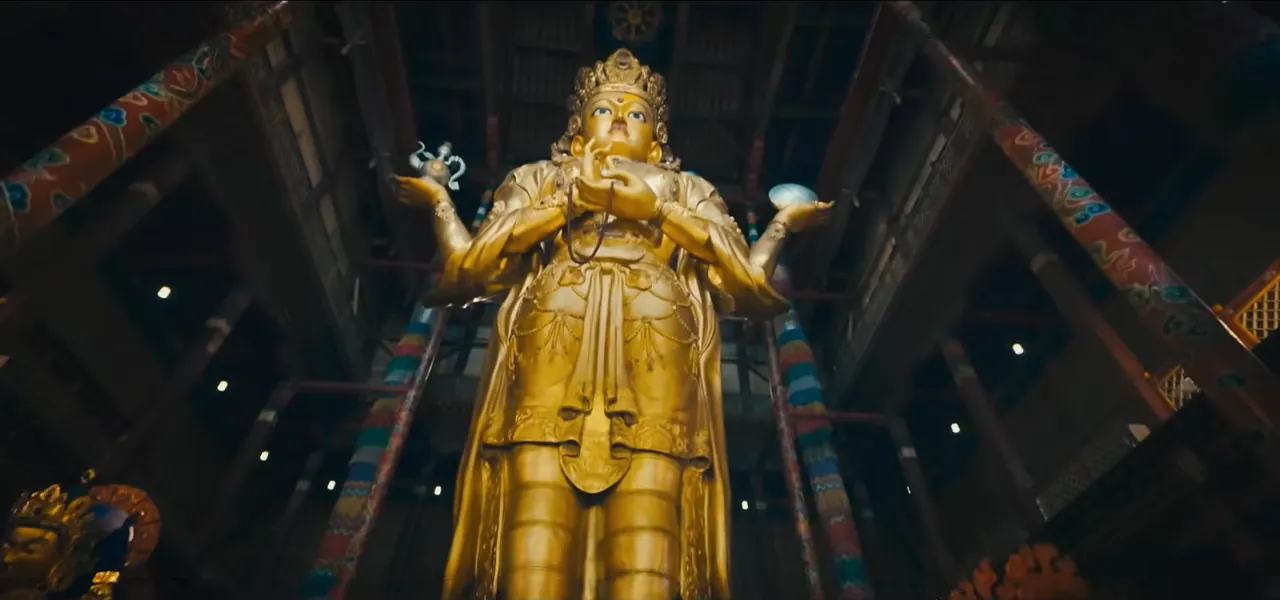
Before the empire, though, came the faith. Most Mongolians today are Buddhists, shaped by Tibetan Buddhism, and the spiritual heart of the capital is Gandan Monastery. Its centrepiece stopped me in my tracks: the Migjid Janraisig statue, a 26-metre figure of the bodhisattva of compassion (Chenrezig), covered in gold and bronze. You can't go inside it, because it's sacred — but that's the remarkable part. Sealed within the statue are mantras and precious stones gathered from all over the country. As Nara put it, this statue, in a way, is Mongolia.
The Man Who Fathered a Continent
You cannot understand Mongolia without understanding Genghis Khan — and almost everything I thought I knew was incomplete. For a start, that wasn't his name. He was born Temüjin; "Genghis Khan" (Chinggis Khaan) was the title the shamans gave him when the empire was founded, a name meant to capture his power. In the 13th century the Mongols were shamanic, not Buddhist, and out of the open steppe Temüjin built the largest contiguous land empire in human history.
His personal story is closer to tragedy than legend. His father had abducted his mother from a rival clan — literally stolen her — and when Temüjin was a boy, that same clan poisoned his father in revenge. He married a woman named Börte, and then history repeated itself: Börte was kidnapped by another clan, and it took him months, and the help of allied leaders, to get her back. She returned pregnant, and whether the child was his was a question the community never fully settled — a shadow that hung over the line of succession. In the end Temüjin, unable to cleanly name an heir, split his vast empire among his four sons.
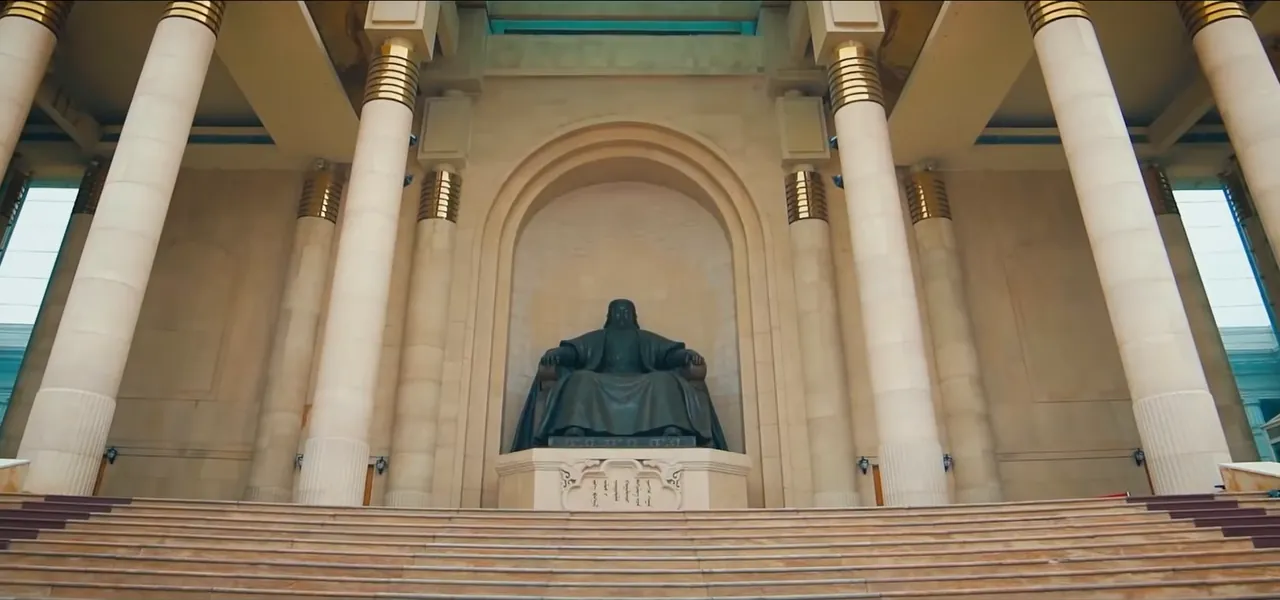
Then there is the legacy written into DNA. Genghis Khan is thought to have had a staggering number of children — he is estimated to have had access to hundreds of secondary partners, and fathering descendants across conquered territories was, for him, a deliberate strategy: children in a region meant a permanent bond to the empire. In 2003, the geneticist Chris Tyler-Smith and colleagues found that about 8% of men across 16 Asian populations — roughly 0.5% of all men on Earth, or around 16 million people — share a single Y-chromosome lineage traced to Mongolia around his time. It became the famous "16 million descendants" claim. (More recent research has complicated the story and suggests the real number may be smaller — but as a symbol of one man's genetic footprint, it's still staggering.)
By the numbers: Genghis Khan, by the numbers
- Born
- c. 1162, as Temüjin
- Died
- 1227, aged around 65
- Empire
- Largest contiguous land empire in history
- Heirs
- Divided among his four sons by Börte
- Y-chromosome lineage
- ~0.5% of men worldwide
- Estimated descendants
- ~16 million (2003 study; now debated)
The 40-Metre Khan
I almost skipped the Genghis Khan statue outside Ulaanbaatar. "Just another statue," I thought — and then I saw it. Standing on the steppe at Tsonjin Boldog is a 40-metre (about 131-foot) figure of Genghis Khan on horseback, sheathed in gleaming stainless steel, built in 2008. It is the largest equestrian statue in the world, and it is genuinely jaw-dropping. It faces east, toward the region where he was born.
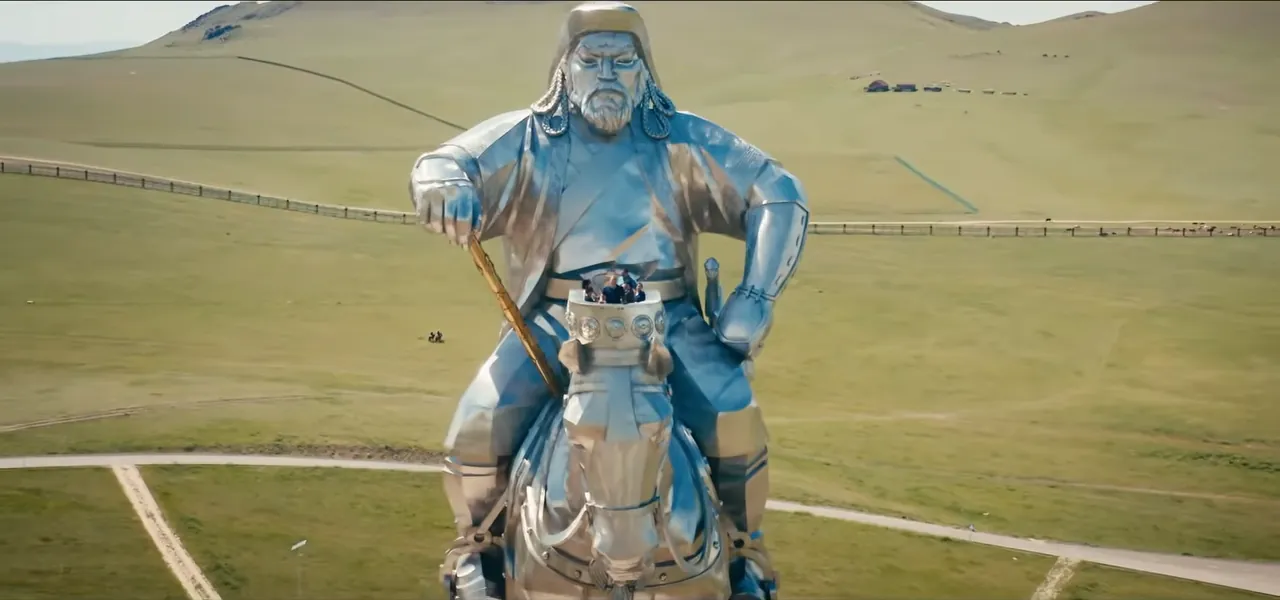
The best part is what's inside. The base is like a small mall — shops, and a gallery presenting Genghis Khan's descendants along the "Golden Lineage" — and from there an elevator carries you up through the horse to a viewing platform on the animal's head, where you look out over the steppe the Khan once ruled. It's part monument, part museum, part theme-park spectacle, and somehow it works.
Karakorum: A Capital Built and Rebuilt
To stand where the empire was actually run, you go to Karakorum — Kharkhorin, in modern spelling — a few hours from the capital. This was the imperial capital of the Mongol Empire in the 13th century, built in Genghis Khan's final years and left to his descendants. Having spent days steeped in his story, standing on the ground where his capital once stood gave me a genuinely strange feeling — history collapsing into the present.
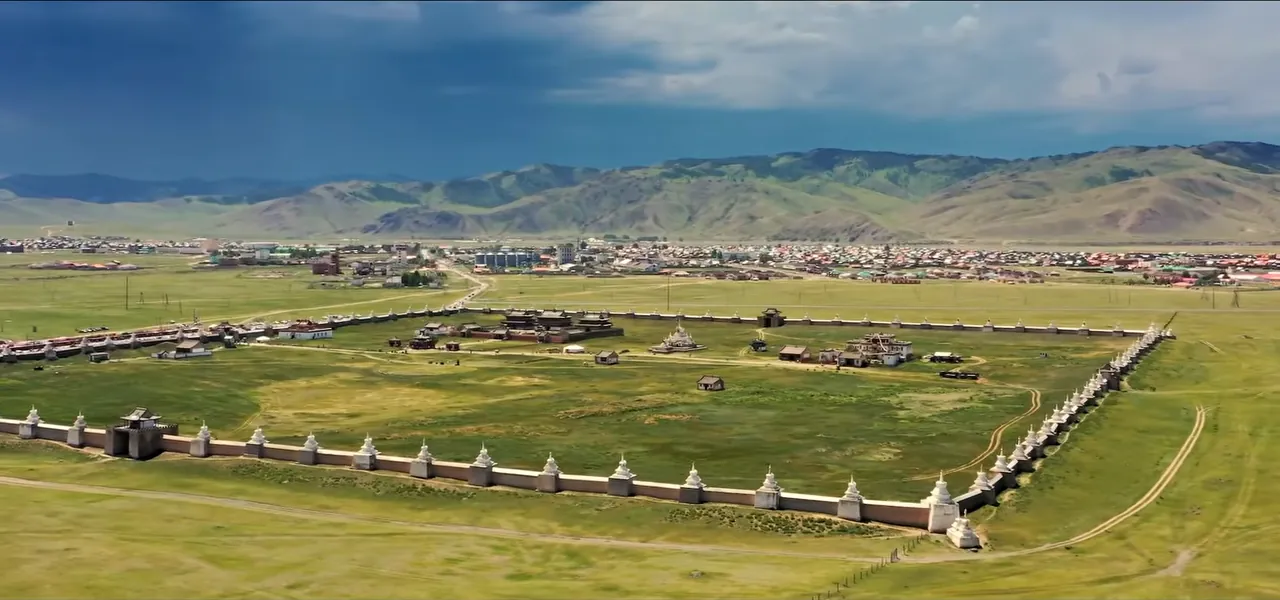
What makes the place remarkable is its layering. The 13th-century capital was itself built over far older ruins, and later the great walled monastery of Erdene Zuu — today a religious centre for Mongolian Buddhists — rose on the ruins of the imperial city. It's Mongolian history rebuilt over and over on the same spot across more than two thousand years. Nearby, a small calligraphy centre lets visitors try the old vertical Mongol script; as a tourist I mostly made a playful mess of it, painting with water on special paper, but there's something moving about tracing a script this old with your own hand.
The Eagle Hunters
One childhood memory had stuck with me about this part of the world: the Central Asian tradition of hunting with eagles. Nara's team arranged something extraordinary — a private demonstration by eagle hunters who had travelled some 2,000 kilometres from Mongolia's far west, near the Kazakh border. There was a personal thread, too: Nara's late father had been friends with one of these men, who went on to become one of the most celebrated eagle hunters in the country. Meeting him felt like a second generation shaking hands with the first.
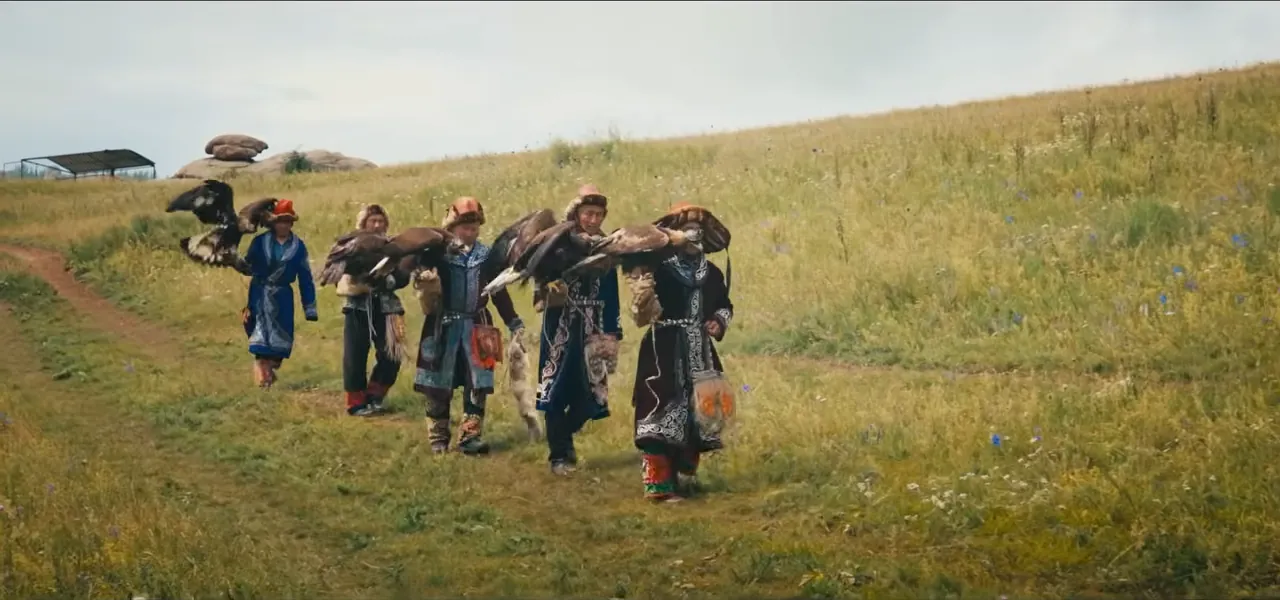
The birds they use are golden eagles, and the craft is intricate. Hunters typically take young female eagles from mountain nests, choosing for temperament, then spend patient months getting the bird used to human presence, teaching it to perch on the arm, and building it toward the hunt. Out on the steppe, the hunter releases the eagle to chase down a fox or hare and return for a scrap of meat as reward. The bond can last a decade or more — some hunters have kept the same eagle for over forty years — and traditionally the bird is eventually released back into the wild to live out its life.
Into the Steppe
Part 1 ends in the city; Part 2 begins where Mongolia truly lives — in the countryside. Everyone had told me the same thing: enjoy your first and last days in Ulaanbaatar, because in between, "you're about to get dirty." They were right, and it was the best part of the whole trip.
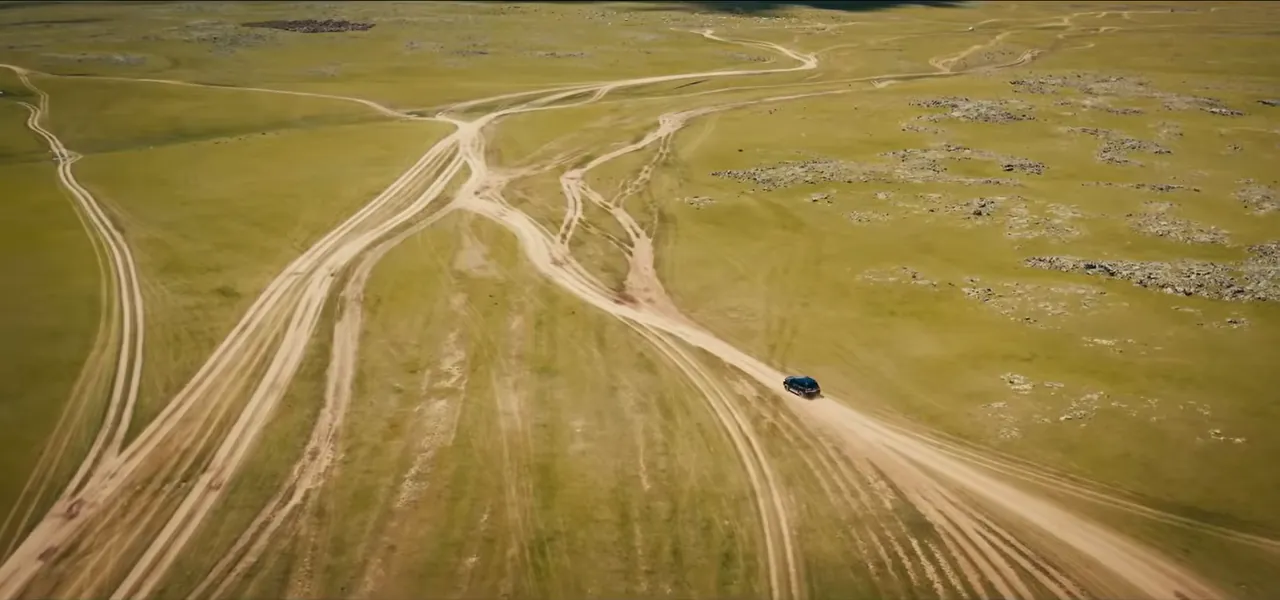
Getting there is an adventure in itself. Our driver from DMD crossed hundreds of kilometres of open country without once looking at a GPS — pedal down, nothing but the occasional cow or camel, and a dozen faint tracks branching off in every direction with no signs to say which was right. He simply knew. On a land this empty, that knowledge is a kind of magic.
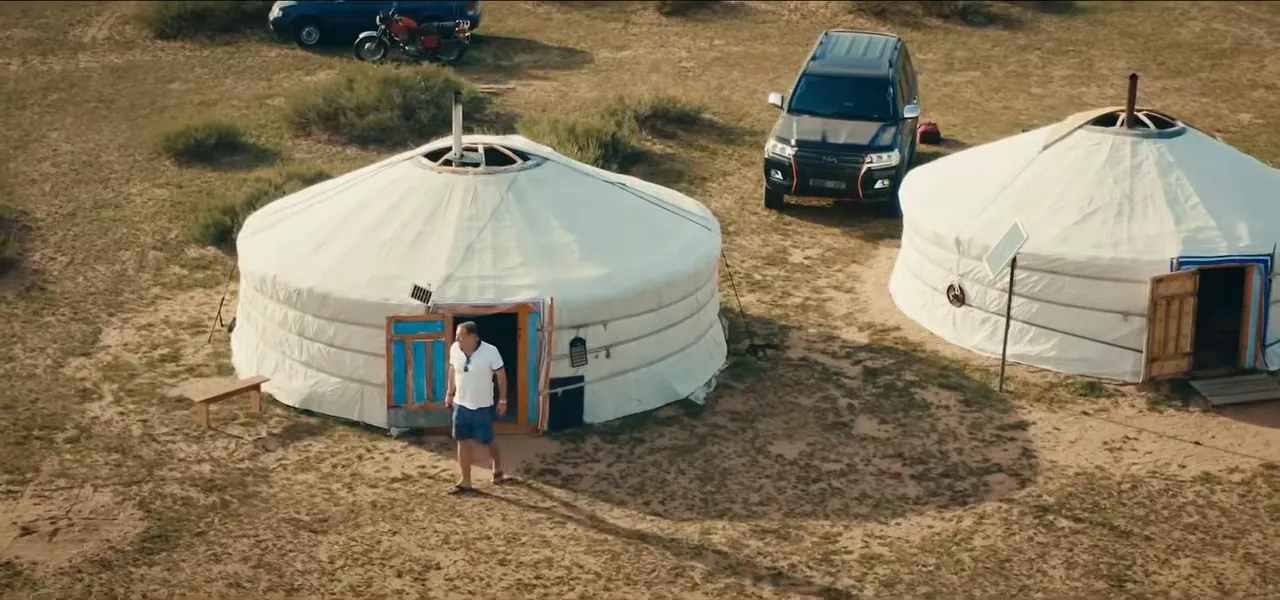
Living With Nomads
We came to stay with the Bor family, in their summer settlement in the beautiful Orkhon Valley — and they weren't chosen at random. The Bor family had received a government award as one of the country's top herder families, their diploma displayed proudly on the single wooden panel inside the ger. Mongolian hospitality is unlike anywhere I've been: a family's door stands open, and you're welcome to walk in without knocking.
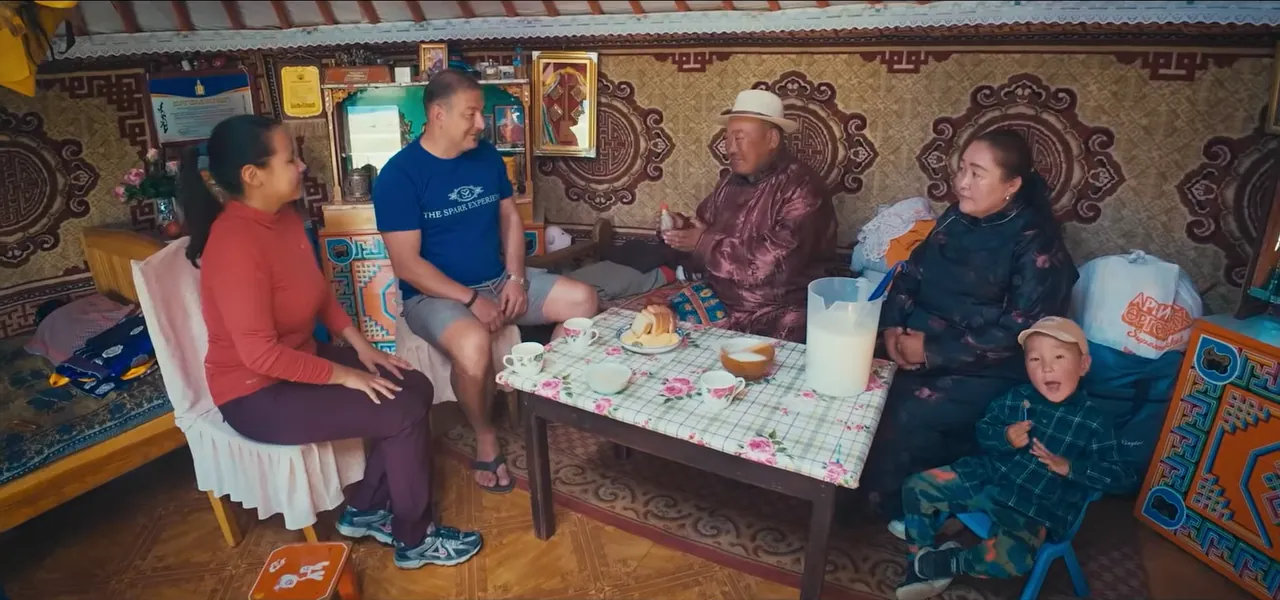
The welcome came with rituals. First, a drink — usually milk tea made from yak or cow's milk, or in summer, airag, fermented mare's milk. It's sharp, fizzy and slightly sour, "like yogurt that's almost getting bad, but isn't," and I genuinely liked it. Then there's the snuff bottle: nomadic men greet each other by offering their personal snuff bottle to smell, a gesture of respect made with objects sometimes carved from precious stone and handed down through generations. You smell it, and you admire it — that's the etiquette.
A Full Day of Milking
Then they put me to work — and this is a family with hundreds of animals. We started with the horses. I'd milked a goat once, in Greece, but a mare is a different proposition entirely, and I fumbled my way through it. Just when I thought we were done, the cows came home — literally — so we milked those too, which went better because by then I'd had some practice. And then came the yaks, which are a different beast altogether. The one I approached took an immediate dislike to me and made her feelings clear. I did, I'll admit, a terrible job.
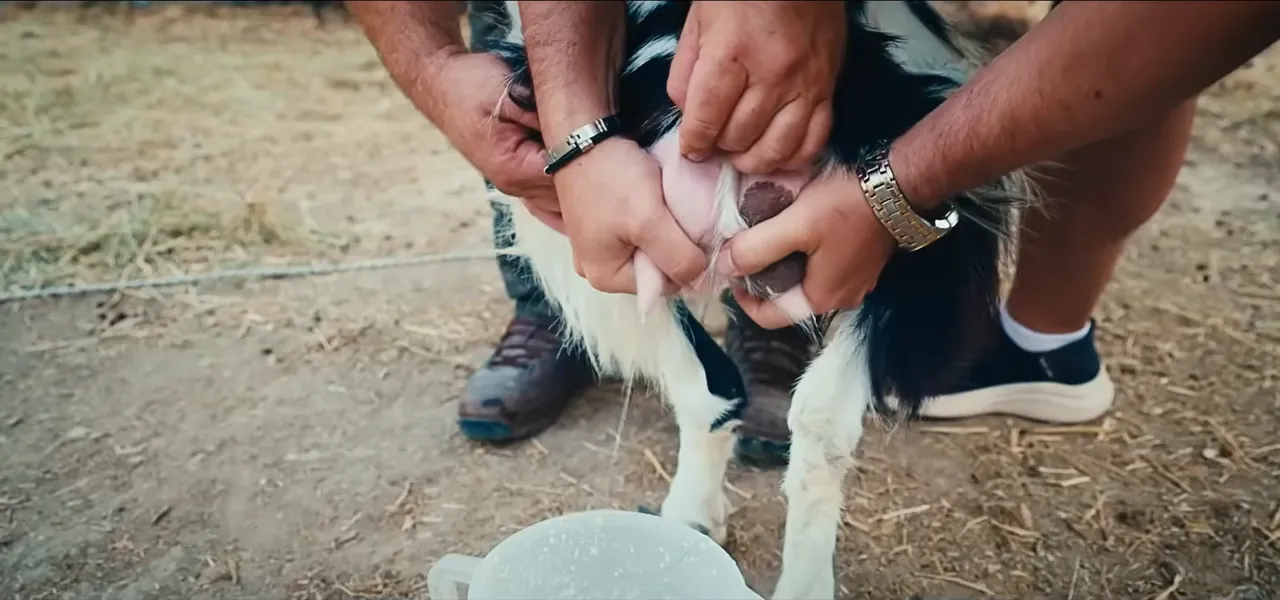
But I contributed at least a glass of horse milk to the evening's dinner, and that felt like something. This is the deal with Travel by Dart: throw a dart at the map, go where it lands — and then, sometimes, do a full day of manual labour you never signed up for.
Everything From the Animals
Dinner, unsurprisingly, came entirely from the herd — new products, new names, and all of it delicious. We had urum, a rich cream skimmed from yak milk. We had khorkhog, lamb pressure-cooked with hot stones dropped right into the pot. And we made buuz, Mongolian steamed dumplings, which the women of the family recruited me to help fold — I was hopeless, but proud to have made them.
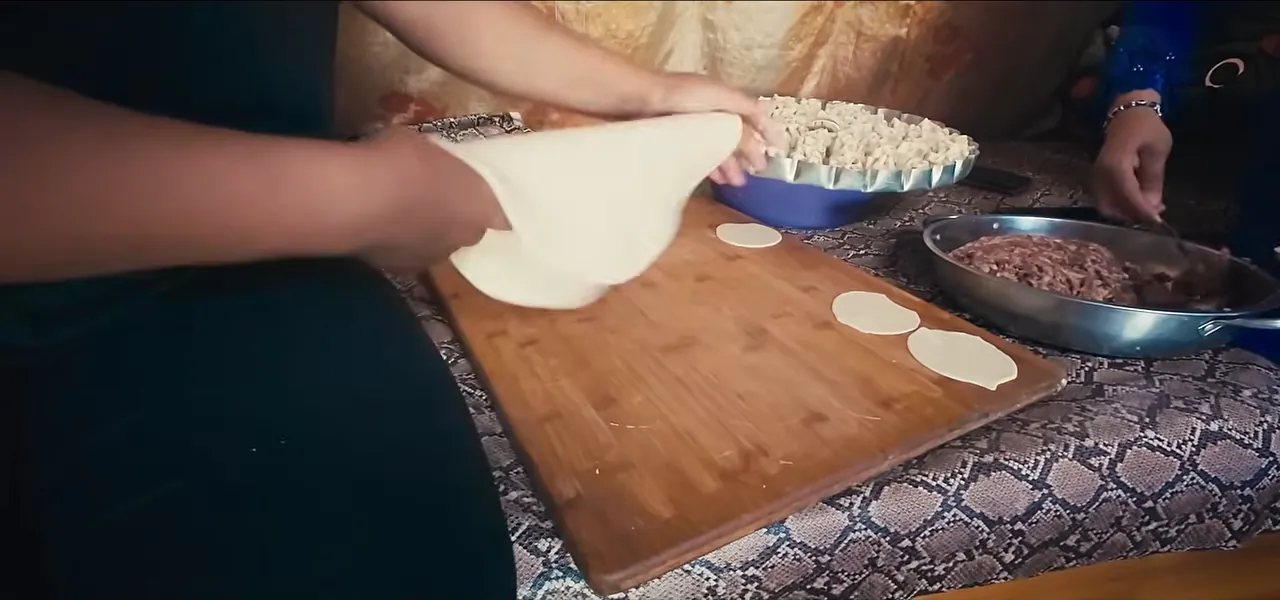
The most surprising item was the alcohol. The family distils their own shimiin arkhi — a milk vodka. They boil fermented yak and mare's milk, and as the steam rises and hits a bowl of cold water, it condenses; the alcohol drips down into a waiting bucket. Watching a clear spirit emerge, drop by drop, from a pot of milk is one of those things you don't quite believe until it's in your cup.
By the numbers: A nomadic table
- Airag
- Fermented mare's milk — fizzy, sour
- Urum
- Cream skimmed from yak milk
- Khorkhog
- Lamb cooked with hot stones
- Buuz
- Steamed meat dumplings
- Shimiin arkhi
- Distilled milk vodka
Naadam: The Three Manly Games
Because it was summer, luck put me in the middle of something special: a local Naadam. Naadam is Mongolia's biggest festival, held in the warm month of July — the national one runs the 11th to the 13th — and it's built around the "Three Manly Games": wrestling, archery and horse racing. This particular celebration was in the village of Bat-Ulzii, which had just been named the best-developed village in the country, so the whole region turned out in their finest, people coming from hundreds of kilometres away.
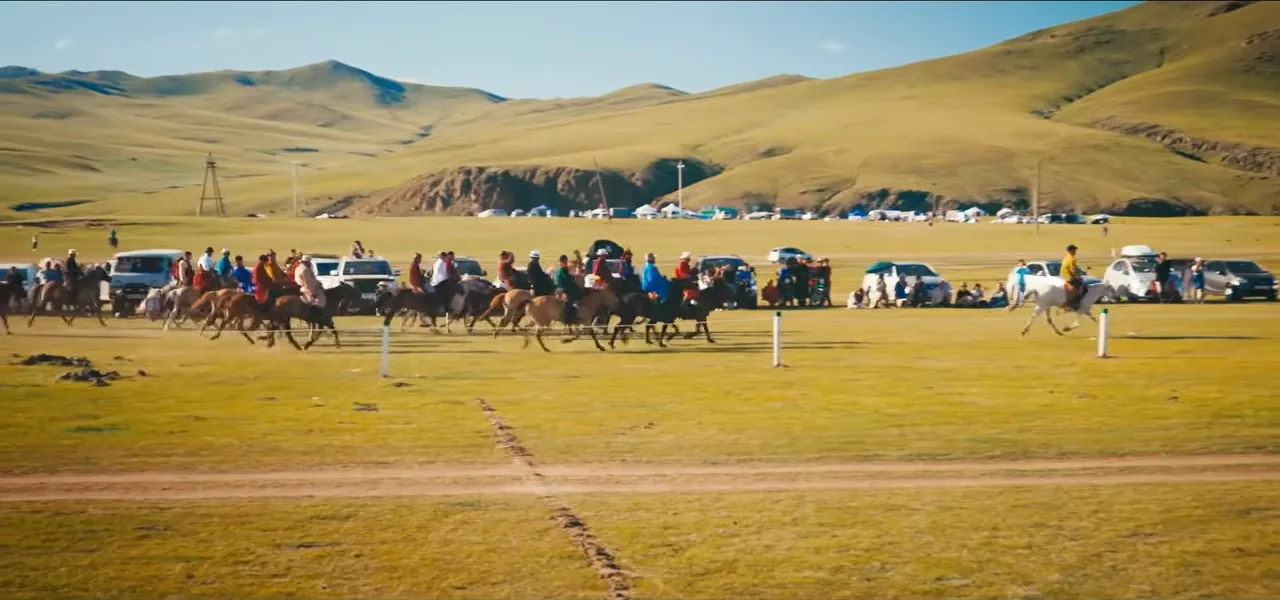
That, to me, was the quiet magic of it. These are people who live so far apart they barely see one another — and Naadam is the day they all come together and celebrate in style. The sports were the highlight. Wrestling is a contest of raw strength and charisma, and before and after a bout the wrestlers perform a distinctive flapping motion with their arms: they're imitating the mythical eagle-like bird Garuda (Khan Garuda), drawing power from it.
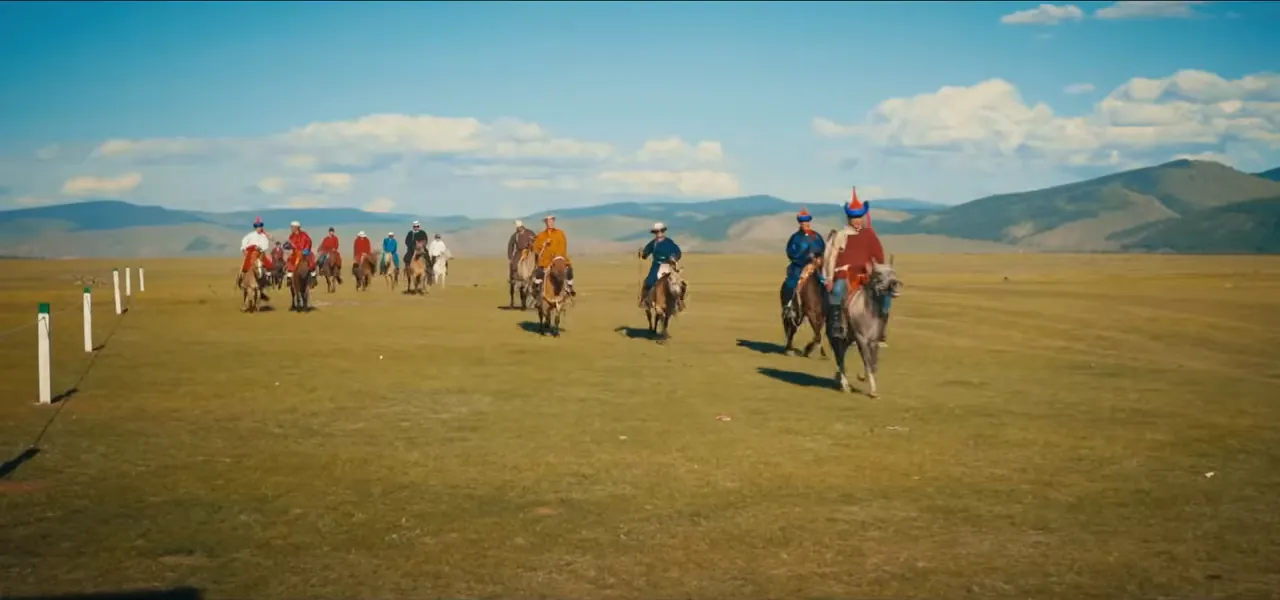
Then came sports I'd never seen. Knucklebone shooting is a team game, a kind of miniature bowling using polished animal anklebones, where the opposing team sings a tune to rattle your concentration. And the archery was extraordinary — arrows loosed at targets two or three hundred metres away, and still finding their mark. Watch enough of it and you understand why: for centuries, these were the exact skills a nomad, and a Mongol soldier, needed to survive.
Camels and the Edge of the Gobi
Saying goodbye to the Bor family was harder than I expected. Spending real time with them made me realise something uncomfortable and true: I know people with a hundred times more who are far less content than this family was. Leaving them happy gave me a genuine jolt of motivation. We moved on to a second family, at the edge of the Gobi Desert, who kept the animal the first did not — the camel.
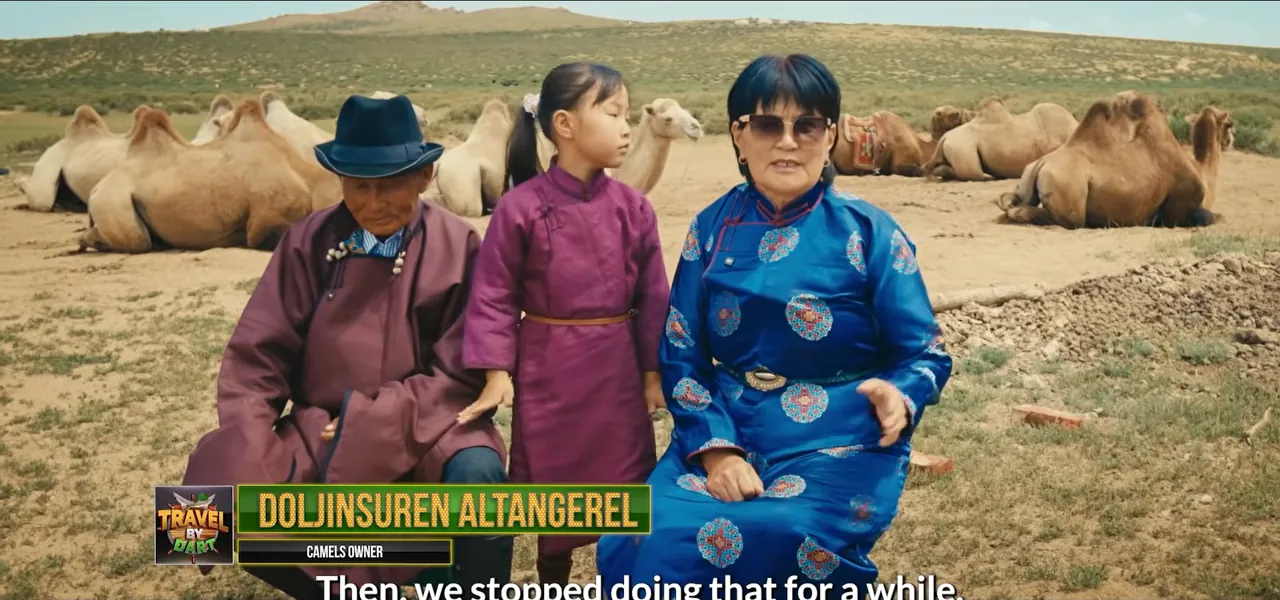
My camel guide was Mr. Davaasüren, who at 80 years old rode a horse and a camel better than anyone I'd met. He took me on a long ride to see the great dunes, and taught me the numbers as we went. The Gobi is the largest desert in Asia — around 1.3 million square kilometres, roughly the size of the UK, Spain and Thailand combined — and it defies the desert stereotype: it's a cold desert that freezes, and sometimes snows, in winter.
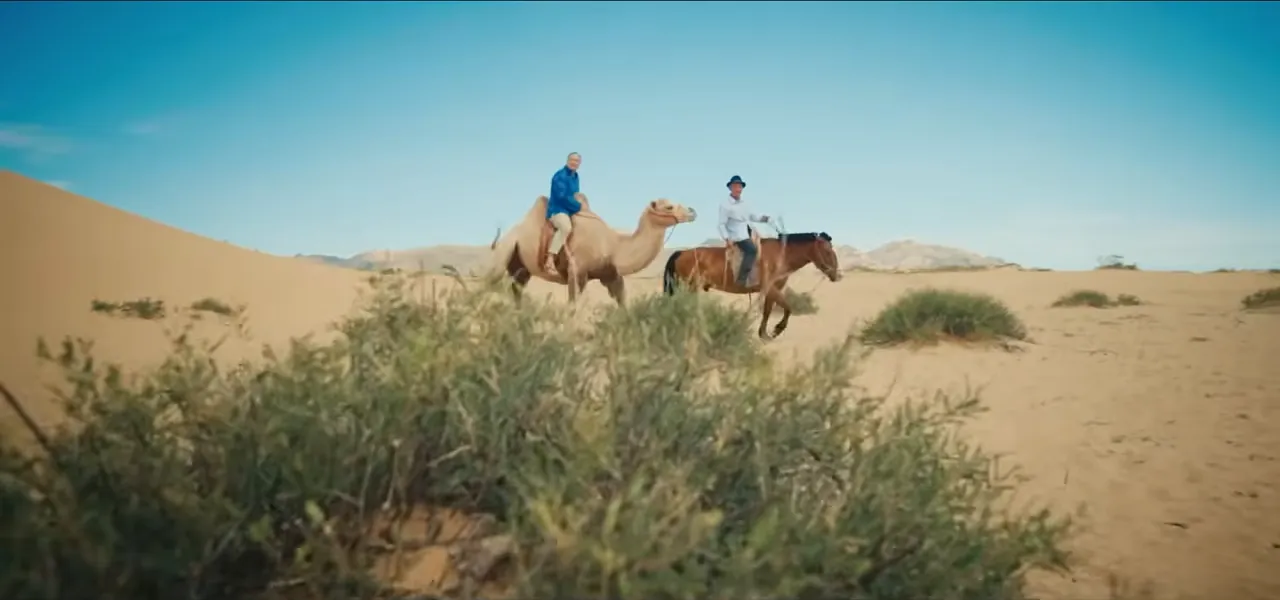
At the top of a dune, Mr. Davaasüren revealed a surprise: a sandboard, strapped to the side of his horse the whole time. He pointed me up the slope and told me to show him what I could do. I was, let's say, slower than I hoped — but sandboarding down a Gobi dune at 80-year-old-guide's suggestion is not a sentence I ever expected to write.
Where the Dart Points Next
After five days in the wilderness — barely showered, thoroughly humbled, and happier than I'd been in a long time — it was time to do what I always do: throw the dart again and surrender to it. I kept the same map I'd used in Vietnam, the one with the Americas on the right and Asia on the left, because it had brought me here, and I wasn't about to argue with luck.
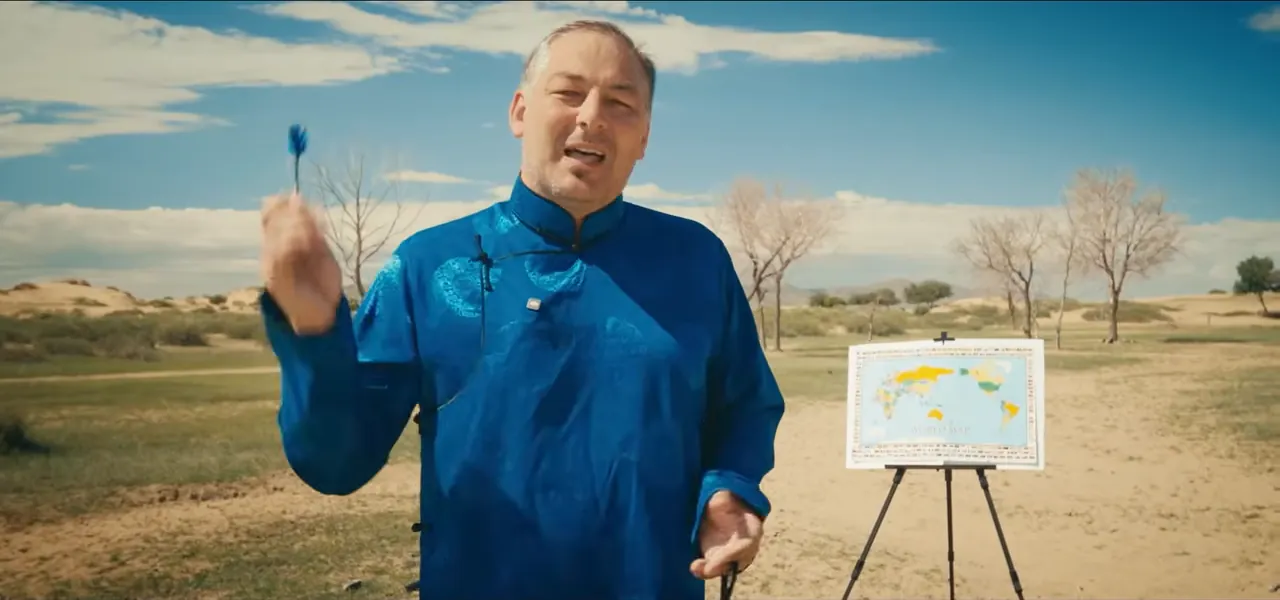
The dart landed out in the Pacific, between Fiji and New Caledonia, and Fiji was closest — so Fiji it was. I couldn't have been more pumped: a place I knew almost nothing about, with friends I could bring along.
But Mongolia is the one that stayed with me. I arrived knowing a single name and not even sure I'd enjoy myself, and I left changed — by the emptiness of the steppe, the weight of Genghis Khan's shadow, the patience of an eagle hunter, and above all by families who have almost nothing by the measures I grew up with, and who are richer in the ways that actually count. If you want to disconnect from the noise of modern life and remember what matters, Nara was right: there may be no better place on Earth. Watch both films above — and if you're following the journey in order, this is where I say goodbye to Asia and head for the South Pacific and my Fiji adventure.
Explore More Travel by Dart Journeys
- Back one dart to Vietnam, where the throw before this one sent me.
- See where the dart landed next: the South Pacific and my Fiji adventure.
- More of the dart's long run through Asia: Cambodia and Thailand.
- Another vast, empty, life-changing landscape: Antarctica.
Suggested Sources & Further Reading
To go deeper into Mongolia, these are some of the best authoritative resources:
- Mongolia — official tourism (mongolia.travel) — the national tourism site.
- UNESCO — Great Burkhan Khaldun Mountain — the sacred mountain tied to Genghis Khan.
- UNESCO — Naadam festival — the Intangible Cultural Heritage listing.
- Encyclopædia Britannica — Genghis Khan — the life and empire behind the legend.
- Encyclopædia Britannica — Mongolia — an authoritative country overview.
All facts verified September 2026.
Mongolia: traveler questions
How many descendants does Genghis Khan really have?+
A widely cited 2003 genetics study led by Chris Tyler-Smith found a Y-chromosome lineage carried by about 8% of men across 16 Asian populations — roughly 0.5% of all men worldwide, or about 16 million people — traced to a single ancestor in Mongolia around Genghis Khan's era. It's the origin of the '16 million descendants' figure, though newer research suggests the true picture is more complex and the number may be smaller.
Is Mongolia really the least densely populated country?+
Mongolia is the most sparsely populated sovereign country in the world, with only about two people per square kilometre across a land nearly the size of Alaska. Its capital, Ulaanbaatar, is also often called the world's coldest capital city, with winter temperatures that drop below minus 40 degrees.
What is a ger (yurt), and can tourists stay in one?+
A ger — Mongolians generally prefer 'ger' to the Russian-derived 'yurt' — is the round, felt-covered tent that nomadic families live in. It's portable, surprisingly warm, and increasingly wired for electricity. Visitors can stay in comfortable tourist ger camps, or, as I did, stay with nomadic families in far simpler conditions.
What is the Naadam festival?+
Naadam is Mongolia's biggest festival, held mainly in July and centred on the 'Three Manly Games': wrestling, archery and horse racing (women compete in archery and horse racing, but not wrestling). The national Naadam runs 11–13 July, but villages hold their own local Naadams across the summer, and they double as the one big social gathering of the year.
How big is the Gobi Desert?+
The Gobi is the largest desert in Asia and among the largest in the world, covering roughly 1.3 million square kilometres — about the size of the UK, Spain and Thailand combined. Unusually, it's a cold desert: it can freeze and even see snow and frost in winter.
What is Mongolian eagle hunting?+
In western Mongolia, mostly among the ethnic Kazakh community, hunters train golden eagles — usually young females taken from the nest — to hunt foxes and hares from horseback. The bond between hunter and bird can last many years, and the eagles are traditionally released back into the wild after about a decade.