Season 7 · Episode 3
Chile
A dictatorship remembered, a nation reinventing itself, and the world’s largest pool.
On this page ▾
By Sorin Mihailovici · Travel by Dart · Last updated November 2026 · ~20 min read
Every journey starts somewhere — sometimes on a runway, sometimes over a map, and sometimes on a stage. Twenty years ago I was a student sitting in the seats of a university auditorium in Edmonton; this time I was back as a guest, asked to talk about how I define success. To me, success is really just a collection of memories — so, live in front of the crowd, I did the only thing that felt right. I pulled on a blindfold and threw a dart at a world map, promising to go wherever it stuck. It could have gone very wrong. Instead the point came down on the long, thin ribbon of Chile, a country that had never once been on my radar. I took off the suit and followed the dart.

Santiago: A City of Two Faces
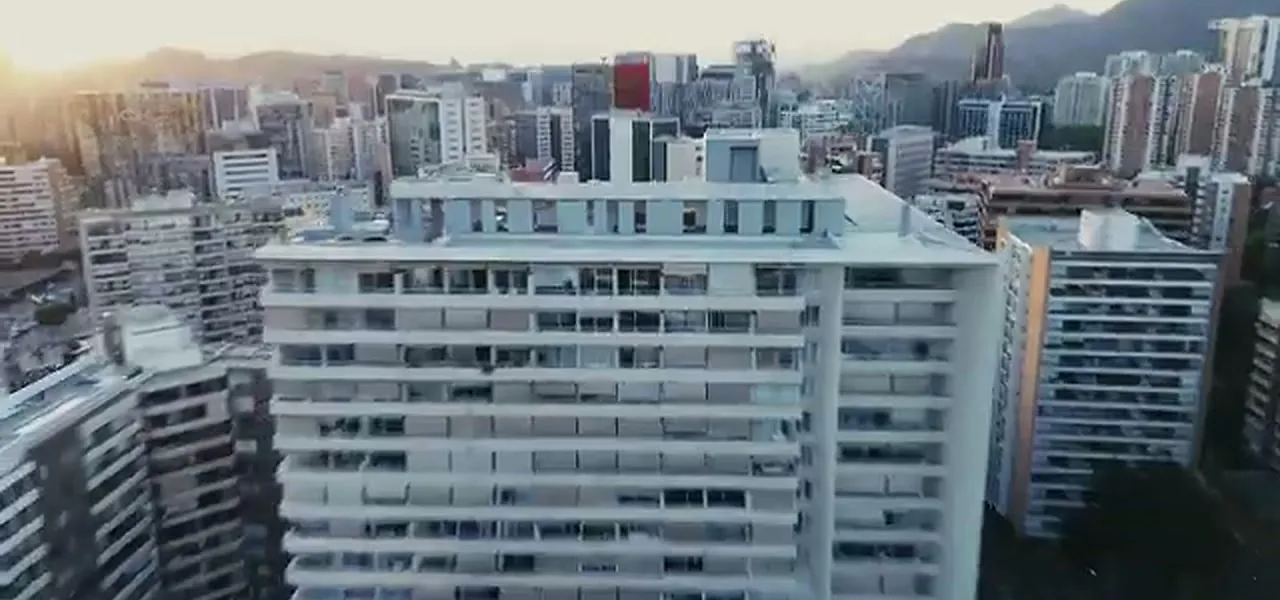
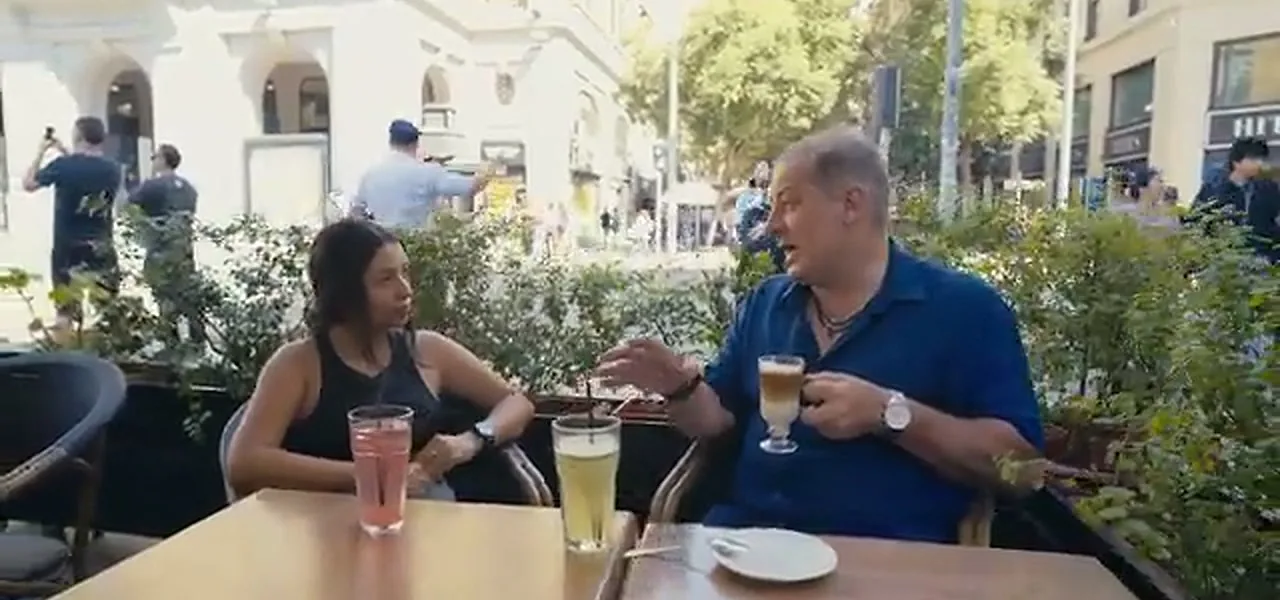
You can't understand a country from its airport; you start with its streets. From above, Santiago looks calm — a sea of towers ringed by the snow-dusted Andes — but that calm is deceptive. My guide was María Paz, young and fiercely proud of her country, and the first thing she showed me was a café where the chairs were chained to the tables, because someone might otherwise grab one and run. Security, she said, is now one of Chile's biggest everyday worries.
Quick facts: Chile at a glance
- This trip
- Santiago & the central coast
- The country
- A ribbon ~4,300 km long, ~180 km wide
- Capital
- Santiago
- The 1973 coup
- 11 September · Pinochet vs. Allende
- Famous for
- Wine (Carménère), the Atacama, extremes
- On the coast
- San Alfonso del Mar — the world's largest pool
- The dart
- Thrown live on a university stage in Edmonton
Santiago is a city of two faces. Turn one corner and you're in the 1700s; turn another and you're in the late 2020s. You feel Latin America and Europe at the same time, and in the last 15 years, María told me, immigration has layered in whole new cultures that weren't here before. The biggest misconception people arrive with? That Chile is somehow undeveloped — no technology, no cars, llamas wandering downtown. Then they land, and the reaction is always the same: wow.
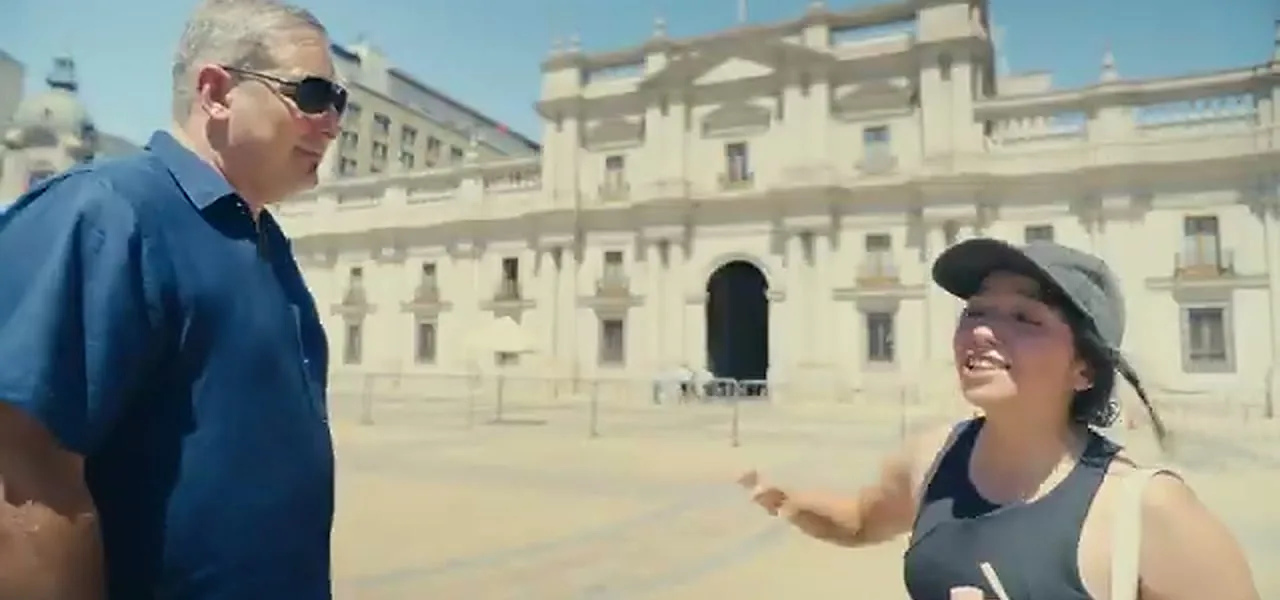
The heart of the city, and of the nation, is La Moneda Palace. It was built in the late 1700s as the colonial royal mint — La Moneda means "the coin" — and the first coins were struck on this very site. Today it's the official seat of Chile's president. But its grand neoclassical façade hides the darkest chapter in the country's modern history.
History Ghosts: The 1973 Coup
On 11 September 1973, General Augusto Pinochet led a military coup against the elected socialist president, Salvador Allende. The palace was attacked and bombed; Allende died inside it; and Chile fell into 17 years of dictatorship marked by torture, disappearances and bloodshed. Standing where it happened, María told me the memory still divides the country: those who lived through the dictatorship often carry fear, while many of the young are more revolutionary, pushing back against the government. Allende's death was officially ruled a suicide — a finding a 2011 forensic investigation confirmed — but for many Chileans it remains an open, painful wound, and some still believe he was killed.
For most visitors, this is history. For some families, it's memory — and one of those families belongs to my friend Rafael. We've known each other more than 25 years, but his Chilean story I only heard later. Rafael was born here, and when the coup came, his father — a young man working a government job in downtown Santiago — was taken political prisoner.
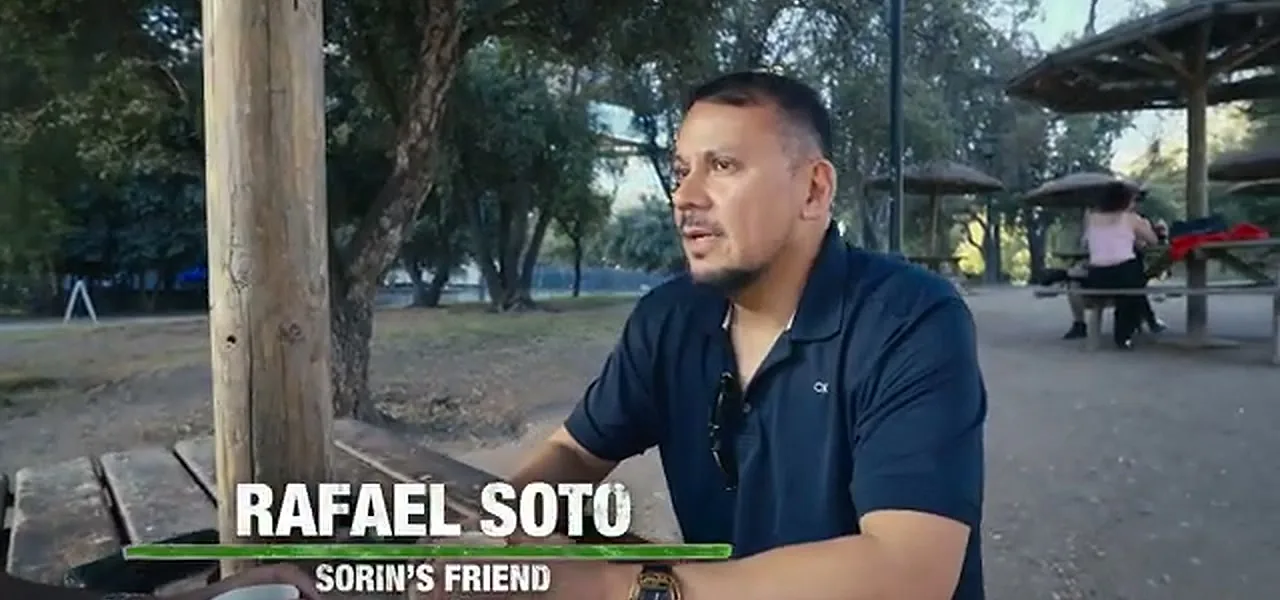
What Rafael told me stopped me cold. His father was held in the Estadio Chile, where, he said, around 40,000 people were detained. The torture there was systematic: those who resisted were eventually released; those who "confessed" — often to things they'd never done, just to make the pain stop — frequently disappeared. His father survived partly by luck: a Red Cross worker who happened to know him helped him recover his original Chilean identity card. His name still appears in a book, published by someone tied to the regime, that branded more than 3,000 people "terrorists." He was never a terrorist. Released after about nine months, transferred north near Calama, held another six, then finally freed — and, because he was now blacklisted and couldn't work, helped by a Canadian priest to emigrate. Canada became home. But Chile never let go.
The stadiums Rafael described weren't abstractions. In the weeks after the coup, Santiago's arenas were turned into mass prisons, and the most infamous of them, the Estadio Chile, is where the beloved folk singer Víctor Jara was detained, tortured and murdered in September 1973 — his hands reportedly broken before he was killed. The stadium now bears his name. If you want to understand this chapter honestly, Santiago offers a place built for exactly that: the Museo de la Memoria y los Derechos Humanos, the Museum of Memory and Human Rights, which documents the dictatorship's victims without flinching. It's not a comfortable visit. It isn't meant to be.
That memory's been washed away, but there's still a lot of resentment in the air. There are divisions marked through family bloodlines — and a lot of the youth aren't being taught this in school, so it's being washed from the history.
Empanadas, and a Barrio Ruled by Fear
History doesn't only live in palaces. Sometimes it lives in a kitchen. Rafael's cousin Karen stayed in Chile, caring for the family's elders and raising three kids — and keeping a tradition alive. She has been making empanadas for years, the recipe and the secrets passed down from her grandmother, whom she watched cook as a little girl.
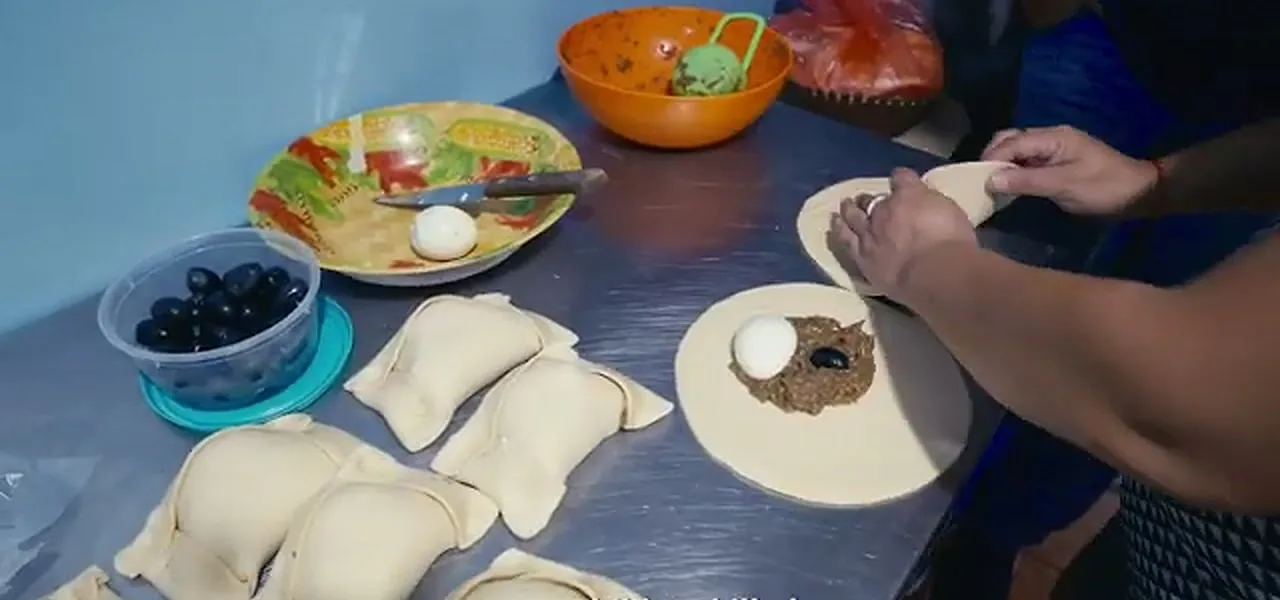
But the neighbourhood around her tells a harder story. The sector, Karen said plainly, has gone bad — a lot of crime, a lot of drug trafficking, a lot of death. A few streets over is where the trafficking concentrates, and the greatest danger is simply keeping children safe on the street, where a stray bullet has already killed kids. It's a stark reminder that behind Santiago's modern skyline, some communities live under a constant, grinding fear. And yet, in the middle of it, Karen cooks — for her family, for her neighbours, for the simple pleasure of making people happy. Her empanadas taste like they've been made the same way for decades, because they have.

The Voice of a New Generation
If Karen keeps the old traditions, the young generation finds its own channels. Every city has a soundtrack, and in Santiago one of the voices behind it is Benjamín Páez, a rapper from Calama — a hard mining town up north that he describes bluntly as "a hole," full of poverty. He started improvising, he said, for one person above all: his mother, to lift her out. In Chile, he told me, if you don't make music and you're not a footballer, you can end up pulled into "other things." Music was his way out.
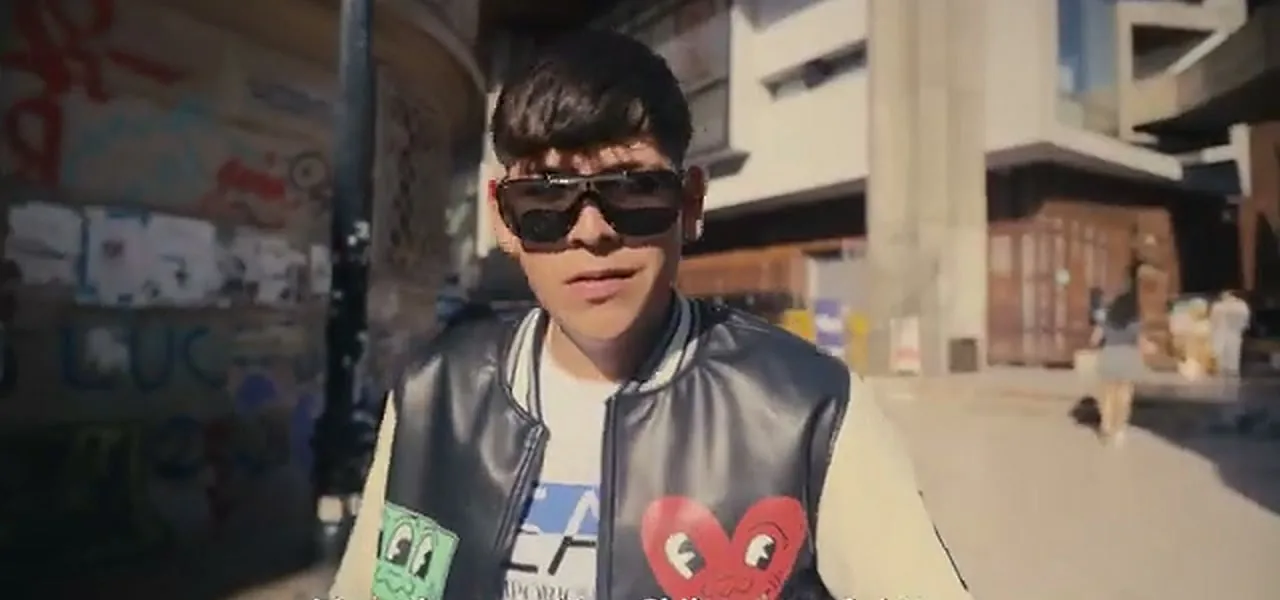
Benjamín frames his whole generation as fighters — luchadores. They came of age during Chile's estallido social, the 2019 social uprising, and they're still fighting for things like education and relief from crushing student debt. Rap, to him, isn't a sideshow; it's the same impulse as any other art, a way to make something out of struggle. Cities change, but the music keeps the pulse.
In Chile, if you don't make music, if you're not a footballer, you get pulled into other things. I make music to get ahead — and to lift up my mother. We're a generation of fighters.
That uprising he mentions isn't ancient history either. In October 2019, what began as a student protest over a metro fare hike exploded into the largest demonstrations Chile had seen since the return of democracy — millions in the streets, not really about the fare at all but about inequality: pensions, healthcare, education, the cost of simply getting by. It left scars and a long, unfinished argument about rewriting the Pinochet-era constitution. Benjamín's generation came of age inside that moment, and you hear it in the music — angry, literate, and refusing to let the past be quietly deleted from the schoolbooks.
Second Life: Starting Over in Chile
Some people leave Chile because of its history. Others arrive looking for a future. Karen Santos came from Brazil with a tourism degree and a feeling that she no longer belonged in her hometown. A friend already living in Chile told her, simply, come. She came for three months — and never left.
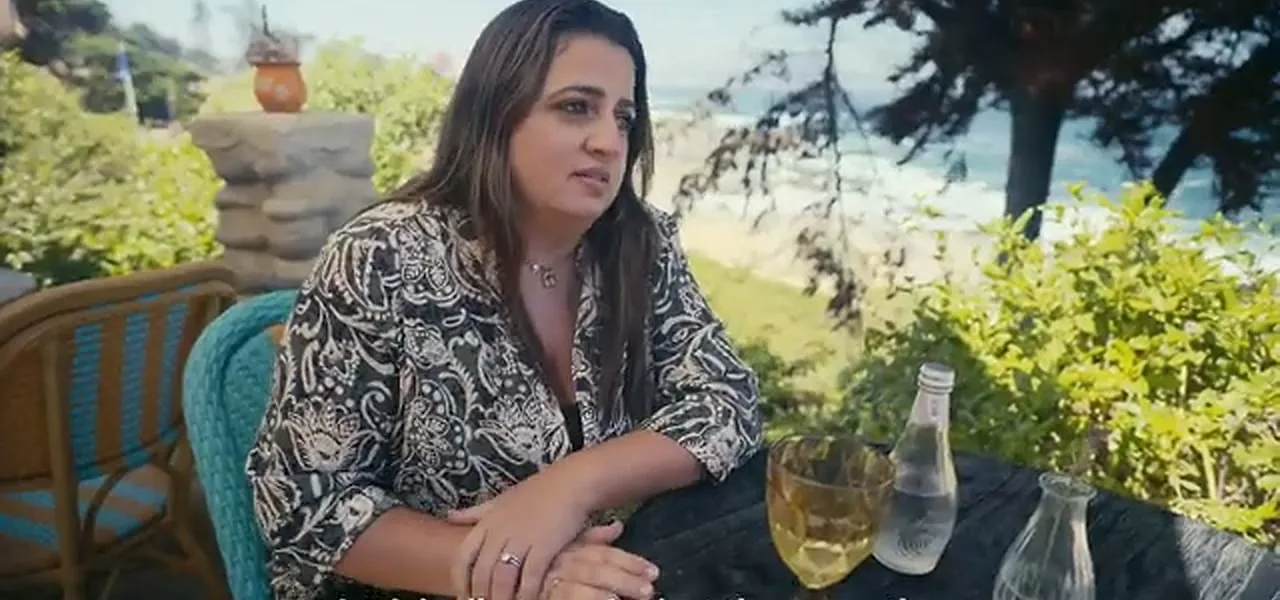
Chile, for a growing number of people, is becoming a place to press reset. Karen built a career in tourism — standing out, she said, as one of very few women in the field, winning awards, eventually opening her own company — and today she helps travellers, foreign and local, discover the country she now calls home. It isn't frictionless: a temporary visa that took six months a decade ago can now take nearly two years. But she stayed, because Brazil, for all she loves it, taxes and squeezes in ways Chile doesn't. She feels Chilean now, she told me, and she isn't going back.
I came for three months. I got a job in my field, and I saw it would be good to stay. I went back to Brazil on vacation, and I realised — no, I don't have to return. I'm still here today.
Bottled Chile: The Lost Grape
To show me yet another side of the country, Karen took me to a winery — and Chile earns the detour. It exports nearly 800 million litres of wine a year, and the reason is geography: a country this long and thin crams in an absurd range of terroirs, from calcareous to volcanic soils (Chile has more than 2,000 volcanoes), cooled by the Pacific on one side and freshened by the Andes on the other. At the historic Undurraga winery, a sommelier named Fernanda walked me through the cellars and poured me the story in a glass.
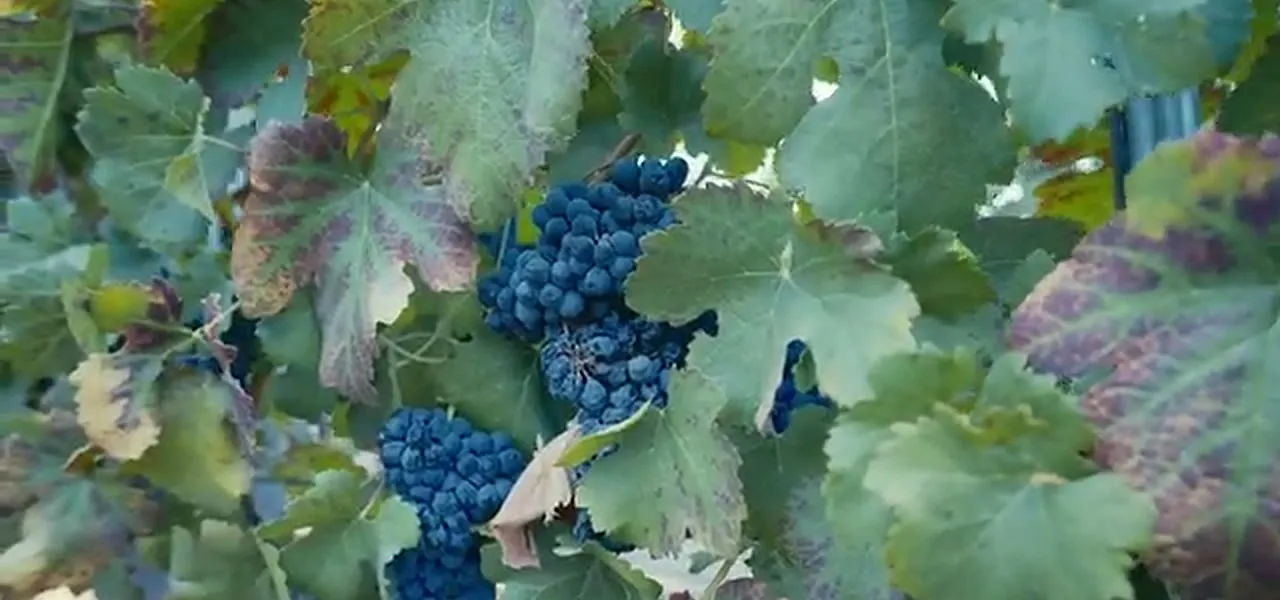
The best part is a genuine detective story. Chileans have grown wine since the 16th century, and in the early 1800s brought over cuttings of Cabernet Sauvignon and Merlot. But a rumour took hold that Chilean "Merlot" behaved strangely — different from Merlot anywhere else. It reached France, which sent a team of specialists, and in 1994 they confirmed the truth: it wasn't Merlot at all, but Carménère, an old Bordeaux variety long believed extinct in Europe. Chile had unknowingly been the grape's last refuge. Today Carménère is Chile's signature wine — and, Fernanda admitted with a grin, her personal favourite.
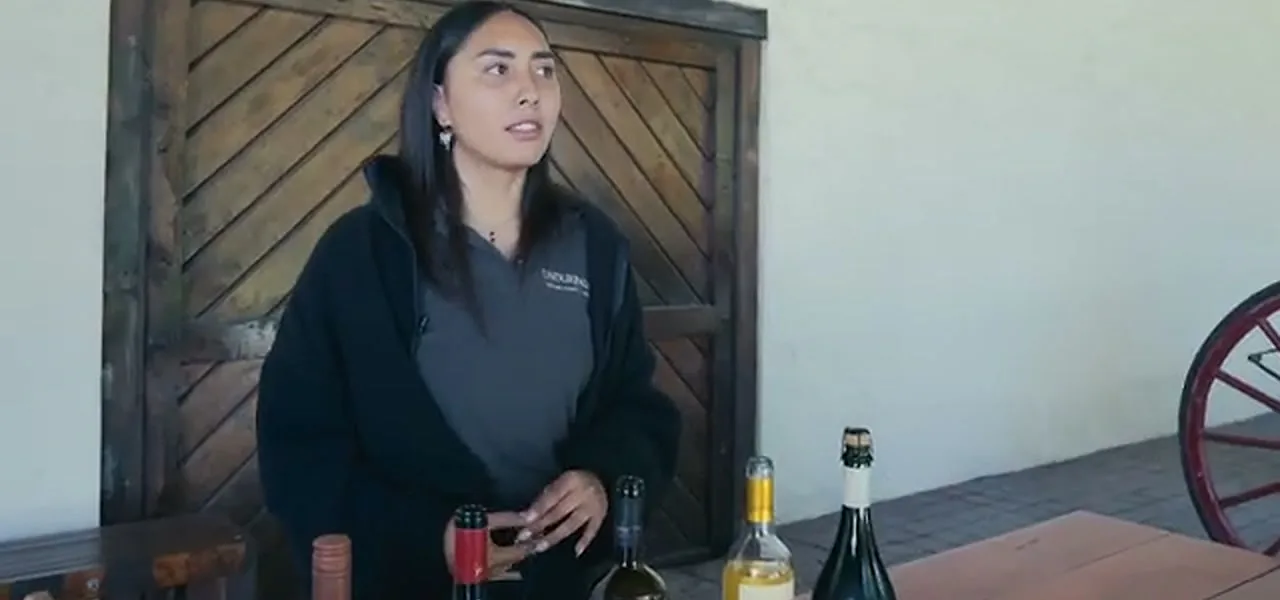
Fernanda also punctured a myth I'd believed my whole life: the dimple in the bottom of a wine bottle has nothing to do with quality — it's about the bottle, and marketing. A heavier bottle with a deeper punt just feels expensive. In the end, she said, there are only two kinds of wine: the one you like, and the one you don't.
At the end of the day, for us there are just two kinds of wine: the wine that you like, and the one you don't — independent of the category, the presentation, all of that.
She's a little wistful about the future, mind you. The younger generation, she admitted, isn't drinking as much wine as their parents did — they lean toward pisco, whisky, other things. For now, a bottle of wine still anchors a Chilean family dinner or a celebration, a quiet tradition handed down like Karen's empanada recipe. Whether it survives the next generation is, like a lot of things here, an open question.
The Ocean Somebody Built
Chile stretches for thousands of kilometres along the Pacific, and sometimes, in the most unexpected places, you stumble onto something genuinely surreal. Karen and her colleague Diana brought me to the coastal town of Algarrobo, where the wild Pacific breaks just metres from the shore — and where somebody decided to build an ocean of their own. This is San Alfonso del Mar, and it holds the Guinness record as the largest swimming pool on Earth.
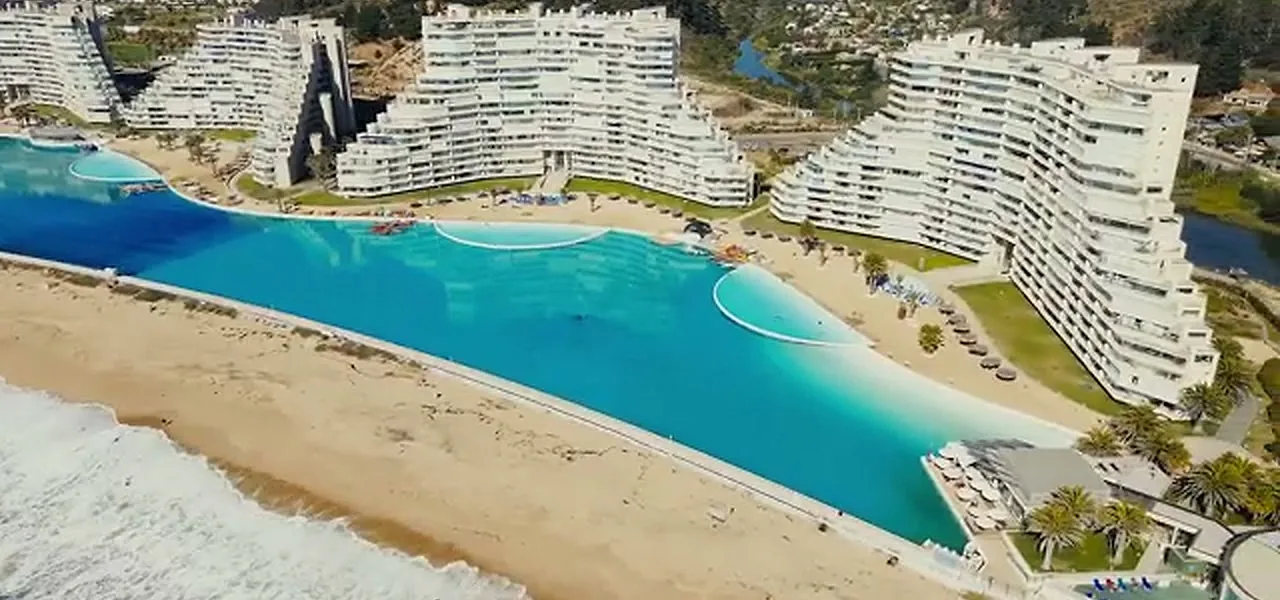
The scale is hard to believe: roughly a kilometre long, about 8 hectares of crystalline water, filled not with fresh water but with filtered seawater drawn straight from the Pacific and run through special machines until it's perfectly clear. The whole complex, Diana told me, cost on the order of $2 billion to build, with two to four million more every year just to maintain. It took around six years to construct — "not," as I put it, "a weekend DIY project" — and it hasn't been without controversy: locals objected that it swallowed public beach and raised ecological concerns.
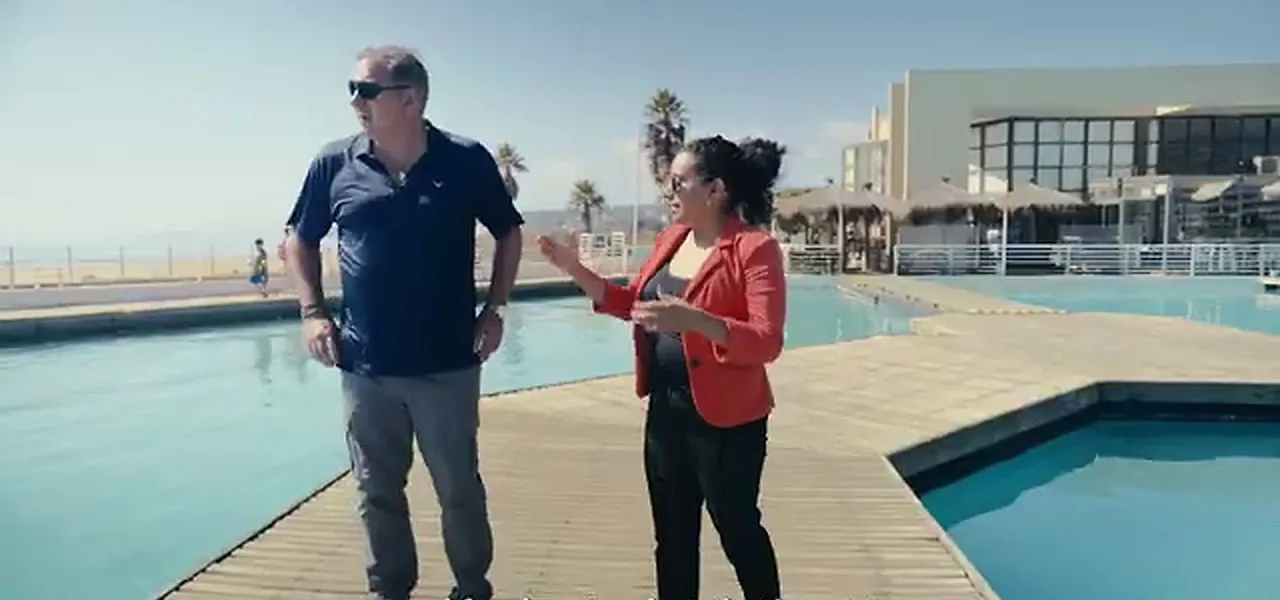
So why build it? Because it works. Algarrobo sits a comfortable 80 minutes from Santiago, near UNESCO-listed Valparaíso, with a view Diana swears you won't find anywhere else in Latin America — and the pool put the town on the map. In summer, thousands of visitors (many of them Brazilian) pour in. It's a Guinness-record oddity, a luxury playground, and, increasingly, a piece of local history. The Pacific is wild and unpredictable; this is the version you can control.
By the numbers: Chile, by the numbers
- Length of the country
- ~4,300 km, averaging ~180 km wide
- Volcanoes
- More than 2,000
- Wine exported
- ~800 million litres a year
- Carménère rediscovered
- 1994 — thought extinct in Europe
- The 1973 coup
- 11 September · ~40,000 held in Estadio Chile
- World's largest pool
- ~1 km long · 8 hectares · Guinness 2006
- Pool complex cost
- ~$2 billion (per the resort)
If You Want to Go: Visiting Chile
Chile is one of the easier South American countries to travel, and Santiago is the natural base — a modern capital with a metro, good food, and the Andes on the doorstep (you can be skiing or hiking within an hour or two). Don't skip the hard history: the Museo de la Memoria, La Moneda, and the Barrio Bellavista and Lastarria districts give you the city's range in a day or two. For the coast, Algarrobo and the giant pool pair naturally with UNESCO-listed Valparaíso and Viña del Mar, all roughly 80–100 minutes west. Wine country — the Maipo, Casablanca and Colchagua valleys — is close enough for a day trip, and a Carménère tasting is close to mandatory.
Use normal city sense, especially after dark and in neighbourhoods you don't know, and lean on local guides — the good ones, like the people I travelled with, open doors and give you the honest version of a place rather than the brochure. And if the dart, or your own curiosity, ever pulls you further north, save time for the Atacama: it's a long way from Santiago, and worth every kilometre.
What Chile Left Me With
Chile is a country of extremes — from the largest swimming pool ever built to the driest desert on Earth, from a palace bombed by its own army to a kitchen where a grandmother's recipe outlives a dictatorship. In a few days it gave me history and reinvention, fear and generosity, trauma carried in bloodlines and hope carried in music, wine, and the simple courage of people who stayed, or started over. It surprised me in ways I didn't expect, and it refused to be a single story. What stays with me is how close the opposites sit here: a torture site and a music scene, a grandmother's kitchen and a billion-dollar pool, a nation still arguing with its own past while quietly becoming one of the most dynamic places on the continent. I came knowing nothing, dragged here by a dart I threw as a kind of dare. I left convinced that the countries we know least are often the ones with the most to say.
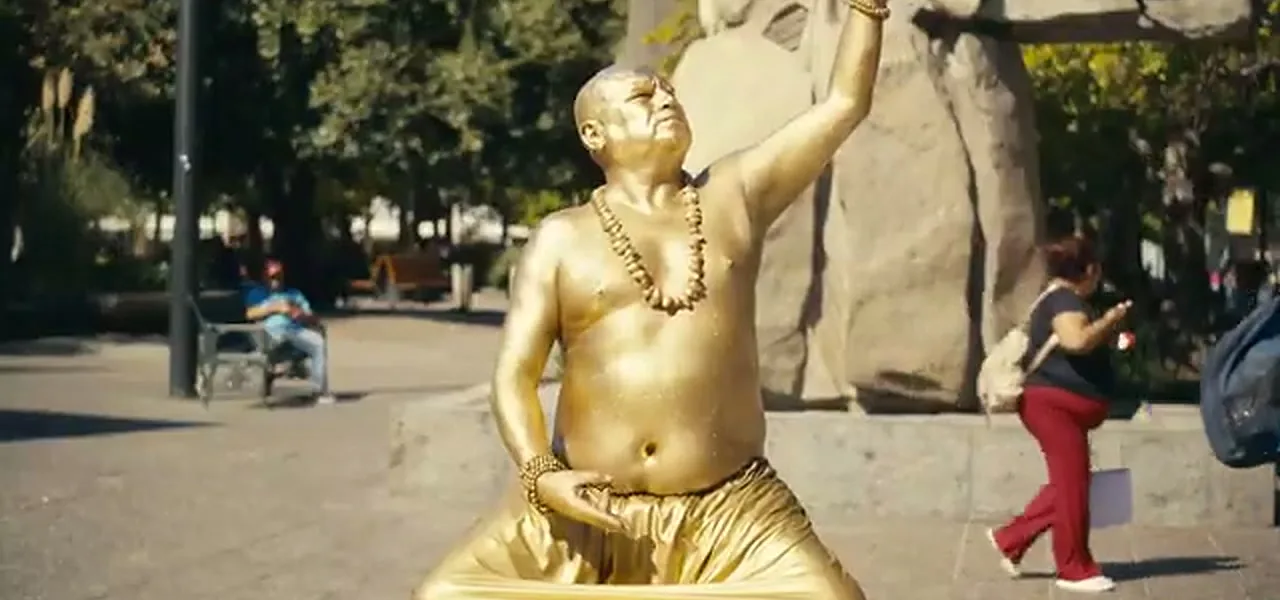
But the dart wasn't finished with Chile yet. Far to the north, beyond the cities and the vineyards, lies one of the most extreme landscapes on the planet: the Atacama, the driest desert on Earth, a place where people go searching for healing, adventure, and sometimes answers. Some journeys take you across the world. Others take you to another planet.
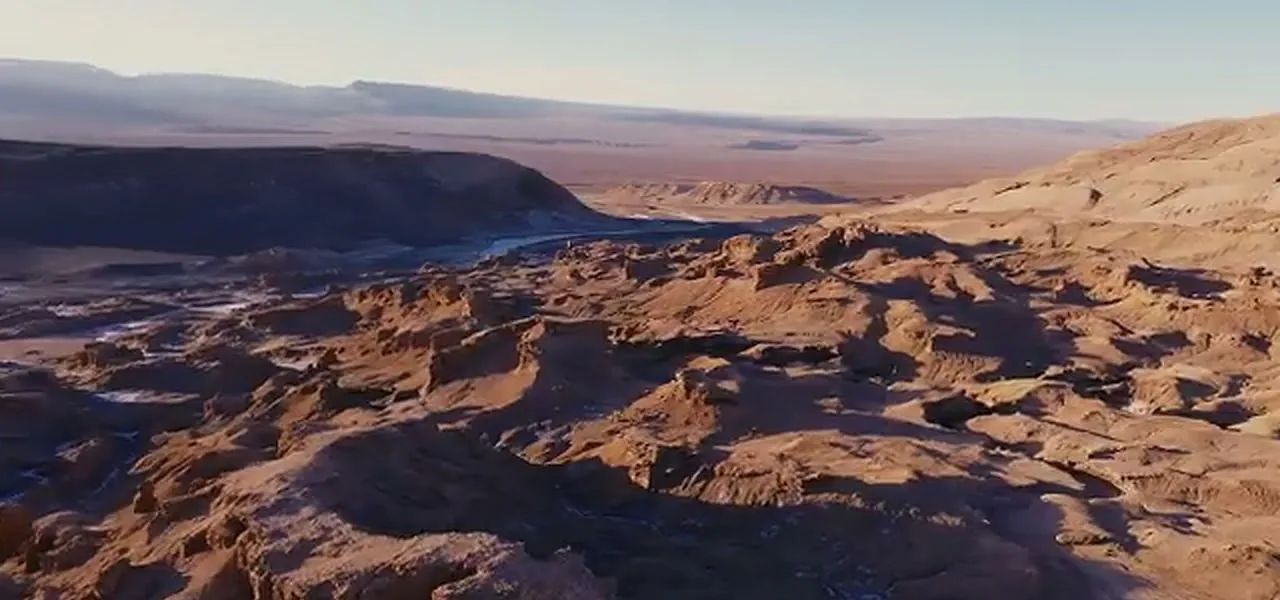
Explore More Travel by Dart Journeys
- The next chapter, far to the north: the driest desert on Earth, the Atacama Desert.
- Where Karen Santos started — and the country that shaped so much of Chile's story: Brazil.
- Over the Andes to Chile's great rival and neighbour: Argentina.
- And up onto the altiplano, to the silver mountains and salt flats of Bolivia.
Suggested Sources & Further Reading
To go deeper into Chile, its history and its wine, these are some of the best authoritative resources:
- Encyclopædia Britannica — Chile — the country, its geography and its people.
- Encyclopædia Britannica — the 1973 Chilean coup — Allende, Pinochet and the dictatorship.
- Museo de la Memoria y los Derechos Humanos — Santiago's museum of memory and human rights.
- Wine Folly — Carménère — the story and character of Chile's signature grape.
- San Alfonso del Mar — the record-setting pool at Algarrobo.
All facts verified November 2026.
Chile: traveler questions
Is Chile safe for travelers?+
Santiago is one of South America's most developed capitals and I moved around it comfortably, but it isn't without problems — my guide pointed out café chairs chained to tables, and petty crime and some rough neighbourhoods are a real concern, as they are in many big cities. In certain barrios, drug trafficking and violence are serious. As always, I used local guides, kept my wits about me, and avoided flashing valuables. Beyond the capital, the central coast and wine country felt very relaxed. Check your government's current travel advice before you go.
What happened at La Moneda in 1973?+
La Moneda is Chile's presidential palace in Santiago, originally built in the late 1700s as the colonial royal mint (hence 'La Moneda,' the coin). On 11 September 1973, General Augusto Pinochet led a military coup against the elected socialist president Salvador Allende; the palace was bombed, Allende died inside it, and Chile entered 17 years of dictatorship marked by torture, disappearances and thousands of deaths. Allende's death was officially ruled a suicide — a finding a 2011 forensic investigation upheld — though it remains an emotional, contested subject for many Chileans. The memory still divides families today.
Why is Chile famous for wine, and what is Carménère?+
Chile is one of the world's great wine countries — it exports roughly 800 million litres a year — thanks to a long, thin geography that packs in wildly varied terroirs between the Andes and the Pacific. Its signature grape is Carménère, an old Bordeaux variety thought extinct after phylloxera devastated Europe. For decades Chilean growers believed they were growing Merlot, until specialists confirmed in 1994 that it was actually the 'lost' Carménère — making Chile the grape's world home. I tasted it at the historic Undurraga winery with a sommelier named Fernanda.
Where is the world's largest swimming pool?+
At the San Alfonso del Mar resort in Algarrobo, on Chile's central coast about 100 km west of Santiago. It stretches roughly a kilometre, covers about 8 hectares, and was recognised by Guinness World Records in 2006 as the world's largest swimming pool — filled with filtered seawater pumped straight from the Pacific that crashes just metres away. (Newer mega-pools have since claimed the record, but it remains the largest in the Americas and the icon of the town.) It's a surreal, controversial, unforgettable place.