Season 1 · Episode 2
Indonesia
17,000 islands, the most biodiverse ocean on Earth, a UNESCO-listed sailing ship and a birthday at sea — from someone who threw a dart at the map and actually went.
On this page ▾
By Sorin Mihailovici · Travel by Dart · Last updated July 2026 · ~17 min read
I don't choose where I travel. I stand in front of a world map, throw a dart, and go wherever it lands. This time I threw it not from a studio but from a rooftop in Panama City, with the Panama Canal behind me — a "lifestyle" throw between episodes, just to prove the concept works anywhere. The dart crossed the Pacific and hit a scatter of green near Australia. "Close to Australia… it looks like Indonesia." And just like that, after a quick stop home in Romania, I was flying to the other side of the world again.
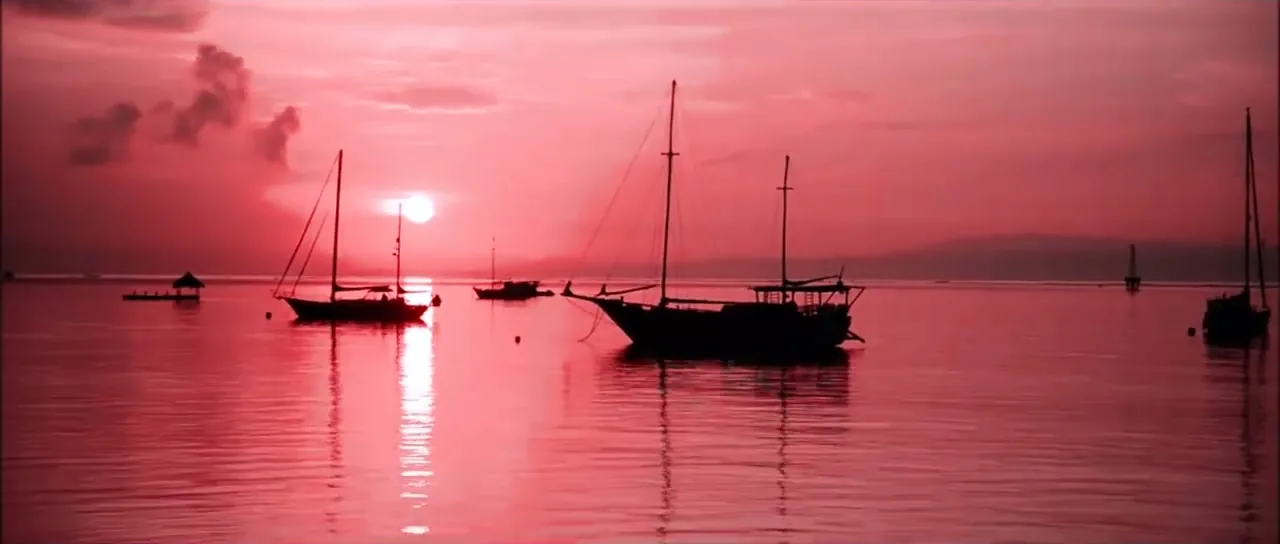
What made it stranger is how I got there. My best friend Matt wanted to spend his 30th birthday "somewhere tropical," so a random dart throw turned into a birthday voyage — four of us boarding a black-hulled wooden ship off Lombok that looked, as one of my friends put it, like something out of Pirates of the Caribbean. But this article isn't the trip diary. It's the piece I wish I'd read before I landed: a complete, fact-checked guide to Indonesia — the geography, the culture, the science and the history behind the islands the dart dropped me into.
Quick facts: Indonesia at a glance
- Official name
- Republic of Indonesia
- Capital
- Jakarta (moving to Nusantara)
- Population
- ~281 million (4th largest)
- Islands
- ~17,000 (world's largest archipelago)
- Language
- Indonesian (Bahasa Indonesia) + 700+ others
- Religion
- ~87% Muslim (world's largest Muslim population)
- Currency
- Indonesian rupiah (Rp)
- Motto
- Bhinneka Tunggal Ika — 'Unity in Diversity'
- Best time to visit
- Dry season, ~May–September
Where Is Indonesia? The World's Largest Archipelago
Ask most travelers to place Indonesia on a map and they'll point to Bali — one island out of roughly seventeen thousand. Indonesia is the largest archipelagic nation on Earth, a country made almost entirely of islands, draped along the equator between the Indian and Pacific Oceans and forming a bridge between the continents of Asia and Australia.
The numbers are hard to hold in your head. By its own 1996 maritime law the country counts 17,508 islands; its statistics agency tallied around 17,000 in a 2024 survey, the figure rising and falling as islands are surveyed, named and — with rising seas — occasionally lost. Only about 6,000 are inhabited. End to end, Indonesia stretches some 5,100 kilometres — roughly the distance from London to New York — and spans three time zones. It is the world's fourth most populous country, with about 281 million people, behind only India, China and the United States.
By the numbers: Indonesia
- Islands
- ~17,000 (about 6,000 inhabited)
- Population
- ~281 million (4th in the world)
- Distance, east to west
- ~5,100 km, across 3 time zones
- Ethnic groups
- 1,300+
- Living languages
- 700+
- Active volcanoes
- ~127 (most of any country)
- Muslim population
- ~242 million (largest on Earth)
- UNESCO World Heritage Sites
- 10+
A Nation of 280 Million: "Unity in Diversity"
If the geography is staggering, the human map is more so. Indonesia is home to more than 1,300 ethnic groups speaking over 700 living languages — one of the highest counts of any country on the planet. The Javanese alone number over 100 million; then come the Sundanese, Batak, Madurese, Bugis, Balinese, Sasak and hundreds more, each with its own language, dress, cuisine and customs.
What holds a country this fragmented together? Partly a shared national language. Bahasa Indonesia — a standardized form of Malay — was deliberately chosen at independence as a neutral tongue that belonged to no single dominant group, and it works: an ambitious child in a Papuan highland village and a banker in Jakarta can understand each other. And partly a national creed, stamped on the country's coat of arms: Bhinneka Tunggal Ika, "Unity in Diversity."
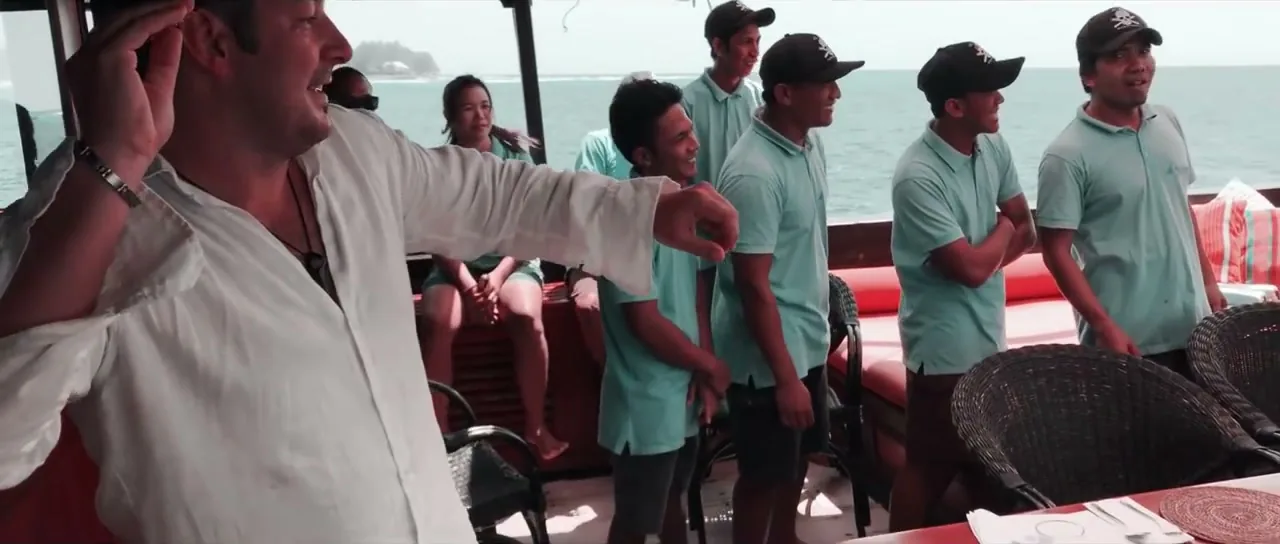
Indonesia is also the world's most populous Muslim-majority nation. Around 87% of Indonesians are Muslim — roughly 242 million people, the largest Muslim population of any country — yet the state is not an Islamic theocracy. Its founding philosophy, Pancasila, enshrines belief in one God alongside official recognition of Islam, Protestantism, Catholicism, Hinduism, Buddhism and Confucianism. On Lombok you feel this everyday Islam gently: the call to prayer drifting over the water, the modest warmth of the markets, the Panjang Umurnya birthday song the crew sang for Matt.
The Ring of Fire: Living With Volcanoes
Indonesia exists because of violence deep in the Earth. The islands sit on the Pacific Ring of Fire, where several of the planet's tectonic plates grind together, and the country holds about 127 active volcanoes — more than any other nation. That geology is a double-edged gift: it builds the islands and enriches the soil (volcanic ash is why Java's rice terraces are so absurdly fertile), but it also makes Indonesia one of the most seismically dangerous places on Earth.
Two eruptions here rewrote world history. In 1883, Krakatoa (Krakatau), between Java and Sumatra, exploded with a sound heard nearly 5,000 kilometres away — still considered the loudest sound in recorded history — killing tens of thousands and dropping global temperatures. Decades earlier, in 1815, Mount Tambora on Sumbawa produced the largest volcanic eruption in recorded human history. It threw so much ash into the atmosphere that 1816 became known worldwide as "the Year Without a Summer," causing crop failures and famine as far away as Europe and North America.
The Coral Triangle: The Most Biodiverse Ocean on Earth
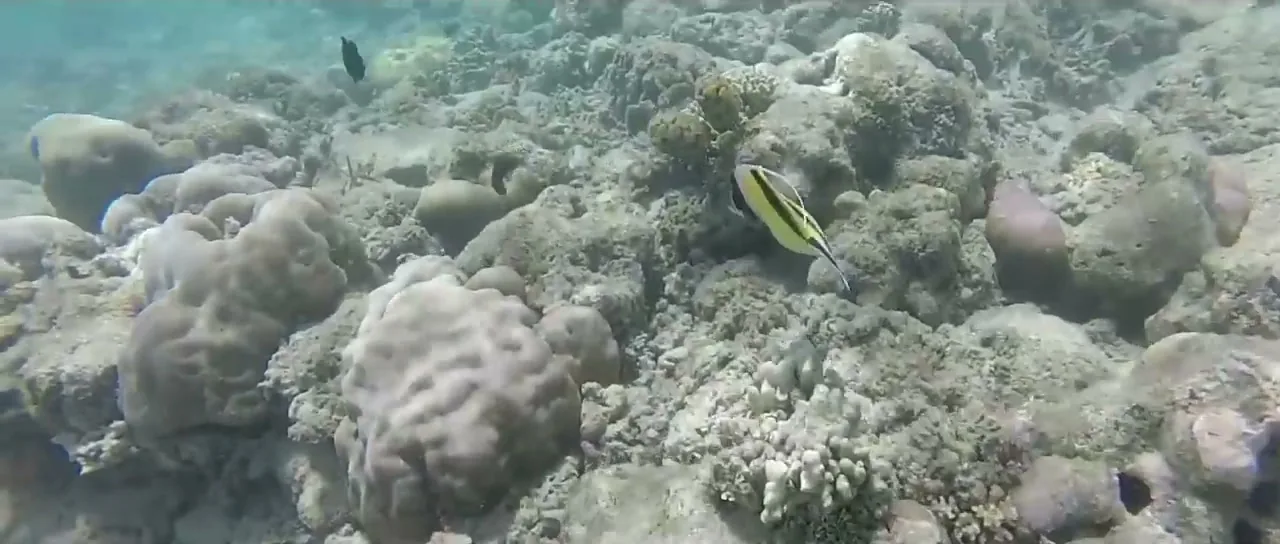
The best hours of this trip happened underwater. We snorkeled three times in a single day, and even with a mask full of seawater I could see it: reefs crowded with fish "in all colours," sea turtles gliding beneath us, whole cities of coral under the jetty where the fish gather in the shade.
That wasn't luck. Indonesia sits at the very heart of the Coral Triangle — a roughly six-million-square-kilometre patch of ocean spanning Indonesia, Malaysia, the Philippines, Papua New Guinea, Timor-Leste and the Solomon Islands that is, without exaggeration, the most biodiverse marine region on the planet. It holds around 76% of all known coral species on Earth and about 37% of the world's reef fish, along with six of the world's seven species of marine turtle. Nowhere else even comes close.
The Coral Triangle by the numbers
Lombok and the Gili Islands
For all its fame, Bali is just one island — and Indonesia's real magic is often the one next door. Lombok, immediately east of Bali across a narrow strait, is drier, quieter and less developed, ringed by beaches its bigger neighbour would kill for and crowned by the volcano Rinjani. It was my base for this whole adventure.
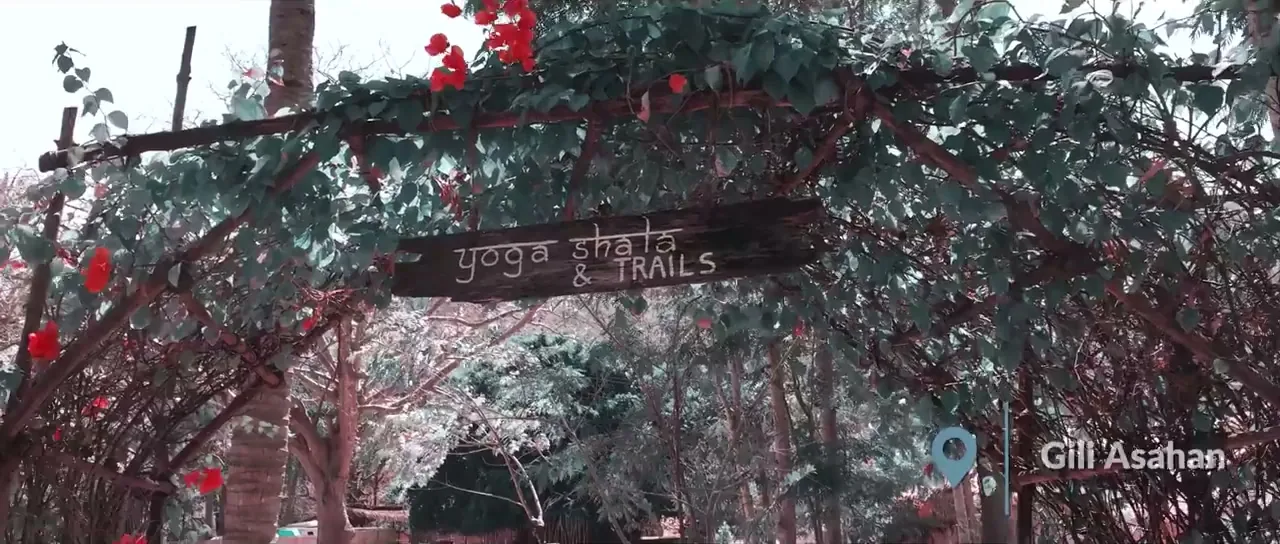
Scattered off Lombok's coasts are the gilis. The three famous ones off the northwest — Gili Trawangan, Gili Meno and Gili Air — share a rule I love: no motorized vehicles are allowed. There are no cars and no scooters. You walk, you cycle, or you take a cidomo, a small horse-drawn cart, and the islands are quieter and cleaner for it. But we spent our time on the lesser-known southwest gilis — Gili Asahan, Gili Gede — where the resorts are few, the beaches are near-empty, and an evening yoga retreat runs to the sound of the tide.
The Sasak: Lombok's Indigenous People
Lombok is the homeland of the Sasak, who make up around 85% of the island's population. Most are Muslim, though some in the interior still practise Wetu Telu, a local tradition that blends Islam with older animist and Hindu beliefs. The Sasak are renowned weavers — the village of Sade is famous for its songket textiles and its distinctive thatched, buffalo-dung-floored houses — and for a healing tradition you can still feel in your muscles.
On Gili Gede, my friends were treated by two traditional Sasak masseuses. Sasak massage is a genuine folk-medicine practice, using firm pressure and locally pressed coconut or herbal oils, passed down through families as part of the same broader Indonesian wellness culture that gave the world jamu. It is not a hotel-spa import; it's the real thing, offered on a tiny island by women who learned it from their mothers.
The Phinisi: Indonesia's UNESCO Sailing Ship
The "pirate ship" my friends kept joking about has a proper name and a serious pedigree. The phinisi (also spelled pinisi) is a traditional two-masted Indonesian wooden sailing vessel, and in 2017 UNESCO added the art of building it to its list of the Intangible Cultural Heritage of Humanity.
These ships are still built almost entirely by hand and by eye — no blueprints — by the Bugis and Konjo peoples of South Sulawesi, in boatbuilding towns like Tana Beru and Bira where roughly 70% of the population makes a living from the craft. The tradition reaches back into the millennia-old story of Austronesian seafaring, the same maritime culture that carried people across the open Pacific to Polynesia and west to Madagascar. The Bugis were such formidable sailors and traders that some historians think European sailors' tales of them gave English the word "bogeyman."

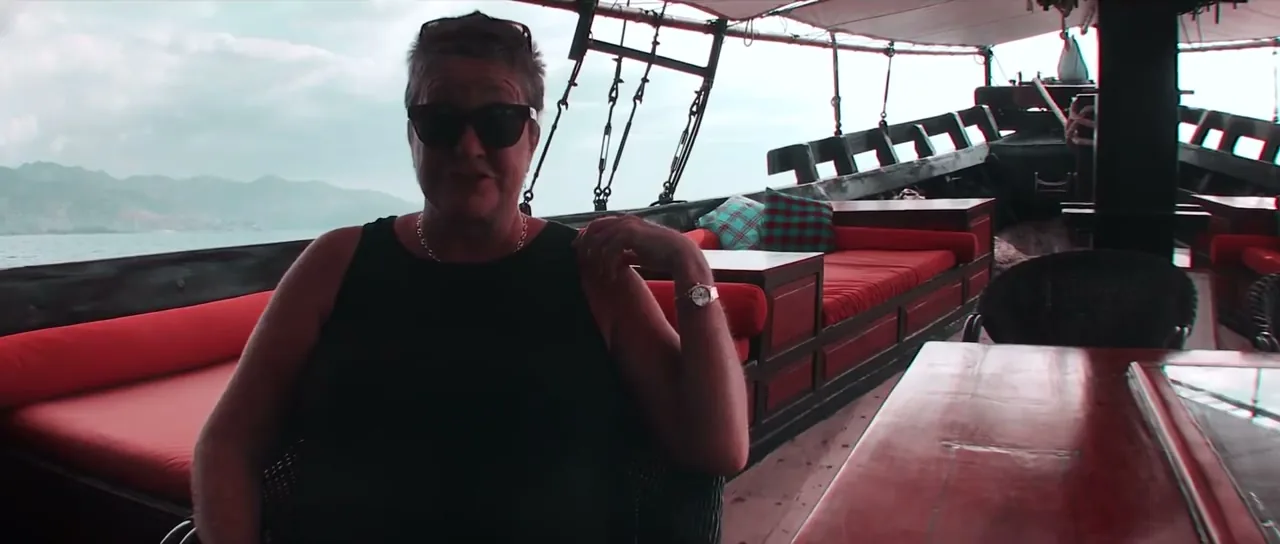
Our ship, the Al Iikai, is one of many old phinisi lovingly converted into a liveaboard cruiser. Its owner, Amanda, told me a story I still think about: she was in Sulawesi when she dreamt the boat's name three times in one night, flew to Bali to find it, and felt her legs "melt into the wood" of the deck. She bought it, and spends ten months a year living aboard.
I had a dream, and three times that night I heard voices saying the name of this boat — Al Iikai, which means Queen of the Sea. I got to the back of the boat and it was like my legs melted into the wood. I knew I was part of the boat, that we just had to be together. So I went and bought it.
Jamu: The Ancient Medicine UNESCO Just Recognized
There's a moment in the episode that most viewers would skip past: Amanda mentions that when a guest gets seasick, the boat's cook brings out "traditional remedies, like turmeric jamu." That throwaway line points to one of Indonesia's most remarkable living traditions.
Jamu is Indonesian herbal medicine, brewed for centuries from turmeric, ginger, tamarind, galangal, lemongrass and dozens of other roots and spices. A bright-yellow blend of turmeric and tamarind (kunyit asam) is the everyday classic, taken to boost immunity and settle the stomach. For generations it was carried through villages by jamu gendong — women, usually, with a basket of bottles on their backs, selling fresh doses door to door. In December 2023, UNESCO inscribed Jamu Wellness Culture on its Intangible Cultural Heritage list, formally recognizing what millions of Indonesians have always known: that this is medicine, memory and identity in a single cup.
What Indonesians Eat: A Culinary Superpower
Amanda called the cook aboard the Al Iikai "this little gem," and I agreed — it was some of the best food I've had anywhere in my travels. Indonesian cuisine is wildly underrated abroad, and it varies from island to island, but a few dishes anchor it everywhere.
- Nasi goreng — Indonesia's beloved fried rice, often crowned with a fried egg, sometimes called the unofficial national dish.
- Satay (sate) — skewers of grilled meat with peanut sauce, sold from smoking street carts across the country.
- Rendang — a slow-cooked Sumatran beef curry, dry and deeply spiced, regularly voted one of the most delicious dishes in the world.
- Gado-gado — a salad of vegetables, tofu and egg bound in peanut sauce.
- Sambal — the fiery chili paste that comes with nearly everything; there are hundreds of regional versions.
- Bubur — the sticky rice porridge Amanda mentioned as a remedy for queasy stomachs, comforting and mild.
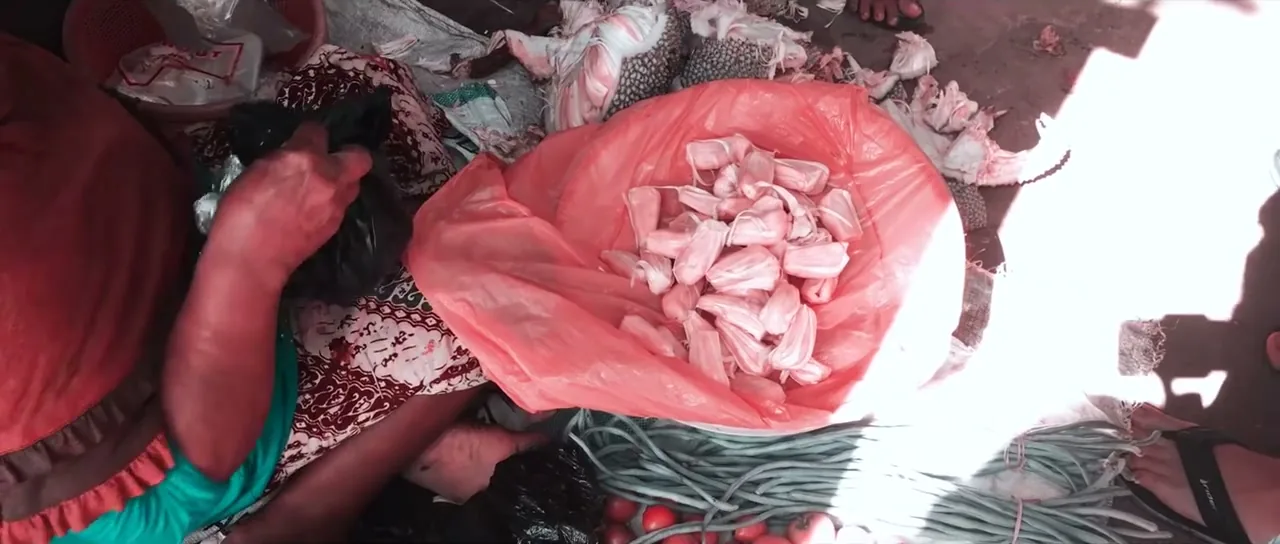
The heart of it all is the market. Riding in the back of a truck to a Lombok street market was, honestly, a highlight — fish and calamari and octopus fresh off the boats, fruit I couldn't name, and kids running up just to practice "hi" and "goodbye." This is where you actually meet a place.
Beyond the Gilis: Indonesia's Icons
We only scratched one corner of Indonesia. To understand the scale of what's out there, here's what the dart didn't have time for:
- Bali — the Hindu island of temples, rice terraces and surf, and the country's tourism engine.
- Borobudur — a 9th-century marvel on Java and the largest Buddhist temple in the world, a UNESCO World Heritage Site built as a giant three-dimensional mandala.
- Komodo National Park — home of the Komodo dragon, the largest living lizard on Earth, found nowhere else.
- Raja Ampat — off Papua, the crown jewel of the Coral Triangle and arguably the best diving on the planet.
- Orangutans of Borneo and Sumatra — the only great apes in Asia, found only on these two islands.
- Batik and wayang — the wax-dyed textiles and shadow-puppet theatre of Java, both UNESCO-recognized art forms.
A Brief History: From the Spice Islands to Independence
For most of recorded history, the world wanted one thing from these islands: spice. Nutmeg, cloves and mace grew almost nowhere else on Earth but the tiny Maluku Islands — the original "Spice Islands" — and were worth their weight in gold in medieval Europe. That trade drew Indian, Chinese and Arab merchants (who brought Islam), then Portuguese and finally Dutch ships.
Great Indigenous powers rose here too — the Buddhist maritime empire of Srivijaya and the Hindu-Buddhist Majapahit, which at its 14th-century height claimed influence across much of the archipelago. From the 1600s the Dutch East India Company (VOC) — history's first true multinational corporation — muscled in, and the Netherlands eventually ruled the islands as the Dutch East Indies for some three centuries. Independence came in the turmoil after World War II: on 17 August 1945, Sukarno proclaimed the Republic of Indonesia, and after four years of armed struggle the Dutch conceded. A scatter of trading islands had become one of the largest nations on Earth.
When to Visit Indonesia: A Practical Guide
- Best overall (dry season): roughly May to September, when the islands, reefs and volcanoes are at their most reliable — ideal for the kind of boat-and-snorkel trip in this episode.
- Wet season: about November to March, hotter and humid with heavy afternoon downpours; cheaper and greener, but rougher for small-boat travel.
- Respect local customs: Indonesia is predominantly Muslim (with Hindu Bali a notable exception). Dress modestly away from beach resorts, ask before photographing people, and use your right hand for giving and receiving.
- Getting around: distances are enormous and mostly over water — plan island by island rather than trying to "see Indonesia" in one trip.
Twenty Things That Surprised Me About Indonesia
- It has around 17,000 islands — and only about 6,000 are inhabited.
- "Gili" just means "small island," so "Gili Islands" literally means "Islands Islands."
- Indonesia has more active volcanoes than any country on Earth.
- It's the world's most populous Muslim-majority nation, yet officially recognizes six religions.
- The waters here hold three-quarters of all coral species known to science.
- The traditional "pirate ship" — the phinisi — has UNESCO heritage status.
- Turmeric jamu was recognized by UNESCO as an intangible cultural heritage in 2023.
- The 1883 eruption of Krakatoa was the loudest sound in recorded history.
- The 1815 eruption of Tambora caused a "Year Without a Summer" across the globe.
- The country spans three time zones and 5,100 km end to end.
- More than 700 living languages are spoken across the islands.
- Indonesia is quietly the world's fourth most populous country.
- The three famous Gili Islands ban all cars and motorbikes.
- A single invisible line — the Wallace Line — splits Asian and Australian wildlife between Bali and Lombok.
- Rendang, a Sumatran beef curry, is routinely voted one of the world's best dishes.
- The world's largest Buddhist temple, Borobudur, is Indonesian.
- The world's largest lizard, the Komodo dragon, lives only here.
- The country is building a brand-new capital city, Nusantara, from scratch.
- Sasak massage and healing are a genuine folk-medicine tradition, not a spa invention.
- Indonesians will make a stranger feel like family — the crew threw Matt a full birthday party, drums and all.
Throw away all your expectations of where you're going to go, and you throw a dart at a map, and then you have to go to that place. It pushes people outside their comfort zone. You learn that a human here is the same as a human there — the same needs, the same desires. That's something I think we've lost in the past twenty years.

Why Indonesia Stays With You
This boat does change people. It has changed me.
We came for a birthday and left, four days later, changed — which is exactly what Amanda promised the boat would do. But the thing I keep returning to isn't the snorkeling or the sunsets or even the losing round of golf on a Lombok island course. It's how much world was packed into one small corner of one country.
In a few days off a single island I brushed against a UNESCO boatbuilding tradition, the most biodiverse ocean on Earth, an ancient medicine only just recognized by the world, an indigenous culture with its own language and healing arts, and a birthday song sung in a language I don't speak by people I'd never met — for a friend they'd known for a day. Indonesia is not a destination you finish. It's 17,000 beginnings. The dart threw me onward from that deck to Bermuda, but I left understanding why people spend their whole lives here and still feel they've only just arrived.
Explore More Travel by Dart Journeys
- Start where this leg began — my Easter Island episode, the adventure right before Indonesia.
- See where the dart sent me next: Bermuda and the truth about its famous Triangle.
- Keep exploring Southeast Asia with my Thailand and Cambodia journeys.
- Read about Romania — my home country, and the stopover on the way to Indonesia.
Suggested Sources & Further Reading
To go deeper into Indonesia, these are some of the best authoritative resources:
- Wonderful Indonesia — the official tourism site of the Republic of Indonesia, with destination guides and practical planning.
- UNESCO — Pinisi, art of boatbuilding in South Sulawesi — the heritage listing for Indonesia's traditional sailing ships.
- WWF — Coral Triangle facts — the science and statistics behind the world's richest marine region.
- Wikipedia — Indonesia — a broad, well-sourced overview of the country's history, geography and culture.
- World Bank — Indonesia — official population, economic and development data.
All facts verified July 2026.
Indonesia: traveler questions
Where did the dart land in the Travel by Dart Indonesia episode?+
The dart, thrown in Panama City, landed on Indonesia. The journey itself unfolded around Lombok and its offshore Gili Islands, aboard a traditional Indonesian sailing ship called the Al Iikai, before the next dart sent Sorin onward to Bermuda.
How many islands does Indonesia have?+
Indonesia is the world's largest archipelagic nation. By its own 1996 maritime law it comprises 17,508 islands; Indonesia's statistics agency counted around 17,000 in 2024. Only about 6,000 are inhabited. The islands span three time zones and stretch roughly 5,100 km from end to end.
What is a phinisi — the 'pirate ship' in the episode?+
A phinisi (or pinisi) is a traditional two-masted Indonesian wooden sailing ship, built by hand mainly by the Bugis and Konjo peoples of South Sulawesi. The craft of building them was inscribed on UNESCO's Intangible Cultural Heritage list in 2017. Many, like the Al Iikai in the episode, have been converted into liveaboard cruise boats.
What are the Gili Islands and where are they?+
The Gilis are small islands off the coast of Lombok, just east of Bali. The three most famous — Gili Trawangan, Gili Meno and Gili Air — ban all motorized vehicles; you get around on foot, by bicycle or by horse-drawn cart (cidomo). The episode visits quieter southwest gilis such as Gili Asahan and Gili Gede.
What is jamu?+
Jamu is Indonesia's traditional herbal medicine, typically made from ingredients like turmeric, ginger, tamarind and other roots and spices. It is used to boost immunity and treat everyday ailments — in the episode, the boat's cook offers turmeric jamu to seasick guests. Jamu Wellness Culture was added to UNESCO's Intangible Cultural Heritage list in 2023.
What is the Coral Triangle?+
The Coral Triangle is a marine region centered on Indonesia that holds the richest coral reef biodiversity on the planet — about 76% of the world's known coral species and 37% of its reef fish, plus six of the world's seven marine turtle species. Snorkeling off Lombok, as in the episode, puts you directly inside it.
When is the best time to visit Indonesia, and is it safe?+
The dry season, roughly May to September, is the most reliable time for island-hopping, diving and beaches. Indonesia is a mainstream destination that welcomes millions of visitors a year; standard travel common sense, respect for local (largely Muslim) customs, and trusted local guides go a long way. Always check current advisories before you go.