Season 3 · Episode 1
Iceland
The land where fire, ice and impossible landscapes live side by side.
On this page ▾
By Sorin Mihailovici · Travel by Dart · Last updated August 2026 · ~22 min read
I threw the dart from a beach in Koh Samui, Thailand — from tropical heat to the edge of the Arctic in a single throw. When I peeled off my blindfold, the tip had landed in the ocean almost exactly between Greenland and Iceland, and after measuring the distance to Reykjavik, the verdict was clear: Iceland. As a kid I'd dreamed of this place — the waterfalls, the Viking sagas, the folklore of elves and trolls straight out of a movie. I could not get here fast enough. And once I did, it gave me so much that a single film couldn't hold it. So settle in: this is the full, three-part story of the most magical country the dart has ever chosen for me.
Quick facts: Iceland at a glance
- Capital
- Reykjavik (world's northernmost)
- Population
- ~380,000
- Language
- Icelandic
- Currency
- Icelandic króna
- Energy
- Almost 100% renewable (geothermal + hydro)
- Peace
- World's most peaceful country (no army)
- Parliament
- Alþingi, founded in 930
- Known for
- Volcanoes, waterfalls, Vikings, midnight sun
The Land of Fire and Ice
Iceland sits alone in the North Atlantic, just below the Arctic Circle, straddling the Mid-Atlantic Ridge — the seam where two of the planet's great tectonic plates pull apart. That geological accident is the reason for everything: the volcanoes, the geysers, the hot springs, the whole restless, steaming landscape. It's a young island still being built, where fire and ice are not opposites but neighbours.
Only about 380,000 people live here, most of them around Reykjavik, and they draw almost all their power from the earth itself — geothermal and hydroelectric — making Iceland one of the greenest nations on the planet. My guide Siggi, whom I'd first met far away in Japan, put it simply: they take their energy from nature, and they respect it as much as they can. It shows. This is also, for well over a decade running, the most peaceful country on Earth: no standing army, police who don't carry guns, and crime so rare it barely registers. And in summer, the sun never really sets — I did much of my filming at midnight in full daylight.
Reykjavik and the World's Oldest Parliament
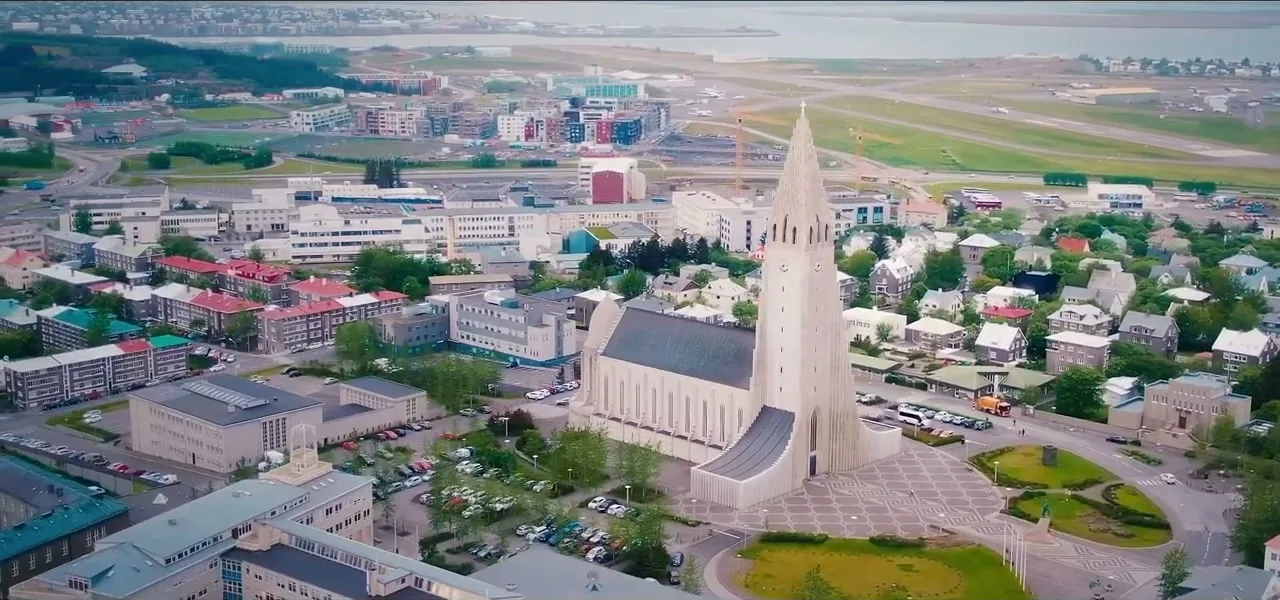
Reykjavik is the northernmost capital in the world, a small, colourful harbour town where, locals like to say, the Americas meet Europe on a single street. Above it rises Hallgrimskirkja, the great church whose curved concrete spire was designed to echo the basalt lava columns of Iceland's own landscape — architecture as poetry. I based myself right in the heart of it, in front of the parliament, immersing in the culture rather than hiding in a luxury bubble.
And the history here runs astonishingly deep. Iceland founded its parliament, the Alþingi, back in the year 930 at Þingvellir, a national park 45 minutes from the city — making it one of the oldest parliaments in the world. The Vikings who settled here in the late 900s were, in part, fleeing a Norwegian king because they wanted to govern themselves; 60 years later they built that first assembly. This is also a nation that has long been ahead of its time on women's rights: Iceland elected its first female member of parliament in 1922, and in 1980 chose Vigdís Finnbogadóttir — the world's first democratically elected female president.
The Truth About the Vikings
You can't come to Iceland without meeting the Vikings — and one of the most interesting people I've ever met, a man named Gudmann, set out to correct what Hollywood got wrong. He spent 18 years working on films like Batman Begins and Game of Thrones, and he's spent even longer defending his ancestors. Hollywood, he says, turned the Vikings into dirty, violent brutes. In reality they were explorers and traders who sailed as far as North Africa and Constantinople; they bathed at least once a week (cleaner than most of medieval Europe), loved jewellery and fine clothes, and built one of the world's first democracies right here. Yes, they raided — but so did everyone. It's unfair, he argues, to pin it all on the Vikings.
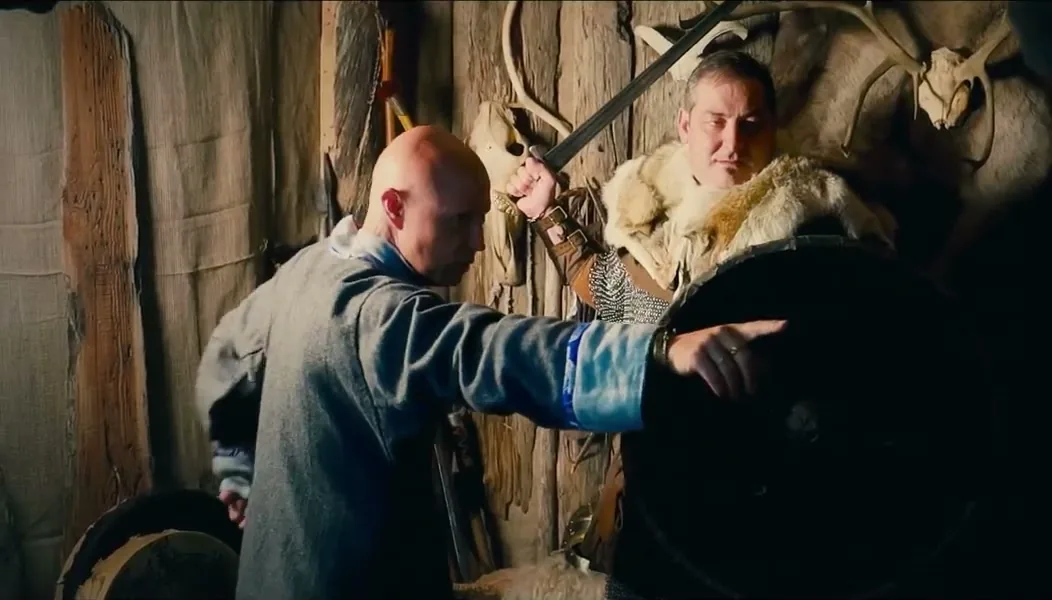
At his studio, the point isn't really the photograph — it's the feeling. He dressed me in furs, put a sword and shield in my hands, and had me scream at a post to "unleash my inner Viking." It sounds silly; it isn't. Something in the room shifts when you're holding a shield and shouting — it's about finding your own strength and getting back to your roots, and I walked out standing a little taller than when I walked in. The photograph is just a souvenir of how that felt.
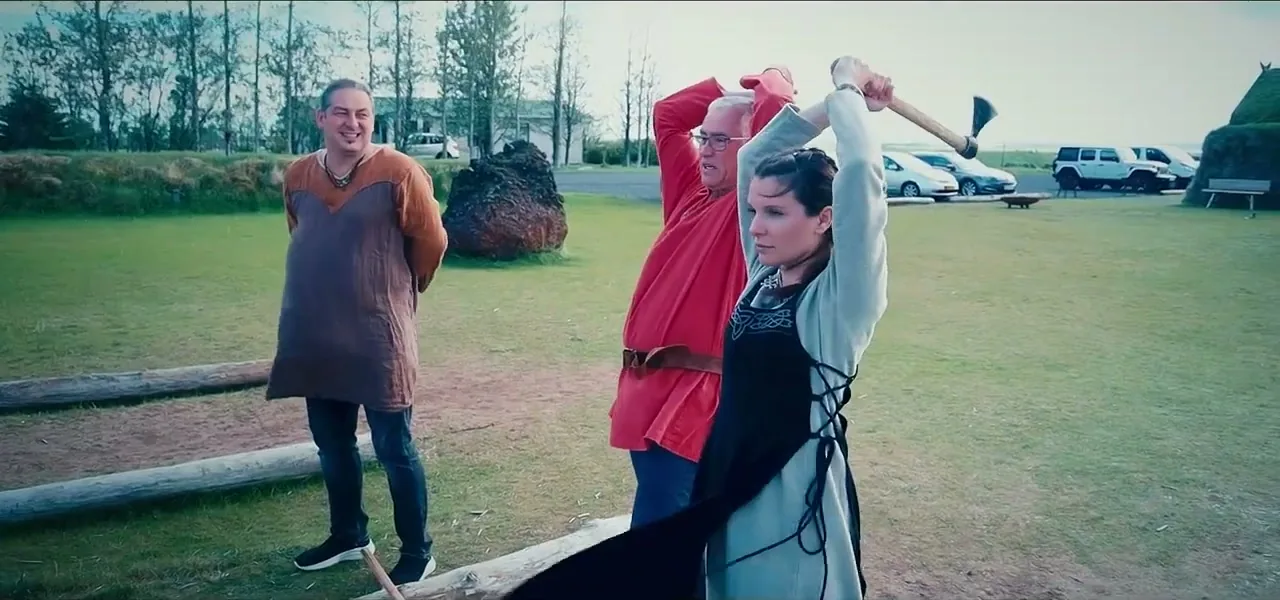
To eat like one, I went to Ingólfsskáli, a Viking-style longhouse restaurant named for Iceland's first settler, where you drink from a horn and feast on Icelandic lamb, beef and pork until, as they promise, no one leaves hungry. And a good Viking's post-feast siesta means axe-throwing. Let's just say it took me a while to stick one in the board — thirteen tries by the official count, which is the only count I'm prepared to admit to.
A Helicopter Over an Active Volcano
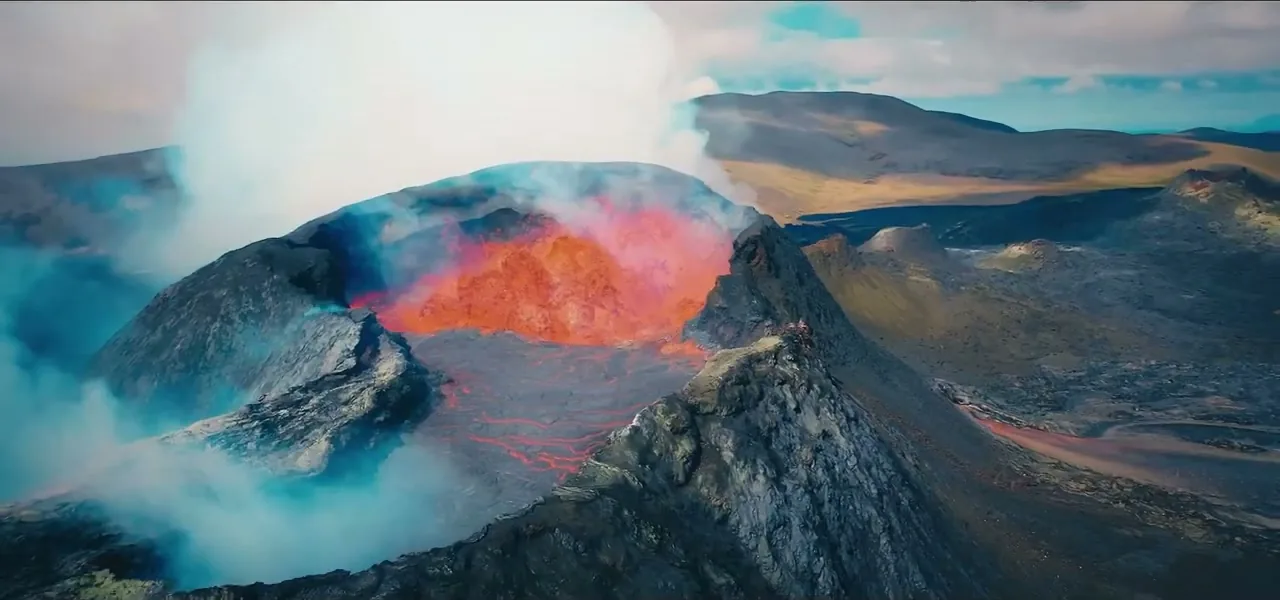
Iceland's scenery has starred in so many films — The Secret Life of Walter Mitty, Oblivion, James Bond — often standing in for other planets. Rather than just admire the helicopter shots, I found the company that actually flies them, the oldest helicopter operator in the country, and took my very first helicopter ride ever, over the Fagradalsfjall volcano.
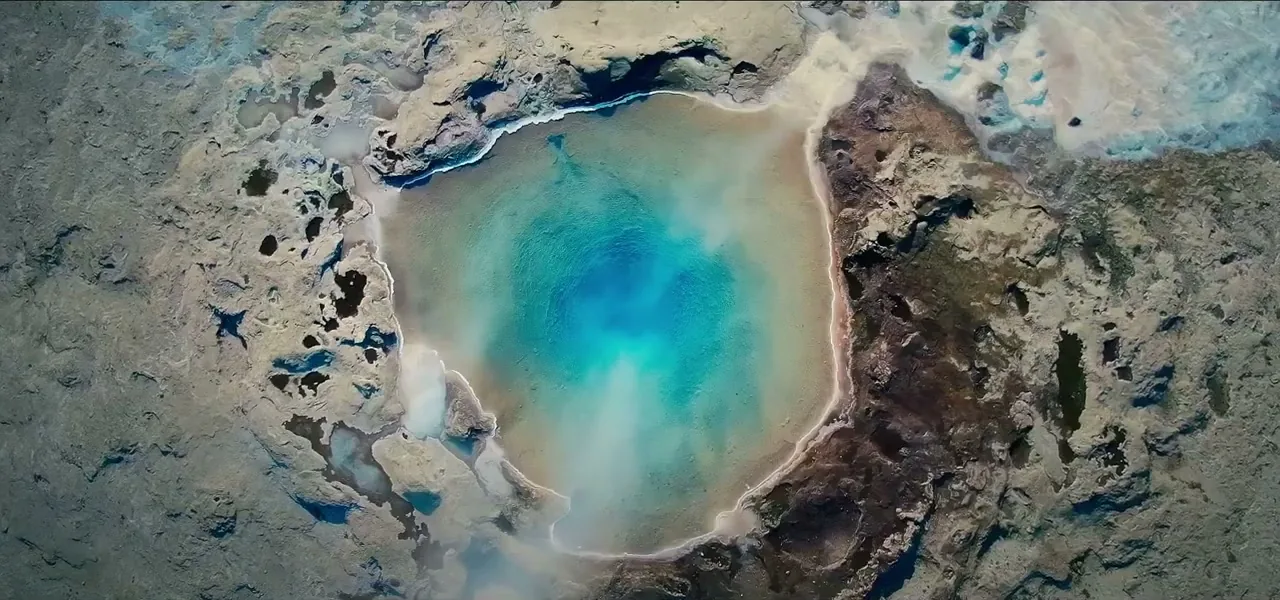
It was extraordinarily smooth — you barely feel the lift — and within moments we were above Reykjavik, then out over a landscape of black lava, and finally looking straight down into a glowing crater. Icelanders casually call these "tourist eruptions," relatively small but utterly spectacular. We even landed beside the crater, close enough to feel the ground was still warm and see smoke leaking from the soil — the leftover heat from eruptions in 2021 and 2022. What makes it stranger still: locals now predict eruptions by the earthquakes that intensify about a week beforehand. While I was filming, Reykjavik was having over 50 small quakes a day — and sure enough, just hours after I evacuated the area, Fagradalsfjall erupted again. It felt like the volcano had politely waited for me to leave.
Iceland gave me back the pure joy of discovering, not just travelling.
Part Two: Waterfalls, Folklore and Fermented Shark
If part one was fire and Vikings, part two is water, ghosts, and the single worst thing I have ever put in my mouth. This is where Iceland gets spooky.
▶ Iceland — Waterfalls, Trolls, Whales & Fermented Shark
Part two: folklore, ghost caves, whale watching and the infamous hákarl
Waterfall-land
I left the capital for the countryside near Hella, in the south, home to some of the most majestic waterfalls on Earth. Iceland's mountains, glaciers and endless rain give it an estimated 10,000 waterfalls, over 200 of them named — it should honestly be called Waterfall-land. In summer the best time to see them is at night, under the midnight sun, and standing before the thundering wall of Skógafoss at midnight genuinely felt like stepping into a parallel universe.
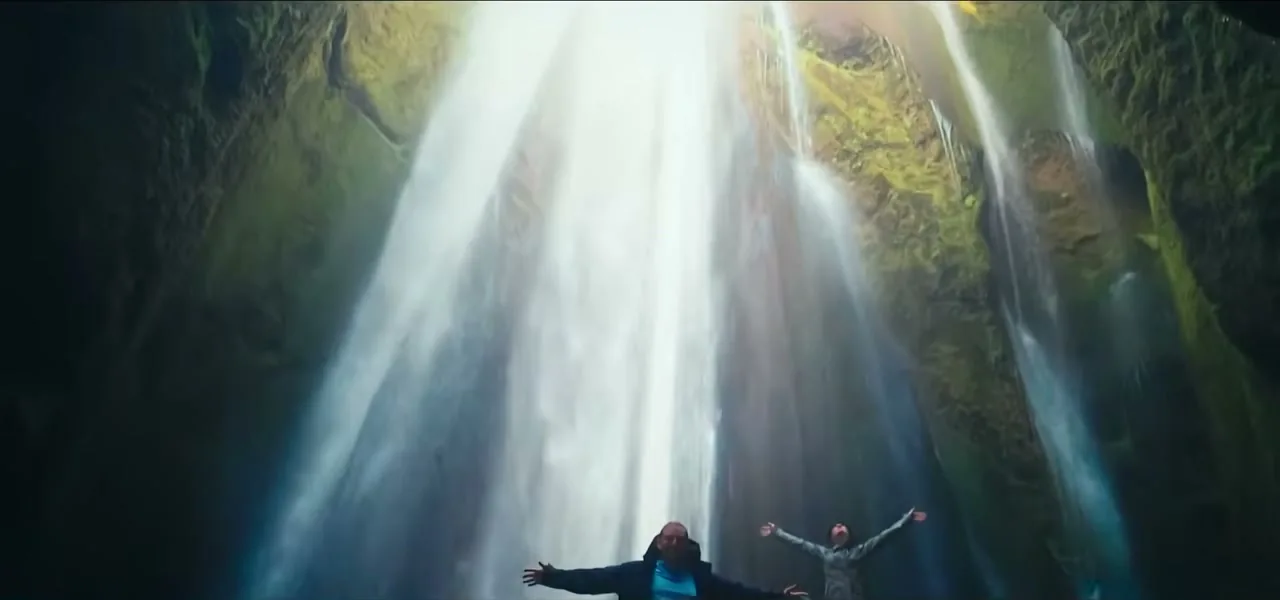
Siggi is deep into folklore, and she told me the legends as we went: that one of the first settlers hid a chest of gold behind Skógafoss (never found — maybe you'll be the lucky one), and that a troll who lingered too long watching the falls was caught by the rising sun and turned forever to stone, his face still visible in the rock. I stayed out near the falls in a remarkable spot, the Hótel Rangá, a Canadian-style log lodge "in the middle of nowhere" run by the endlessly charismatic Mr. Fridrik, famous in winter for its Northern Lights and its own observatory of high-end telescopes. Fridrik also taught me a genuinely useful Icelandic survival skill — how to drive across a river without drowning your engine: slowly, so you never build a wave in front of the car.
Hákarl: The Most Disgusting Delicacy on Earth
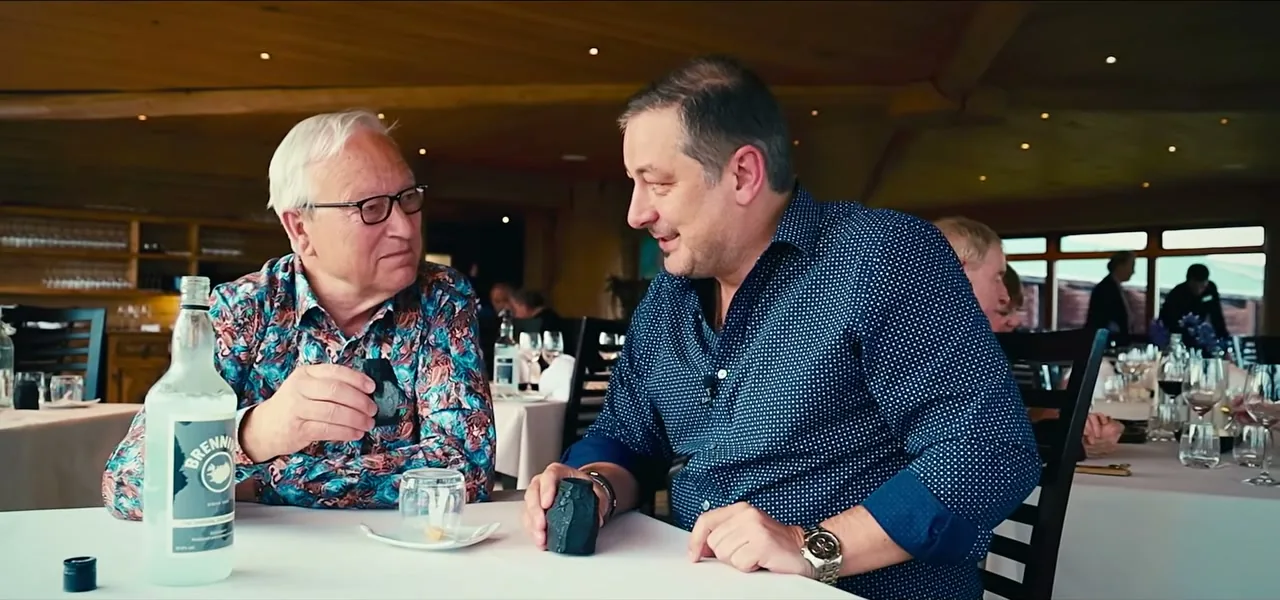
Mr. Fridrik insisted I try the national dish, and I try the traditional food in every country. This one nearly broke me. Hákarl is fermented Greenland shark, cured and hung to dry for months until it reeks of ammonia. You put a frozen cube in your mouth, let it soften, and chew until the "real taste" hits — and then you chase it with Brennivín, the caraway schnapps Icelanders lovingly call "Black Death." Out of respect for my hosts I usually say I like what I'm offered. Not here. I felt like I'd bitten into a piece of a corpse; the ammonia went straight up into my brain. I genuinely do not understand how this became a delicacy — but nobody's died from it yet, so I survived. The Black Death, by the way, was the good part.
Ghosts, Elves and the Hidden People
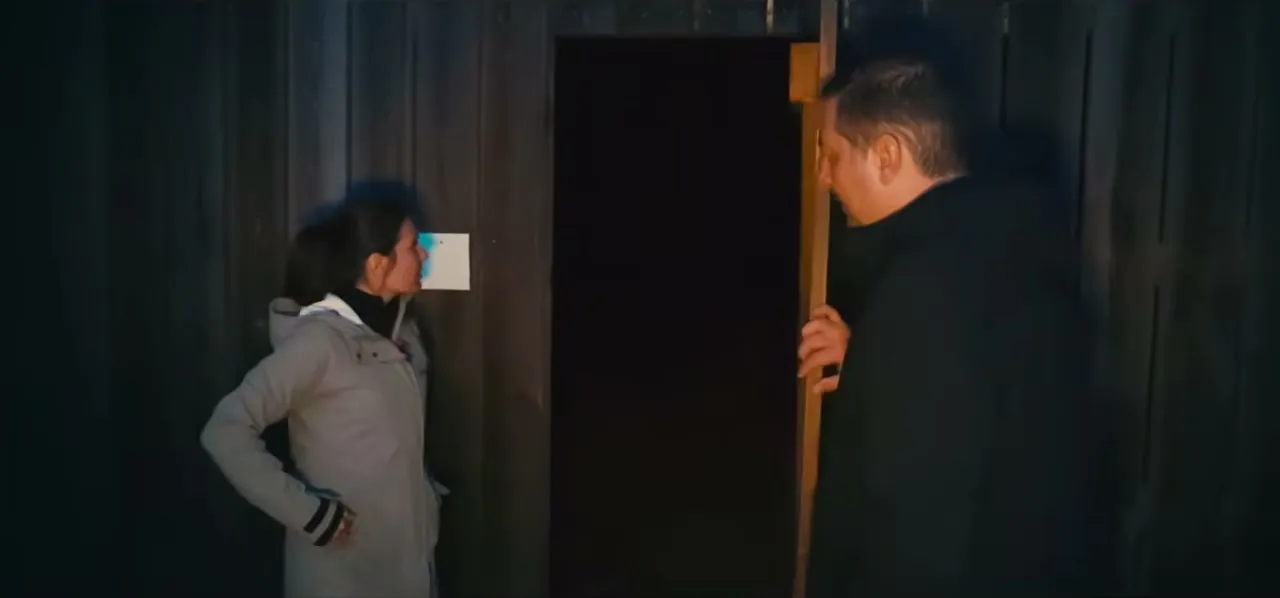
Icelanders take the unseen world seriously, and I mean seriously. A large share of the country genuinely respects the existence of the Huldufólk — the "hidden people," the elves and trolls said to live inside rocks. All over Iceland you'll find signs telling you not to move the stones, lest you disturb them and bring a curse. Siggi took me to a cave famous for the angry ghosts of drowned sailors; before we stepped inside she asked the spirits for permission, told me to touch nothing and take nothing, and thanked them ("Takk fyrir") as we left. There was a word carved near the entrance — "DIE" — and I did not linger. Later, driving home at 1:30 a.m., a low bed of fog settled on the road no higher than the car for several kilometres, and Siggi wondered aloud, only half-joking, whether we'd woken the sailors.
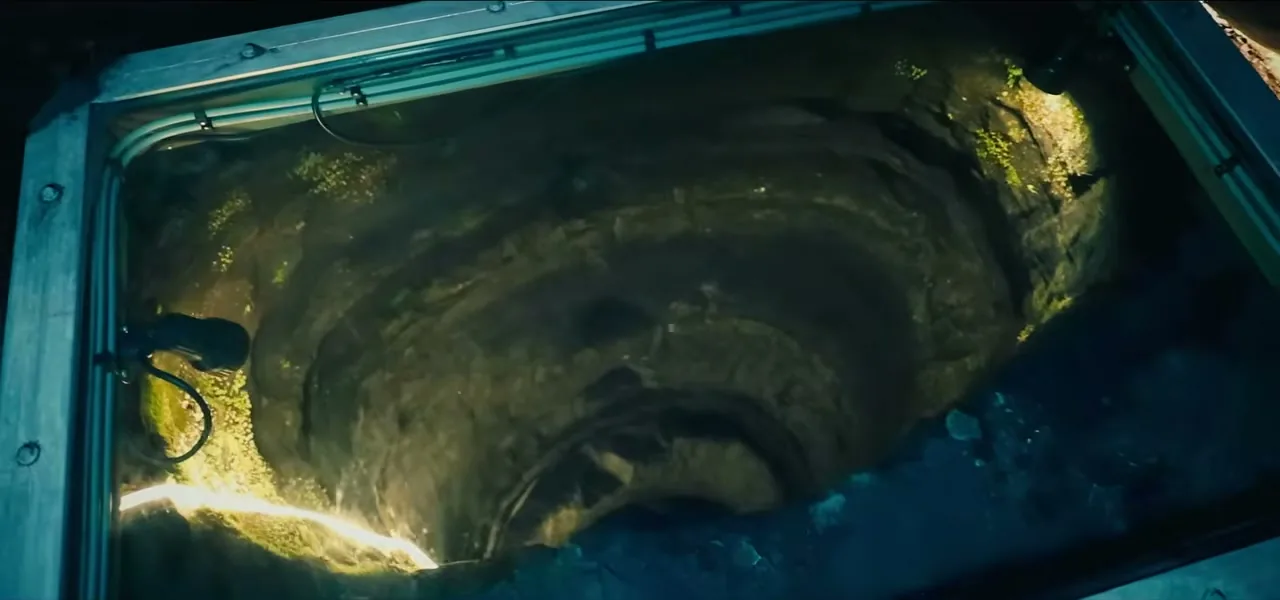
We also visited the Hella Caves — a cluster of ancient, hand-carved sandstone chambers on a farm in the south, possibly among the oldest human dwellings on the island, their soft walls layered with centuries of carvings on top of carvings. The caretaker keeps candles lit inside and speaks of his resident ghost as a roommate he's "on good terms" with. In Iceland, the line between history and haunting is thin, and nobody's in a hurry to redraw it.
Whales off Reykjavik
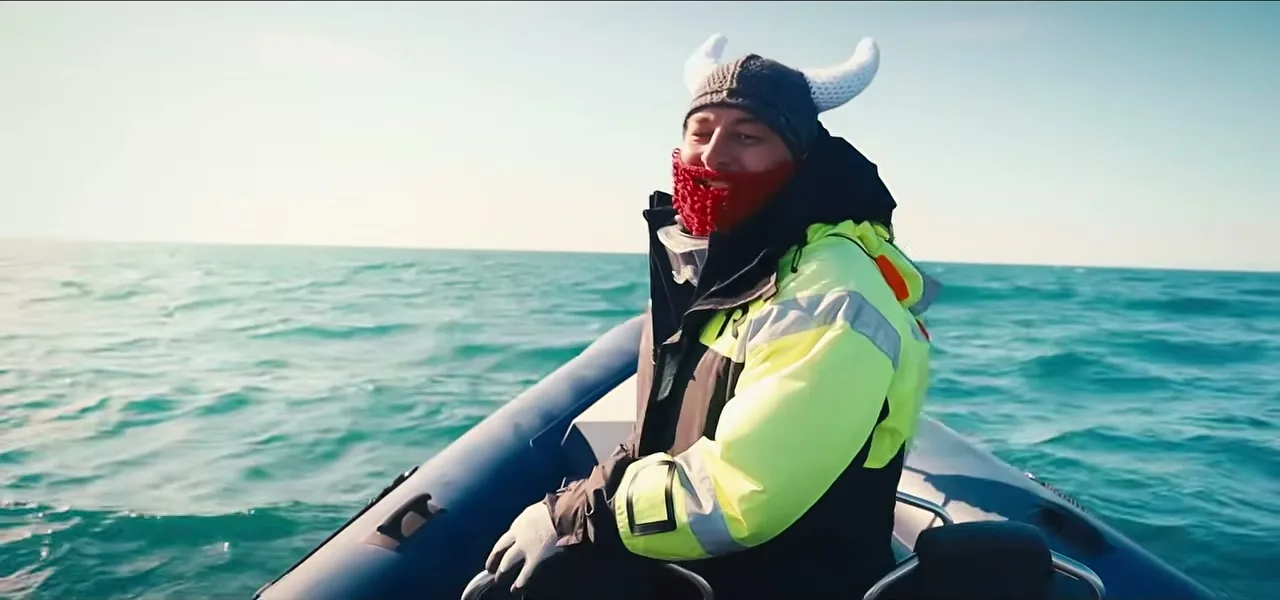
Back in the capital I stayed in one of the coolest hotels I've ever seen — a former harbour paint factory turned colourful, rule-free hotel with pub quizzes and DJ nights — and set out to do something Bermuda had denied me on an earlier trip: see whales. Reykjavik is one of the world's whale-watching hotspots. Of roughly 90 whale species on Earth, about 23 — more than a quarter — have been seen off Iceland's coast, most commonly humpbacks and minkes, along with white-beaked dolphins. And they did not disappoint: humpbacks came right up to the boat, breaching and playing, with dolphins darting between them. A guide told me each humpback's tail is as unique as a human fingerprint, which is how they identify individuals. It's one of those moments a camera can't capture — you simply have to be there.
Part Three: Volcanic Bread, Horses and the Split Between Continents
For the final part I went looking for the Iceland tourists rarely see — the quiet, strange, soulful side of the island.
▶ Iceland — Volcanic Bread, Icelandic Horses & the Rift Between Continents
Part three: baking bread in the earth, the five-gaited horse, geysers, and the final dart throw
Baking Bread in the Earth
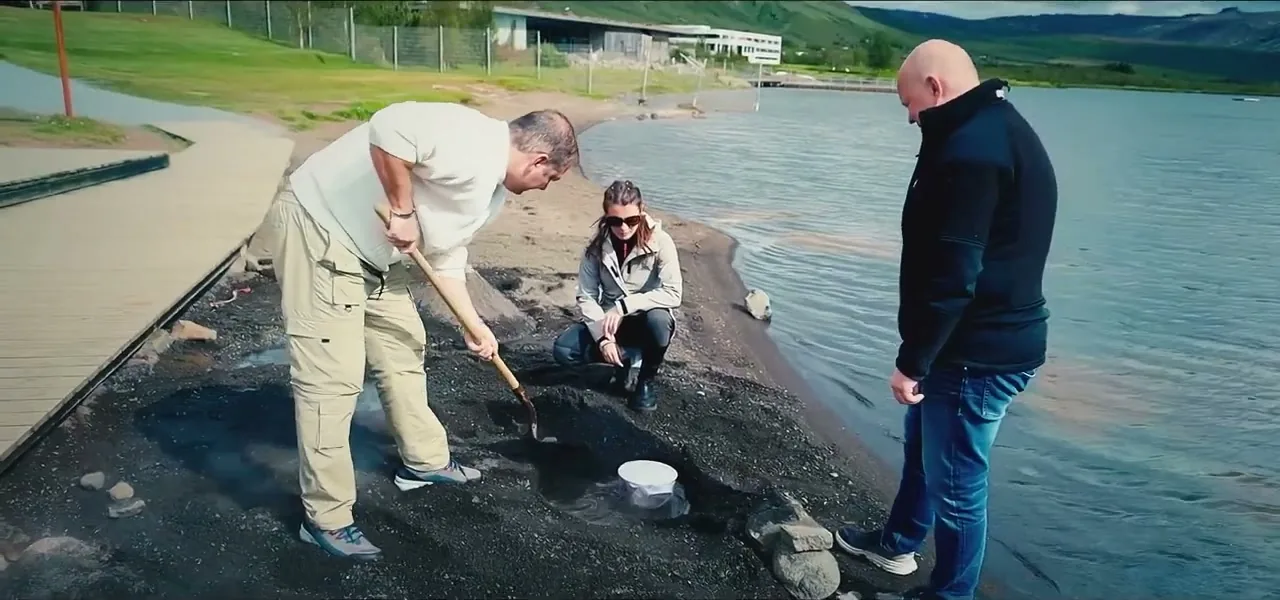
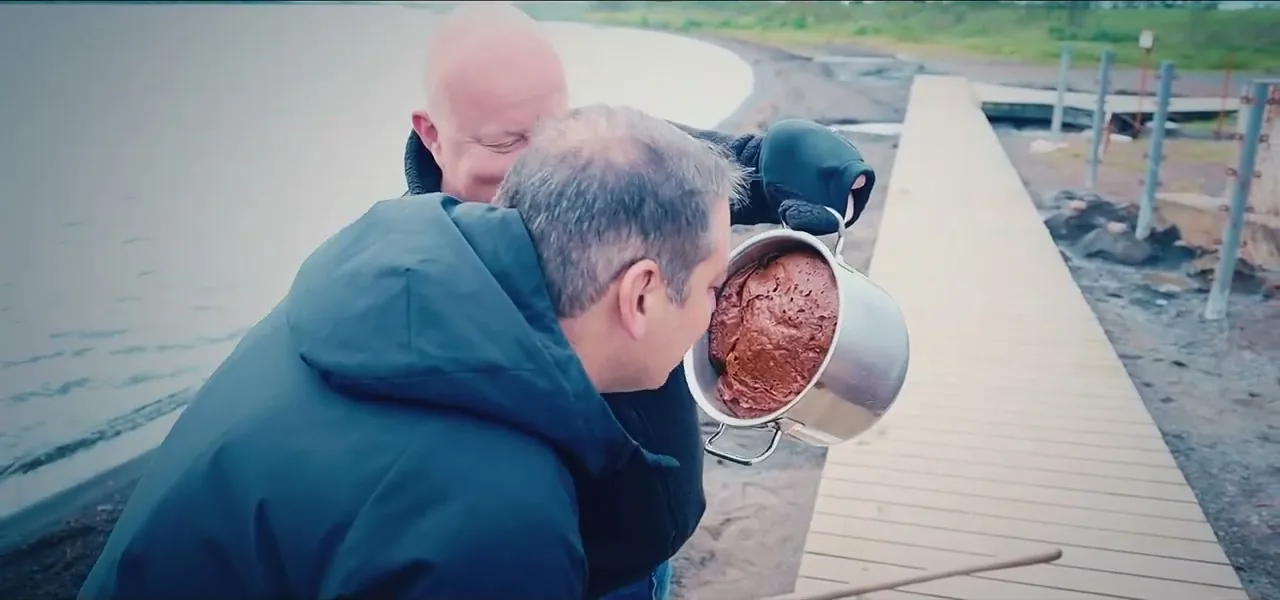
One of the most Icelandic things you can possibly do is bake bread in the ground. An hour from Reykjavik, at Laugarvatn, I met a baker who does it exactly as his grandmother did: mix a simple rye dough — rye, flour, sugar, salt, baking powder, milk from local cows — seal it in a pot, and bury it in the geothermally heated black sand at the edge of a hot lake. You leave it for 24 hours and dig it up the next day. The result is astonishing: a dense, dark, almost cake-like loaf with no spices at all — the sweetness comes purely from the sugar caramelising in the earth's heat. Sliced, buttered, and topped with smoked trout, it was, honestly, one of the most unique tastes of my life. I asked for seconds. The earth had cooked us breakfast.
The Horse That Can Never Come Home
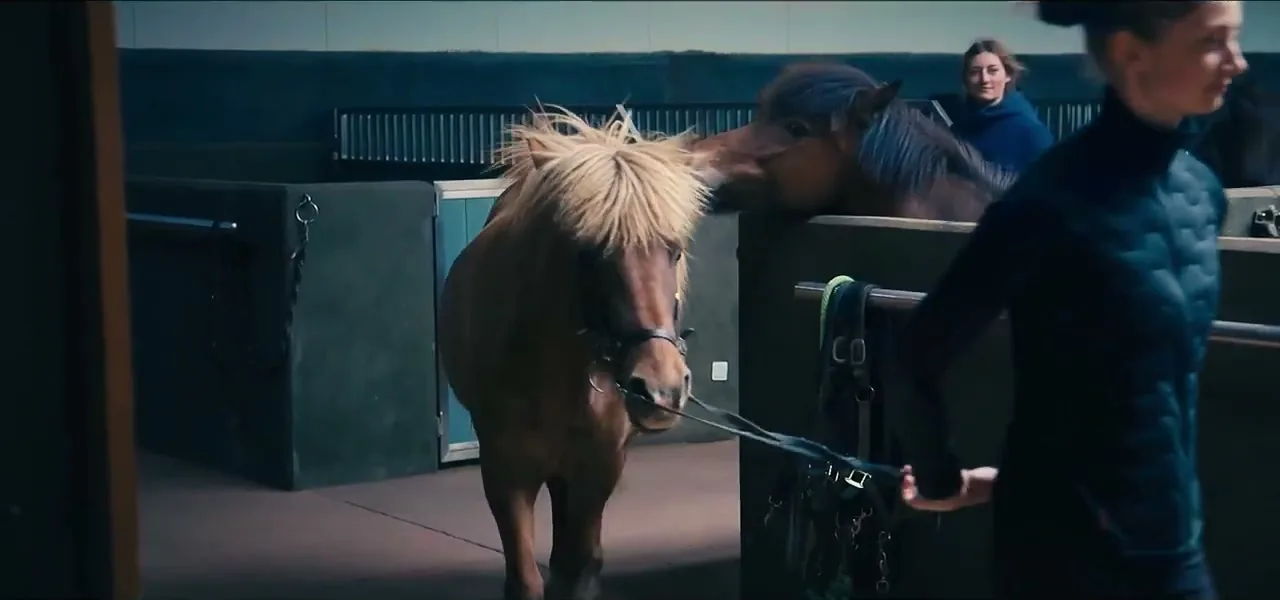
The Icelandic horse is as native to this land as its people — it arrived on the settlers' very first ships and has been isolated from all other breeds for over 1,000 years. That isolation made it unique. Where a normal horse has three gaits — walk, trot, canter — the Icelandic horse has five, adding the wonderfully smooth tölt and the lightning-fast flying pace, which can hit nearly 48 km/h over a short sprint. Every one of them is registered in a global database (WorldFengur) that can trace bloodlines back over a century. And to protect the breed's purity, there's a heartbreaking rule: an Icelandic horse can leave the country only once. Sell it abroad, and it may never return home. We couldn't resist meeting these gentle, shaggy creatures and going for a ride.
Geysers, Elves and a Farewell
I also stood among the crowds at the Geysir geothermal field — the place that gave the whole world the word "geyser" — watching the ground itself boil and, every few minutes, Strokkur blast a column of scalding water high into the air. Around it, signs again ask you not to move the rocks, out of respect for the Huldufólk who may live inside them. For my last night I chose the Hótel Natura, one of Reykjavik's oldest hotels and the place where Icelandic tourism began, partly because it donates to breast-cancer awareness — my own mother is a breast cancer survivor, so I made a small donation and stayed in the pink suite. On this trip I even visited a remote shamanic farm run by a luminous woman named Linda, a quiet refuge for people at a fork in their lives — the kind of "less-known Iceland" the dart is always pushing me to find.
A Dart Thrown Between Two Continents
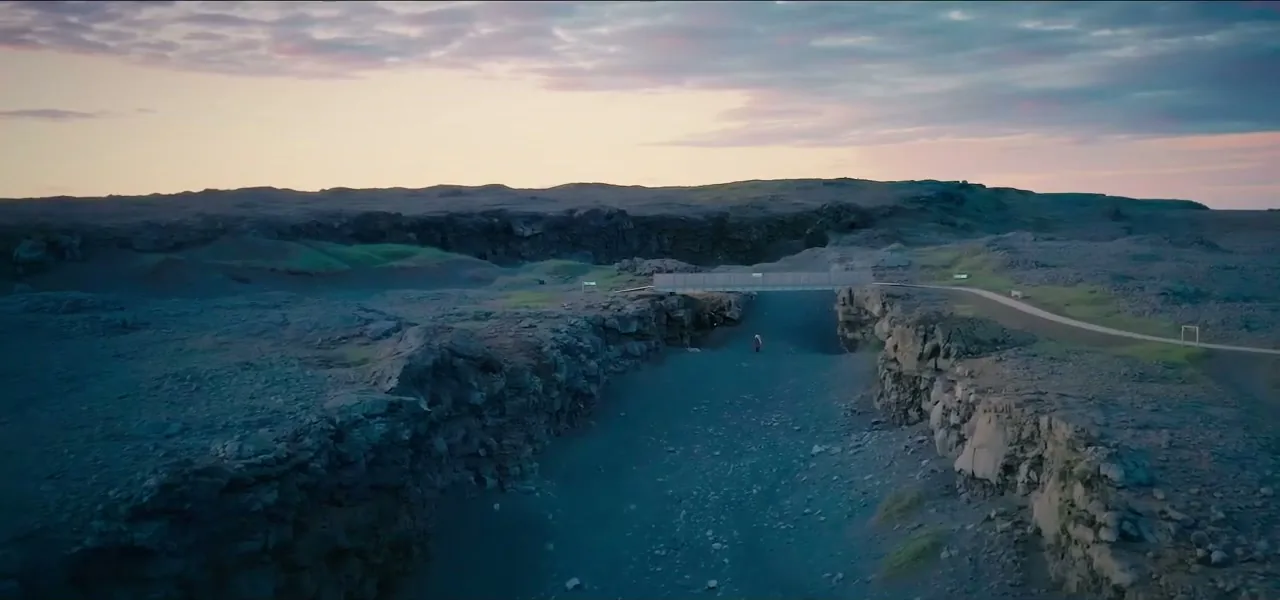
Every episode ends with a dart, and for this one I chose the most extraordinary spot imaginable: the rift at Þingvellir, the visible crevasse where the North American and Eurasian tectonic plates are tearing apart — the only place on Earth you can stand with a foot on each continent (and, at Silfra nearby, even snorkel between them). We'd literally felt an earthquake twenty seconds earlier. At midnight, under the midnight sun, in a Viking costume, standing in the crack between two worlds, I threw the dart blindfolded. It sailed into the ocean, and the nearest land was Antigua and Barbuda — a tiny Caribbean two-island nation that would open the next chapter, complete, I'd soon learn, with pink-sand beaches, a bird sanctuary, and someone who'd literally been to space.
By the numbers: Iceland by the numbers
- Population
- ~380,000 people
- Waterfalls
- ~10,000 (200+ named)
- Parliament founded
- 930 — one of the world's oldest
- Whale species offshore
- ~23 of the world's 90
- Icelandic horse gaits
- 5 (vs. the usual 3)
- Volcanic bread bake time
- 24 hours in hot sand
The Iceland Still Waiting for Me
Three episodes, and I still barely scratched it — which is the best reason I can give you to go yourself. I never made it to the Blue Lagoon, the milky-blue geothermal spa where you soak in warm mineral water surrounded by black lava. I only touched a corner of the famous Golden Circle, the day-trip loop that strings together Þingvellir, the Geysir field and the thundering Gullfoss waterfall. And I never reached the south-east, where you can walk on a glacier, kayak among icebergs at the Jökulsárlón glacier lagoon, or watch chunks of ancient ice wash up on the black sand of Diamond Beach.
Then there's the thing most people come for and I saw only in summer's wrong season: the Northern Lights, the Aurora Borealis that ripples green across the winter sky. Iceland is really two countries in one — a land of endless daylight and midnight waterfalls in summer, and a dark, glittering, aurora-lit dreamscape in winter. You could visit twice and see two completely different planets. Whichever you choose, rent a good car, respect the weather and the roads, and give yourself more days than you think you need.
The Country That Recharges You
Iceland went straight onto my list of the top three countries I've ever visited, and I mean it without exaggeration. For such a small place in the middle of the ocean, it has an impossible amount to offer — waterfalls and Vikings and whales and volcanoes and folklore that can, genuinely, change how you see the world. It gave me back the pure joy of discovering, not just travelling.
Think about what this country actually is: a place with almost no crime, where the police carry no guns, powered cleanly by the earth beneath it, running on the world's oldest democratic instincts, and generous enough to bake you bread in its own volcanic soil. In a world full of conflict and noise, this little island near the North Pole quietly offers joy, peace, and the feeling of being fully recharged. I will absolutely be back, and next time I'll bring friends. As the Icelanders say when they throw themselves into the unknown — "Þetta reddast." Everything will work out. And with that, I pulled the dart, and threw myself toward the Caribbean.
Explore More Travel by Dart Journeys
- See where the dart threw me next: the Caribbean warmth of Antigua and Barbuda.
- The frozen north's other face: my Finland journey into Lapland.
- The coldest, emptiest place the dart ever chose: Antarctica.
- More of Europe the dart uncovered: Italy.
Suggested Sources & Further Reading
To go deeper into Iceland, these are some of the best authoritative resources:
- Visit Iceland — the country's official tourism site.
- UNESCO — Þingvellir National Park — the site of the world's oldest parliament.
- Encyclopædia Britannica — Iceland — history, geography and geology.
- Encyclopædia Britannica — Vikings — the seafarers who settled the island.
All facts verified September 2026.
Iceland: traveler questions
Why is Iceland so famous, and what is it known for?+
Iceland is a volcanic island in the North Atlantic known for its extreme natural beauty — active volcanoes, glaciers, more than 10,000 waterfalls, geysers, geothermal hot springs, the midnight sun in summer and the Northern Lights in winter. It's also famous for its Viking heritage, one of the world's oldest parliaments, and for consistently ranking as the most peaceful country on Earth.
Is Iceland safe to visit?+
Extremely. Iceland has topped the Global Peace Index as the world's most peaceful country for well over a decade. It has no standing army, the police don't carry guns, and violent crime is very rare. The real hazards are natural — weather, rivers and rough roads — so the key is respecting the nature and driving carefully.
What is hákarl (fermented shark)?+
Hákarl is Iceland's notorious national dish: Greenland shark that has been cured and hung to dry for months, giving it a powerful ammonia smell. It's traditionally eaten in small cubes and chased with Brennivín, a caraway schnapps nicknamed 'Black Death.' It is very much an acquired taste — I found it the most disgusting thing I've ever eaten, and I'm not alone.
When is the best time to visit Iceland?+
It depends what you want. Summer (roughly June–August) brings the midnight sun, when it never really gets dark and you can chase waterfalls at 2 a.m.; it's the best time for driving and the countryside. Winter brings long nights and the best chance of seeing the Aurora Borealis. A car is essential either way — there are no trains, and the best sights are spread across the island.
Can you really snorkel between two continents in Iceland?+
Yes. At the Silfra fissure in Þingvellir National Park, the North American and Eurasian tectonic plates are pulling apart, and you can dive or snorkel right in the crevasse between the two continents — the only place on Earth where you can do it — in some of the clearest water anywhere.