Season 5 · Episode 2
Cappadocia
Fairy chimneys, cave churches and a sky full of balloons.
On this page ▾
By Sorin Mihailovici · Travel by Dart · Last updated August 2026 · ~14 min read
Many people dream of flying in a hot-air balloon at least once in their lives — and almost all of them are picturing this exact place, whether they know its name or not. After days in Istanbul learning the history of Hagia Sophia and floating in the white terraces of Pamukkale, I came to the second half of my Turkey trip: Cappadocia, or as locals say it, Kapadokya. It's a region unlike anywhere I've been — a landscape that genuinely looks like another planet, layered over one of the oldest human stories on Earth. This is where Turkey stops being a country you're visiting and starts being a place you can't quite believe is real.
Quick facts: Cappadocia at a glance
- Where
- Central Turkey (Anatolia)
- Name means
- 'Land of beautiful horses' (from Persian)
- Human history
- 10,000+ years
- Famous for
- Sunrise hot-air balloons
- Balloons at once
- Up to ~150 (capped at 27 companies)
- Underground city
- Kaymaklı — 8 levels deep
- Rock spires
- 'Fairy chimneys' of volcanic tuff
- The dart's next stop
- Scotland
A Land Older Than Almost Anywhere
Before the balloons, the ground beneath them. Cappadocia means "the land of beautiful horses," a name that comes down from ancient Persian — and the horses are real: the region still has wild herds, and horseback is one of the classic ways to explore its valleys. It sits in the heart of Anatolia, one of the oldest continuously inhabited regions on the planet, with a human story stretching back more than 10,000 years. This was the land of the Hittites, one of the great Bronze Age civilisations, whose empire once rivalled Egypt's and who left their mark across central Turkey around the Red River. The wider Anatolian region also holds sites like Göbekli Tepe — far to the southeast near the Syrian border, and the oldest known temple complex on Earth, older than Stonehenge by some six thousand years. You are standing, in other words, very near the beginning of settled human life. Empires, faiths and peoples have washed over this ground for millennia, and every one of them left something carved into the rock.
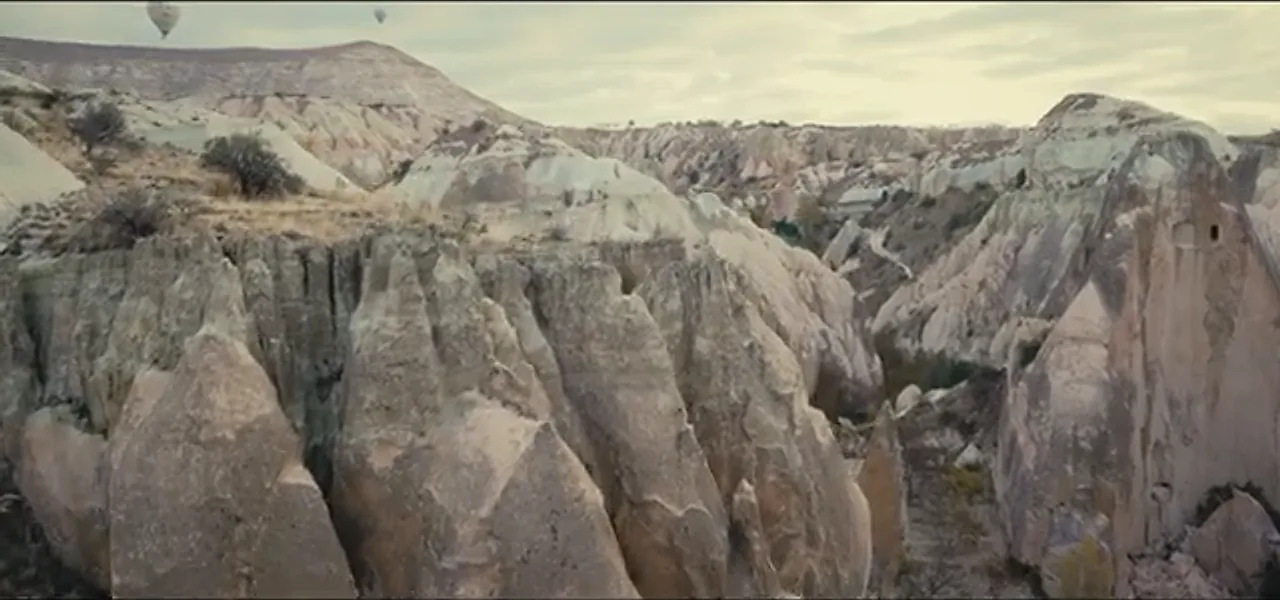
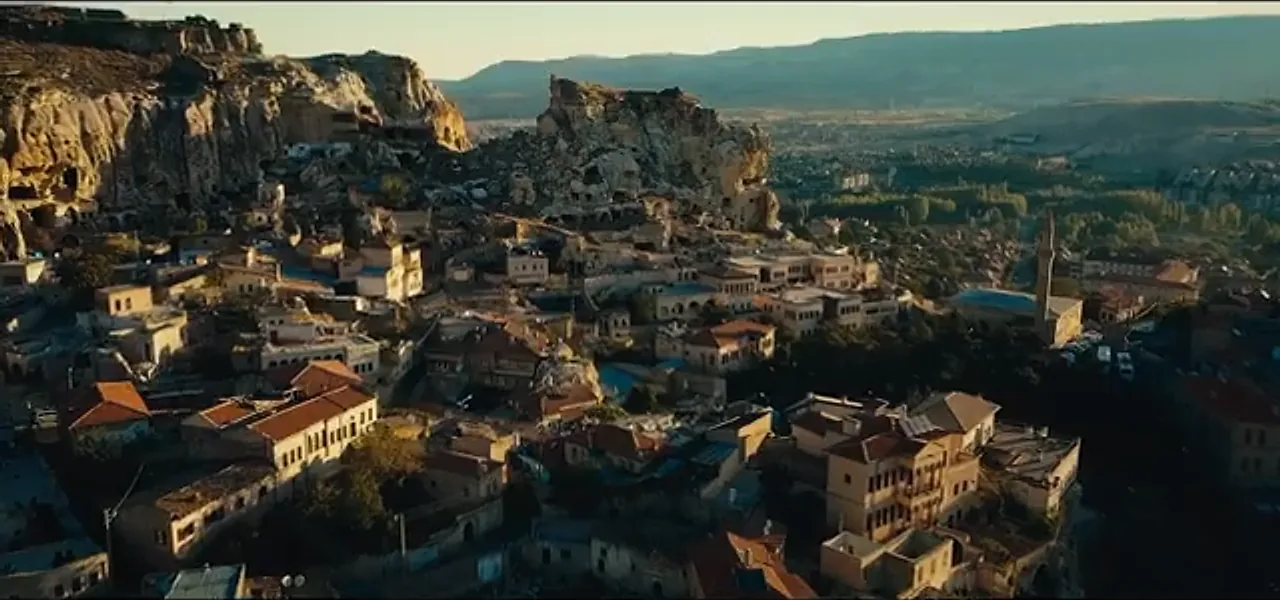
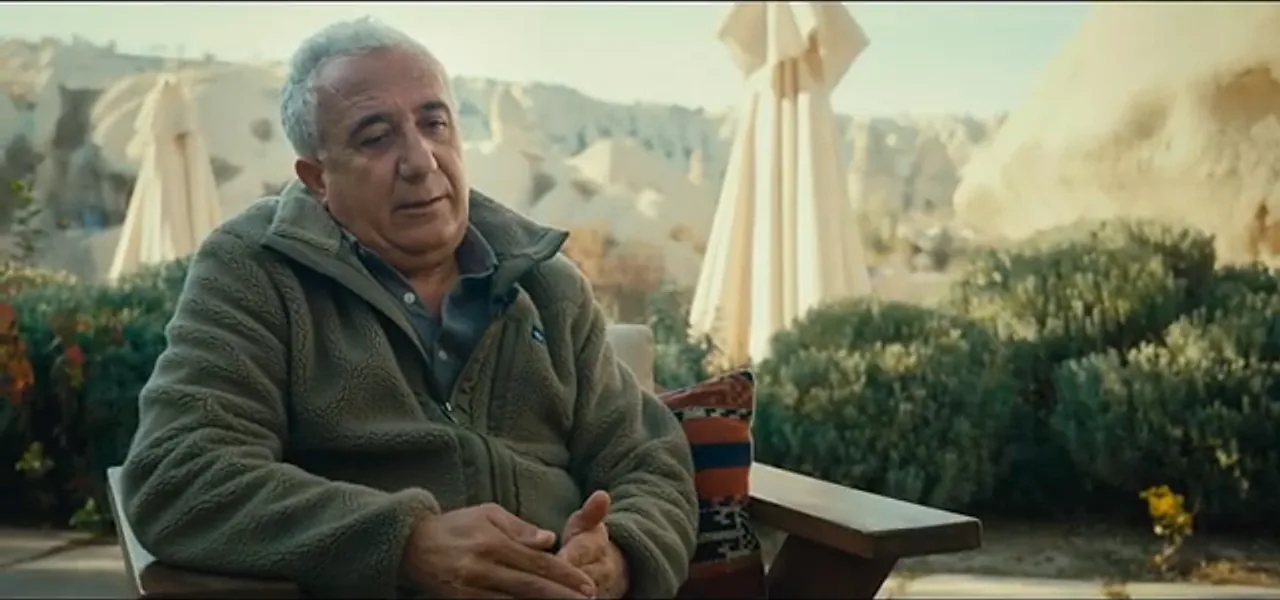
The strangest chapter of that story is written into the rock itself. After Christ, early Christians fleeing Roman persecution came into these hidden valleys and did something extraordinary: rather than build, they dug — carving homes, churches and whole cities directly into the soft stone, tucking themselves into places that were hard to find and harder to attack. My host for the rest of the journey was Mr. Ali, a man born and raised here who never left, and one of the wisest people I've met — the kind of person you learn from just by looking into his eyes while he talks. He handed me the keys to one of his properties: the Sultan Cave Suites, a hotel carved into a hilltop in Göreme.
The Balloons: A Million Dollars in the Sky
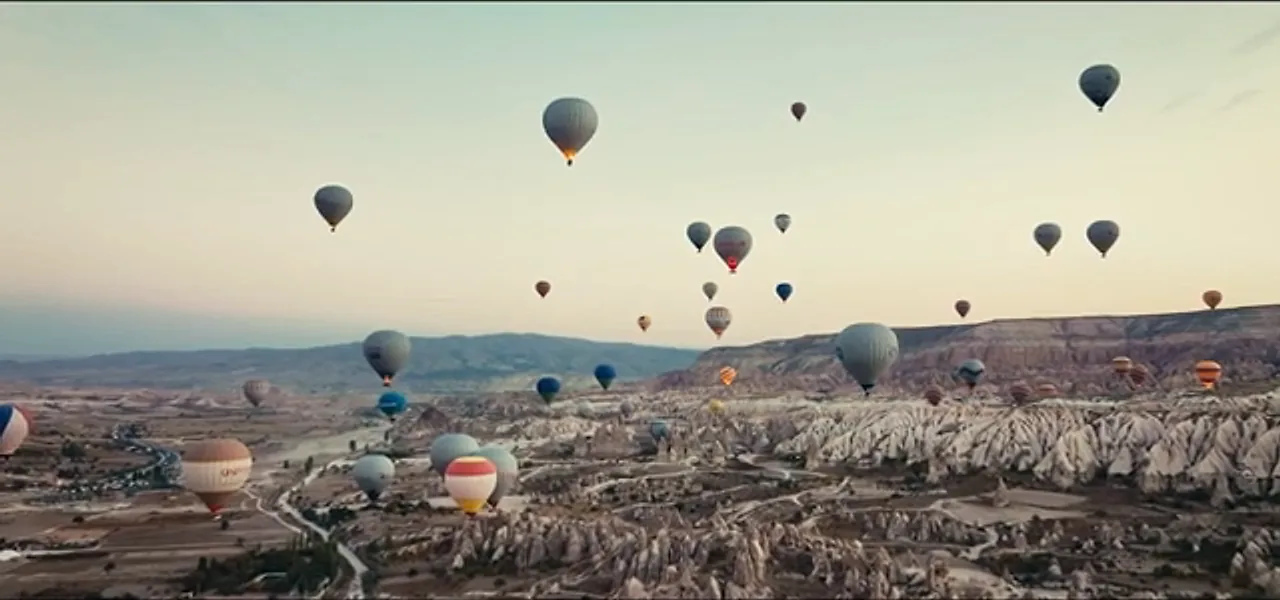
You cannot come to Cappadocia and skip the hot-air balloons — and I say that as someone who'd already ballooned over Tuscany. There is simply nowhere like this. On a clear morning, you look up and see as many as 150 balloons hanging in the sky at once, and the story of how that came to be is a good one. Commercial ballooning here started in 1989, when a couple who travelled the world with a small balloon stopped in the region, realised the landscape and the gentle morning winds were near-perfect, and did a test flight. From that one flight grew a whole industry.
And it is an industry. It's capped at just 27 licensed companies — you can't start a new one, only buy an existing one — and each needs a fleet of at least three balloons, at roughly €150,000 apiece. When 150 of them are up at dawn, that's around 4,000 people and, if you do the math, close to a million dollars floating in the air every single morning. The pilots earn it: they train for the better part of a year, then must log some 300 solo hours before they're allowed to carry a single passenger.
By the numbers: Ballooning over Cappadocia
- Ballooning began
- c. 1989
- Licensed companies
- 27 (capped — no new ones)
- Balloons at once
- Up to ~150–156
- People in the sky
- ~4,000 on a full morning
- Cost per balloon
- ~€150,000
- Pilot solo hours needed
- ~300 before carrying passengers
- Cruising altitude
- 600–1,000 m (up to ~1,500 m)
Everything hinges on the weather: if the wind is calm and clear, they fly; if it isn't, the whole valley stays grounded, which is why anyone serious about the balloons books several mornings in a row to be safe. It's worth every bit of the effort. When conditions line up and the fleet lifts off together into a pink sky, it is, without exaggeration, one of the great travel spectacles on the planet.
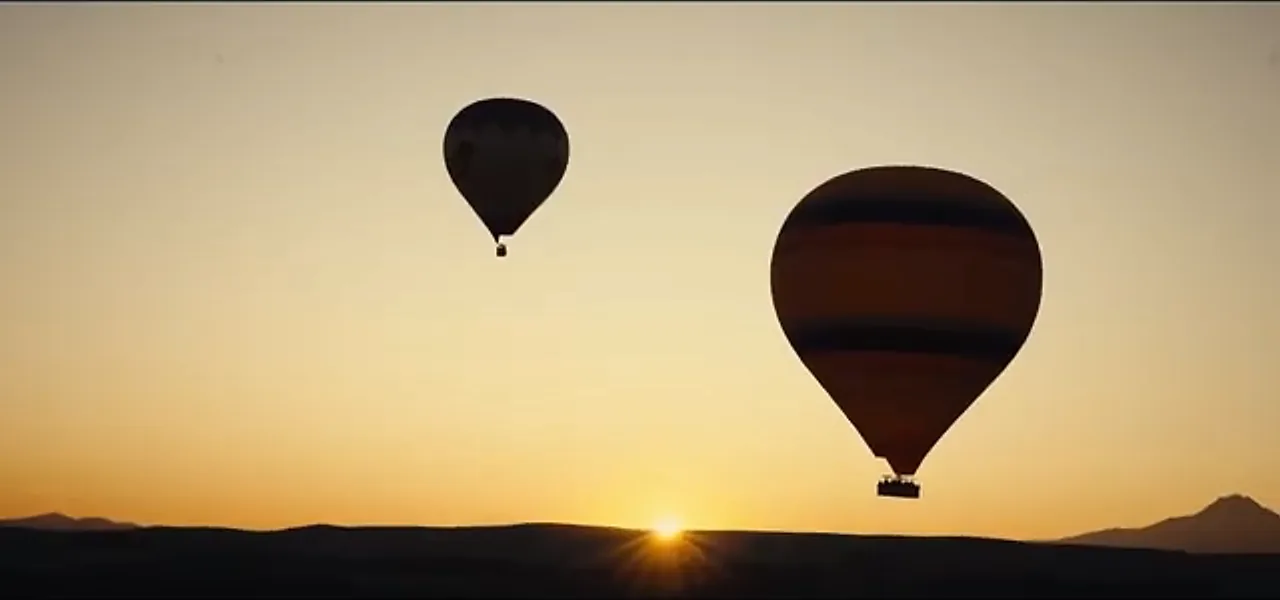
The morning itself is a ritual. They pick you up around 5:30, in the dark, and by 6:15 you're at a camp in the countryside where crews are unrolling the great envelopes across the ground and firing the burners to inflate them, everyone huddled around small fires against the pre-dawn cold, breath fogging, coffee in hand. There's a low excitement to it — dozens of half-inflated balloons rising off the ground like waking animals, the roar of the burners echoing across the valley, the sky just starting to go grey then gold. Then you climb into the basket, the pilot opens the burner overhead, and — gently, almost imperceptibly, so slowly you barely register the moment your feet leave the earth — you lift.
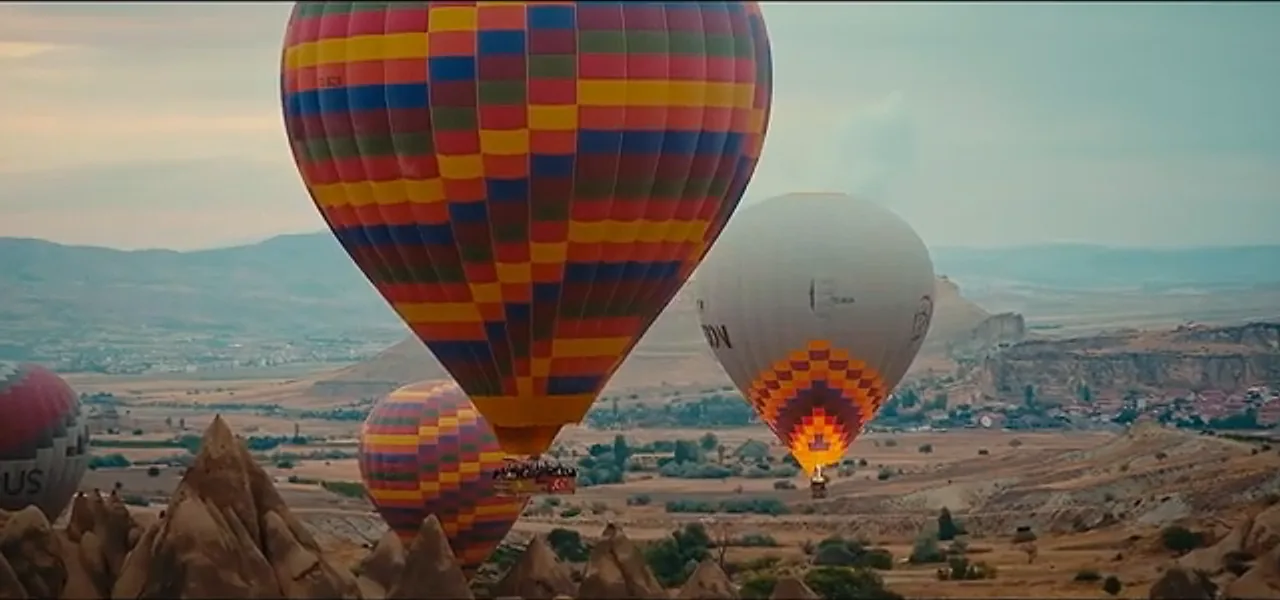
Floating
Here's the thing nobody tells you: you don't feel it move. I'd braced for the sway and lurch of the small basket and the roaring flame, but once you're up, there's no shaking, no sudden movement — if you get motion sickness, you won't get it here. You simply float, and a deep calm settles over you. We drifted somewhere between 600 and 1,000 metres above the valleys, the whole surreal landscape of chimneys and canyons opening up beneath us, dozens of other balloons hanging in the pink light all around.
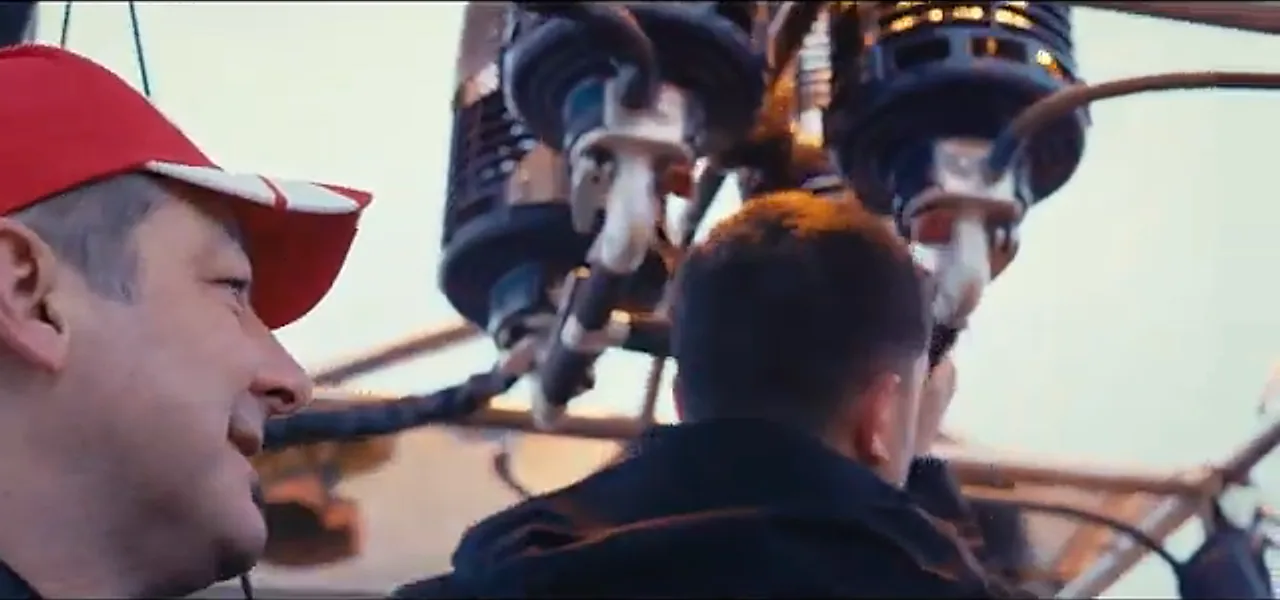
It's one of those rare moments that give you goosebumps, the kind you wish could last forever. An hour went by in what felt like minutes, and I stepped out of the basket knowing I'd never look at the early hours of the day the same way again. If the dart only ever sent me somewhere for a single sunrise, I'd want it to be this one.
And the balloons are only the headline. Cappadocia rewards you the moment the fleet lands: you can hike the coloured valleys — Rose Valley glows pink at sunset, Love Valley bristles with its famously shaped chimneys — ride a horse or an ATV through the canyons, or drive to the pottery town of Avanos on the Red River, where families have thrown clay by hand for generations. At dusk, half the region climbs to a viewpoint to watch the light turn the rock gold and then rose, and then violet. It is a place that photographs impossibly well and, unusually, looks even better in person.
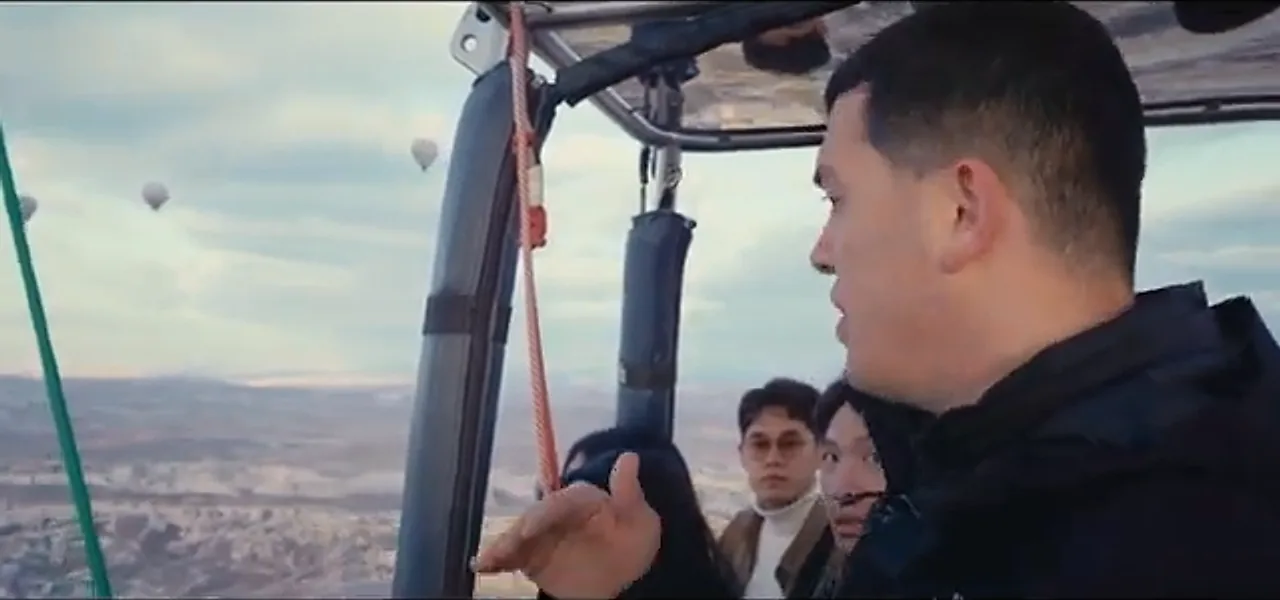
The Cities Beneath the Ground
Back on the earth, I went under it. On the Green Valley tour, Mr. Ali took me down into one of Cappadocia's most astonishing secrets: an underground city. These aren't cellars — they're entire towns, dug straight down into the rock, where people lived thousands of years ago because they didn't have to build houses at all. They simply carved them out of the stone. You descend through low, narrow passages — I'm tall, so I spent a lot of it bent double — and the tunnels keep opening into rooms: kitchens with soot still on the ceilings, stables with mangers cut into the walls, communal spaces, storage. Whole lives were lived down here, in the dark, by lamplight, for months at a time.
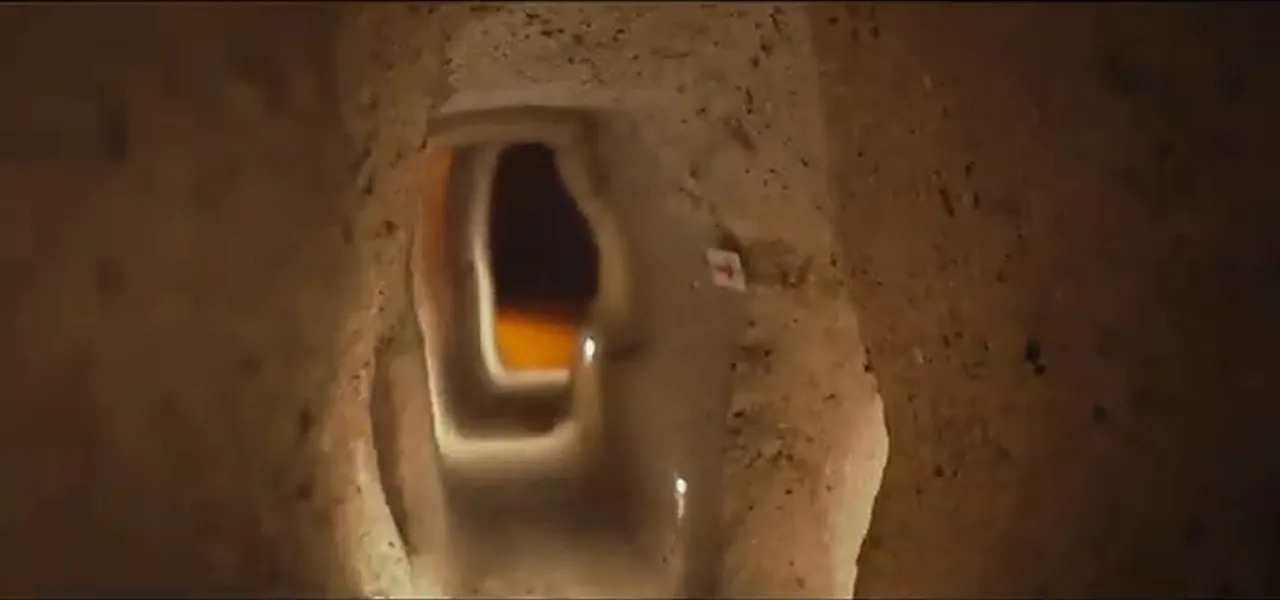
The one I visited, Kaymaklı, goes eight floors deep, of which four are open to visitors, and walking through it is genuinely disorienting. Ali showed me their winery — the stone basin where they stomped grapes, with a channel cut so the juice ran down to be collected below — and their "telephone system," a network of tunnels through which you could shout a message and be heard floors away. At its peak, more than 20,000 people are thought to have lived in the underground cities scattered across Cappadocia, hiding from Roman armies in the dark, self-sufficient and unseen.
It is one of the most remarkable things humans have ever built, and almost nobody outside Turkey knows it exists. And Cappadocia's relationship with wine, which I first glimpsed in that carved stone winery, is no accident: this has been grape country for thousands of years, one of the oldest wine-producing regions on Earth, and the local vineyards — grown in that same volcanic soil — still bottle distinctive Anatolian wines today.
Fairy Chimneys and the Rock That Made Everything Possible
All of it — the cave homes, the churches, the eight-storey cities — was possible because of one peculiar kind of rock. Cappadocia's landscape was made by ancient volcanic eruptions: layers of ash, ejecta and lava that settled and hardened into a soft stone called tuff. Where a harder rock happened to cap a softer column, erosion did the rest, wearing away the soft stone below and leaving the tall, capped spires known as fairy chimneys.
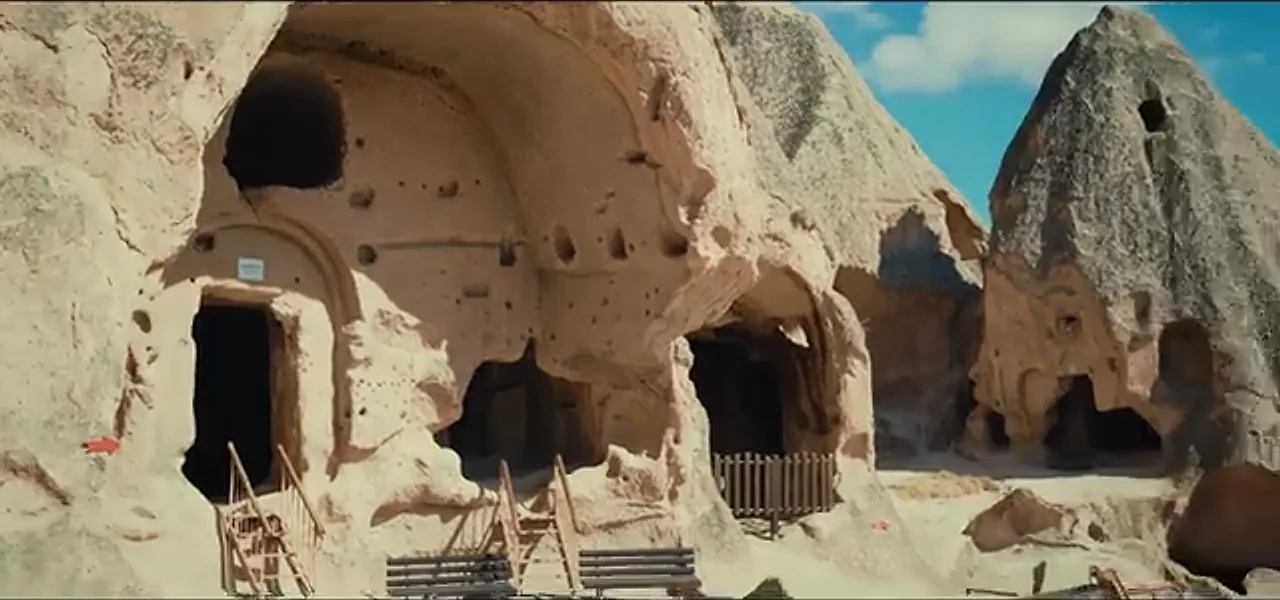
The rock is the secret to the whole place. As Ali described it, it's "just like a stronger chalk — only it doesn't melt when it rains." Soft enough to carve like a sponge, but durable enough to last millennia in the open air, it let people shape the land to their needs in a way that's almost unheard of anywhere else. The chimneys stand today essentially as nature made them, altered only by the small holes carved into some of them — dovecotes for pigeons, whose droppings were prized as fertiliser. A landscape built by fire, and then quietly colonised, chisel by chisel, by people.
The Whirling Dervishes
That night, I saw something completely different, and it's the moment from Cappadocia I still think about most: the Sema, the ceremony of the whirling dervishes. It's not a performance so much as a sacred Sufi ritual — a form of moving meditation, in which the dancer spins, one hand turned up to the heavens and one down to the earth, as a way of connecting with God through music and motion. Watching it, you understand quickly that this isn't entertainment; the dancers seem to go somewhere else entirely. It's hypnotic: the tall camel-hair hats, the long white skirts flaring into perfect circles, the endless, effortless turning, all set to the reedy, aching sound of the ney flute. You could watch for an hour and not notice the time pass.
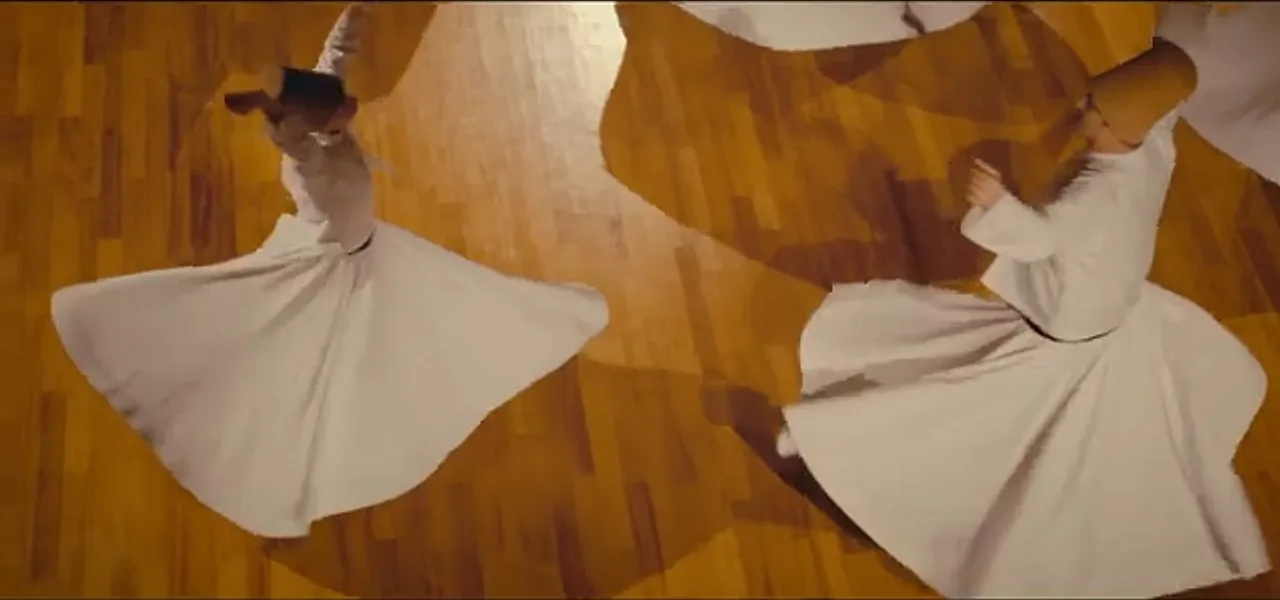
Its roots run deep. The tradition came with the Turkish people down from Central Asia and took form under the 13th-century poet and mystic Rumi — Mevlana — in the city of Konya, where his school trained dervishes and sent them out across the Ottoman world; their descendants still whirl today, from Turkey to the Balkans. Rumi's poetry, written eight centuries ago, remains some of the best-loved verse on Earth — his lines about love and belonging are quoted at weddings and funerals from Istanbul to California — and the spinning dance is its physical expression: a body turning like a planet, one palm open to receive from the sky and one turned down to pass it to the earth.
Ali made a point that stayed with me: Anatolian Islam, shaped by this Sufi tradition, has long emphasised tolerance — respect for every religion and ethnic group, a "big tribe" in his words. In a region layered with Hittites, Romans, Christians and Ottomans, that inclusiveness isn't an accident. It's how so many worlds came to coexist in one landscape.
Anatolian Islam is more Sufi. It's like a big tribe — the dervishes trained the people to respect every different religion and ethnic group.
The Hammam
There was one more essential Turkish experience left, and it's the one your muscles thank you for: the hammam, the Turkish bath. I did it at the Kelebek Hotel and Spa, and I have rarely felt so thoroughly, gloriously clean. The hammam is far older than modern Turkey — it was inherited from the Roman and Byzantine bathing traditions — and it comes from a time before homes had running water, when every town of any size had a communal bathhouse where the whole community came to wash, rest and socialise.
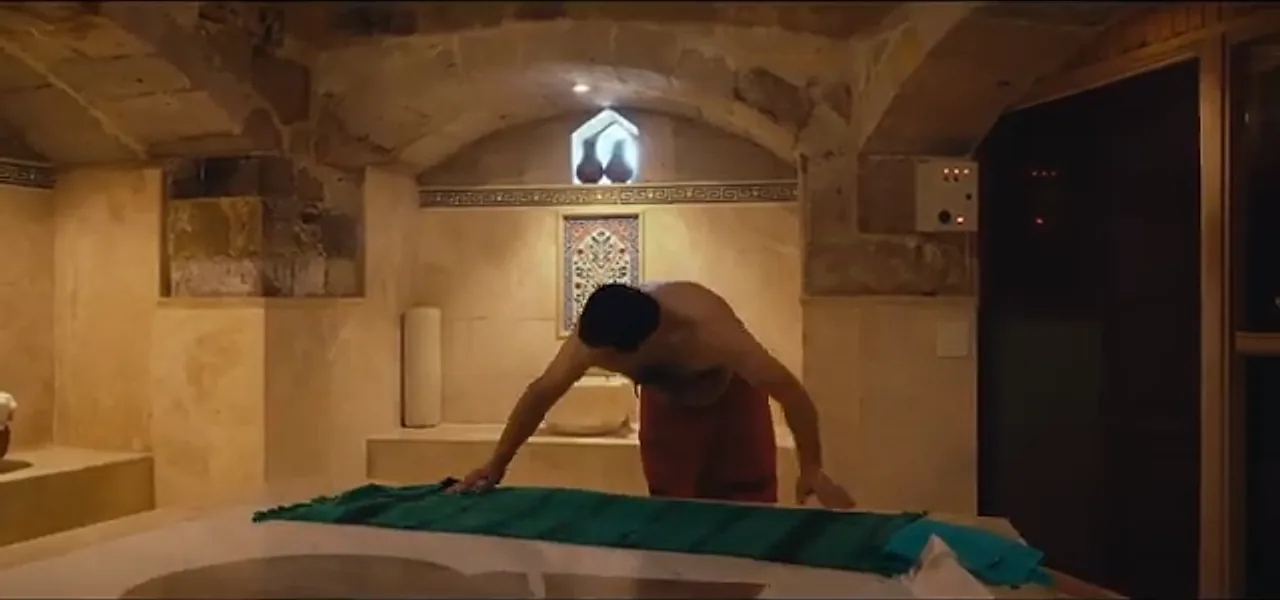
You lie on a heated marble slab in the steam, and then an attendant scrubs, foams and massages you until you feel like a new person has been unpacked from inside the old one. The scrub is done with a coarse mitt called a kese, which lifts away a startling amount of what you'd rather not know was on your skin; then comes a cloud of soap bubbles and a massage, and finally a rinse with warm water poured from a metal bowl. Historically the hammam was far more than hygiene — it was a social institution, a place where deals were made, marriages were arranged, and the whole community met on equal footing, stripped of the clothes that signalled rank. It's a small window into how central bathing has always been to this culture — not a luxury bolted on for tourists, but a genuine, centuries-old ritual of care.
Where the Dart Points Next
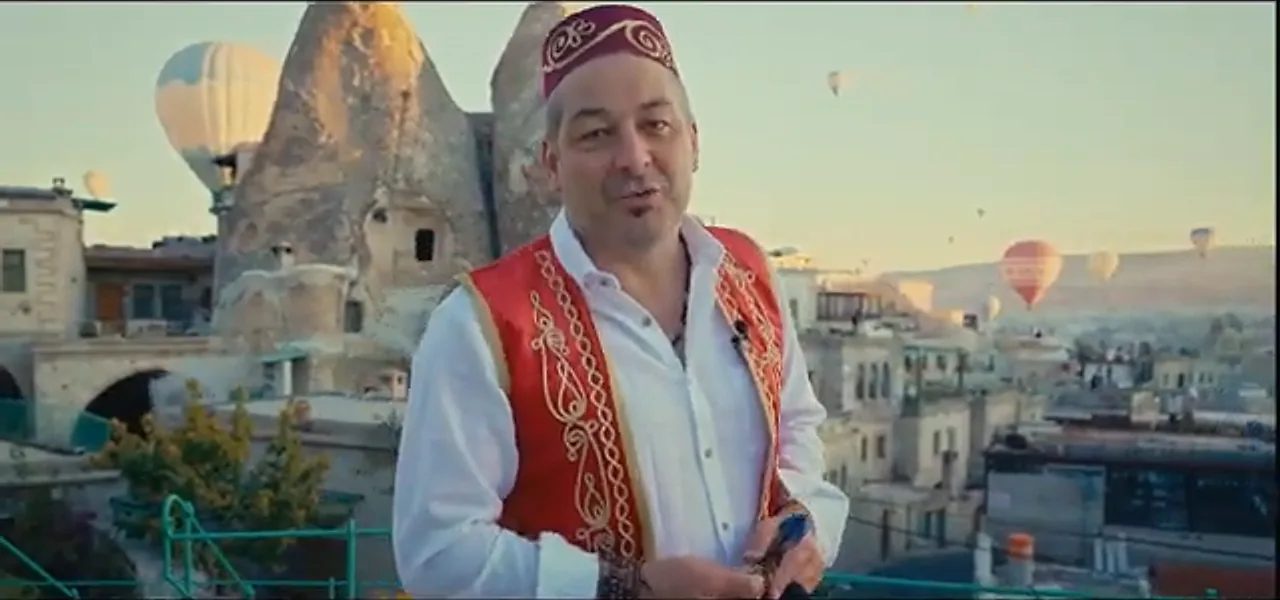
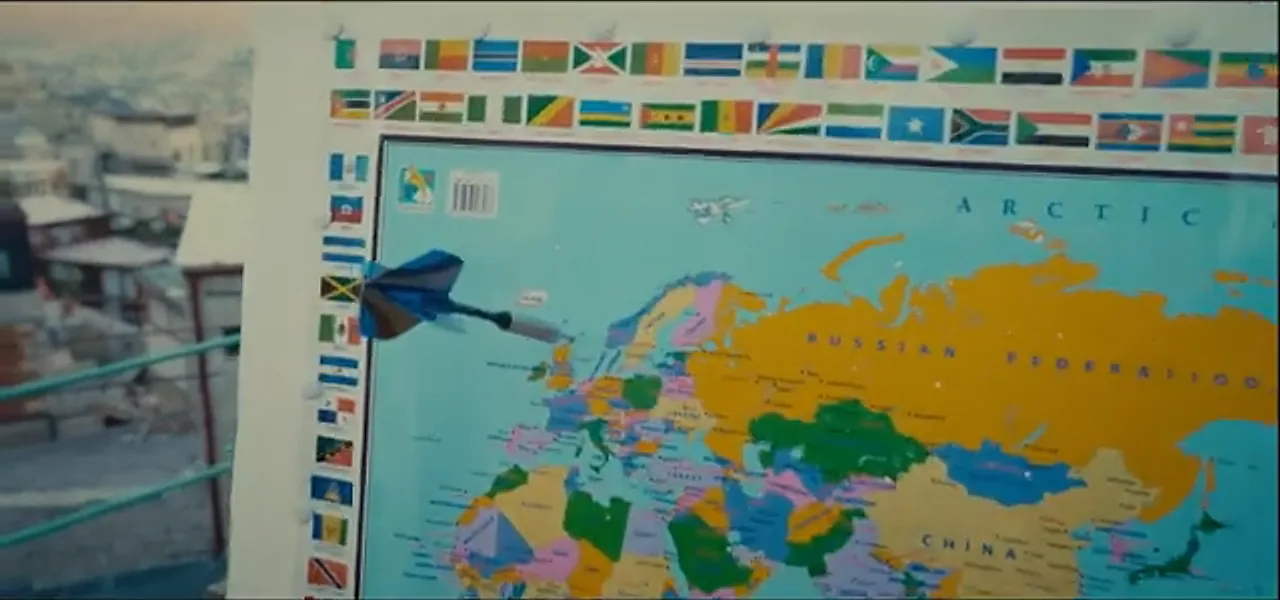
On my last morning in Cappadocia — seven o'clock, the balloons already climbing behind me — it was time to do what I always do. Out of respect for the culture, I dressed in a small piece of traditional Turkish clothing, set up the map with that impossible sky as a backdrop, and threw the dart blindfolded.
I heard the sound of it hitting the map, and when I looked, the dart was stuck right at the top of the United Kingdom — which means Scotland. From the fairy chimneys and cave cities of Anatolia to the lochs and Highlands of the far north: you could not invent two more different places, and that jump, that whiplash, is the entire magic of this show. Turkey had been a phenomenal ride — the imperial grandeur of Istanbul, the cotton-white terraces of Pamukkale, and here, a valley that looks like a dream and a sky full of balloons.
If there's one thing Cappadocia leaves you with, it's a strange sort of humility. You spend a morning marvelling at 150 balloons and a fortune floating in the air, and then you climb down into a city carved by hand a thousand years earlier, and you realise the truly astonishing thing was always the rock and the people who refused to be beaten by it. Turkey looks like three different planets — the city, the terraces, and this — and somehow they're all one country, one dart throw, one impossible trip.
If you've ever thought about coming here, take this as your sign: Cappadocia is one of the rare places that fully lives up to its photographs, and then quietly exceeds them once you're standing in it at dawn. Watch the full Cappadocia episode above. If you missed the first half of the trip — Istanbul, Hagia Sophia and Pamukkale — it's all in my Turkey film. And next, the dart carries me north to the mountains, castles and lochs of Scotland.
Explore More Travel by Dart Journeys
- Back to the first half of the trip: my Turkey film — Istanbul, Hagia Sophia and Pamukkale.
- See where the dart carried me next: Scotland.
- More of the planet's otherworldly landscapes: Iceland.
- Another ancient Mediterranean world the dart uncovered: Greece.
Suggested Sources & Further Reading
To go deeper into Cappadocia, these are some of the best authoritative resources:
- Go Türkiye — Turkey's official tourism portal.
- UNESCO — Göreme National Park and the Rock Sites of Cappadocia — the region's World Heritage listing.
- UNESCO — Mevlevi Sema Ceremony — the whirling dervishes' Intangible Cultural Heritage listing.
- Encyclopædia Britannica — Cappadocia — the region's geology and history.
All facts verified September 2026.
Cappadocia: traveler questions
What is Cappadocia famous for?+
Cappadocia, in central Turkey's Anatolia region, is famous above all for its sunrise hot-air balloon flights — up to around 150 balloons in the sky at once — and for its surreal landscape of 'fairy chimneys': spires of soft volcanic rock. People have carved cave homes, churches and entire multi-storey underground cities into that rock for thousands of years, and many of the region's hotels are still cut into the cliffs.
When did hot-air ballooning start in Cappadocia, and how big is it?+
Commercial ballooning in Cappadocia began around 1989, after a travelling couple realised the landscape and calm morning winds were ideal. Today it's a major industry, capped at 27 licensed companies; on a good day around 150 balloons take off together, carrying some 4,000 people. A single balloon costs roughly €150,000, and pilots need about 300 solo hours before they can fly passengers.
What are the underground cities of Cappadocia?+
They are entire towns dug down into the soft rock — the best known being Kaymaklı (eight levels, four open to visitors) and Derinkuyu. Early Christians expanded and hid in them to escape Roman persecution, and at their peak more than 20,000 people are thought to have lived underground across Cappadocia, complete with wineries, stables, ventilation shafts and communication tunnels.
What are fairy chimneys made of?+
Fairy chimneys are natural rock formations created by ancient volcanic eruptions: layers of soft ash and 'tuff' were topped by harder rock, and as the soft stone eroded it left tall spires, often with a harder 'cap.' The rock is soft enough to carve like a sponge but doesn't dissolve in rain, which is why people could dig homes, churches and cities into it.
What is a whirling dervish?+
The whirling dervishes perform the Sema, a sacred Sufi ceremony of spinning meditation meant to connect the dancer with God through music and movement. It originates in the teachings of the 13th-century poet and mystic Rumi (Mevlana) and the city of Konya. Anatolian Sufism is known for its emphasis on tolerance and respect across faiths.
What is a Turkish hammam?+
A hammam is a traditional bathhouse — a communal steam bath with a hot marble slab where you're washed, scrubbed and massaged. The tradition long predates modern Turkey, inherited from Roman and Byzantine bathing culture, and dates from a time before homes had running water. It remains one of the most restorative experiences you can have in the country.