Season 5 · Episode 1
Turkey
Where East meets West—and neither side tells the whole story.
On this page ▾
By Sorin Mihailovici · Travel by Dart · Last updated August 2026 · ~15 min read
The dart threw me here from a rooftop in Cartagena, Colombia, and I'll admit I was more excited than I probably showed on camera. It could have landed on any of the remote, difficult places the dart loves — I'd recently been sent to the North Pole and Easter Island — but instead it gave me Turkey: one of the oldest continuously inhabited lands in the world, where, as a guide would tell me, the story of humankind, of Christianity, and of empires all trace threads back to this soil. This isn't a journey through a country so much as through layers of history stacked on top of one another for thousands of years.
What follows is the guide I wish I'd had before I arrived — everything Istanbul and Pamukkale taught me, with the misconceptions cleared away. And there were a lot of misconceptions to clear: this is a country most Westerners think they understand and almost none actually do. Nearly everything I "knew" about Turkey before landing turned out to be either half-true or flatly wrong, and unlearning it was half the pleasure of the trip.
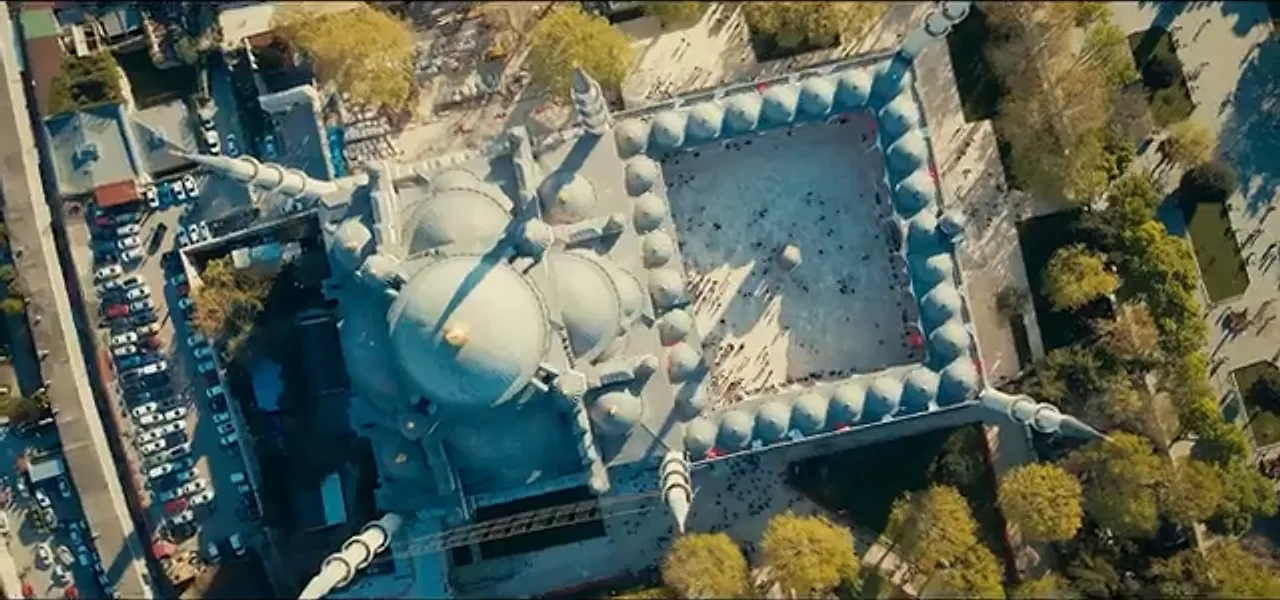
Quick facts: Turkey at a glance
- Largest city
- Istanbul (~16 million)
- Capital
- Ankara (not Istanbul)
- Former name of empire
- The Ottoman Empire
- Istanbul sits on
- Two continents — Europe & Asia
- Hagia Sophia completed
- 537 AD
- Blue Mosque minarets
- Six (rare for an Ottoman mosque)
- Natural wonder
- Pamukkale's travertine terraces
- Everywhere symbol
- The nazar ('evil eye')
The Misconceptions People Have About Turkey
Before the monuments, the corrections — because Turkey is a country the West gets wrong in specific, persistent ways. First: the capital is not Istanbul. It's Ankara, a smaller, quieter, administrative city. Istanbul is the giant — around 16 million people, up from barely a million when my guide's father was young — but it doesn't run the country. Second: Turks are not Arabs. Turkish people trace their origin to Central Asia and migrated here around the 11th and 12th centuries; Arabs are from the Arabian Peninsula, an entirely different culture and language. And Turks are not Kurds, either — the Kurds are a distinct, ancient people with their own identity. Even the language trips people up: the Ottoman language of the empire and the modern Turkish spoken today are almost entirely different.
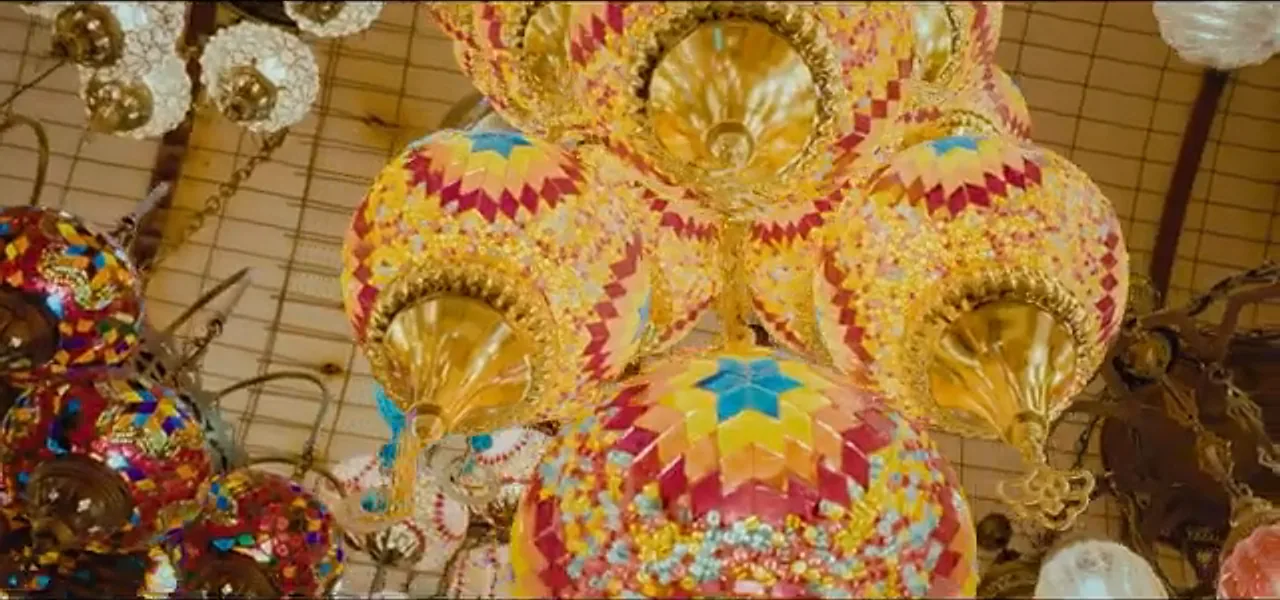
And there's the food and ritual the country runs on. Turkey is the land of Turkish coffee — thick, unfiltered, and so culturally central that reading the grounds left in the cup is its own fortune-telling tradition — of endlessly poured Turkish tea in little tulip glasses, of ayran, the salty yoghurt drink, and of the sprawling Grand Bazaar. So many things, in so many places, that you could spend a month here and only scratch the surface.
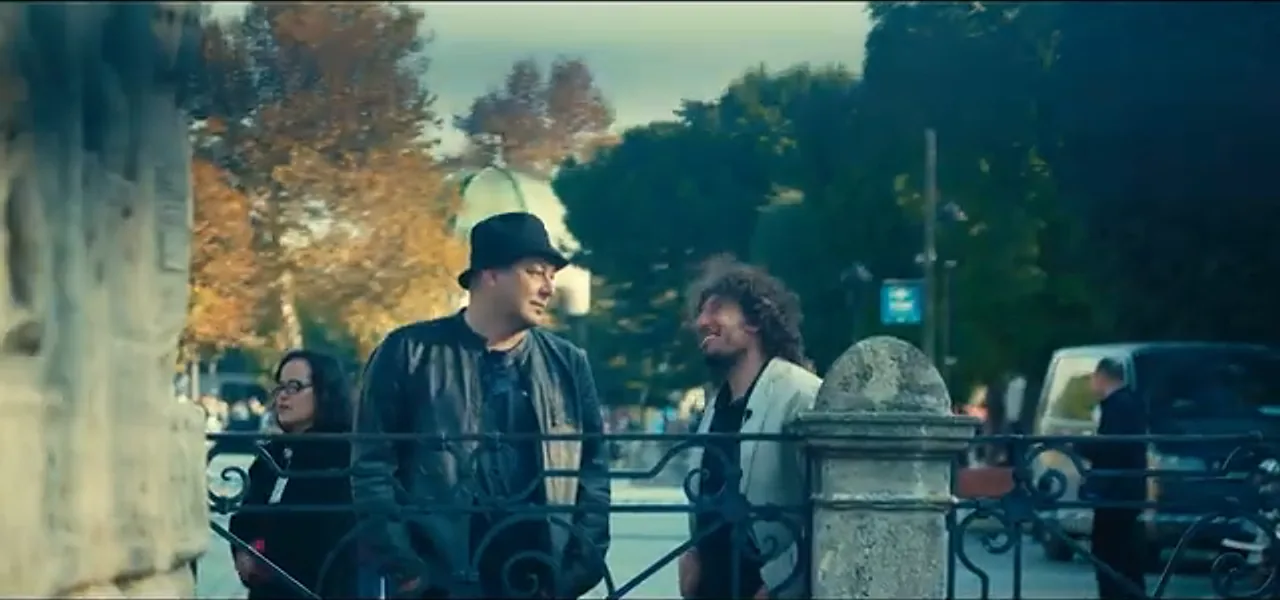
My guide through all of it was a wonderful character named Apo — short for Abdullah — whose tour company is called Apopedia, because, he says with a straight face, his biggest competitor is Wikipedia. Over a few days he walked me through Sultanahmet, the old-city neighbourhood where Istanbul keeps its most famous landmarks packed within a few minutes of each other.
Nearly everything I thought I knew about Turkey before landing turned out to be either half-true or flatly wrong — and unlearning it was half the pleasure of the trip.
The Blue Mosque and the Six-Minaret Crisis
We started at the Blue Mosque. From the outside, the thing that stops you is the minarets: most imperial Ottoman mosques have four, but this one has six — and that, when it was built in the early 1600s, caused a genuine religious crisis. The rule of the day was a hierarchy: ordinary officials could build a mosque with one minaret; the sultan's imperial mosques could have up to four; and only the Grand Mosque of Mecca, the holiest site in Islam, had six. When Sultan Ahmed built six here, religious authorities accused him of trying to rival Mecca itself. The solution, the story goes, was elegant: they simply added a seventh minaret to Mecca — and over the centuries Mecca kept adding more, until today it has far more than any other. After Mecca, the Blue Mosque still holds the record.
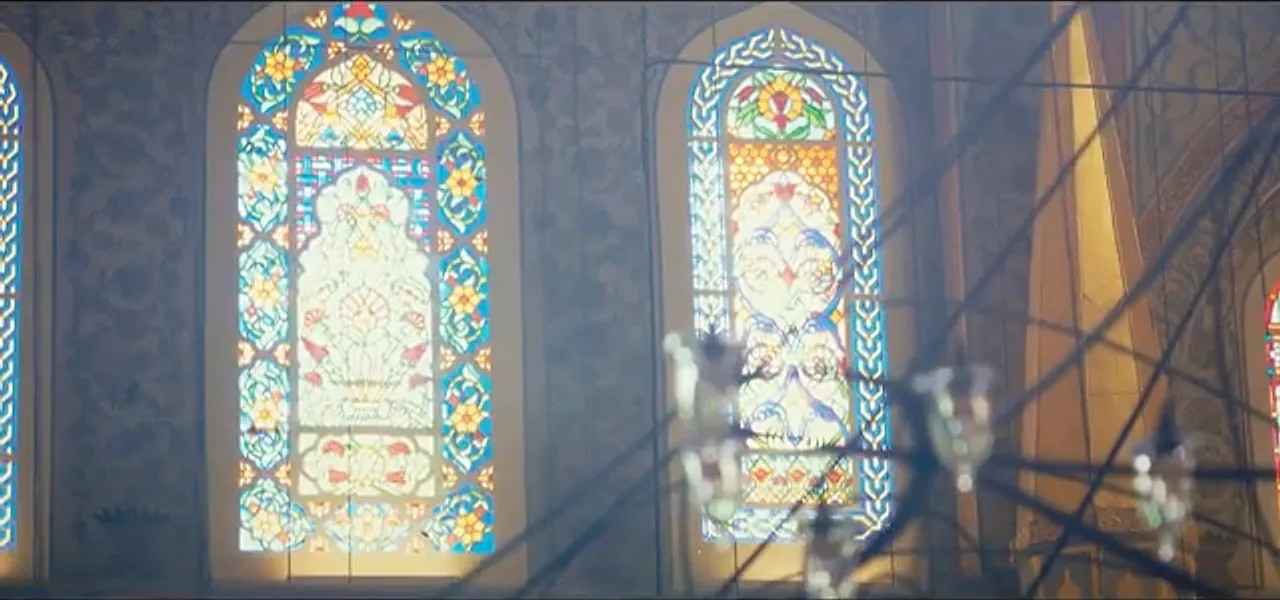
Inside, the mosque earns its Western nickname: the walls are lined with tens of thousands of blue İznik tiles, and the whole space resolves into a harmony of domes and near-perfect symmetry, built, Apo pointed out, on the golden ratio. The prayer hall holds up to 10,000 worshippers. My favourite detail was the smallest: the great low chandeliers are hung with ostrich eggs, placed there centuries ago in the belief that they would repel spiders and keep the space free of cobwebs.
Hagia Sophia: A Building That Changed Architecture
A short walk away stands the building I most wanted to see: Hagia Sophia. It's hard to overstate what this place is. Completed in 537 AD by the Byzantine Romans, it was, at the time, the largest building in the world, and for roughly a thousand years the largest cathedral — a record it held until the cathedral of Seville was built. Its name means "holy wisdom," and its engineering was a genuine revolution: an enormous square hall crowned by a vast dome that seems to float, achieved without cluttering the centre with columns. Every great mosque that followed — the Blue Mosque, the Süleymaniye — took its inspiration from this one Roman church.
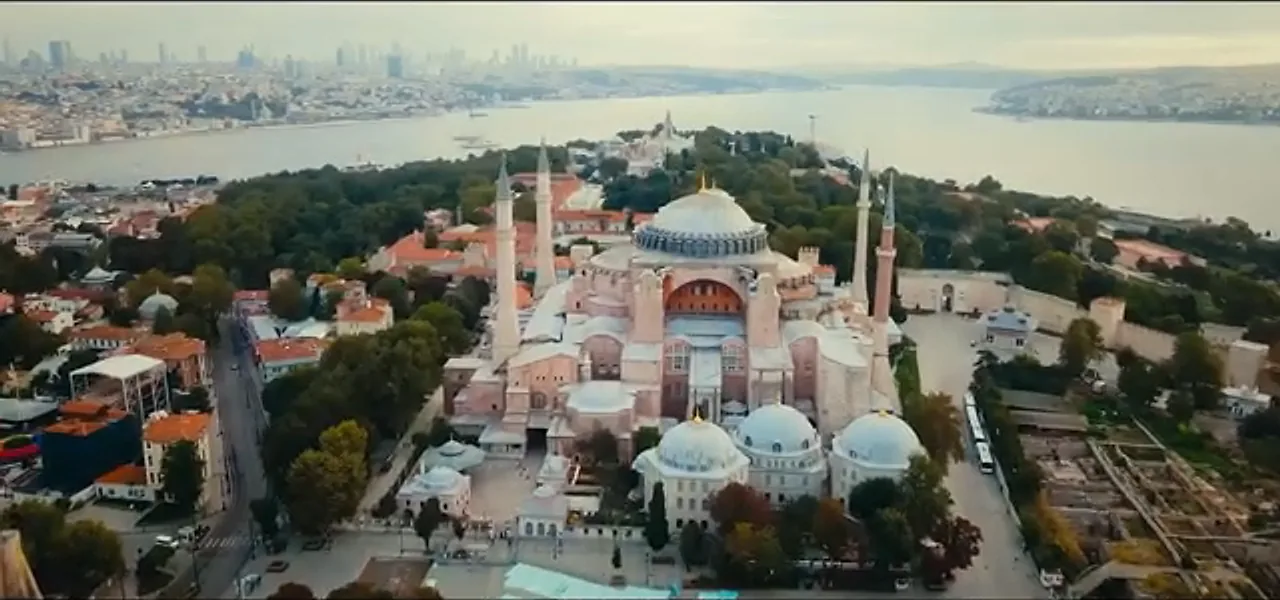
Its story is the story of the whole city compressed into one building. It was the centre of Greek Orthodox Christianity for about 900 years; then, when the Ottomans conquered Constantinople in 1453, they converted it into a mosque. (It later became a museum, and in 2020 was made a mosque once more.) And here's the detail I love: it stands directly facing the Blue Mosque, the two of them looking at each other across a square. As Apo put it, it's as if Hagia Sophia is saying I am here — I am Rome, I am Christianity, and the Blue Mosque answers I am here — I am the Ottomans, I am Islam. Two empires, two faiths, staring each other down in stone.
By the numbers: A timeline in one square
- 537 AD
- Hagia Sophia completed by the Byzantines
- ~900 years
- Its life as an Orthodox cathedral
- 1348
- The Galata Tower is built
- 1453
- Ottomans take Constantinople
- 1609–1616
- The Blue Mosque is built
- 1935
- 'Istanbul' becomes the official name
The Land Where Everything Began
Apo kept circling back to one idea, and it reframed the entire trip for me: Turkey is one of the oldest theatres of human civilisation, a place where an astonishing amount of what we call "history" actually happened. This is a land of prophets and saints. Saint Paul, whose letters make up much of the New Testament, was born in Tarsus, in what is now southern Turkey. Early Christianity took root and spread from these hills long before it reached Rome as we imagine it. Judaism, Christianity and Islam all leave deep footprints in the same soil.
It goes further back still. Turkey holds some of the oldest structures humans have ever built, and for millennia this crossroads between continents has been where East and West traded, fought, prayed and mixed. When you stand in Istanbul, you're not visiting an old city. You're standing near the beginning of a great deal of the human story.
Into the Underworld: The Basilica Cistern
If Istanbul above ground is chaos and light, the Basilica Cistern is its cool, silent opposite. Built in the 6th century as the underground water reservoir for the Byzantine Grand Palace, it's a vast, cathedral-like cavern held up by 336 marble columns arranged in 12 rows — and remarkably, it was built in just two years, by a workforce of some 5,000 labourers. Today it's lit and staged so beautifully that walking through it, you genuinely feel like you've dropped out of the modern city and into the ancient one.
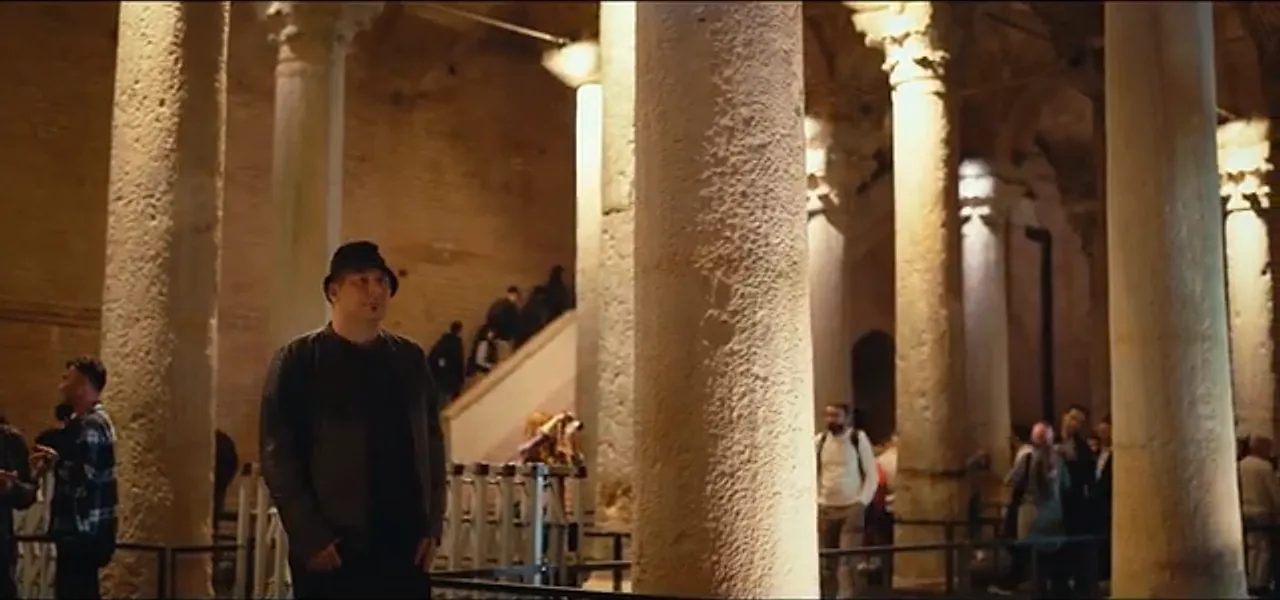
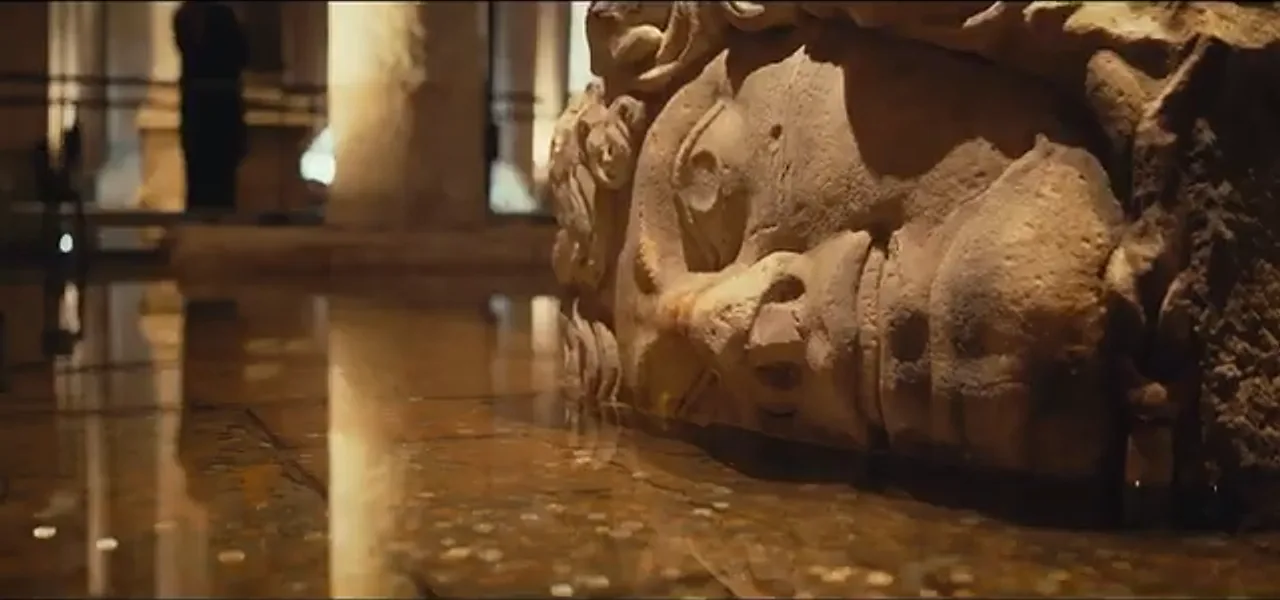
Its most famous residents are two enormous stone Medusa heads, reused from some older Roman building and placed at the base of two columns — one on its side, one upside down. Apo kept warning me, half-joking, not to look her in the eyes: by legend, Medusa's gaze turns you to stone. The lighting throws a long, distorted shadow up the wall, and even knowing it's a myth, standing in that gloom in front of that ancient, glaring face, you understand exactly why people have told stories about her for two thousand years.
The Tower, the Cats, and the Evil Eye
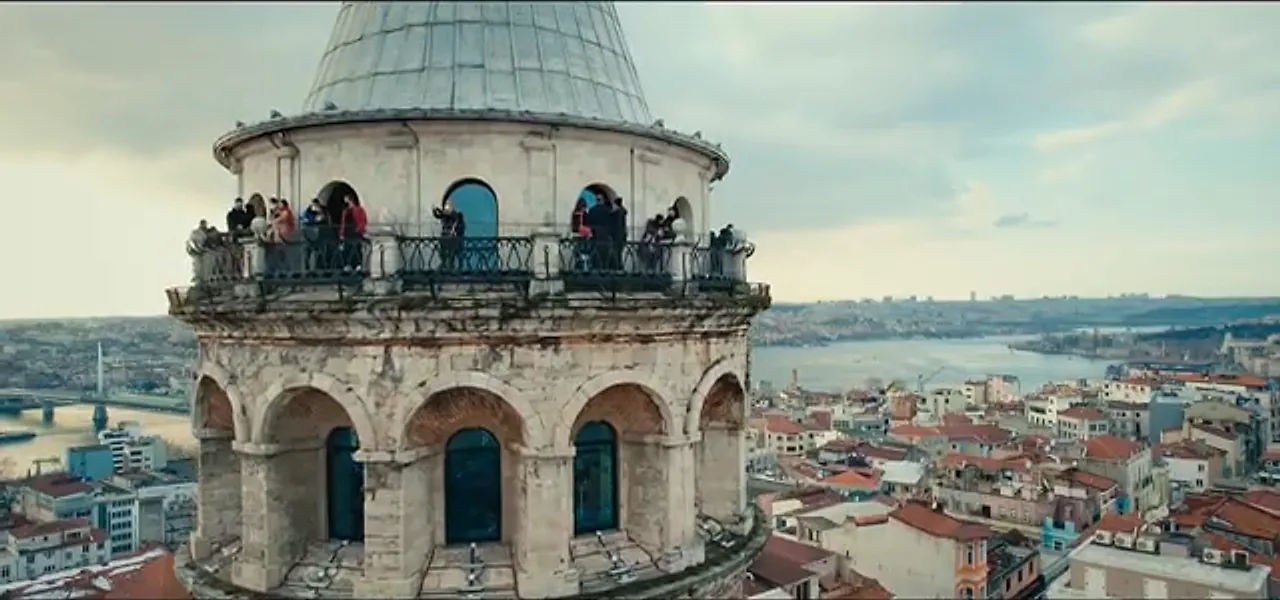
Back above ground, the Galata Tower — a stout medieval cylinder built in 1348 — watches over the rooftops from across the Golden Horn. Its best story is a piece of aviation legend: in the 17th century, an Ottoman named Hezârfen Ahmed Çelebi is said to have built himself a pair of artificial wings, leapt from the top of this tower, and glided all the way across the Bosphorus to the Asian side of the city.
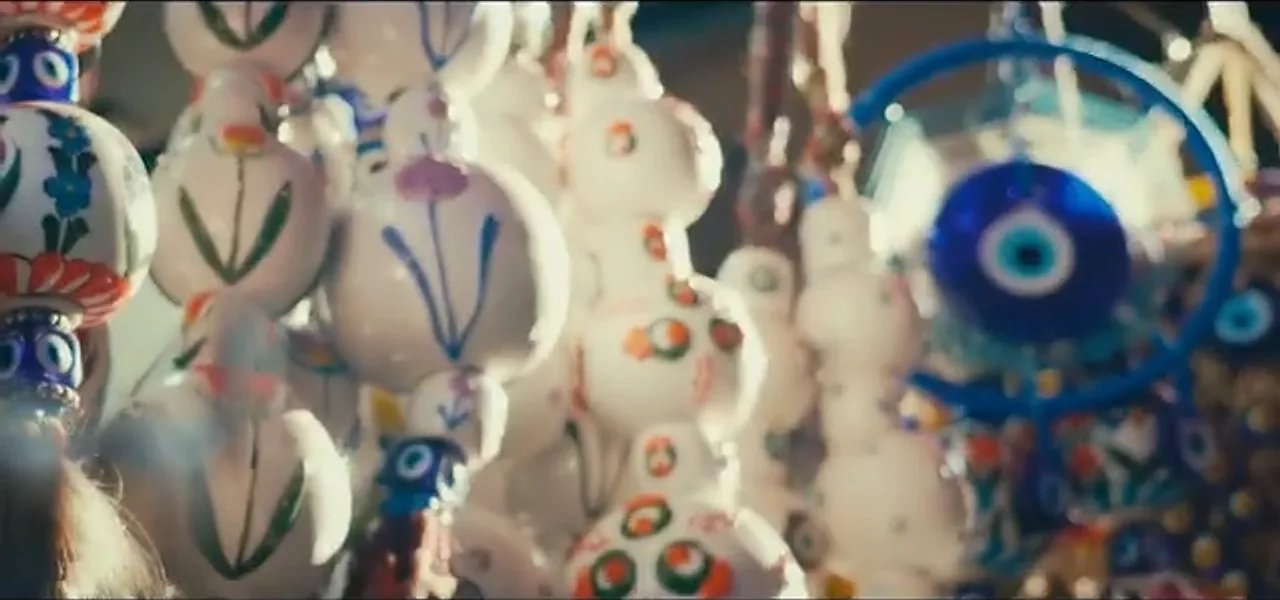
Two things you notice on every street. One is the cats — Istanbul is sometimes called the City of Cats, and I lost count somewhere past a thousand; they're everywhere, and astonishingly friendly. The other is the evil eye. At every kiosk, doorway and market stall hangs the nazar — a blue glass charm shaped like an eye. Turks believe that ill will travels through envious or malicious looks, so the amulet takes the form of an eye to catch and turn that bad energy away. Once you start seeing them, you cannot stop.
A City on Two Continents
Then Apo took me across the water, and it's the single strangest fact about Istanbul: it is the only city in the world that sits on two continents. The Bosphorus strait divides the city into a European side and an Asian side, and you cross between the two — between continents — in about five minutes on a ferry. The Asian side isn't as different as the word makes it sound; things are a little cheaper, the pace a little calmer, but it's the same restless, magnetic Istanbul.
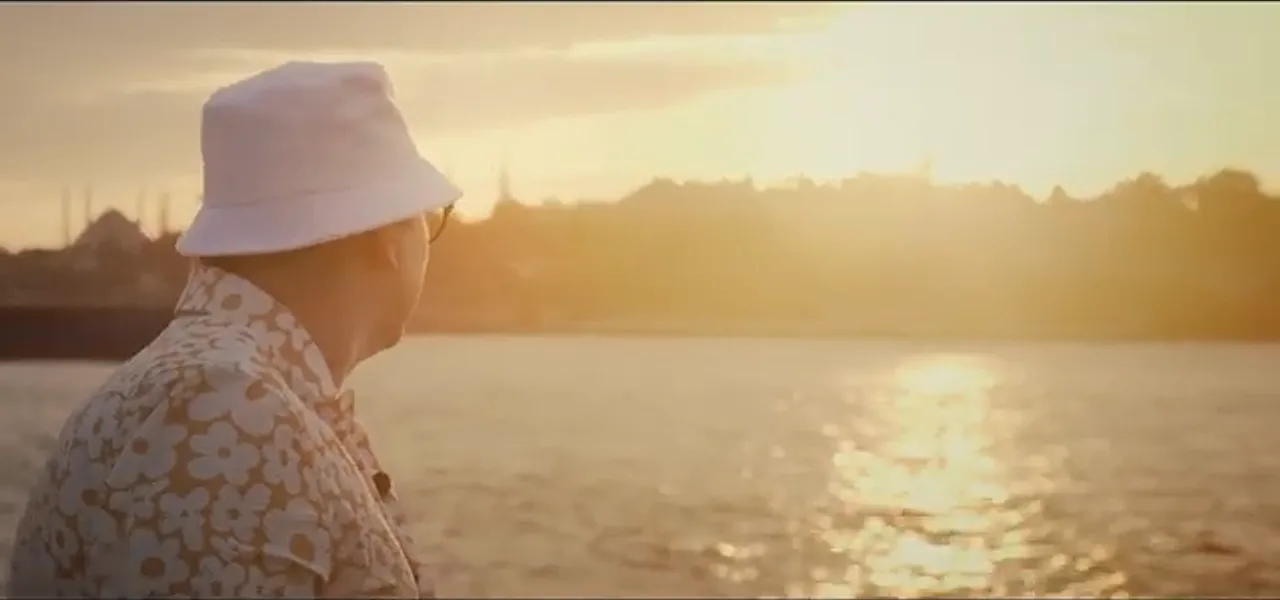
The name itself carries the myth: Bosphorus means "ox passage," from the Greek tale of Zeus — or, in one version, his lover Io, fleeing the wrath of his wife Hera — crossing this water in the form of an ox. And the strait isn't only scenery; it's one of the busiest and most strategically vital waterways on the planet, the sole sea route between the Black Sea and the Mediterranean. Empires have risen and fallen over who controls it. Sitting on a ferry with a glass of tea, watching tankers and fishing boats and commuters all thread the same blue channel between two continents, you feel the weight of why this city has been fought over for three thousand years.
Istanbul demands that you keep up with its fast, chaotic rhythm, but underneath the noise there's a genuine, alluring mystery to it — a sense that behind every ordinary doorway is another thousand years of story. Apo was the best guide I could have asked for, and when our days in the city were done, it was time to leave the metropolis behind for something completely different.
Pamukkale: The Cotton Castle
Many people make the mistake of only ever seeing Istanbul. But Turkey is so much more, so we flew south to one of its natural wonders: Pamukkale, whose name means "cotton castle." From a distance it looks impossibly like a hillside covered in snow — but it's not snow. It's travertine: brilliant white terraces of calcium-carbonate rock, formed as mineral-rich hot-spring water flows down the slope, cools, and leaves its calcium behind. These terraces have been building, drop by drop, for around 400,000 years.
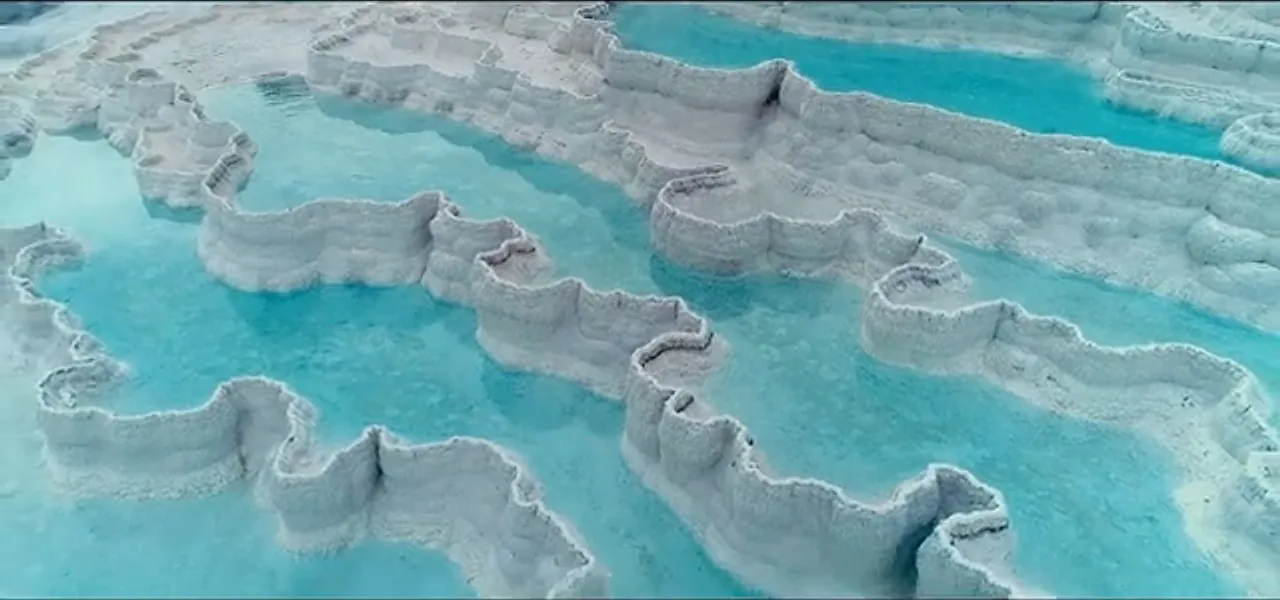
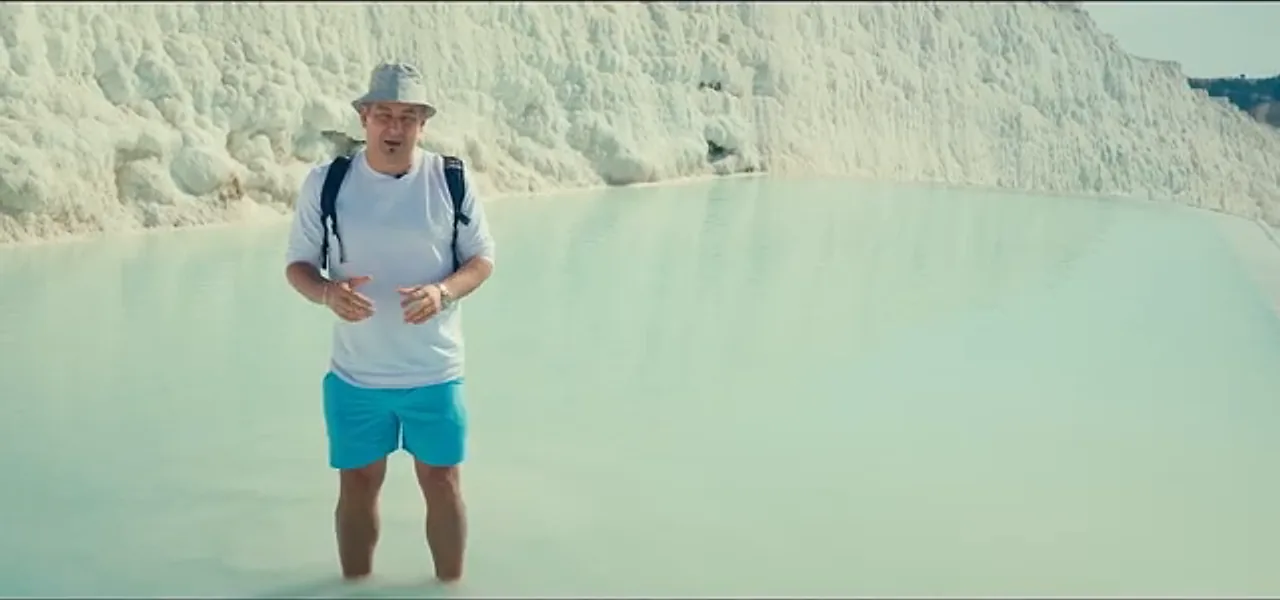
Here's the joke the place plays on you: they're called hot springs, and the water is famous for its supposed healing powers — but I visited on the 1st of November, and while the sun made it look like a warm paradise, most of the pools were genuinely freezing. A few are warm; most will take your breath away for the wrong reasons. You walk the terraces barefoot, because that's the rule that protects the fragile white rock, and the cold is a small price for standing inside something that looks like it belongs on another planet.
Cleopatra's Pool and the Ruins Above
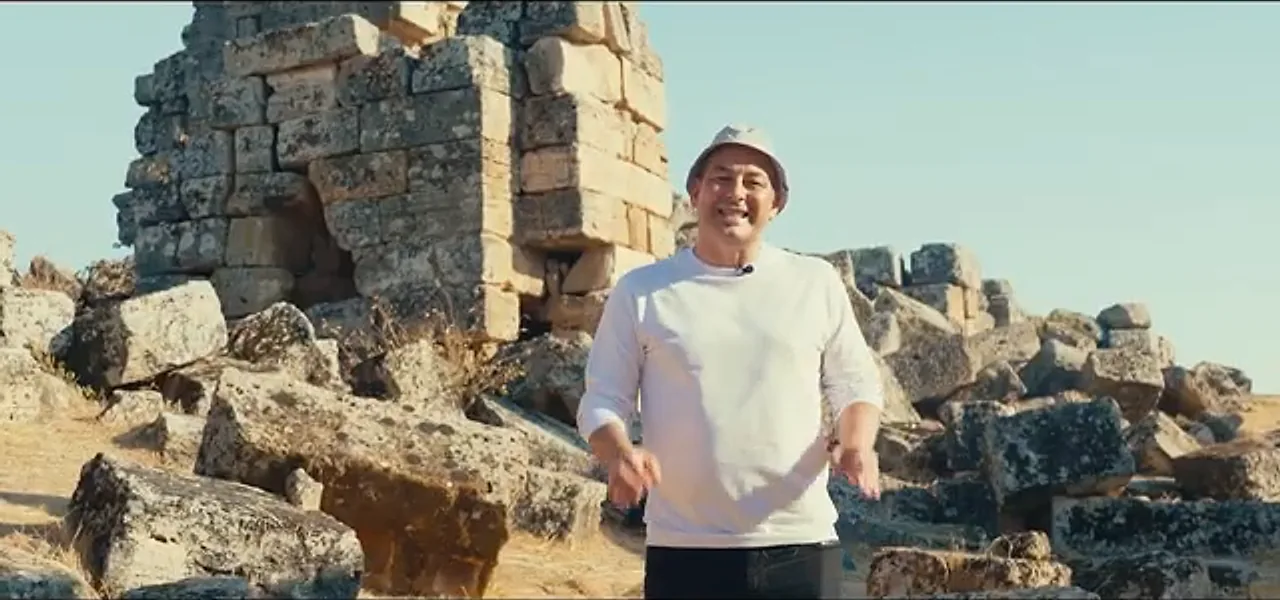
Pamukkale isn't only the terraces. Rising directly above them are the ruins of Hierapolis, an ancient city founded more than two thousand years ago — a spa town even then, where Greeks and Romans came to bathe in the same healing springs I'd just been shivering in. It became one of the earliest centres of Christianity, and is said to hold the burial place of Saint Philip, one of Jesus' apostles, who by tradition was martyred here. I walked its old streets, past tombs and colonnades, and stumbled onto its showpiece: a Roman theatre carved into the hillside with seating for around 12,000 people, so well preserved that, thousands of years on, most of the structure is still intact. Standing alone in the middle of a stage where crowds gathered two millennia ago, with the white cliffs of Pamukkale falling away below, is genuinely humbling.
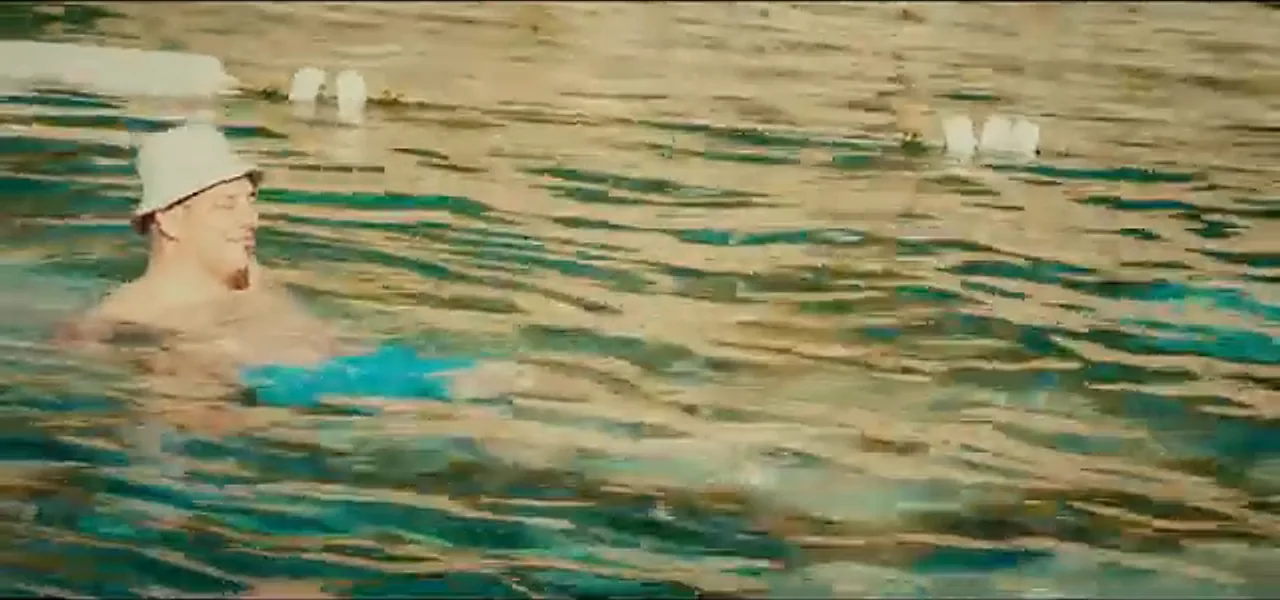
And then there's the pool. Tucked among the ruins is one of the most famous thermal pools in the world — Cleopatra's Pool, where the queen herself is said to have bathed. Unlike the icy terraces below, this water sits at a perfect 36°C (about 97°F), and its floor is scattered with the toppled marble columns of an ancient temple, so you swim among two-thousand-year-old ruins. The story goes that these columns tumbled into the pool during an earthquake centuries ago and were simply left where they fell — so today you drift over the wreckage of a Roman temple in bath-warm water. Floating there, mineral bubbles rising around me, past submerged columns older than almost anything in my own part of the world, I understood Cleopatra completely. This woman had it good.
The best part of a place like Pamukkale is how it rearranges your sense of a country. That morning I'd been in the roar of a 16-million-person megacity straddling two continents; that afternoon I was floating alone through Roman ruins in a thermal spring, in near silence, hours away. Turkey does that constantly — it refuses to be one thing.
What Comes Next
Istanbul and Pamukkale were only the beginning. Turkey has a way of looking like three completely different planets in one country — the imperial city, the cotton-white terraces, and, still to come, a landscape unlike anywhere on Earth. Because when most people around the world picture Turkey, they picture one thing above all: a sky full of colourful hot-air balloons drifting over a valley of stone spires at dawn. That happens in Cappadocia — the fairy chimneys, the cave dwellings, the whirling dervishes, and the vast underground cities carved into the rock of Anatolia — and I couldn't miss it for the life of me.
That's the second half of my Turkish adventure, and it's a place strange enough to deserve its own story. Watch this episode above, and then come with me into Cappadocia, where I go deep beneath the earth into cities carved from stone, meet the whirling dervishes, and finally float up into that famous morning sky full of balloons.
Explore More Travel by Dart Journeys
- Continue into the second half of the trip: Cappadocia — balloons, fairy chimneys and underground cities.
- See where the dart flew next: Scotland.
- Back one dart to Colombia, where the throw before this one sent me.
- Ancient neighbours across the Aegean: Greece and Crete.
Suggested Sources & Further Reading
To go deeper into Turkey, these are some of the best authoritative resources:
- Go Türkiye — Turkey's official tourism portal.
- UNESCO — Historic Areas of Istanbul — the World Heritage listing for the old city.
- UNESCO — Hierapolis-Pamukkale — the travertine terraces and Roman ruins.
- Encyclopædia Britannica — Hagia Sophia — the building that changed architecture.
- Encyclopædia Britannica — Istanbul — the city on two continents.
All facts verified September 2026.
Turkey: traveler questions
Is Istanbul the capital of Turkey?+
No — this is one of the most common misconceptions about Turkey. The capital is Ankara, a smaller, more administrative city. Istanbul is by far the largest city, with around 16 million people, and it's the country's cultural and economic heart, but the seat of government is Ankara.
Why does the Blue Mosque have six minarets?+
Most imperial Ottoman mosques had four minarets; the Blue Mosque (built 1609–1616 for Sultan Ahmed I) was given six. By tradition, only the Grand Mosque of Mecca had six at the time, so the design was seen as rivalling the holiest site in Islam — a controversy the sultan is said to have resolved by funding a seventh minaret for Mecca. Its interior blue İznik tiles gave the mosque its Western nickname.
How old is Hagia Sophia?+
Hagia Sophia was completed in 537 AD under the Byzantine (Eastern Roman) emperor Justinian, and for roughly a thousand years it was the largest cathedral in the world. It served as a Greek Orthodox church for about 900 years, became a mosque after the Ottoman conquest in 1453, was a museum from 1935, and was reconverted to a mosque in 2020. Its name means 'holy wisdom.'
Why is Istanbul on two continents?+
Istanbul is the only major city in the world that straddles two continents — Europe and Asia — divided by the Bosphorus strait. You can cross from one continent to the other in minutes by ferry. The strait's name means 'ox passage,' from the Greek myth of Zeus (or his lover Io) crossing it in the form of an ox.
What is Pamukkale?+
Pamukkale, meaning 'cotton castle,' is a natural wonder in southwestern Turkey: brilliant white terraces of travertine (calcium-carbonate rock) deposited by mineral-rich hot springs over roughly 400,000 years. Above it stand the ruins of the ancient city of Hierapolis, including Cleopatra's Pool, a thermal pool scattered with fallen Roman columns.
What is the 'evil eye' you see everywhere in Turkey?+
The nazar boncuğu — a blue glass amulet in the shape of an eye — is believed to protect the wearer from the 'evil eye,' the harm thought to come from envious or ill-intentioned looks. You'll see it hanging at nearly every shop, kiosk and doorway in Istanbul, and it's one of the country's most recognisable symbols.